Writing a Book With AI in 2026: What Actually Works
Finding the best AI tool for writing a book doesn’t have to be complicated. Here’s a quick answer based on hands-on testing and research:
Best AI book writing tools at a glance:
| Goal | Best Tool | Free Option? |
|---|---|---|
| Fiction prose quality | Sudowrite | Trial (10,000 credits) |
| Full novel workflow | Novelcrafter | 21-day free trial |
| Non-fiction with research | Youbooks | No |
| Free structured ebook | Inkfluence AI | Yes (5+5 chapters/month) |
| Long-form editing | Type.ai | Yes (limited) |
| All-in-one + KDP export | AIWriteBook | First chapter free |
| General chatbot writing | Claude | Yes (~30 msgs/day) |
Writing a book is hard. Writing a good book is even harder.
AI tools promise to fix that — but most were built for marketers, not authors. Every few weeks a new one appears claiming it will write your book for you. Most fall short.
The reality? No AI tool writes a complete, publish-ready book on its own. What the best tools do is remove the friction — the blank page, the stuck scenes, the messy first drafts — so you can focus on the parts only you can bring.
In 2026, the gap between general chatbots like Claude and ChatGPT and purpose-built book writing tools like Sudowrite and Novelcrafter has become clearer. Each serves a different kind of author at a different stage of the writing process.
This guide cuts through the noise and shows you exactly which tools are worth your time — and your money.
Top Contenders for the Best AI Tool for Writing a Book in 2026
By May 2026, the landscape of AI writing has shifted from “simple text generation” to “narrative orchestration.” We’ve moved beyond asking a chatbot to “write a story” and toward platforms that understand character arcs, plot beats, and world-building.

When looking for the best ai tool for writing a book, two specialized names dominate the conversation: Sudowrite and Novelcrafter. Sudowrite is famous for its “Muse” model, which is specifically trained on fiction to produce evocative, sensory-rich prose. It’s the tool you use when you want the AI to act like a high-level ghostwriter.
On the other hand, Novelcrafter acts more like a “Personal Wiki” for your novel. It doesn’t lock you into one AI model; instead, it allows you to connect to over 300 different models via OpenRouter, including Claude 3.5 and GPT-5. This flexibility is vital for maintaining narrative consistency across a 100,000-word manuscript.
For those who want a streamlined, all-in-one experience, AI Book Writer – Write a Book with AI | AIWriteBook has become a favorite. It manages the full workflow—from the initial spark of an idea to a KDP-ready EPUB. If your goal is to publish quickly on Amazon, this is a powerhouse choice. Meanwhile, Youbooks: AI Non-fiction Book Generator has carved out a niche by focusing on “slow” AI—using over 1,000 steps to ensure your book isn’t just “AI slop” but a well-researched masterpiece.
To see how these fit into the broader creative landscape, check out our guide on the Best Ai Tools For Content Creation In 2026/.
Choosing the Best AI Tool for Writing a Book for Non-Fiction Authors
Non-fiction writing requires a different “brain” than fiction. You aren’t looking for flowery metaphors; you need factual accuracy, structured chapters, and data integration.
For this, Youbooks: AI Non-fiction Book Generator stands out because it allows you to upload your own sources (PDFs, research papers, notes). It grounds the AI in your facts, preventing the “hallucinations” that plague general chatbots. This is similar to the precision needed for technical report writing, where accuracy is non-negotiable.
Another strong contender is eesel AI. Originally known for its ability to grow blog traffic (reaching 750,000 daily impressions for some users!), its blog-to-book workflow is excellent for authors who want to turn a series of articles into a structured book. It excels at generating assets like tables and quotes from Reddit or academic sources, making your non-fiction feel “lived-in” and authoritative.
Comparing the Best AI Tool for Writing a Book Free Tiers
Let’s be honest: writing a book is an investment, and many of us want to start without a heavy monthly fee. If you’re looking for the best ai tool for writing a book that won’t break the bank, you have several solid options.
- Inkfluence AI: This is arguably the most generous free tier in 2026. It gives you 5 chapters to start and 5 more every month, free forever. It even allows PDF/EPUB exports, which most “free” tools hide behind a paywall.
- Type.ai: If you prefer a clean, Google Docs-style interface, Type.ai: Free AI book writer and editor is fantastic. It’s a “smart” editor that helps you rewrite and expand text as you go.
- Raptor Write: For the tech-savvy, Raptor Write is completely free but requires you to bring your own API key (like from OpenAI or Anthropic). You only pay for the “fuel” (the AI tokens) you actually use.
For a deeper dive into free options across all categories, visit our list of the Best Free Ai Writing Generators In April 2026 Top Free Picks/.
Key Criteria for Evaluating AI Book Writing Software
Not all AI is created equal. When we evaluate these tools, we look at four main pillars: output quality, long-form support, export options, and the user interface.
| Feature | Sudowrite | Novelcrafter | Type.ai |
|---|---|---|---|
| Best For | Creative Prose | Plot Control | Editing/Drafting |
| Context Window | Medium | High (via API) | 130,000 words |
| Export Formats | TXT, DOCX | Various | PDF, DOCX, Audio |
| Learning Curve | Easy | Steep | Very Easy |
A major differentiator in 2026 is how a tool handles “long-form” content. A chatbot like ChatGPT might “forget” what happened in Chapter 1 by the time you reach Chapter 10. Specialized tools like the Book Writing App — ScribNova solve this by using a “Story Bible” or “Codex” to keep track of characters and plot points.
This level of organization is also why these tools are becoming popular in academic settings, as seen in our review of AI writing tools for students.
Fiction-Specific Features vs General Chatbots
Why spend $20/month on a specialized tool when you already have ChatGPT?
The answer lies in features like the Sudowrite Muse or the Novelcrafter Codex. These aren’t just text boxes; they are databases. In Novelcrafter, your Codex stores every detail about your protagonist’s eye color, your magic system’s rules, and your kingdom’s history. When you write, the AI “reads” those notes to ensure it doesn’t accidentally change your hero’s name or give them a sword they lost three chapters ago.
General chatbots like Claude 3.5 or ChatGPT-5 are brilliant for prose, but they lack this structural memory. This is where tools like BookNova — AI Fiction Book Writer shine—they are “novel machines” that use a Story Thread Engine to maintain continuity from page 1 to page 300.
Technical Limitations and API Integration
We must mention the “wrapper” reality. Many tools are simply beautiful interfaces built on top of the same AI models (like GPT-4o or Claude 3.5).
If you want the most control, look for tools that support OpenRouter or Ollama. This allows you to plug in different “brains” depending on your needs. Use Claude for emotional dialogue and GPT-5 for complex plot logic.
However, be aware of “word count caps.” Some free tools might let you write, but they’ll block your export once you hit 10,000 words. If you’re a student or a researcher, you might run into similar limits with essay writing tools, so always check the fine print on “unlimited” claims.
Advanced Workflows for Drafting and Exporting Manuscripts
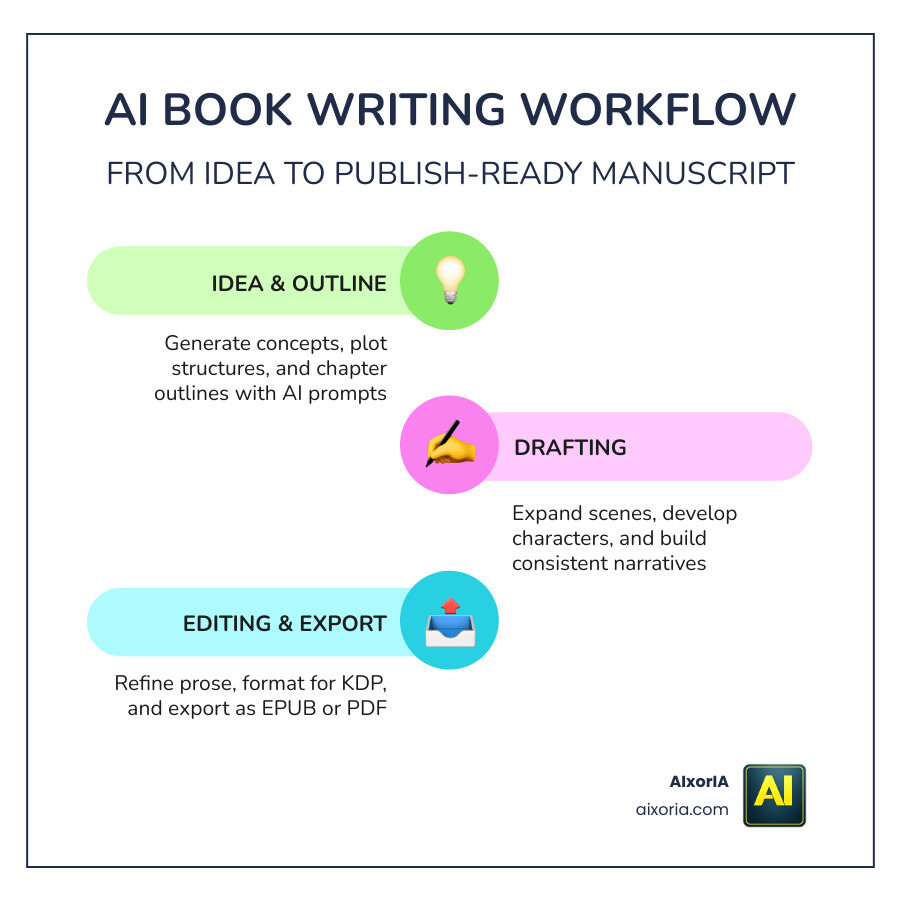
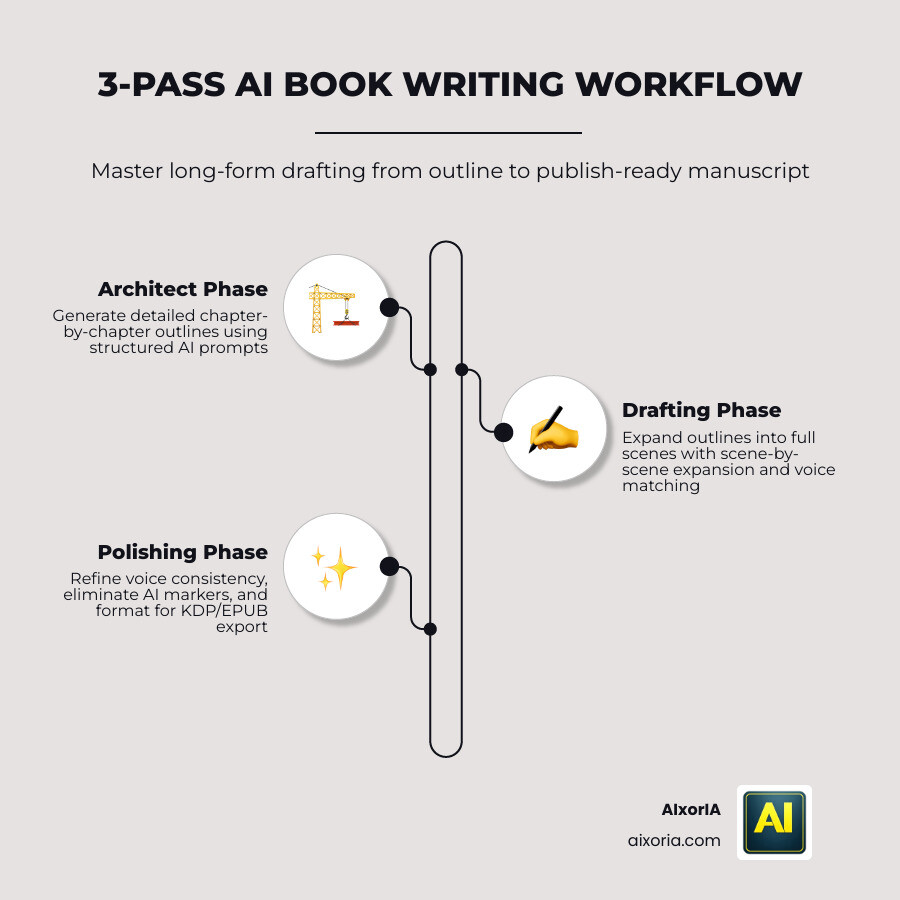
To get the most out of the best ai tool for writing a book, you need a workflow. We recommend a “Three-Pass” approach:
- The Architect Phase: Use an AI like ScribNova to generate a detailed chapter-by-chapter outline.
- The Drafting Phase: Use Sudowrite or Claude to expand those outlines into scenes. If the prose feels too “AI-ish,” use AI paraphrasing tools to shift the tone to something more personal.
- The Polishing Phase: Run your draft through a tool like 7 Best Ai Paraphrasing Tools For Students to ensure the voice is consistent and to check for overused AI “crutch” words like delve or tapestry.

Finally, use the built-in KDP formatting features in tools like AIWriteBook. They handle the “bleed,” “trim,” and “margins” that usually make self-publishing a headache.
Frequently Asked Questions about AI Book Writing
Can I write a full book for free with AI?
Yes, but it requires more manual labor. You can use the free tiers of Inkfluence AI (5 chapters a month) or Raptor Write (if you have a small amount of API credits). Alternatively, you can use the free versions of Claude or ChatGPT, but you will have to manually copy-paste your work into a document and handle all the formatting yourself.
How do I avoid AI detection in my published book?
The secret isn’t a “stealth” tool; it’s human editing. AI is great at drafting, but it’s bad at “voice.” By injecting your own anecdotes, unique metaphors, and personal expertise, you naturally bypass detection. Amazon KDP now requires you to disclose if your content is AI-generated, so honesty is the best policy. You can use tools like Turnitin or GPTZero to see how “predictable” your text looks and then rewrite the flagged sections.
Which AI is best for maintaining story continuity?
Novelcrafter is the industry leader for continuity thanks to its Codex system. Sudowrite’s Story Bible is a close second. For fiction writers, having a tool that “remembers” your world is more important than the quality of a single sentence.
Conclusion
The journey to becoming a published author in 2026 is faster and more accessible than ever before. Whether you choose the creative power of Sudowrite, the organizational genius of Novelcrafter, or the structured efficiency of Inkfluence AI, the best ai tool for writing a book is ultimately the one that gets you to write “The End.”
At AIxorIA, we believe that technology should empower your unique voice, not replace it. We provide custom AI solutions, tool training workshops, and performance audits designed to help you master these new workflows. Our mission is to provide simple language help and affordable services so that every writer—from the first-timer to the NYT bestseller—can thrive in this new era.
Ready to transform your book idea into a reality? Start your AI writing journey today with us and let’s build something incredible together!