The Finance Team’s Biggest Problem in 2026 (And How Software Solves It)

The best corporate finance automation software in 2026 helps teams cut close cycles, eliminate manual errors, and shift from repetitive data work to real strategic analysis. Here’s a quick look at the top platforms:
| Platform | Best For | Key Strength |
|---|---|---|
| Redwood Software | Record-to-report automation | End-to-end close orchestration |
| Farseer | Financial consolidation | 50%+ less manual work, multi-entity control |
| V7 Go | DCF & LBO modeling | 85-95% faster model creation |
| Maximor | Revenue automation | ASC 606 compliance, close in 1-2 days |
| Numos | Autonomous finance ops | Agentic AI with full audit trails |
| Anaplan | Enterprise FP&A | Complex multi-unit scenario planning |
| Workday Adaptive Planning | Scalable budgeting | Workforce planning + generative AI |
| Oracle EPM | Enterprise performance | Deep ERP integration |
| IBM Planning Analytics | High-speed decisions | TM1 engine, rapid bid cycle reduction |
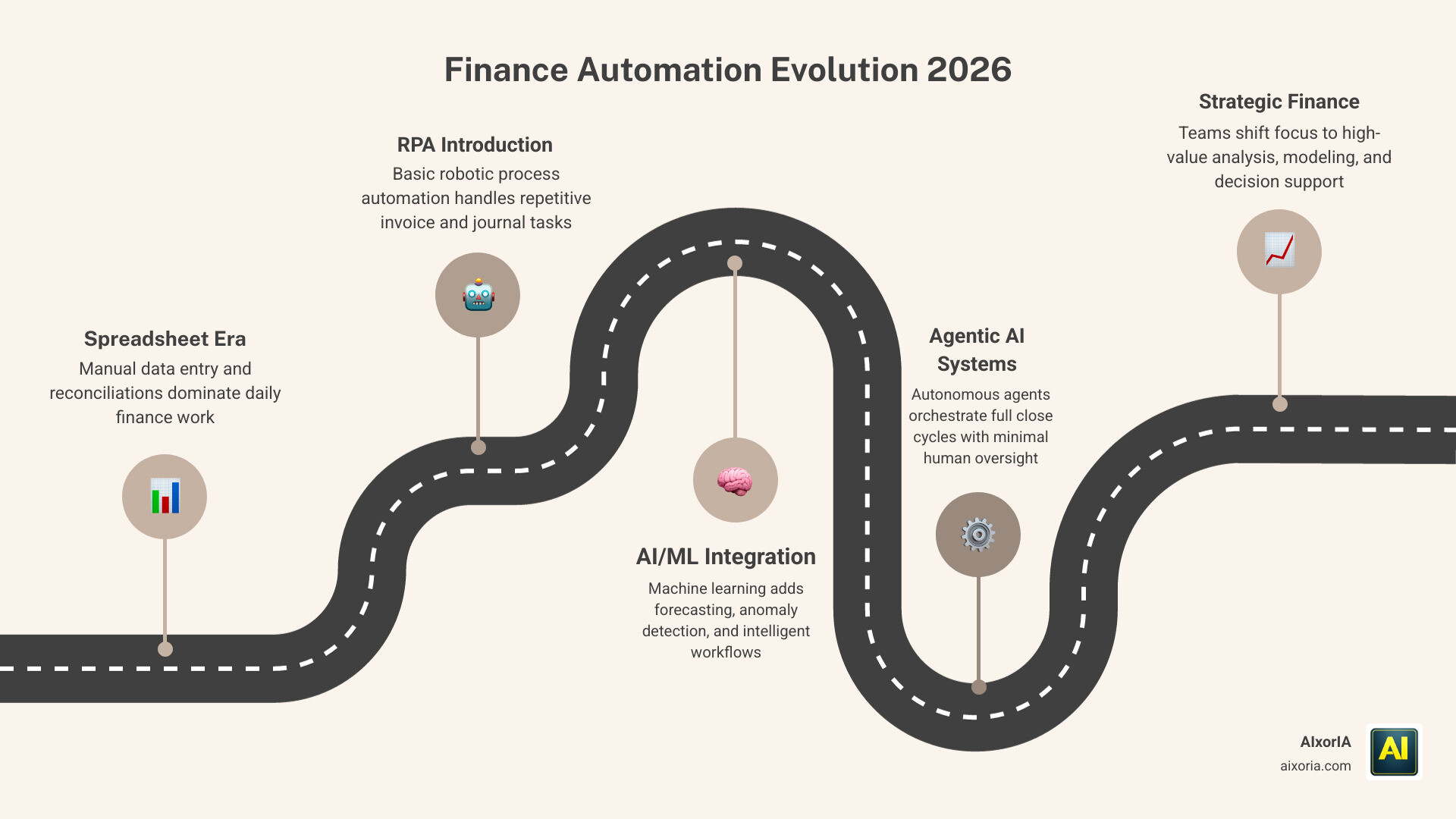
If your finance team still runs on spreadsheets, you’re not alone — but you’re falling behind.
The volume of repetitive, manual tasks in corporate finance is genuinely overwhelming. Think month-end close, intercompany reconciliations, revenue recognition, financial modeling — done by hand, every single cycle. It’s the professional equivalent of Groundhog Day.
And the cost is real. Not just in hours, but in the strategic work that doesn’t get done while your team is buried in data entry.
The good news: a new generation of corporate finance automation software is changing this fast. These tools don’t just automate invoices — they orchestrate entire financial processes, apply AI to forecasting, and produce audit-ready outputs with far less human effort.
One striking data point that captures the current moment well: 96% of CFOs want AI in their finance stack — but only 14% actually trust it yet. That trust gap is exactly what the right software needs to close.
This guide compares the top platforms so you can find the right fit for your team — without needing a technical background or a six-month implementation.
What is Corporate Finance Automation Software?
Corporate finance automation software uses advanced technology like artificial intelligence (AI), machine learning (ML), and robotic process automation (RPA) to streamline and execute routine financial operations.
But how does it differ from general finance tools?
While general accounting tools focus on basic bookkeeping, invoicing, and transactional tasks for small businesses, corporate-grade systems handle enterprise-scale complexity. They manage multi-entity consolidation, complex regulatory compliance, and predictive strategic planning.
In practice, we look at three main layers of automation:
- Business Process Automation (BPA): Orchestrates broad, multi-step workflows—such as routing a complex capital expenditure request through several tiers of executive approval.
- Robotic Process Automation (RPA): Handles rigid, rules-based tasks like copying transaction data from sales logs into journal entries.
- Intelligent Automation (IA): Combines AI and machine learning to read unstructured contracts, detect operational anomalies, and build predictive forecasts.
By implementing these technologies, companies transition from manual data production to deep strategic analysis. For a broader look at how these systems impact modern businesses, check out our Benefits of Finance Automation Software 2026 Guide.
Key Features of the Best Corporate Finance Automation Software
Selecting the right platform requires looking past marketing buzzwords to evaluate core capabilities. The best corporate finance automation software must provide:
- Seamless ERP Integration: The platform must plug directly into enterprise resource planning (ERP) systems like SAP, Oracle, or NetSuite without requiring custom-coded workarounds.
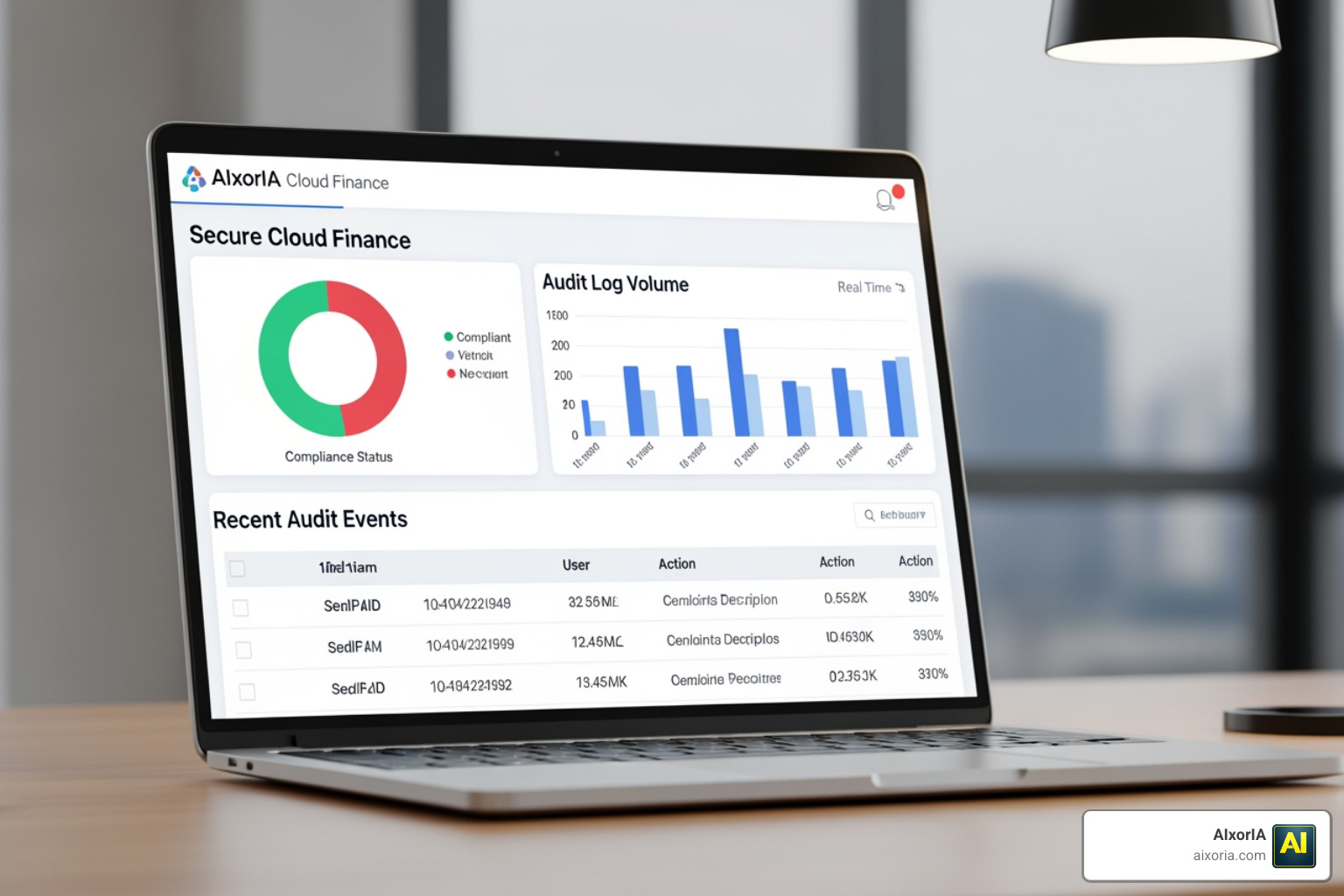
- Institutional-Grade Security & Compliance: Enterprise financial data requires robust protection. Look for platforms aligned with SOC 1, SOC 2, ISO 27001, and GDPR standards, featuring role-based access controls and comprehensive audit logs.
- Intelligent Multi-Source Reconciliation: The ability to pull data from CRMs, bank accounts, and billing systems to reconcile records automatically. To understand how AI simplifies this process, read our guide on AI Finance Tools for Multi Source Reconciliation Complete 2026 Guide.
- Auditable AI and Clear Documentation: AI tools must provide clear audit trails, showing the exact source files and logic used to generate financial models or journal entries.
Top 9 Corporate Finance Automation Software Platforms
To help you compare the leading tools available in 2026, we have broken down the top nine platforms by their primary strengths and core functionalities. For an in-depth comparison, you can also explore our article on the 9 Best Corporate Finance Automation Software in 2026.
Redwood Software for Record-to-Report
Redwood Software focuses on automating the record-to-report (R2R) lifecycle. By orchestrating complex financial workflows, Redwood allows teams to shift their focus from manual data production to strategic analysis.
- Key Capabilities: Redwood excels at balance sheet reconciliation, automated journal entries, intercompany transactions, and complex accruals.
- The Approach: It uses a structured “Define, Orchestrate, and Execute” framework. Ready-to-use financial components allow teams to build automated pipelines without specialized IT help.
- Why It Stands Out: Redwood is highly ERP-friendly, scaling easily across diverse systems while maintaining built-in audit controls. Learn more about how it compares to broader tools in our review of The 9 Best Finance Automation Software Tools in 2026.
Farseer for Financial Consolidation
For companies managing multiple entities, Farseer takes the chaos out of group reporting by replacing manual spreadsheet consolidation with a governed, automated workflow.
- Key Capabilities: Farseer connects local entity trial balances, maps diverse charts of accounts to a unified group structure, and automatically handles currency translations and intercompany eliminations.
- Real-World Impact: Enterprise finance teams using Farseer have cut manual data preparation by over 50%. Instead of taking weeks to consolidate and update plans, teams can complete these tasks in just a day or two.
- Why It Stands Out: It combines a familiar spreadsheet-like interface with strict governance, ensuring compliance with IFRS and GAAP. For more details on streamlining your close, see the Financial Consolidation & Close Software | Farseer page.
Why V7 Go is the Best Corporate Finance Automation Software for Modeling
Financial modeling has historically been one of the most labor-intensive tasks in corporate finance. V7 Go changes this by using purpose-built AI agents to automate complex valuation models.
- Key Capabilities: V7 Go automates the creation of Discounted Cash Flow (DCF) and Leveraged Buyout (LBO) models by extracting historical data from annual reports and 10-Ks, then populating proprietary Excel templates while preserving formulas and formatting.
- Stunning Time Savings: Traditional DCF model creation drops from 3–5 days of manual work to just 2–4 hours (an 85% time savings). For LBO models, the timeline plummets from 2–3 weeks to a mere 30–60 minutes (a 95% time savings).
- Why It Stands Out: Unlike generic LLMs that can hallucinate figures, V7 Go features visual citations, linking every output cell directly to its source location in the original document. Explore its capabilities further on the AI DCF Model Generation Agent | Automate Financial Modeling | V7 Go page, and read our analysis of the Best AI Tool for Financial Statement Analysis in 2026.
Maximor for Revenue Automation and Compliance
For mid-market and enterprise businesses running complex billing structures, Maximor simplifies revenue operations while enforcing strict compliance standards.
- Key Capabilities: Maximor automates contract ingestion, extracts key commercial terms, auto-prepares revenue schedules, and drafts audit memos.
- Real-World Impact: It reduces the monthly revenue close cycle from over 5 days to just 1–2 days. Additionally, 100% of contracts can be automatically prepared with schedules and memos to ensure ASC 606 and IFRS 15 compliance.
- Why It Stands Out: Maximor is fully ERP-agnostic, plugging directly into NetSuite, SAP, and Sage Intacct without disrupting existing workflows. To learn more, visit Maximor : AI Automation Platform for Accounting & Finance Ops .
Numos for Autonomous Finance Operations
Numos represents the next step in financial technology: moving away from rigid, rules-based automation toward autonomous, agentic workflows.
- Key Capabilities: Numos builds a continuously updated semantic layer across your entire financial stack. Its AI agents can execute multi-step workflows, reason over financial data, and perform real-time variance analysis.
- Security & Compliance: It features SOC 1, SOC 2, and SOX-compliant infrastructure with role-based access and human-in-the-loop checkpoints.
- Why It Stands Out: Instead of simple data transferring, Numos understands the context of your business, allowing you to ask natural-language questions about budget variances and receive instant, auditable answers. Read more about agentic platforms in our guide to the 9 Best AI Powered Finance Automation Software in 2026.
Anaplan for Enterprise FP&A
Anaplan is a powerhouse built for large enterprises that need to coordinate complex planning across multiple business units, departments, and geographies.
- Key Capabilities: It excels at driver-based planning, multi-dimensional modeling, and predictive forecasting.
- Advanced AI Features: Anaplan uses PlanIQ for predictive forecasting and Optimizer to solve complex resource allocation problems.
- Why It Stands Out: It connects data, workflows, and people in a single platform, eliminating version-control issues. Learn more about enterprise planning tools in our roundup of the Best Finance Automation Software Tools 2026.
Workday Adaptive Planning for Scalable Budgeting
Workday Adaptive Planning offers robust budgeting, forecasting, and workforce planning capabilities, making it a favorite for rapidly growing mid-market and enterprise companies.
- Key Capabilities: It simplifies headcount planning, expense forecasting, and cash flow modeling.
- Generative AI Integration: Workday has rolled out generative AI capabilities that allow users to ask plain-language questions and receive instant narrative insights.
- Why It Stands Out: While it integrates with any ERP, it is exceptionally powerful for organizations already operating within the broader Workday ecosystem.
Oracle EPM for Comprehensive Financial Management
Oracle Enterprise Performance Management (EPM) is a comprehensive suite designed to model, plan, and close financial books for the world’s largest organizations.
- Key Capabilities: It covers everything from financial planning and budgeting to tax reporting and operational close processes.
- Why It Stands Out: Oracle EPM offers unmatched scalability and deep, native integration with Oracle ERP Cloud, making it the default choice for global enterprises requiring absolute control.
IBM Planning Analytics for High-Speed Decision Making
Powered by the famous TM1 financial database engine, IBM Planning Analytics delivers high-speed calculations and multi-dimensional analysis.
- Key Capabilities: It enables real-time scenario planning, rapid data consolidation, and complex financial forecasting.
- Real-World Impact: IBM’s internal teams used their own intelligent automation to eliminate 35,000 human hours annually and reduce their average pricing bid cycle times by 75%.
- Why It Stands Out: Its computational speed makes it perfect for large-scale operations requiring instant recalculations of massive datasets.
Implementation, ROI, and Compliance in 2026
Transitioning to automated systems can feel daunting, but the modern implementation playbook makes the process smoother than ever.
Implementation Timelines
While legacy enterprise software installations used to take up to a year, modern ERP-agnostic platforms like Maximor can achieve their first ROI milestones within 4 to 8 weeks with zero operational downtime.
Realistic ROI Expectations
Automating financial workflows yields rapid, measurable results:
- Time Savings: Platforms like Farseer and Redwood cut manual data preparation and close tasks by 50% or more.
- Operational Speed: TD Ameritrade used process automation to reduce the time required to open new accounts by 70%, while IBM teams cut pricing bid cycles by 75%.
- Direct Cost Reductions: The Primanti Brothers saved 2,000 hours and $84,000 annually by automating their daily sales and labor reporting.
Compliance and Security
In 2026, automation actually strengthens compliance. Automated systems eliminate human spreadsheet errors and enforce strict internal controls. Leading solutions ensure audit readiness by generating automated workpapers, maintaining detailed audit trails, and securing data through SOC 1, SOC 2, and SOX-compliant frameworks.
Frequently Asked Questions about Corporate Finance Automation
How does corporate finance automation differ from general accounting software?
General accounting software handles basic financial transactions like bookkeeping, invoicing, and simple bill payments for small businesses. In contrast, corporate finance automation software is built for enterprise-scale complexity. It automates advanced processes like multi-entity consolidation, predictive FP&A, ASC 606 revenue compliance, and complex financial modeling (like DCF and LBO models).
What is the typical ROI timeline for implementing the Best Corporate Finance Automation Software?
Most organizations begin seeing measurable ROI within 4 to 8 weeks of launching modern, cloud-native platforms. Initial returns typically show up as a dramatic reduction in monthly close times (often cutting close cycles from 5 days down to 1–2 days) and the elimination of hundreds of manual data-entry hours.
How do AI-powered finance tools ensure data security and compliance?
The best tools secure sensitive data by using bank-level encryption, role-based access controls, and strict compliance with SOC 1, SOC 2, and SOX standards. Furthermore, they address the “AI trust gap” by providing transparent, auditable logs and visual citations, allowing auditors to trace any AI-generated figure back to its exact source document.
Conclusion
The shift toward corporate finance automation is no longer a luxury for forward-thinking companies—it is a necessity for keeping pace in 2026. By automating repetitive tasks, your team can stop acting as data processors and start serving as strategic business partners.
At AIxorIA, we specialize in helping businesses navigate this digital transformation. We design custom AI solutions, host practical tool training workshops, write simple tutorials, and conduct deep performance audits to help your team succeed. Our mission is to make advanced technology accessible with clear language, affordable services, and fast customer support.
Ready to eliminate manual spreadsheet work and unlock the strategic power of your financial data? Empower your finance team with AIxorIA today.
4 thoughts on “Best Corporate Finance Automation Software in 2026 (Top 9 Compared)”