The Fastest Way to Find the Best AI Finance Tools for Multi-Source Reconciliation
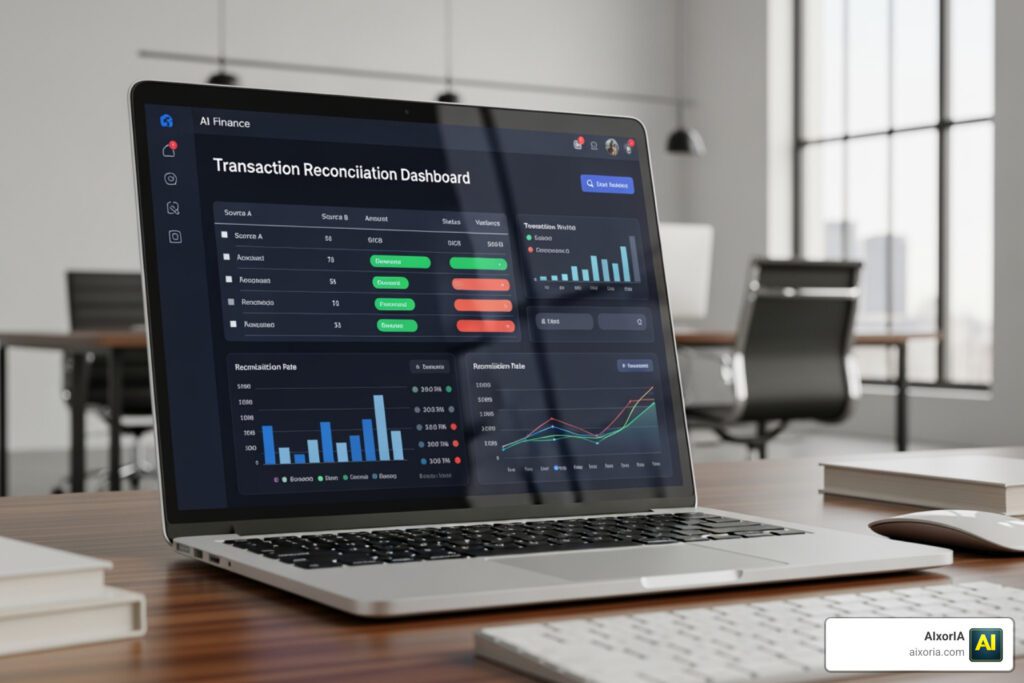
AI finance tools for multi-source reconciliation are purpose-built platforms that automatically match transactions across banks, ERPs, payment gateways, and other data sources — replacing slow, error-prone manual processes. As we move through 2026, the complexity of financial data has reached a tipping point where traditional spreadsheets can no longer keep pace with the velocity of digital commerce.
Modern businesses pull financial data from many places at once — bank accounts, payment processors, ERP systems, payroll platforms, even blockchain networks. Getting all of that to line up cleanly is genuinely hard without the right tools. In the past, reconciliation was a backward-looking task performed weeks after the month ended. Today, AI-driven systems allow for continuous, real-time matching that provides an up-to-the-minute view of cash flow and financial health.
If your finance team is still spending hours every month chasing down mismatched transactions across spreadsheets, you’re not alone. According to a 2026 industry report, 29% of organizations still rely on manual expense processing — and 71% of employees spend more than 30 minutes on a single expense report. This inefficiency creates a bottleneck that prevents finance departments from contributing to high-level strategic decision-making.
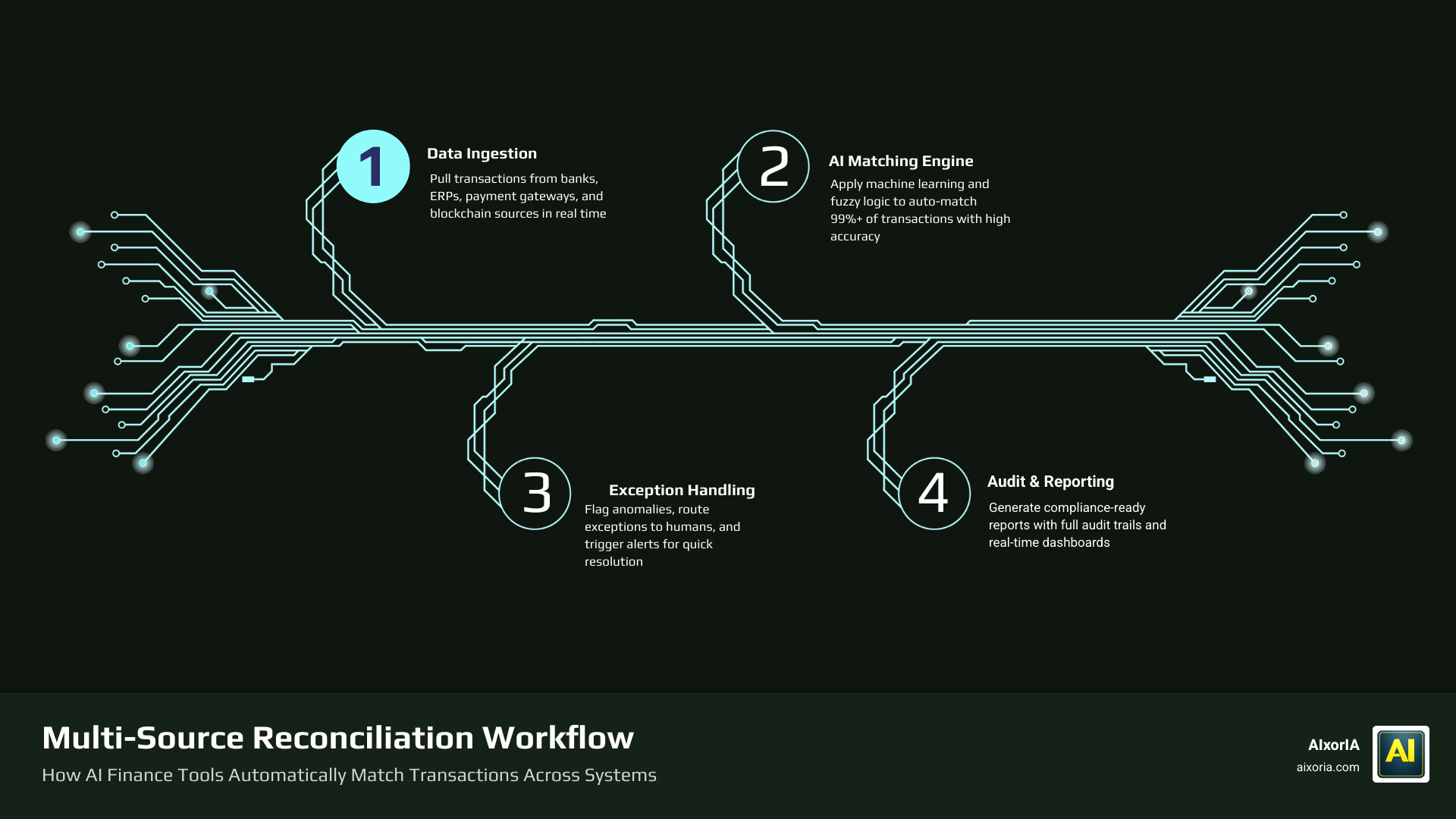
The good news? AI has changed the game. Leading platforms now achieve 99%+ auto-match rates and have helped teams cut daily reconciliation time by over 96%. These tools use advanced algorithms to identify patterns that the human eye might miss, such as recurring discrepancies or subtle timing differences between different payment gateways.
This guide walks you through the best categories of AI reconciliation tools available right now, what makes each one worth considering, and how to choose the right fit for your business — even if you don’t have a dedicated IT team. By understanding the core capabilities of these engines, you can move away from the “grunt work” of data entry and toward a more automated, accurate financial future.
Why Modern Finance Teams Need AI Finance Tools for Multi-Source Reconciliation
In 2026, the sheer volume of financial data is enough to make any controller’s head spin. Between various payment gateways, multiple bank accounts, and complex ERP systems, manual data entry is no longer just “slow”—it’s a liability. We’ve seen that manual processes are a leading cause of misstatements and audit delays, with nearly a third of accountants admitting to making several errors per week due to capacity constraints. This constant pressure leads to burnout and high turnover in finance departments, further complicating the reconciliation cycle.
Implementing AI Finance Tools for Multi-Source Reconciliation allows teams to break down data silos. Instead of downloading CSVs from five different places and playing “Find the Difference” in Excel, these tools provide real-time visibility. By connecting directly to your sources via secure APIs, they offer a 96%+ decrease in time spent on daily reconciliations, allowing your team to focus on strategy rather than data hunting. This shift is essential for maintaining a competitive edge in a market where financial agility is a key differentiator.
The benefits of finance automation software 2026 guide highlights that productivity gains are often massive. For instance, some organizations have seen a 35%+ increase in FTE productivity simply by automating transaction matching. When you aren’t chasing missing receipts or fixing broken spreadsheet formulas, you can finally get ahead of the month-end close. Furthermore, the reduction in human error significantly lowers the risk of non-compliance and financial penalties, providing peace of mind for stakeholders and auditors alike.

Core Features of AI-Powered Reconciliation Engines
What makes these modern tools different from the basic matching rules of the past? It comes down to intelligence and adaptability. Traditional systems use “hard logic”-if the amount and date don’t match perfectly, it fails. AI, however, uses machine learning to handle the “messy” reality of finance, where data is often incomplete or formatted inconsistently. For a broader overview of how machine learning works in practice, the Wikipedia article on machine learning offers useful background.
Key features include:
- Fuzzy Matching & Contextual Clues: If a wire memo says “INV1234-6,” AI can infer this refers to three separate invoices (1234, 1235, and 1236) and match them accordingly. It looks at historical patterns and metadata to make high-confidence connections.
- Anomaly Detection: The system continuously monitors patterns. If a payment processor suddenly introduces a new service fee or a vendor changes their naming alias, the AI flags it as an anomaly for review rather than simply failing the match.
- Self-Learning Engines: These tools learn from your manual overrides. If you tell the system once that “Acme Corp” and “Acme Logistics LLC” are the same entity, it won’t ask you again, effectively building a custom logic library for your specific business.
- Data Normalization: AI parses unstructured data from PDFs and various file formats, mapping them into a unified schema so you can compare “apples to apples” across different systems, regardless of how the source data was originally presented.
- Predictive Modeling: Advanced engines can predict future cash flow discrepancies by analyzing historical reconciliation trends, allowing finance leaders to intervene before a minor mismatch becomes a major reporting issue.
Manual vs. AI Reconciliation Comparison
| Feature | Manual / Spreadsheet | AI-Powered Reconciliation |
|---|---|---|
| Matching Logic | Exact match only | Fuzzy, one-to-many, many-to-many |
| Error Rate | High (Human error/formula breaks) | Low (98-99% accuracy) |
| Scalability | Requires more headcount to grow | Handles millions of lines instantly |
| Audit Trail | Often missing or fragmented | Automated, step-by-step digital logs |
| Handling Exceptions | Manual investigation | AI-suggested resolutions |
Top Categories of AI Reconciliation Solutions
Not every business needs the same type of tool. A global retailer has different needs than a crypto-native startup. Choosing from the 9 best AI powered finance automation software in 2026 requires understanding these specific categories and how they align with your organizational structure.
Evaluating AI Finance Tools for Multi-Source Reconciliation for Enterprise Close
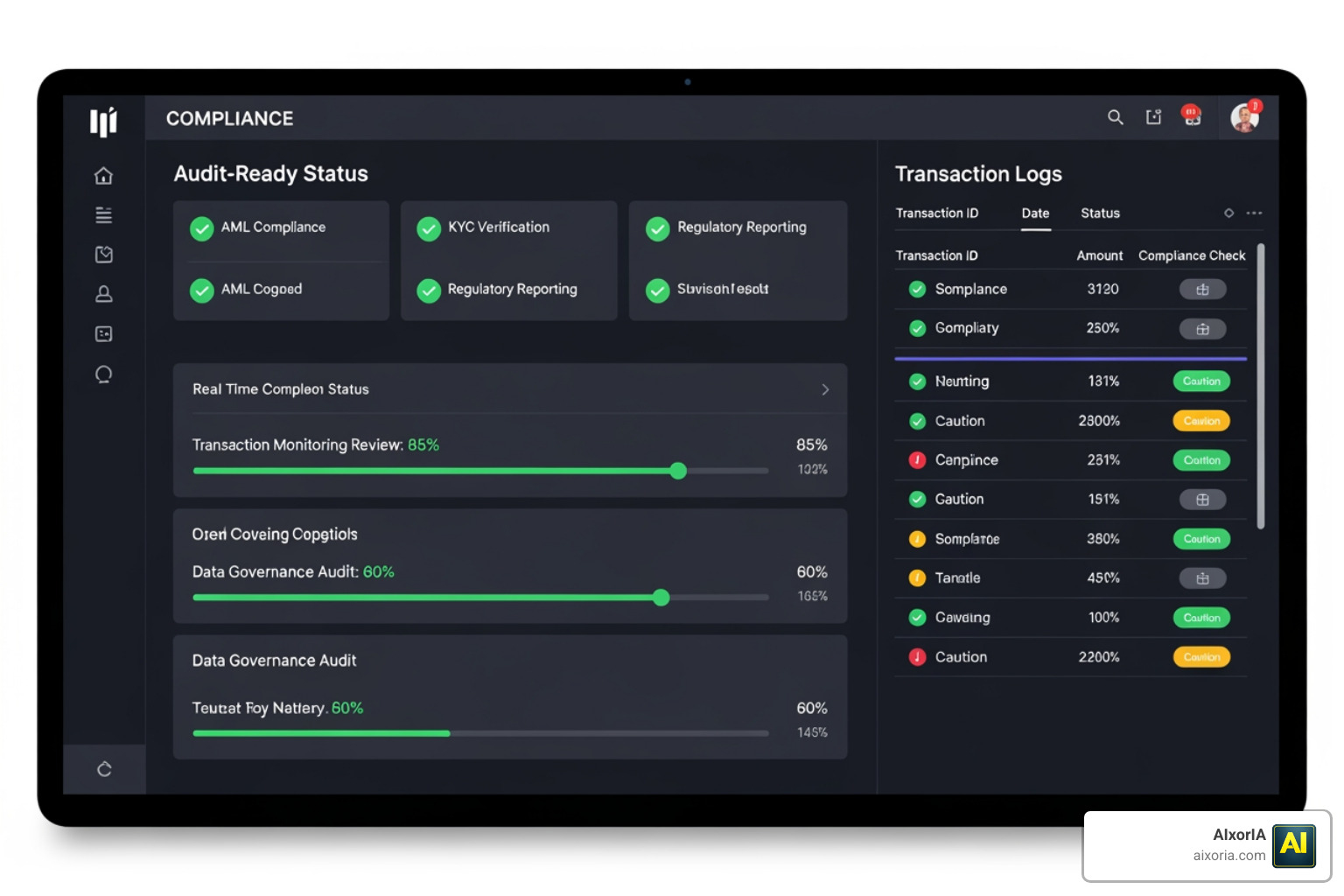
For large corporations, the goal is a “zero-day close.” Enterprise-grade solutions are designed for high-volume environments where millions of transactions occur across dozens of entities. One major bank achieved a 99.99% match rate across one million daily transactions using these types of best finance automation software tools 2026. These platforms don’t just match data; they automate journal entries and provide compliance guardrails to ensure every transaction is audit-ready for US financial institutions. By integrating directly with the general ledger, they eliminate the need for manual data uploads, ensuring that the financial statements are always a true reflection of the company’s position.
Specialized AI Finance Tools for Multi-Source Reconciliation in Web3
The world of digital assets adds a layer of complexity—blockchain data. Specialized Web3 reconciliation engines are built specifically for this. They reconcile internal ledgers against blockchain networks, custodians, and liquidity providers. Because a single DeFi swap can appear as three separate transactions in a custodian, these best AI tools for enhancing digital banking in 2026 use five-dimensional dashboards to track token amounts, fiat values, and cost basis simultaneously. This is critical for maintaining UK financial stability and meeting global regulatory standards, which have become increasingly stringent regarding digital asset reporting in 2026.
Best Practices for Implementing AI Reconciliation Platforms
Moving to an AI-driven model is a shift in mindset. We recommend starting with these best practices to ensure a smooth transition and maximize the return on your technology investment:
- Prioritize Integration Depth: Ensure your chosen tool has native, bidirectional syncing with your ERP. This allows the tool to pull data and push journal entries back without manual exports, creating a closed-loop system that maintains data integrity.
- Configure Smart Guardrails: You don’t have to automate everything on day one. Set confidence thresholds (e.g., auto-approve matches with a 95%+ confidence score) and route the rest to a human review queue. As the AI learns, you can gradually lower the threshold for manual intervention.
- Maintain Audit Trails: One of the biggest benefits of 9 best corporate finance automation software in 2026 is the automated audit trail. Ensure your tool logs every match, adjustment, and user approval, providing a clear path for internal and external auditors.
- Continuous Learning: Use the best AI tools for financial statement analysis in 2026 to review reconciliation health. If match rates drop, it’s often a sign of a systemic change in your data sources that needs a rule update.
- Data Security and Role-Based Access: Implement strict access controls to ensure that only authorized personnel can approve high-value exceptions. In 2026, data security is paramount, and your reconciliation tool should support multi-factor authentication and encrypted data transfers.
Frequently Asked Questions about AI Reconciliation
How does AI handle unstructured transaction data?
AI uses Optical Character Recognition (OCR) and Large Language Models (LLMs) to “read” documents like bank statements or PDFs. It doesn’t just look for numbers; it understands context. For example, if a payment hits the bank without a reference number, the AI can scan your email inbox for a separate remittance advice and link the two together based on the sender, date, and amount. This ability to synthesize information from multiple formats is what sets AI apart from legacy rule-based systems.
What is the typical ROI for AI reconciliation tools?
Most organizations see measurable results within the first three months. Standard benchmarks include an 80% reduction in manual effort and a 95% reduction in time spent on exception management. Beyond the time savings, the ROI includes improved cash flow visibility and the elimination of costly late-payment fees. For high-growth companies, the biggest ROI is the ability to scale—one retailer reported automating 150 million transactions annually without adding a single person to their finance headcount, allowing them to reinvest those savings into product development.
Can AI tools integrate with legacy ERP systems?
Yes. Most modern AI Finance Tools for Multi-Source Reconciliation are ERP-agnostic. They use secure APIs or SFTP file transfers to connect with older systems. Leading AI-enabled reconciliation tools are specifically built to transform and cleanse data from various legacy formats (CSV, TXT, XLSX) into a format the AI can process. This means you don’t need to undergo a full ERP overhaul to benefit from AI-driven reconciliation; you can simply layer the AI engine on top of your existing infrastructure.
Conclusion
The transition from manual spreadsheets to AI Finance Tools for Multi-Source Reconciliation is no longer a luxury—it’s a necessity for teams that want to stay competitive in 2026. By automating the “grunt work” of transaction matching, finance professionals can finally step into the role of strategic advisors, using real-time data to guide the company’s growth. The future of finance is not found in the cells of a spreadsheet, but in the insights generated by intelligent automation.
At AIxorIA, we believe that technology should be accessible and simple. Whether you are looking for custom AI solutions, tool training workshops, or a performance audit of your current financial workflows, our team is here to help you navigate this transition with affordable, fast support. We specialize in helping businesses bridge the gap between legacy processes and modern AI capabilities, ensuring that your team is equipped for the challenges of the 2026 financial landscape.
Ready to reclaim your month-end and transform your finance department into a powerhouse of efficiency? Check out our AI Finance Tools for Multi-Source Reconciliation Complete 2026 Guide to find the perfect match for your business and start your journey toward automated excellence today.
2 thoughts on “AI Finance Tools for Multi-Source Reconciliation (2026 Guide) | Best AI Reconciliation Software”