Why Choosing the Right Accounting Software Can Make or Break Your Rental Business
Scr0ll d0wn to D0VVNL0AD
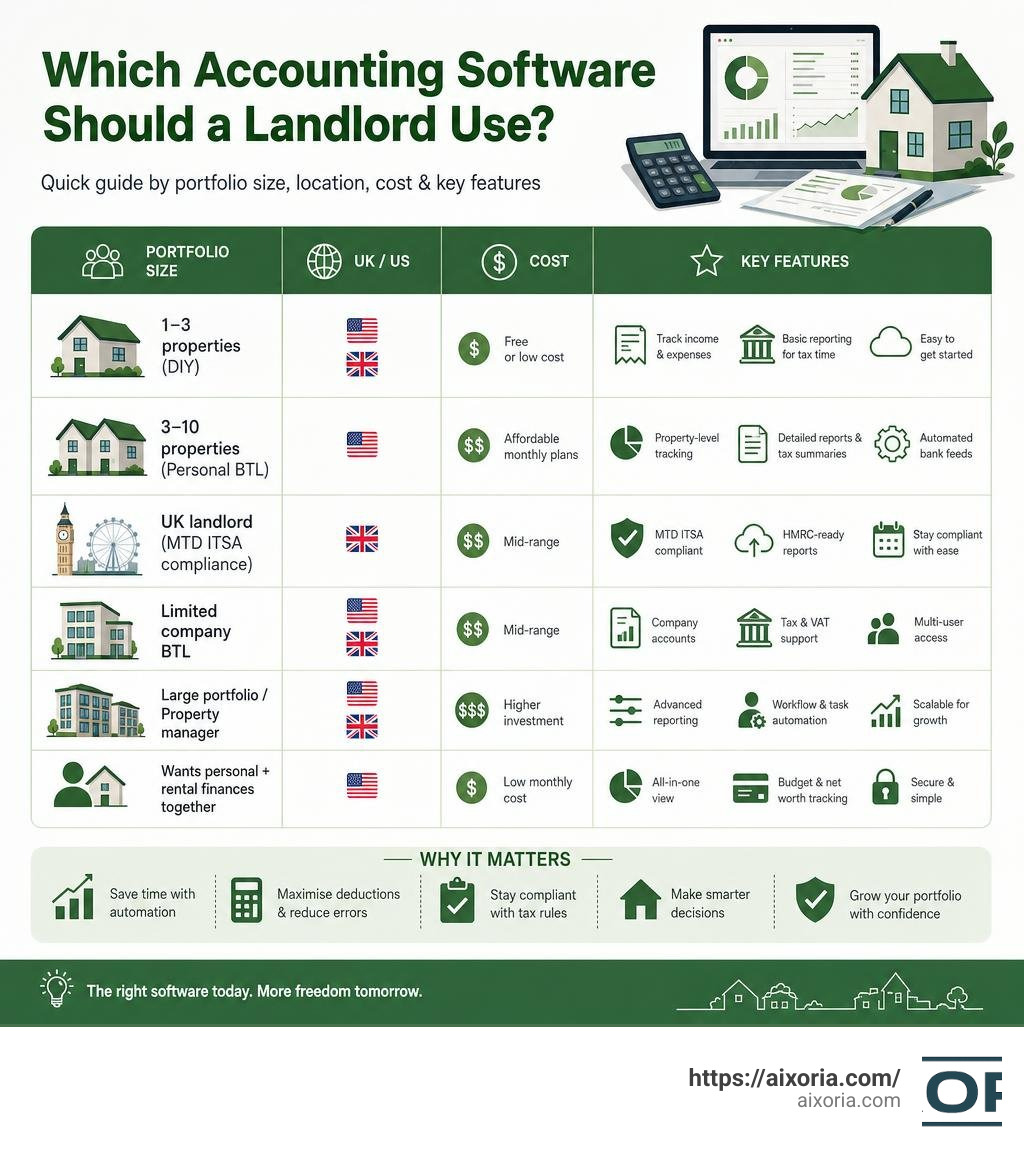
Which accounting software a landlord should use depends on a few key factors: your portfolio size, whether you hold properties personally or through a limited company, and whether you need basic bookkeeping or a full property management suite.
Here’s a quick answer to help you decide:

| Landlord Type | Best Fit |
|---|---|
| 1-3 properties, DIY | Landlord Studio, Stessa, or Baselane (free options available) |
| 3-10 properties, personal BTL | REI Hub or Landlord Studio paid plan |
| UK landlord needing MTD ITSA compliance | Hammock, Landlord Vision, or Xero |
| Limited company BTL | Xero or FreeAgent |
| Large portfolio / property manager | Buildium, AppFolio, or Rent Manager |
| Wants personal + rental finances together | Quicken Business & Personal ($4.99/month) |
Getting this decision right matters more than most landlords realise.
Many rental property owners start with a spreadsheet. It feels simple at first. But as your portfolio grows, manual tracking leads to formula errors, missed deductions, and stressful tax seasons. Generic tools like QuickBooks can work, but they require significant setup and don’t understand rental-specific needs out of the box.
Dedicated rental accounting software changes that. It tracks income and expenses per property, generates reports built for tax time, and automates the tasks that eat up your weekends.
This guide cuts through the noise and shows you exactly which tool fits your situation.
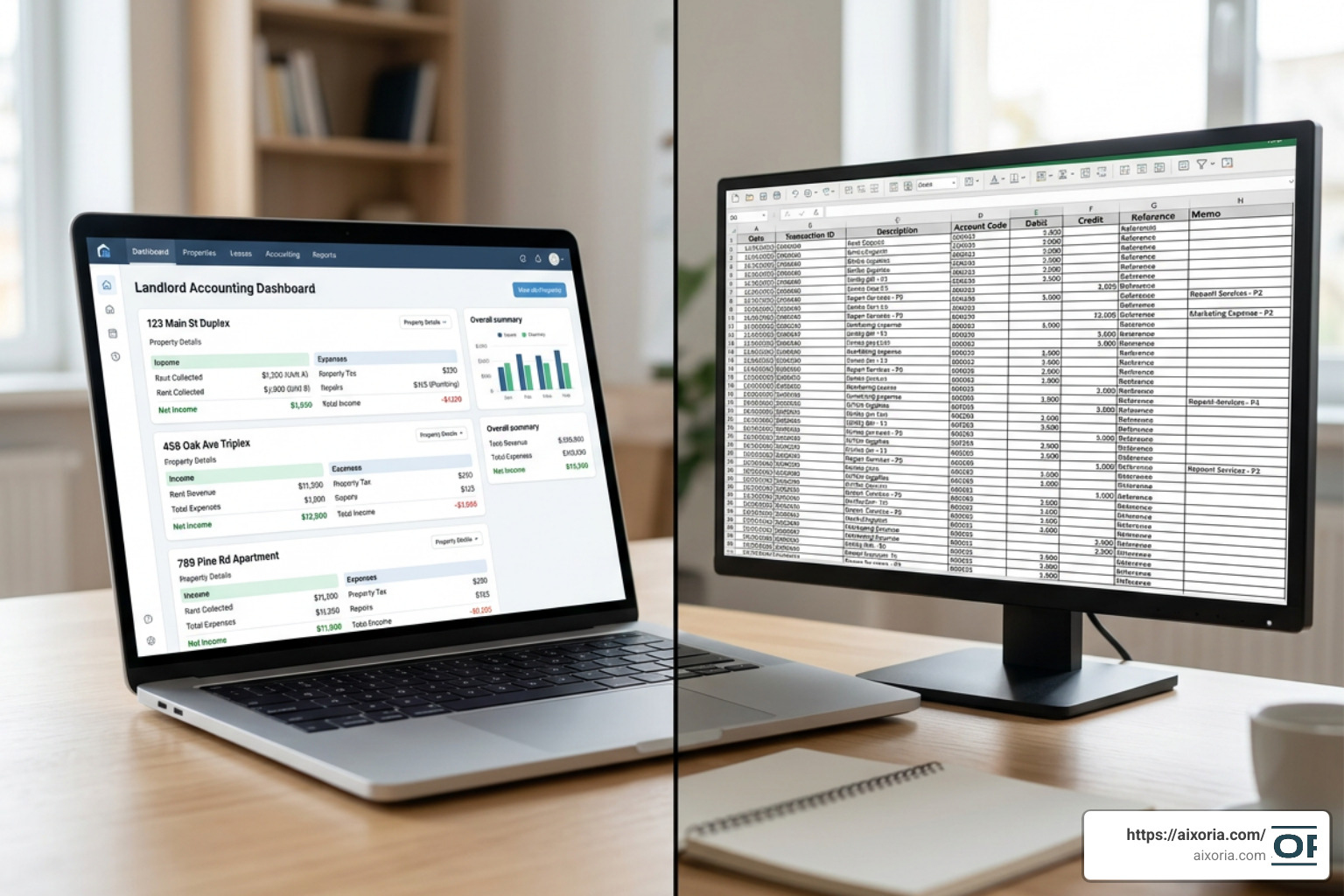
Dedicated Rental Tools vs. General Accounting Platforms
When looking at the financial landscape of property management, we generally see two distinct paths: dedicated rental property accounting tools and general-purpose business accounting platforms.
Dedicated tools are built from the ground up to recognize that real estate accounting is unique. Instead of managing a single business ledger, landlords are essentially running separate micro-businesses for every single property—and sometimes every individual unit. Specialized software automatically structures your accounts this way, offering built-in Schedule E templates, tenant ledger tracking, and automated rent matching.
On the other hand, general accounting platforms like QuickBooks or Xero are built for standard businesses that sell products or services. While they are incredibly powerful, they do not inherently understand what a “security deposit” or “tenant lease” is. To use them effectively, you have to spend hours setting up complex workarounds using “classes” or “locations” to separate your properties.
To explore how these financial tools stack up for different investment strategies, check out the Best Money Management Software for Rental Property Expenses in 2026.
Why Landlords Outgrow Generic Spreadsheets
Almost every landlord we know started with a spreadsheet. It is practically a rite of passage. However, relying on manual data entry is a ticking tax bomb.
As your portfolio grows, spreadsheets quickly become “spreadsheet hell.” A single broken formula can throw off your entire year-end calculation, leading to massive errors on your tax returns. Furthermore, spreadsheets do not offer automated bank feeds. This means you are left manually typing in every hardware store run, plumbing repair, and rent payment.
Inevitably, receipts get lost, manual errors slip through, and you lose hours of your weekend trying to reconcile your bank statement with your rows of data. If you want to see how automation is transforming bookkeeping across other industries, read our guide on the 9 Best Corporate Finance Automation Software In 2026.
Key Features of Dedicated Rental Accounting Software
If you are moving away from spreadsheets, we recommend looking for software that includes these non-negotiable features:
- Automated Bank Feeds: The software should securely connect to your bank accounts to pull in transactions in real-time, matching rent payments automatically.
- Schedule E Tax Categorization: The IRS requires rental income and expenses to be reported on Schedule E. Your software should automatically map your expenses (like mortgage interest, repairs, and property taxes) to these exact tax categories.
- Smart Receipt Scanning: A mobile app that lets you take a photo of a receipt at the hardware store and instantly attaches it to the correct transaction.
- Mileage Tracking: Since driving to your properties is a deductible expense, built-in GPS tracking can save you thousands of dollars at tax time.
For an excellent example of a tool that excels in these areas, you can learn more about the Rental Property Accounting Software by Stessa, which currently serves over 350,000 landlords with automated single-entry bookkeeping.
Which Accounting Software Should a Landlord Use?
To answer the core question—Which accounting software should a landlord use?—we have to evaluate your specific situation. There is no single “perfect” tool for everyone. Your choice will depend on whether you own one duplex or a hundred units, whether you hold properties in your own name or an LLC, and whether you are based in the US or the UK.

Deciding Which Accounting Software Should a Landlord Use for Small Portfolios
For DIY landlords managing 1 to 10 properties, ease of use and affordability are the top priorities. You do not need enterprise-grade trust accounting; you need to know who has paid rent and ensure your tax deductions are fully maximized.
For this tier, we highly recommend looking at specialized tools like:
- Stessa: Excellent for US-based landlords because its Essentials plan is free for unlimited properties, offering clean Schedule E reporting and automated bank feeds.
- Landlord Studio: Boasting an impressive 4.9-star rating from over 10,000 landlords, it is incredibly user-friendly and features a great mobile app for receipt scanning and mileage tracking.
- Baselane: A fantastic free option that combines property-specific banking with built-in bookkeeping, processing over $3.1 billion in transactions annually for more than 50,000 real estate investors.
- REI Hub: Starting at $15 per month, this is the best option if you want a true double-entry accounting system specifically designed for real estate investors.
If you also need to manage tenant billing and invoicing alongside your bookkeeping, check out our insights on the 7 Best Automated Invoicing Software In 2026 Complete Guide For Businesses.
Deciding Which Accounting Software Should a Landlord Use for Large Portfolios
Once you scale past 10 to 15 properties, or if you begin managing properties on behalf of other owners, your accounting needs change dramatically. You will require advanced features like trust accounting, automated late fees, vendor management, and detailed owner statements.
For larger portfolios, standalone accounting tools are rarely enough. Instead, you should look at dedicated, all-in-one property management platforms:
- Buildium: Starting at $58 per month, Buildium is a powerhouse for established landlords and professional property managers who require robust accounting backbones.
- DoorLoop: Starting at $49 per month, this platform is widely praised for its modern, incredibly fast user interface and excellent customer support.
- Rentec Direct: Holding a stellar 4.9-out-of-5 rating from more than 14,734 reviews, Rentec Direct is a highly reliable option for growing property managers.
Managing these larger datasets requires strong analytical tools. To see how modern technology can help you make sense of your portfolio’s performance, take a look at the Best Ai Tools For Data Analysis And Visualization In 2026.
UK Landlords and MTD ITSA Compliance in 2026
For our UK-based readers, the decision of which accounting software should a landlord use is no longer just about convenience—it is about legal compliance.
Under HMRC’s Making Tax Digital for Income Tax Self Assessment (MTD ITSA) regulations, UK landlords are facing a major shift in how they must report their rental income.
To ensure you stay on the right side of the law, we recommend reviewing the Best Accounting Software UK Landlords 2026 | LetCompliance.
Phased Rollout and Digital Linking Requirements
The MTD ITSA rollout is phased based on your gross rental and self-employed income:
- From April 2026: Landlords with a gross income of over £50,000 must use HMRC-recognized digital software to keep records and submit quarterly updates.
- From April 2027: The threshold drops, requiring those with gross incomes over £30,000 to comply.
- By 2028: The threshold is planned to lower to £20,000.
Under these rules, manual spreadsheets will no longer cut it unless they are connected to HMRC via specialized “bridging software.” HMRC requires strict “digital linking,” meaning data cannot be copied and pasted manually between different systems.
To make your life easier, we recommend choosing an HMRC-approved software like Hammock (built specifically for landlords with open banking rent matching), Landlord Vision, or Xero (best if you run your properties through a limited company).
Standalone Accounting vs. All-in-One Property Management Platforms
As you shop around, you will notice a clear fork in the road: should you buy standalone accounting software, or should you invest in an all-in-one property management platform?
To help you weigh the structural differences between these two approaches, we suggest reading The Best Accounting Software for Real Estate (2026) | Dupple.
When to Choose All-in-One Platforms
Standalone accounting tools are fantastic if you only need to manage the financial books. However, they do not help you find tenants, sign leases, or manage maintenance requests.
You should opt for an all-in-one property management platform (such as DoorLoop, Buildium, or Avail) if you want a single central system to handle:
- Tenant Screening: Running credit checks and background screens directly within the app.
- Online Rent Collection: Giving tenants a dedicated portal to pay rent via ACH or credit card, which then automatically updates your accounting ledger.
- Maintenance Workflows: Allowing tenants to upload photos of a leaky faucet, assigning the job to a contractor, and paying the invoice all in one place.
If you are managing a team of leasing agents, virtual assistants, or contractors to run your properties, keeping everyone on the same page is crucial. Check out our guide on the Best Team Communication Tools In 2026 to streamline your operations.
Frequently Asked Questions about Landlord Accounting
Is there free accounting software for landlords?
Yes, there are several highly capable free options for self-managing landlords. Stessa offers its Essentials plan for free with unlimited properties, which covers automated bank feeds and tax-ready reporting. Baselane provides a completely free core plan that combines property-specific banking, rent collection, and bookkeeping. Additionally, Landlord Studio offers a free basic tier for landlords with up to 3 units.
Can I use QuickBooks for rental properties?
You can, but it requires manual setup. Because QuickBooks is designed for standard businesses, it lacks built-in rental features. You will need to manually configure “classes” for your different properties and “locations” for your units. While accountants love QuickBooks, many self-managing landlords eventually outgrow it because of the complex manual work required to generate simple property-level reports.
How does a smart receipt scanner help landlords?
A smart receipt scanner allows you to take a photo of any receipt on your phone. The software’s OCR (Optical Character Recognition) technology automatically reads the vendor, date, and amount, categorizes the expense to the correct Schedule E line, and attaches the digital image to the transaction. This keeps your books audit-proof without any manual typing.
To see how this works in practice, explore the features of the Real Estate Accounting Software for Landlords | Landlord Studio.
Conclusion
At the end of the day, the best accounting software is the one you will actually use consistently. If you are a small DIY landlord, starting with a specialized, user-friendly tool like Landlord Studio or Stessa will save you countless hours and protect you from costly mistakes at tax time. If you are managing a larger portfolio or navigating the UK’s new MTD ITSA regulations, investing in a robust, compliant platform is essential for scaling your business.
We are dedicated to helping property owners and modern businesses leverage technology to optimize their operations. If you want to learn more about how to integrate modern digital tools, automation, and smart workflows into your business, explore our AI Tutorials for step-by-step guides and expert advice.
5 thoughts on “Which Accounting Software Should a Landlord Use in 2026? Best Options Compared”