Why finding the right AI agent is best for coding in 2026
Scr0ll d0wn to D0VVNL0AD
Understanding which AI agent is best for coding? is the fastest way for small businesses to boost productivity in May 2026.
If you need a quick answer to pick the right tool, here is how the top players compare:
| Category | Best Tool | Key Strength |
|---|---|---|
| Best Overall | Cursor | Best AI-native editor; huge adoption in 2026. |
| Complex Logic | Claude Code | Superior at deep reasoning and multi-file bugs. |
| Enterprise Scale | Augment Code | Handles giant codebases with 400k+ files easily. |
| Security & Privacy | Tabnine | Best for private, air-gapped, or local needs. |
| Beginner Friendly | Replit Agent | Lowest barrier to entry for non-technical owners. |
By the start of 2026, roughly 85% of developers used AI tools regularly. However, there is a catch. Only 29% of developers trust the accuracy of AI. This “trust gap” means you need more than just a chatbot. You need an agent that can reason.
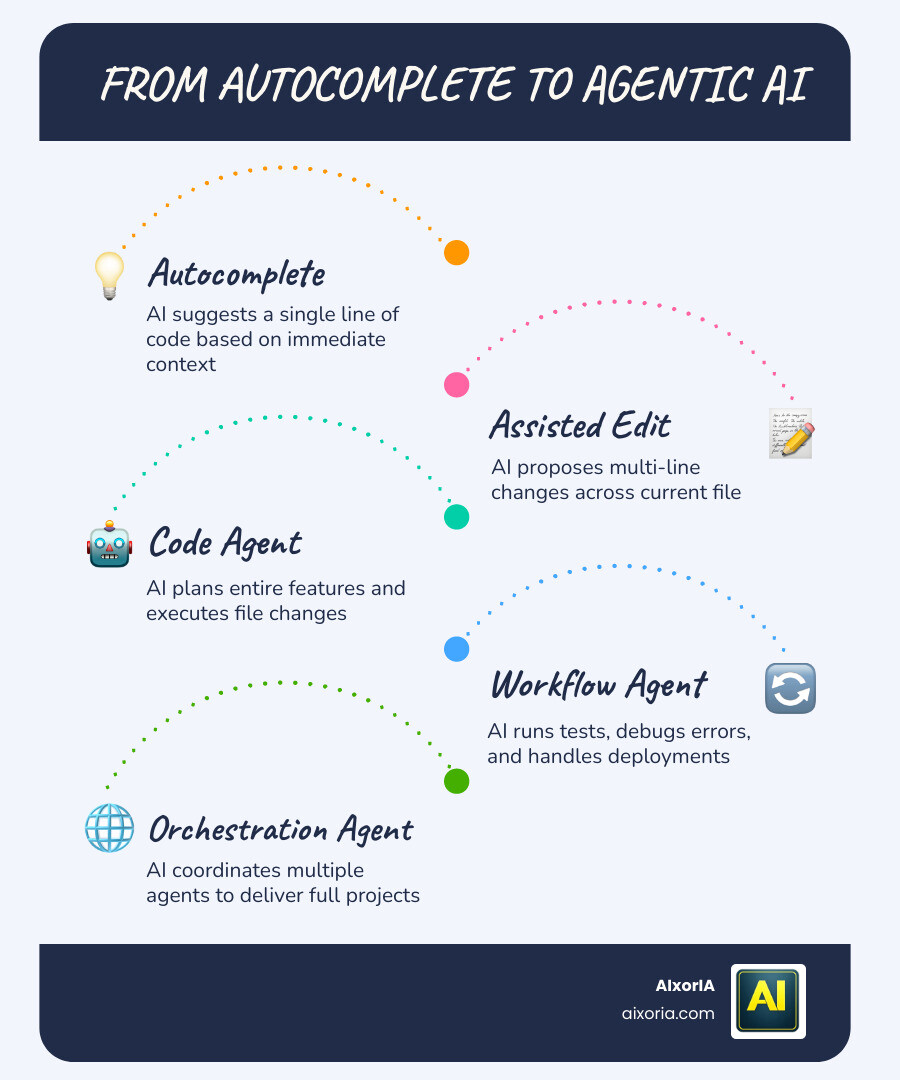
Today, 9 out of 10 developers save at least one hour per week using these tools. One in five developers saves eight hours or more. This isn’t just about typing faster anymore. Modern agents can now:
- Plan entire features across multiple files.
- Run their own tests and fix errors automatically.
- Search through thousands of files to find the right context.
- Deploy code directly to the cloud.
The role of a software engineer has shifted. It is no longer about memorizing syntax. It is about managing AI agents that do the heavy lifting for you.
Which AI agent is best for coding?
Choosing the right partner for your development workflow is a high-stakes decision in 2026. While the market is flooded with over 1,000 VS Code extensions, a few heavy hitters dominate the conversation. We have evaluated these based on their “agentic” capabilities—meaning their ability to actually do work rather than just suggest text.
| Tool | Core Advantage | Best For |
|---|---|---|
| Cursor | Native IDE integration with “Agent Mode” | Daily full-stack development |
| Claude Code | Terminal-based speed and “auto-accept” | Rapid refactoring and debugging |
| GitHub Copilot | Massive ecosystem and enterprise familiarity | Teams already deep in the GitHub stack |
| Augment Code | Deep semantic indexing of massive repos | Enterprise monorepos (400k+ files) |
| Codex | Cloud-based parallel task execution | Asynchronous multi-tasking |
When we look at Introducing Codex | OpenAI, we see the foundation of this technology. It has evolved from a simple model into a connected assistant that operates across your app, editor, and terminal. For a broader look at the market, you can check out our guide on the 8 Best AI Coding Tools for Developers.
Why choosing the right AI agent is best for coding productivity
The primary reason why an AI agent is best for coding? comes down to “net productivity.” It isn’t just about how many lines of code are generated; it’s about how many of those lines are correct and follow your project’s architecture.
In 2026, developers are moving away from “vibe coding” (guessing based on a prompt) toward verifiable engineering. High-performing agents reduce the cycle time—the time it takes from an initial idea to a merged pull request. By automating repetitive tasks like stubbing out new features or writing unit tests, these tools allow engineers to focus on high-level system design. To understand more about the generation process, see our article on the Best AI for Generating Code.
Determining which AI agent is best for coding based on stack
Your choice often depends on the “language” your business speaks. While most agents are generalists, some shine in specific environments:
- Python & Data Science: Tools like Claude Code and Gemini Code Assist excel here due to their ability to handle large context windows and complex mathematical reasoning.
- Java & Enterprise: JetBrains AI Assistant provides deep integration with the IDEs that enterprise Java developers have used for decades.
- AWS & Infrastructure: Amazon Q Developer is specifically tuned for AWS infrastructure, helping identify missing permissions or misconfigured S3 buckets.
- Large Monorepos: Augment Code is the clear winner for teams managing 450,000+ files, as its context engine understands cross-service dependencies that break smaller tools.
For a deeper dive into these specifics, read What Are the 8 Best AI Coding Assistant Tools.
Evaluation Criteria for Modern AI Coding Assistants
In 2026, we don’t just ask if a tool can code; we ask how it thinks. Here are the criteria we use at AIxorIA to evaluate these agents:
- Architectural Reasoning: Can the agent understand that a change in the “Payment” service requires an update in the “Notification” service? Tools like Augment Code and Cursor are leading the way here.
- Context Window: The ability to “read” the whole book at once. While older tools could only see a few files, modern agents like Gemini Pro 2.5 offer a 1 million token context window, allowing them to reason across your entire codebase.
- Token Efficiency: AI can be expensive. The best agents use “prompt caching” and smart indexing to keep costs down while maintaining high accuracy.
- Data Privacy: For regulated industries, the ability to run an agent locally (via tools like Aider + Ollama) or in an air-gapped environment is a dealbreaker.
Check out our review of The 7 Best AI Coding Tools for Developers in 2026 for more on these technical benchmarks.
Pricing Models and ROI for Enterprise Teams
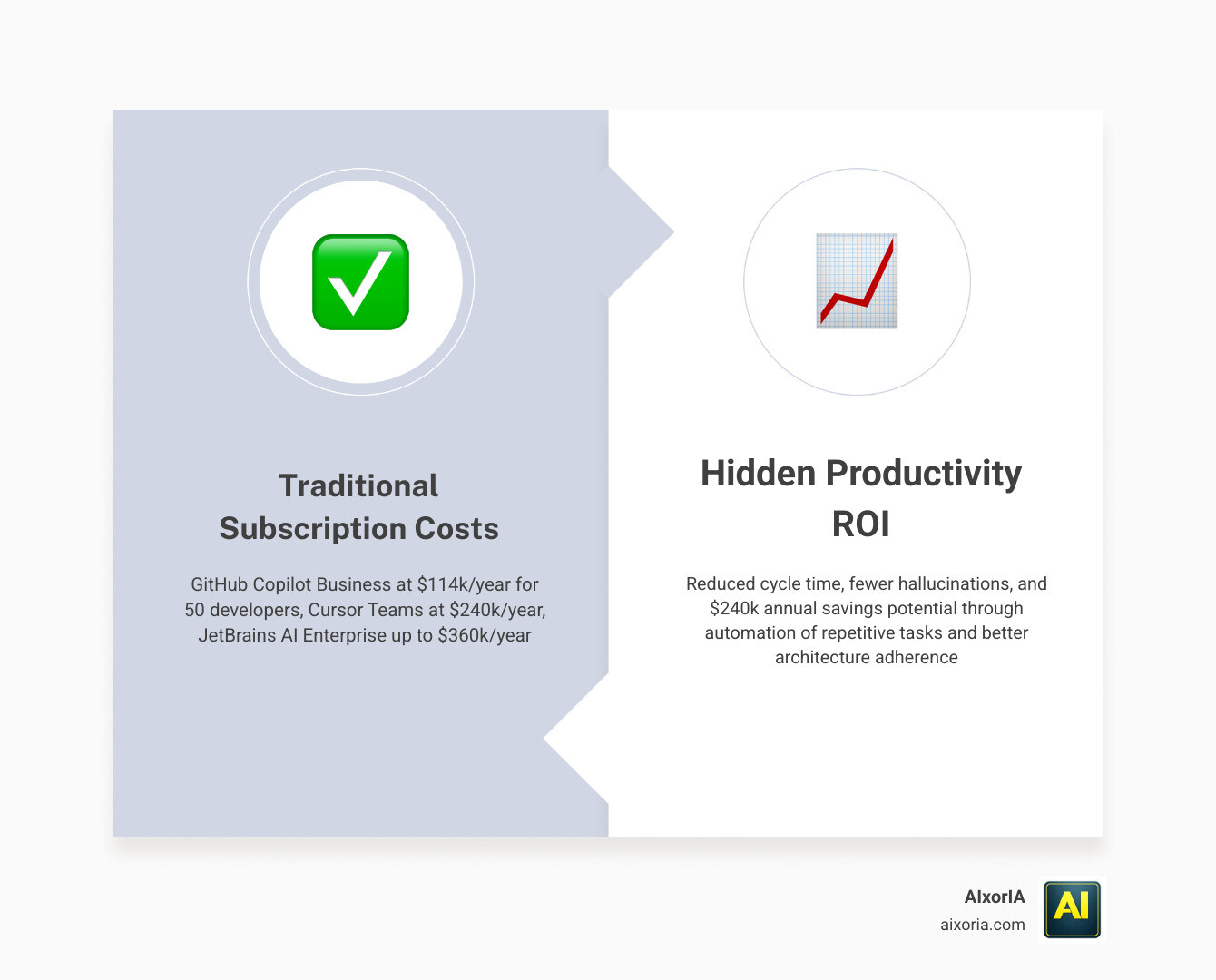
The “hidden cost” of AI isn’t just the subscription; it’s the time spent fixing hallucinations. However, the math for a 50-developer team in 2026 generally looks like this:
- GitHub Copilot Business: Roughly $114,000/year.
- Cursor Teams: Approximately $240,000/year.
- JetBrains AI Enterprise: Up to $360,000/year.
While these numbers seem high, the ROI is found in the 1 in 5 developers saving 8+ hours a week. If a senior engineer’s time is valued at $100/hour, saving 32 hours a month pays for the tool many times over. We recommend starting with a small pilot to measure “Change Failure Rate”—if the AI is introducing bugs, the ROI disappears. For more on managing your team’s time, see Best AI Tools for Productivity and Time Management.
Emerging Trends in Agentic Development

We are entering the era of Multi-Agent Orchestration. Instead of one AI helping one human, we are seeing teams of AI agents working together. One agent might write the code, another writes the tests, and a third performs a security audit—all before a human even looks at the PR.
Code Verification has also emerged as a vital category. Tools like Qodo (formerly Codium) focus specifically on ensuring the code works as intended through automated test generation and logic checks. This helps close the “trust gap” we mentioned earlier.
To stay ahead of these trends, explore the Top 9 AI Agent Orchestration Frameworks in 2026 and the The 7 Best AI Agent Orchestration Tools in 2026.
Frequently Asked Questions about AI Coding Agents
Which AI coding assistant is best for beginners?
For those just starting out, Tabnine and Replit Agent are fantastic. Replit, in particular, allows you to build and deploy a full-stack app from a single prompt in your browser. It handles the server setup, database, and hosting, which removes the “it doesn’t work on my machine” headache for new learners.
Can AI agents handle large-scale monorepos?
Yes, but only a few do it well. Augment Code is specifically built for this. While most tools struggle with more than 100 files, Augment uses a specialized “Context Engine” to index hundreds of thousands of files. This allows it to trace a bug through a complex web of microservices that would confuse a standard chatbot.
How do AI agents handle security and privacy?
Security is the biggest hurdle for enterprise adoption. In 2026, leading tools offer:
- Zero Data Retention: Ensuring your code isn’t used to train future models.
- Self-Hosted Options: Running the AI on your own servers (like Tabnine Enterprise).
- Vulnerability Scanning: Automatically catching SQL injections or hardcoded secrets before they are committed.
Conclusion
Finding which AI agent is best for coding? isn’t a one-size-fits-all journey. It depends on whether you are a solo dev building a “vibe” app on the weekend or an enterprise team managing a legacy banking system.
At AIxorIA, we specialize in helping businesses navigate this complex landscape. Whether you need custom AI solutions, hands-on tool training workshops, or a performance audit to see if your AI tools are actually delivering ROI, we are here to help. We pride ourselves on simple language, affordable services, and support that actually answers the phone.2 –
Ready to build the future? Check out our guide on the Best AI Tools for Building AI Agents in 2026 or reach out to us today to see how we can empower your team!