Why Choosing the Best AI for Coding Projects Can Make or Break Your Development in 2026
Scr0ll d0wn to D0VVNL0AD
Finding the best AI for coding projects doesn’t have to be complicated — here’s a quick answer before we dive deeper:
Top AI Coding Tools at a Glance (2026):
| Tool | Best For | Starting Price |
|---|---|---|
| GitHub Copilot | General coding, enterprise teams | Free / $10/month |
| Cursor | Rapid iteration, agentic development | Free / $20/month |
| Gemini Code Assist | Google Cloud projects, enterprise | $22.80/user/month |
| Replit AI | MVP prototyping, beginners | $15/month |
| Amazon Q Developer | AWS projects, cloud-native | Free / paid tiers |
| Tabnine | Privacy-focused teams, beginners | Free / $12/month |
| Codeium | Budget-conscious developers | Free |
Software development has changed fast. Really fast.
Not long ago, writing code meant memorizing syntax, searching Stack Overflow, and spending hours on boilerplate. Today, over 76% of developers use or plan to use AI tools — and most of them started within the last two years.
The numbers back this up. There are now more than 1,085 AI coding assistants available just for VS Code alone, with over 90% released in the past two years. That’s an explosion of options — and a real headache if you’re trying to pick the right one.
Here’s the problem: not all AI coding tools are equal. Some are great for spinning up a quick prototype. Others shine in large, complex codebases. A few are built specifically for cloud platforms like AWS or Google Cloud. And some are simply better for teams that can’t afford to share proprietary code with third-party servers.
If you’re a small business owner or a developer trying to move faster without a massive budget or a team of AI specialists — this guide is for you.
We cut through the noise and compare the tools that actually matter in 2026, so you can pick the right one for your specific project and get building.
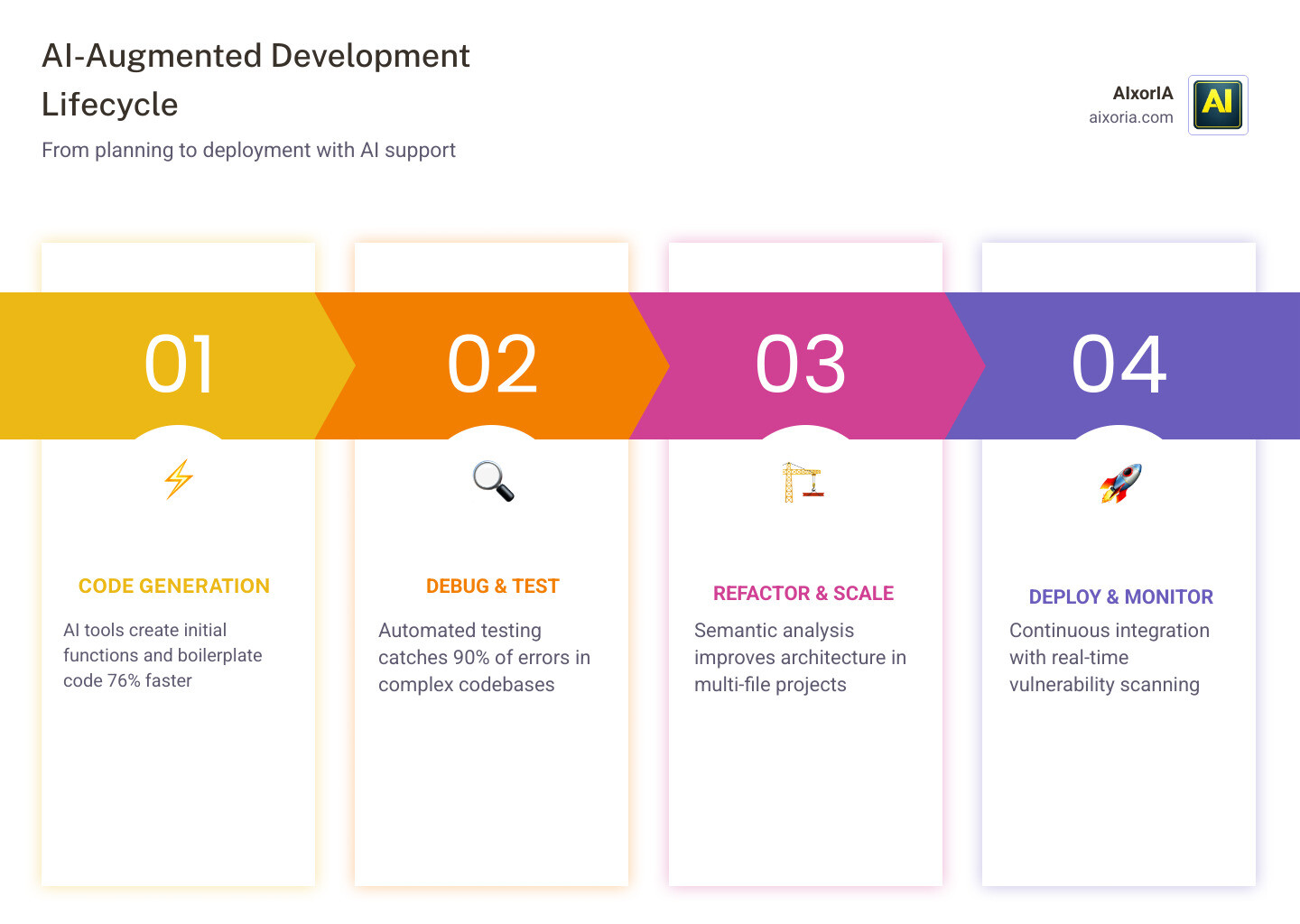
Top Contenders: Evaluating the Best AI for Coding Projects in 2026
In 2026, the landscape of AI coding tools has matured from simple “autocomplete” to full-blown “agentic” partners. These tools don’t just suggest the next line of code; they can plan features, debug complex logic, and even run tests autonomously.
When looking for the best AI for coding projects, we have to look at the “Big Four” that currently dominate the market:
- GitHub Copilot: Still the industry gold standard. It’s the “safe” choice for most developers because it integrates perfectly with GitHub and offers a massive library of learned patterns.
- Cursor: An “AI-first” code editor. Unlike others that are just plugins, Cursor is a fork of VS Code built specifically to handle AI interactions. It’s currently a favorite for developers who want the most “agentic” experience.
- Tabnine: The veteran in the space. It focuses heavily on privacy and local deployments, making it a top pick for those who aren’t comfortable sending code to the cloud.
- Gemini Code Assist: Google’s heavy hitter. With a massive 1-million-token context window, it can “read” your entire project at once, which is a game-changer for large-scale enterprise work.
Best AI for Coding Projects: Rapid MVP Development
If you are a startup founder or a solo dev trying to launch a product yesterday, speed is your only metric. For rapid MVP development, Replit AI and Bolt.new are the frontrunners.
Replit AI is unique because it provides an entire development environment in the browser. Research shows it can automate up to 90% of foundational boilerplate code, allowing you to focus on the unique features of your app. Similarly, Bolt.new allows for browser-based full-stack development where the AI handles the deployment and environment setup for you.
When you’re in the “move fast and break things” phase, you need a tool that understands modern frameworks like React or Next.js out of the box. For more insights on choosing for speed, check out our guide on the 8 Best AI Coding Tools for Developers.
Best AI for Coding Projects: Enterprise and Large Codebases
Large codebases present a different challenge: context. An AI that only sees the file you are currently working on will often suggest code that breaks dependencies in another folder.
This is where context depth and codebase awareness become vital. Tools like Sourcegraph Cody and Augment Code use semantic search and repository mapping to understand how your 12 different microservices interact. Augment Code, for instance, can process over 400,000 files, ensuring that a change in your API doesn’t break your frontend.
For teams managing legacy systems or complex architectures, the The 7 Best AI Coding Tools for Developers in 2026 highlights how these tools prioritize architectural reasoning over simple syntax completion.
Key Features That Define High-Performance AI Assistants

What separates a “good” tool from the best AI for coding projects? In 2026, it comes down to three things: Architectural Understanding, Context Windows, and Multi-file Editing.
Modern tools no longer just “guess” the next word. They index your entire repository. This allows for “semantic search,” where you can ask the AI, “Where do we handle user authentication?” and it will find the relevant logic even if the files aren’t named “auth.js.”
Furthermore, the rise of the 1M+ token context window means the AI can hold your entire project’s documentation, code, and database schema in its “active memory” at once. This prevents the “hallucinations” that used to plague older models. If you’re looking for a tool that specializes in this deep generation, see our breakdown of the Best AI for Generating Code.
Productivity and Workflow Efficiency
The impact on productivity is no longer theoretical. A McKinsey study suggests that heavy tasks like code refactoring can be completed in a fraction of the usual time when AI is involved. In enterprise settings, GitHub Copilot has been shown to increase completed tasks by approximately 25%.
This efficiency comes from:
- Boilerplate Generation: Letting the AI write the repetitive “setup” code.
- Debugging Speed: Pasting an error log and having the AI point directly to the offending line.
- Real-time Documentation: Generating README files and comments as you go.
For those looking to optimize their entire day, not just their code, we’ve reviewed the Best AI Tools for Productivity and Time Management.
Data Science and ML Workflows
Data scientists have unique needs. They often work in notebooks (like Jupyter) rather than standard script files. The best AI for coding projects in the data science realm must support persistent context across notebook cells.
Current research from MIT CSAIL warns that while AI is great at basic tasks, it can struggle with idiosyncratic codebases or complex mathematical logic. However, specialized tools like the Databricks Assistant or Augment Code excel here by tracing data quality issues through feature engineering pipelines across multiple services.
Security, Privacy, and Compliance in AI-Assisted Development

As we embrace these tools, we must ask: Where is my code going? For many businesses, sending proprietary logic to a third-party server is a non-starter due to GDPR, SOC 2, or general IP protection concerns.
When evaluating the What Are the 8 Best AI Coding Assistant Tools, security should be your first filter.
Free and Budget-Friendly Options for Startups
You don’t need a massive budget to get started. Several high-quality tools offer generous free tiers:
- Codeium: Offers a robust free-forever tier for individuals with support for 70+ languages.
- Amazon Q Developer: Has a free tier that allows up to 50 interactions per month, perfect for testing AWS integrations.
- Pieces for Developers: A unique tool that can run LLMs locally on your machine. This means your code never leaves your computer, providing ultimate privacy for $0.
- Ollama Integration: For the tech-savvy, using Ollama to run open-source models (like Llama 3 or Qwen2.5-Coder) locally is becoming a popular way to avoid subscription fees and privacy risks.
Enterprise Security and Data Handling
For larger organizations, “Zero-data training” is the standard. This is a guarantee from providers like GitHub (Business/Enterprise plans) or Google that your code will not be used to train their future models.
Some teams go a step further with on-premise deployment, where the AI model lives entirely within the company’s firewall. Tools like Tabnine and Qodo are leaders in this “private AI” space, offering vulnerability scanning and license compliance checks to ensure AI-generated code doesn’t introduce legal or security risks.
Frequently Asked Questions about AI Coding Tools
How do AI coding tools handle proprietary data privacy?
Most professional-grade tools use data encryption and offer “opt-out” clauses for model training. Enterprise versions usually provide a “Zero-Retention” policy, meaning the AI processes your code to provide a suggestion but forgets it immediately afterward. For maximum security, look for tools that support local processing via Ollama or LM Studio.
Can AI assistants handle complex refactoring in 2026?
Yes, but with caveats. While context windows have expanded, allowing AI to see the “big picture,” human oversight is still essential. The best AI for coding projects uses semantic dependency analysis to suggest how a change in one module affects another, but a developer should always review the architectural reasoning before merging.
Which AI tool is best for AWS or Google Cloud projects?
For AWS-heavy projects, Amazon Q Developer is superior as it is trained on AWS documentation and best practices. For Google Cloud or Firebase, Gemini Code Assist offers the best integration, including the ability to generate cloud-native configurations and troubleshoot serverless functions directly.
Conclusion
The “best” AI isn’t the one with the most features; it’s the one that fits your specific workflow, budget, and security requirements. Whether you’re using Cursor for its agentic power, GitHub Copilot for its reliability, or Codeium for its price point, the goal is the same: to spend less time on syntax and more time on solving problems.
At AIxorIA, we specialize in helping businesses navigate this rapidly changing landscape. We know that implementing these tools isn’t just about clicking “install” — it’s about training your team to use them effectively and auditing their performance to ensure you’re actually getting a return on your investment.
We provide custom AI solutions, tool training workshops, and performance audits designed to empower your development team without the corporate jargon. Our mission is simple: provide affordable help and fast support to make AI work for you.
Ready to supercharge your development cycle? More info about AIxorIA services is just a click away. Let’s build something great together in 2026.