Car Insurance Costs Are Rising — Here’s Who Charges the Least in 2026

The top 10 cheapest insurance companies in 2026, ranked by average monthly rates, are:
| Rank | Company | Liability-Only (avg/mo) | Full Coverage (avg/mo) |
|---|---|---|---|
| 1 | Country Financial | $42 | $89 |
| 2 | Auto-Owners | $45 | $87 |
| 3 | USAA* | ~$43 | ~$107 |
| 4 | GEICO | $41 | ~$104 |
| 5 | State Farm | $53 | $106 |
| 6 | Erie Insurance | ~$37 | ~$159 |
| 7 | Travelers | ~$45 | $138 |
| 8 | American Family | ~$52 | $159 |
| 9 | Progressive | ~$55 | ~$152 |
| 10 | Nationwide | ~$58 | ~$167 |
*USAA is available only to military members, veterans, and their families.
Car insurance costs have climbed sharply. The national average for full coverage is now around $215 per month — and for many drivers, that number feels impossible to justify.
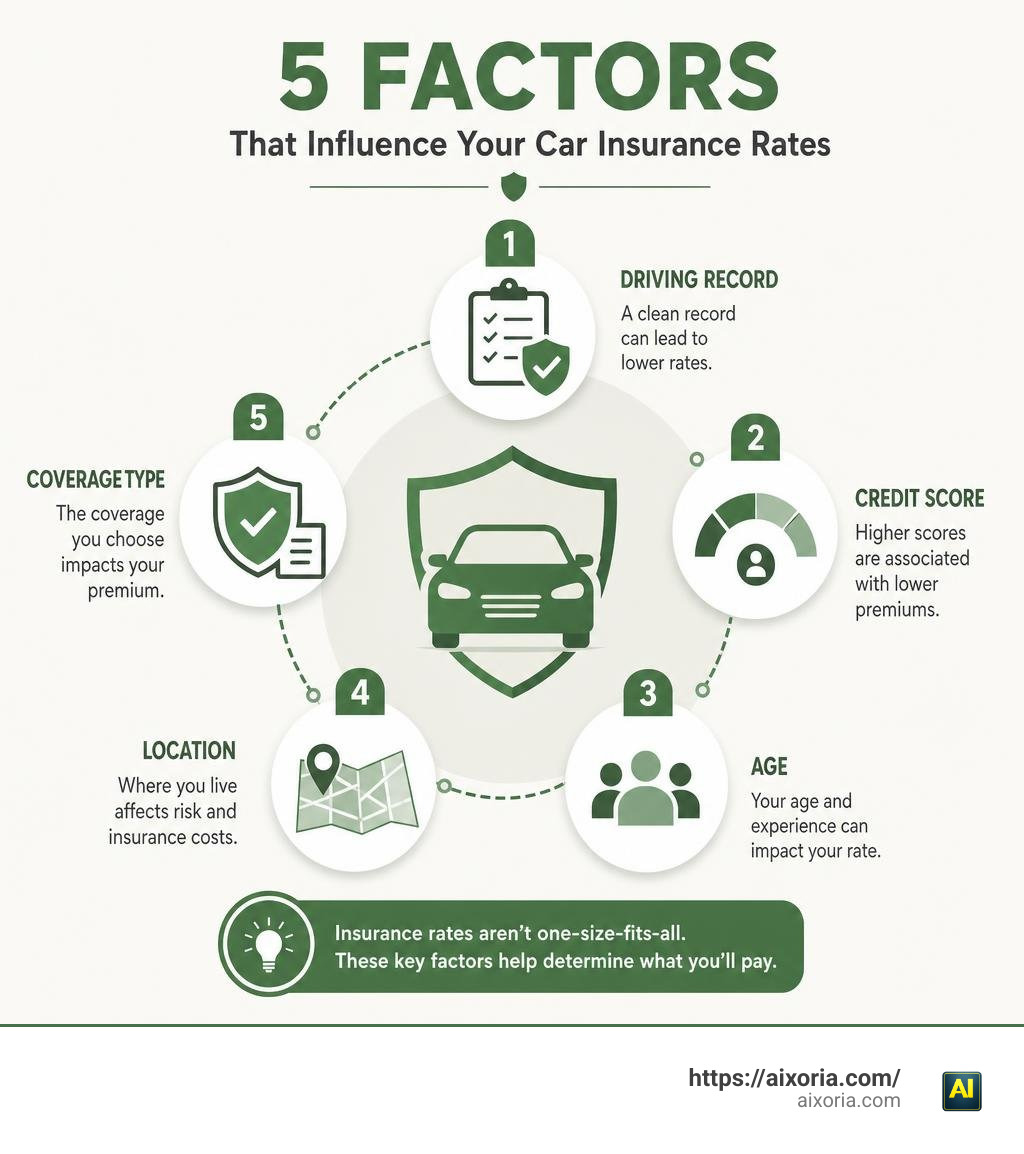
But here’s the thing: not everyone pays the average. Rates vary a lot depending on your insurer, your state, your driving record, and even your credit score. Drivers with poor credit can pay nearly twice as much as those with good credit. A single at-fault accident can raise your monthly bill by $102 or more.
The good news? Some companies consistently charge far less than others — and knowing which ones can save you hundreds of dollars a year. The median savings for drivers who switch insurers is $461 per year, according to survey data.
This guide breaks down exactly who offers the cheapest rates, who they’re cheapest for, and what to watch out for when you’re chasing the lowest premium.
Ranking the Top 10 Cheapest Insurance Companies
When we look for the top 10 cheapest insurance companies, we have to separate the regional powerhouses from the national giants. While household names like GEICO and State Farm are available almost everywhere, regional insurers like Country Financial and Erie Insurance often quiet the competition with incredibly low rates in the states where they operate.
According to a comprehensive analysis of the best cheap car insurance companies in 2026, several standouts offer rates well below the national average. Let’s look closely at how these top ten insurers stack up:
- Country Financial: Holding the crown for the cheapest liability-only coverage at just $42 per month, Country Financial is an absolute lifesaver for budget-conscious drivers in its 19-state footprint. Its full coverage rate is equally impressive at $89 per month.
- Auto-Owners: If you want full coverage, Auto-Owners is practically unmatched, offering the lowest average full coverage rate at $87 per month. Its liability-only policy is also a steal at $52 per month, which sits comfortably $24 below the national average.
- USAA: Consistently the cheapest option overall with an average annual premium of $1,140 to $1,279 for full coverage. The only catch? It is strictly reserved for military members, veterans, and their families.
- GEICO: For those who don’t qualify for military coverage, GEICO offers the lowest minimum liability coverage among major national insurers at $41 per month ($494 per year).
- State Farm: A highly reliable national choice, State Farm averages $53 per month for liability and $106 for full coverage. It remains a favorite for young drivers thanks to its robust safe-driving programs.
- Erie Insurance: This regional gem offers incredible value across the Mid-Atlantic and Midwest, boasting a full coverage average of $159 per month and an incredibly low liability rate around $37 per month.
- Travelers: Standing tall as the cheapest large national insurer for full coverage, Travelers averages $138 per month ($1,653 per year), making it a fantastic default option for drivers with clean records.
- American Family: With an average full coverage rate of $159 per month, American Family saves its policyholders an average of $49 monthly compared to standard national rates.
- Progressive: Known for its specialized underwriting, Progressive is highly competitive for high-risk drivers, averaging around $152 per month for full coverage.
- Nationwide: Offering a full coverage average of $167 per month, Nationwide is highly customizable and features a popular vanishing deductible program that rewards safe driving.
How the Top 10 Cheapest Insurance Companies Calculate Rates
To understand why these prices vary so much, we have to look behind the curtain at the insurance underwriting process. Every insurer uses a proprietary algorithm to assess risk. When you apply for a policy, the company runs a soft credit check (which does not impact your credit score) and evaluates several factors to determine your likelihood of filing a claim.
Because each company weighs these risks differently, a driver who gets a high quote from one insurer might get a highly affordable rate from another. This is why we always emphasize comparing multiple options. If you want to see how these budget-friendly options match up against the industry’s heavyweights in terms of customer satisfaction and financial strength, check out our guide on the Most Reputable Car Insurance Companies in 2026 Top 10 Ranked.
Liability-Only vs. Full Coverage Costs
One of the biggest decisions you will make when shopping for car insurance is choosing between liability-only and full coverage.
- Liability-Only (Minimum Coverage): This is the bare minimum required by your state’s laws. It covers bodily injury and property damage to other people if you cause an accident, but it won’t pay a single dime to fix your own car. Nationally, liability-only insurance averages $98 per month.
- Full Coverage: This bundle includes liability plus collision and comprehensive coverage. Collision pays for damage to your car from an accident, while comprehensive covers non-accident incidents like theft, vandalism, animal strikes, or weather damage.
While full coverage is more expensive, it is usually required by lenders if you are financing or leasing your vehicle. You can explore a deeper breakdown of these cost structures in industry reports on the top cheapest car insurance companies.
Cheapest Car Insurance Rates by Driver Profile and State

Your demographic profile and where you park your car at night are the two most powerful forces driving your insurance premiums. Let’s look at how rates shift across different risk categories and geographical locations.
Clean Records and Safe Drivers
If you have a spotless driving record with zero accidents, speeding tickets, or DUIs, you are the gold standard for insurance companies. Insurers will actively compete for your business, allowing you to secure the absolute lowest rates on the market. Safe drivers can easily qualify for safe driver discounts of up to 22%, and those who don’t drive many miles can save even more by opting for low-mileage or usage-based programs.
Drivers with Incidents or Poor Credit
If your record is less than perfect, your monthly premium will reflect that risk. Insurance companies view past behavior as an indicator of future claims. Here is how common incidents impact your rates on average:
- A Speeding Ticket: Increases your monthly car insurance rate by an average of $50.
- An At-Fault Accident: Raises full coverage rates by an average of $102 per month.
- A DUI: This is the most costly violation, often raising your premium by 70% to 80%. Progressive is frequently the most forgiving and affordable option for drivers with a DUI on their record.
Your credit score also plays a massive role in states that allow credit-based insurance scoring. In fact, drivers with poor credit pay nearly twice as much for car insurance as those with good credit scores. If you are struggling with a complex driving history or credit challenges, reading our Aspire General Insurance Review 2026 Coverage Claims Customer Ratings can help you find specialized non-standard coverage options.
Teens, Seniors, and Military Members
Different stages of life present different risk levels to underwriters:
- Teen Drivers: Lacking experience on the road, teens are highly prone to accidents. Adding a 16-year-old to a policy can easily double a parent’s premium. Auto-Owners and Erie Insurance offer some of the most reasonable rates for teens, and programs like State Farm’s “Steer Clear” can help lower these costs.
- Senior Drivers: Rates generally decrease as you age, hitting their lowest points when you are in your 50s and 60s. However, once drivers reach their 70s, rates begin to creep back up due to slower reflex times and increased fragility. Country Financial and Travelers tend to offer the best rates for seniors.
- Military Members: Active duty military, veterans, and their immediate families have access to USAA, which is almost always the cheapest insurer with unmatched customer service.
Regional vs. National Carriers
Do not overlook regional insurers when shopping around. While major national brands spend billions on advertising, smaller companies like Erie Insurance, Country Financial, and Mapfre Insurance consistently beat them on price.
For instance, Mapfre offers the cheapest minimum coverage in its service areas, averaging just $35 per month for eligible drivers. To see how these regional players stack up on a broader scale, you can view the Top 50 Cheapest Car Insurance Companies in the U.S. (Full Coverage), 2026 – World ranking sites or check regional trends through industry publications.
How to Lower Your Premiums with Discounts
You don’t have to accept your initial quote as the final price. Insurance companies offer a wide array of discounts that can dramatically lower your monthly premium if you know what to ask for.
The single most effective way to save is by bundling your policies. Combining your home or renters insurance with your auto policy can save you up to 25% on your premiums. For example, if you are looking to secure your belongings, checking out our State Farm Renters Insurance Review 2026 Coverage Cost Discounts is a great starting point to see how bundling can work in your favor.
Another highly effective option is enrolling in a telematics program. By letting your insurer track your driving habits via a mobile app or plug-in device, you can secure discounts ranging from 10% to 30%. Programs like Travelers’ IntelliDrive are highly consumer-friendly, offering discounts for safe driving without raising your rates if you make a mistake.
Common Auto Insurance Discounts
Here are some of the most common discounts you should ask your agent about:
- Good Student Discount: Drivers under 25 who maintain a “B” average or higher can save significantly.
- Student Away at School: If your teen driver is away at college without a car (usually at least 100 miles from home), you can save an average of 16% on your policy.
- Autopay and Paperless Billing: Simply signing up for automatic monthly withdrawals can save you up to $200 a year with some carriers.
- Defensive Driving Course: Taking an approved safety course can earn you a permanent discount, especially for teen and senior drivers.
Balancing Cost with Adequate Coverage
While finding a cheap policy is satisfying, the absolute cheapest rate isn’t always the smartest choice. If you get into a major accident and your policy limits are too low, you could be held personally liable for tens of thousands of dollars in medical bills and property damage.
Choosing From the Top 10 Cheapest Insurance Companies Safely
When comparing cheap insurers, look beyond the monthly premium. You want to make sure the company has the financial strength to pay out claims if a disaster strikes. Check the company’s financial stability ratings through AM Best (aim for an “A” rating or higher) and review their customer satisfaction scores through J.D. Power.
It is also wise to look at how they handle other types of insurance to see their overall reputation. For example, if you are a pet owner, checking who the Highest Rated Pet Insurance Company is can give you a good feel for how different companies treat claims. Similarly, if you are planning a trip, looking at a Travel Insurance Comparison 2026 Compare Plans Save Money can help you understand how different insurers structure their customer support.
Risks of Choosing the Absolute Cheapest Policy
Opting for a state-minimum liability policy carries serious risks. For instance, if your state only requires $25,000 in property damage liability, and you accidentally crash into a $60,000 electric vehicle, you are legally responsible for paying the remaining $35,000 out of your own pocket.
Furthermore, if you don’t have comprehensive or collision coverage, you won’t receive anything if your car is stolen, damaged in a storm, or totaled in an accident that was your fault. If you own high-value assets, like a short-term rental property, you already know the importance of robust protection. You can read more about safeguarding your properties in our guide on Homeowners Short Term Rental Insurance.
To find the right balance, we recommend setting your liability limits to at least 100/300/100 ($100,000 bodily injury per person, $300,000 bodily injury per accident, and $100,000 property damage) and choosing a deductible that matches your emergency fund. If you can comfortably afford a $1,000 out-of-pocket expense in an emergency, raising your deductible from $500 to $1,000 can slash your monthly premium by up to 25%.
Frequently Asked Questions about Cheap Car Insurance
What is the cheapest car insurance company overall?
Country Financial is the cheapest overall regional provider, with liability-only coverage starting at $42 per month. For major national carriers open to the general public, GEICO is the cheapest for minimum coverage at $41 per month, while Travelers is the cheapest for full coverage at $138 per month. If you have military ties, USAA is the absolute cheapest provider across the board. You can find more up-to-date monthly rate comparisons in the Cheapest Car Insurance Companies July 2026: Rates from $41/mo – My Classroom analysis.
Does getting an insurance quote affect my credit score?
No. When insurance companies check your credit to calculate your premium, they perform a soft inquiry. This does not impact your credit score or show up on your credit report to lenders.
How often should I compare car insurance quotes?
We recommend comparing quotes every 12 months at your policy renewal, or immediately following major life changes such as getting married, buying a home, moving to a new ZIP code, or adding a new driver to your household.
Conclusion
Finding affordable car insurance in 2026 requires a mix of comparison shopping, maintaining a clean driving record, and maximizing every available discount. By looking at regional powerhouses alongside national giants, you can easily find a policy that fits your budget without leaving yourself financially vulnerable.
If you are looking for other ways to optimize your personal finances, protect your assets, or even fund a new adventure, we have you covered. Whether you are searching for the Best Life Insurance Agents in 2026 Top Experts to Compare Before You Buy, researching Ethos Life Insurance Reviews, looking into specialty coverage like American Modern Insurance Review 2026 Coverage Cost Pros Cons, or even checking out Bank of America RV Loans in 2026 to plan your next road trip, taking a proactive approach to your finances always pays off.
Ready to boost your everyday efficiency so you have more time to tackle your financial goals? Discover What is the best AI for productivity in 2026? and start streamlining your life today!
5 thoughts on “Top 10 Cheapest Car Insurance Companies in 2026 (Save Up to $461/Year)”