What Is ETL in Python? (A Beginner’s Quick Answer)

ETL in Python refers to the process of Extract, Transform, Load — moving data from one or more sources, cleaning and reshaping it, then storing it somewhere useful, all using Python code.
If you just need the quick version:
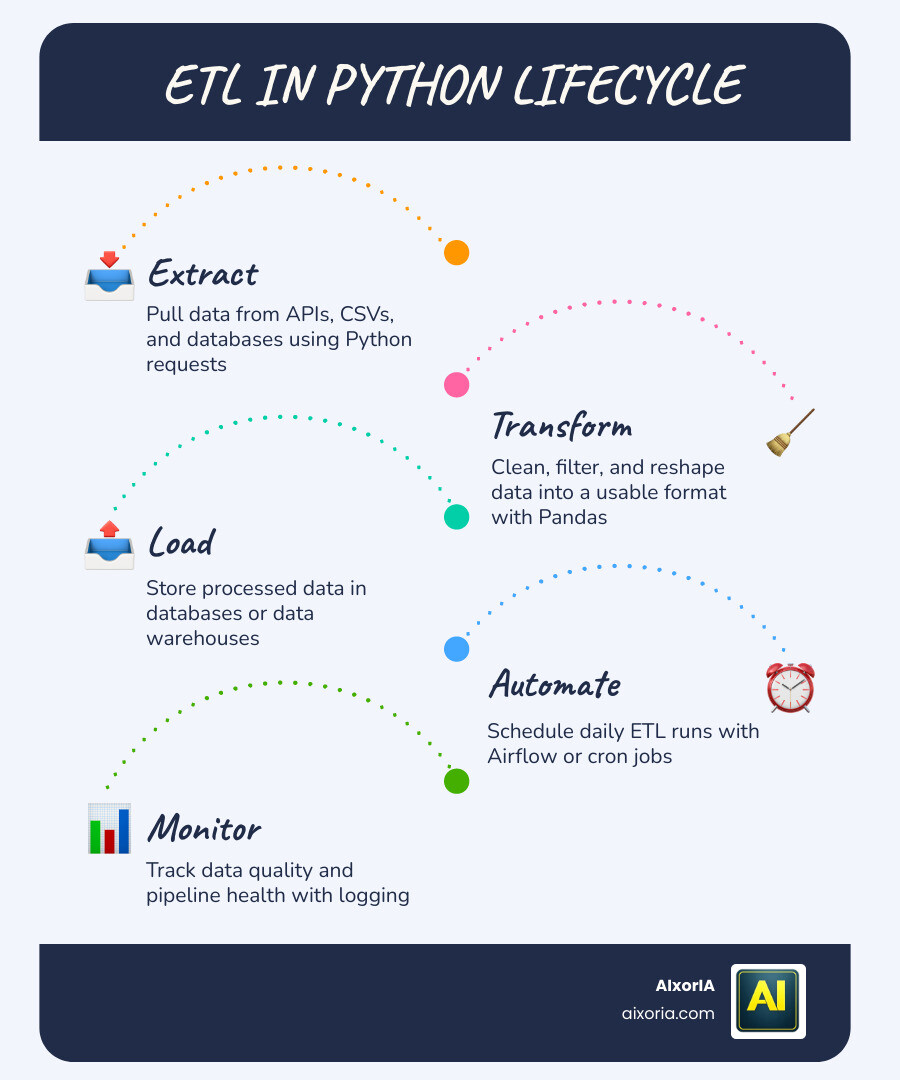
- Extract — Pull data from sources like APIs, CSV files, or databases
- Transform — Clean, filter, and reshape that data into a usable format
- Load — Store the processed data in a database, data warehouse, or file
That’s it. The rest of this guide shows you how to actually build one.
Data is often called “the new oil” — but raw data is just as useless as crude oil straight from the ground. It needs to be refined before it can power anything.
That’s exactly what ETL does.
And Python has become the go-to language for this job. Over 84% of data professionals use Python for data engineering tasks. It’s readable, flexible, and backed by a massive ecosystem of libraries built specifically for moving and transforming data.
Here’s why this matters right now: by 2026, an estimated 60% of AI initiatives will fail — not because the AI models are bad, but because the underlying data isn’t clean or structured enough to use. ETL pipelines are what fix that problem before it starts.
Whether you’re a small business owner trying to connect your tools and data sources, or someone just getting started with data engineering, Python gives you a practical, affordable way to build reliable data workflows — without needing an enterprise budget.
Why Use Python for ETL Pipelines?
When we talk about building an etl in python, we often get asked: “Why not just use a spreadsheet or a drag-and-drop tool?” While those have their place, Python offers a level of power and simplicity that is hard to beat.
First, there is the readability. Python’s syntax is famous for being close to plain English. This makes it much easier for us to maintain code over time or hand it off to a teammate. According to Building an ETL Pipeline in Python – 2026 | Integrate.io, Python is the top choice for engineers because it handles both structured and unstructured data with ease.
Second, Python acts as a “glue language.” It can talk to almost anything—SQL databases, cloud buckets, social media APIs, or even legacy Excel files. When you look at the 20 Best Etl Tools For Data Integration, you’ll notice that many of the most powerful modern tools are either built on Python or offer deep Python integration.
Finally, the library ecosystem is massive. Instead of writing code from scratch to connect to a database, we can just import a library and be done in three lines. This allows for rapid prototyping, letting us move from an idea to a working pipeline in a single afternoon.
The Role of ETL in Python for AI Readiness
As we move through 2026, the buzz around Artificial Intelligence is louder than ever. However, AI is only as good as the data you feed it. We’ve seen that many businesses struggle because their data is messy, duplicated, or trapped in “silos.”
By using etl in python, we can ensure our data is “AI-ready.” This involves more than just moving data; it’s about data quality and governance. We can integrate machine learning models directly into our pipelines to perform predictive analytics on the fly. For instance, as data is being loaded, a Python script can flag potential fraud or predict inventory needs.
If you are looking for ways to streamline this, checking out the Best Ai Tools For Data Integration In 2026 can help you see how Python-based logic fits into the broader AI landscape.
Benefits of Programmatic ETL Over GUI Tools
Graphical User Interface (GUI) tools are great for simple tasks, but they often become “black boxes” where it’s hard to see exactly what’s happening. Programmatic ETL—writing the actual code—gives us:
- Version Control: We can use tools like Git to track every change made to the pipeline.
- Flexibility: We aren’t limited by the “buttons” provided by a software vendor. If we need a custom transformation, we just write it.
- Cost-Effectiveness: Many of the best libraries are open-source. For teams on a budget, exploring the Best Free Etl Tools For Developers In 2026 shows how much can be achieved without high licensing fees.
- CI/CD Integration: We can automate testing and deployment, ensuring that a small change doesn’t break the entire system.
Essential Steps to Build an ETL in Python
Building a pipeline might seem daunting, but we like to break it down into manageable chunks. A modular architecture is key—this means keeping your extraction, transformation, and loading logic in separate functions or files.
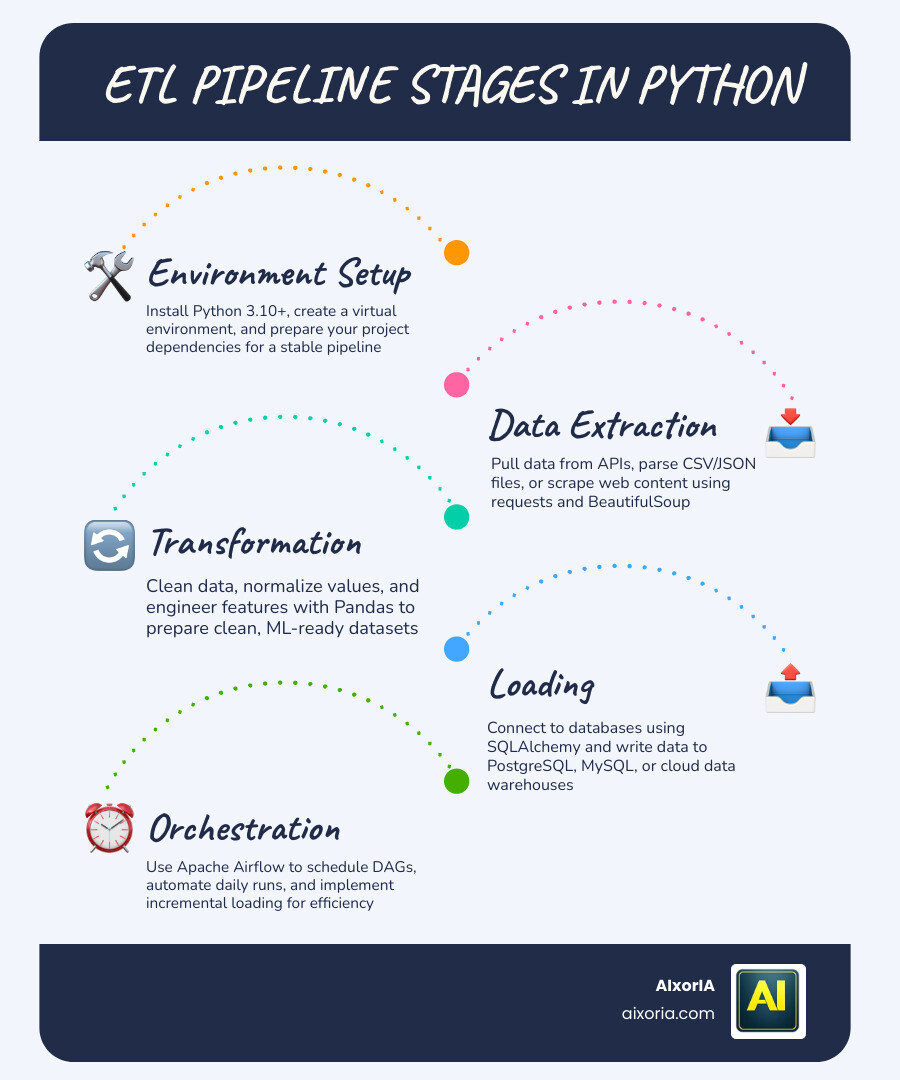
The first step is Environment Setup. You’ll need Python installed (we recommend version 3.10 or higher in 2026) and a virtual environment to keep your project dependencies organized.
According to this Building a Scalable ETL Pipeline in Python: Step-by-Step Guide | Codez Up, a robust pipeline must also prioritize Error Handling. What happens if an API is down? Or if a CSV file has a weird symbol in it? We use try-except blocks and retry decorators to make our pipelines “fault-tolerant.”
Data Extraction and Transformation Techniques
Extraction is the “E” in ETL. In Python, this often involves:
- API Requests: Using the
requestslibrary to pull JSON data from web services. - Web Scraping: Using
BeautifulSoupto extract information from websites. - File Parsing: Reading CSV, JSON, or XML files directly into memory.
Once we have the data, we move to Transformation. This is where the magic happens. We use the Pandas library to create “DataFrames”—which are like super-powered spreadsheets. Common techniques include:
- Data Cleaning: Removing null values or duplicates.
- Min-Max Normalization: Scaling numbers between 0 and 1 so that one feature doesn’t overwhelm another in a machine learning model.
- Feature Engineering: Creating new data points, like calculating a “Total Spend” column from “Price” and “Quantity.”
For those working with heavy-duty data environments, integrating these scripts with the The 8 Best Etl Tools For Databricks In 2026 can help scale these transformations across huge clusters.
Loading Data and Orchestrating the ETL in Python
The final stage is Loading. We typically use SQLAlchemy to connect to our target databases. This library allows us to write Python code that works across different types of databases (like PostgreSQL, MySQL, or SQLite) without changing the syntax.
Whether you are loading into a local database or a massive cloud warehouse, it’s important to choose the right destination. You can find more on this in our guide on the Best Etl Tools In Data Warehouse In 2026.
Finally, we need Orchestration. You don’t want to sit there and click “Run” every morning at 8:00 AM. We use tools like Apache Airflow to create DAGs (Directed Acyclic Graphs). A DAG is just a fancy way of saying “a map of tasks that run in a specific order.” This allows for full automation and incremental loading, where we only process new data since the last run, saving time and computing power.
Top Python ETL Libraries and Frameworks for 2026
To help you choose the right tool for the job, we’ve put together a quick comparison of the heavy hitters in the Python ecosystem.
| Library | Best For | Key Strength |
|---|---|---|
| Pandas | Data Manipulation | The “gold standard” for cleaning and reshaping data. |
| SQLAlchemy | Database Interaction | Easy-to-use “glue” between Python and SQL. |
| Apache Airflow | Orchestration | Scheduling complex, multi-step workflows. |
| PySpark | Big Data | Processing millions of rows across multiple computers. |
| DuckDB | Fast Analytics | An in-memory database that is incredibly fast for local work. |
| pygrametl | Data Warehousing | Specifically designed for dimension and fact table management. |
For enterprise-level needs, we often look at the Most Reliable Etl Tools For Enterprise Data In 2026 to see how these libraries can be supported by robust infrastructure.
Special mention goes to pygrametl, which is an excellent framework if you are building a formal data warehouse. It treats your tables as Python objects, making it much easier to handle “Slowly Changing Dimensions”—a common headache in data engineering.
Choosing Between Custom Code and No-Code Tools
We love custom code because of its flexibility, but we also recognize that it takes more maintenance. If your team doesn’t have dedicated developers, you might consider the Best No Code Etl Tools In 2026.
However, for SaaS companies that need to scale rapidly and handle unique data structures, custom etl in python is usually the better long-term investment. You can see how these compare in our review of the Best Etl Tools For Saas Companies In 2026.
Best Practices for Robust Data Pipelines
Building a pipeline is one thing; keeping it running is another. We’ve learned that following a few “golden rules” saves hours of debugging later.
- Modular Code: Don’t write one giant script. Break it into
extract(),transform(), andload()functions. - Logging: Use Python’s built-in
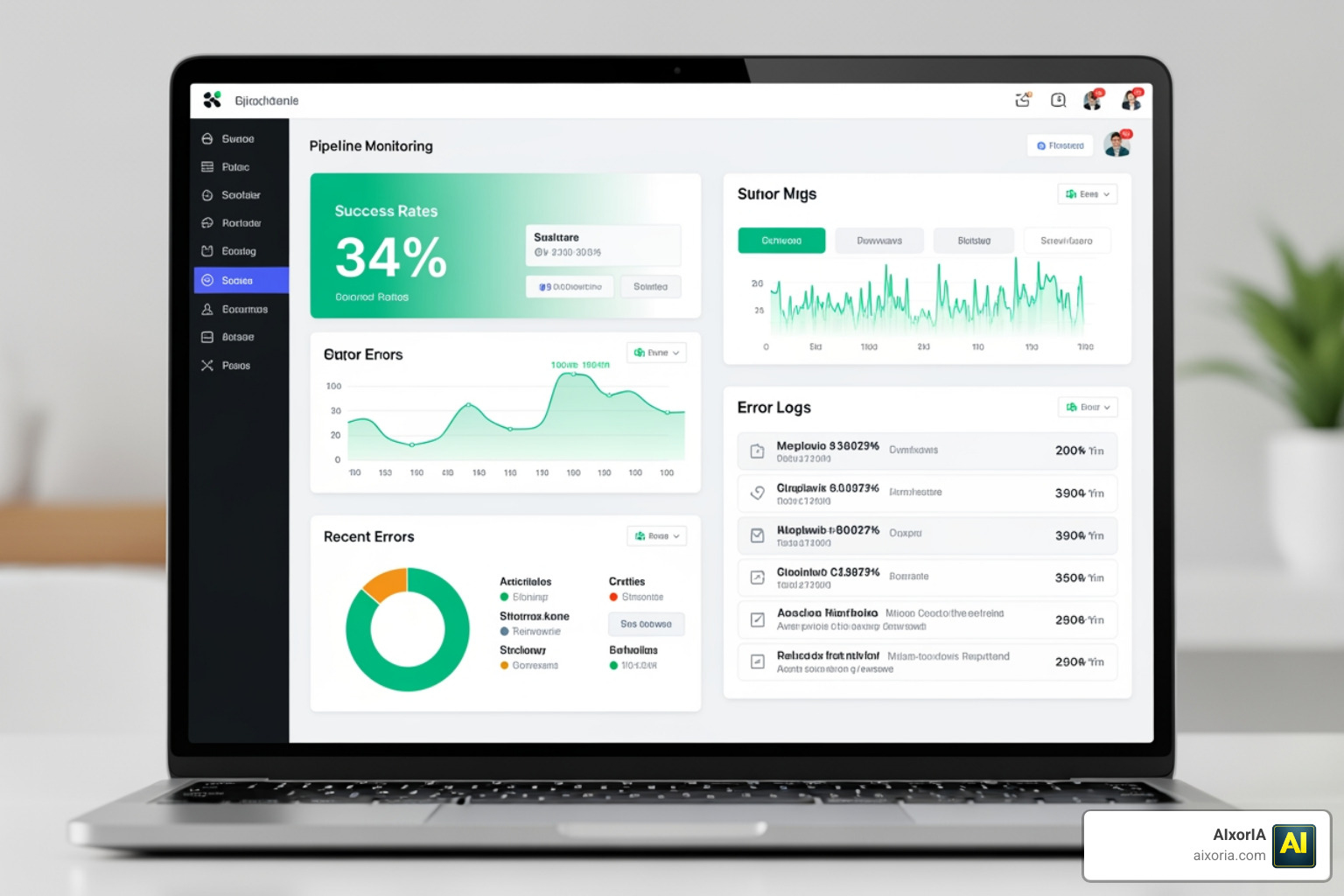
loggingmodule. If a pipeline fails at 3:00 AM, you need a log file to tell you exactly why. - Unit Testing: Use
pytestto test your functions with small “dummy” datasets. This ensures that your cleaning logic doesn’t accidentally delete important data. - Data Validation: Before loading data, use
assertstatements or specialized libraries to check that “Age” isn’t a negative number and “Email” actually contains an “@” symbol. - Security: Never hardcode passwords. Use environment variables or secret managers to handle database credentials. Also, ensure sensitive data is encrypted during the transformation phase.
For a deeper dive into these concepts, this Building an End-to-End ETL Pipeline with Python: A Hands-On Guide – MentorCruise is a fantastic resource for beginners.
Frequently Asked Questions about ETL in Python
Is Python better than SQL for ETL?
It depends! SQL is incredibly fast for transformations inside a database. However, Python is much better for “Extract” and “Transform” tasks that happen outside the database, such as calling APIs, cleaning messy text, or integrating with AI models. Most modern pipelines use both.
What is the fastest Python library for data movement?
While Pandas is the most popular, a library called Odo is often cited as being up to 11x faster for moving data from CSV files into a SQL database because it uses native database bulk-loading tools.
How do I automate a Python ETL script for daily runs?
For simple tasks, you can use a “Cron Job” on Linux or “Task Scheduler” on Windows. For professional workflows, we recommend Apache Airflow or Prefect, which provide a dashboard to monitor your runs and send alerts if something fails.
Conclusion
Building an etl in python is one of the most valuable skills you can learn in the modern data era. It moves you from being a passive consumer of data to someone who can build the infrastructure that powers business intelligence and AI.
From simple Pandas scripts to complex Airflow DAGs, the journey of refining “raw oil” into “actionable insights” is both rewarding and essential for any data-driven organization. By following the modular steps and best practices we’ve discussed, you’ll be well on your way to creating scalable, robust pipelines.
At AIxorIA, we specialize in helping businesses navigate this complexity. Whether you need a custom AI solution, a performance audit of your current data workflows, or a hands-on tutorial for your team, we are here to provide simple, affordable help.
Ready to take the next step? Explore our guide on the 20 Best Etl Tools For Data Integration or contact us today to learn how we can empower your business with data.
2 thoughts on “What Is ETL in Python? Beginner’s Guide to Build ETL Pipelines (2026)”