Why Choosing the Right ETL Tool Can Make or Break Your SaaS Data Stack

The best ETL tools for SaaS companies in 2026 are:
| Tool | Best For | Pricing Model |
|---|---|---|
| Fivetran | Pre-built connectors, managed ELT | Usage-based |
| Airbyte | Open-source flexibility, custom connectors | Free + cloud tiers |
| AWS Glue | AWS ecosystem, serverless pipelines | Pay-per-DPU-hour |
| Matillion | Mid-market, visual pipeline building | Consumption-based |
| dbt + Stitch | Lean teams, warehouse-first transformation | Fixed + row-based |
| Databricks | Enterprise ML + analytics, lakehouse | DBU billing |
| SnapLogic | API-heavy SaaS integrations | Enterprise quote |
| Workato | Workflow automation, non-technical users | Request-based |
Data is everywhere — and it’s only growing. By the end of 2025, the total volume of data generated worldwide was projected to hit 181 zettabytes. For SaaS companies, that’s not just a headline statistic. It’s the daily reality of managing customer records, product usage events, billing data, CRM updates, and marketing signals — all flowing in from dozens of different tools at once.
Without a reliable way to move and organize that data, you’re essentially flying blind.
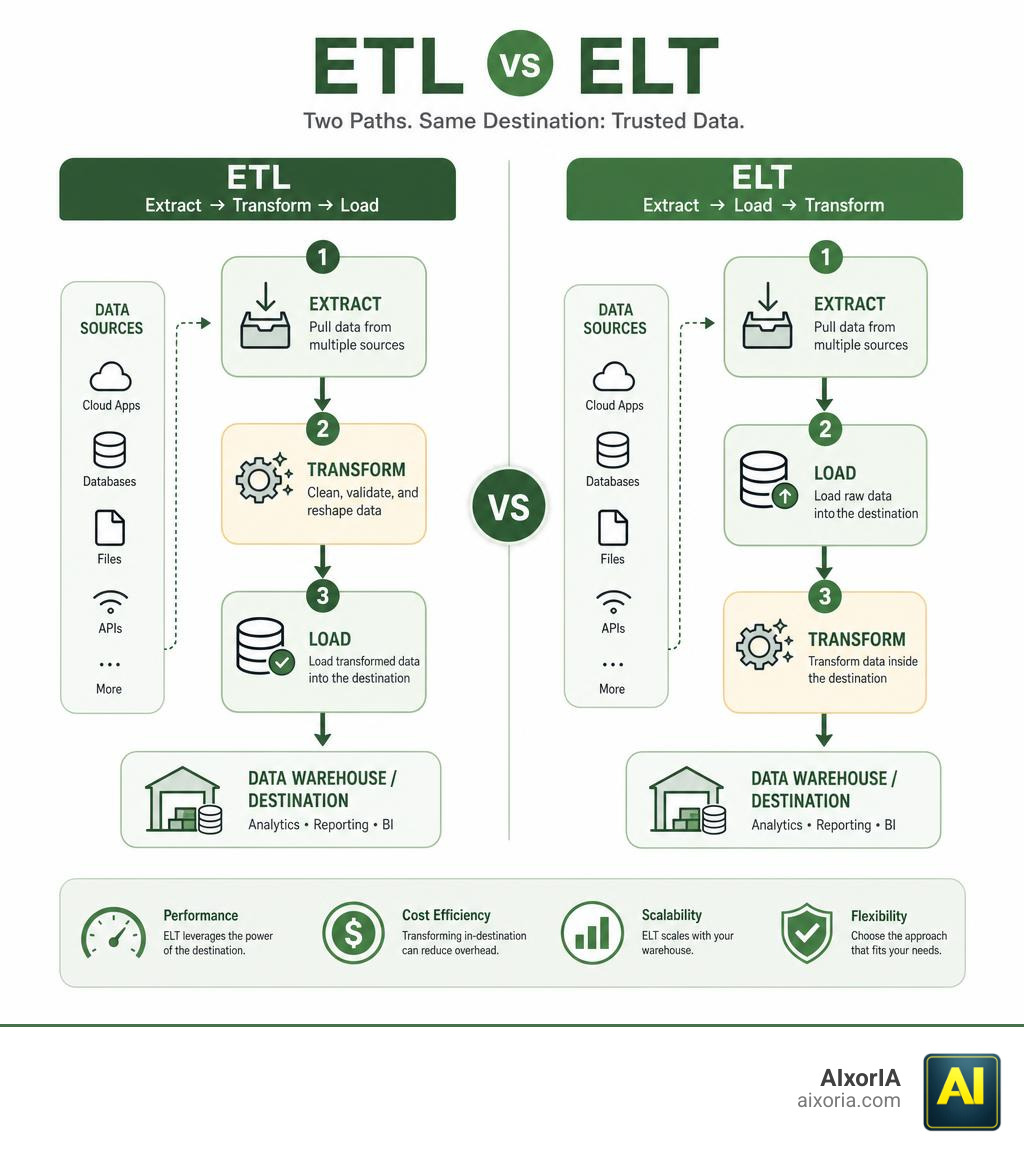
That’s where ETL tools come in. ETL stands for Extract, Transform, Load — the process of pulling data from its sources, cleaning and reshaping it, then delivering it somewhere useful like a data warehouse or analytics dashboard.
But here’s the thing: not all ETL tools are built the same, and what works for a scrappy startup is very different from what an enterprise SaaS team needs.
The global ETL software market is valued at $10.24 billion in 2026 and is on track to more than double to $21.25 billion by 2031. There’s a reason the market is booming — teams are realizing that choosing the wrong tool costs far more than the license fee. It costs engineering hours, broken pipelines, and stale data.
This guide cuts through the noise. Whether you’re a founder stitching together your first data stack or a growing SaaS team trying to replace a fragile mess of custom scripts, you’ll find a clear, practical breakdown of the tools worth your attention — and how to match them to your situation.
Key Evaluation Criteria for the Best ETL Tools for SaaS Companies
Selecting an ETL or ELT platform isn’t just about looking at a feature checklist. For SaaS companies, data pipelines are the lifeblood of customer analytics, product-led growth strategies, and financial reporting.
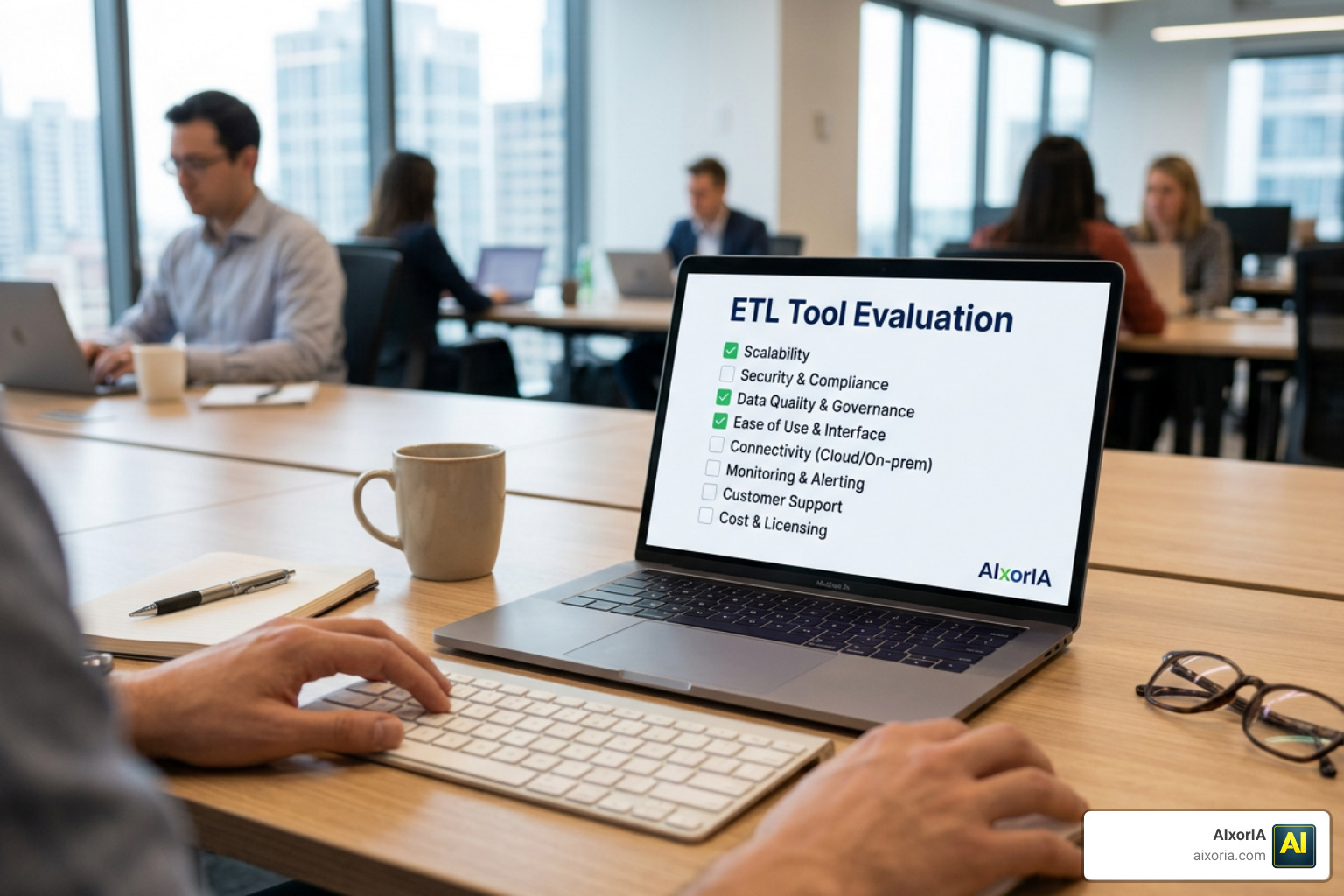
When evaluating the best ETL tools for SaaS companies, we recommend focusing on these core pillars:
- Scalability: Can the tool handle sudden bursts of product usage data without crashing or causing massive latency spikes?
- Security & Compliance: With strict regulations globally, your data pipelines must respect customer trust and legal frameworks.
- Ease of Use: Is the tool accessible to business analysts, or does every minor pipeline adjustment require a dedicated data engineer?
- Data Lineage & Observability: When a dashboard metric looks incorrect, can you easily trace the data back to its raw source?
- Schema Drift Management: SaaS APIs change constantly. Your ETL tool must detect and gracefully adapt to schema changes rather than silently breaking.
- API Integration Depth: SaaS environments live and die by APIs. The tool must handle complex, nested JSON payloads and rate-limiting rules seamlessly.
Comparing Pricing Models of the Best ETL Tools for SaaS Companies
Pricing models in the ETL market can be surprisingly complex, often leading to unexpected “billing shock” if not carefully managed. SaaS companies should understand the different structures before committing:
- Usage-Based / Volume-Based: You pay based on the volume of data processed (e.g., millions of rows synced or gigabytes transferred). This is highly predictable for stable datasets but can spike during initial historical loads.
- Credit-Based (DBU Billing): Platforms like Databricks charge based on virtual compute units consumed per hour. This requires proactive cluster management to avoid runaway costs.
- Fixed-Fee / Flat-Rate: Some tools charge a flat monthly fee per connector or per active pipeline flow. This offers maximum predictability but can limit flexibility if you need to test new sources.
Below is a comparison of how these pricing structures impact the total cost of ownership (TCO):
| Pricing Model | Pros | Cons | Typical SaaS Fit |
|---|---|---|---|
| Usage-Based (Row/Vol) | Pay only for what you sync; scales down | Hard to predict with volatile user activity | Scaling startups and mid-market |
| Credit-Based (Compute) | Highly cost-efficient for heavy processing | Requires active monitoring and optimization | Enterprise data engineering teams |
| Fixed-Fee / Flat-Rate | Highly predictable budgeting | Can become expensive for simple, low-volume syncs | Regulated spaces or predictable stacks |
Security, Compliance, and Governance in SaaS Data Pipelines
SaaS companies handle sensitive customer information, making security and compliance (such as GDPR, SOC 2, and HIPAA) non-negotiable. Traditional ETL processes often move data through intermediary staging environments, which expands your compliance surface area and introduces potential security vulnerabilities.
To mitigate this risk, forward-thinking SaaS teams are turning to direct synchronization methods. Using platforms like Data Privacy for SaaS Data Sync | Oneprofile CDP allows teams to sync records securely between cloud applications without keeping intermediate copies of customer data. This approach minimizes data exposure and ensures strict compliance with data minimization principles.
Top ETL and ELT Platforms for SaaS Environments in 2026
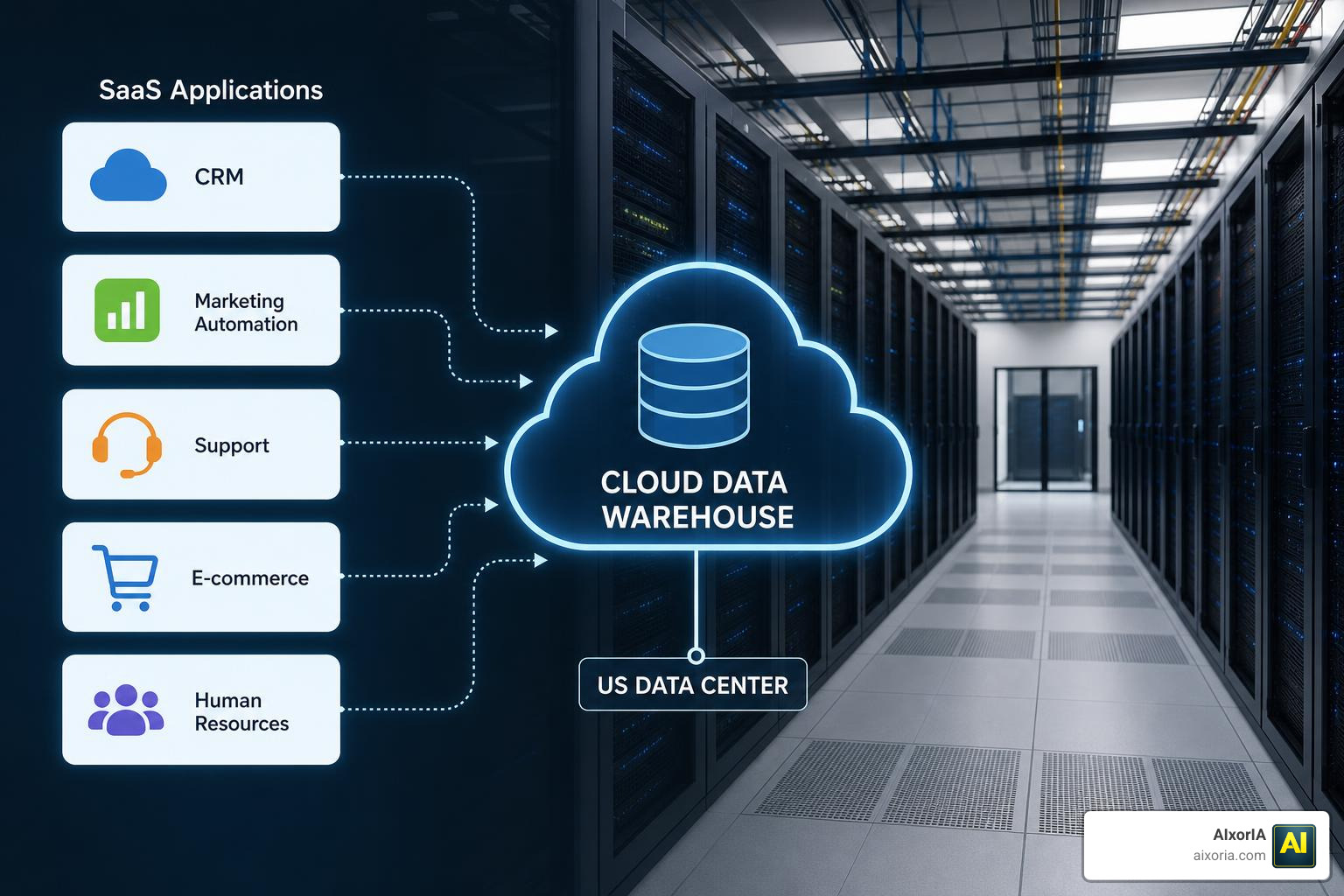
Modern SaaS architectures require versatile platforms that can bridge the gap between cloud warehouses, production databases, and third-party APIs.
Low-Code and No-Code Automation Platforms
For teams looking to move fast without writing thousands of lines of custom integration code, low-code and no-code platforms offer visual drag-and-drop workflow builders. These solutions democratize data integration, allowing product managers, analysts, and marketing teams to build automated pipelines.
If you are looking for an enterprise-ready solution that blends low-code pipeline design with smart assistance, Planasonix — Enterprise ETL Platform & Universal SaaS Driver provides an AI Copilot that can generate pipelines from plain English prompts. It also offers universal ODBC/JDBC drivers to query over 70 SaaS sources directly.
Additionally, for highly specialized, real-time syncs between CRMs and operational tools, Outreach Two-Way Sync | Stacksync provides a robust, zero-code way to keep your go-to-market applications perfectly in sync without manual file exports or complex API maintenance.
Code-Driven and Developer-First Data Engines
On the other side of the spectrum, engineering-heavy SaaS teams often require absolute programmatic control, version-controlled pipelines, and deep integrations with transformation tools like dbt.
For developer-first architectures, Weld | Fast, reliable data movement provides autonomous ETL pipelines tailored for modern analytical environments, AI agents, and RAG pipelines. Weld handles schema migrations and API updates automatically while allowing teams to embed white-label data ingestion directly into their own SaaS products.
Similarly, Peliqan – All-in-one Data Platform unifies ETL/ELT, SQL query assistance, and low-code Python scripting into a single federated engine, helping engineers build and deploy secure data pipelines up to ten times faster.
Enterprise-Grade Replication and Warehouse Connectors
Enterprise SaaS companies operating at hyper-scale often face the challenge of replicating massive operational databases—like Salesforce—into high-performance analytical warehouses like Google BigQuery.
To bypass API rate limitations and maintain absolute data ownership, solutions like Salesforce to BigQuery Data Replication | GRAX run directly within your own cloud environment. This ensures 100% data residency control while continuously replicating complex schemas and historical version changes directly to BigQuery for advanced machine learning and business intelligence.
Strategic Implementation: Matching ETL Tools to Your SaaS Growth Stage
Your data architecture should scale alongside your business. Choosing a tool that is too complex early on can drain engineering resources, while an overly simple tool will eventually bottleneck a rapidly growing company.
- Startups: Focus on rapid deployment, low maintenance, and predictable costs. Look for managed ELT tools with wide pre-built connector coverage to get up and running in minutes.
- Mid-Market: Prioritize data governance, automated schema validation, and flexible transformation workflows (like dbt integration) to support multiple scaling departments.
- Enterprise: Demand granular role-based access controls (RBAC), end-to-end data lineage, dedicated hybrid cloud deployments, and sub-second real-time CDC capabilities.
Overcoming Common Pipeline Limitations and Schema Drift
SaaS teams frequently run into API rate limits and unexpected schema changes that break downstream reports. To mitigate these challenges, implement the following best practices:
- Establish Automated Schema Validation: Use tools that detect new, deleted, or modified source fields and alert your team before the data reaches your warehouse.
- Leverage Log-Based Change Data Capture (CDC): Instead of repeatedly querying APIs for full table scans, use CDC to read database logs and sync only the incremental changes.
- Monitor Query Usage: Set up cost alerts and query optimization practices to prevent runaway expenses on serverless, usage-based platforms.
Selecting the Best ETL Tools for SaaS Companies by Team Expertise
If your team consists primarily of business analysts and operations managers, lean heavily toward visual, low-code platforms that minimize SQL and Python requirements. However, if you have a dedicated data engineering team, choosing a code-driven, developer-first engine will give them the programmatic flexibility they need to build custom, highly optimized data architectures.
Frequently Asked Questions about SaaS ETL
What is the difference between ETL and ELT for SaaS companies?
Traditional ETL extracts data, transforms it on an intermediary server, and then loads it into the destination. ELT (Extract, Load, Transform) extracts raw data and loads it directly into a modern cloud data warehouse first, performing the transformations inside the warehouse using its native compute power. ELT is generally preferred by modern SaaS teams because it reduces pipeline fragility and preserves raw data history.
How do real-time CDC and batch replication compare in SaaS environments?
Batch replication runs at scheduled intervals (e.g., hourly or daily), which is highly cost-effective but introduces data latency. Change Data Capture (CDC) tracks database logs in near real-time, instantly syncing inserts, updates, and deletes. CDC is crucial for live operational dashboards but requires more robust infrastructure and monitoring.
How should a SaaS company estimate the total cost of ownership for an ETL tool?
To estimate the true TCO, look beyond the upfront software licensing or subscription fee. Factor in cloud compute costs (warehouse querying), storage fees, data egress charges, and—most importantly—the engineering hours required to maintain, debug, and update custom connectors.
Conclusion
Building a dependable data stack doesn’t have to be an overwhelming engineering headache. By matching the best ETL tools for SaaS companies to your team’s technical expertise and growth stage, you can transform raw, scattered data into a powerful competitive advantage.
At AIxorIA, we specialize in cutting through technical complexity. We provide custom AI solutions, tool training workshops, practical tutorials, and thorough performance audits to help SaaS companies optimize their data and technology stacks. If you want to dive deeper into your options, check out our comprehensive guide on how to Discover the 20 Best ETL Tools for Data Integration to find the perfect fit for your architecture.
4 thoughts on “8 Best ETL Tools for SaaS Companies in 2026 (Ranked)”