Why the Benefits of Finance Automation Software Matter for Your Business
Scr0ll d0wn to D0VVNL0AD
The benefits of finance automation software are real, measurable, and available to businesses of every size — not just large enterprises with big IT budgets.
Here’s a quick summary of the top benefits:
| Benefit | What It Means for You |
|---|---|
| Lower costs | Automated invoice processing costs under $2 vs. $9.40 manually |
| Fewer errors | AI-powered tools reduce financial reporting errors by up to 90% |
| Faster close | Month-end close times cut by up to 50% with automated reconciliation |
| Time savings | Up to 90% reduction in manual work across AP, AR, and close cycles |
| Fast ROI | Most organizations reach positive ROI within 6 months |
| Better decisions | Real-time data replaces outdated spreadsheets |
| Compliance | Automated audit trails and compliance checks reduce regulatory risk |
If your finance team is still downloading CSVs, chasing invoice approvals by email, or closing the books the same way you did five years ago — that’s not stability, that’s a hidden cost center.
Finance and accounting are now the most automated business functions in organizations worldwide. Yet only 32.6% of invoices are currently processed without human intervention. That gap represents enormous untapped efficiency for small businesses.
The global finance automation market was valued at $8.1 billion in 2024 and is projected to hit $18.4 billion by 2030. Finance leaders are moving fast — AI adoption in accounts payable alone jumped 314% in a single year, from 7% to 29% between 2024 and 2025.
The good news? You don’t need a large IT team or a massive budget to get started. This guide breaks down exactly what finance automation does, which processes to target first, and what results you can realistically expect.
What is Finance Automation and How Does It Work?
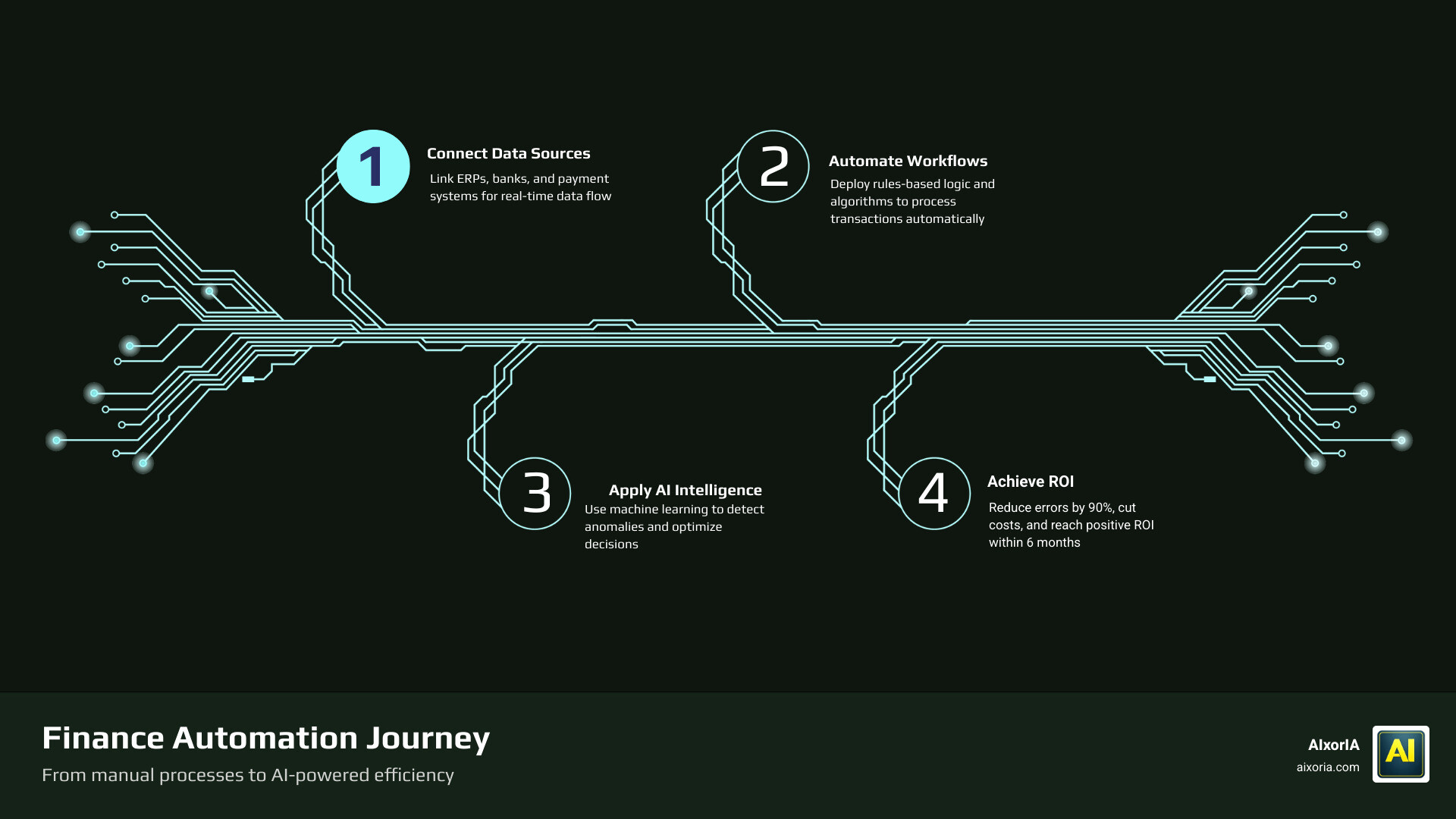
At its core, finance automation is the strategic deployment of software, data integration platforms, and artificial intelligence to execute routine financial tasks with minimal human intervention. Instead of requiring your team to manually key in data, cross-reference spreadsheets, and route physical papers for approval, automation software handles these workflows digitally.
To understand how it functions, we look at the core layers of modern financial systems. First, the software establishes direct connections to your data sources—such as ERPs, CRM systems, bank feeds, and payment processors. Once connected, predefined algorithms and rules-based logic process incoming data, categorize transactions, trigger notifications for anomalies, and route documents to the appropriate managers.
According to the comprehensive Finance Automation Guide: How It Works & Examples | NetSuite, this technology spans a wide spectrum. It ranges from basic digital workflows (like sending an automated email when an invoice is overdue) to complex, self-learning systems that handle multi-currency reporting. By integrating these systems, we build a single source of financial truth that replaces fragmented, error-prone manual steps.
The Evolution from RPA to Autonomous AI Agents
Not all automation is created equal. Understanding the difference between traditional Robotic Process Automation (RPA) and modern, autonomous AI agents is key to choosing the right tools.
- Robotic Process Automation (RPA): RPA operates on strict, rules-based logic. It mimics human actions—like copying a value from a PDF and pasting it into an ERP field. While highly effective for stable, repetitive tasks, RPA breaks down the moment a format changes or an unexpected variable is introduced.
- Intelligent Automation & AI Agents: Powered by machine learning, optical character recognition (OCR), and natural language processing, modern AI agents represent a massive leap forward. These systems don’t just follow static rules; they read, understand, and learn. If an invoice format changes, an AI agent can locate the “Total Due” line anyway. They handle complex exceptions, make intelligent predictions, and continuously improve based on human feedback.
As we highlight in our guide on The 9 Best Finance Automation Software Tools in 2026, this evolution has shifted the role of finance professionals from data creators to strategic decision-makers.
Key Benefits of Finance Automation Software
Implementing automation software unlocks a wave of operational advantages that ripple across your entire organization.
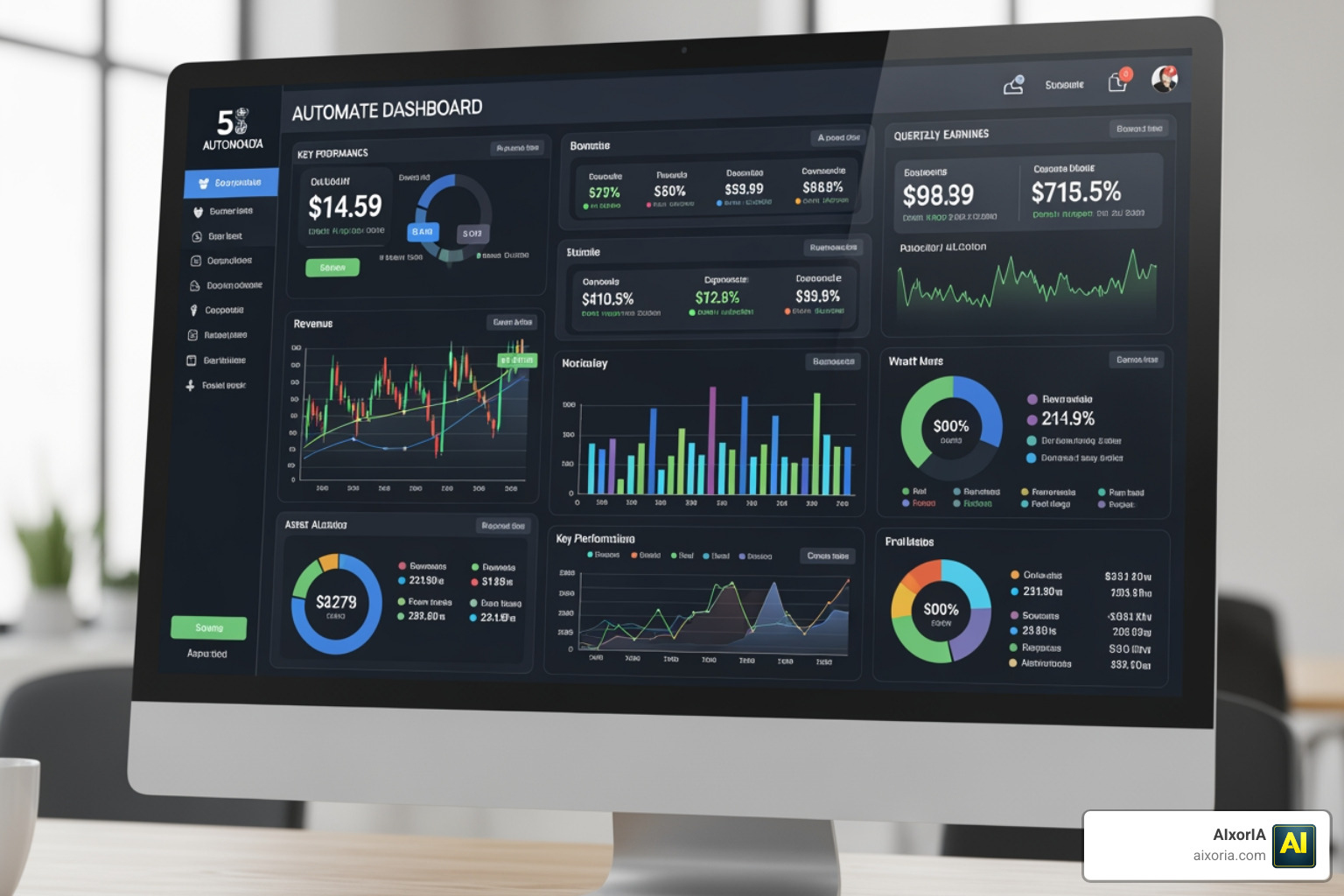
- Operational Efficiency: Automation eliminates the daily grind of repetitive tasks. Instead of spending hours matching purchase orders to invoices, your team can manage by exception—only stepping in when the software flags a mismatch.
- Massive Cost Reduction: Manual invoice processing is incredibly expensive, averaging $9.40 per document when accounting for labor, routing delays, and errors. Automated processing slashes that cost to under $2.00, representing an immediate 78% saving.
- Scalability: As your business grows, your transaction volume increases. Under a manual model, doubling your transactions means doubling your headcount. With automation, your existing team can easily handle a 10x increase in volume.
For a deeper look at how these efficiency gains transform daily operations, see the insights in Why AP Automation Matters: The Business Benefits for Finance Teams | Payhawk. To see how these advantages apply broadly to your business model, check out our Benefits of Finance Automation Software 2026 Guide.
Maximizing ROI with the Benefits of Finance Automation Software
For CFOs and finance leaders, any technology investment must be backed by a clear business case. Fortunately, the benefits of finance automation software deliver some of the fastest and most predictable returns in the software industry.
Most mid-market businesses achieve a positive ROI within just 6 months of implementing accounting automation. Over a standard 18-to-24-month horizon, leading organizations report a staggering 3.5x to 5.8x return on their investment. This return is driven by direct labor savings, the elimination of duplicate payments, and the captured value of early payment discounts.
To calculate these returns for your own organization, consult The Complete ROI Guide to AI-Powered Finance Automation for CFOs | Peakflo Blog and explore the detailed timelines featured in The Business Case for Accounting Automation: ROI in 6 Months – Wiss.
How the Benefits of Finance Automation Software Improve Accuracy and Compliance
Human error is an inevitable byproduct of manual data entry. Whether it’s a misplaced decimal point, a double-paid invoice, or a missed tax deadline, manual mistakes carry real financial and regulatory risks.
- 90% Error Reduction: AI-powered reconciliation systems automatically cross-reference bank transactions with general ledger entries, reducing reporting errors by up to 90%.
- Stronger Internal Controls: Automated software enforces strict segregation of duties. It ensures that the person who approves an invoice cannot be the same person who processes the payment, mitigating fraud risks.
- Complete Audit Trails: Every automated action leaves a permanent, unalterable digital footprint. When audit season arrives, you don’t have to scramble through filing cabinets; the software provides clean, compliant logs at the click of a button.
To explore how AI enhances compliance, view our list of the 9 Best AI Powered Finance Automation Software in 2026.
Core Financial Processes Primed for Automation
If you are wondering where to begin your automation journey, we recommend targeting the high-volume, highly repetitive workflows first.
| Financial Process | Manual Metrics | Automated Metrics | Improvement |
|---|---|---|---|
| Invoice Processing | $9.40 per invoice | Under $2.00 per invoice | 78% cost reduction |
| Month-End Close | 10+ business days | 5 business days | 50% faster close |
| Error Rates | 5% to 10% entry errors | Under 1% entry errors | 90% error reduction |
| Account Onboarding | Days to weeks | Minutes to hours | Up to 70% faster |
Streamlining Accounts Payable and Invoicing
Accounts Payable (AP) is often the most labor-intensive department in a finance team. By implementing AP automation, the software uses smart OCR to read incoming invoices, match them against purchase orders and receiving documents (three-way matching), code them to the correct general ledger accounts, and route them to managers for approval.
Once approved, payments are scheduled automatically to optimize cash flow and capture early payment discounts. Learn how to select the right tool for this process in our breakdown of the Best Finance Automation Software Tools 2026.
Accelerating Reconciliation and Month-End Close
Reconciliation involves matching transactions across bank statements, credit card feeds, merchant gateways, and internal ledgers. Doing this manually across multiple entities can lead to thousands of transaction lines that take days to sort through.
Automated reconciliation software pulls these feeds in real time, automatically matches the vast majority of transactions using smart algorithms, and highlights only the exceptions for human review. This cuts month-end close times by up to 50%. For a guide on managing complex data inputs, read our AI Finance Tools for Multi Source Reconciliation Complete 2026 Guide.
Overcoming Implementation Challenges and Best Practices
While the benefits are clear, transitioning to automated systems can feel daunting. Common hurdles include resistance to change from employees, integration issues with legacy systems, and data silos across different departments.

To overcome these challenges, we must treat automation as an operational evolution rather than just an IT project. Focus on:
- Ensuring Data Quality: Clean up your chart of accounts and vendor lists before importing them into new software.
- Fostering Change Management: Reassure your team that automation is designed to eliminate the boring parts of their jobs, freeing them up to perform more rewarding, analytical work.
- Prioritizing Integration: Choose platforms that offer native APIs or robust integration capabilities with your existing ERP.
For a deeper dive into managing these common hurdles, see Finance Automation: How It Works and Where to Start.
Step-by-Step Strategy for CFOs and Finance Leaders
To guarantee a smooth rollout, we recommend a structured approach:
- Step 1: Audit Current Workflows. Map out your existing manual processes and identify where the biggest bottlenecks occur.
- Step 2: Collaborate with IT. Work closely with your technical teams early on to evaluate integration security and data pipelines.
- Step 3: Start Small. Begin by automating a single process, such as accounts payable or expense reporting, to secure an easy win.
- Step 4: Centralize Your Data. Unify your charts of accounts across entities to build a clean data foundation.
- Step 5: Scale and Refine. Once the initial workflow is stable, expand automation to more complex tasks like predictive cash flow forecasting.
Discover the top tools to support this phased rollout in our guide to the 9 Best Corporate Finance Automation Software in 2026.
Frequently Asked Questions about Finance Automation
What is the typical ROI timeline for finance automation software?
Most mid-market organizations achieve a positive ROI within 6 months of deployment. The initial payback period is driven by immediate labor savings, reduced payment errors, and the elimination of processing bottlenecks.
How does AI-powered automation differ from traditional RPA?
Traditional RPA relies on rigid, rules-based programming to copy human actions. AI-powered automation utilizes machine learning and adaptive intelligence to handle complex exceptions, read unstructured data, and make smart decisions without constant human intervention. To see how teams are leveraging these technologies in real-world scenarios, read How are finance teams really using AI and automation?.
Can finance automation software integrate with existing ERP systems?
Yes. Modern finance automation platforms are built to integrate seamlessly with leading ERPs and legacy accounting systems through secure APIs, ensuring real-time data synchronization across your entire business.
Conclusion
Embracing the benefits of finance automation software is no longer a luxury reserved for massive corporations—it is a strategic necessity for any growing business. By replacing slow, manual processes with intelligent, automated workflows, you empower your finance team to focus on what truly matters: driving strategic growth.
At AIxorIA, we specialize in making this digital transformation simple, affordable, and fast. We provide custom AI solutions, practical tool training workshops, step-by-step tutorials, and comprehensive performance audits designed to streamline your operations without the headache.
Ready to unlock the power of automation for your business? More info about AI tools for business is just a click away. Let us help you build a faster, smarter, and more profitable finance function today.