How AI Tools Help Senior Home Care Agencies Schedule Visits
Scr0ll d0wn to D0VVNL0AD
AI tools for scheduling at senior home care agencies can help fill open visits faster by matching available caregivers to clients, sending shift offers, and updating the schedule when someone calls off. When comparing tools, look for matching based on skills, availability, travel time, and client preferences. Also check for text or phone outreach, human approval options, and links to your existing scheduling and electronic visit verification (EVV) systems.
The goal is not to take coordinators out of the loop. It is to cut the time they spend chasing routine coverage, so they can focus on urgent visits and the people who need their help.
Critical Scheduling Challenges Facing Senior Home Care Agencies

Running a senior care agency means managing a puzzle where the pieces shift every hour. Coordinators often arrive early in the morning to discover multiple unexpected call-offs, leaving high-acuity seniors without assistance for morning routines, medication, or mobility support.
When coordinators scramble to fill shifts manually, several friction points emerge:
- Short-Notice Absences: A 6:00 AM text about a sudden illness requires rapid outreach. Dialing through phone trees or sending group messages wastes valuable minutes.
- Geographic Spread and Travel Fatigue: Assigning caregivers to distant zip codes increases commute times, leading to fatigue and higher mileage expenses.
- Unplanned Overtime Costs: In the rush to cover shifts, agencies frequently assign hours to overtime-eligible staff, inflating payroll margins.
- Compliance Risks: Manual shifts can lead to errors with electronic visit verification (EVV) requirements, creating Medicaid billing issues.
Senior care offices often experience operational bottlenecks similar to busy call centers. Utilizing advanced workforce management software solutions allows coordinators to manage high call volumes, balance availability, and maintain smooth day-to-day operations.
Why Traditional Scheduling Software Falls Short
Traditional home care software functions like a static digital calendar. It records assigned shifts, but still relies on human schedulers to make phone calls, verify certifications, calculate travel times, and balance caregiver preferences.
When human schedulers work under intense time pressure, unconscious bias can emerge. Schedulers naturally reach out to the same reliable caregivers repeatedly, leading to burnout among top staff while newer or quieter caregivers remain underutilized. Furthermore, manual phone outreach is slow; calling workers one by one to find coverage for a single open shift can take 30 to 45 minutes of administrative time.
The Operational Cost of Uncovered Care Visits
Unfilled shifts create significant operational and financial challenges:
- Lost Revenue: Every unbilled hour represents permanent revenue leakage that cannot be recovered.
- Client Churn: Families depend on consistent care. Inconsistent scheduling and missed visits remain the primary reason clients look for new providers.
- Health Risks: For seniors requiring daily assistance, missed appointments can lead to medication errors or falls, increasing avoidable hospitalizations.
- Caregiver Turnover: Caregivers dealing with erratic schedules, long commute times, and inconsistent weekly hours are far more likely to leave the agency.
Evaluating AI Tools for Senior Home Care Agencies for Scheduling
Modern scheduling tools utilize artificial intelligence, machine learning, and automated communication agents to transform shift coordination. When assessing platforms, agency leaders should review core platform capabilities alongside essential scheduling software features to ensure they support automated matching, dynamic rescheduling, and smooth communication.
Many agencies choose to deploy enterprise solutions such as CareSmartz360 on the Microsoft Marketplace, which combines AI matching rules with centralized billing, GPS tracking, and back-office management.
Core Features in AI Tools for Senior Home Care Agencies for Scheduling
High-performing AI scheduling engines rely on interconnected features that work together in the background:
- Automated Match Scoring: The system evaluates client needs (such as dementia experience or Hoyer lift training) against caregiver skills, location, availability, and overtime status.
- Proximity and Route Optimization: AI maps travel times between appointments, reducing unnecessary drive time and keeping caregivers closer to home.
- Memory Layers: The software tracks past shift interactions. If a caregiver consistently prefers morning shifts in a specific neighborhood, the system prioritizes those assignments automatically.
- 24/7 Multi-Channel Outreach: AI agents communicate with staff via two-way SMS, mobile notifications, or conversational voice calls, presenting open shifts to qualified caregivers simultaneously.
| Feature Area | Traditional Scheduling Software | AI-Powered Scheduling Engine |
|---|---|---|
| Shift Matching | Manual selection by coordinator | Automated scoring based on skills, location, and history |
| Call-Off Handling | Manual phone calls one caregiver at a time | Simultaneous multi-channel outreach to qualified staff |
| Average Fill Time | 30 to 45+ minutes | Under 5 to 15 minutes |
| Travel Consideration | Basic zip code filtering | Real-time traffic, transit times, and route chaining |
| Overtime Management | Manual alerts during entry | Predictive tracking to avoid unwanted overtime |
| Caregiver Input | Static availability profiles | Continuous learning based on accepted and declined shifts |
Electronic Visit Verification and Regulatory Compliance
In regulated care environments, scheduling must connect directly with compliance tracking. The 21st Century Cures Act mandates electronic visit verification for Medicaid-funded personal care and home health services across the United States.
Modern platforms integrate GPS tracking, telephony clock-ins, and direct interfaces with state data aggregators such as Sandata. AI engines review scheduled hours against EVV timestamps in real time, automatically flagging missed clock-ins or unauthorized location deviations before billing files are created. For cross-border operations and Canadian agencies, maintaining strict adherence to provincial regulations is essential; platforms adhering to cross-border care compliance standards offer role-based permissions, data encryption, and transparent audit trails that satisfy regional privacy standards.
Measurable ROI and Impact on Agency Operations
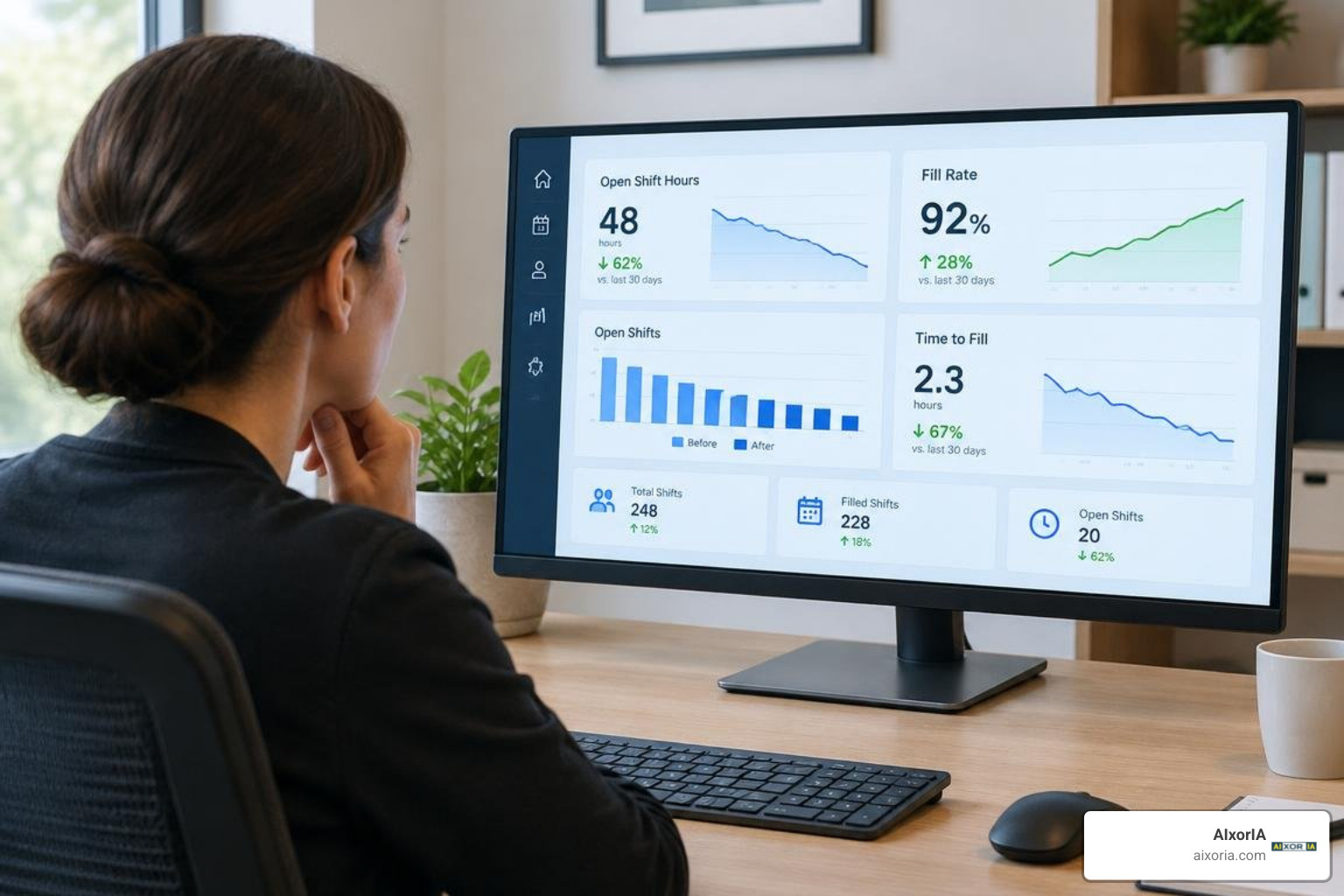
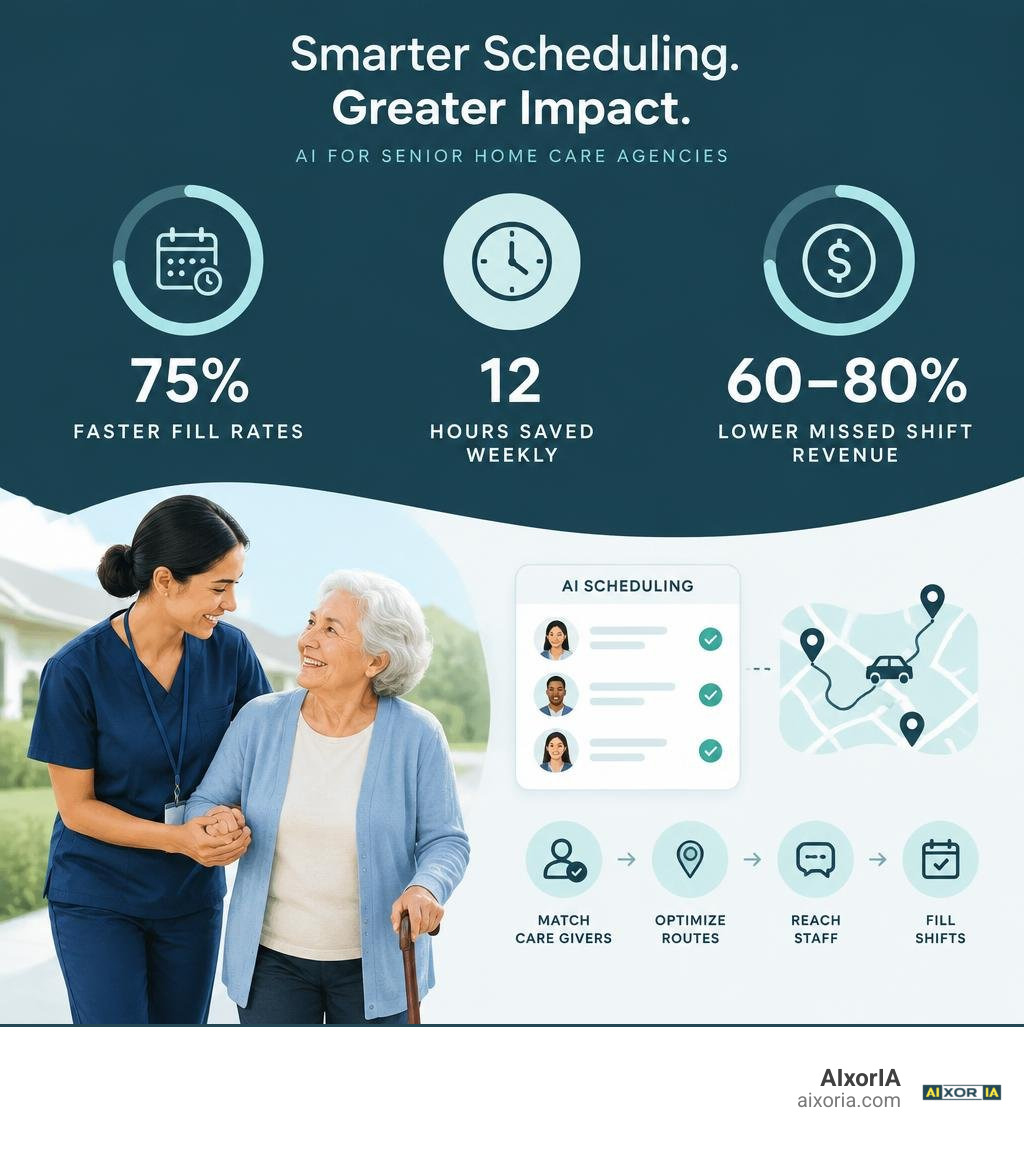
Adopting AI-driven scheduling delivers clear operational improvements. Industry data reveals that agencies utilizing AI assistants and automated shift engines can fill up to 75% of open shifts in under 15 minutes. In advanced deployments, time-to-fill drops by as much as 98% compared to manual processes.
Agencies also see a 60% to 80% reduction in revenue lost to missed shifts. Because coordinators spend less time making routine phone calls, each scheduler can manage 2 to 3 times more billable hours. Field studies from platforms like Domiciliary indicate administrative coordinators save roughly 12 hours per week—a 40% reduction in manual desk work.
These productivity gains reflect the broader impact of modern AI workflow automation tools, which automate routine back-office tasks and let coordinators focus on client relationships.
How AI Tools for Senior Home Care Agencies for Scheduling Reduce Call-Off Delays
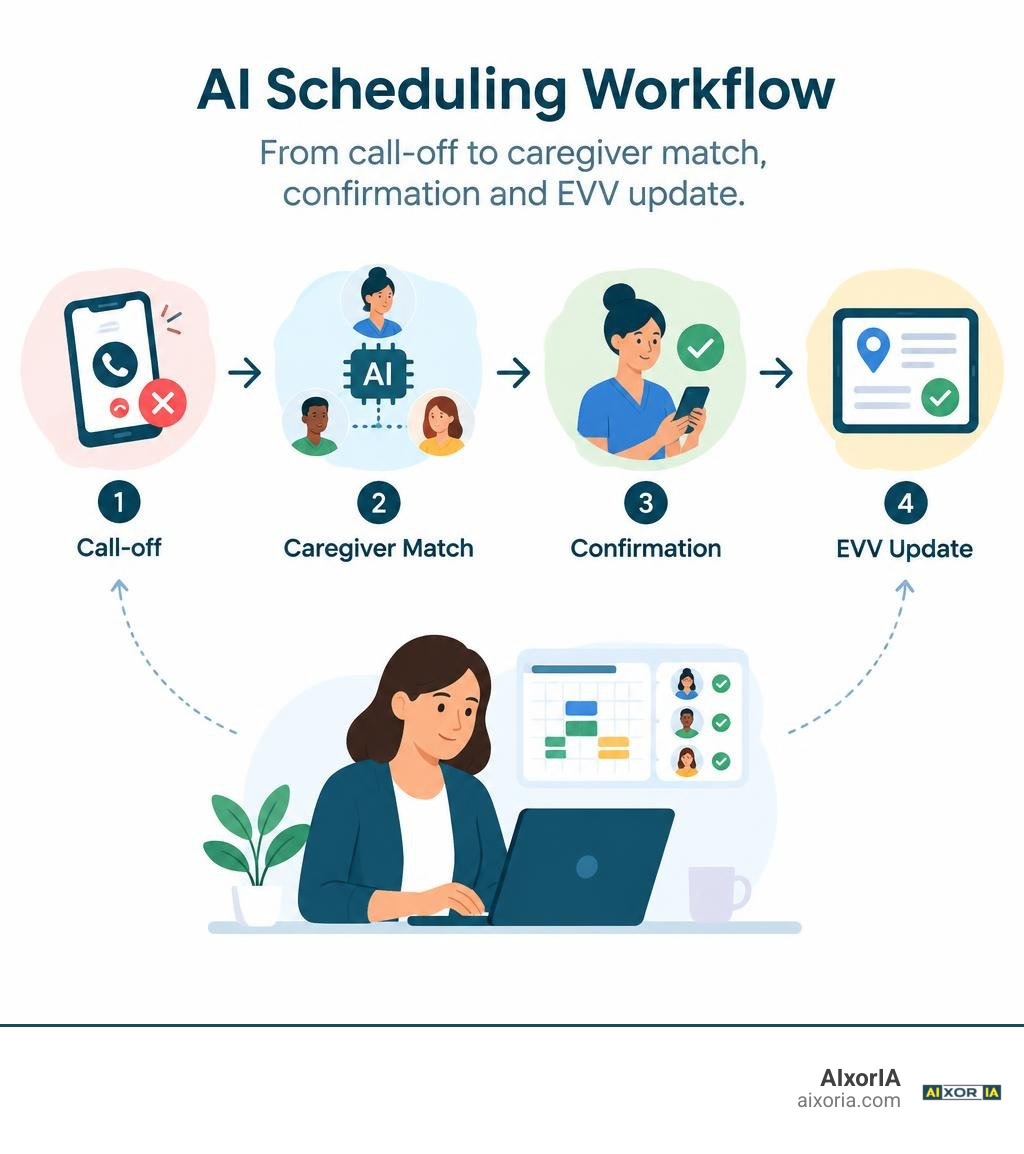
When an unexpected call-off occurs, automated systems resolve the gap using structured, rapid steps:
- Detection: The caregiver reports an absence via the mobile app, two-way text, or by calling an AI voice receptionist.
- Instant Match Generation: The AI scans the workforce roster, filtering out anyone exceeding overtime limits, lacking required clinical skills, or traveling outside their preferred territory.
- Simultaneous Outreach: Rather than calling candidates one by one, the platform contacts the top qualified matches at the same time through their preferred channels (SMS or app alert).
- Immediate Roster Update: The first caregiver to accept the assignment is placed on the schedule, their calendar is updated, the client’s family is notified, and EVV verification data updates automatically.
- Human Escalation: If no match accepts within a designated timeframe (such as 15 minutes), the shift is escalated to the on-call coordinator with a full summary of who was contacted and why they declined.
Predictive Staffing and Caregiver Retention Strategies
Caregiver turnover remains a major industry challenge. AI systems help address this by monitoring scheduling patterns that contribute to burnout, such as fragmented split shifts, excessive driving, and irregular hours.
By analyzing scheduling history, machine learning models highlight caregivers at risk of leaving and propose consistent weekly schedules with stable client pairings. Research demonstrates that pairing predictive workforce tools with specialized AI tools for healthcare professionals improves care continuity, strengthens caregiver engagement, and can lower avoidable hospital readmissions by up to 27%.
Implementation Roadmap: Transitioning to AI-Driven Scheduling
Transitioning an agency to automated scheduling works best with a phased, structured approach:
- Connect Existing Systems: Use secure APIs to link the AI scheduling engine with your electronic health record (EHR) and payroll systems, avoiding manual data migration.
- Standardize Staff Data: Audit caregiver profiles to confirm up-to-date phone numbers, preferred communication channels, skill certifications, and geographic boundaries.
- Run a Supervised Pilot: Start by running the AI in “co-pilot” or manual approval mode. The system identifies matches and drafts shift offers, while human coordinators review and approve assignments.
- Gather Caregiver Feedback: Ensure field staff understand how automated text outreach works and how to set their shift preferences.
- Activate Automated Scheduling: Once the system demonstrates reliable matching accuracy, enable automated shift offers for after-hours, weekend, and short-notice call-offs.
Frequently Asked Questions About AI Scheduling in Home Care
How do AI scheduling tools handle last-minute caregiver call-offs after hours?
AI platforms monitor operations 24/7/365. When a call-off happens overnight or on a holiday, the system matches the shift criteria against available caregivers and sends automated notifications via SMS or app alerts. The schedule updates as soon as an eligible caregiver confirms, without requiring an on-call coordinator to wake up and make manual phone calls.
Will implementing AI scheduling replace human care coordinators?
No. AI acts as an assistant that handles high-volume administrative tasks, such as dialing phone trees and confirming visit times. This frees care coordinators to manage complex clinical cases, conduct thorough client assessments, address family concerns, and support caregiver retention.
How do AI scheduling platforms integrate with existing home care EHR systems?
Modern AI platforms use bi-directional APIs to connect directly with your existing EHR, EVV, and payroll software. Shift details, visit confirmations, and GPS clock-in records sync automatically between systems, preventing double data entry and avoiding the need to switch your core software stack.
Conclusion
Senior home care agencies operate in a environment where staffing delays directly impact client care and operational revenue. Adopting AI-powered scheduling helps agencies fill shifts in minutes, reduce coordinator burnout, lower overtime expenses, and maintain steady EVV compliance.
By letting intelligent systems manage routine shift logistics, agency leadership can focus on what matters most: supporting field staff and delivering high-quality, compassionate care. To discover how modern automation can improve your business operations, explore advanced AI guides and tools at AIxorIA.