Why the Best AI Workflow Automation Tools for Startups Are a Game-Changer in 2026
The best AI workflow automation tools for startups in 2026 are listed here at a glance:
| Tool | Best For | Free Plan | Starting Price |
|---|---|---|---|
| Gumloop | Non-technical teams, AI-native workflows | Yes | Paid tiers available |
| Zapier | Broad app connections, no-code | Yes | ~$20/month |
| n8n | Developers, self-hosting, flexibility | Yes (self-hosted) | $20/month cloud |
| Make | Visual builders, budget-conscious teams | Yes | Low-cost paid tiers |
| Lindy.ai | AI agents, memory, inbox automation | Yes | Paid tiers available |
| Relay.app | Collaborative workflows, fast-growing teams | Yes | Paid tiers available |
Running a startup means doing the work of a much bigger team — often with fewer people, less budget, and no time to waste.
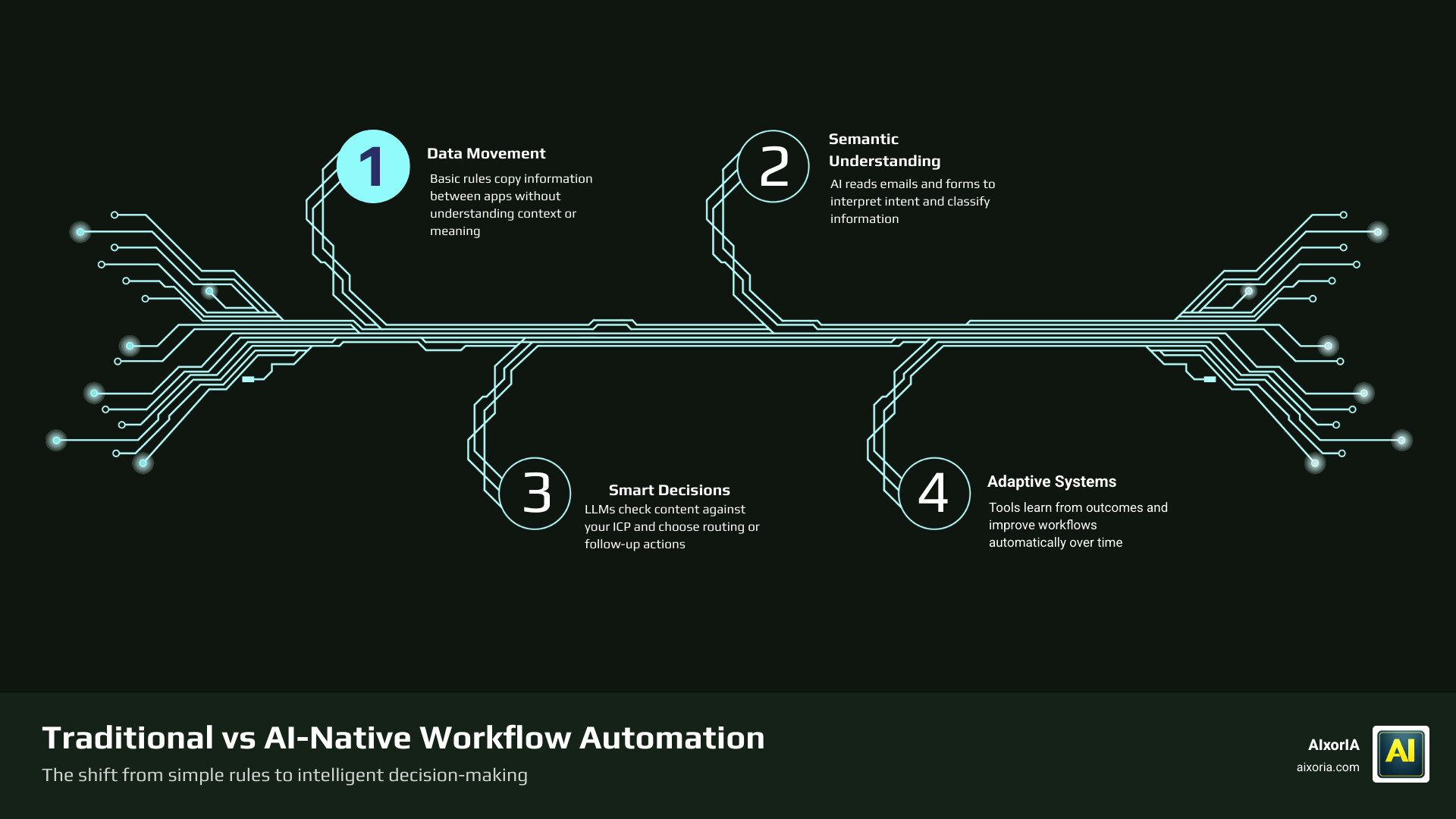
A few years ago, automation meant setting up simple “if this, then that” rules to move data between apps. That was useful. But it wasn’t intelligent.
Today, AI workflow automation tools do something fundamentally different. Instead of just moving data, they understand it. They read emails, classify leads, generate content, make routing decisions, and adapt to new information — all without you writing a single line of code.
The market reflects this shift. The workflow automation space is projected to hit $78.26 billion by 2035, growing at 21% per year. And startups are right at the center of that growth.
But here’s the challenge most small teams face: nearly half of product teams say poor integration with existing tools is their biggest blocker to shipping AI features faster. And only a tiny fraction of AI pilots ever make it to a real, working production system.
That gap — between a promising demo and something your team actually uses every day — is exactly what the right automation tool helps you close.
This guide walks you through the best options available right now, what they cost, and how to pick the one that fits where your startup actually is today.
Why Startups Must Prioritize AI Automation in 2026
In 2026, efficiency isn’t just a “nice-to-have” for startups; it’s the difference between scaling and stalling. We’ve seen that many teams struggle with the “AI Gap.” While everyone is excited about Large Language Models (LLMs), only about 5% of enterprise-grade AI pilots actually make it to production. The primary bottleneck is the distance between a cool prototype and a maintainable, observable system.
The Best AI Workflow Automation Tools for Startups solve this by enabling “semantic decisioning.” This means the tool doesn’t just copy a name from a form to a CRM; it reads the form, understands the intent, checks it against your Ideal Customer Profile (ICP), and decides whether to alert a salesperson or send a polite automated follow-up.
As noted in our guide on the Best AI Tools for Business Productivity, these platforms allow LLMs to handle unstructured data like emails and documents, turning them into structured actions. If you aren’t automating these processes, you’re likely wasting 6–20 hours per team member every week on manual coordination. To see how these tools stack up against traditional options, check out our Best Workflow Automation Software in 2026 Tested review.
Key Features of High-Growth Automation Platforms
When we evaluate the Best AI Workflow Automation Tools for Startups, we look for specific features that allow a small team to move fast without breaking things.
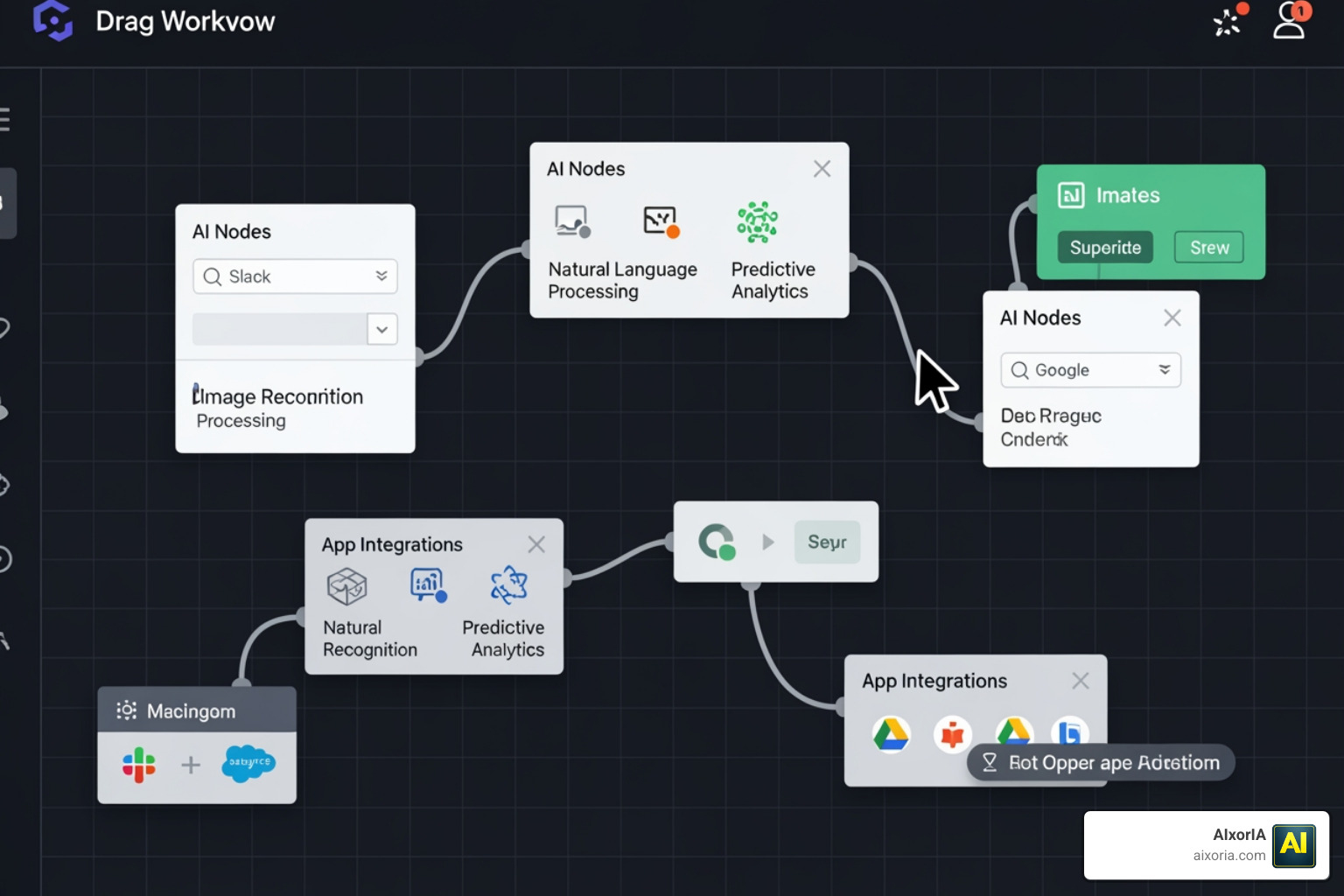
- No-Code Visual Builders: You shouldn’t need a computer science degree to build an agent. Drag-and-drop canvases are the gold standard for 2026.
- LLM Orchestration: The ability to switch between models (like GPT-5, Claude 4, or Llama 3) within a single workflow is vital for cost and performance optimization.
- Human-in-the-Loop (HITL): AI isn’t perfect. High-growth platforms include “approval nodes” where a human can quickly review an AI-generated email or report before it goes live.
- Enterprise-Grade Security: Even at the early stage, you need SOC2 compliance, Role-Based Access Control (RBAC), and audit logs to protect your data and stay compliant.
For a deeper dive into which features matter most for different roles, see our articles on Best AI Tools for Work and the Best AI Tools for Business Analysts in 2026.
Best AI Workflow Automation Tools for Startups in 2026
Choosing the right platform depends on your team’s technical skill and your specific goals. Here is an in-depth look at the top contenders.
Top-Rated Best AI Workflow Automation Tools for Startups
Gumloop Gumloop has emerged as a favorite for startups because it includes access to premium LLM models in one subscription. You don’t need to manage separate API keys for OpenAI and Anthropic. It’s particularly strong for “AI-native” workflows, like taking a YouTube link and automatically generating a SEO-optimized blog post.
Zapier The “old reliable” of the industry. With over 8,000 integrations, Zapier is the best for connecting niche work apps. While its AI features sometimes feel added-on compared to newer tools, its “Central” feature allows you to build persistent AI agents that work across your entire tech stack.
n8n If your startup has a technical co-founder, n8n is likely your best bet. It is “source-available,” meaning you can self-host it for free. It offers over 4,000 community templates and allows you to write custom JavaScript or Python code steps for maximum flexibility.
Lindy.ai Lindy focuses on creating autonomous agents that act like virtual teammates. It’s excellent for “inbox zero” management and meeting follow-ups. It integrates with 4,000+ apps and is designed to build a “memory” of how you work over time.
For more details on these specific platforms, read our full breakdown of the 7 Best AI Workflow Automation Tools for Startups 2026: From No-Code to AI Agents.
Evaluating the Best AI Workflow Automation Tools for Startups by Cost
Budget is a major factor for bootstrapped teams.
- Make is often cited as the most budget-friendly cloud option. While the interface can be a bit more complex than Zapier, its pricing is generally lower for high-volume tasks.
- n8n wins on cost if you self-host, as you only pay for your own server costs.
- Relay.app is gaining traction for its fair pricing and unique “human-in-the-loop” features that come standard on lower tiers.
Discover more about cost-effective strategies in our guide on Best AI Productivity Tools for Entrepreneurs 2026.
Step-by-Step Implementation for Early-Stage Teams
We recommend a 5-step approach to get your first AI automation running in under a day:
- Workflow Audit: Identify the “boring” tasks. Where are you copying and pasting data? Where are you summarizing transcripts manually?
- Natural Language Definition: Many tools like Hachigo or Gumloop allow you to describe your task in plain English. “When a new lead comes in from HubSpot, summarize their LinkedIn profile and send a Slack message to the sales team.”
- Tool Connection: Link your existing stack (Slack, Gmail, CRM) via OAuth.
- Testing and Evals: Run the workflow with “golden-set” data to ensure the AI isn’t hallucinating.
- Deployment and Monitoring: Set it live, but keep an eye on the error logs.
For a look at how to measure the return on these implementations, see the Latest research on AI workflow governance.
Frequently Asked Questions about Startup Automation
Which tools offer the best free plans for bootstrapped startups?
n8n is the winner for those who can self-host. For cloud users, Make offers 1,000 credits per month on their free plan. Gumloop also offers a generous starter tier that allows you to experiment with various LLMs without an upfront cost.
How do AI workflow automation tools handle data privacy?
Most top-tier tools in 2026 are SOC2 Type II certified. They use end-to-end encryption and offer features like PII (Personally Identifiable Information) masking, which prevents sensitive customer data from being sent to the LLM providers. Always check if a tool offers “data residency” options if you are operating in highly regulated regions.
Can non-technical founders build complex AI agents?
Absolutely. The shift toward natural language prompts means that if you can describe a process, you can automate it. Tools like Lindy and Gumloop are built specifically for founders who need to “hire” an AI agent rather than write code.
Conclusion
The Best AI Workflow Automation Tools for Startups are no longer just about saving a few minutes here and there; they are about building a scalable foundation that allows your team to focus on growth instead of admin.
At AIxorIA, we specialize in helping businesses navigate this transition. Whether you need custom AI solutions, tool training workshops to get your team up to speed, or a performance audit of your existing workflows, we are here to help. We pride ourselves on simple language, affordable services, and fast support to ensure your startup stays lean and mean.
Ready to see how autonomous agents can transform your ROI? Explore our AI Tools for Business in 2026: Autonomous Agents ROI Formula Enterprise Guide to start your journey.
Thanks for sharing this
This is why your voice matters so much in community