What Are AI and Automation — and Why Should You Care?
Scr0ll d0wn to D0VVNL0AD
What are AI and automation? Here’s the short answer:
| Term | What It Does | Example |
|---|---|---|
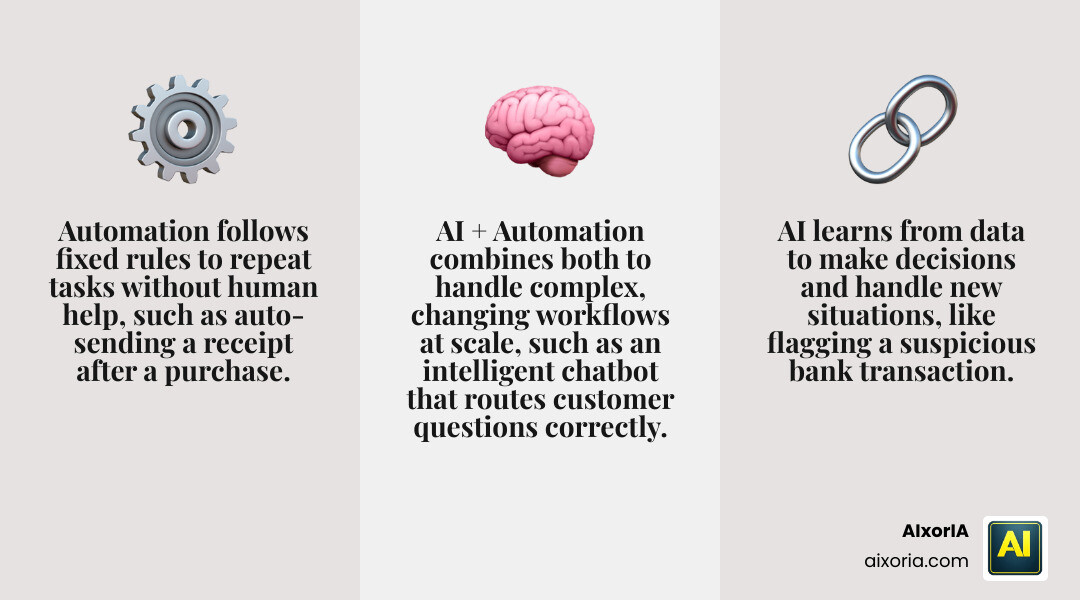
| Automation | Follows fixed rules to repeat tasks without human help | Auto-sending a receipt after a purchase |
| Artificial Intelligence (AI) | Learns from data to make decisions and handle new situations | Flagging a suspicious bank transaction |
| AI + Automation | Combines both to handle complex, changing workflows at scale | A chatbot that understands your question and routes it correctly |
Together, they handle the work that eats your day — so you can focus on the stuff that actually moves your business forward.
Employees spend an estimated 41% of their time on repetitive, low-impact tasks. That’s almost half your workday on work a machine could do.
That’s exactly the problem AI and automation are built to solve.
Automation has been around for centuries — from ancient water mills to factory assembly lines. But the rise of AI has changed the game completely. Where traditional automation follows a rigid script, AI can read the situation, adapt, and improve over time.
The result? Businesses of every size — including small ones with no tech team — can now run smarter, faster, and leaner.
What are AI and automation?
To truly grasp the potential of modern technology, we have to look at these two concepts both separately and as a team. According to What is AI? – Artificial Intelligence Explained – AWS, artificial intelligence is a transformative technology that enables machines to perform human-like problem-solving tasks. It’s about creating systems that can simulate human learning, comprehension, and creativity.
Automation, on the other hand, is the use of technology to execute tasks with minimal human intervention. While automation has historically been about physical machines (like those in car factories), in 2026, it is largely software-driven. As explained in What is AI Automation? – AI Automation Explained – AWS, AI automation seeks to solve the biggest weakness of traditional automation: the tendency for rigid systems to break when something unexpected happens.
Defining What are AI and automation in 2026
In May 2026, the lines between these two are blurring thanks to the explosion of generative AI. Traditional Robotic Process Automation (RPA) used to be “dumb”—it could move data from one spreadsheet to another, but it couldn’t “read” a messy, handwritten invoice.
Today, we use AI to handle unstructured data. This means the system doesn’t just follow a path; it understands the content. Whether it’s summarizing a long email chain or writing code to fix a bug, the current generation of best AI tools for work allows us to automate cognitive tasks that were once thought to be “AI-proof.”
The Synergy: What are AI and automation together?
When we combine these forces, we get “Intelligent Automation.” This isn’t just about doing things faster; it’s about reducing the cognitive load on your team. Imagine a system that doesn’t just file an expense report but also cross-references it with company policy, flags potential fraud, and suggests a more cost-effective travel route for next time.
By utilizing the best AI tools for business productivity, we can optimize workflows so that the “boring” stuff happens in the background. This leaves our human brains free to do what they do best: strategy, empathy, and creative problem-solving.
Key Differences: Automation vs. Artificial Intelligence
It is a common mistake to use these terms interchangeably, but they are quite different in their “DNA.” To understand What are AI and automation? in a practical sense, think of automation as the hands and AI as the brain.
| Feature | Traditional Automation | Artificial Intelligence (AI) |
|---|---|---|
| Logic | Rules-based (If X, then Y) | Learning-based (Neural networks) |
| Adaptability | Rigid; fails on exceptions | Flexible; learns from new data |
| Input | Requires structured data | Handles unstructured data (text, images) |
| Goal | Consistency and speed | Reasoning and decision-making |
As noted in the Artificial intelligence – Wikiwand entry, AI research has traditionally focused on goals like reasoning, knowledge representation, and perception. Automation doesn’t care about “reasoning”—it just wants to make sure the task is finished exactly the same way every single time.
Traditional Automation vs. AI Agents
The most exciting development in 2026 is the shift from simple automation to “AI Agents.” Traditional tools follow predefined rules. If you automate an email sequence and a customer replies with a complex question, the automation usually fails or sends a generic, frustrating response.
AI agents are different. They use autonomous planning and contextual adaptation. An agent can look at a customer’s history, detect their mood through sentiment analysis, and decide on the best course of action without a human telling it exactly what to do. If you’re looking to scale a small business, exploring the best AI workflow automation tools for startups 2026 is the best place to start. These tools move beyond “no-code” into “agentic” territory, where the software actually helps you design the workflow itself.
Real-World Use Cases and Industry Examples
You are likely interacting with AI and automation every day without even realizing it. From the personalized recommendations on your favorite streaming service to the fraud alerts from your bank, these systems are working 24/7.
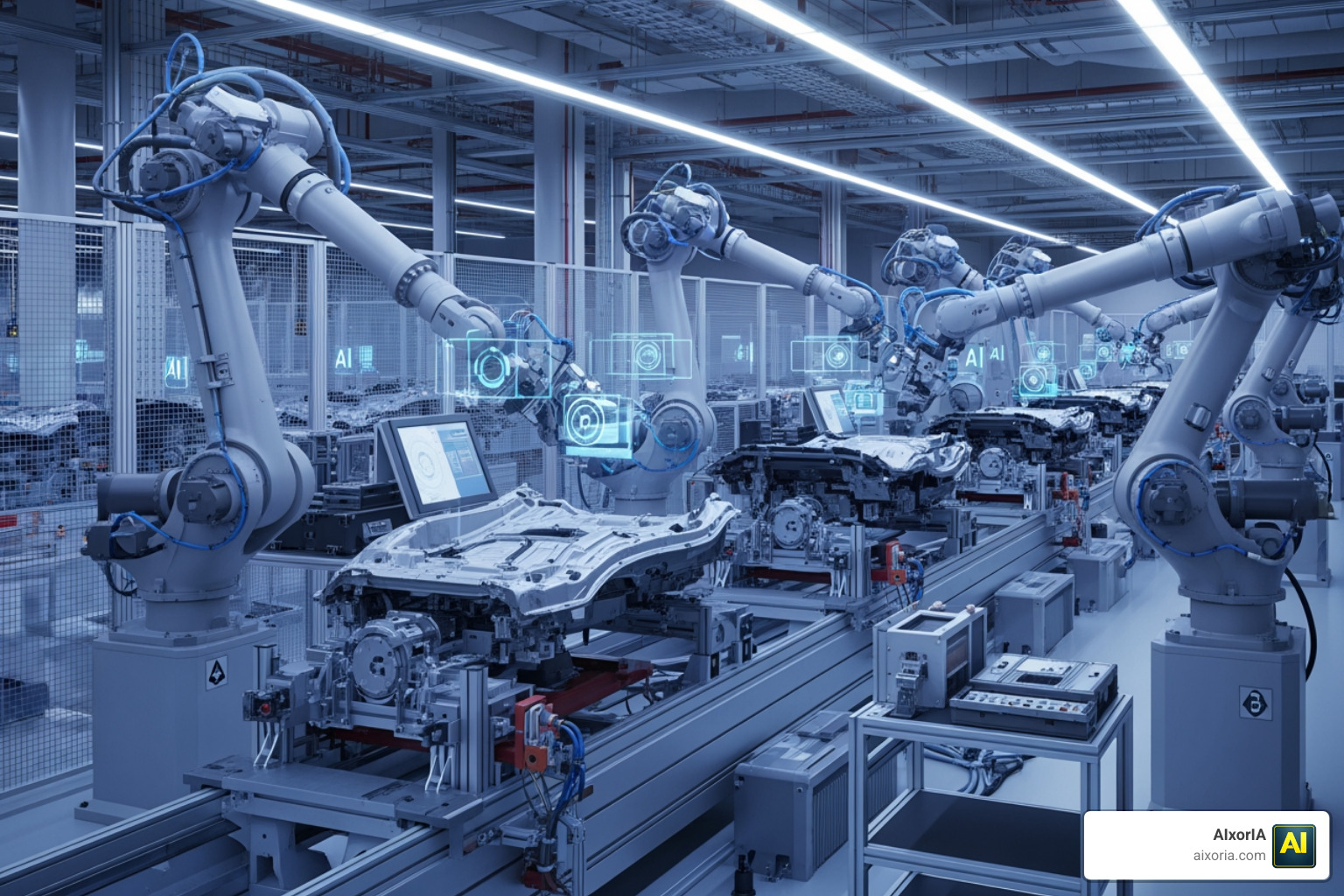
According to What Is Artificial Intelligence (AI)? | IBM, real-world applications are vast. For example, predictive maintenance uses sensors and AI to forecast when a factory machine is about to break before it actually happens, saving millions in downtime. In customer service, virtual agents are now handling up to 60% of inquiries, achieving high satisfaction rates because they can actually solve problems rather than just reciting a script.
Sector-Specific Applications
We see these technologies transforming every corner of the economy:
- Healthcare: AI assists medical professionals in diagnosing conditions by analyzing medical images with superhuman precision. It’s also being used to formulate patient treatment plans and reduce manual charting time by up to 75%.
- Finance: Beyond fraud detection, AI is used for real-time market trend prediction and automated invoice matching.
- Supply Chain: ML-powered insights help companies plan demand and manage inventory, reducing waste and ensuring products are where they need to be.
For those of us working in office environments, using AI tools for productivity and time management has become the new standard for staying competitive.
Benefits and Challenges of Implementation
The benefits of asking “What are AI and automation?” and then applying the answer are clear: 90% of business leaders who use AI report significant cost and time savings.
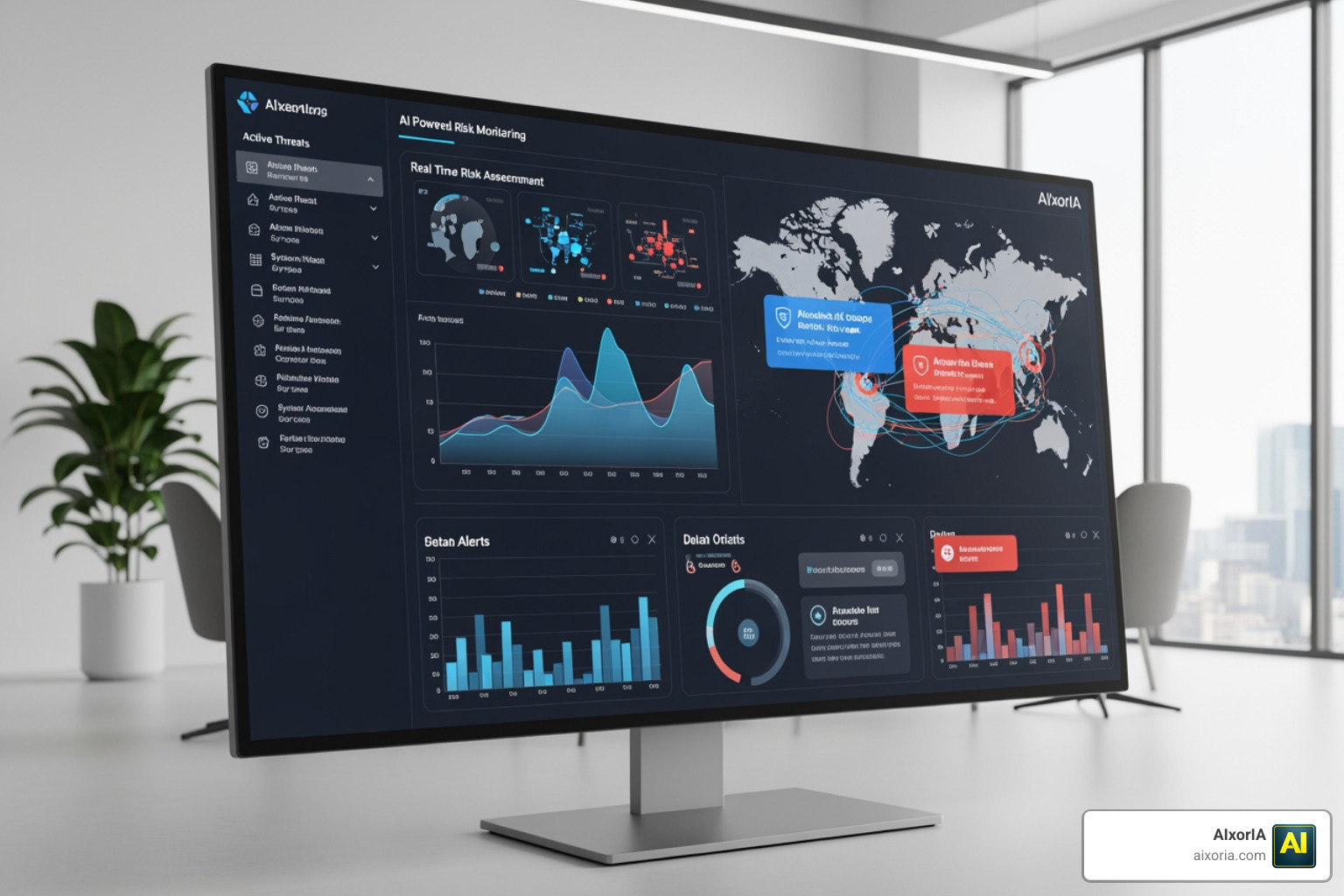
However, we must be realistic about the hurdles. Implementation isn’t just about buying software; it’s about a shift in culture. As Wikipedia’s Artificial intelligence article points out, the field has gone through “AI winters” where expectations didn’t meet reality. Today, the challenge isn’t the technology’s capability—it’s the integration.
Overcoming Risks and Ethical Concerns
We cannot talk about AI without addressing the “elephant in the room”: ethics and risks.
- Data Privacy: AI requires data to learn. Ensuring that data is encrypted and handled according to regulations is non-negotiable.
- Algorithmic Bias: If the data used to train an AI is biased, the AI will be too. We must build diverse teams and use representative data to minimize this.
- Job Displacement: While 65% of workers believe AI will free up their time for strategic work, there is valid concern about roles being replaced. At AIxorIA, we believe the future belongs to those who use AI as a collaborator, not a competitor.
To stay ahead of these risks, keep up with the best AI tools for productivity in 2026, as these newer models often include better “guardrails” and transparency features.
Frequently Asked Questions about AI and Automation
Is AI the same as automation?
No. Automation is about doing (following a set of instructions), while AI is about thinking (processing information to make a decision). You can have automation without AI (a sprinkler system on a timer), and you can have AI without automation (a system that suggests a diagnosis to a doctor but doesn’t perform the treatment).
Which is better for my business?
Neither is “better”—they serve different purposes. If you have high-volume, repetitive tasks that never change, traditional automation is cheaper and more reliable. If your tasks involve variable data, human language, or complex decisions, you need AI. Most modern businesses need a mix of both.
Does AI replace human workers?
AI is designed to augment human work. It takes over the “low-value” tasks—like data entry and scheduling—so that humans can focus on “high-value” tasks like strategy, creative design, and building relationships. In fact, many companies find that AI creates new types of jobs that didn’t exist five years ago.
Conclusion
Understanding What are AI and automation? is the first step toward a more efficient future. At AIxorIA, we specialize in making these complex technologies simple. We provide custom AI solutions, tool training workshops, and performance audits to ensure your business isn’t just “using AI,” but using it right.
The key to success in 2026 is strategic alignment. Don’t adopt technology for the sake of it—identify your “digital friction points” and apply the right tool for the job. Whether you are a startup looking for no-code agents or an enterprise seeking a full ROI formula, keeping a “human-in-the-loop” ensures that your automation remains ethical, accurate, and effective.
Ready to take the next step? Learn more about AI tools for business in 2026 and discover how we can help you turn these powerful technologies into your competitive advantage.
1 thought on “What Are AI and Automation? 2026 Guide, Differences & Examples”