Why Finding the Easiest Accounting Software for Nonprofits Matters More Than You Think
Scr0ll d0wn to D0VVNL0AD
Finding the easiest accounting software for nonprofits can be the difference between spending your limited time on your mission — or drowning in spreadsheets.
Here are the top options to consider right now:
| Software | Best For | Starting Price | Free Option? |
|---|---|---|---|
| Aplos | Mid-sized nonprofits, churches | ~$49/mo | 15-day trial |
| Wave | Tiny orgs under $50K revenue | $0 | Yes |
| ZipBooks | Startups on zero budget | $0 | Yes |
| MoneyMinder | Volunteer-run groups | $299/yr | Yes (limited) |
| Xero | Growing nonprofits | ~$25/mo | 30-day trial |
| Zoho Books | Remote/volunteer teams | Free–paid tiers | Yes (under $50K) |
| NP Ledger | Fund accounting on a budget | $29/mo | Free trial |

The reality is that over 1.9 million U.S. nonprofits manage more than $3.7 trillion in revenue and donations every year. Yet many of them — especially small and volunteer-run organizations — are still tracking finances in Excel or Google Sheets.
That creates real problems. Restricted funds get mixed up. Grant spending goes untracked. Board reports take hours to pull together manually. And Form 990 season becomes a scramble.
The good news? There are software tools built specifically for nonprofits that make all of this dramatically simpler — even if no one on your team has an accounting background.
This guide breaks down which platforms are genuinely easy to use, which are free or low-cost, and which ones will actually grow with you as your organization expands.
Key Challenges in Nonprofit Financial Management
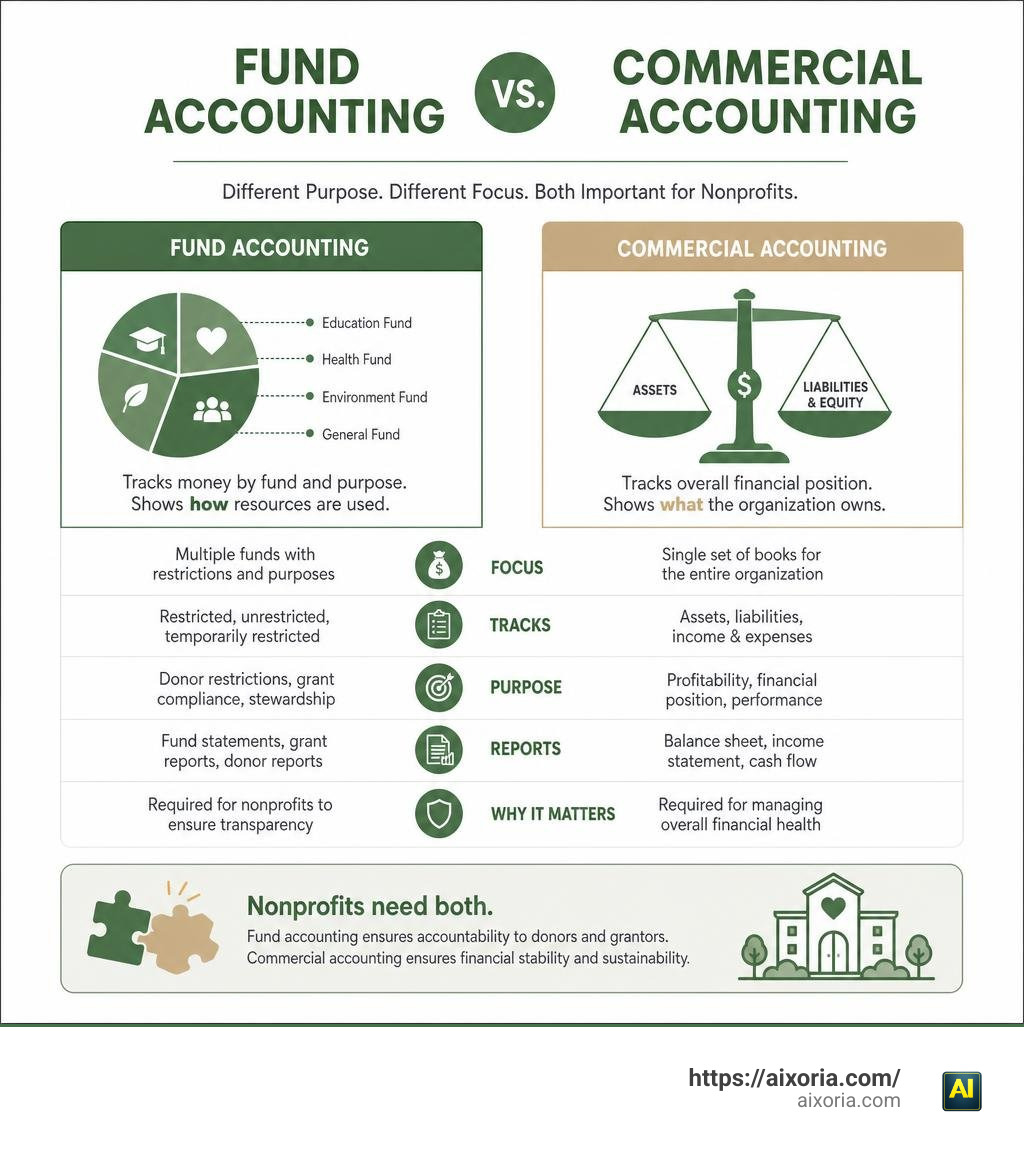
Managing the finances of a tax-exempt organization in 2026 is fundamentally different from running a traditional business. While commercial businesses focus on profitability, nonprofits focus on stewardship and transparency. You aren’t trying to show how much money you made; you are trying to show exactly how you spent every single dollar to make the world a better place.
This stewardship model introduces unique challenges that quickly break standard spreadsheets and basic accounting tools:
- Restricted Funds vs. Unrestricted Funds: This is the biggest hurdle. When a donor writes a check specifically for your “Winter Shelter Program,” you cannot legally spend that money on administrative rent. Keeping these designated funds strictly separated in your accounts is a legal requirement.
- Grant Tracking & Compliance: If your nonprofit receives government grants or private foundation funding, you must track spending against specific grant parameters. Failing to show a clear audit trail can result in losing your funding entirely.
- Board & Stakeholder Reporting: Nonprofit boards are filled with passionate volunteers who may not have financial backgrounds. You need to present clear, visual, and highly accurate reports—like the Statement of Financial Position (the nonprofit equivalent of a Balance Sheet) and the Statement of Activities (the Income Statement)—without spending days compiling them in Excel.
- IRS Compliance and Form 990: To maintain your tax-exempt status, you must file an annual Form 990, 990-EZ, or 990-N. This requires mapping every transaction to specific IRS categories. If your software doesn’t support this natively, your year-end tax preparation becomes an expensive nightmare for your CPA.

To keep your sanity and protect your organization, automating these complex processes is no longer optional. Modern tools help you transition away from manual data entry. If you want to understand how automation saves hundreds of hours of administrative overhead, check out our Benefits of Finance Automation Software 2026 Guide to see how modern platforms streamline these workflows.
Evaluating the Easiest Accounting Software for Nonprofits
When we look for the easiest accounting software for nonprofits, we aren’t just looking for a pretty interface. “Easy” means that a volunteer treasurer with zero formal accounting training can log in and successfully reconcile a bank statement, tag a donation, and run a report without making painful errors.
To find the right fit for your organization, we evaluate tools based on three core pillars:
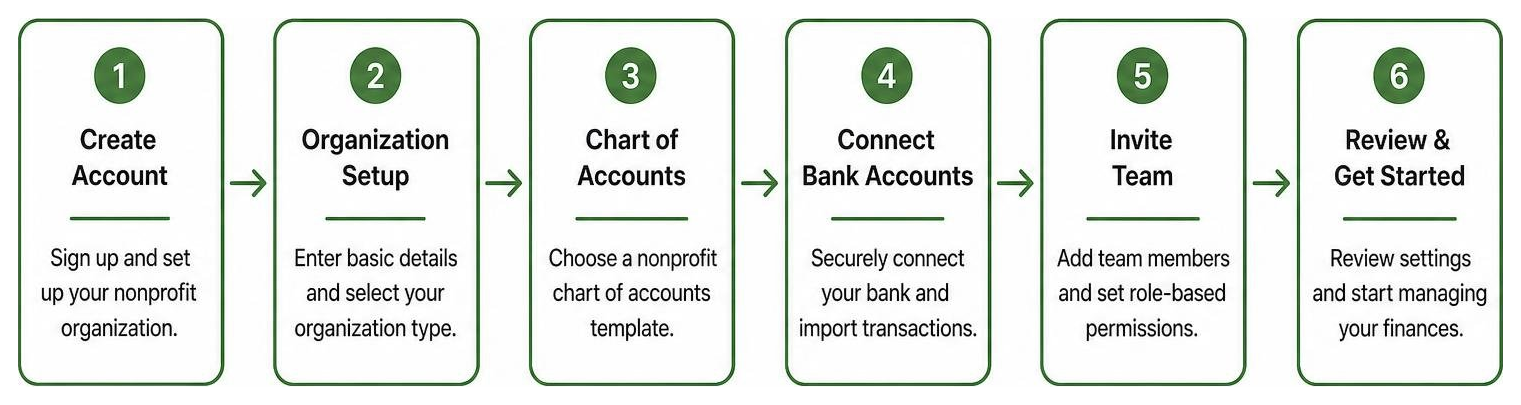
- User Onboarding & Setup: A startup nonprofit doesn’t have weeks to spend on software implementation. The best platforms offer guided setup wizards, pre-built nonprofit chart-of-accounts templates, and easy data migration tools to get you up and running in minutes.
- Automatic Bank Reconciliation: Manually typing in bank transactions is the fastest way to introduce errors. The software must connect directly to your bank accounts to pull transactions automatically.
- Multi-User Permissions & Collaboration: Nonprofits rely heavily on volunteers, remote board members, and external accountants. The system must allow you to assign specific, role-based permissions. For example, you want your fundraising volunteer to log donations without having access to your payroll data or the ability to edit historical transactions.
For a broader look at how simple accounting tools compare, you can read our review of the 7 Easiest Accounting Software for Small Business 2026 to see how general-business tools stack up against dedicated nonprofit platforms.
Key Features of the Easiest Accounting Software for Nonprofits
The secret to effortless bookkeeping lies in the features that eliminate manual admin work. When evaluating your options, look for these key capabilities:
- Automatic Bank Feeds & Smart Categorization: This is the baseline for modern accounting. The software should automatically import transactions from your bank, credit cards, and payment processors. Advanced tools use machine learning to suggest categories based on historical data, allowing volunteers to simply click “approve.”
- Flexible Transaction Tagging: Instead of bloating your chart of accounts with hundreds of sub-accounts for every event and campaign, the easiest systems use “tags” or “classes.” This allows you to tag a $500 expense as both “Office Supplies” and “Summer Youth Camp,” keeping your general ledger clean while giving you deep reporting flexibility.
- Seamless Donor Management & Receipting: Your accounting shouldn’t live in a vacuum. Integrating your fundraising efforts directly with your ledger prevents duplicate data entry. The platform should make it simple to track donor profiles, issue automated tax-compliant donation receipts, and send out annual giving statements with a single click.
To see how specialized reporting tools work in action, you can explore the Nonprofit Reporting Software | Financial Reports, Dashboards & Insights page, which details how to build board-ready reports without manual workarounds.
Additionally, safeguarding donor data is paramount. Implementing secure systems with robust internal controls ensures compliance and trust. You can learn more about securing your financial workflows in our guide on the Best Accounting Workflow Automation Software in 2026 SOC 2 AI.
Budget-Friendly Options for the Easiest Accounting Software for Nonprofits
For startup charities and grassroots organizations, keeping overhead low is vital. Fortunately, several platforms offer free tiers or steep discounts specifically for verified 501(c)(3) organizations.
- Wave Accounting & ZipBooks: If you have an annual revenue under $50,000 and don’t manage complex restricted grants, completely free tools like Wave or ZipBooks are fantastic starting points. ZipBooks is highly user-friendly, offering unlimited invoicing and basic donor profiles. However, keep in mind that these general business tools do not natively support fund accounting, meaning you will have to use manual tags as a workaround.
- Zoho Books: Zoho offers a generous free tier for organizations with annual revenues under $50,000. For larger organizations, they provide a permanent 15% discount for registered charities, trusts, and societies. It features a highly polished mobile app and role-based collaboration, making it a favorite for remote teams. You can check out their dedicated nonprofit features on the Nonprofit Accounting Software | Easy Accounting for Charities & NGO – Zoho Books page.
- Pandle: Pandle is a highly accessible, low-cost option that offers a free-forever tier and a Pro tier for just £5/month. It features “Pandle Projects,” which is an incredibly easy way for small charities to track designated campaign funds without complex setups. Read more about their approach on the Charity & Non-Profit Accounting Software – Pandle page.
- QuickBooks Online via TechSoup: While buying QuickBooks directly from Intuit can be incredibly expensive, verified nonprofits can access heavily discounted QuickBooks Online licenses (ranging from $80 to $170 per year) through the TechSoup platform.
If you are trying to decide between a free general business tool and a paid industry giant, our breakdown of QuickBooks vs Wave Which is Better in 2026 offers a side-by-side comparison of usability and value.
Advanced Fund Tracking and Compliance Tools
As your nonprofit grows, your accounting needs will inevitably become more complex. If you are managing multiple restricted grants, hiring employees, or preparing for an independent audit, you will outgrow basic tools and need true, native fund accounting.
- NP Ledger: Starting at just $29/month, NP Ledger is designed specifically to bridge the gap between simple, affordable software and robust fund accounting. It features AI-powered workflows like voice entry (where you can speak transactions to prefill forms), receipt scanning, and built-in safeguards that prevent restricted funds from being spent incorrectly. Crucially, it provides native Form 990-N and 990-EZ preparation helpers at no extra charge. Learn more at NP Ledger — Nonprofit Fund Accounting.
- Kananas: For organizations that want to tie their accounting directly to their community management, Kananas centralizes bookkeeping, member databases, and event planning in one place. It is free for up to 50 members and uses AI to analyze CSV bank statement lines to suggest accounting categories, keeping your treasurer in complete control. Check out their platform details on the Nonprofit Accounting Software – Kananas page.
- Xero: Trusted by millions of organizations globally, Xero offers a permanent 25% discount for verified 501(c)(3) nonprofits. While it is a general business tool, its flexible tracking categories make it highly adaptable for fund accounting. It partners with Gusto to offer seamless, compliant payroll and boasts an app store with over 1,000 integrations. You can explore their nonprofit program at Accounting software for nonprofit organizations | Xero US.
Frequently Asked Questions about Nonprofit Bookkeeping
What is the difference between fund accounting and regular business accounting?
Regular business accounting is designed to track profitability and net income for owners or shareholders. Fund accounting, on the other hand, is designed for stewardship and compliance. It tracks restricted and unrestricted assets inside the ledger to prove to donors, grantors, and the IRS that designated money was spent exactly as intended.
Can a startup nonprofit use completely free accounting software?
Yes, absolutely. If your startup nonprofit has a tight budget and simple finances (under $50,000 in annual revenue with no complex restricted grants), free platforms like Wave, ZipBooks, or Zoho Books’ free tier are excellent options. However, as you begin receiving restricted donations or government grants, you will likely need to upgrade to a system with native fund accounting safeguards to avoid manual errors in external spreadsheets.
How does automatic bank categorization save time for volunteers?
Instead of manually typing in every single expense and donation from paper bank statements—a process prone to typos and duplicate entries—automatic bank feeds pull transactions into your ledger in real time. Modern tools use AI and custom bank rules to automatically categorize recurring transactions (like monthly donor subscriptions or utility bills), meaning your volunteer treasurer only needs to review and approve them.
Conclusion
Choosing the easiest accounting software for nonprofits isn’t about finding the tool with the most bells and whistles. It’s about finding a platform that respects your time, aligns with your team’s technical skill level, and protects your tax-exempt status.
For tiny startups, starting with a free tool like Wave or a discounted Zoho Books account is a smart way to keep overhead low. As your organization grows and begins managing restricted funds, migrating to a dedicated platform like NP Ledger, Xero, or Aplos will save your team hundreds of hours of manual administrative work.
At Aixoria, we believe that modern technology should empower you to focus on what matters most—your mission. By automating your financial workflows, you can ensure complete transparency for your donors, keep your board informed, and set your organization up for sustainable, long-term impact.
Ready to supercharge your team’s administrative efficiency beyond just bookkeeping? Discover the cutting-edge tools that are shaping the future of work in our comprehensive guide on What is the Best AI for Productivity in 2026 and take back your time today.