Why Choosing the Right Software Development Tools Matters in 2026
Scr0ll d0wn to D0VVNL0AD

The best software development tools can mean the difference between a project that ships on time and one that drags on for months. Whether you’re a small business owner trying to build something or a developer managing a team, the tools you pick shape everything — your speed, your costs, and your code quality.
Here’s a quick look at the top tools by category:
| Category | Top Tools |
|---|---|
| Version Control | GitHub, GitLab, Bitbucket |
| AI Coding Assistants | GitHub Copilot, Cursor, Claude Code |
| IDEs & Code Editors | VS Code, IntelliJ IDEA, PyCharm |
| Testing & QA | Selenium, Playwright, Cypress |
| CI/CD | GitHub Actions, Argo CD, CircleCI |
| Infrastructure as Code | Terraform, Pulumi |
| Containerization | Docker, Kubernetes |
| Project Management | Jira, Linear |
| Cloud Cost Management | CloudZero |
| Documentation | Confluence, Bit.ai |
Software development today moves through seven phases — planning, analysis, design, implementation, testing, deployment, and maintenance. Each phase has its own challenges. And each phase now has tools specifically built to make it easier.
The good news? You don’t need to be a technical expert to benefit from these tools. Many of them are built for teams of all sizes, including small businesses with no dedicated engineering staff.
AI has changed things fast. Developers using AI coding assistants report up to 55% faster coding speed. Platforms like GitHub now host over 100 million developers. Tools that once required deep technical knowledge are becoming more accessible every year.
This guide covers 45+ of the best tools across every phase of the SDLC — so you can find what fits your team, your budget, and your goals.
The Evolution of the Software Development Life Cycle (SDLC) in 2026
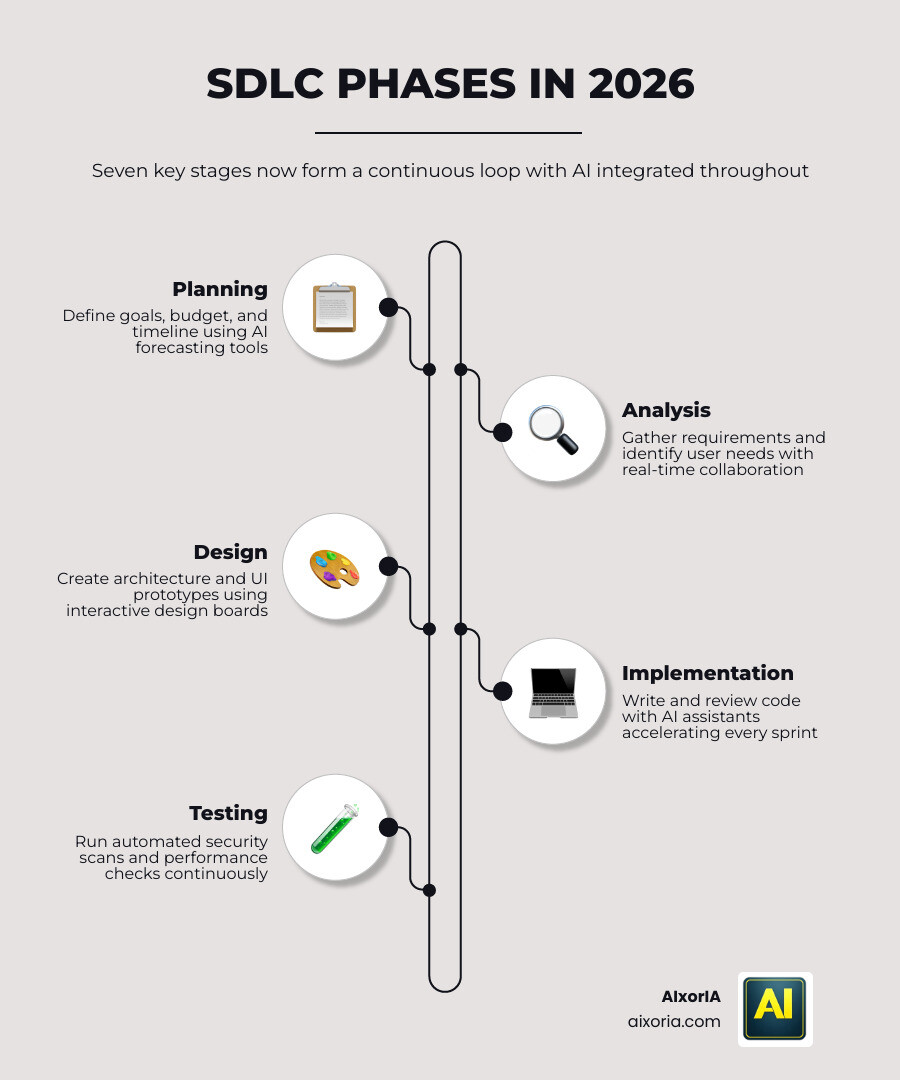
The Software Development Life Cycle (SDLC) isn’t what it used to be. In 2026, we’ve moved past the rigid “Waterfall” days into a world where AI and automation touch every single stage. The seven phases—Project Planning, Analysis, Design, Implementation, Testing, Deployment, and Maintenance—now function as a continuous loop rather than a straight line.
Modern engineering teams use Finally, AI for the entire software lifecycle. to bridge the gaps between these phases. For example, during the Analysis and Design stages, we no longer just draw on whiteboards. Tools like Figma and Excalidraw (which boasts over 74k stars on GitHub) allow us to visualize architecture and UI/UX in real-time.
When we hit the Implementation phase, AI isn’t just a “nice to have”; it’s the engine. From autonomous planning to refactoring data layers, tools now suggest the next edit before we even finish our thought. The Testing and Deployment phases have also evolved, with “Shift-Left” mentalities ensuring that security and quality checks happen the moment code is written, not just before it goes live.
Essential Categories of the Best Software Development Tools
Choosing the best software development tools requires a solid framework. At AIxorIA, we often tell our workshop participants that the “trendiest” tool isn’t always the best fit. You need to evaluate tools based on your specific tech stack, team size, and security requirements.
A great tool should reduce friction, not add to it. For instance, cloud development environments like CodeSandbox are claiming to save developers more than 5 hours per week by eliminating the “it works on my machine” headache. When selecting your stack, consider these three pillars:
- Scalability: Can the tool grow from a solo project to an enterprise-grade application?
- Integration: Does it play nicely with your existing project management and communication tools?
- Security: Does it meet standards like SOC 2?
For a deeper dive into how AI is specifically reshaping this landscape, check out our research on The 20 Best AI Software Development Tools in 2026.
Best Software Development Tools for Version Control and Collaboration
Source code management is the heartbeat of any engineering team. Git remains the gold standard, but the platforms we use to host it—GitHub, GitLab, and BitBucket—have become much more than just “storage.” They are now full-blown collaboration hubs.
VSCode has remained the most popular editor because of its massive ecosystem of over 80k extensions. In 2026, it has evolved into an “AI-native” editor, supporting “Agent Mode” where AI can autonomously plan and execute multi-step code changes.
For teams looking to boost their output, exploring The 8 Best AI Coding Assistant Tools is essential. These assistants help distributed teams maintain a consistent coding style and catch errors during the pull request process, ensuring that distance doesn’t degrade quality.
Best Software Development Tools for Testing and Security
Security is no longer a separate phase at the end of the SDLC; it’s embedded everywhere. This is known as “Shift-Left” security. Tools like SonarQube now support over 30 programming languages, scanning for vulnerabilities and “code smell” as you type.
For automated testing, Selenium continues to be a powerhouse for browser-based automation, while Playwright and Cypress have gained massive traction for their speed and reliability in modern web frameworks. To keep your codebase healthy, we recommend looking into Top Rated AI Driven Code Refactoring Tools for Enterprise Teams in 2026 to automate the cleanup of legacy code and ensure your security patches are always up to date.
AI-Assisted Development and Cloud Infrastructure
The biggest shift we’ve seen recently is the rise of “Agentic Development.” Unlike basic autocomplete, these tools can read your entire codebase, suggest multi-file edits, and even run terminal commands to fix test failures.
| Feature | AI-Native IDEs (e.g., Cursor) | Traditional Editors + Extensions |
|---|---|---|
| Context Awareness | Deep, whole-codebase indexing | Limited to open files |
| Multi-file Edits | Native and seamless | Often requires manual intervention |
| Agentic Capabilities | Built-in autonomous agents | Plugin-dependent |
| Learning Curve | Low (standard IDE feel) | Varies by extension |
Infrastructure as Code (IaC) tools like Terraform and Pulumi allow us to treat our servers and databases just like software. Terraform remains the leader here due to its plugin-based architecture that supports AWS, Azure, and GCP. If you are working on specialized projects, you might want to see the Best AI Tools for ML Projects 2026 Tested Ranked by Workflow to see how infrastructure and AI models blend. For those in the Java ecosystem, The Leading IDE for Professional Java and Kotlin Development (IntelliJ IDEA) now features natively integrated AI that can even help refactor data layers autonomously.
Accelerating Coding and Documentation with AI
Documentation is often the part of development that everyone hates but everyone needs. In 2026, AI has finally solved this. Tools like Mintlify and Bit.ai can auto-generate documentation by simply highlighting your code in VS Code.
GitHub Copilot and Cursor have become standard. While Copilot offers incredible speed, Cursor represents a shift toward conversational coding, where you can literally talk to your codebase to find bugs or explain complex logic. For those on a budget, we’ve compiled a list of 9 Free AI Tools to Understand Code and Generate Documentation that provide professional-grade results without the subscription fees.
Containerization and Observability for Reliable Deployments
Reliability is the name of the game. Docker and Kubernetes remain the kings of containerization, ensuring that your application runs the same way in production as it does on your laptop.
To manage these complex deployments, CI/CD tools like GitHub Actions and Argo CD enable “GitOps”—a practice where your Git repository is the single source of truth for your infrastructure. Observability tools like Grafana and Datadog then provide the “eyes” on your system, monitoring performance and alerting you to issues before your users notice them. For more on this, explore The 7 Best AI Coding Tools for Developers in 2026.
Optimizing Developer Experience (DevEx) and Engineering Spend
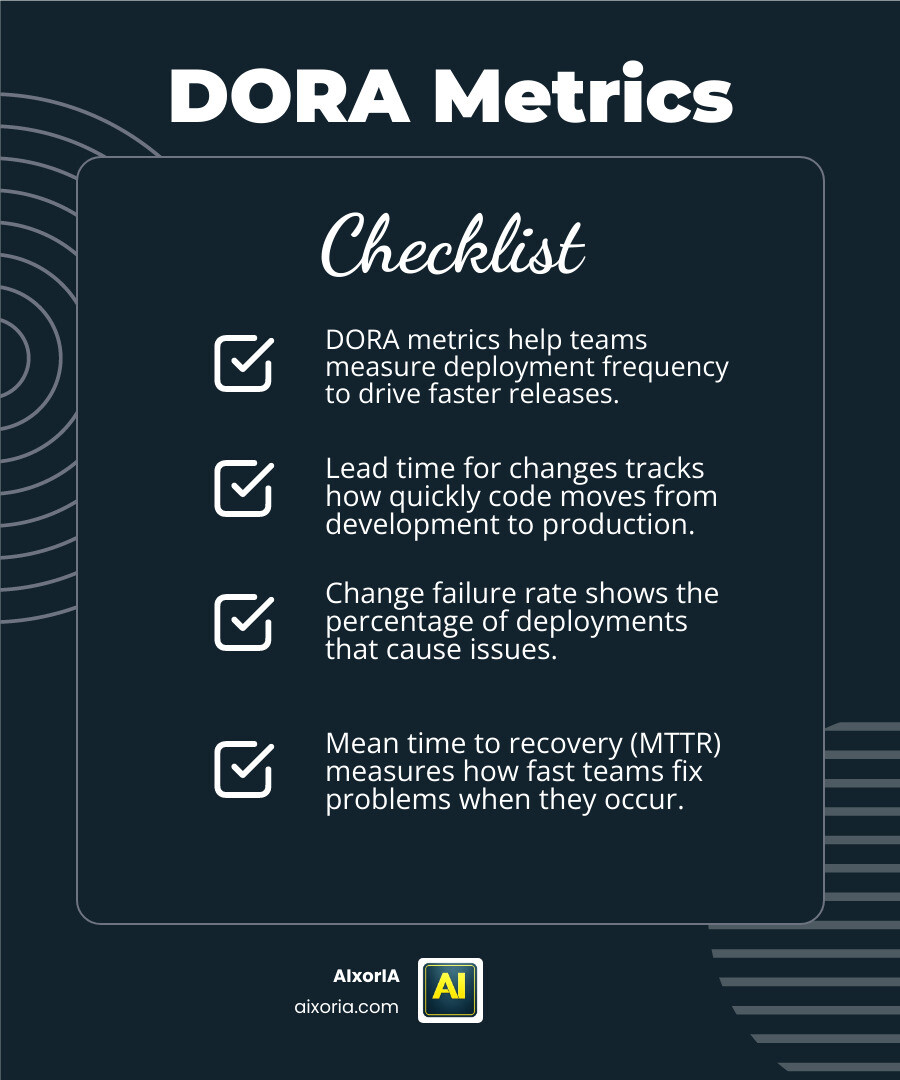
A happy developer is a productive developer. Developer Experience (DevEx) is about removing the “paper cuts” that slow teams down—like long build times or confusing documentation. We track this using DORA metrics:
- Deployment Frequency: How often we ship code.
- Lead Time for Changes: How long it takes to go from code to production.
- Change Failure Rate: How often deployments cause issues.
- Mean Time to Recovery (MTTR): How fast we fix things when they break.
Beyond happiness, we have to talk about the “bill.” Cloud costs can spiral out of control. Interestingly, while many cloud providers promise 72% discounts through savings plans, most customers only see about 20% savings. Tools like CloudZero are now being integrated directly into the SDLC to track “cost per feature,” allowing engineering teams to see the financial impact of their code in real-time. This “FinOps” approach ensures that innovation doesn’t break the bank. Discover more in our guide on Best AI Tools for Productivity for Developers in 2026.
Project Management and Progressive Delivery
Agile workflows are supported by heavyweights like Jira and the increasingly popular, speed-focused Linear. These tools help manage the “Implementation” phase by keeping tasks organized and visible.
To make releases safer, we use “Progressive Delivery” through feature flags. Tools like LaunchDarkly allow us to turn features on or off for specific users without redeploying code. This means we can test a new feature on 1% of our users, ensure it doesn’t crash, and then roll it out to everyone else. It’s like having an “undo” button for your entire product launch. For a comparison of how these tools perform, check out our Best AI Tools for Productivity for Coders in 2026 Tested.
Frequently Asked Questions about Software Development Tools
How can engineering teams manage cloud costs during the SDLC?
Teams should adopt FinOps practices by using tools like CloudZero. This allows you to map cost metadata to specific features and dev teams rather than just seeing a giant monthly bill. By receiving anomaly detection alerts, teams can catch “runaway” cloud resources before they become expensive mistakes.
Which AI-assisted development tools are most effective in 2026?
GitHub Copilot remains the leader for general productivity, but AI-native editors like Cursor are preferred for complex, multi-file refactoring. For Python-specific work, PyCharm’s natively integrated AI Assistant is exceptionally powerful for data science and web development.
What are the best tools for remote software development collaboration?
GitHub and GitLab are the foundations for code collaboration. For communication, Slack remains king, while tools like Loom (for video walkthroughs) and Notion (for centralized documentation) help keep distributed teams aligned without endless meetings.
Conclusion
Navigating the best software development tools in 2026 can feel overwhelming, but you don’t have to do it alone. At AIxorIA, we specialize in helping businesses cut through the noise. Whether you need a custom AI solution to automate your workflow, a tool training workshop for your engineering team, or a performance audit to see where your productivity is leaking, we are here to help.
Our mission is to provide simple, affordable, and fast support to ensure your technology stack is an asset, not a burden. Ready to supercharge your team’s efficiency? More info about AI productivity services is just a click away. Let’s build something great together.
1 thought on “Best Software Development Tools in 2026 (45+ Tested Tools for Faster Coding)”