Why Sales Call Tracking Software Is the Missing Piece in Your Revenue Stack
Scr0ll d0wn to D0VVNL0AD
Sales call tracking software is a tool that records, analyzes, and attributes data from phone conversations between sales reps and prospects — automatically logging everything into your CRM so nothing slips through the cracks.
Quick answer: What does sales call tracking software do?

- Records and transcribes inbound and outbound sales calls
- Assigns unique phone numbers to marketing campaigns to trace exactly where each call came from
- Automatically logs call data (duration, outcome, sentiment) into your CRM
- Uses AI to surface insights, flag objections, and coach reps
- Connects marketing spend to real revenue by linking calls to campaigns
Picture this: you’re on a sales call. Your prospect is opening up — sharing pain points, budget signals, timeline. You’re furiously scribbling notes. But are you actually listening, or just trying to keep up?
That’s the core problem sales call tracking solves.
Manual note-taking means missed signals. Manual CRM logging means dirty data. And without knowing which ad, campaign, or channel triggered a call, your marketing budget is flying blind.
According to Salesforce research, 80% of sales reps who use AI say it’s easier to get the customer insights needed to close a deal — compared to only 54% of reps who don’t use AI. That gap is wide, and call tracking software is one of the fastest ways to close it.
The good news: modern call tracking platforms handle the busywork automatically, so your reps can focus on the actual conversation.
What is Call Tracking and How Does It Work?
At its core, sales call tracking software acts as a bridge between your digital marketing campaigns and your offline voice conversations. But how does it actually work under the hood?
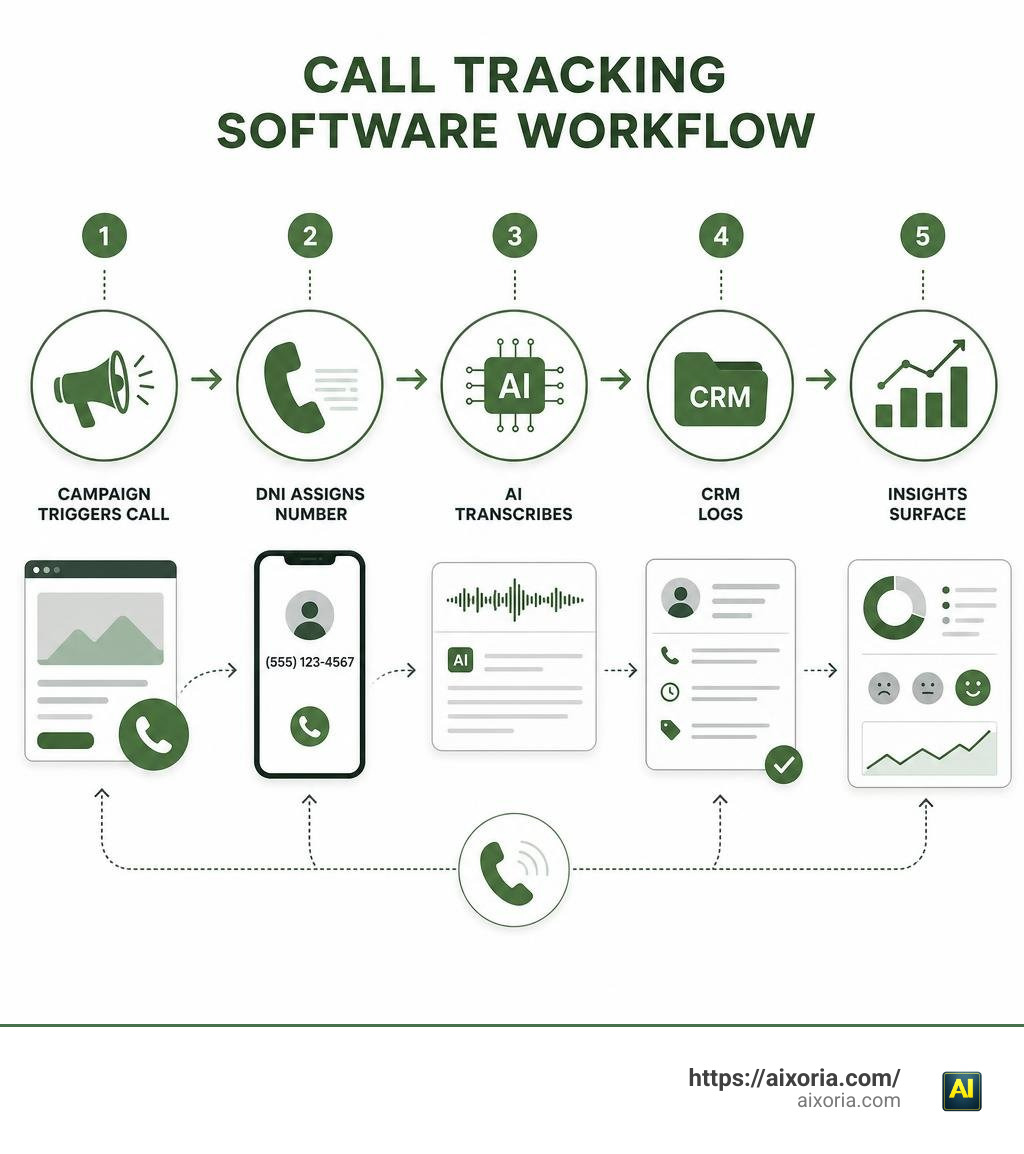
The magic lies in a technology called Dynamic Number Insertion (DNI). When a prospect clicks on an ad and lands on your website, DNI automatically swaps out the generic phone number on your page with a unique tracking number assigned specifically to that user’s session.

This session-level tracking connects the dots between a prospect’s digital footprint (the keywords they searched, the Google or Meta ad they clicked, the pages they browsed) and the subsequent phone call. When the phone rings, we don’t just know that someone is calling; we know exactly why they are calling.
Once the call is initiated, the software works in tandem with your telephony system and your CRM to capture the full picture:
- The Handshake: The tracking software routes the call to your sales rep while preserving the visitor’s attribution data.
- The Capture: The conversation is recorded (with proper consent) and securely streamed to a cloud server.
- The Sync: The tool pushes metadata (call duration, date, time, and caller ID) directly into your CRM, matching it to an existing lead or creating a new contact profile.
- The Analysis: AI models transcribe the conversation, evaluate user sentiment, and tag specific outcomes (like a booked meeting or competitor mention).
By automating this entire pipeline, you build a comprehensive, error-free lead profile. This degree of automation is why modern revenue teams look for platforms that offer bi-directional, native syncs with tools like Salesforce and HubSpot rather than simple one-way data dumps. To see how these technologies fit into a broader sales automation strategy, explore our guide on the Best AI Sales Automation Tools for Mid-Market Companies in 2026.
For high-ticket sales funnels with long multi-touch conversion paths, platforms like Hyros take this a step further. They utilize first-party data matching to bypass standard attribution gaps, allowing you to feed offline conversion and close data directly back into ad network APIs (like Google and Facebook). This trains their smart bidding algorithms to optimize for actual revenue-generating closes rather than simple, unqualified clicks.
Key Differences Between Inbound and Outbound Tracking
While the term “call tracking” is often used as a catch-all, inbound and outbound tracking serve entirely different functions in your sales motion. Understanding these differences is critical to selecting the right platform.
Inbound Call Tracking: The Marketing Lens
Inbound tracking focuses on attribution. It is designed to answer one key question: Which marketing efforts are actually making the phone ring?
By routing inbound calls through unique tracking numbers, you can accurately evaluate your campaign ROI across diverse channels, from PPC campaigns to offline billboards. Advanced systems also utilize intelligent call routing, directing callers to specific product specialists based on the region or campaign they dialed. This reduces transfers, improves the customer experience, and boosts close rates.
Outbound Call Tracking: The Sales Performance Lens
Outbound tracking focuses on activity, efficiency, and execution. It is designed to help outbound teams manage, scale, and optimize their active outreach.
Instead of tracking where a caller came from, outbound software monitors how your reps interact with prospects. Outbound systems rely heavily on sales dialer software to automate the dialing process. For outbound-heavy teams, tools like JustCall offer power, predictive, and dynamic dialers that connect reps only when a live prospect answers, saving hours of idle time. To scale these outbound efforts efficiently, check out the Best AI BDR Tools for Scaling Outbound Efforts in 2026.
VoIP vs. SIM-Based Tracking
When implementing outbound call tracking, we must also consider the technical delivery method. Most traditional platforms operate over Voice over Internet Protocol (VoIP). However, SIM-based and mobile-first options have emerged as highly reliable alternatives.
| Feature | VoIP-Based Platforms | SIM-Based Tracking (e.g., Salestrail, Runo) |
|---|---|---|
| Network Reliability | Dependent on active internet connection; prone to latency/drops. | Uses native mobile carrier networks; crystal-clear audio. |
| Rep Adoption | Requires reps to use a specific web app or softphone. | Reps use their native mobile dialer or WhatsApp. |
| Caller ID Trust | Often flagged as spam by carrier algorithms. | Uses the rep’s actual mobile SIM number; higher pickup rates. |
| Mobile Flexibility | Often clunky on mobile devices. | Built native-first; background tracking on Android, in-app on iOS. |
Mobile-first apps like #1 Automated Call Tracking Software for Business & Sales Teams and Runo allow remote or on-field reps to make SIM-based or WhatsApp calls normally, while automatically capturing duration, recordings, and logging them directly to the CRM. This approach eliminates the clunkiness of VoIP and keeps connection rates high.
Key Features to Prioritize in Sales Call Tracking Software
Choosing a sales call tracking software platform requires looking past marketing buzzwords and evaluating features based on your team’s specific workflow. Let’s break down the core features you should prioritize.
Core Capabilities of Modern Sales Call Tracking Software
Modern systems go far beyond simple call recording. The best platforms leverage advanced AI to transform voice data into structured, actionable business intelligence.
- AI Transcription & Summarization: Manually reviewing hours of audio is impossible. AI transcriptions convert voice to text in near real-time, generating structured post-call summaries that help reps prepare for follow-ups without spending hours on administrative data entry.
- Sentiment Analysis: Premium AI models analyze vocal tones, pauses, and speech patterns to evaluate customer sentiment. This helps identify exactly where a prospect is in the sales funnel or flags potential deal risks before they derail a sale.
- Conversation Intelligence: Platforms like The Best Sales Software: Improve Your Sales Team, Close More Deals – Gong act as a complete “Revenue AI Operating System.” Gong captures 99% of customer interactions across calls, emails, and calendars, analyzing the data to surface buying signals, track competitor mentions, and deliver pipeline forecasts based on real buyer behavior. For a deeper dive into these ecosystems, read our review of the Best AI Tools for Sales and Marketing in 2026.
- Real-Time Coaching: Traditional conversation intelligence is retrospective—it tells you what went wrong after the call is over. However, tools like Othello provide real-time, on-screen guidance. Operating invisibly on the desktop, Othello listens to live calls to suggest discovery questions, counter competitor claims, and enforce playbooks during the active conversation. This live guidance has been shown to reduce rep ramp-up times by up to 45%. You can discover more options in our roundup of the 9 Best AI Tools for Sales GTM in 2026.
How to Evaluate and Choose Sales Call Tracking Software
When comparing vendors, we recommend evaluating their offerings against your technical requirements, team structure, and compliance obligations.
1. Integration Capabilities
Your call tracking tool must plug seamlessly into your existing tech stack. Look for native, bi-directional integrations with your CRM (Salesforce, HubSpot, Zoho) and your marketing platforms (Google Ads, Meta Business Manager). If you are evaluating tools for a collaborative team environment, consider reading about the Best Sales Collaboration Software in 2026.
2. Compliance and Data Governance
Recording phone calls comes with strict legal responsibilities. Your chosen platform must have built-in features to help you comply with global and regional laws. If you run a small business or contact center, you can learn more about managing these operational workflows in our guide to the Best Contact Center Workforce Management Software for Small Business.
Ensure your software supports the following essential compliance standards:
- TCPA (Telephone Consumer Protection Act): Requires prior express written consent before autodialing mobile numbers.
- GDPR & CCPA: Demands explicit consent workflows for call recording and grants users the “right to be forgotten” (deleting their call data upon request).
- State-Level Calling Laws: Certain US states have incredibly strict rules. For example, Florida limits outbound sales calls to three per person in a 24-hour window, and California requires all autodialed calls to begin with a live human greeting rather than a recording.
- Spam Mitigation: Carrier-level spam filters rely on machine learning algorithms that flag repetitive calling patterns or low answer rates. Outbound platforms should support number rotation, local presence dialing, and registration with the Free Caller Registry to protect your outbound numbers from being flagged as “Spam Risk.”
3. Pricing Models and Overages
Call tracking pricing varies wildly. Some platforms charge a flat monthly fee per user, while others charge based on call volume, transcription minutes, or telephone number rentals. Be sure to audit potential overage charges for phone numbers and transcription minutes to avoid unexpected bills.
Frequently Asked Questions about Call Tracking
How does dynamic number insertion (DNI) work?
DNI works by placing a small JavaScript snippet on your website. When a visitor arrives, the script analyzes their referral source (e.g., a Google PPC ad, an organic search, or a social media link). It then swaps the static phone number on your site with a unique tracking phone number from a designated pool.
This tracking number is temporarily tied to that specific user’s web session. If they call that number, the software matches the call to their session data, giving you exact keyword-level and campaign-level marketing attribution.
What is the difference between call tracking and conversation intelligence?
The difference comes down to the depth of data captured:
- Call Tracking: Primarily captures call metadata. It focuses on who called, when they called, how long they talked, and which marketing campaign triggered the call. It is heavily focused on marketing attribution and basic rep activity logging.
- Conversation Intelligence: Focuses on the content of the conversation. It uses AI to transcribe the audio, analyze buyer sentiment, identify competitor mentions, flag objections, and evaluate the quality of the interaction. It is designed for sales coaching, playbook adherence, and deal forecasting.
How do compliance laws like GDPR and TCPA affect call recording?
These laws require businesses to implement strict consent and data-handling workflows:
- Two-Party Consent: In many jurisdictions (like California, Massachusetts, and several European countries), both parties must consent to a call being recorded. Your software must support automated compliance features, such as playing an audible disclosure (“This call is recorded for quality assurance…”) or providing opt-out mechanisms.
- Data Security: Recordings and transcripts must be encrypted both in transit and at rest. Under GDPR, you must also be able to easily locate and delete a specific customer’s call recordings if they submit a deletion request.
Conclusion
Comparing sales call tracking software isn’t just about finding a tool to record phone calls—it’s about choosing a foundational system that turns voice conversations into structured, revenue-driving data.
Whether you need inbound tracking to optimize your digital marketing spend, mobile-first SIM tracking to keep your field reps efficient, or real-time AI coaching to help your team close deals in the moment, the right software will eliminate administrative busywork and give you complete visibility into your pipeline.
At Aixoria, we help mid-market companies and enterprise revenue teams navigate the complex landscape of modern sales technology. If you’re looking to streamline your workflows, eliminate tool overload, and implement cutting-edge AI systems, check out our comprehensive guide on What is the Best AI for Productivity in 2026 to learn how to unlock your team’s full potential.
1 thought on “Best Sales Call Tracking Software in 2026 (Top AI Tools Compared)”