Better SEO Tools for Keyword Research, Backlink Analysis, and Rank Tracking

If you work in SEO, content marketing, affiliate marketing, or digital growth, chances are you’ve used Ahrefs—or at least considered it.
It’s one of the most powerful SEO platforms on the market for keyword research, backlink analysis, site audits, rank tracking, and competitor analysis. But in 2026, many businesses—especially startups, agencies, bloggers, and growing SaaS brands—are looking for better Ahrefs alternatives.
Why?
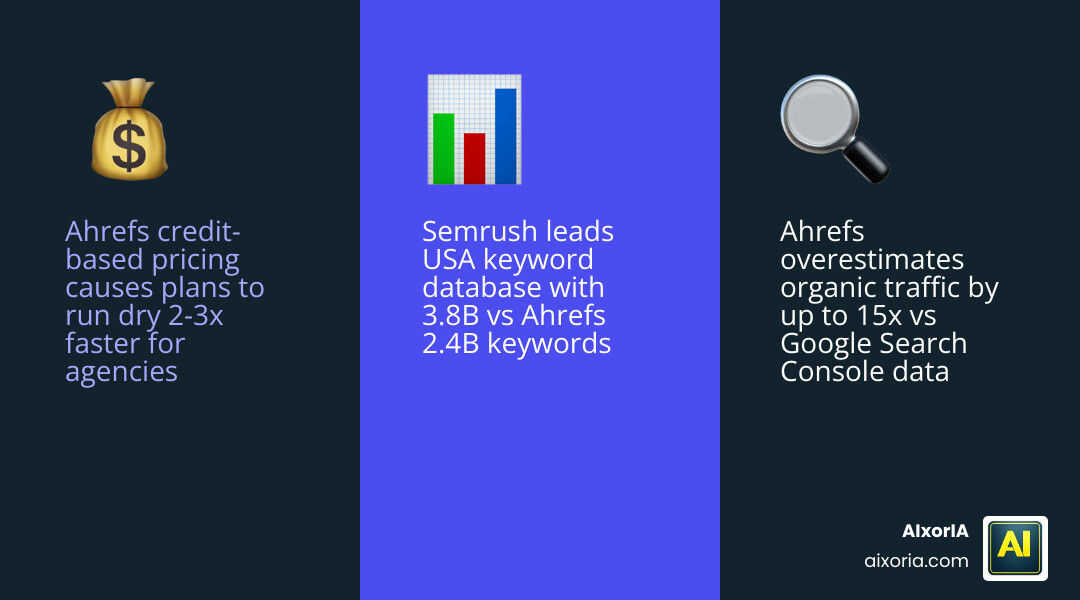
Mostly because of pricing.
Ahrefs is powerful, but it’s expensive. And for many users, they don’t actually need every enterprise-level feature it offers. Sometimes, a cheaper, simpler, or more specialized SEO platform is the smarter choice.
The good news: there are now several excellent Ahrefs alternatives that offer strong SEO data, easier workflows, AI-powered insights, and better pricing flexibility.
Some are better for content teams. Some are stronger for technical SEO. Some are built for agencies. And some are simply better for beginners.
Power your SEO with smarter tools
The best platform isn’t the one with the most features—it’s the one that helps you get results faster.
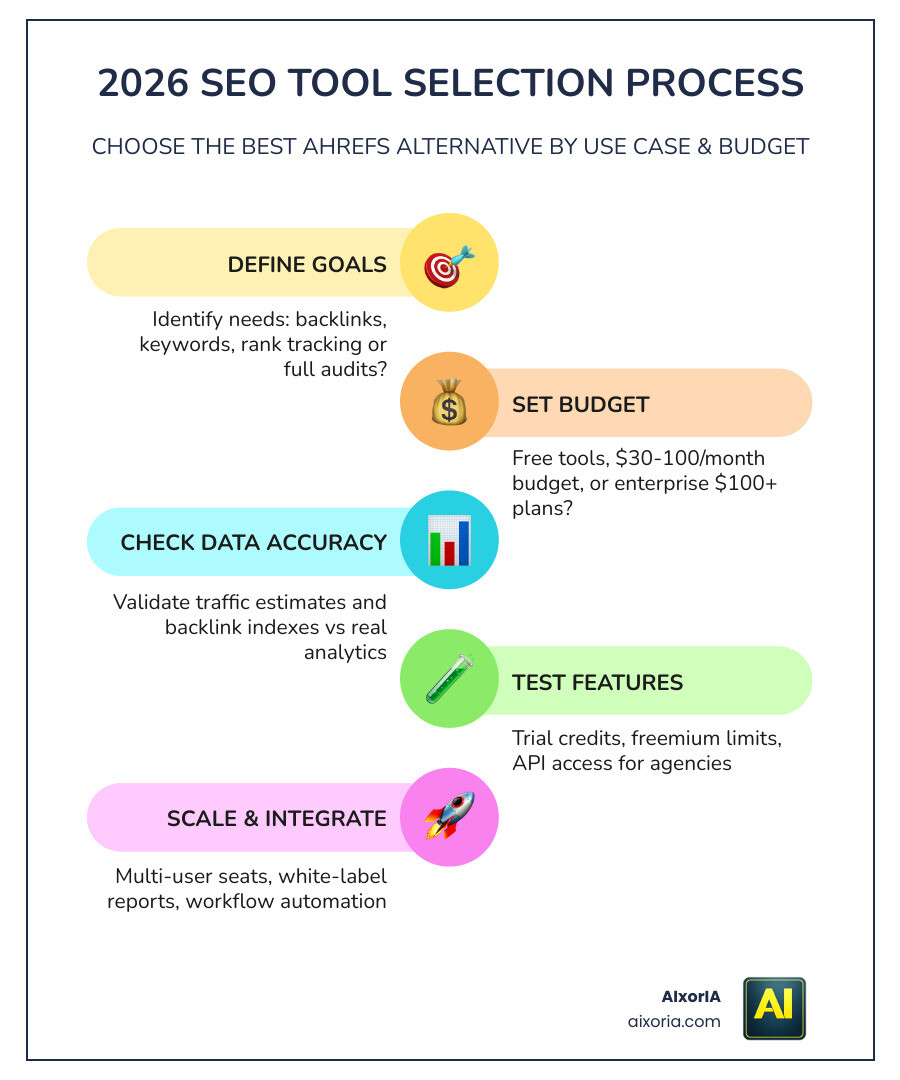
That’s why we reviewed the top Ahrefs alternatives available in 2026 and selected the best options based on:
- keyword research quality
- backlink database strength
- technical SEO capabilities
- AI-powered workflow support
- reporting and usability
- pricing and scalability
Here are the best Ahrefs alternatives worth considering this year.
The Best Ahrefs Alternatives in 2026
- Semrush — Best overall Ahrefs alternative
- SE Ranking — Best for agencies and freelancers
- Mangools — Best for beginners
- Ubersuggest — Best budget-friendly option
- Moz Pro — Best for trusted SEO insights
- Serpstat — Best for all-in-one growth teams
- SpyFu — Best for competitor PPC + SEO research
- Surfer SEO — Best for content optimization
- Raven Tools — Best for SEO reporting and client dashboards
READ MORE – 20 Best SEO Tools in 2026 (Free + Paid)
What Makes the Best Ahrefs Alternative?
Not every SEO tool should try to be Ahrefs.
Some tools are better because they focus on simplicity. Others win because they combine SEO with content strategy, AI writing, PPC analysis, or reporting.
The best Ahrefs alternatives usually perform well in four major areas:
1. Keyword Research Accuracy
You need reliable keyword difficulty scores, traffic estimates, SERP analysis, and content opportunities—not just huge keyword lists.
Good keyword data helps you prioritize rankings that actually matter.
2. Backlink Intelligence
Backlink analysis is where Ahrefs is famous.
A strong alternative should help you analyze referring domains, link growth, toxic links, anchor text, and competitor link profiles.
3. Technical SEO and Site Audits
Site health matters.
A good platform should help identify crawl issues, broken pages, duplicate content, Core Web Vitals problems, indexing issues, and internal linking gaps.
4. Practical Workflow + ROI
The best tool is the one your team actually uses.
That means:
- clean dashboard
- understandable reports
- automation where possible
- team collaboration
- affordable pricing
Because better SEO isn’t about more data.
It’s about faster decisions.
Best Ahrefs Alternatives at a Glance
| Tool | Best For | Standout Feature | Starting Price |
|---|---|---|---|
| Semrush | Best overall | Full SEO + PPC suite | From $139.95/month |
| SE Ranking | Agencies | White-label reporting | From $65/month |
| Mangools | Beginners | Simple UI + easy keyword research | From $29/month |
| Ubersuggest | Budget users | Affordable all-in-one SEO | From $29/month |
| Moz Pro | Trusted SEO workflows | Domain Authority metrics | From $49/month |
| Serpstat | Growth teams | SEO + PPC + content tools | From $59/month |
| SpyFu | Competitor research | PPC + SEO competitor spying | From $39/month |
| Surfer SEO | Content teams | AI-powered content optimization | From $79/month |
| Raven Tools | Reporting | Client dashboards + reporting | From $39/month |
Best overall Ahrefs alternative
Semrush
Semrush, our pick for the best overall Ahrefs alternative

Semrush pros:
- Powerful keyword research database
- Excellent backlink analysis and link-building tools
- Strong competitor research for both SEO and PPC
- SEO + PPC + content marketing tools in one platform
- Great for agencies, SaaS teams, and in-house marketers
Semrush cons:
- Higher pricing compared to beginner-friendly tools
- Dashboard can feel overwhelming for new users
- Some advanced reports are locked behind higher-tier plans
Semrush is the closest true competitor to Ahrefs—and for many businesses, it’s actually the better choice.
While Ahrefs is widely known for backlink analysis, Semrush offers a much broader digital marketing ecosystem. It combines keyword research, backlink audits, site audits, rank tracking, competitor analysis, content optimization, PPC intelligence, local SEO, and even social media tools inside one platform.
That makes it more than just an SEO tool—it becomes a full growth platform.
Its Keyword Magic Tool is one of the strongest keyword research systems available in 2026. You can discover high-volume keywords, long-tail opportunities, search intent clusters, and SERP difficulty data much faster than with most alternatives. This is especially valuable for content teams trying to build topical authority instead of publishing random blog posts.
Semrush also performs extremely well in backlink intelligence. You can monitor referring domains, toxic links, anchor text distribution, link growth, and competitor backlink gaps with detailed reporting. For agencies and link-building campaigns, this becomes a major advantage.
One area where Semrush has improved significantly is AI workflow support.
Its newer AI features help marketers identify ranking opportunities, content gaps, and underperforming pages much faster. Instead of manually checking hundreds of URLs, the platform helps prioritize what should be fixed first—saving both time and money.
For businesses running both SEO and paid search, Semrush becomes even more valuable because you can analyze Google Ads competitors, paid keywords, ad copies, and organic search opportunities from the same dashboard.
This is something Ahrefs doesn’t handle as strongly.
The main downside is pricing. Smaller businesses, solo bloggers, and early-stage startups may find it expensive compared to tools like Mangools or Ubersuggest. There’s also a learning curve because the platform is packed with features.
But if your goal is full-stack SEO growth—not just backlink research—Semrush is often the strongest Ahrefs alternative available.
For serious marketers, it’s usually worth the investment.
Semrush pricing:
From $139.95/month
Best Ahrefs alternative for agencies
SE Ranking
SE Ranking, our pick for the best Ahrefs alternative for agencies

SE Ranking pros:
- Strong white-label reporting for client delivery
- Excellent rank tracking across multiple locations and devices
- Affordable pricing compared to enterprise SEO platforms
- Clean, easy-to-understand dashboards for teams and clients
- Useful AI-powered keyword clustering and content grouping
SE Ranking cons:
- Smaller backlink database than Ahrefs and Semrush
- Fewer advanced enterprise-level features
- Some deeper technical SEO workflows require higher plans
SE Ranking has become one of the fastest-growing SEO platforms because it solves one of the biggest problems agencies face: getting powerful SEO tools without paying enterprise-level prices.
For agencies managing multiple clients, reporting and workflow efficiency matter just as much as keyword data. SE Ranking performs extremely well in both areas.
Its rank tracking system is one of its strongest features. You can monitor keyword positions across different search engines, devices, cities, and countries with highly accurate tracking. This is especially useful for local SEO agencies and businesses managing location-based campaigns.
The white-label reporting system is another major advantage.
Instead of manually building client reports every month, agencies can automate branded reports with clean dashboards that are easy for non-technical clients to understand. This saves hours of repetitive work and improves client communication significantly.
SE Ranking also includes strong keyword research, competitor analysis, site audits, backlink monitoring, and on-page SEO tools, making it a true all-in-one SEO platform rather than just a rank tracker.
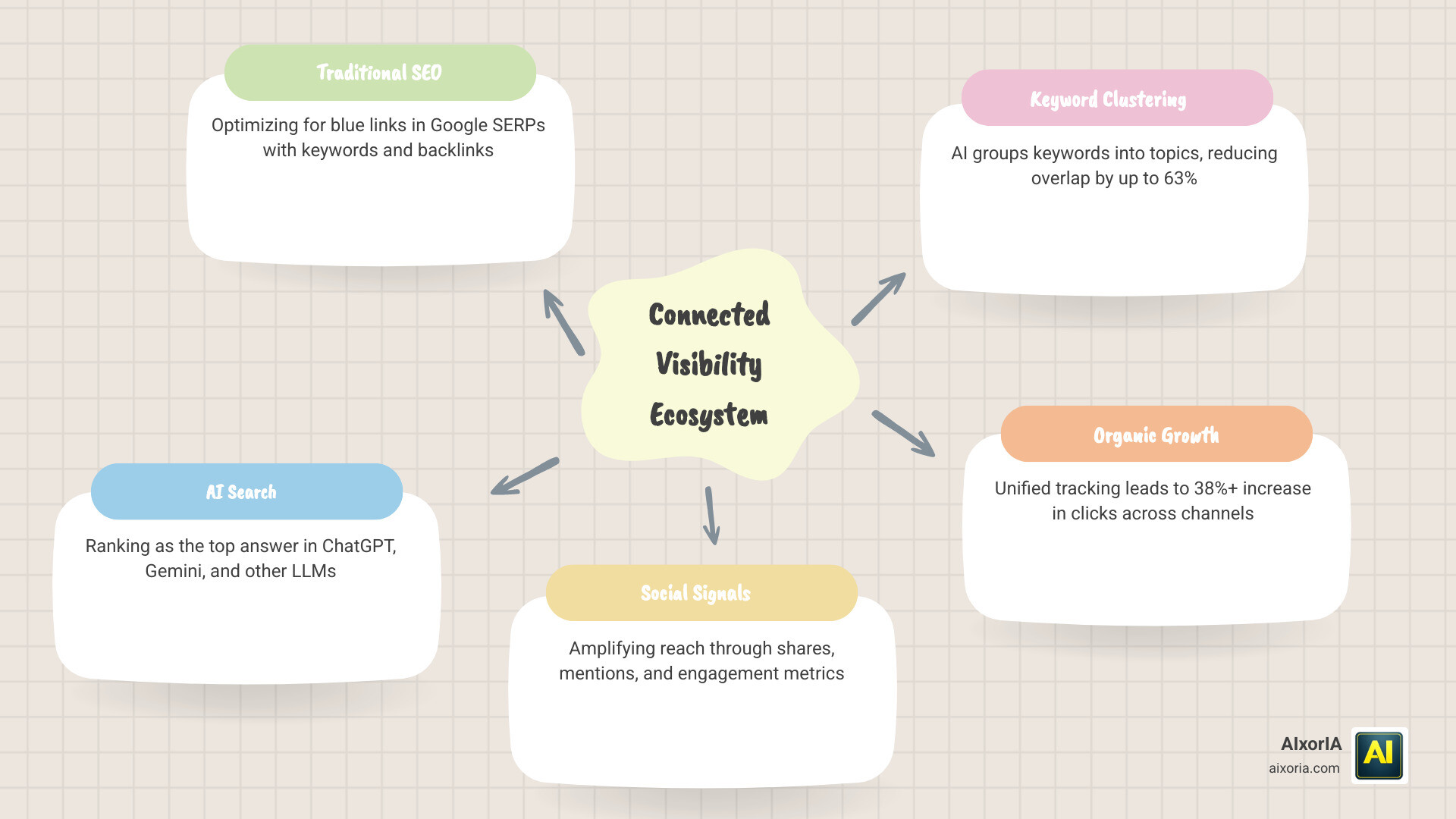
Its AI-powered keyword clustering has become especially valuable in 2026.
Instead of manually organizing hundreds of keywords into topic groups, the platform helps structure content strategy faster. This is extremely useful for agencies trying to scale content production while maintaining search intent alignment and topical authority.
Compared to Ahrefs, the backlink database is smaller, so very aggressive link-building teams may still prefer Ahrefs for deeper backlink intelligence. Enterprise organizations with highly complex SEO operations may also need more advanced customization than SE Ranking offers.
But for freelancers, consultants, small-to-mid agencies, and growing digital marketing teams, SE Ranking often delivers better ROI than Ahrefs.
It gives you the features you actually use—without forcing you to pay for features you don’t.
That’s why many agencies consider it the smartest Ahrefs replacement available today.
SE Ranking pricing:
From $65/month
Best Ahrefs alternative for beginners
Mangools
Mangools, our pick for the best beginner-friendly Ahrefs alternative
Mangools pros:
- Extremely easy-to-use interface with a clean dashboard
- Powerful KWFinder tool for low-competition keyword research
- Affordable pricing for bloggers, freelancers, and small businesses
- Simple SERP analysis that helps beginners make faster decisions
- Includes rank tracking, backlink analysis, and site profiling tools
Mangools cons:
- Limited advanced technical SEO features
- Smaller tool ecosystem compared to Ahrefs and Semrush
- Not ideal for large agencies or enterprise SEO operations
Mangools is one of the best Ahrefs alternatives for beginners because it focuses on simplicity without sacrificing the features that actually matter.
Many SEO tools try to impress users with complex dashboards, dozens of reports, and enterprise-level data. The problem is that most beginners don’t need all of that—they need clear answers and fast decisions.
That’s exactly where Mangools performs well.
Its most popular tool, KWFinder, is excellent for discovering low-competition keywords with realistic ranking opportunities. Instead of overwhelming users with endless keyword lists, it helps prioritize terms that smaller websites can actually rank for.
This makes it especially valuable for bloggers, affiliate marketers, niche site owners, YouTubers, and content creators trying to grow organic traffic without a huge budget.
Mangools also makes SERP analysis much easier.
You can quickly see domain authority, page authority, backlinks, and ranking difficulty without needing advanced SEO experience. This helps beginners understand whether a keyword is worth targeting before spending time creating content.
The platform also includes other useful tools like SERPChecker, SERPWatcher, LinkMiner, and SiteProfiler. Together, these give users enough power for keyword research, rank tracking, backlink checks, and competitor research without the complexity of larger enterprise platforms.
One of the biggest advantages is usability.
Unlike Ahrefs, which can feel heavy for new users, Mangools feels intuitive from day one. You spend less time learning the software and more time actually improving your SEO strategy.
The main downside is technical depth.
If you need advanced site audits, enterprise-level reporting, deep backlink analysis, or large-scale agency workflows, Mangools may feel limited compared to Ahrefs or Semrush.
But for beginners, that limitation is often a strength—not a weakness.
Because in SEO, execution beats complexity.
If Ahrefs feels too expensive, too advanced, or simply too much for your current stage, Mangools is often the smartest and safest place to start.
Mangools pricing:
From $29/month
Best budget-friendly Ahrefs alternative
Ubersuggest
Ubersuggest, our pick for the best budget-friendly Ahrefs alternative

Ubersuggest pros:
- Affordable pricing compared to Ahrefs and Semrush
- Easy keyword research with beginner-friendly navigation
- Built-in content ideas and SEO suggestions
- Helpful site audit features for small businesses
- Strong value for startups, bloggers, and local businesses
Ubersuggest cons:
- Less accurate data in highly competitive industries
- Smaller backlink database compared to Ahrefs
- Limited advanced features for enterprise SEO teams
Ubersuggest has become one of the most popular Ahrefs alternatives because it gives smaller businesses access to practical SEO tools without premium-level pricing.
Not every business needs a large enterprise SEO platform.
Many startups, local businesses, affiliate sites, and side projects simply need reliable keyword research, site audits, backlink visibility, and content opportunities they can act on quickly. That’s exactly where Ubersuggest works best.
Its keyword research system is simple and highly accessible.
You can enter a target keyword and quickly see search volume, SEO difficulty, paid difficulty, CPC data, and related keyword suggestions. This helps users identify ranking opportunities without needing advanced SEO training.
The platform also performs well for content planning.
Its content ideas feature helps marketers discover pages already ranking for a keyword, along with estimated traffic, backlinks, and social engagement insights. This makes it easier to understand what type of content Google is rewarding and where your own content strategy can improve.
Ubersuggest also includes useful technical SEO tools like site audits, on-page recommendations, backlink monitoring, and competitor analysis. While these tools may not be as deep as Ahrefs or Semrush, they are often more than enough for smaller teams focused on growth.
One of its strongest advantages in 2026 is AI-assisted prioritization.
Instead of showing endless reports, the platform helps users understand which pages should be improved first. This is especially valuable for businesses without a dedicated SEO specialist because it turns raw data into clear action steps.
Of course, there are limitations.
Its backlink database is smaller than Ahrefs, and some industries—especially highly competitive SaaS or enterprise markets—may find the keyword data less detailed than premium platforms.
But for budget-conscious users, the value is hard to ignore.
If your goal is to improve SEO performance without spending hundreds of dollars every month, Ubersuggest is often one of the smartest Ahrefs alternatives available.
It gives you the essentials without the enterprise price tag.
Ubersuggest pricing:
From $29/month
Best Ahrefs alternative for trusted SEO workflows
Moz Pro
Moz Pro, our pick for the best Ahrefs alternative for trusted SEO workflows

Moz Pro pros:
- Strong Domain Authority (DA) metric trusted across the SEO industry
- Reliable keyword research and rank tracking tools
- Excellent onboarding and beginner-friendly learning resources
- Helpful site audits and page optimization suggestions
- Strong reputation and long-standing SEO credibility
Moz Pro cons:
- Smaller feature set compared to Ahrefs and Semrush
- Interface feels older in some sections
- Backlink database is not as deep as Ahrefs
Moz Pro remains one of the most respected names in SEO, and for many marketers, trust matters just as much as features.
While newer tools often focus on flashy dashboards and AI-heavy workflows, Moz Pro continues to win with reliability, clarity, and proven SEO frameworks that teams have trusted for years.
Its most famous feature is Domain Authority (DA).
Even in 2026, DA remains one of the most commonly used authority metrics for link building, outreach campaigns, and quick competitive analysis. Many agencies, bloggers, and digital PR teams still rely on it as a fast benchmark when evaluating backlink opportunities.
Moz Pro also offers strong keyword research capabilities with practical metrics like keyword difficulty, search volume, and ranking opportunity scores. Instead of flooding users with massive data sets, it focuses on helping marketers make cleaner strategic decisions.
Its site audit system is another major strength.
You can identify crawl issues, broken pages, duplicate content, redirect problems, and on-page SEO improvements through simple reports that are easy to understand—even for teams without deep technical SEO expertise.
This makes Moz especially valuable for businesses that want dependable SEO systems rather than highly complex enterprise workflows.
The educational side of Moz is also a huge advantage.
Its guides, learning resources, and onboarding experience are among the best in the industry. For marketing teams building internal SEO knowledge, this creates long-term value beyond the software itself.
Compared to Ahrefs, Moz Pro does have limitations.
Its backlink index is smaller, and it doesn’t offer the same depth of competitive link analysis or enterprise-level SEO reporting. Teams heavily focused on aggressive link-building campaigns may still prefer Ahrefs or Semrush for deeper backlink intelligence.
But for businesses that prioritize trust, clean workflows, and proven SEO fundamentals, Moz Pro remains one of the strongest Ahrefs alternatives available.
Sometimes the best tool isn’t the newest one.
It’s the one your team consistently trusts enough to use every day.
Moz Pro pricing:
From $49/month
Best Ahrefs alternative for all-in-one growth teams
Serpstat
Serpstat, our pick for the best Ahrefs alternative for all-in-one growth teams
Serpstat pros:
- Combines SEO, PPC, content marketing, and competitor research in one platform
- Strong keyword clustering and topic grouping features
- Affordable pricing compared to major enterprise SEO tools
- Helpful backlink monitoring and site audit capabilities
- Good option for growing marketing teams and agencies
Serpstat cons:
- Interface can feel crowded for first-time users
- Learning curve for beginners
- Backlink database is smaller than Ahrefs in some niches
Serpstat is built for businesses that want growth strategy—not just keyword reports.
Instead of focusing only on backlinks or technical SEO, it combines keyword research, competitor analysis, PPC insights, content planning, site audits, and backlink monitoring inside one platform. This makes it a strong Ahrefs alternative for teams managing multiple channels at once.
For startups, SaaS companies, in-house marketing teams, and digital agencies, this broader approach creates a major advantage.
You’re not just tracking rankings—you’re building a full growth system.
One of Serpstat’s strongest features is keyword clustering.
In 2026, topical authority matters more than publishing isolated blog posts. Serpstat helps marketers group related keywords based on search intent, making it easier to build content hubs and stronger internal linking strategies.
This is especially useful for content teams scaling SEO across dozens or hundreds of pages.
Its competitor analysis tools are also impressive.
You can identify which keywords competitors rank for, which pages drive their traffic, where they earn backlinks, and where PPC opportunities exist. This helps marketers find faster wins instead of relying only on original keyword brainstorming.
The platform also includes strong technical SEO tools.
Its site audit system helps identify indexing problems, broken links, duplicate content, redirect issues, and performance gaps. While it may not go as deep as enterprise platforms like Ahrefs or Semrush, it provides more than enough technical visibility for most growth-focused teams.
Pricing is another reason many businesses choose Serpstat.
Compared to premium SEO platforms, it offers a much more affordable path for teams that need both SEO and PPC insights without paying for multiple separate tools.
The main drawback is usability.
Because Serpstat includes so many features, the interface can feel crowded at first. New users may need time to understand where everything lives and how to use the reports effectively.
Its backlink database is also smaller than Ahrefs, which may matter for aggressive link-building campaigns or enterprise outreach strategies.
Still, for businesses looking for one platform that supports SEO, content, PPC, and competitive growth planning together, Serpstat is one of the smartest Ahrefs alternatives available.
It’s not just an SEO tool.
It’s a strategic growth platform.
Serpstat pricing:
From $59/month
Best Ahrefs alternative for competitor research
SpyFu

SpyFu, our pick for the best Ahrefs alternative for competitor research
SpyFu pros:
- Excellent PPC and SEO competitor analysis
- Strong historical keyword and ranking data
- Helps uncover competitor ad strategies and paid keywords
- Useful for affiliate marketers, SaaS brands, and agencies
- Affordable pricing for strategic research
SpyFu cons:
- Weaker technical SEO tools compared to Ahrefs
- Limited backlink depth for serious link-building campaigns
- Less useful for full SEO operations management
SpyFu is one of the best Ahrefs alternatives when your biggest question is simple:
“What are my competitors doing that I’m missing?”
While Ahrefs is often used for backlink analysis and keyword tracking, SpyFu focuses heavily on competitive intelligence—especially for businesses running both SEO and Google Ads campaigns.
That makes it a powerful strategic tool for marketers who want faster wins instead of starting every campaign from scratch.
Its biggest strength is historical competitor data.
You can see which keywords your competitors have ranked for over time, which paid keywords they continue to invest in, how their ad copy has changed, and where their traffic opportunities are growing or declining.
This gives marketers something more valuable than raw keyword data: strategic context.
Instead of guessing which keywords are worth targeting, you can identify where competitors are already proving profitability.
For SaaS companies, affiliate marketers, eCommerce brands, and lead-generation businesses, this becomes extremely useful because SEO and PPC often work together—not separately.
SpyFu also performs well for uncovering competitor content gaps.
You can compare domains, discover missing keyword opportunities, and identify where rivals are capturing traffic that your site is not. This helps prioritize SEO strategy with stronger confidence.
Its PPC intelligence is where it becomes especially different from Ahrefs.
You can analyze Google Ads competitors, estimated monthly ad spend, high-performing paid keywords, and long-term campaign patterns. For businesses combining paid search and organic growth, this often provides better decision-making than backlink-heavy tools alone.
The biggest limitation is technical SEO depth.
SpyFu is not built to replace advanced site audits, deep backlink analysis, or large-scale technical optimization platforms like Ahrefs or Semrush. Its backlink database is useful, but not strong enough for aggressive link-building strategies.
That means many teams use SpyFu as a strategic research tool alongside another primary SEO platform.
And honestly, that’s where it performs best.
If your success depends on understanding competitor strategy—not just checking rankings—SpyFu is one of the smartest Ahrefs alternatives available in 2026.
Sometimes winning SEO is less about finding new ideas…
and more about finding what your competitors already proved works.
SpyFu pricing:
From $39/month
Best Ahrefs alternative for content optimization
Surfer SEO
Surfer SEO, our pick for the best Ahrefs alternative for content optimization
Surfer SEO pros:
- Excellent on-page SEO optimization for blog posts and landing pages
- AI-powered content editor with real-time recommendations
- Strong NLP-based keyword suggestions and entity optimization
- Helpful for editorial teams publishing content at scale
- Great companion tool for SEO + content strategy workflows
Surfer SEO cons:
- Not a full backlink analysis platform like Ahrefs
- Limited technical SEO compared to enterprise SEO suites
- Works best when paired with another SEO tool
Surfer SEO is not a direct one-to-one Ahrefs replacement—but for content teams, it can often be even more valuable.
That’s because rankings today depend heavily on content quality, structure, topical depth, and search intent alignment—not just backlinks.
Surfer focuses exactly on that.
Instead of helping you discover backlinks, it helps you create pages that deserve to rank.
Its Content Editor is the core feature.
You enter a target keyword, and Surfer analyzes the top-ranking pages in Google to identify what your content needs: heading structure, keyword usage, entities, topical coverage, word count, semantic relevance, and content gaps.
This allows writers and SEO teams to optimize content based on real SERP data instead of guesswork.
For editorial teams publishing large volumes of content, this becomes a major competitive advantage.
In 2026, Surfer’s AI writing workflows have improved significantly.
It now helps generate outlines, improve weak sections, identify missing subtopics, and prioritize updates for underperforming pages. Instead of manually reviewing every article, teams can use Surfer to improve rankings faster and more consistently.
This is especially useful for SaaS companies, affiliate sites, publishers, and agencies managing high-volume content operations.
Its NLP recommendations are another major strength.
Rather than simple keyword stuffing, Surfer helps optimize content using related entities and semantic coverage that align with how Google understands topical authority.
This creates stronger long-term rankings and reduces the risk of thin content.
Of course, there are limitations.
Surfer is not designed for deep backlink analysis, large-scale technical SEO audits, or competitor link research. If you need those workflows, you’ll still want Ahrefs, Semrush, or another core SEO platform.
That’s why many teams use Surfer alongside another SEO tool rather than replacing Ahrefs completely.
And honestly, that often works better.
Because modern SEO isn’t about one tool doing everything.
It’s about combining the right tools for the right outcomes.
If your biggest priority is ranking better content—not just tracking backlinks—Surfer SEO is one of the strongest Ahrefs alternatives available today.
Surfer SEO pricing:
From $79/month
Best free Ahrefs alternative
Google Keyword Planner
Google Keyword Planner, our pick for the best free Ahrefs alternative
Google Keyword Planner pros:
- Completely free with no subscription fees or usage limits
- Direct keyword data from Google’s own advertising ecosystem
- Useful forecasting tools for PPC budget planning and traffic estimates
- Can generate keyword suggestions using your website URL
- Great starting point for validating keyword opportunities
Google Keyword Planner cons:
- Built primarily for advertisers, not organic SEO professionals
- Search volume is often shown in broad ranges instead of exact numbers
- No backlink analysis, rank tracking, or competitor content gap tools
Google Keyword Planner is free, which is the biggest reason it deserves a place on this list.
But that doesn’t mean it’s only useful for beginners.
In fact, many experienced SEO professionals still use it because it provides something most third-party SEO tools can’t: keyword insights directly from Google itself.
That makes it one of the most underrated tools in search marketing.
Google Keyword Planner has two core functions.
The first is keyword discovery.
You enter a seed keyword, a landing page, or even your website URL, and it generates related keyword ideas along with search volume estimates, competition level, bid ranges, and year-over-year trend changes.
This is extremely useful for validating whether a keyword deserves deeper SEO investment.
The second function is forecasting.
If you’re running Google Ads—or planning to—Keyword Planner helps estimate traffic potential, click volume, conversion opportunities, and PPC budget requirements. This makes it valuable for businesses combining paid search and organic SEO strategy.
It helps answer an important question:
Should you rank organically for this keyword, or is paid search the better short-term move?
That strategic insight is often more valuable than simply finding more keywords.
The biggest limitation is the same one it has always had: it was built for advertisers, not content strategists.
Without active Google Ads spend, search volume is usually displayed in broad ranges like 1K–10K instead of precise monthly numbers. This makes deep keyword prioritization harder compared to dedicated SEO platforms like Ahrefs or Semrush.
It also won’t help with backlink audits, rank tracking, technical SEO fixes, or competitor gap analysis.
So it’s not a full Ahrefs replacement.
But for validating keyword ideas, understanding search demand, and building SEO strategy using Google’s own data—without paying for another subscription—it remains one of the most reliable free tools available.
For budget-conscious marketers, startups, bloggers, and local businesses, Google Keyword Planner is often the smartest place to begin.
Sometimes the best SEO tool isn’t the most advanced one.
It’s the one that gives you trustworthy data for free.
Google Keyword Planner pricing:
Free
Which Ahrefs alternative is best?
Much like SEO itself, there’s no single perfect tool for everyone.
The best Ahrefs alternative depends on your goals, your workflow, and how your team actually uses SEO data.
Some businesses need stronger backlink analysis. Others care more about content optimization, technical SEO, PPC intelligence, or affordable reporting for multiple clients.
That’s why choosing the right tool is less about finding the “most powerful” platform and more about finding the one that helps you make better decisions faster.
If you want the strongest all-around Ahrefs replacement, the best choice is usually Semrush.
It offers the most complete SEO ecosystem with keyword research, backlink analysis, competitor tracking, PPC insights, content optimization, and technical SEO tools—all inside one platform. For serious marketers, agencies, and growing businesses, it’s often the closest true Ahrefs competitor.
If you run an agency or manage multiple clients, SE Ranking is often the smarter investment.
Its white-label reporting, rank tracking, and affordable pricing make it one of the best ROI-focused tools available for consultants and SEO teams.
If you’re just getting started with SEO, Mangools is the safest and easiest option.
It removes the complexity of enterprise dashboards and helps beginners focus on what matters most: finding keywords they can actually rank for.
If your budget is limited, Ubersuggest offers strong value without the premium price tag.
For startups, local businesses, and side projects, it covers the essentials without forcing you into expensive subscriptions.
If your biggest priority is content optimization, Surfer SEO can often be more valuable than a traditional SEO platform.
It helps improve what actually ranks—your content.
And if you simply need a free option to validate keyword opportunities, Google Keyword Planner remains one of the most reliable starting points available.
The smartest strategy for many businesses isn’t replacing Ahrefs with one tool.
It’s combining two tools that solve different problems better.
For example:
- Semrush + Surfer SEO
- SE Ranking + Google Keyword Planner
- SpyFu + Ubersuggest
- Mangools + Surfer SEO
This often creates better results than paying for one expensive platform trying to do everything.
Because the best SEO tool isn’t the most expensive one.
It’s the one that helps you publish better content, rank faster, find real opportunities, and grow consistently over time.