Understanding AI Search Visibility in 2026

As we navigate through May 2026, the digital landscape has shifted dramatically. AI search visibility is no longer a “nice-to-have” metric; it is the heartbeat of brand discovery. Unlike traditional search, where you compete for a spot in a list of ten blue links, AI search involves “Generative Engine Optimization” (GEO). This is the process of ensuring your brand is part of the synthesized answer an LLM (Large Language Model) provides to a user. As users move away from browsing lists and toward receiving direct answers, the competition for these “synthesized spots” has become the new frontline of digital marketing.
When a potential customer asks, “What is the most reliable CRM for small businesses?” the AI doesn’t just show them a website; it creates a narrative. If your brand is mentioned, your citation frequency – how often the AI points back to your site as a source – directly impacts buyer perception. High visibility in these conversational interfaces builds immediate trust. This trust is rooted in the AI’s perceived objectivity; when an LLM recommends a product, users often view it as a vetted expert opinion rather than a paid advertisement. Conversely, being left out is the 2026 equivalent of being on page ten of Google. To understand the mechanics behind this, we often recommend exploring How Ai Search Optimization Tools Increase Organic Traffic In 2026 to see how these signals translate into real-world visits.
Why Manual Tracking Fails to Scale
We often see teams try to “DIY” their AI monitoring by simply typing prompts into ChatGPT once a week. This is a recipe for disaster. LLMs produce probabilistic outputs, meaning the answer can change based on the time of day, the specific phrasing of the prompt, or even the user’s previous search history. This volatility requires a systematic approach to data collection that manual efforts simply cannot match.
Manual tracking cannot account for:
- Prompt Volume: To get an accurate picture, you need to track hundreds of variations of buyer-intent questions.
- Real-Time Monitoring: AI models update their training data and web-access capabilities constantly. A brand that was visible yesterday might be invisible today.
- Data Fragmentation: Checking ChatGPT, then Perplexity, then Gemini manually leads to fragmented data that is impossible to report to stakeholders or use for strategic planning.
Key Features of the Best AI Search Visibility Tools
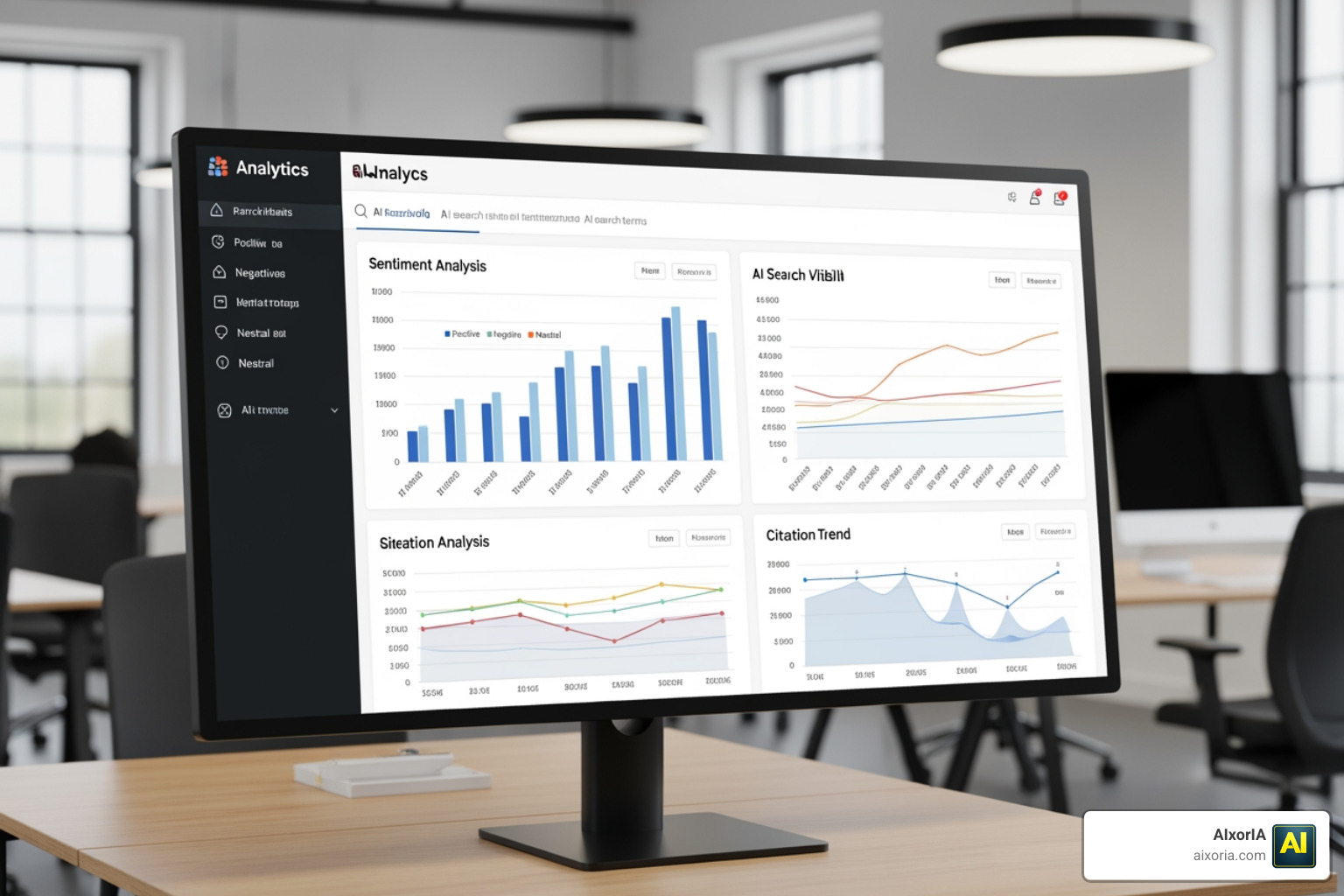
When we evaluate the Best AI Search Visibility Tools for our clients at AIxorIA, we look for more than just a “mention tracker.” The most effective tools provide deep sentiment analysis – identifying if the AI is recommending you or merely listing you as a “cheaper, less robust alternative.” Sentiment analysis is particularly vital because an AI might mention your brand in a negative context, such as a “common point of failure” in a comparison. They also utilize entity recognition to ensure the AI understands your brand as a specific authority in your niche. For a deeper dive into the specific mechanics, you can check Which Answer Engine Optimization Tools Work Best For Ai Visibility.
Multi-Platform LLM Coverage for Best AI Search Visibility Tools
In 2026, your customers aren’t just using one tool. A comprehensive strategy requires monitoring across a diverse ecosystem. Each of these models has a unique “personality” and source preference, making a multi-platform approach non-negotiable for global brands. The Best AI Search Visibility Tools should cover:
- ChatGPT: Still the market leader for general conversational queries.
- Perplexity: The go-to for research-heavy, source-cited searches.
- Gemini & Google AI Overviews: Critical for capturing traffic from the world’s most popular search engine.
- Claude: Known for high-quality, nuanced reasoning.
- Specialized Models: Emerging players like Grok, DeepSeek, and Meta AI.
For a curated list of the top performers in this space, our guide on 20 Best Ai Search Visibility Tools In 2026 provides a side-by-side comparison of platform reach.
Actionable Insights and Citation Gap Analysis
Data is useless without a plan. The leading tools in this category provide “Citation Gap Analysis.” This feature identifies specific prompts where your competitors are cited but you are not. It then provides a prioritized roadmap, often pointing to specific source URLs – like a Reddit thread, a niche directory, or a tech review site – where you need to earn a mention to influence the AI.
By identifying these outreach opportunities, you can move from passive monitoring to active optimization. This proactive approach is a cornerstone of How Ai Search Optimization Tools Increase Organic Traffic In 2026.
Comparing AI Visibility Tools vs. Traditional SEO Software
The biggest mistake we see brands make is assuming their existing SEO suite can handle AI search. While traditional tools are great for keyword rankings, they are blind to the “black box” of LLM synthesis. Traditional software tracks where you sit in a list; AI visibility tools track how you are described in a conversation. Understanding these differences is the first step in reallocating your marketing budget toward the channels that will drive the most value in a post-SERP world.
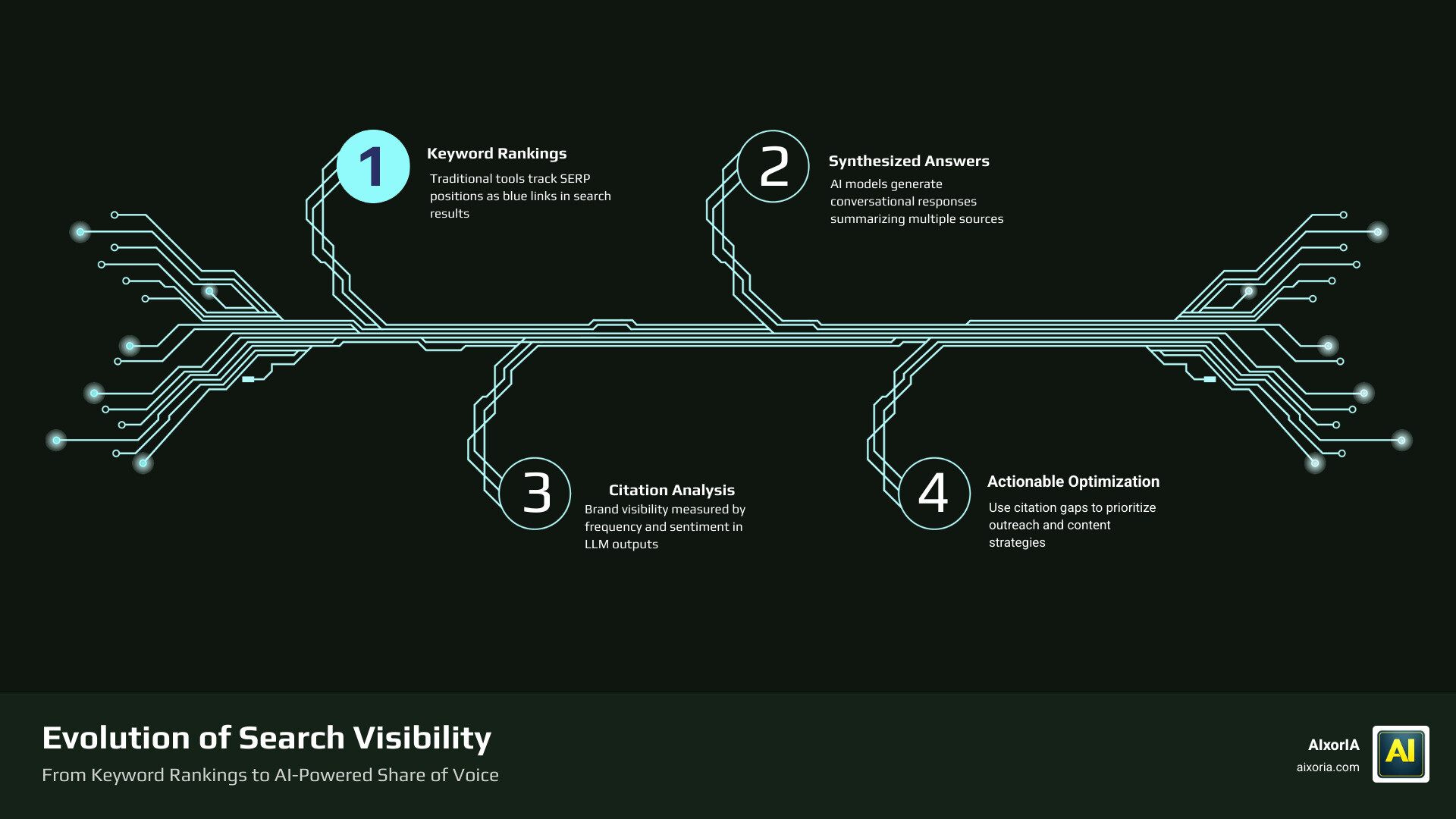
| Feature | Traditional SEO Tools | AI Search Visibility Tools |
|---|---|---|
| Primary Metric | Keyword Rankings (1-100) | Share of Voice / Mention Volume |
| Output Type | List of Blue Links | Synthesized Conversational Answers |
| Data Source | Search Engine Results Pages (SERPs) | LLM Response Analysis & Citations |
| Optimization Focus | Backlinks & Metadata | EEAT, Citations, & Entity Clarity |
| User Journey | Click-through to Website | Zero-click Discovery or Citation Click |
The Shift from Blue Links to Conversational Answers
The shift is fundamental. Traditional SEO focuses on user intent through keywords, but AI search focuses on natural language and complex questions. This has led to a massive increase in “zero-click” searches, where the user gets all the information they need without ever leaving the AI interface. In this new paradigm, the goal of SEO shifts from driving traffic to your website to ensuring your brand’s core value proposition is accurately reflected in the AI’s summary. To remain relevant, your brand must be the authority the AI relies on to build that answer. You can learn more about this transition in our resource on Which Answer Engine Optimization Tools Work Best For Ai Visibility.
How to Evaluate and Choose the Best AI Search Visibility Tools

Choosing the right tool depends heavily on your organization’s size and goals. At AIxorIA, we help businesses navigate these choices through our performance audits and tool training workshops.
When evaluating, consider these three pillars:
- Pricing Models: Are you paying per prompt, per platform, or a flat monthly fee? Tools like Profound start at $99/month, while enterprise solutions like Semrush AIO or Botify use custom pricing for massive site architectures. Understanding the total cost of ownership is essential for long-term budgeting.
- Security Standards: For enterprise organizations, SOC2 compliance and SSO (Single Sign-On) are non-negotiable. You are often inputting sensitive brand data; ensure the provider treats it with care and adheres to global data protection regulations.
- Methodology: Does the tool use an API (which can sometimes provide different results than a user sees) or does it query the actual user interface? Tools like AIclicks and SearchInsight AI often prioritize real-user interface scraping for higher accuracy. This ensures that the data you see matches the actual experience of your potential customers.
Scalability and Reporting for Best AI Search Visibility Tools
If you are an agency, you need white-label reports and API access to integrate this data into your existing client dashboards. Scalability is also about “prompt volume” – the number of different questions the tool can track daily without breaking the bank. For a look at which tools offer the best “bang for your buck” in terms of volume, refer back to our 20 Best Ai Search Visibility Tools In 2026 guide.
Other specialized platforms to consider include:
- Searchable: Excellent for capturing clicks from AI discoveries.
- Beacon: Offers a unique “GEO Score” and autonomous AI agents for strategy.
- Writesonic: Great for linking visibility data directly to content creation.
Frequently Asked Questions about AI Search Visibility
Do I need a dedicated tool for AI visibility if I use Ahrefs or Semrush?
In short, yes. While legacy SEO tools are beginning to add AI features, they are rarely purpose-built for tracking citation patterns and conversational share of voice across 10+ different LLMs. Most high-performing teams in 2026 use a dedicated AI visibility tool alongside their traditional SEO suite to ensure they are capturing the full spectrum of the modern search journey.
How often should my brand monitor AI search rankings?
Because AI models are updated frequently and “hallucinations” can occur, we recommend daily monitoring for high-priority brand prompts. Weekly reporting is usually sufficient for broader industry trends and competitive benchmarking. However, during product launches or PR crises, real-time alerts are essential to mitigate the impact of any incorrect information the AI might propagate.
Can AI visibility tools help with local SEO and entity recognition?
Absolutely. Many tools, such as Ziptie, specialize in “Geo AI” visibility. This helps local businesses ensure that when someone asks an AI for “the best coffee shop near me,” their business is the one recommended with accurate location data.
Conclusion
The era of relying solely on “blue links” is over. To thrive in 2026, your brand must be visible, cited, and recommended by the AI engines that consumers now trust. Investing in the Best AI Search Visibility Tools is the only way to move beyond guesswork and start making data-driven decisions that protect your market share.
At AIxorIA, we specialize in making this transition simple. Whether you need a custom AI solution, a performance audit, or a hands-on workshop to train your team on these new tools, we are here to help. We pride ourselves on providing affordable services with fast customer support, ensuring you never feel lost in the complex world of AI. The transition to AI-first discovery is happening now, and those who adapt early will define the market leaders of the next decade.
Don’t let your brand become invisible. Start tracking your AI search presence today and reclaim your spot in the conversational future. By leveraging the right technology, you can ensure that every time a customer asks an AI for a recommendation, your brand is the one that stands out.
Learn more about AIxorIA services and how we can boost your visibility
1 thought on “Best AI Search Visibility Tools in 2026 (Tested Guide for GEO & AI Rankings)”