The Anthropic AI Automation Tool Is Changing How Work Gets Done
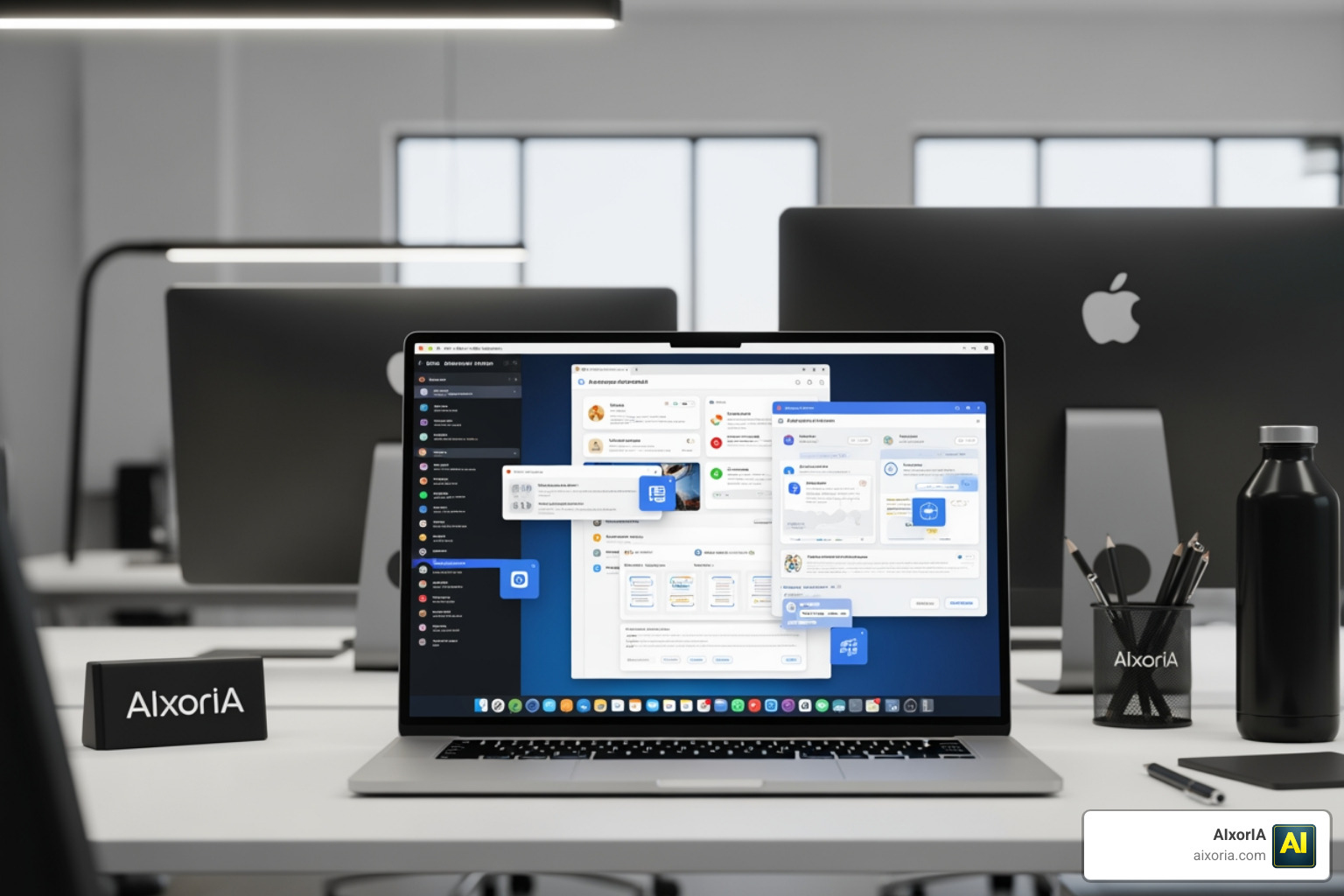
The Anthropic AI Automation Tool is not just another chatbot — it’s a suite of agentic AI products that can take on full tasks, work across your files and apps, and deliver finished results without you having to guide every step.
Here’s a quick breakdown of what it includes:
| Tool | What It Does | Best For |
|---|---|---|
| Claude Cowork | Works on your desktop, local files, and cloud apps autonomously | Non-technical knowledge workers |
| Claude Code | Reads codebases, makes changes across files, runs tests | Developers and technical teams |
| Tool Use (API) | Connects Claude to external tools and APIs for custom automation | Businesses building AI workflows |
In May 2026, Anthropic’s automation releases sent shockwaves through financial markets — triggering a $285 billion selloff across software, financial services, and asset management sectors. The Goldman Sachs basket of US software stocks dropped 6% in a single day. That’s not a minor product launch. That’s a signal that something fundamental is shifting.
The reason investors reacted so strongly? These tools don’t just assist with work. They do the work.
Think of it this way: most AI tools answer your questions. Anthropic’s automation tools complete your projects.
Whether you’re a small business owner trying to save time, or an enterprise team looking to cut costs, understanding what these tools actually do — and what they cost — matters right now.
Understanding the Anthropic AI Automation Tool and Its Market Impact
When we look at the financial landscape of May 2026, the arrival of the Anthropic AI Automation Tool was less of a “product drop” and more of an “economic event.” The market reaction was swift and staggering. A $285 billion rout in stocks occurred almost overnight as investors realized that the traditional “seat-based” software model was under threat.
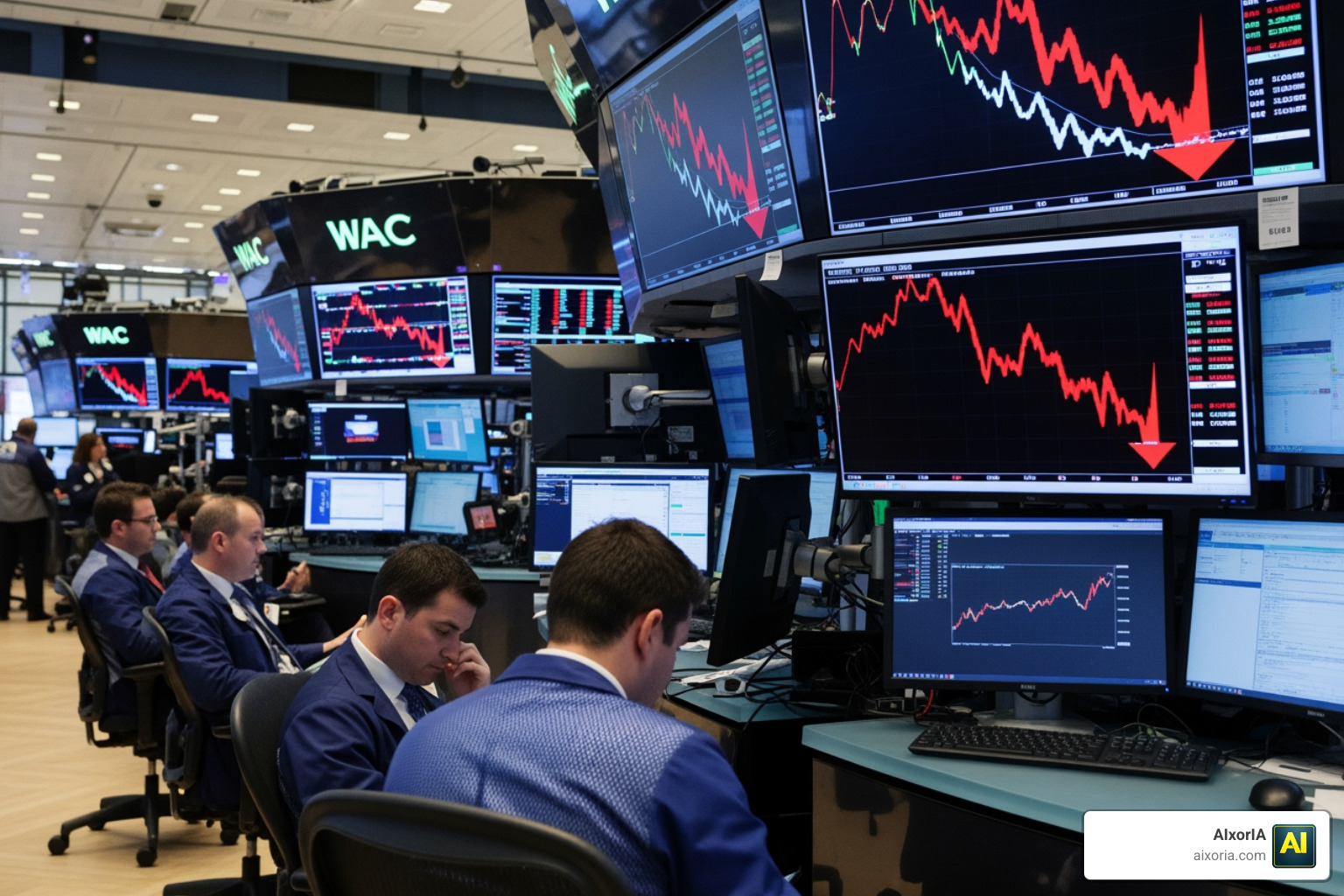
The Goldman Sachs basket of US software stocks sank 6%, marking its most significant one-day decline since the tariff-fueled selloff earlier in the year. It wasn’t just tech, either; an index of financial services firms tumbled nearly 7%, and the Nasdaq 100 Index fell as much as 2.4% before slightly recovering. This volatility underscores the massive geopolitical and economic stakes, which we’ve explored in our analysis of Anthropic AI US China Competition.
Economic Shifts in Software and Finance
Why did asset managers and institutional investors panic? Because for years, software valuations were built on the idea that more employees equaled more software licenses. When a tool can autonomously manage asset portfolios or handle complex financial audits without a human-in-the-loop for every click, the entire valuation model for the financial services sector begins to shift.
Why Automation Triggered a Global Rout
The shift from “assistive AI” to “agentic AI” represents a displacement of traditional knowledge work. Investors saw the Anthropic AI Automation Tool and realized that enterprise software-as-a-service (SaaS) companies might see a decline in usage as businesses consolidate their workflows into a single, autonomous AI environment. This market correction reflects a new reality: the value is no longer in providing the interface for work, but in delivering the outcome of that work.
Core Features of the Anthropic AI Automation Tool
The power of this system lies in its ability to step out of the browser and onto your desktop. Unlike previous versions that lived in a chat tab, the modern Anthropic AI Automation Tool integrates directly with your local environment.
- Claude Cowork: This is the flagship feature for non-technical users. It can browse your local folders, open spreadsheets, and interact with cloud apps to fulfill a goal you set in plain English.
- Claude Code: An agentic system for developers that doesn’t just suggest lines of code—it understands the entire project structure.
- Tool Use (API): For businesses, this allows developers to connect Claude to their own internal databases and software. You can learn the technical specifics in the Tool use with Claude – Claude API Docs.
Agentic Workflows and Tool Use
The “agentic loop” is what makes this tool special. Instead of a simple “input-output” interaction, the system uses chain-of-thought reasoning to plan multi-step actions. It can decide when to search the web, when to run a script, and when to ask you for clarification.
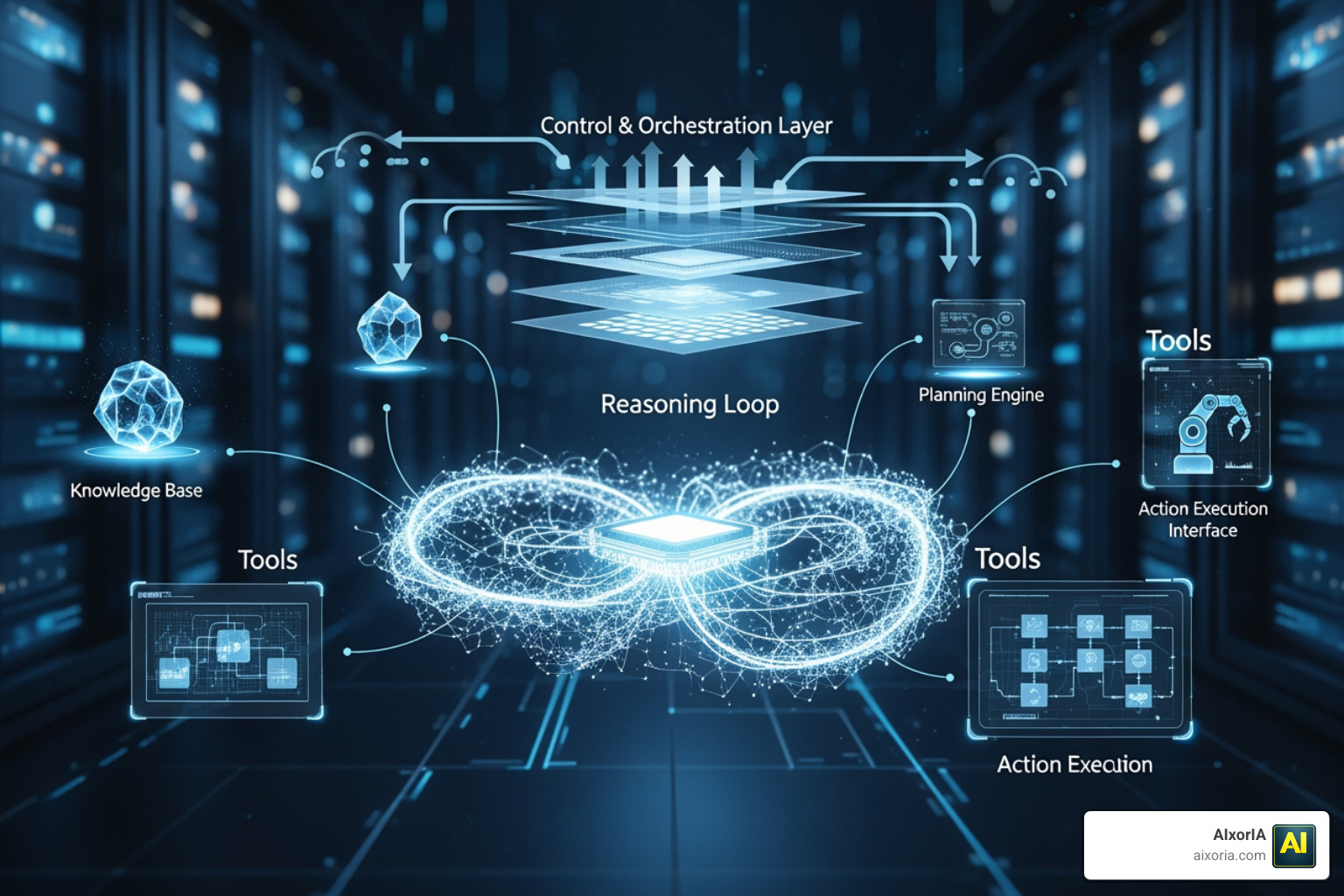
For organizations looking to implement these loops, we often get asked What Are the Best Tools for AI Orchestration to ensure these agents play well with existing tech stacks.
Anthropic AI Automation Tool vs. Standard Chat Interfaces
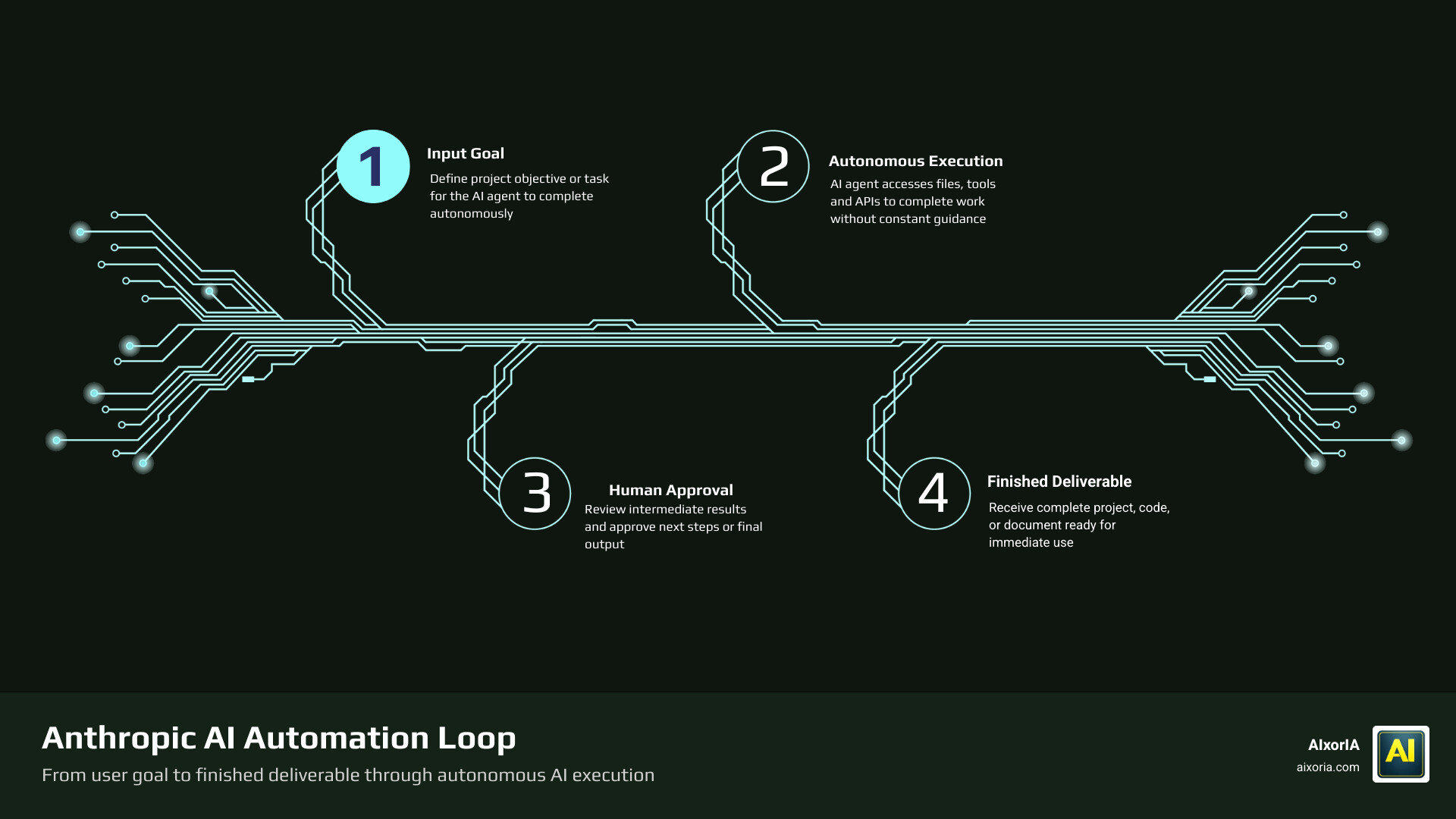
The biggest difference is the focus on the outcome rather than the prompt. In a standard chat interface, you are the project manager, giving the AI one instruction at a time. With the Anthropic AI Automation Tool, you are the director. You give it a goal—like “Organize my Q1 tax documents and flag any missing receipts”—and it executes that across multiple files. For a deeper dive into these differences, check out our guide on Anthropic AI Automation Tool Features Use Cases How It Compares.
Enterprise Use Cases and Performance Metrics
We’ve seen incredible data coming out of early enterprise adoptions. This isn’t just about saving a few minutes on emails; it’s about fundamental operational efficiency.
- Logistics: Companies have reported an average of $1.2M in annual cost savings by using Claude to optimize routing and supply chain documentation.
- Fintech & Healthtech: These sectors have seen a 50% faster time-to-market for new products.
- Retail: Customer retention has boosted by 28% through personalized, AI-driven automation.
- Pharmaceuticals: Project timelines for drug documentation and research synthesis have been reduced by 30%.
If you’re looking to build your own agents to hit these metrics, we recommend reviewing the Best AI Tools for Building AI Agents in 2026.
Software Development and Agentic Coding
Claude Code is a game-changer for engineering teams. It can navigate unfamiliar codebases and trace complex dependencies. In one case, a team completed a 10,000-line Scala-to-Java migration in just four days—a task that would typically take ten engineer-weeks. Furthermore, incident investigation times have been slashed by 80%, allowing teams to fix bugs before they impact the user base.
Knowledge Work and Document Synthesis
For those of us who don’t write code, the tool is equally powerful. It can point at a folder of messy downloads and attachments, then rename, sort, and deduplicate them automatically. It can synthesize research across dozens of PDFs and produce a structured draft, saving hours of “assembly” work.
Safety, Pricing, and Implementation Strategies
Anthropic has always prioritized safety through its “Constitutional AI” framework. This means the Anthropic AI Automation Tool operates under a set of rules that prevent it from taking harmful actions. It uses a permission-based system; for example, Claude Code requires your explicit “okay” before it modifies a file or runs a terminal command.
For businesses deciding between different platforms, we’ve compared these safety features in our list of The 4 Best AI Assistant Tools for Business in 2026.
Subscription Tiers and Availability
While there is a free tier for basic use, the automation features are primarily housed in the paid plans:
- Pro Plan: Approximately $20/month (or $17/month billed annually).
- Max Plan: Starting from $100/month, offering 5-20x more usage than the Pro plan, designed for heavy enterprise users.
Future Development of the Anthropic AI Automation Tool
With the release of Claude Opus 4.7, we are seeing the model become even smarter at handling multimodal inputs (like video and complex imagery). The long-term implication is a shift for knowledge workers: we are moving away from being “doers” and toward being “architects” of our own productivity.
Frequently Asked Questions about Anthropic AI Automation
How does the tool handle data privacy and security?
Anthropic uses a Responsible Scaling Policy and “Constitutional AI” to ensure the tool stays within boundaries. Many of the Cowork features run with local file access, meaning you control exactly which folders the AI can see. It operates within your environment rather than an opaque backend.
What is the difference between Cowork and Code modes?
Claude Cowork is built for outcomes in non-technical work—think file organization, research, and document drafting. Claude Code is a technical agent that lives in the terminal; it reads codebases, runs tests, and helps developers build software by describing goals in plain language.
Which industries see the highest ROI from this tool?
Currently, Logistics, Fintech, Healthtech, and Pharmaceuticals see the highest returns. Any industry that deals with massive amounts of unstructured data (like contracts, records, or research papers) or complex software development cycles will see the most immediate benefit.
Conclusion
At AIxorIA, we believe that the Anthropic AI Automation Tool represents the next great leap in how businesses operate. However, we also know that “agentic AI” can sound a bit intimidating. That’s why we provide custom AI solutions, tool training workshops, and performance audits to help you navigate this new landscape without the headache.
Our mission is to provide affordable services and fast support to ensure your team isn’t left behind by the $285 billion market shift. If you’re ready to start automating your workflows, check out our More info about AI tutorials to see how you can put these tools to work today. We’re here to help you turn these complex AI “agents” into simple, everyday wins for your business.
2 thoughts on “Anthropic AI Automation Tool in 2026: Features, Pricing & Real Business Impact”