Which AI Tools Help Gyms Keep Members?
Scr0ll d0wn to D0VVNL0AD
The most useful AI tools for gyms and fitness studios for member retention do three jobs: spot changes in attendance, help staff reach out at the right time, and remove hassles such as failed payments or hard-to-book classes.
For most gyms, attendance tracking is the best place to start. A retention tool can compare each member’s recent visits with their usual pattern and flag a drop before the member asks to cancel. Messaging tools can then draft a relevant check-in, while staff handle replies that need a personal touch.
This guide compares those tool categories by what they do, what data they need, and how easily they fit into a small gym’s workflow.
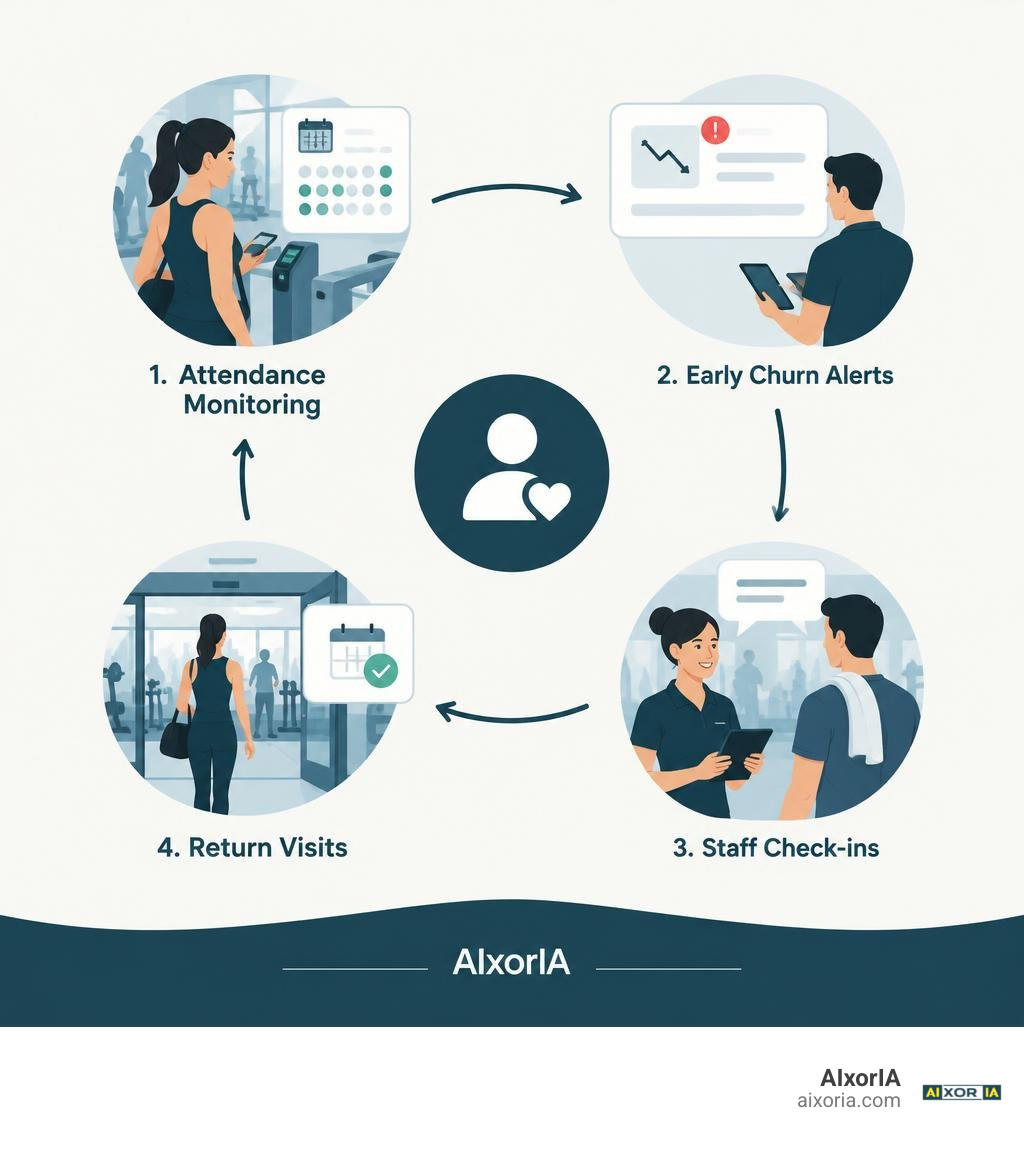
How AI Tools for Gyms and Fitness Studios for Member Retention Work
The dirty secret of the fitness industry is that members rarely cancel out of anger. They cancel out of guilt.
Industry research shows that approximately 53% of gym members stop attending without ever formally canceling their membership at first. They drift away quietly over weeks, paying for access they do not use until an unexpected billing notification triggers a cancellation request. In fact, roughly 50% of new members stop showing up within their first three to six months.
Traditional gym operations react to cancellations only after the formal request arrives at the front desk. By that point, the member has mentally moved on, and a desperate discount offer feels cheap and transactional.
Modern AI retention software turns this dynamic on its head. Instead of waiting for an exit interview, predictive retention algorithms monitor real-time check-in telemetry and access-control hardware to establish an individual behavioral baseline for every member. If a member who consistently attends three times a week misses ten consecutive days, the system flags that variance.
Because your members leave weeks before they cancel, identifying these quiet behavioral shifts gives your team an actionable window to intervene before the habit loop breaks entirely. Modern AI-powered customer engagement software provides the infrastructure needed to spot these behavioral changes automatically across large member databases.
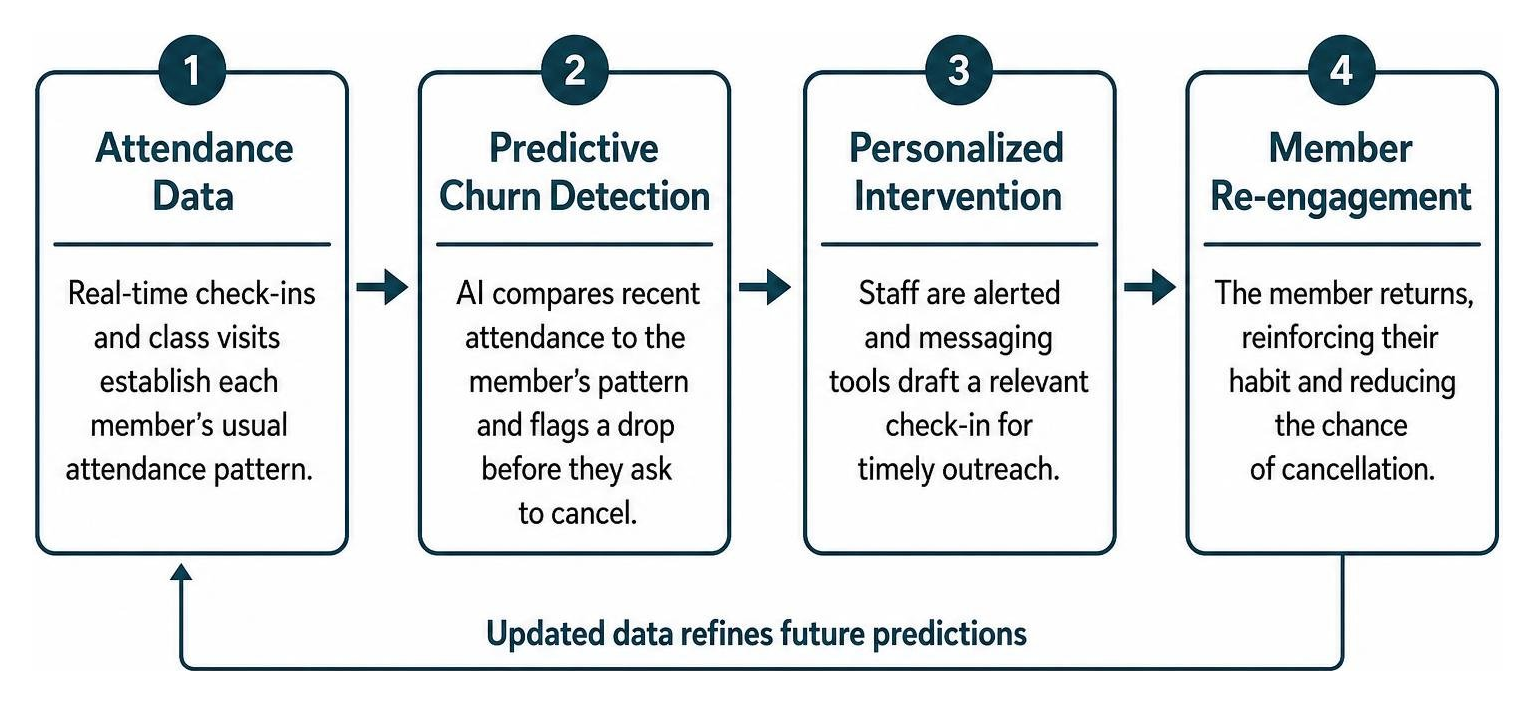
Predictive Analytics vs. Automated Messaging: Core AI Tools for Gyms and Fitness Studios for Member Retention
To choose the right software, operators must distinguish between two complementary technologies: predictive analytics and automated conversational messaging.
- Predictive Analytics Engines: These models ingest attendance records, class booking histories, time-of-day preferences, and retail purchase data. They calculate a real-time “churn probability score” for each profile. Rather than relying on rigid rules (e.g., “alert staff if anyone misses 14 days”), predictive models account for seasonality, historical vacations, and subtle habit changes (like switching from high-energy group fitness classes to solitary treadmill sessions).
- Automated Conversational Messaging: Once an at-risk profile is flagged, conversational layers generate personalized outreach across SMS, WhatsApp, email, or automated voice channels. Instead of sending robotic mass broadcasts, generative tools draft messages that reference the member’s favorite instructor, preferred workout times, or recent fitness milestones.
When integrated smoothly, predictive analytics acts as the facility’s radar, while automated messaging handles the initial legwork of re-engagement.
Data Requirements for Hyper-Personalized Fitness Programming and Re-Engagement
AI systems rely heavily on structured, unfragmented data. To deliver effective workout personalization and contextual retention outreach, platforms require three primary data streams:
- Access & Telemetry Data: RFID turnstile logs, class check-ins, app logins, and booking cancellations.
- Member Profile & Goal Attributes: Stated fitness goals (hypertrophy, endurance, weight loss), injury history, and schedule availability recorded during initial onboarding.
- Wearable & Telemetry Logs: Heart-rate telemetry, workout completion logs, and effort metrics synced via mobile member apps.
Using this information, AI engines draft customized workout progressions and check-in prompts. Trainers can then review and adjust these plans, cutting administrative planning time while maintaining professional oversight. Similar to how professionals use AI tools for business coaching feedback, fitness staff can scale their attention across hundreds of clients without sacrificing quality.
Key Categories of Fitness Retention AI Compared
Selecting the right retention software requires matching your studio’s operational bottlenecks with the appropriate technology architecture.
| Feature / Category | Autonomous Retention Overlays | Omnichannel Reception Agents | Automated Billing Recovery |
|---|---|---|---|
| Primary Goal | Stop silent member churn & drift | Capture leads & resolve inquiries 24/7 | Recover failed recurring payments |
| Core Mechanism | Attendance anomaly detection & check-in prompts | Conversational voice, SMS, & web chatbots | Smart retry logic & conversational SMS links |
| Integration Complexity | Low (API overlay on existing CRM) | Moderate (Requires schedule & voice mapping) | Low to Moderate (Connects to payment gateway) |
| Staff Labor Impact | Saves 10+ hours/week in manual audits | Eliminates after-hours front-desk call load | Eliminates awkward collection phone calls |
| Ideal Facility Type | Boutique studios & multi-location clubs | High-volume gyms & 24/7 access facilities | Facilities with high recurring subscription volume |
Autonomous Churn Prevention and Retention Overlays
Retention overlay systems sit directly on top of legacy club management systems—such as Mindbody, Glofox, Club Automation, or Pike13—via read-only API connections. This architecture allows gyms to deploy machine learning without migrating their customer database or retraining staff on a new booking platform.
Platforms like NexScale and Patch Retention analyze daily attendance rosters to spot silent drop-offs. When the system detects a drop in visit frequency, it populates a daily task queue for gym staff with draft SMS or email messages. Front-desk teams or trainers simply spend 10 to 15 minutes reviewing and approving these messages before they go out.
For multi-location operators, Enryze combines studio management features with predictive churn triggers to alert staff the moment a client enters the critical two-week absence window.
Omnichannel Front-Desk Agents and Booking Automation
Front-desk staff juggle member greetings, clean towels, equipment maintenance, and ringing phones. When the desk is swamped, inbound inquiries and booking changes fall through the cracks. In fact, research shows that roughly 80% of gym leads are lost when initial response times exceed five minutes. Furthermore, 53% of members abandon booking or managing memberships online when facing digital friction.
Omnichannel tools—including Schedulous and LookSphere—act as 24/7 virtual concierges across web chat, SMS, and phone lines. These platforms handle routine tasks like schedule queries, guest pass sign-ups, and class reschedulings.
By answering common questions around the clock, studios capture after-hours interest and make class booking effortless. This mirrors how appointment-driven service businesses use AI booking tools to reduce no-shows, while conversational routing tools help improve customer service scores by eliminating hold times.
Automated Payment Recovery and Billing Intelligence
Passive churn—when a member drops out due to an expired credit card, bank decline, or processing error—is one of the most preventable sources of lost revenue in the fitness industry. Traditional collection notices are cold and punitive, often causing embarrassed members to walk away entirely.
AI billing tools replace rigid collection letters with friendly, conversational payment recovery workflows. When a transaction fails, the system immediately sends a secure, mobile-friendly update link via SMS.
Solutions like Workforce Wave handle billing inquiries and pause requests with natural-language voice agents that follow studio-defined rules. These systems treat billing touchpoints as customer service interactions, keeping payment recovery high while protecting the member relationship. Managing these customer touchpoints alongside your core database is simple when pairing these tools with your small business CRM software.
Solving the Four Major Gym Revenue Leaks with Automation

Fitness facilities typically leak revenue through four predictable operational gaps:
- The Missed Inquiry: Prospective members calling after hours or walking away from slow web forms.
- The Ghost Lead: Prospects who take a trial class but never receive structured follow-up within 24 hours.
- The Silent Non-Attender: Active members whose visit frequency drops from three times a week to zero over a month without staff noticing.
- The Friction Dropout: Members who leave due to booking bugs, clunky payment recovery, or unaddressed class waitlists.
Automated retention tools help close these gaps systematically. Pairing automated engagement with nurture and drip campaign software ensures that every trial guest, active member, and at-risk client receives timely, relevant communication without overwhelming your front-desk team.
Implementing AI Tools for Gyms and Fitness Studios for Member Retention on a Budget
Single-location gyms and boutique studios do not need an in-house engineering team or an enterprise budget to deploy retention automation. A phased 90-day rollout helps keep implementation manageable and effective:
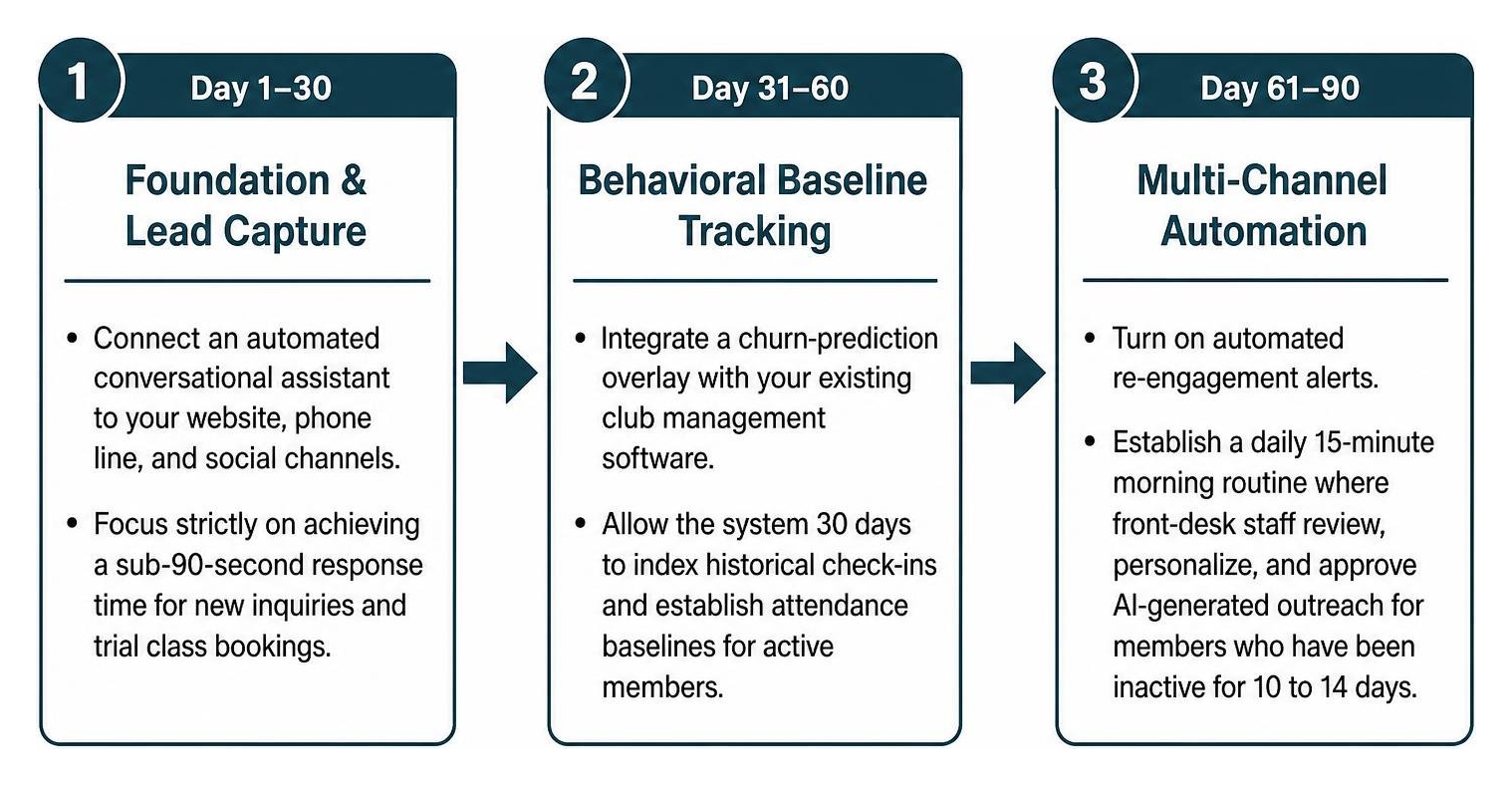
- Phase 1: Days 1–30 (Foundation & Lead Capture): Connect an automated conversational assistant to your website, phone line, and social channels. Focus strictly on achieving a sub-90-second response time for new inquiries and trial class bookings.
- Phase 2: Days 31–60 (Behavioral Baseline Tracking): Integrate a churn-prediction overlay with your existing club management software. Allow the system 30 days to index historical check-ins and establish attendance baselines for active members.
- Phase 3: Days 61–90 (Automated Re-Engagement Workflows): Turn on automated re-engagement alerts. Establish a daily 15-minute morning routine where front-desk staff review, personalize, and approve AI-generated outreach for members who have been inactive for 10 to 14 days.
Preserving Human Judgment: Where Fitness Staff Outperforms Algorithms
While AI handles speed, data processing, and pattern recognition, human connection remains the heart of member retention. Automated systems should handle routine scheduling and data analysis so trainers and front-desk staff can focus on high-impact personal interactions.
Critical areas where human judgment must always lead include:
- Injury & Health Adjustments: An algorithm should never diagnose physical pain or modify movements for recovering members without a certified trainer’s direct sign-off.
- Empathetic Cancellation Conversations: When a member experiences financial hardship, family emergencies, or medical illness, a compassionate human conversation can preserve the relationship for a future return.
- Community Building: Algorithms send text messages, but personal trainers build long-term gym culture. An AI check-in works best when it prompts a real trainer to say, “Great to see you back on the turf today, Dave!”
Frequently Asked Questions About AI for Fitness Retention
How quickly does AI detect member churn in gyms?
AI systems detect member churn within 7 to 14 days of behavioral drift—weeks before a member submits a cancellation form. Rather than waiting for complete non-attendance, predictive models flag subtle warning signs, such as a drop in weekly check-in frequency, skipped peak class times, or a lack of mobile app activity compared to the member’s established baseline.
Can small boutique fitness studios use AI without technical staff?
Yes. Modern retention platforms operate as no-code, read-only overlays that connect to popular fitness management systems (like Mindbody, Glofox, and Mariana Tek) via standard API keys. Studio owners configure plain-language rules (such as “draft a check-in text if a member misses 10 days”), and staff review suggested messages in a daily task queue.
What measurable ROI can gym operators expect from retention AI?
Gym operators deploying retention AI typically see measurable returns across three key metrics:
- Retained Monthly Revenue: Improving member retention by just 5% can preserve between $25,000 and $100,000+ in annual recurring dues for a single studio, depending on monthly membership rates.
- Operational Labor Savings: Facilities often reduce administrative workloads by 15% or more by automating routine phone calls, booking updates, and billing follow-ups.
- Win-Back Rates: Reaching out within the first 14 days of inactivity helps studios recover between 25% and 35% of drifting members, compared to less than 10% once a member has been absent for over a month.
Conclusion

Member retention is the most powerful financial lever in the fitness industry. While acquiring new members requires significant
marketing spend, keeping your current members engaged and active protects your recurring revenue and builds a healthier studio community.
Using AI for retention is not about replacing your trainers with chatbots or running your gym on cold, detached autopilot. It is about building an early warning system that catches disengaged members before they slip away, while removing the day-to-day administrative headaches that pull your team away from the gym floor.
By pairing automated behavioral tracking with personal staff outreach, gym operators can stop silent member churn, protect their recurring dues, and deliver the attentive, high-touch experience members expect. To explore practical automation frameworks, tool audits, and custom operational strategies for your business, explore how to scale your retention and operational workflows with AIxorIA.
1 thought on “Which AI Tools Help Gyms Keep Members? 2026 Guide”