Scr0ll d0wn to D0VVNL0AD
How AI Booking Tools Help Salons Fill Chairs and Cut No-Shows
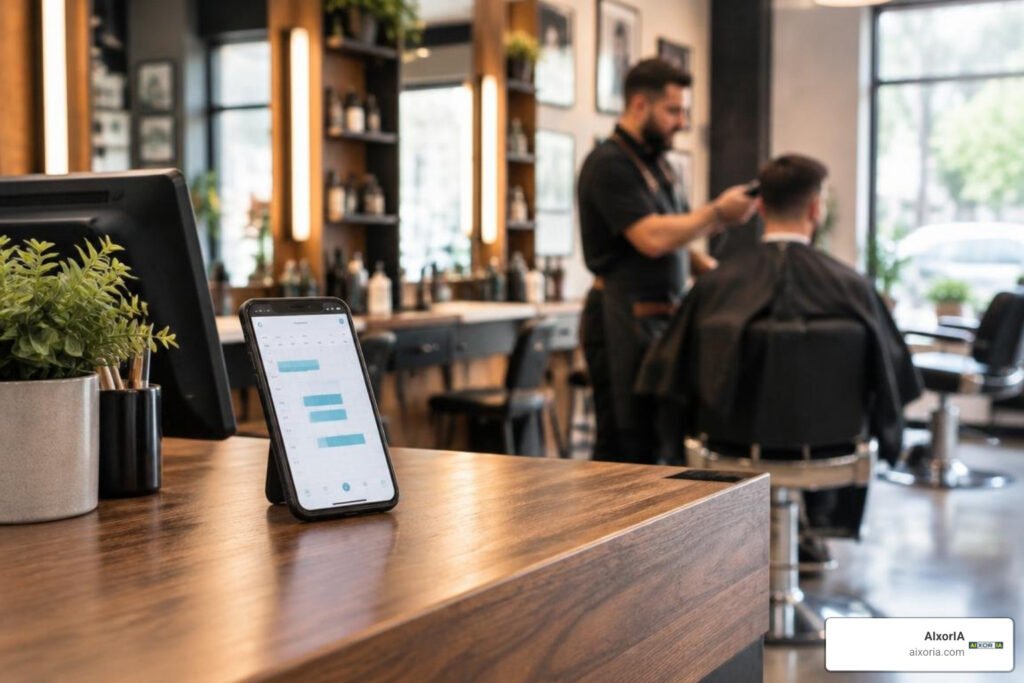
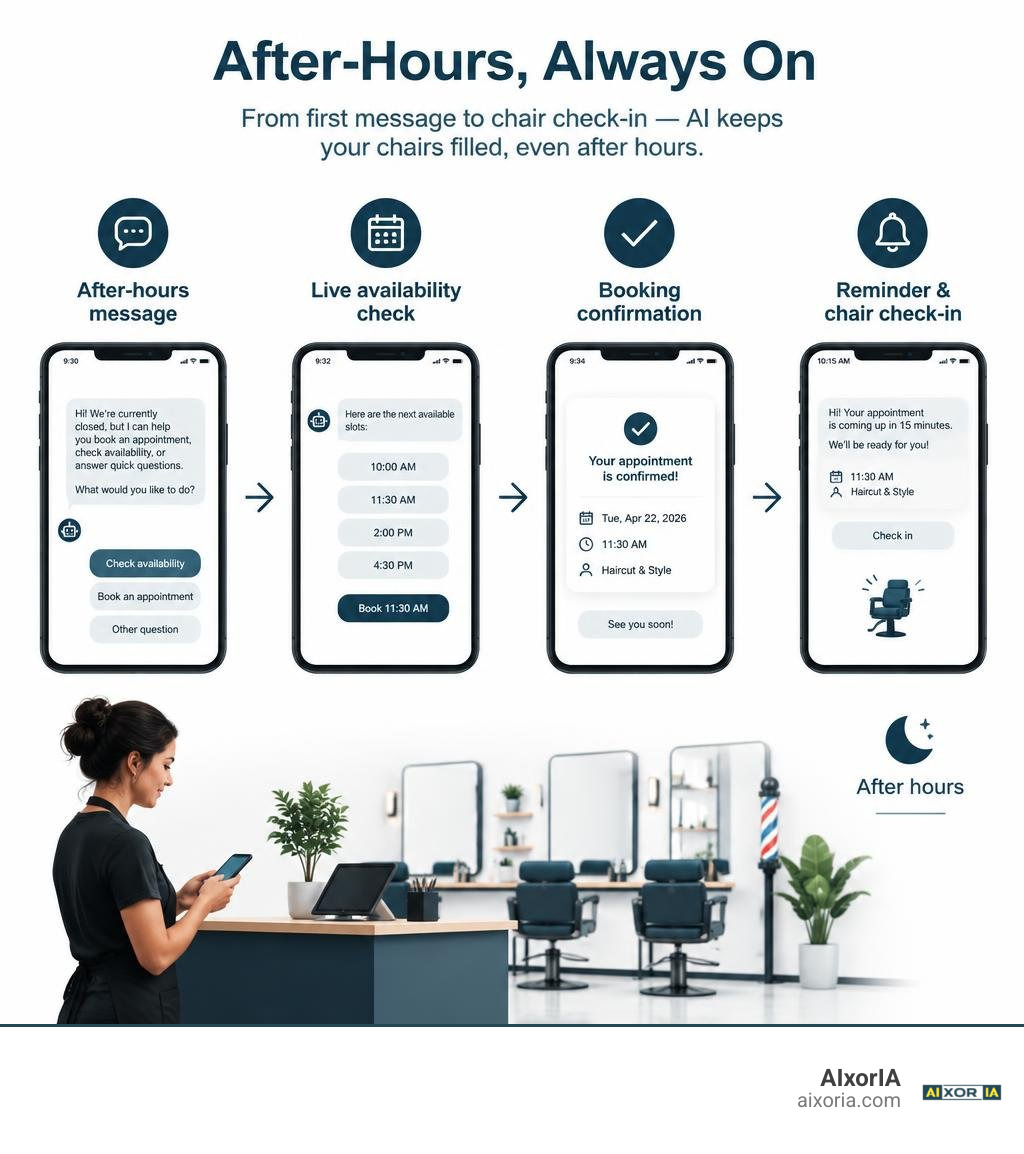
AI tools for booking and no-shows at barbershops and salons can answer routine requests after hours, check live availability, and book clients without staff stepping away from a service. To cut missed appointments, start with automatic reminders and easy confirmations. Add two-way replies and a waitlist if last-minute cancellations often leave chairs empty.
You do not need to automate every conversation. Keep complex consultations, complaints, and price exceptions with your team. Start with one busy channel, then compare bookings, no-shows, and staff time before and after the trial.
How AI Tools for Barbershops and Salons for Booking and No-Shows Transform Operations
Running a bustling salon or barbershop means living in constant motion. Scissors snipping, dryers whirring, and clients walking in all create an energetic atmosphere. Yet, in the background, a silent bottleneck often costs owners thousands in lost revenue: missed inquiries and unfilled chairs.
Industry research shows that roughly 40% of appointments are booked after business hours. When a prospective client reaches out at 9:30 PM on a Tuesday, they expect an answer right away. Research into response velocity demonstrates that businesses replying to incoming leads within 60 seconds convert at 35.1%, compared to a meager 7.1% conversion rate when a response takes between one and twenty-four hours. If a client waits until morning for a text or email reply, there is a high chance they have already booked a seat with the competitor down the street.
Deploying dedicated automated customer service solutions enables shops to provide 24/7 self-service scheduling that converts late-night browsers into paying customers. Rather than losing revenue while you sleep or mid-fade, an AI-powered system handles incoming demand smoothly across every digital doorway.
How AI Scheduling Differs from Traditional Online Booking Software
Traditional online booking widgets are essentially static calendars. A customer clicks a link, browses a grid of available time slots, selects a time, and manually inputs their contact details. While functional, standard widgets suffer from significant structural limitations:
- Rigid gap creation: Standard schedulers let clients pick arbitrary slots—such as 2:15 PM—leaving awkward 15-to-30-minute gaps on either side that are nearly impossible to sell.
- Lack of chair awareness: Traditional forms rarely calculate physical workspace capacity alongside staff shifts, leading to station crowding during peak hours.
- Static duration estimates: Basic portals treat a 30-minute skin fade and a complex beard sculpt identically unless manually configured by the user, leading to overrun schedules.
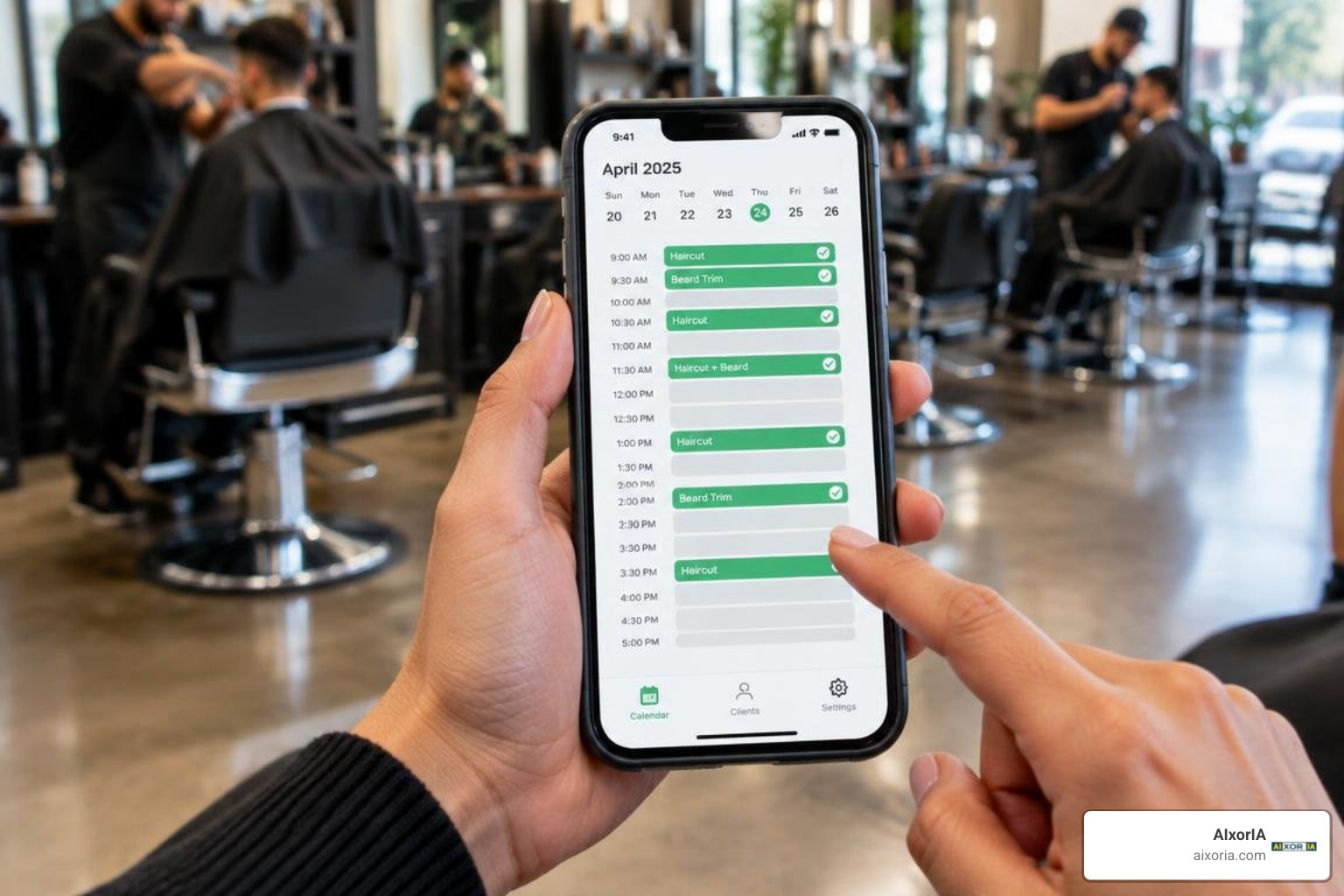
In contrast, modern AI scheduling acts like an experienced front-desk manager. Dynamic scheduling algorithms analyze team velocity, service durations, processing downtime, and historical chair utilization to recommend optimal appointment clusters. Using smart schedule optimization modes (such as gap reduction and precision clustering), the system nudges clients toward specific slots that maximize chair density. When paired with broader AI tools for business productivity, these systems can drive up to 16% more booked services while trimming dead time across the workweek.
Measurable No-Show Reduction: Reminders, Deposits, and Smart Waitlists
Across appointment-based industries, the baseline no-show rate hovers around 23%. For a three-to-five-chair barbershop or salon, empty chairs can easily drain upwards of $2,000 per month in lost earnings.
While basic digital reminders provide a measurable lift—clients receiving digital notifications are roughly 25% less likely to miss an appointment—AI workflows take no-show mitigation several steps further:
- Two-Way Conversational Confirmations: Instead of static “Reply YES to confirm” texts that get ignored, an AI assistant communicates conversationally. If a client replies, “Running 10 minutes late!” or “Can I push to 4:00 PM?”, the AI interprets the intent and adjusts the schedule instantly.
- Automated Deposit Collection: Requiring micro-deposits or card-on-file guarantees through integrated payment gateways filters out uncommitted clients while providing chargeback and late-cancellation protection.
- Smart Waitlist Backfilling: When an appointment is canceled at 7:12 PM, an automated assistant instantly contacts waitlisted clients who requested that time window. Top systems can backfill canceled slots within two minutes, keeping staff utilization at peak levels.
Locations adopting precision AI scheduling and active confirmation loops report up to 71% fewer no-shows within 90 days of implementation.
Omnichannel Management: Phones, Social DMs, and Walk-Ins
Modern clients do not interact with salons through a single channel. Discovery happens visually on social media, follow-ups happen over text, and urgent questions often arrive via phone calls.
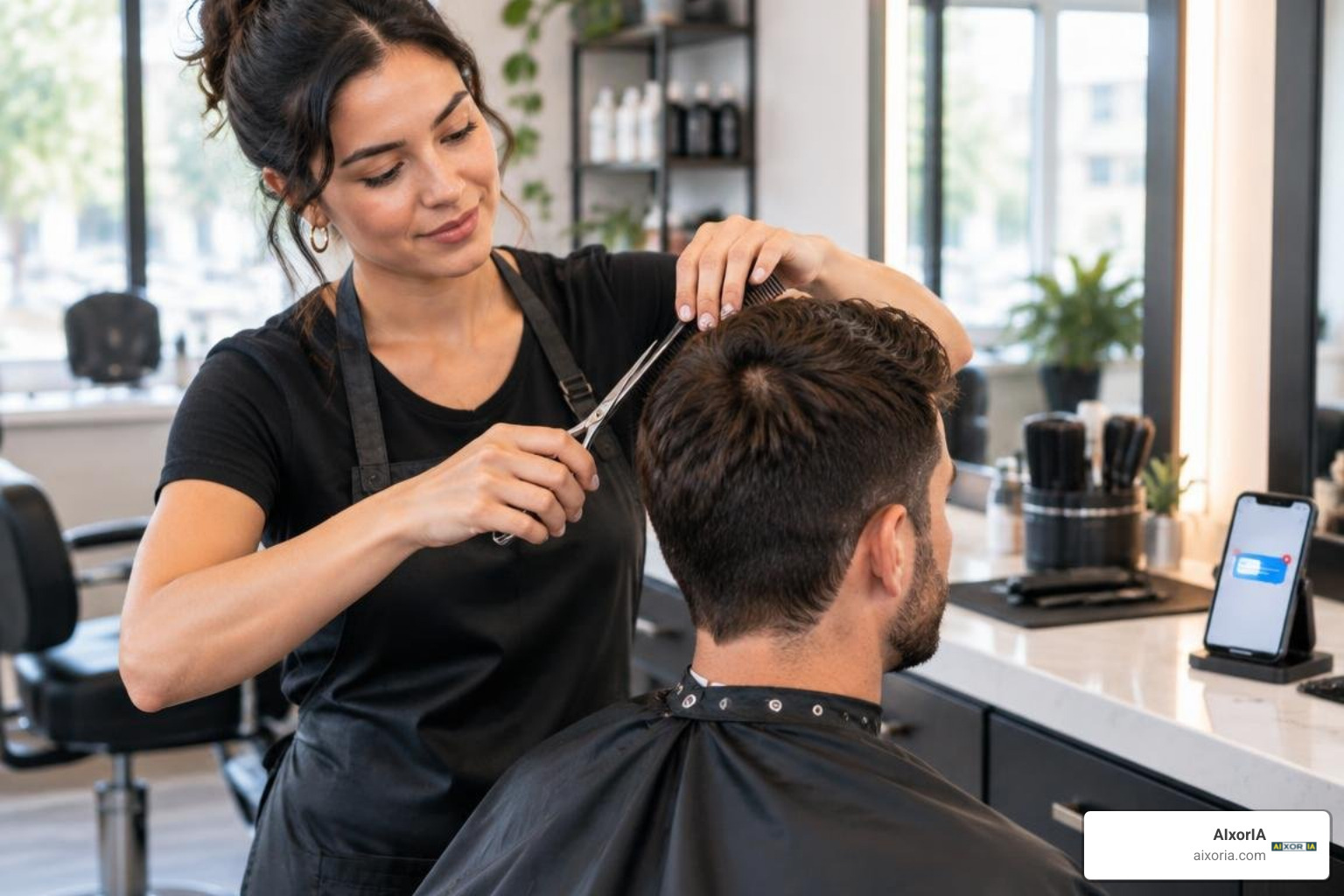
Industry studies show that 35% of barbershop and salon calls go unanswered each month, primarily because stylists and barbers are actively servicing guests with scissors or color bowls in hand. Furthermore, 55% of Gen Z and 47% of Millennials cite a salon’s social media presence as the top factor when choosing where to book, with 41% discovering new services on social channels (36% originating directly on Instagram).
Equipping your business with the best AI tools for small business owners ensures that every direct message, missed phone call, and web chat is addressed in seconds without pulling your team away from in-person clients.
Managing Inbound Phone Calls, WhatsApp, and Instagram Inboxes
When a client dials your salon during a busy Saturday rush, an AI voice booking assistant can answer naturally on the second ring. Modern conversational voice systems greet the caller warmly, reference real-time calendar availability, explain service details, and book the requested stylist into the schedule.
Simultaneously, standalone chat assistants monitor your WhatsApp and web inboxes. Many platforms even offer automatic multilingual detection (such as English, Korean, or Spanish), allowing salons to cater seamlessly to diverse local demographics without needing multilingual front-desk staff.
Handling Walk-In Queues Alongside Pre-Booked Appointments
In barbershop environments, walk-in clients provide essential daily revenue but can quickly disrupt scheduled bookings if not managed systematically.
AI-enabled salon software integrates physical walk-in queues with appointment calendars in real time. When a walk-in guest checks in via an on-counter tablet:
- The system evaluates real-time chair turnover (typically 15 to 30 minutes for clipper cuts) and projects live wait times accurately.
- Walk-ins are assigned to the next available chair or routed to specific barbers based on requested services (e.g., beard work, specialty fades, junior vs. master pricing).
- If a pre-booked appointment runs late, the system intelligently buffers the queue, preventing station congestion and customer frustration.
Architecture and Cost Analysis: Standalone Tools vs All-in-One Suites
When selecting software, owners typically choose between two primary architectures: All-in-One Salon Management Platforms and Standalone AI Receptionists.
| Feature / Metric | Standalone AI Receptionist | All-in-One Suite |
|---|---|---|
| Primary Focus | Inbound communication, after-hours capture, zero-drop reminders | Comprehensive operations: POS, inventory, payroll, and booking |
| Typical Monthly Cost | $30 – $195 / month (flat fee) | $100 – $400+ / month (often plus processing/booking fees) |
| Setup Time | 5 minutes to 24 hours (calendar overlay) | Several days to weeks (data migration required) |
| Calendar Sync | Google Calendar, Outlook, or API bridge | Native proprietary calendar |
| Inbound Phone AI | High availability (dedicated voice agents) | Add-on modules or third-party integrations |
| Omnichannel DMs | Direct integration (WhatsApp, Instagram, Web) | Native widget or marketplace links |
| Best Suited For | Solo barbers, independent stylists, boutique teams | Multi-chair high-volume salons, multi-location franchises |
Comparing AI Tools for Barbershops and Salons for Booking and No-Shows
Choosing the right platform depends on your operational bottlenecks. Solo operators and small teams often see the fastest return on investment by pairing an existing lightweight calendar with an automated SMS dispatch and rebooking workflow.
Larger salons that run targeted seasonal promotions or complex loyalty tiers can leverage advanced AI tools for sales and marketing to recover abandoned booking carts and re-engage dormant clients automatically. In fact, high-adoption enterprise locations using automated retention features generate approximately $9,900 in incremental revenue per month, driven largely by automated re-engagement texts and intelligent slot optimization.
Calendar Integration vs Full Software Migration
One of the biggest hesitations salon owners face is the fear of migrating databases. Fortunately, modern AI assistants rarely require you to rip out your existing point-of-sale hardware.
- Zero-Migration Calendar Overlays: Standalone AI bots connect directly to Google Calendar or your existing booking feed. They read live availability and write new appointments without disrupting historical client data.
- Native Enterprise Upgrades: If your salon is already outgrowing its POS, switching to an enterprise platform with native AI delivers deep visibility into staff commissions, tip payouts, and inventory tracking across multiple branches.
Implementing AI Scheduling: Best Practices, Human Handoffs, and ROI
Introducing artificial intelligence into a personal service business requires a thoughtful balance between automation and human connection. Clients love convenience, but they value craftsmanship and personal hospitality above all else.
Defining Automation Boundaries: What to Delegate and What to Keep Human
To maintain a luxury customer experience, establish clear boundaries between automated tasks and staff conversations:
- Workflows to Automate Fully:
- Standard haircut, blowout, and single-process color bookings.
- 24-hour and 2-hour appointment confirmation messages.
- Automated waitlist notifications for canceled slots.
- Routine questions regarding business hours, parking, and base service pricing.
- Client review collection and Google Business profile follow-up requests.
- Workflows That Must Remain Human-Led:
- Complex Color Corrections & Chemical Consultations: Assessing damaged hair requires visual inspection and direct professional dialogue.
- Pricing Exceptions & VIP Discounts: Discretionary rate adjustments should remain under owner or stylist control.
- Customer Complaints & Disputes: Negative feedback demands human empathy and personalized resolution.
- Sensitive Client Profile Notes: Scalp conditions, personal preferences, and private records should never be delegated to automated chat outputs.
Measuring Success When Testing AI Tools for Barbershops and Salons for Booking and No-Shows
When launching a 30-day pilot for an AI assistant, track these four core performance metrics:
- Response Velocity: Track the reduction in average response time for incoming DMs and missed calls (target: under 2 minutes).
- After-Hours Booking Volume: Measure the total percentage and dollar value of appointments secured between 7:00 PM and 8:00 AM.
- No-Show Rate Delta: Compare your no-show and late-cancellation percentage over 30 days against your pre-pilot baseline.
- Chair Utilization Rate: Calculate total billable service hours divided by total available chair hours to measure how effectively the tool filled awkward gaps.
Frequently Asked Questions About Salon AI Scheduling
Do I need to replace my existing booking software to use an AI booking assistant?
No. Many standalone AI receptionists operate as a calendar overlay. They connect directly to your existing Google Calendar, Outlook, or booking software via standard API integrations. Setup often takes less than an hour without any need to migrate historical client records or replace your current POS hardware.
How does an AI booking assistant reduce no-shows compared to standard SMS reminders?
Traditional SMS reminders are one-way notifications that clients often overlook. AI booking assistants conduct two-way conversations, allowing clients to confirm, delay, or reschedule directly in the chat thread. Furthermore, AI tools enforce deposit policies and automatically message your waitlist the moment a slot opens, ensuring canceled appointments are refilled immediately.
What happens when an AI assistant encounters a complex or custom booking request?
When a customer asks a question outside the AI’s training—such as a complex multi-process chemical treatment or a service complaint—the system flags the conversation with an alert and transfers the thread directly to a staff member’s inbox with the complete context preserved.
Conclusion
Maximizing revenue in modern barbershops and salons comes down to keeping chairs full and eliminating operational friction. By deploying AI booking assistants, owners can capture after-hours bookings 24/7, respond to social DMs in seconds, and dramatically reduce costly no-shows through smart two-way reminders and instant waitlist backfilling.
Automating routine scheduling tasks frees your team to focus entirely on client care and creative styling. To discover more practical strategies, operational tutorials, and curated business automation resources, explore AIxorIA and elevate your business operations today.