What Are Chatbots Mostly Used For? A Quick-Start Guide

What are chatbots mostly used for? Here’s the short answer:
- Customer support — answering FAQs, tracking orders, resetting passwords, 24/7
- Marketing and sales — qualifying leads, recommending products, recovering abandoned carts
- Internal business operations — HR queries, IT helpdesk, employee onboarding
- Personal assistance — booking appointments, making reservations, placing orders
- Information retrieval — pulling reports, checking inventory, surfacing policy documents
If you run a small business, chances are you’ve already bumped into a chatbot — either as a customer or while looking for ways to stop answering the same questions over and over again.
Chatbots have come a long way. What started in 1966 as a simple text program called ELIZA has grown into a market worth roughly $9.6 billion in 2025, projected to surpass $27 billion by 2030. Today, AI-powered chatbots can hold real conversations, complete multi-step tasks, and resolve customer issues without any human involvement.
The numbers back this up. AI already handles 30% of customer service cases with no human handoff — and that figure is projected to hit 50% by 2027. Meanwhile, 66% of customers try to solve their own problems first before reaching out to a person. Chatbots are how smart businesses meet them there.
This guide walks you through exactly where chatbots are being used, what they’re good at, and what that means for a business like yours.
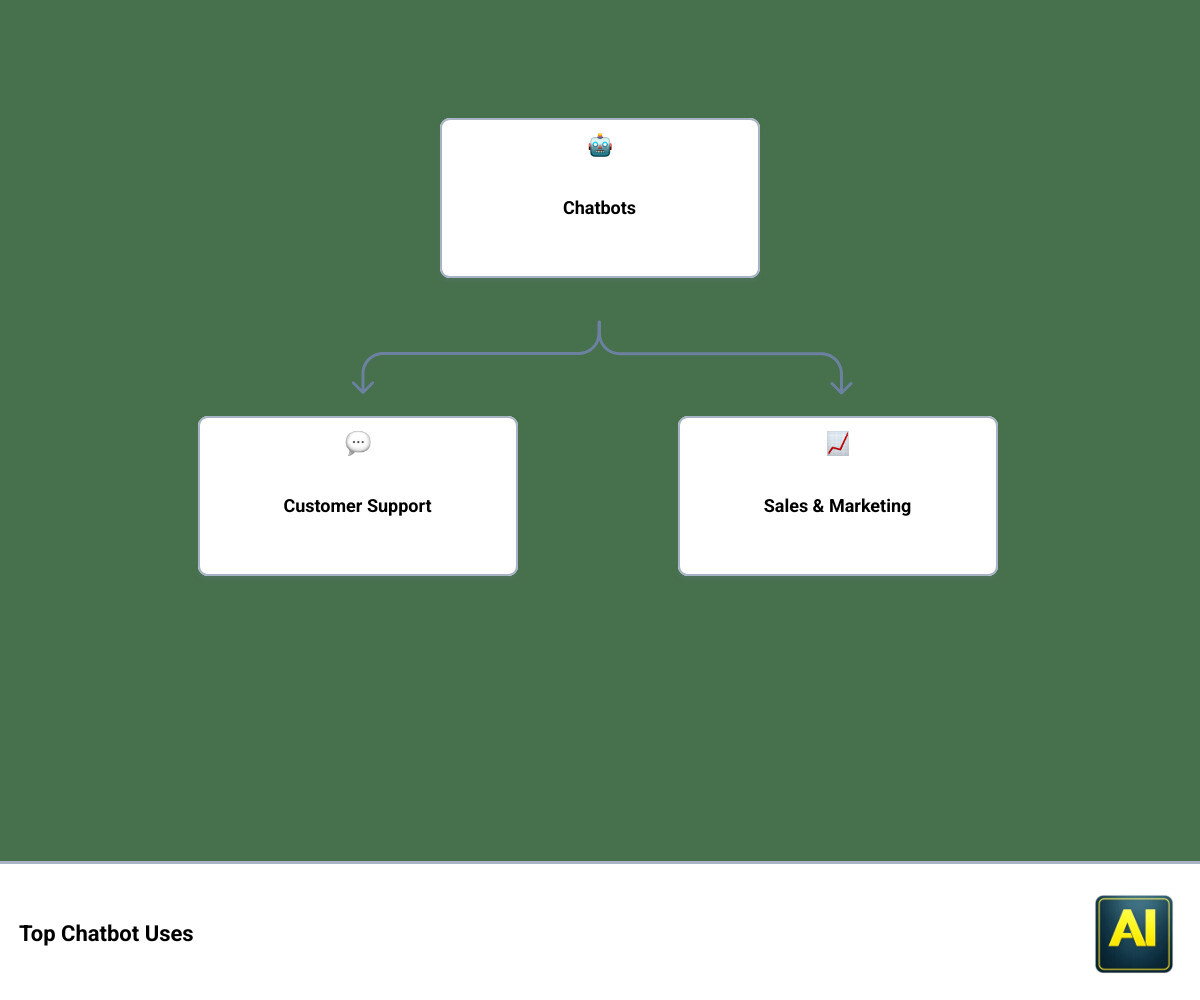
What are chatbots mostly used for?
To understand how chatbots are taking over the business landscape, we have to look at the sheer scale of their adoption. Across almost every major sector, conversational AI has moved out of the experimental “pilot” phase and directly into core operational infrastructure.
According to recent data from the Chatbot Statistics & Trends By Industry For 2026 | Emulent Agency, different industries adopt this technology at varying speeds. The driving factor is usually the volume of repetitive queries and the emotional stakes of the interactions.
For instance, banking and retail lead the charge because they handle millions of transactional, easily automated requests (like checking a balance or tracking a package). On the flip side, government services and healthcare lag slightly behind because their queries often require higher emotional sensitivity or complex regulatory compliance.
Here is a breakdown of chatbot adoption rates and the unit economics driving this massive shift:
| Industry | Chatbot Adoption Rate (2026) | Primary Use Case | Average Human Ticket Cost | Average AI Ticket Cost |
|---|---|---|---|---|
| Banking & Finance | 71% | Balance checks, fraud alerts, password resets | $5.10 | $0.55 – $0.95 |
| Retail & E-commerce | 69% | Order tracking, product recommendations | $5.10 | $0.55 – $0.95 |
| Technology & SaaS | 69% | Troubleshooting, lead qualification | $5.10 | $0.55 – $0.95 |
| Healthcare | 52% | Appointment scheduling, intake forms | $5.10 | $0.55 – $0.95 |
| Education | 43% | Course registration, campus FAQs | $5.10 | $0.55 – $0.95 |
| Travel & Hospitality | 38% | Booking changes, local recommendations | $5.10 | $0.55 – $0.95 |
| Government Services | 22% | Public records, tax deadlines | $5.10 | $0.55 – $0.95 |
The math is hard to ignore. When you realize that an AI-handled ticket costs a fraction of a phone call with a human agent, it’s easy to see why businesses are rushing to implement these digital helpers.
Customer Support and Service Automation
If you ask any business owner why they bought a chatbot, the answer is almost always: “To give my support team a break.” Customer service is the absolute frontline of chatbot deployment.
The primary business value lies in two key areas: 24/7 availability and cost efficiency. Customers in 2026 have zero patience. In fact, around 90% of consumers expect an immediate response when they reach out to a brand. Humans need sleep, coffee breaks, and weekends off; chatbots do not. They work through holidays, late nights, and sudden traffic spikes without breaking a sweat.
This round-the-clock availability doesn’t just keep customers happy—it completely alters support economics. By automating the resolution of simple, high-volume tickets, businesses can drastically lower their overhead.
But it’s not just about saving money. According to the Zendesk Customer Experience Trends Report, an overwhelming 86% of customer experience (CX) leaders believe CX will be utterly transformed over the next three years. This transformation is driven by the shift from basic auto-responders to highly capable, contextual virtual assistants. To explore how these advanced systems work, check out our deep dive into Conversational AI Tools in 2026: Multimodal Memory, Autonomous Intelligence Explained.
To see how these benefits translate to real-world impact, you can read more about the Top 22 benefits of chatbots for businesses and customers.
What are chatbots mostly used for in customer service?
In day-to-day customer service operations, chatbots act as the ultimate triage nurse. They handle the “low-hanging fruit” tasks that consume hours of human labor. These include:
- Answering FAQs: “What is your return policy?” or “Are you open on Memorial Day?”
- Password Resets: Authenticating users and automatically sending secure reset links.
- Order Tracking: Pulling real-time shipping data from APIs to tell a customer exactly where their package is.
- Routing and Triage: Gathering basic customer information (name, account number, issue type) before passing the ticket to a human agent, ensuring the agent has all the context they need to resolve the issue quickly.
By taking these repetitive tasks off the plate of your human staff, you free them up to handle complex, high-empathy situations that actually require a human touch. For a closer look at how this dynamic improves customer satisfaction, read about What is a chatbot? Learn how AI enhances CX.
Marketing, Sales, and Lead Generation
Chatbots aren’t just defensive tools used to cut support costs; they are also highly effective offensive tools for driving revenue. In marketing and sales, chatbots act as virtual shop assistants that never sleep.
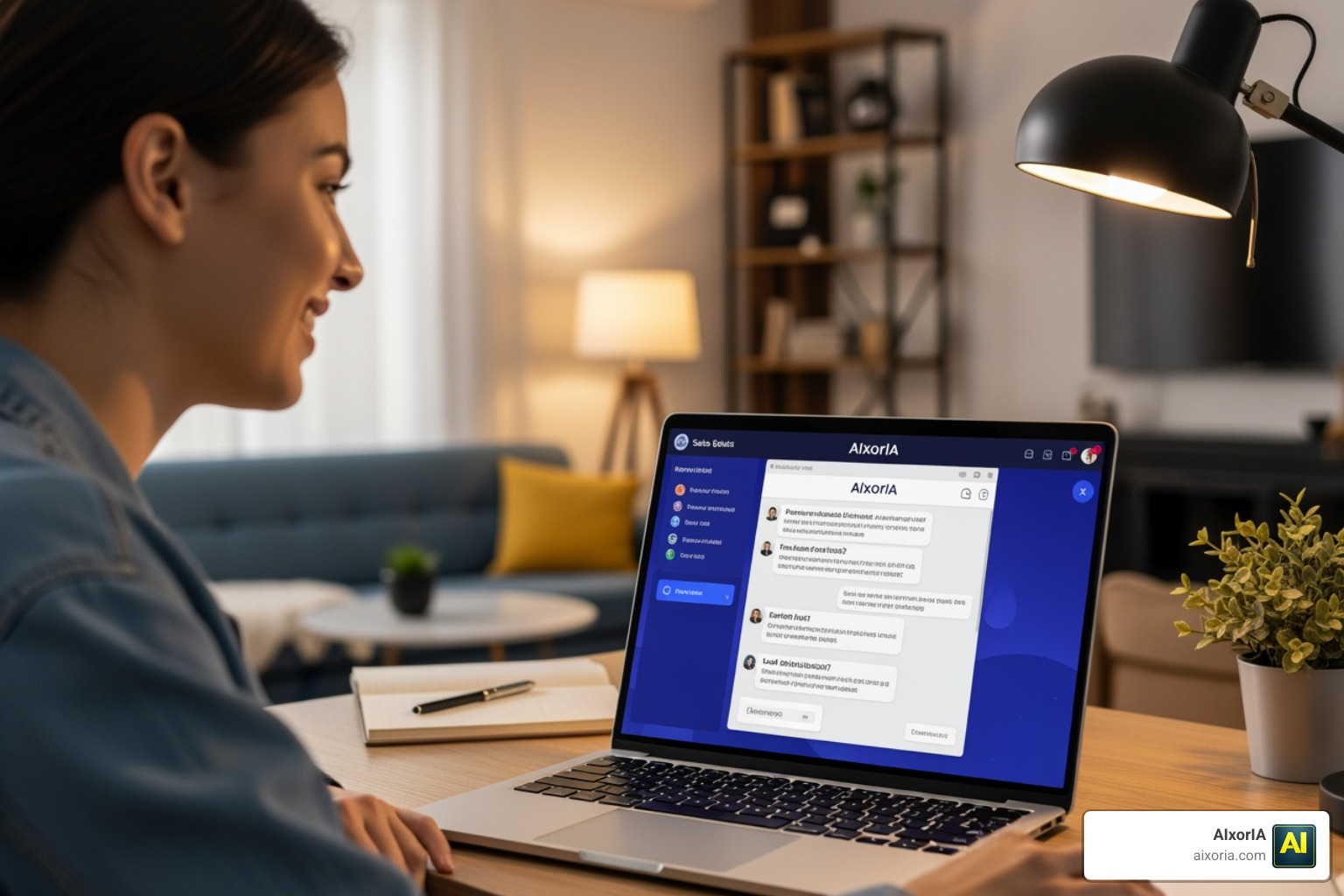
Instead of forcing a website visitor to fill out a static, boring contact form, a marketing chatbot initiates a friendly, interactive conversation. It can ask qualifying questions in real-time to determine if a visitor is a hot lead, a casual browser, or an existing customer looking for help.
For a complete list of creative marketing and sales implementations, you can explore the official Chatbot Use Cases | IBM.
What are chatbots mostly used for in sales pipelines?
Within a modern sales pipeline, chatbots are used to grease the wheels of the buyer’s journey. They keep prospects engaged at the exact moment their purchase intent is highest. Key applications include:
- Qualifying Leads: Asking targeted questions (e.g., “What is your monthly budget?” or “How many users do you have?”) to score leads before routing them to your sales team.
- Booking Appointments: Integrating directly with calendars (like Calendly or Google Calendar) to let qualified prospects book a demo or sales call right inside the chat window.
- Product Recommendations: Guiding users through a mini-quiz to suggest the perfect product for their specific needs.
- Cart Abandonment Recovery: Spotting when a user is about to leave a checkout page and offering a quick discount code or answering a last-minute question to save the sale.
If you are looking for free conversational tools to help brainstorm marketing copy or build basic scripts for your sales bots, take a look at our list of the 13 Best Free Apps Similar to ChatGPT.
Enterprise Productivity and Internal Operations
While customer-facing bots get all the glory, some of the most impactful chatbot work happens behind closed doors. Modern enterprises use internal chatbots to streamline operations, support employees, and boost productivity.
Imagine a new employee starting at your company. Instead of inundating the HR department with questions about how to sign up for health insurance or where to find the holiday schedule, the employee can simply ask the internal HR chatbot. The bot can instantly search unstructured company PDFs, employee handbooks, and knowledge bases to deliver a precise answer.
Similarly, IT helpdesks use chatbots to automate password resets, software installations, and device troubleshooting. In 2026, these internal systems are increasingly integrated directly into daily communication hubs like Slack or Microsoft Teams, allowing employees to access company knowledge without leaving their workspace.
To understand how IT and business leaders are deploying these tools internally, read What is an AI chatbot? The 2026 guide for IT and business leaders | Zoom. If you run a smaller operation or work as an independent creator, you can also check out our guide on the 6 Best AI Chat Tools to Boost Freelancer Productivity 2026 to see how to apply these productivity hacks on a smaller scale.
Rule-Based vs. AI-Powered Conversational Chatbots
Not all chatbots are created equal. If you’ve ever interacted with a bot that felt like a frustrating, rigid phone menu where you had to click specific buttons to get anywhere, you were dealing with a rule-based chatbot.
Rule-based bots operate on strict “if/then” decision trees. They look for specific keywords or rely entirely on pre-defined buttons. If a customer types something slightly outside the script—or makes a typo—the rule-based bot breaks, usually repeating: “I’m sorry, I didn’t understand that.”
On the other hand, AI-powered conversational chatbots utilize Natural Language Processing (NLP) and machine learning. They don’t just match keywords; they understand intent, context, and sentiment.
With the rise of Generative AI and Large Language Models (LLMs), modern AI chatbots can handle typos, slang, and complex follow-up questions. They can even generate highly personalized, human-like responses on the fly rather than pulling from a static list of pre-written answers.
To get a technical breakdown of how these different architectures operate, check out the guide on What is a Chatbot? – AI Chatbots Explained – AWS. If you’re on the hunt for a powerful, cost-effective conversational tool to test out these advanced AI capabilities yourself, find out Which AI Chat App is Completely Free?.
Frequently Asked Questions about Chatbot Uses
How do chatbots reduce operational costs for businesses?
Chatbots drastically improve the unit economics of customer support. While a traditional phone or email ticket handled by a human agent costs an average of $5.10, an AI-handled ticket costs between $0.55 and $0.95. By resolving up to 30% to 50% of routine inquiries autonomously, chatbots allow businesses to scale their support capacity without linearly increasing their headcount.
Can chatbots handle complex customer queries without human intervention?
Yes, modern “AI agents” can handle multi-step workflows by connecting directly to external APIs, databases, and CRMs. However, for highly complex, sensitive, or emotional issues, chatbots are designed with seamless escalation paths. When a bot realizes a query requires human judgment, it smoothly hands the conversation (and all gathered context) over to a live agent.
Which industries have the highest chatbot adoption rates?
Banking and financial services lead the market with a 71% adoption rate, closely followed by retail, e-commerce, and the technology sector at 69%. These industries experience a massive volume of repetitive, transactional queries, making them the perfect candidates for high-ROI chatbot automation.
Conclusion
At the end of the day, chatbots have evolved from the clunky, annoying pop-up windows of the early 2010s into highly sophisticated digital workforce members. Whether they are answering customer questions at 3:00 AM, qualifying high-value sales leads, or helping your employees find internal documents, their primary purpose remains the same: to automate the routine so humans can focus on the exceptional.
At AIxorIA, we believe that incorporating AI into your business shouldn’t be overly complicated or wildly expensive. We specialize in providing custom AI solutions, hands-on tool training workshops, and performance audits designed to empower your team. Our mission is to translate complex tech into simple, actionable strategies that fit your budget and drive real growth.

Ready to take your business operations to the next level? Read our comprehensive AI Tools for Business in 2026: Autonomous Agents ROI Formula Enterprise Guide to calculate your potential savings, or reach out to us today to see how we can build a custom conversational assistant tailored to your business needs!