Turn a Voice Note Into a Business Proposal
Scr0ll d0wn to D0VVNL0AD
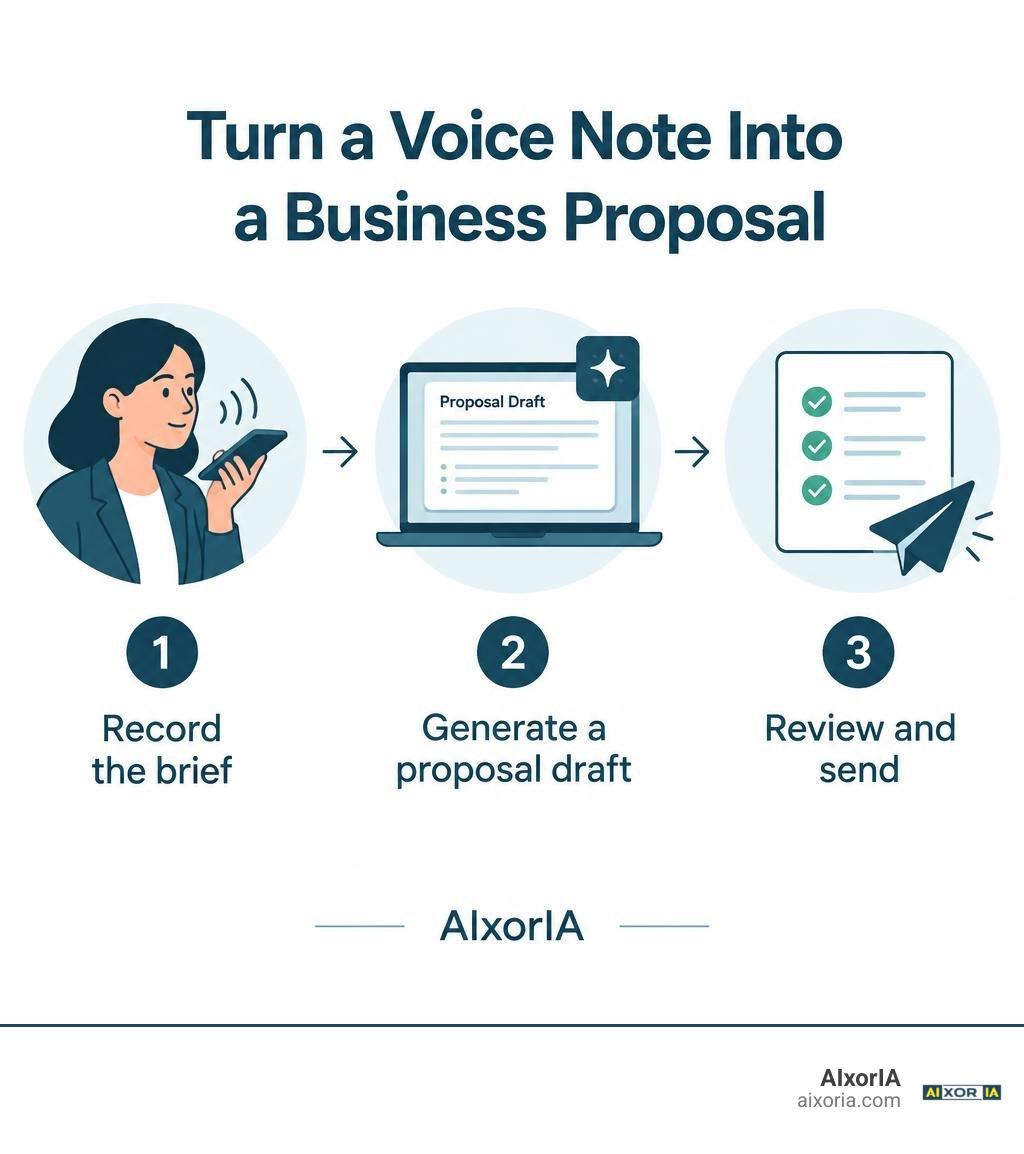
Using ai tools for writing business proposals from a voice note starts with a clear recording. Say who the client is, what they need, the deliverables, the budget, and any deadlines. Then use a tool that accepts audio or a transcript to draft the proposal. Before sending it, check every price, promise, and date against your notes.
This cuts down on typing and helps you send a tailored proposal while the conversation is still fresh. It does not remove the need for a final review.
The article editor does not render LaTeX. Do not write LaTeX commands or math delimiters in article copy. Explain calculations in plain language, or use an ordinary-text formula when useful, such as watts = volts × amps. Write units as readable text, such as ft³/hour or gallons/kWh. When asked to remove formulas or confusing mathematical notation, replace them with prose; do not substitute different equations or hide the notation in code.
Why Use AI Tools for Writing Business Proposals from a Voice Note

Every sales professional, agency founder, and independent consultant knows the painful friction of the brief-to-proposal gap. A discovery meeting concludes on high energy, the client is engaged, and expectations are set. Yet, turning that spoken conversation into an executive-ready proposal traditionally requires hours of manual drafting, formatting, and administrative wrangling.
By the time you sit down to write, critical nuances from the call have faded, forcing you to decipher fragmented scribbles. When looking at the best AI tools for proposal writing in 2026, the biggest shift is moving away from static templates toward dynamic, voice-driven document pipelines. Incorporating voice notes bridges the gap between conversational sales dialogue and formal contracting, making these systems essential AI tools for business productivity.
Speed and Efficiency: The Hidden Cost of Manual Drafting
Writing a standard service proposal from scratch or a complex template typically takes 90 to 180 minutes. For custom agency pitches and technical builds, manual preparation can easily stretch past 5 hours. Roughly 70% of proposal content consists of repeatable frameworks, boilerplate service scopes, and standardized terms, yet professionals spend thousands of unbillable hours retyping this material.
Consider the baseline mechanics: the average professional types at approximately 45 words per minute. In contrast, natural spoken dialogue flows at roughly 220 words per minute. When you evaluate what is the best voice dictation software in 2026, the primary benefit is speed of capture. Dictating a comprehensive post-meeting debrief takes 3 to 5 minutes, whereas typing out those same observations consumes 20 to 30 minutes of administrative focus.
Over a month of active prospecting, that variance represents dozens of recovered billable hours. A solo consultant handling 4 to 6 active pitches weekly can recover up to 12 billable hours per month, amounting to thousands of dollars in reclaimed operational capacity. Pairing modern speech recognition with the most accurate dictation software tested by professionals ensures that specialized industry terminology, technical deliverables, and client names are transcribed cleanly for downstream document generation.
Higher Win Rates from Rapid Turnaround
Deal momentum is fragile. Research shows that roughly 47% of submitted proposals never receive a reply, often because the time between the discovery meeting and proposal delivery was too long. When a proposal arrives in a prospect’s inbox days after a conversation, their internal urgency has cooled, and competing priorities take over.
Submitting a scoped, professional proposal within minutes of concluding a discovery call creates a decisive competitive edge. Adopting the best AI tools for sales and marketing allows teams to capture deal variables while conversation context is fresh, resulting in up to 45% higher close rates compared to delayed manual bids.
The 3-Step Framework: Converting Voice Notes into Winning Proposals
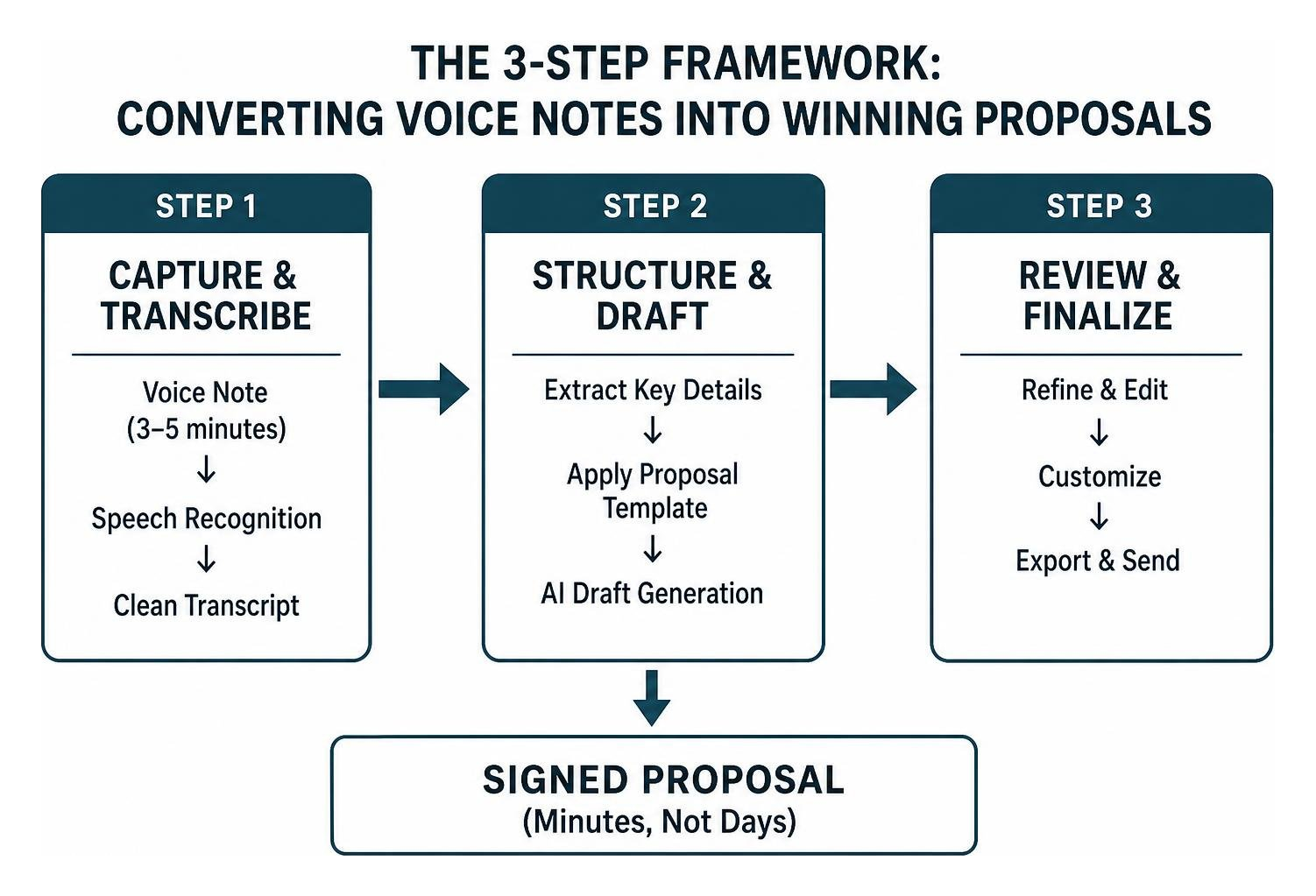
Modern voice-to-document pipelines combine large language models, structured document templates, and natural language understanding. Rather than treating artificial intelligence as a generic chatbot where you must manually engineer extensive prompts, dedicated proposal systems follow a streamlined three-phase progression.
| Proposal Creation Method | Typical Time per Proposal | Time Savings vs. Manual | Best Suited For |
|---|---|---|---|
| Manual Drafting & Static Templates | 90 – 180 minutes | Baseline (0%) | Complex multi-million enterprise tenders |
| Generic AI Writing Assistants | 45 – 90 minutes | 40% – 50% | Routine letters and simple service summaries |
| CRM-Connected Workflow Automations | 30 – 60 minutes | 50% – 65% | Standardized monthly service packages |
| Dedicated Voice-to-Proposal AI Pipelines | 10 – 20 minutes | 60% – 80% | High-velocity consultancies and agencies |
Step 1: Record and Structure Your Spoken Discovery Note
The foundation of an accurate AI-generated proposal is the initial audio recording. You do not need to speak in rigid paragraphs, but providing clear structural anchors ensures that the AI engine extracts the necessary commercial variables. Immediately following your discovery call or on-site walkthrough, record a 2- to 4-minute voice memo using your smartphone or desktop microphone.
When dictating your brief, touch upon the primary commercial pillars:
- The Buyer and Core Objective: State the client company name, key stakeholders, and the underlying business problem they are trying to solve.
- Agreed Scope and Deliverables: List the primary workstreams, milestones, and exclusions discussed during the meeting.
- Investment and Commercial Framing: State the project pricing, retainer structure, or deposit requirements.
- Timeline and Milestones: Outline estimated kick-off dates, phased delivery targets, and project completion goals.
If you already use meeting recording tools during client sessions, you can extract the audio transcript directly. Utilizing a tool like Portant allows you to ingest plain-language spoken notes, pasted transcripts, or unstructured text directly into clean proposal templates. For high-fidelity audio capture across noisy environments, pairing your workflow with the 9 best audio to text transcription software in 2026 prevents transcription errors before the text reaches the proposal generation engine.
Step 2: Ingest Audio Using AI Tools for Writing Business Proposals from a Voice Note
Once your voice memo or meeting transcript is recorded, upload the audio file (MP3, WAV, or M4A) or paste the transcript into your chosen proposal tool. Dedicated proposal generation platforms use specialized entity extraction algorithms tuned specifically for business development documents.
Unlike general-purpose chatbots that frequently return unstructured blocks of text, purpose-built engines like ProposalGenAI automatically parse unstructured conversational transcripts and organize them into standardized proposal sections:
- Executive Summary: Synthesizing the prospect’s pain point and positioning your strategic intervention.
- Current State Analysis: Documenting operational bottlenecks discussed during discovery.
- Scope of Work & Deliverables: Transforming conversational deliverables into clear, bulleted workstreams.
- Phased Implementation Roadmap: Organizing spoken timelines into logical milestones.
- Investment Breakdown: Converting mentioned fee structures into clear pricing schedules.
For teams drafting extensive narrative deliverables, choosing the best AI tool to create a document provides full structural control over dynamic tables, visual callouts, and section hierarchies.
Step 3: Refine, Brand, and Deliver with Automated Workflows
The output generated by an AI proposal engine serves as an 80% to 90% complete first draft. The final step involves a quick human-in-the-loop editing pass to verify commercial figures, adjust tone, and apply visual branding.
- Audit Critical Figures: Confirm that all budget totals, milestone deadlines, and payment schedules match your commercial agreements.
- Adjust Narrative Tone: Ensure the writing style reflects your company’s standard formality, whether concise and technical or consultative and persuasive.
- Incorporate Legal Safeguards: Embed standard payment terms, liability limits, proposal validity windows (such as 30 days), and intellectual property clauses.
- Export and Distribute: Download the completed document as an editable Word file or PDF. For documents generated in standard formats, utilizing the best AI tools for formatting Word documents ensures typography, spacing, and header styles remain aligned with your corporate identity.
Many modern proposal systems link directly to CRM pipelines and payment processors, allowing you to embed digital signatures and Stripe deposit links so clients can accept and pay upon review.
How Dedicated AI Proposal Engines Extract Pricing, Scope, and Timelines
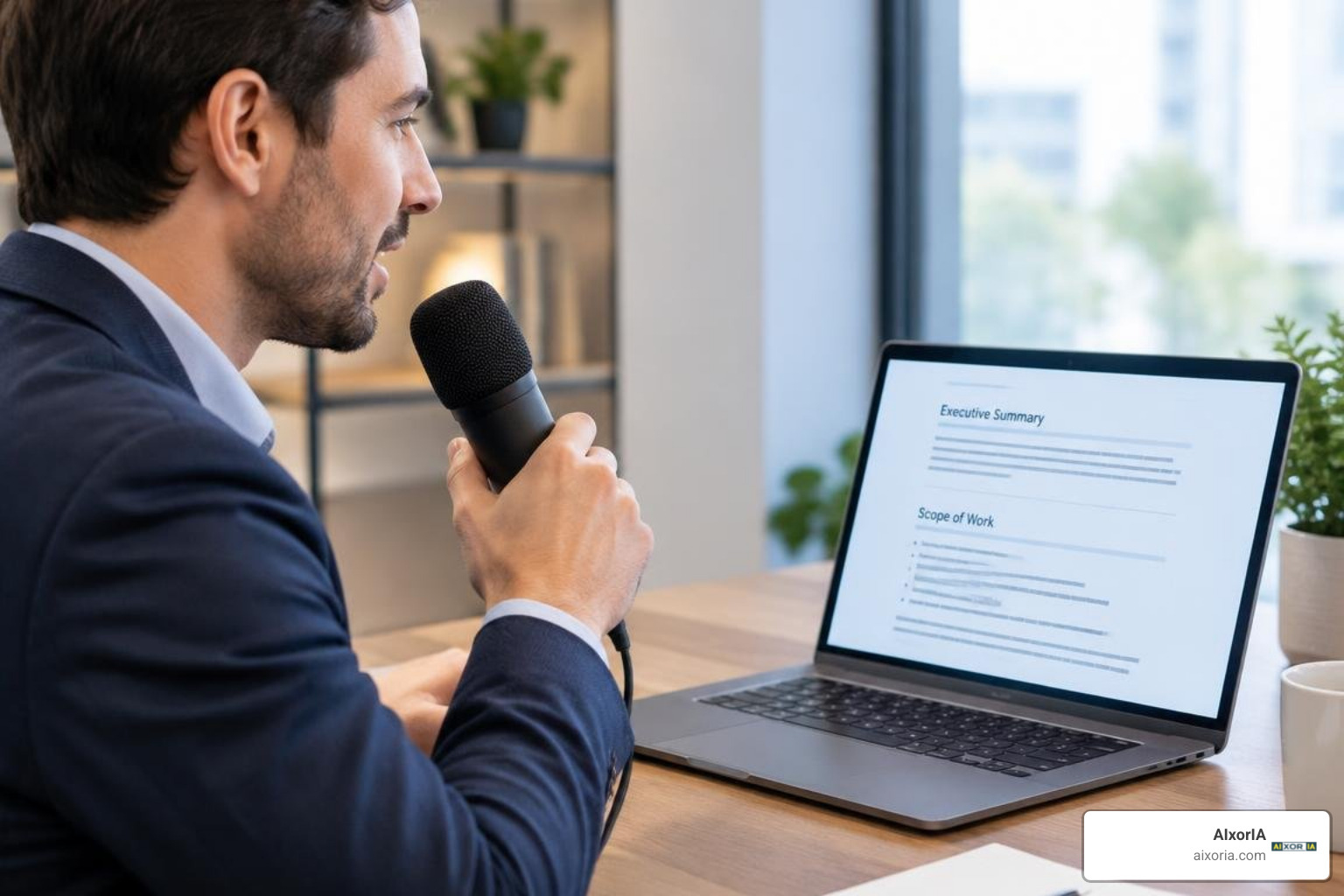
The true power of voice-to-proposal AI lies in its ability to parse messy, conversational dialogue and accurately map it to deterministic business structures. During a discovery call, commercial points rarely emerge in linear order; clients may mention budget constraints early, clarify technical deliverables midway through, and set deadline expectations at the end.
Dedicated AI proposal engines utilize semantic parsing models trained on thousands of commercial contracts. Rather than guessing, the system scans the voice transcript for semantic anchors, identifying numerical values as financial terms, date references as project milestones, and action verbs as functional deliverables. This structured extraction mirrors the capabilities found in the benefits of AI-powered RFP tools for small business proposal writing, enabling small teams to assemble enterprise-grade documents rapidly.
Dynamic Pricing and Budget Mapping
Conversational voice notes often contain variable pricing models, such as split payment schedules, hourly estimations, or recurring retainers. Modern AI proposal engines recognize conditional business logic spoken in plain English.
For example, if your voice note states:
“The overall engagement is twenty-four thousand dollars, split into two phases: ten thousand for initial brand strategy due upfront, and fourteen thousand for identity execution upon phase one completion.”
The engine automatically structures the commercial section:
| Deliverable Phase | Scope Description | Billing Trigger | Total Investment |
|---|---|---|---|
| Phase 1: Brand Strategy | Strategic positioning, stakeholder interviews, market research | Due on proposal acceptance | $10,000 |
| Phase 2: Identity Execution | Visual design system, brand guidelines, production assets | Due upon Phase 1 sign-off | $14,000 |
| Total Engagement Value | Complete strategic and creative rollout | Net 30 terms | $24,000 |
Scope, Milestones, and Risk Mitigation
Scope creep remains one of the largest operational risks for service businesses. When proposals are rushed, boundaries between included services and billable add-ons blur.
Voice-to-proposal AI models help safeguard margins by converting casual verbal agreements into defined scope boundaries. The AI extracts stated deliverables while automatically generating an “Assumptions and Exclusions” clause based on your historical catalog. For solo founders using the best AI tools for entrepreneurs, this automated boundary setting prevents unbilled work and sets clear expectations with prospective clients.
Best Practices and Common Pitfalls When Using AI Tools for Writing Business Proposals from a Voice Note
While voice-driven proposal generation accelerates drafting, relying entirely on unguided automation introduces risks. High-value proposals require human oversight to maintain accuracy, brand authenticity, and client confidentiality.
Preserving Brand Voice and Personalization
A common risk when using generic AI models is the “sounds like AI” trap: overly polite, bloated sentences loaded with generic buzzwords like “elevate,” “synergy,” and “paradigm shift.”
To maintain an authentic voice:
- Train on Past Winning Proposals: Upload 3 to 5 successful proposals into your AI workspace to establish your preferred sentence cadence, formatting standards, and vocabulary.
- Dictate Concrete Proof Points: Include specific metrics in your voice note (for example: “Mention how we scaled Client X’s organic revenue by 140% in six months”).
- Conduct a Specificity Edit: Spend 5 minutes replacing vague statements with concrete milestones, named tools, and exact numbers before sending the document. When composing email cover notes, pairing this with the best AI tool for professional email writing ensures consistency across client touchpoints.
Maintaining distinct brand identity across all sales collateral is easy when integrating systems with the best AI tools for content creation.
Data Privacy, Confidentiality, and Compliance
Voice notes from discovery meetings often contain confidential business intelligence, unreleased product roadmaps, and proprietary financial metrics. Academic research on the accuracy and efficiency of artificial intelligence tools for transcription in qualitative studies highlights the importance of reliable, secure transcription environments when handling sensitive dialogue.
When adopting voice-to-proposal tools, verify the provider’s data governance standards:
- Zero Model Training Policies: Ensure that your spoken audio recordings, transcripts, and finalized proposals are not used to train public machine learning models.
- Row-Level Cloud Encryption: Data must be encrypted in transit and at rest using modern standards (AES-256).
- Automated Data Retention Rules: Select platforms that allow you to automatically purge client audio recordings after transcription and document generation are complete.
Frequently Asked Questions About Voice-to-Proposal AI
How accurate are AI tools in extracting budgets and timelines from conversational voice notes?
Modern speech-to-text engines and LLMs achieve over 95% accuracy in extracting explicit numbers, dates, and named entities from clear audio. However, conversational ambiguities (such as saying “around ten or twelve grand depending on scope”) require human clarification. The AI will generally capture the stated range, but you must select the final fixed number during your review pass.
Can AI voice proposal tools integrate directly with CRMs and invoicing platforms?
Yes. Dedicated proposal automation platforms integrate with major CRM ecosystems (including HubSpot and Salesforce), cloud storage suites, and payment processors like Stripe. This connectivity allows the software to pull deal records, populate client fields, update sales pipeline stages automatically upon document creation, and issue automated deposit invoices once the client signs.
How long does it take to set up and train a voice-to-proposal system?
Initial setup typically takes 1 to 2 hours. This involves uploading your brand guidelines, default legal terms, service catalog pricing, and 2 or 3 past winning proposals as reference benchmarks. Most teams achieve complete workflow proficiency within their first three generated proposals, seeing compounding time savings from the second week onward.
Conclusion
The bottleneck in business development has never been closing deals—it has been the administrative friction of translating spoken discovery conversations into polished, binding proposals. By capturing post-meeting thoughts through voice notes and letting specialized AI handle the structural heavy lifting, service professionals can eliminate hours of typing while delivering bids while client interest is at its peak.
To implement a scalable, vendor-neutral sales pipeline tailored to your operational model, explore AIxorIA custom automation frameworks and AI tool orchestration to streamline your business workflows from initial lead capture to contract execution.