Is Metricool a Good Social Media Analytics Tool? Here’s the Quick Answer
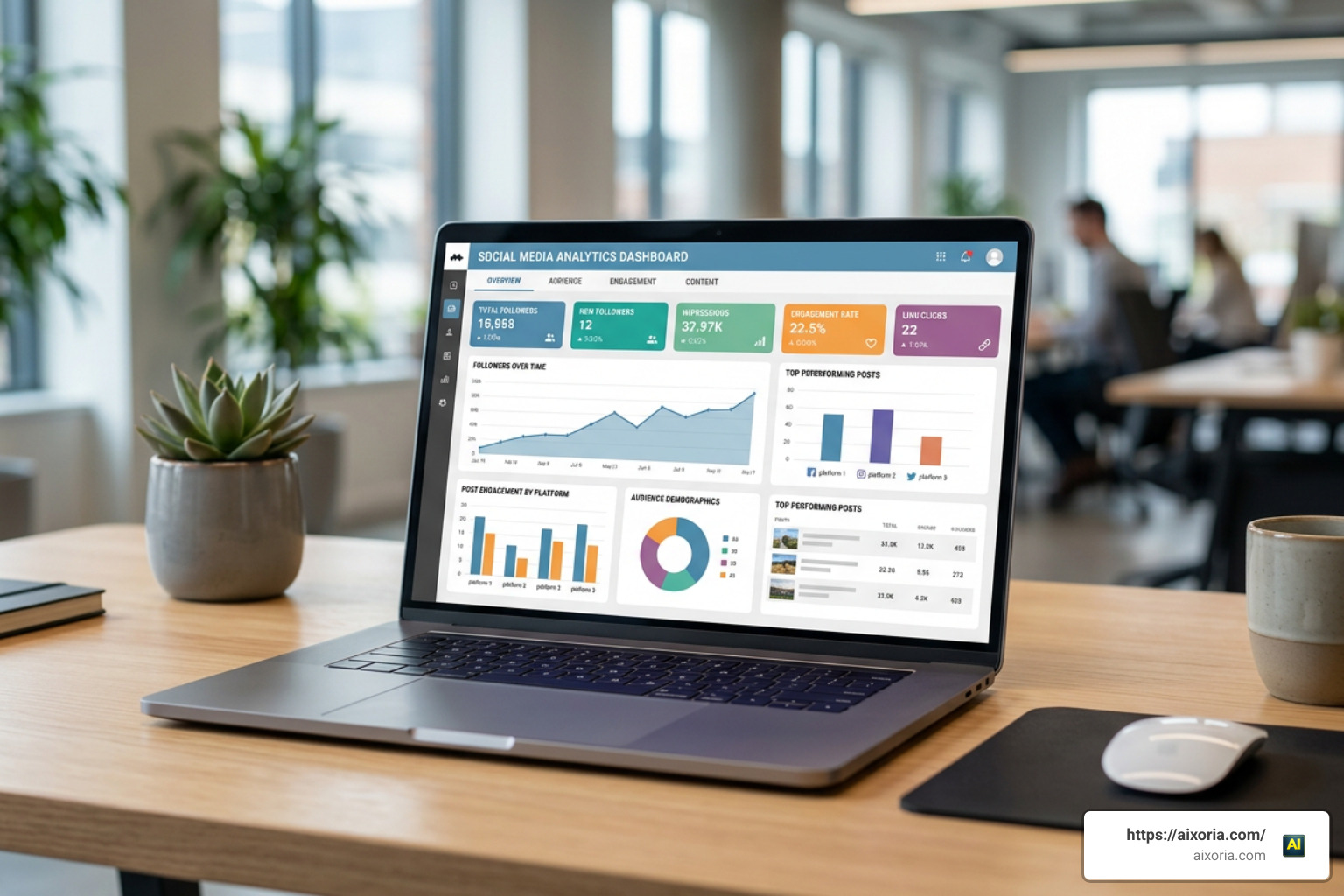
Is Metricool a good social media analytics tool? Yes — for most small businesses, freelancers, and agencies, it delivers strong analytics at a price that’s hard to beat.
Here’s a fast summary before we dive deeper:
| Factor | Metricool Rating |
|---|---|
| Analytics depth | Strong — within 5% of native platform data |
| Platforms supported | 10+ including Instagram, TikTok, LinkedIn, Google Business Profile |
| Free plan | Genuinely useful — 50 posts/month, 5 competitor profiles |
| Pricing (paid) | Starts at $18/month for 5 brands |
| Best for | Agencies, social media managers, data-driven marketers |
| Main weakness | No media library, no social listening |
| User ratings | 4.5/5 on G2, 4.2/5 on Trustpilot |
Managing social media across multiple platforms is chaotic. Most tools make you choose between great scheduling or great analytics — rarely both at a reasonable price.
Metricool is different. It’s built around analytics first, with scheduling layered on top to make those insights actionable. Over 3.5 million professionals use it, and users report saving an average of 12 hours per week on social media tasks.
That said, it’s not perfect. There are real gaps — no media library, no social listening, and a mobile app that lags behind the desktop version. Whether those gaps matter depends entirely on how you work.
This review covers everything: features, pricing, real user feedback, and how it stacks up against tools like Hootsuite, Buffer, and Later.
What is Metricool and How Does It Work?
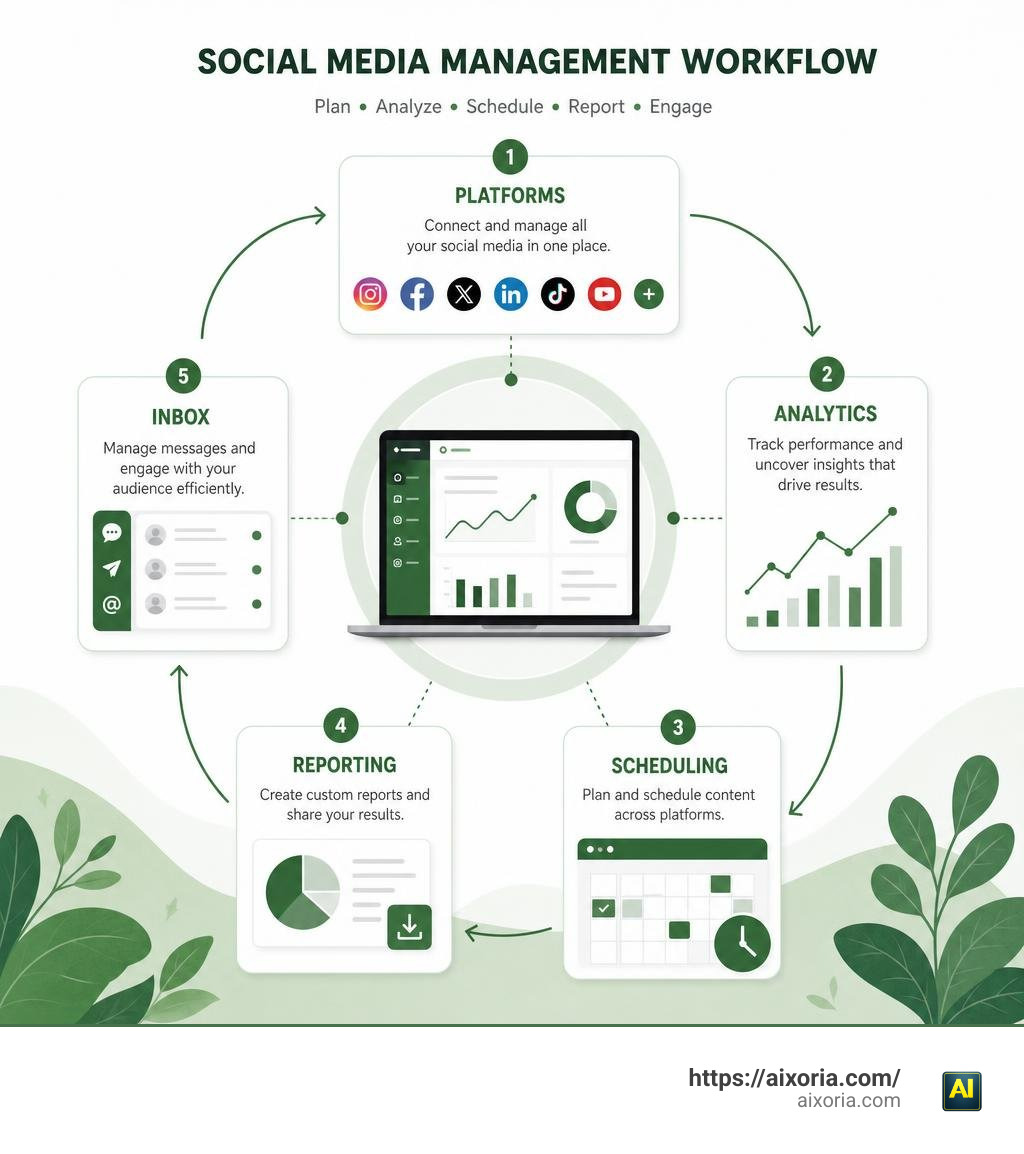
At its core, Metricool is an all-in-one social media management workspace designed to help us plan, measure, and scale our digital presence. Instead of hopping between endless browser tabs to check Instagram notifications, schedule LinkedIn posts, and review Google Ads budgets, Metricool pulls everything into a single, unified dashboard.

The platform was originally built with a heavy emphasis on data. While many social media tools treat analytics as an afterthought—an awkward cousin at the family dinner—Metricool treats data as the backbone of its entire system. The goal is simple: to make sure every post we schedule is backed by actionable insights. For a deeper look at its day-to-day usability, you can check out the Metricool Review 2026: How Good Is This Social Media Tool? which highlights its operational balance.
Supported Social Media Platforms in 2026
We live in a multi-platform world, and Metricool has kept pace. In July 2026, the tool supports over 10 major digital platforms, allowing us to manage organic content, paid campaigns, and local search optimization side-by-side. Supported platforms include:
- Facebook & Instagram: Full analytics, direct scheduling for posts, Reels, and Stories.
- LinkedIn: Analytics and scheduling for personal profiles and company pages (essential, as LinkedIn organic reach remains incredibly strong).
- TikTok: Direct video scheduling and specialized performance metrics.
- YouTube: Video and Shorts scheduling, plus channel growth tracking.
- Pinterest: Board-specific pin scheduling and visual analytics.
- X (formerly Twitter): Real-time tweet scheduling and historical data tracking.
- Threads & Bluesky: Integration with emerging text-based platforms to keep our strategy modern.
- Twitch: Live stream performance metrics and community growth insights.
- Google Business Profile: A unique addition that many standard tools ignore, letting us manage local posts, reviews, and customer actions.
Core Features for Content Planning and Scheduling
Scheduling on Metricool is built around a clean, color-coded visual calendar. The interface supports a simple drag-and-drop system, making it easy to move content around when our campaign plans change.
One of our favorite features is the Best Times to Post overlay. Instead of relying on generic internet advice that tells everyone to post at “9:00 AM on Tuesdays,” Metricool looks directly at our unique audience’s historical activity. It highlights the exact hours when our followers are active, which has helped users achieve an average 30% increase in Instagram engagement.
For high-volume content operations, Metricool offers a robust bulk scheduling option. By downloading their provided CSV template, we can map out our copy, links, and publishing times in a spreadsheet and upload dozens of posts at once. In real-world testing, users have successfully uploaded over 120 posts across 6 different accounts in less than 10 minutes.
Is Metricool a good social media analytics tool?
To truly answer the question, “Is Metricool a good social media analytics tool?”, we have to look closely at the depth of data it provides. The short answer is yes—it is arguably the strongest analytics tool at its price point. It treats data not just as raw numbers, but as organized insights that tell us what is actually working.
To illustrate how it handles data across different budgets, let’s compare what you get on the free tier versus the paid plans:
| Analytics Feature | Free Plan | Paid Plans (Starter, Advanced, Enterprise) |
|---|---|---|
| Data Retention | 30 days of historical data | Unlimited / Multi-year historical data |
| Platform Coverage | Basic platforms (LinkedIn analytics excluded) | All platforms, including full LinkedIn data |
| Competitor Tracking | Up to 5 competitor profiles | Expanded competitor slots (up to 100+) |
| Reporting | Manual dashboard viewing only | Automated PDF/PPTX reports & Looker Studio integration |
| Data Accuracy | Within 5% of native platform insights | Within 5% of native platform insights |
For a broader perspective on how this compares to other options on the market, take a look at the Metricool Review: Why It’s the Best Social Media Management Tool in 2026.
Why Is Metricool a good social media analytics tool?
Metricool’s analytics dashboard stands out because it categorizes data logically. Instead of overwhelming us with a massive data dump, it breaks performance down into three essential pillars:
- Audience Growth & Demographics: We can track follower trends over time, seeing exactly when we gained or lost momentum. It also maps out geographic and gender demographics so we can ensure our content aligns with our target market.
- Post-Level Performance: We can sort our content by reach, impressions, engagement rates, or clicks. This makes it incredibly easy to identify which posts “flopped” and which ones were a “chef’s kiss” success.
- Competitor Tracking: This is one of Metricool’s most underrated features. Even on the free plan, we can input up to 5 competitor profiles to monitor their follower growth, posting frequency, and top-performing content. It gives us an instant benchmark of our performance within our niche.
If you are evaluating whether this is the absolute top choice for your business, you can compare it with other options in our guide on the best social media management tool.
Custom Reporting and Client Dashboards
If you manage social media for clients, you know that manual reporting is a massive time sink. Metricool solves this by offering automated, professional reports that can be customized with our agency’s logo (white-labeling).
We can generate these reports in PDF or PPTX formats with just a few clicks, choosing which metrics to display and which to hide. For advanced agencies who need interactive dashboards, Metricool’s Advanced plan includes a native Looker Studio (formerly Google Data Studio) connector. This allows us to feed live social data directly into custom client portals, saving our team hours of manual reporting work every month.
Pros and Cons of Using Metricool
No tool is perfect, and Metricool has its share of friction points alongside its brilliant features. Let’s look at how the daily user experience balances out.
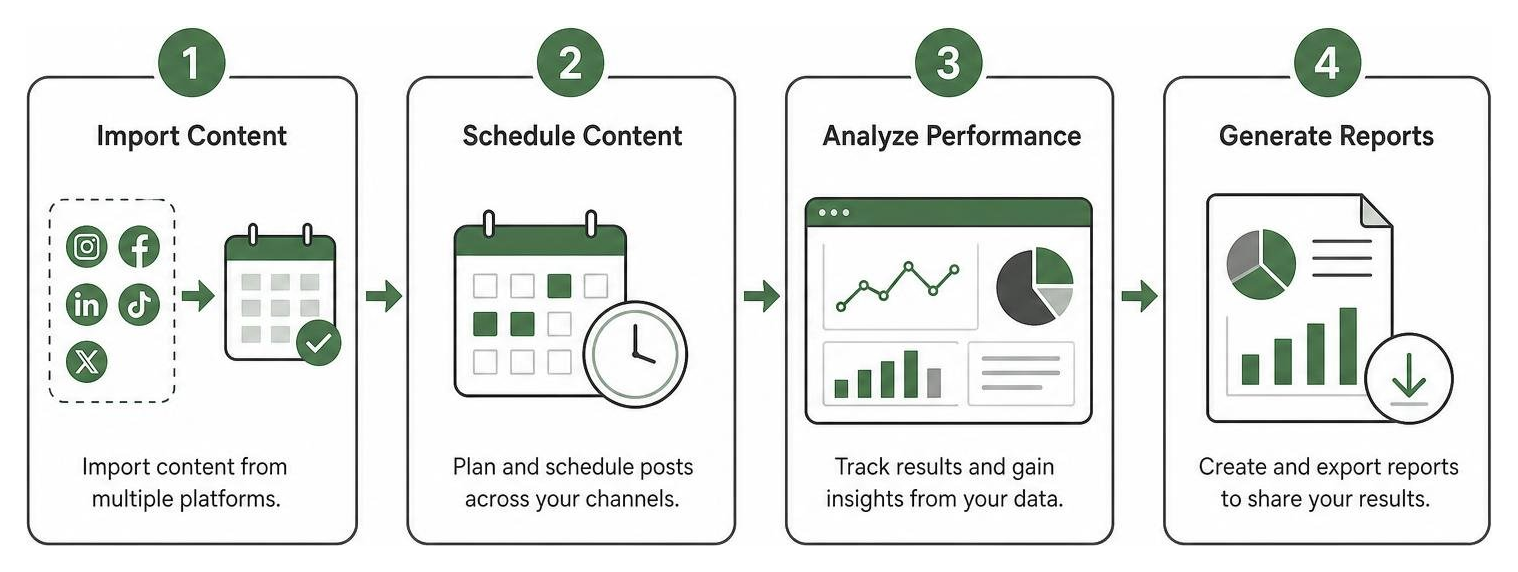
For a detailed, hands-on perspective from someone who used the platform daily for half a year, check out the Metricool Review: 6-Month User Insights.
Key Advantages: What Metricool Does Best
- Exceptional Price-to-Value Ratio: Compared to enterprise tools, Metricool offers incredibly deep analytics and multi-brand management for a fraction of the cost.
- The Unified Inbox: Metricool pulls comments, direct messages, and reviews from Facebook, Instagram, TikTok, and Google Business Profile into a single inbox. We can reply to our community in real-time without constantly logging in and out of different apps, saving about an hour of daily administrative friction.
- Integrated Ad Tracking: Unlike most scheduling tools, Metricool tracks Google, Meta, and TikTok ad campaigns. We can monitor our ad spend, impressions, and click-through rates alongside our organic posts.
- Google Business Profile Scheduling: It treats local SEO as a priority, allowing us to schedule updates and photos directly to Google Business Profile locations.
If you want to streamline your workflows even further, you can pair these features with some of the top AI tools for social media automation to handle content creation and scheduling on autopilot.
Notable Limitations and Missing Features
- No Native Media Library: This is perhaps the most common complaint on G2. Metricool does not have a centralized asset library where we can store, tag, and reuse images or videos. Instead, we have to rely on integrations like Google Drive or Canva to pull our creative assets.
- No Social Listening: If you need to monitor brand mentions, track industry keywords, or perform sentiment analysis across the web, Metricool cannot help you. It only tracks direct interactions on your connected accounts. If this is a deal-breaker, you may want to look into dedicated social listening tools.
- Mobile App Limitations: While the desktop web app is incredibly robust, the mobile app (rated 3.5/5 on Google Play) is clearly secondary. It’s great for quick checks or approving drafts on the go, but lacks advanced features like built-in image editing and deep analytics deep-dives.
Pricing Plans and Value for Money
Metricool’s pricing structure is one of its biggest selling points. Unlike competitors that charge steep per-user fees or penalize you for growing, Metricool uses a transparent, brand-based pricing model.
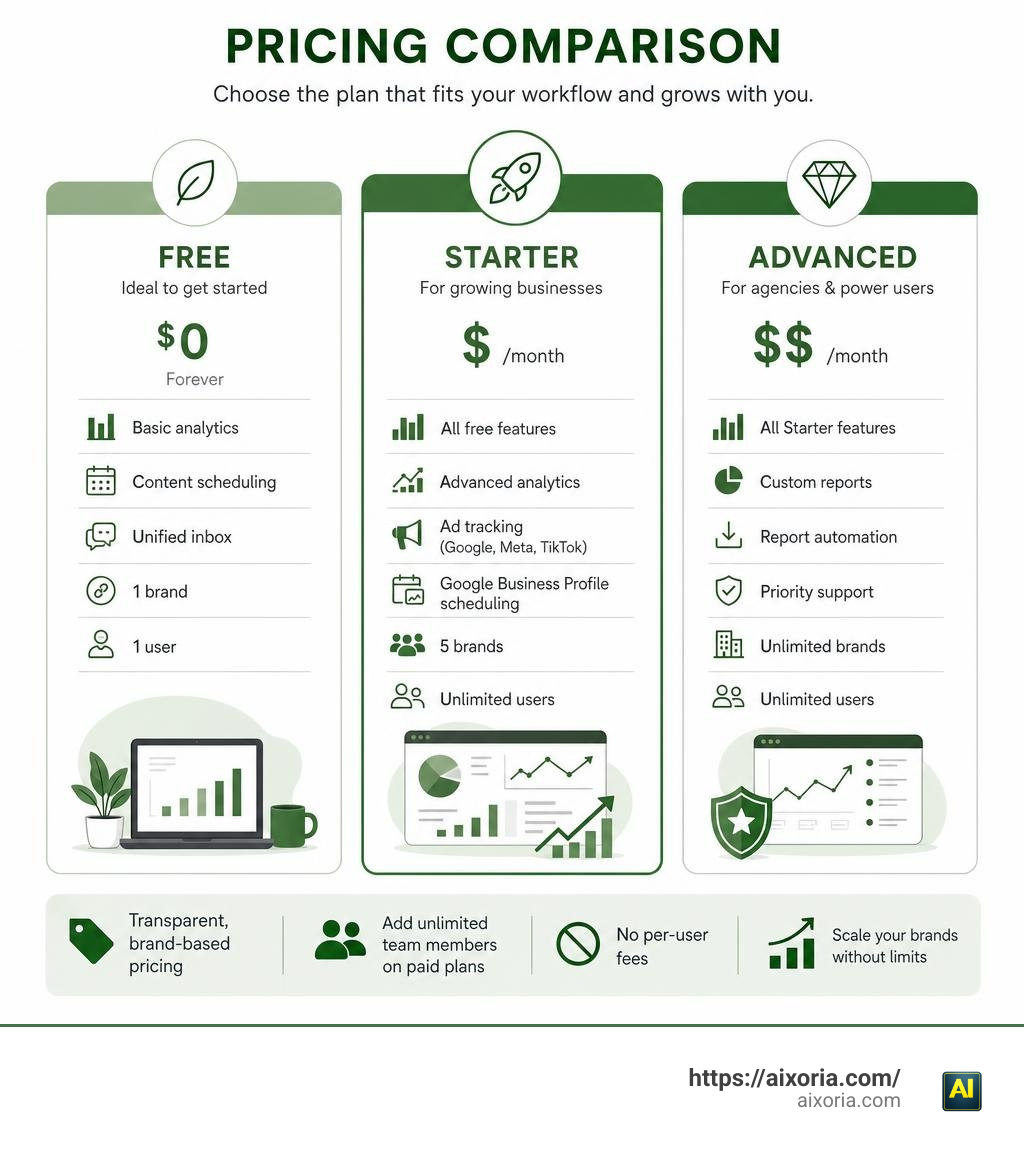
This brand-based model means we pay for the number of “brands” (or clients) we manage, and we can add as many team members as we need on the professional tiers without extra costs. For a broader look at how users feel about this pricing structure, read the Metricool Reviews 2026: 4.5 G2 & 4.2 Trustpilot roundup.
The Permanently Free Plan vs. Paid Tiers
Let’s break down the primary tiers available in 2026:
- The Free Plan: Allows us to manage 1 brand with up to 50 posts per month (recently adjusted from older limits). It includes basic analytics for most networks, the visual calendar, and up to 5 competitor profiles. It is genuinely usable for solopreneurs or single-brand creators, though it excludes LinkedIn analytics due to API restrictions on free tiers.
- Starter Plan ($18/month billed annually, or $22/month monthly): Supports up to 5 brands and allows unlimited scheduling (up to 2,000 posts/month). This plan unlocks LinkedIn scheduling and analytics, making it the perfect sweet spot for freelancers.
- Advanced Plan ($45/month billed annually, or $54/month monthly): Supports up to 15 brands and 5,000 posts/month. This tier is built for growing agencies, unlocking team collaboration tools, custom reporting templates, Looker Studio access, and API access.
- Enterprise Plan ($139/month billed annually, or $172/month monthly): Supports up to 50 brands and 10,000 posts/month. This is designed for large-scale operations and multi-brand agencies.
If Metricool’s structure doesn’t quite fit your business workflow, you can explore other alternative social media management tools to find a better match.
API Access and Multi-Brand Management
For agencies managing dozens of clients, Metricool’s brand-based system is highly efficient. A “brand” in Metricool represents a single business entity. Under one brand, we can connect one account from each supported social network. This makes switching between client profiles incredibly smooth.
Additionally, Metricool provides a functional REST API starting at the Advanced tier. This allows technical teams to build custom integrations or programmatically schedule content. For instance, we can connect AI-driven content pipelines directly to Metricool’s scheduling queue using an API token, automating the jump from a drafted article to a scheduled social post. You can read more about how agencies scale this in the Metricool Review 2026: The Social Media Tool for Multi-Brand Operations – Tygart Media.
Frequently Asked Questions about Metricool
Is Metricool a good social media analytics tool for beginners?
Yes, Metricool has a very gentle learning curve. The interface is clean and organized into clear tabs: Analytics, Inbox, Planning, SmartLinks, and Ads. Most users report feeling completely comfortable navigating the platform within a day or two. The onboarding process is simple, and the visual calendar makes scheduling highly intuitive even if you have never used a social media management tool before.
Does Metricool support Google Business Profile and ad management?
Absolutely. This is one of Metricool’s standout features. We can schedule posts directly to our Google Business Profile (GBP), manage local customer reviews, and track performance metrics like local searches and map clicks. On top of that, we can create, monitor, and optimize ad campaigns for Google Ads, Meta Ads, and TikTok Ads right from the Metricool dashboard.
How does Metricool’s data accuracy compare to native insights?
Metricool’s analytics are highly accurate, typically falling within 5% variance of native platform insights (like Instagram Insights or LinkedIn Analytics). Any minor discrepancies are usually due to the way different social platform APIs package and delay their data transmission. For all practical business decisions and client reporting, Metricool’s data is incredibly reliable.
Conclusion
So, is Metricool a good social media analytics tool? We believe it is one of the absolute best options on the market in 2026, especially if you prioritize clear, actionable data and affordable multi-brand management over complex creative features. Its ability to combine organic social scheduling, local SEO via Google Business Profile, and paid ad tracking under one roof makes it an incredibly powerful workspace.
If you are ready to modernize your digital marketing stack and explore how automated, data-driven workflows can save you hours of manual work every week, head over to our AI tools category to discover more cutting-edge tools designed to scale your business.
1 thought on “Is Metricool a Good Social Media Analytics Tool? Honest 2026 Review”