How to Choose AI Tools for Referral Program Automation
Scr0ll d0wn to D0VVNL0AD
The best AI tools for referral program automation depend on what you need done. Choose an all-in-one platform if you need referral links, tracking, reward rules, and reporting in one place. Choose a workflow tool if you already have those systems and mainly need to connect them. If finding affiliates is the bottleneck, look for partner discovery and outreach features.
Before comparing tools, decide what counts as a successful referral: a signup, a booking, or a paid purchase. That choice shapes how you track results and when you send rewards. AI can help draft a program and spot patterns, but clear rules should decide who qualifies and what gets paid.
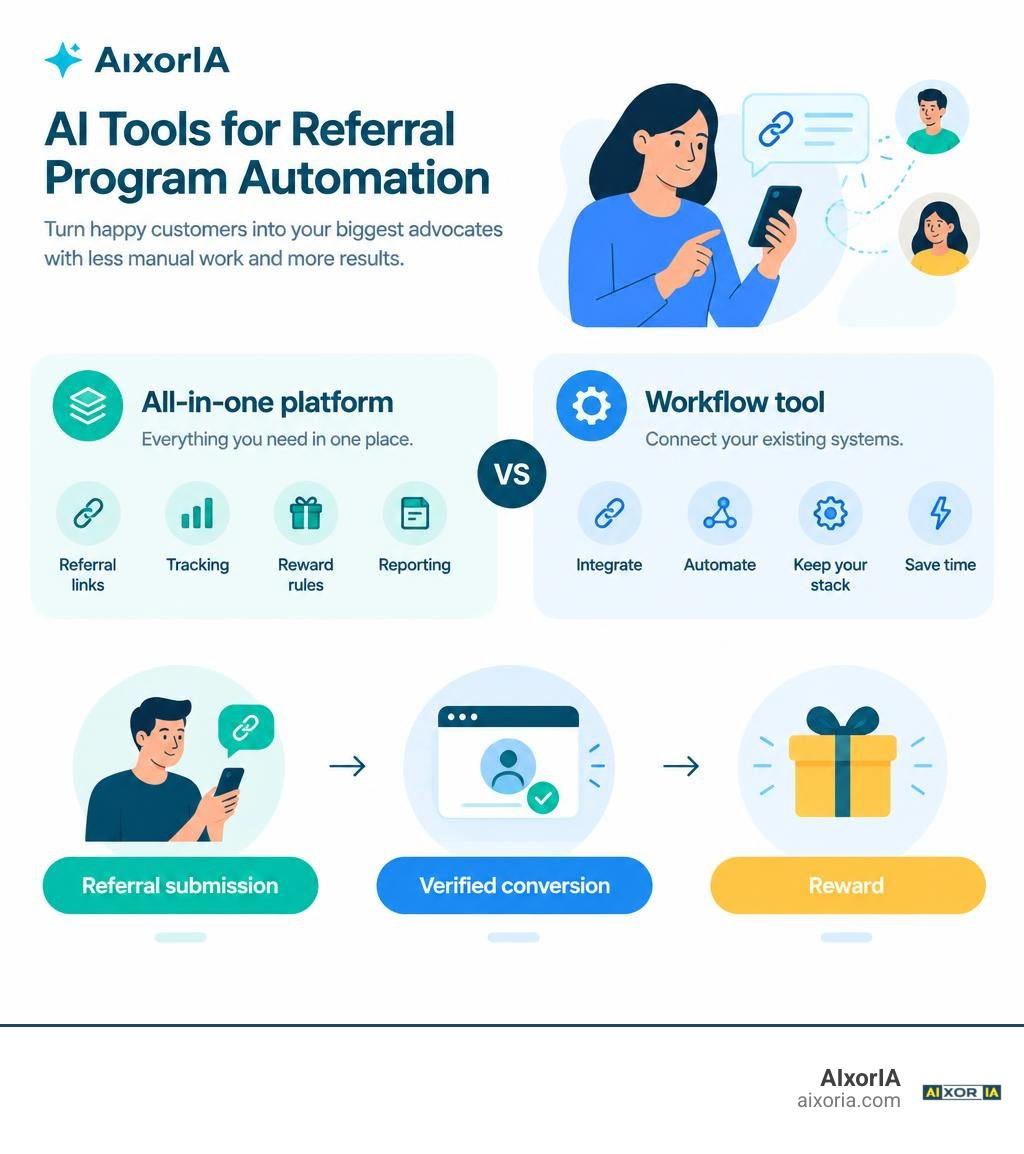
AI tools for referral program automation: what they do
According to research from Extole, 83% of consumers are willing to refer brands after a positive experience, yet only 29% actually do. Closing that gap requires removing friction for advocates and automating the administrative burden behind the scenes.
Modern referral engines combine generative assistance, natural-language interfaces, and predictive intelligence with rules-based tracking infrastructure. Instead of manually drafting campaigns, managing spreadsheets, and chasing down commission discrepancies, growth teams use artificial intelligence to draft program architectures, discover active brand partners, review suspicious signups, and generate actionable performance summaries.
How AI tools for referral program automation differ from traditional software
Traditional referral software relies entirely on static, deterministic parameters configured through complex nested menus. Setting up multi-tiered reward structures or custom affiliate rules historically demanded hours of manual input or custom developer support.
By contrast, AI-assisted referral systems introduce conversational setup, automated pattern recognition, and adaptive partner recommendations:
- Conversational Program Building: Teams can describe a desired reward model in plain English, and the platform automatically configures campaign rules, reward tiers, and copy.
- Dynamic Partner Discovery: Rather than waiting for advocates to register, AI engines scan public and vertical-specific signals to identify, score, and draft outreach for relevant affiliates and creators.
- Deep Anomaly Detection: Machine learning models surface subtle behavioral anomalies across IP addresses, device fingerprints, and email structures before issuing rewards.
- Proactive Deal and Funnel Intelligence: Overnight scanning engines analyze referral deal pipelines, flag stalled introductions, and draft targeted follow-ups based on historical close rates.
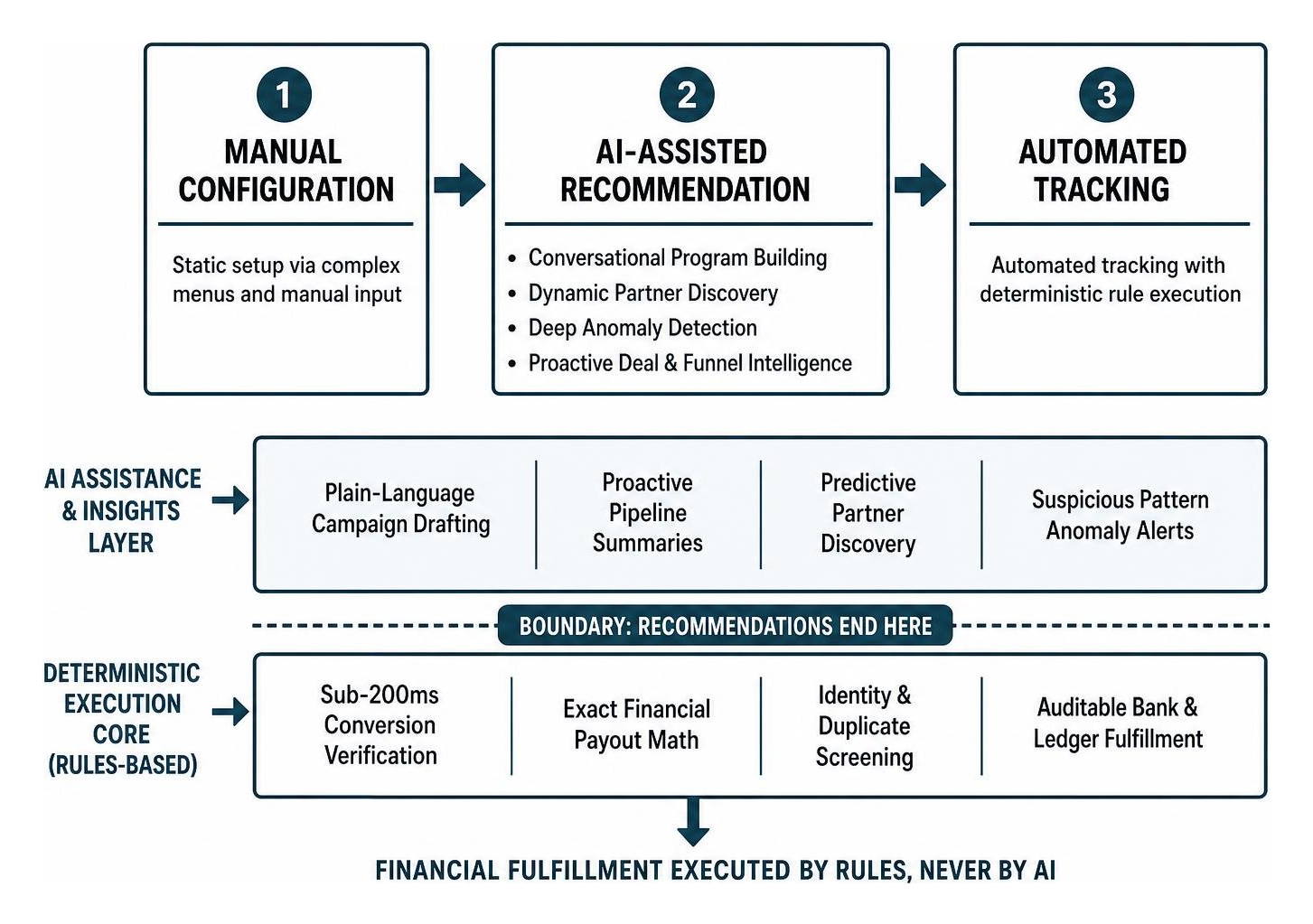
Where AI should stop and rules-based execution should take over
While artificial intelligence excels at synthesizing data, drafting copy, and suggesting optimizations, it should never have unchecked authority over financial fulfillment. Issuing cash payouts, store credits, or promotional vouchers demands mathematical certainty.
A reliable referral architecture enforces a strict boundary between probabilistic AI recommendations and deterministic rule execution:
- Eligibility and Qualification: Hard business logic must evaluate whether an order cleared its return window, met minimum spend thresholds, or satisfied account-funding requirements.
- Fraud Mitigation and Blacklisting: Deterministic checks must instantly reject self-referrals, matching credit card fingerprints, and duplicate device IDs.
- Reward Calculation and Ledgering: Payout amounts must reflect exact commission percentages and currency conversions without algorithmic drift.
- Human-in-the-Loop Governance: AI agents can draft outreach or recommend commission changes, but administrative confirmation should remain required for structural updates.
Compare AI referral program automation options by job to be done
Different teams face distinct growth bottlenecks. Some businesses need a complete turnkey portal for ecommerce customers, while others require headless APIs or workflow bridges across existing enterprise CRMs.
| Platform Category | Core Capabilities | Primary Strengths | Best-Fit Use Case |
|---|---|---|---|
| All-in-One AI Program Platforms | End-to-end portals, dynamic coupon codes, built-in partner discovery, automated payouts | Launch speed, white-label dashboards, minimal engineering required | Direct-to-consumer ecommerce, high-growth SaaS, digital newsletters |
| API-First & Headless Engines | Custom reward logic, developer SDKs, webhook event streaming, flexible data models | Deep product integration, bespoke user interfaces, limitless scalability | Enterprise mobile applications, fintech, multi-brand platforms |
| Workflow Connectors & Automation Bridges | Multi-app triggers, automated CRM data routing, custom email and messaging alerts | Interoperability across legacy stacks, no-code data synchronization | B2B sales pipelines, agencies, customized internal workflows |
| Deal & Relationship Intelligence Agents | Automated pipeline scanning, deal stall detection, confidence-scored follow-ups | High-touch partner tracking, automated intake from email/Slack | Enterprise B2B partner programs, high-ticket professional services |
Growth teams can leverage modern tools tailored to these specific operational requirements. For example, exploring an AI program builder and partner discovery engine allows brands to generate launch-ready reward structures and recruit creators from a unified interface. Similarly, platforms like ReferralHero automate customer enrollment and track word-of-mouth conversations, while ReferralCandy combines customer referrals with milestone-based affiliate rewards.
AI tools for referral program automation: all-in-one program platforms
All-in-one platforms manage the entire advocate lifecycle from a consolidated interface. These platforms generate unique sharing links, provide self-service portals for advocates, track conversion events via native billing integrations, and handle reward fulfillment.
Leading platforms incorporate specialized AI copilots. Teams can prompt these assistants to build multi-tiered reward campaigns, optimize audience targeting, or rewrite welcome sequences. Many also feature automated partner discovery, analyzing market data to surface creators and publishers aligned with specific target demographics.
AI tools for referral program automation: workflow connectors and flexible platforms
Organizations with established marketing stacks often prefer connecting existing databases, CRMs, and email service providers rather than migrating to a standalone hub.
Using flexible referral workflows across connected business apps allows teams to automatically capture form submissions, verify lead records in CRMs, and trigger instant gift card distribution. For enterprise software teams requiring complete user experience control, headless engines like Voucherify provide developer SDKs and prompt-based rule builders to run custom promotions at scale. Meanwhile, specialized B2B partner managers like Introzy’s Kai process communication threads across Slack and email to recommend deal-advancing actions.
Match tool capabilities to program type and team needs
Selecting the appropriate tool requires evaluating program complexity, sales cycle duration, and technical resources:
- Direct-to-Consumer Ecommerce: Focus on double-sided reward incentives, dynamic discount codes, Shopify or WooCommerce billing synchronization, and automated post-purchase widgets.
- SaaS and Subscription Services: Prioritize recurring commission handling, upgrade and churn tracking, usage-based billing webhooks, and self-service partner dashboards.
- B2B and High-Touch Services: Choose platforms that track multi-touch lead stages, support manual review intervals, integrate with sales CRMs, and provide deep relationship intelligence.
- Internal Employee Referral Programs: Look for seamless integration with Applicant Tracking Systems (ATS) and automated HR payroll routing. Employee referral channels yield significant hiring efficiencies; industry benchmarks show referred candidates achieve 45% lower cost per hire, 55% faster time-to-hire, and 70% higher one-year retention compared to traditional job boards.
How to configure, integrate, and optimize an automated referral program

Deploying an automated referral engine involves aligning incentive structures with business margins, connecting conversion tracking, and enforcing strict validation checks. Thorough workflow automation planning ensures data passes cleanly between checkout events, CRM records, and payout ledgers.
Configure the program and discover suitable partners
Begin by establishing clear program objectives and baseline unit economics. A sustainable referral program structures advocate rewards below customer acquisition costs while offering meaningful value to newly referred buyers.
When configuring programs through AI-assisted platforms:
- Define Conversion Milestones: Specify whether rewards trigger on lead generation, completed demo bookings, or cleared transactions.
- Establish Double-Sided Incentives: Pair advocate incentives (such as cash, account credits, or tiered product gifts) with attractive introductory discounts for the referred friend.
- Target Relevant Partners: Utilize partner discovery algorithms to surface affiliates by vertical relevance, audience demographics, and engagement authenticity rather than raw follower counts.
When managing partner-driven campaigns, ensure marketing assets adhere to consumer protection standards, including Federal Trade Commission § 255.5 guidelines regarding clear disclosures of material connections.
Connect tracking, attribution, CRM, billing, and marketing tools
Accurate attribution forms the backbone of partner trust. Modern platforms offer multiple tracking layers:
- Link and Code Tracking: Assign unique alphanumeric links and dynamic coupon codes that map directly to advocate profiles.
- Server-Side Event Tracking: Integrate direct webhooks from payment processors like Stripe, Paddle, or Chargebee to prevent client-side tracking loss caused by ad blockers.
- CRM and Drip Campaign Integration: Route referral stages into sales records and trigger automated lifecycle emails. Implementing structured marketing automation campaign management ensures advocates receive timely milestone updates and motivational progress alerts.
Automate rewards, payouts, and fraud review
Automating fulfillment reduces administrative drag while keeping advocates engaged. However, reward distribution workflows must include automated guardrails:
- Review Windows: Enforce automated holding periods that match standard product refund policies before authorizing commissions.
- Fraud Rules: Block self-referrals by cross-referencing IP subnets, device cookies, and matching shipping or billing names.
- Multi-Method Payouts: Automate disbursements via PayPal, Wise, or digital gift cards once advocates cross predefined minimum balance thresholds.
Use analytics to improve referral performance
AI-driven analytics engines process conversion funnels to identify optimization opportunities across advocate cohorts.
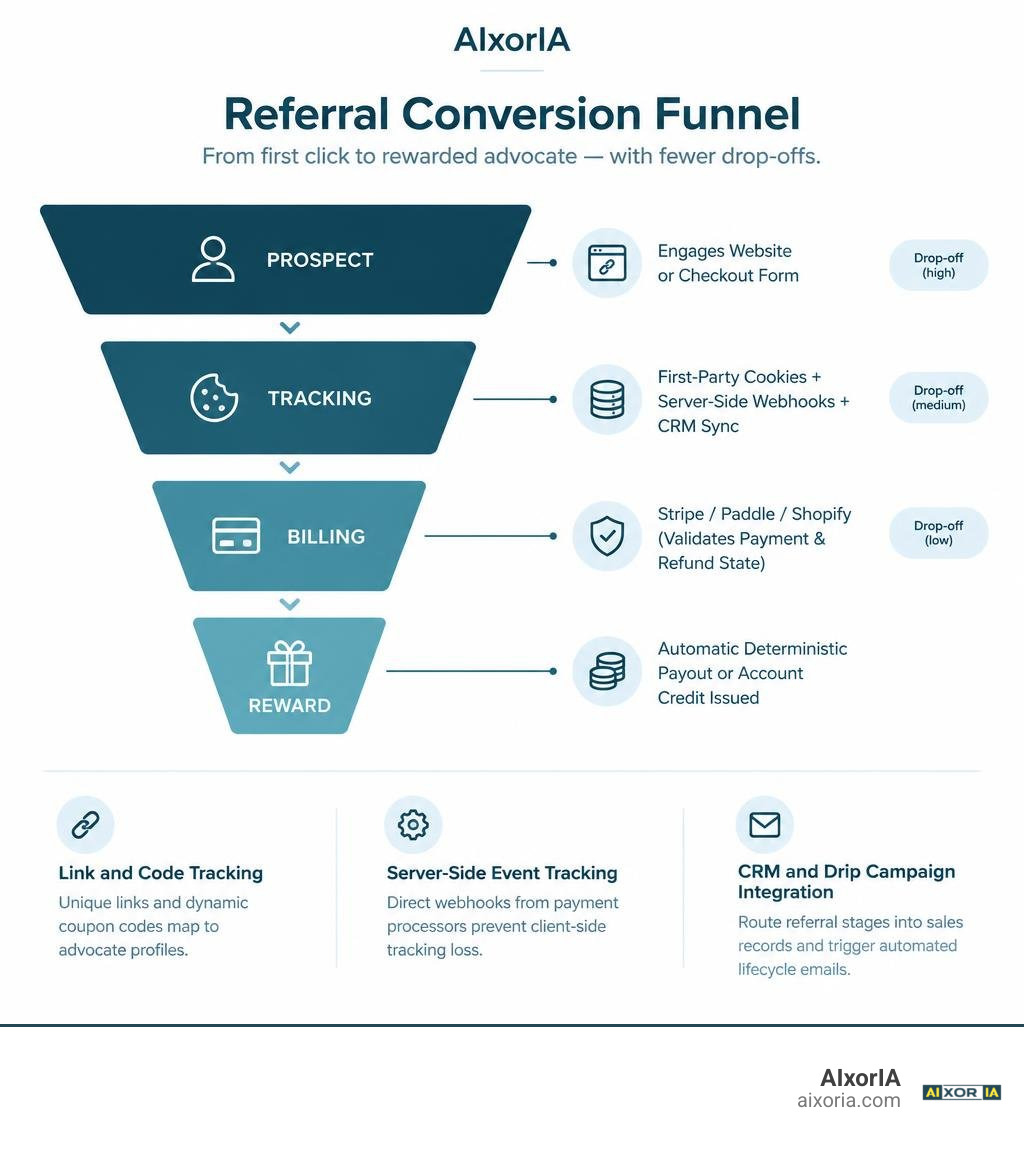
Instead of manually building reporting queries, growth managers can review automatically generated performance insights:
- Top Advocate Identification: Surface super-advocates responsible for disproportionate revenue shares and segment them into VIP commission tiers.
- Funnel Bottleneck Alerts: Pinpoint drop-off points where sharing volume remains high but referral landing page conversion lags.
- Hypothesis Testing: Distinguish factual data observations from speculative interpretations, validating whether seasonal surges represent repeatable marketing opportunities.
Protect the program with governance and human oversight
According to Gartner research on emerging enterprise deployments, over 40% of agentic AI initiatives face restructuring or cancellation by the end of 2027 due to escalating costs, unclear ROI, or inadequate risk controls. Maintaining operational stability requires proactive governance.
Enforce Model Context Protocol (MCP) integrations and machine-readable APIs that operate strictly under authenticated user permissions. Keep full audit logs of configuration edits, limit AI writes to draft states, and require explicit human approval before deploying structural rule changes.
Frequently asked questions about AI referral automation
Can AI manage a referral program and deliver rewards automatically?
AI tools can draft campaign rules, monitor deal health, find partners, and generate performance reports. However, the underlying platform infrastructure should always handle eligibility verification, fraud screening, and financial payouts using fixed, deterministic rules.
How does AI help with referral tracking, attribution, and fraud detection?
AI improves tracking by matching word-of-mouth touchpoints, reconciling complex email introduction threads, and identifying subtle fraud rings across duplicate device signatures and velocity spikes that traditional static filters miss.
What should businesses check before choosing an AI referral platform?
Evaluate whether the vendor provides verifiable, live API integrations with your billing and CRM stack, transparent data security standards, clear pricing without hidden transaction overages, and inspectable audit logs for all automated actions.
Conclusion
Building a high-performing referral engine requires pairing intuitive advocate experiences with auditable, automated backend operations. Start by defining your core conversion milestone, whether that means demo completions or paid subscription events. Automate routine workflows like tracking link generation, partner intake, and reward delivery, but always maintain strict rules-based control over financial disbursements.
As AI adoption expands across marketing and revenue operations, growth leaders must balance intelligent automation with rigorous data governance. To discover practical, field-tested guidance on implementing cutting-edge productivity platforms and modern marketing workflows, explore AIxorIA’s guides and tool reviews to scale your business with confidence.