AI Tools for Home Inspectors: From Field Notes to Finished Reports
Scr0ll d0wn to D0VVNL0AD
AI tools for report writing for home inspectors turn photos, voice notes, and brief observations into draft report sections. Some can sort photos by home system, suggest defect descriptions, and create a client-friendly summary. The inspector still needs to check every finding and approve the final report.
The goal is less typing after each inspection, not less care on-site. When comparing tools, start with how you already capture notes, then test whether the draft saves time after you review and correct it.
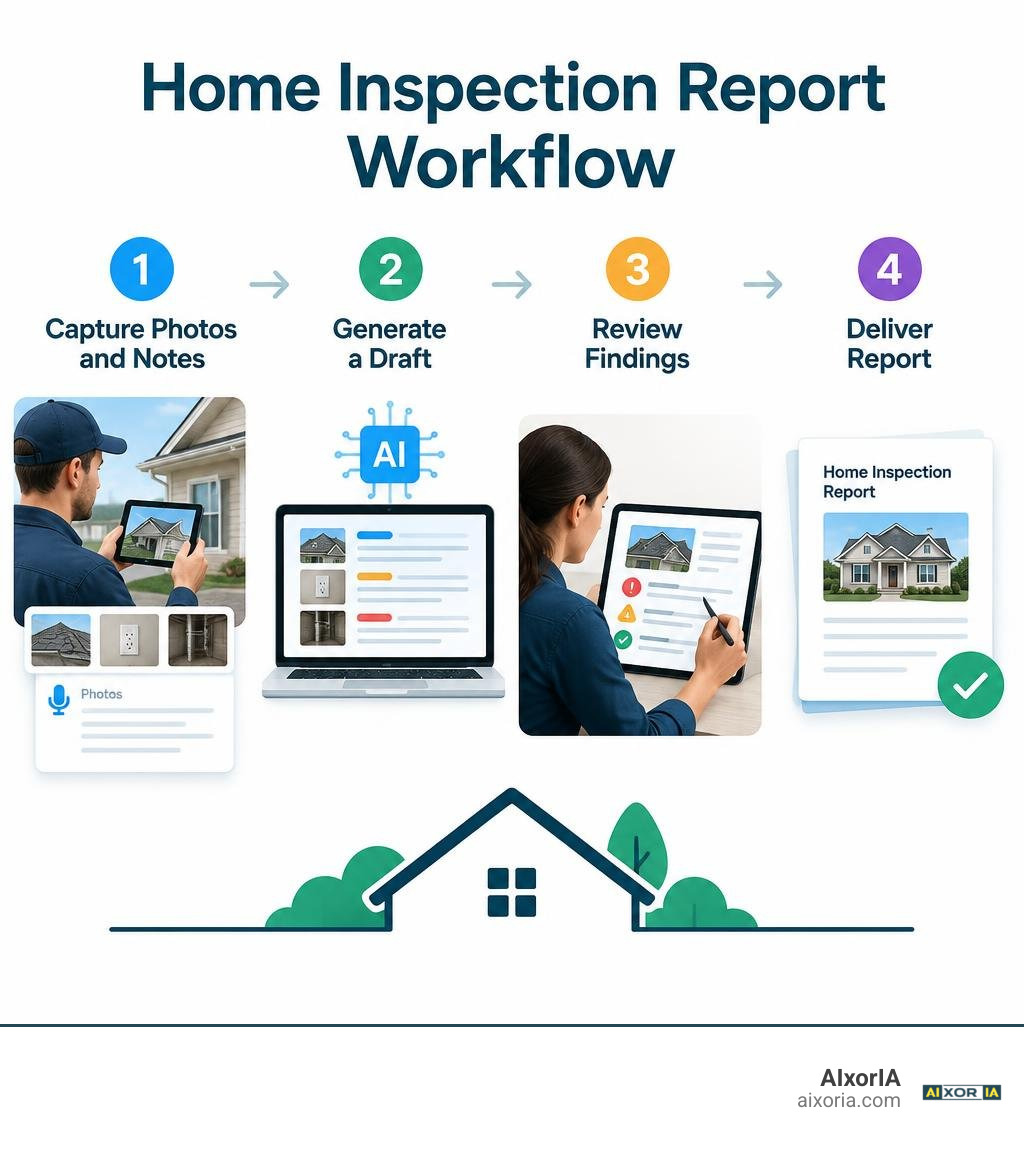
Core Capabilities of AI Tools for Home Inspectors for Report Writing
Home inspection has always been a field of keen observation paired with substantial administrative friction. Traditionally, an inspector might spend two to three hours inspecting a property, only to face another two hours at a desk typing narratives, sorting images, and aligning recommendations. For professionals seeking the best AI for technical report writing in 2026, the emergence of specialized machine learning models is transforming how field data becomes a structured deliverable.
Modern platforms harness large language models (LLMs) and specialized vision algorithms to handle repetitive documentation. Rather than manually typing boilerplate sentences about GFCI protection or roof shingle granular loss, inspectors can rely on algorithms that analyze context and draft liability-safe narratives instantly.
These tools do not replace the physical expertise required to evaluate a subpanel or crawl through an attic. Instead, they act as an administrative co-pilot. By synthesizing disjointed field observations into cohesive summaries, AI allows inspectors to deliver reports much faster while maintaining rigorous documentation standards.
Key Features of AI Tools for Home Inspectors for Report Writing
The capabilities powering today’s inspection platforms go far beyond simple spell-checkers. Dedicated systems incorporate several sophisticated modules:
- Computer Vision and Image Categorization: Advanced computer vision models analyze incoming inspection images, automatically identifying components such as water heaters, electrical panels, foundation walls, or plumbing traps.
- Defect Detection: Visual recognition engines scan photos for recognizable issues, such as missing safety discharge pipes, active corrosion, or damaged roofing material, prompting the inspector with relevant findings.
- Severity Tagging: Software can automatically assign severity markers (such as Minor Defect, Maintenance Item, or Immediate Safety Hazard) based on the context of the observation.
- Standardized Narrative Generation: Integrated comment engines convert raw keywords into professional, standards-compliant sentences using established AI report generation workflows.
Voice-to-Text and Real-Time Observation Drafting
One of the most practical innovations for field inspectors is contextual voice dictation. Unlike generic speech-to-text engines that struggle with trade terminology, inspection-specific AI models understand building components and shorthand industry phrasing.
An inspector can record a five-second audio memo while standing in front of an exterior service panel: a brief note about a double-tapped 40-amp breaker and a potential safety hazard. The system processes this short voice note, identifies the component and safety risk, and expands it into a fully articulated observation. The output explains the underlying issue, describes why it presents a fire hazard, and recommends evaluation by a licensed electrical contractor. This capability alone eliminates hundreds of repetitive keystrokes per job.
How Field-to-Report AI Automation Works
The path from stepping onto a property to sending a finalized PDF involves multiple automated steps designed to preserve data integrity and speed up delivery.
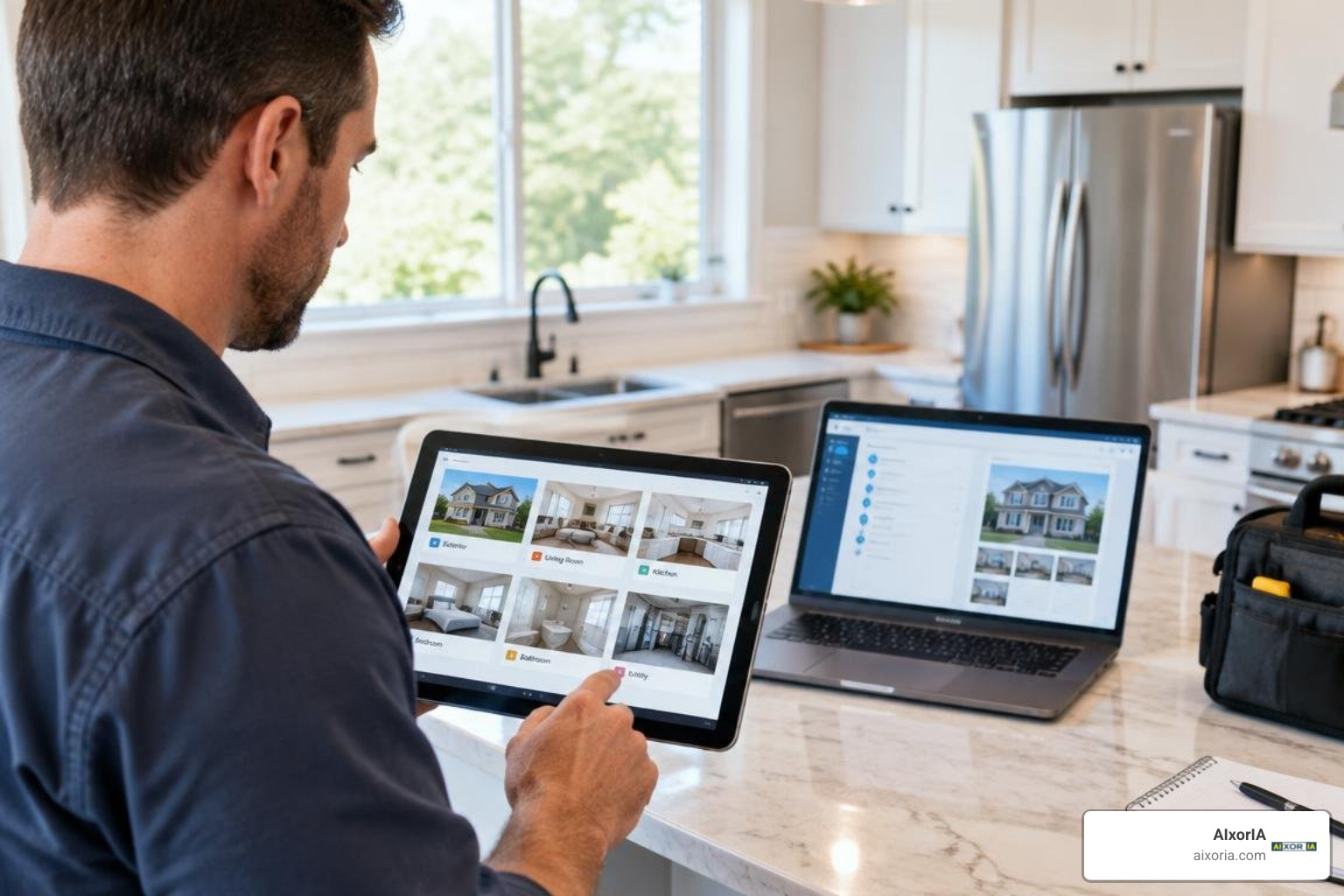
Understanding this multi-stage pipeline helps inspectors choose the right advanced business productivity solutions to optimize their day-to-day operations.
On-Site Data and Photo Ingestion
The workflow begins on a mobile device. While moving through the interior, crawlspace, or roof, the inspector captures media directly through an app:
- Batch Uploading and Offline Caching: Because cellular reception can be spotty in basements or rural areas, modern apps store media locally and queue background uploads once a signal is restored.
- Optical Character Recognition (OCR): The software reads equipment data plates on HVAC units and water heaters, instantly extracting serial numbers, manufacture dates, and capacity ratings without requiring manual transcription.
- Automated System Tagging: As photos are taken, the system tags them by home section (Exterior, Roofing, Electrical, Plumbing, HVAC, Interior), significantly reducing manual sorting later.
Automated Categorization and Narrative Generation
Once media and shorthand notes are ingested, the system’s core language engine organizes the data against the inspector’s chosen template or local standard of practice (such as InterNACHI or ASHI standards):
- System Routing: Photos and notes are slotted into their appropriate categories automatically.
- Code and Standards Awareness: While home inspections are not municipal code enforcement, AI drafting models reference common building conventions to suggest accurate remediation advice.
- Summary Generation: The tool compiles major safety hazards and critical defects into an executive summary at the front of the report, ensuring buyers and real estate agents can quickly review crucial findings.
Comparing Key Categories of Report Writing Assistants
Not every inspection business operates the same way. Some professionals prefer dedicated, lightweight tools, while others require end-to-end management suites. Using dedicated tools for structured project reports allows inspectors to match their software to their business complexity.
| Software Model | Primary Focus | Best Suited For | Key AI Strengths | Typical Pricing |
|---|---|---|---|---|
| Standalone AI Report Writers | Pure report generation, rapid photo-to-narrative drafting | Solo inspectors wanting speed without software bloat | Deep photo analysis, voice-to-comment generation, rapid PDF output | Pay-per-report ($10–$15) or flat monthly ($39–$79/mo) |
| All-in-One Inspection CRMs | Integrated scheduling, billing, client portals, and reporting | Multi-inspector firms and established operations | Embedded defect detection, CRM automations, template synchronization | Tiered monthly plans or per-inspection fees ($60–$100+/mo) |
| Modular AI Comment Assistants | Enhancing existing templates with dynamic drafting | Inspectors loyal to legacy reporting software | Comment expansion, tone adjustment, one-click narrative condensing | Add-on modules or included beta capabilities |
Standalone AI Report Writers vs. All-in-One Inspection Platforms
Choosing between a specialized report generator and a broader business platform depends heavily on existing workflows:
- Standalone Writers: These tools concentrate exclusively on turning field media into finished documents. They tend to feature fast, modern interfaces with low learning curves and focus directly on reducing typing bottlenecks.
- All-in-One Platforms: Enterprise suites incorporate business tools such as automated client agreements, payment processing, calendar scheduling, and workflow integrations. They can also include comment-enhancement features for adjusting narrative length and supporting consistent documentation.
Evaluating AI Tools for Home Inspectors for Report Writing by Business Size
When selecting **ai tools for home inspectors for report writing **, your operational scale dictates which features offer the highest return on investment:
- Solo Operators: A single inspector benefits most from tools that eliminate evening desk time. A straightforward subscription (such as platforms offering unlimited reports for $40–$70/month) pays for itself if it saves one hour per day. A well-matched tool can help a solo operator produce polished reports before leaving the driveway.
- Multi-Inspector Companies: Larger firms require administrative oversight, multi-user permissions, unified comment libraries, and cross-team consistency. For these teams, cloud-based synchronization and standardized templates ensure that every inspector represents the brand uniformly.
Managing Liability, Accuracy, and the Human-in-the-Loop Standard
While machine learning accelerates narrative creation, automated text generation introduces unique legal and operational risks if not managed responsibly.
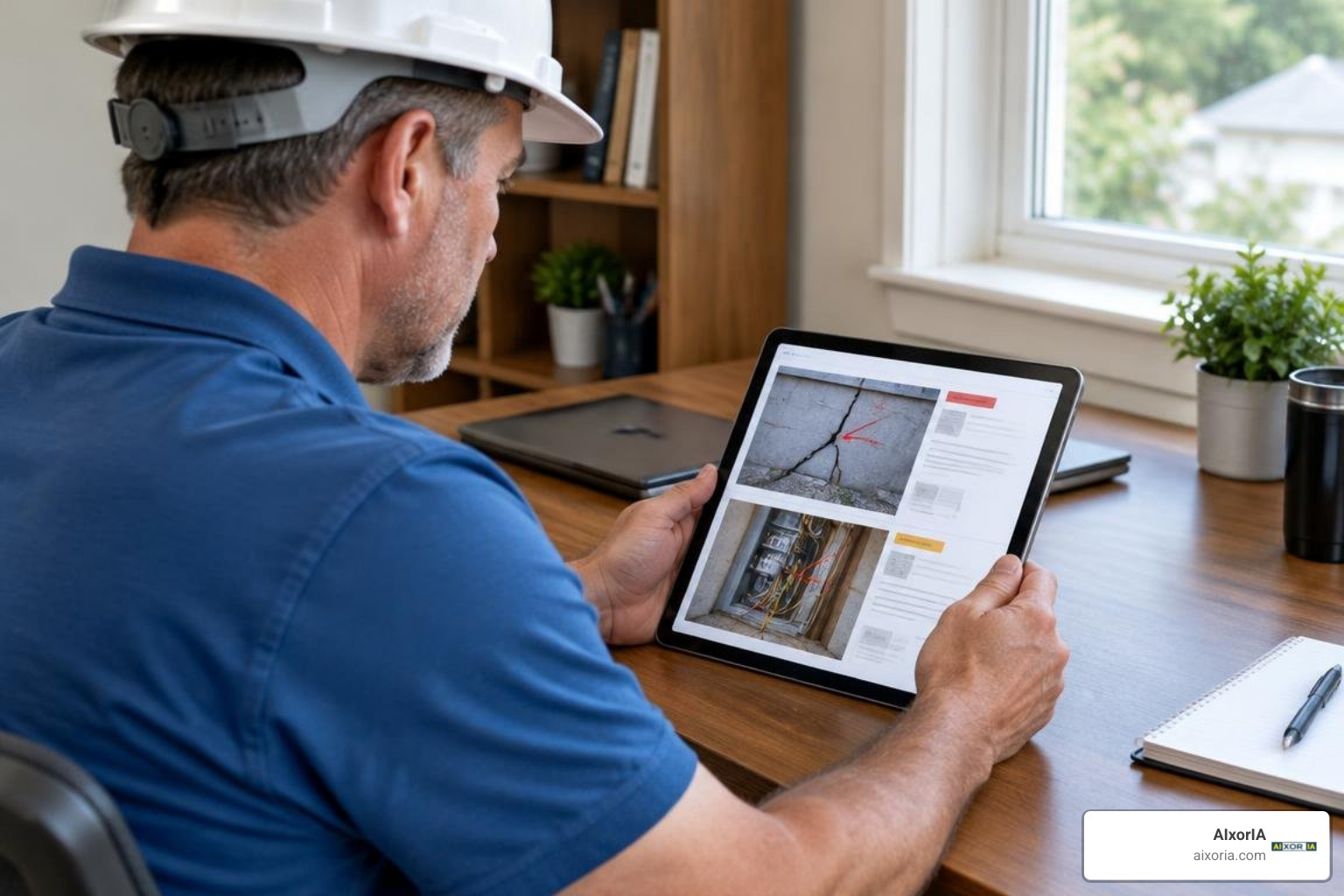
In technical reporting, precision is paramount. Tools that assist in formatting polished final documents must always be paired with strict editorial review. Organizations looking for governance benchmarks can consult the NIST AI Risk Management Framework, which emphasizes reliability, accountability, and regular evaluation when deploying automated systems.
Mitigating Hallucinations and Technical Inaccuracies
Generative models can occasionally produce hallucinations, or grammatically correct statements that misstate technical facts. In home inspection, mistaking a functional GFCI circuit for an open ground can lead to legal disputes or client confusion.
To maintain report accuracy:
- Never Skip Manual Review: Treat AI drafts as rough suggestions that require licensed professional sign-off.
- Verify Recommendations: Ensure the suggested trade professional (e.g., licensed structural engineer vs. general handyman) matches the severity of the defect.
- Cross-Check Photo Alignment: Confirm that automated routing has placed images in their proper sub-panels and room locations.
Standardizing Disclaimers and Code Compliance
Inspection reports are legally binding documents often scrutinized during property transactions. Top AI tools draw from curated, pre-vetted comment repositories (often containing 8,000+ standardized clauses) rather than generating unconstrained text from scratch.
This hybrid approach ensures that drafted language incorporates necessary disclaimers—such as noting limited visibility in concealed wall spaces or inaccessible roof pitches—safeguarding the inspector against liability while delivering actionable insights to the homebuyer.
Future Trends: Agentic Workflows and Multimodal Inspection Systems
The development of artificial intelligence in property assessment is shifting toward autonomous, multimodal assistance. Beyond text drafting, upcoming capabilities will transform how field data is captured and interpreted:
- Multimodal Visual Diagnostics: Future computer vision models will combine standard optical photos with thermal imaging overlays, automatically identifying thermal bridging, insulation voids, or hidden plumbing leaks behind drywall.
- Predictive System Lifespans: By comparing appliance model numbers against historical component failure databases, software will assist inspectors in estimating the remaining functional life of major mechanical systems.
- Automated Client Portals and Interactive Summaries: Buyers will interact with AI-driven digital reports, asking plain-language questions about the most urgent safety items to address.
- Advanced Data Aggregation: Inspectors will leverage platforms for analyzing inspection datasets across thousands of regional properties to spot recurring builder defects or seasonal moisture patterns.
Frequently Asked Questions About AI Inspection Software
Will AI report writing tools replace certified home inspectors?
No. AI software cannot physically walk a roof, probe structural framing, test electrical receptacles, or smell gas leaks. The technology serves strictly as an administrative assistant that automates data organization, photo sorting, and narrative drafting, leaving the physical evaluation and professional judgment entirely to the certified inspector.
How much time can an inspector save using AI report generators?
Most inspectors report saving between 45 and 90 minutes per inspection report. By generating observations in real time on-site through voice dictation and automated photo routing, many professionals are able to deliver completed, reviewed reports to clients immediately upon leaving the property.
Can AI tools integrate with my existing custom comment library?
Yes. Leading AI inspection platforms allow users to import existing templates and custom comment libraries from legacy software (such as Spectora, HomeGauge, or Palm-Tech). The AI uses these custom entries as reference material, ensuring that generated narratives match the inspector’s personal phrasing, tone, and regional terminology.
Conclusion
Modernizing your reporting workflow is one of the most effective steps you can take to grow an inspection business. By automating photo categorization, streamlining narrative generation, and eliminating repetitive data entry, AI-powered report writers allow you to finish your administrative work before you pull out of the driveway.
Embracing these tools improves turnaround times, pleases real estate agents, and protects your evenings—all while preserving the careful human oversight that client trust depends on. To discover more ways modern software can elevate your business operations, explore curated AI business tools and guides at AIxorIA.