AI Search Has Changed How Customers Find Your Brand
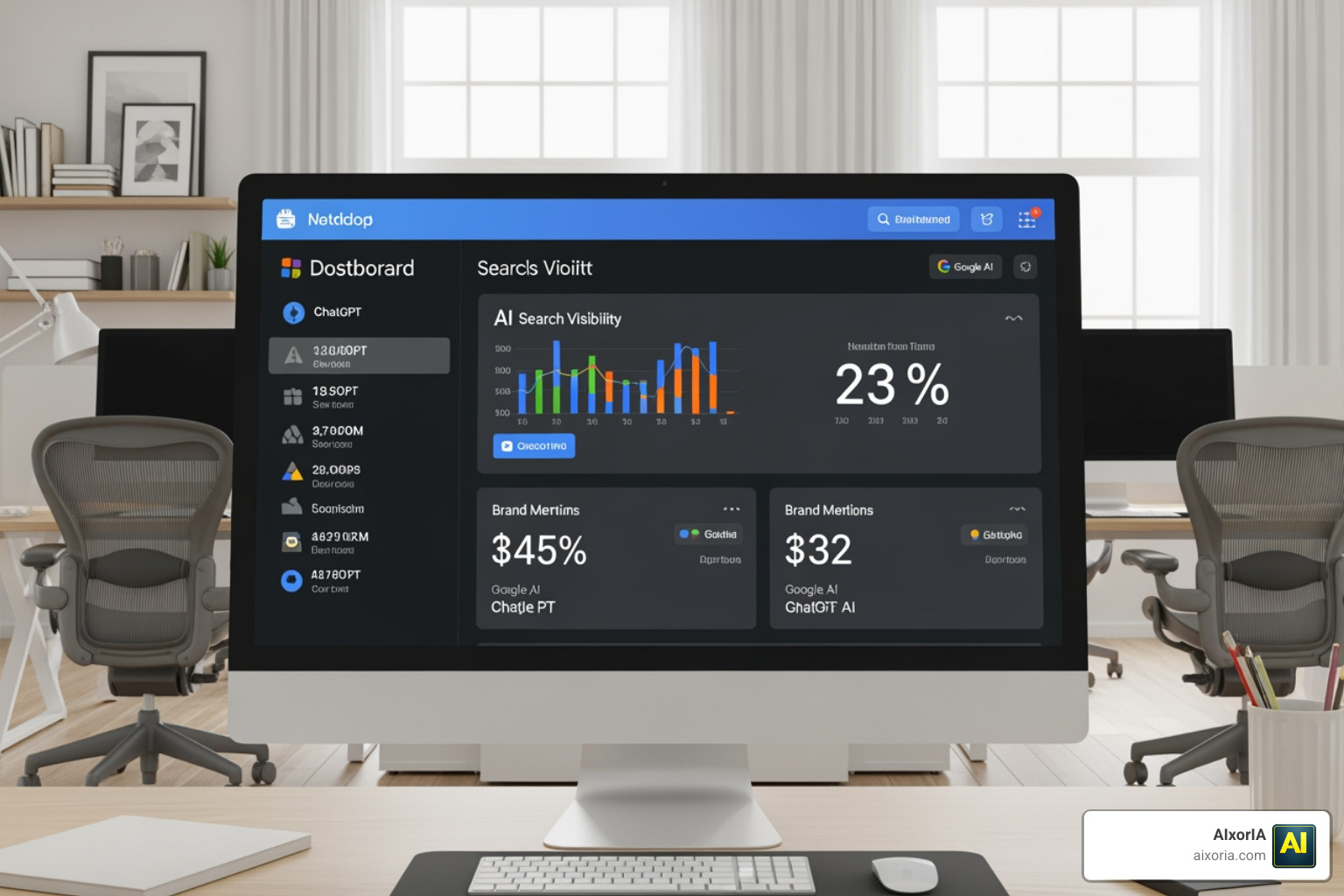
An ai search visibility tool is software that tracks whether your brand gets mentioned — and cited — when AI platforms like ChatGPT, Gemini, Perplexity, and Google AI Overviews answer questions in your category.
Quick answer: What is an AI search visibility tool?
| Feature | What it does |
|---|---|
| Brand mention tracking | Finds where your brand appears in AI-generated answers |
| Citation monitoring | Shows whether your brand is linked or just named |
| Competitor benchmarking | Compares your visibility to rivals across AI platforms |
| Prompt tracking | Monitors specific questions your customers ask AI |
| Platform coverage | Tracks multiple AI engines in one dashboard |
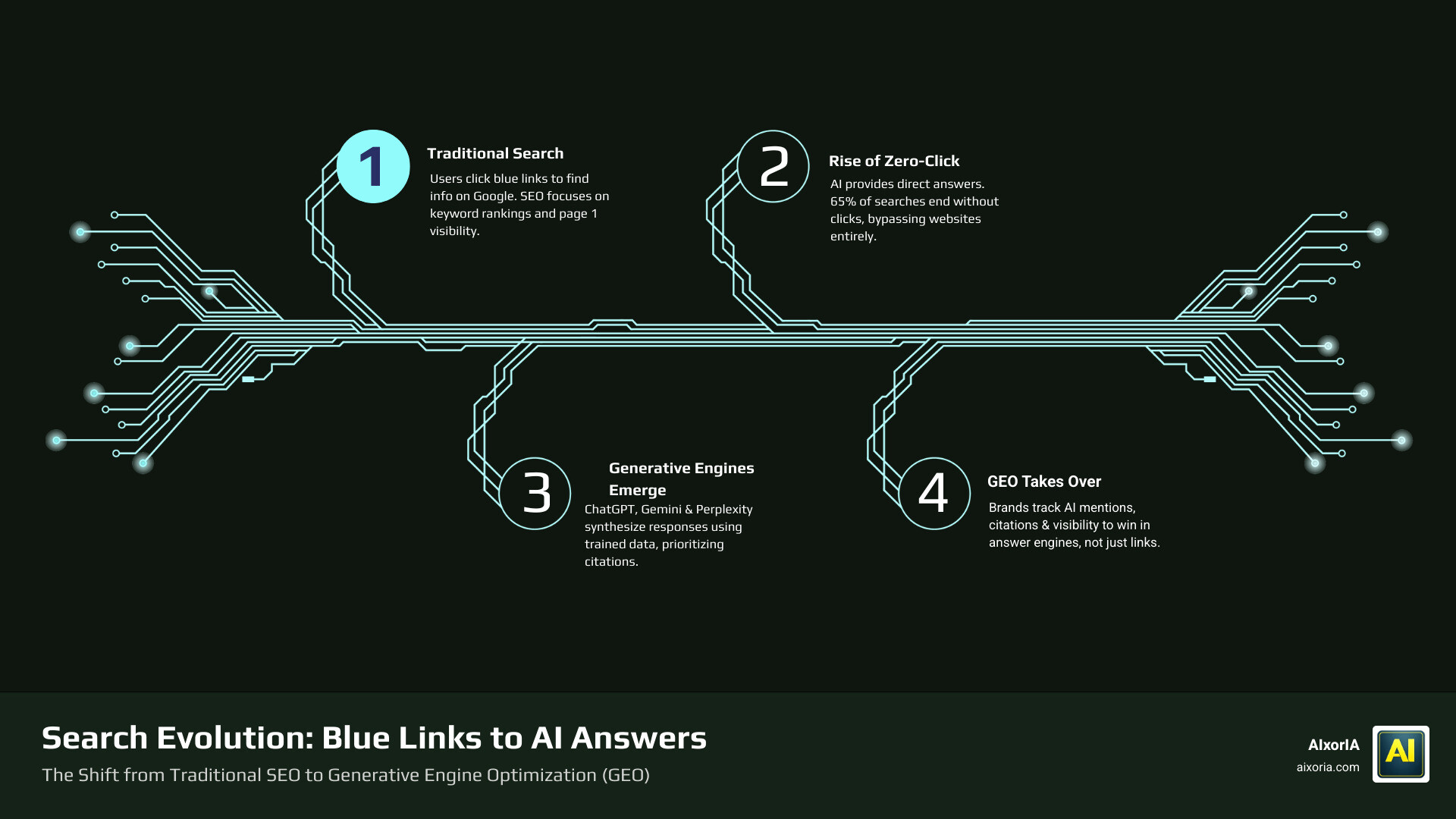
Not long ago, ranking on Google’s first page was enough. Today, millions of people skip the blue links entirely. They type a question into ChatGPT or Perplexity and act on whatever answer comes back — without clicking through to any website.
Here’s the problem: if your brand isn’t mentioned in those AI-generated answers, you’re essentially invisible to those buyers.
Traditional SEO tools track your keyword rankings in search results. But they can’t tell you whether ChatGPT recommends your product, whether Gemini links to your blog, or whether Perplexity even knows your company exists.
That’s exactly the gap AI search visibility tools are built to fill.
Think of it this way: AI engines are now the gatekeepers of brand discovery. They pick winners and losers in every product category, every day, based on what they’ve learned — and who they choose to cite.
For small business owners, this shift is both a threat and an opportunity. You don’t need a massive SEO budget to show up in AI answers. But you do need to know where you stand right now.
Understanding the Shift to Generative Engine Optimization (GEO)
As we move through 2026, the way we think about “search” has fundamentally shifted. We are no longer just optimizing for keywords; we are optimizing for generative engines. This new discipline, often called Generative Engine Optimization (GEO), focuses on how Large Language Models (LLMs) perceive and present your brand.
Generative engines don’t just provide a list of links; they synthesize information to provide a direct answer. This means the user intent is satisfied immediately. If a user asks, “What is the best ai search visibility tool for a small SaaS startup?” the AI will provide a curated list. If you aren’t on that list, you’ve lost a lead before they even saw your website. To keep up with these changes, many brands are turning to specialized platforms. You can explore a wide range of options in our list of the 20 Best Ai Search Visibility Tools In 2026/.
Why Your Brand Needs an AI Search Visibility Tool
For B2B brands and startups, tracking AI search visibility isn’t just a “nice-to-have” anymore—it’s a survival tactic. In 2026, “zero-click research” is the norm. Buyers are doing 70-80% of their research within an AI interface before they ever reach out to a salesperson.
If an AI engine confidently recommends a competitor because it found more “structured” or “readable” data on their site, your growth will stall. Using an ai search visibility tool allows us to see these “invisible” erosions in our market share. For a deeper look at how these performance metrics work, check out our guide on Understanding AI Search Performance Tracking.
Differences Between Traditional SEO and AI Search Tracking
Traditional SEO is about blue links, domain authority, and backlinks. AI search tracking is about mentions, sentiment, and citations.
- Traditional SEO: “Am I on page 1 for this keyword?”
- AI Search Visibility: “Does ChatGPT mention my brand when asked for recommendations? Is the sentiment positive? Does it link back to my specific product page?”
While traditional tools are great for tracking SERP positions, they often miss the probabilistic nature of LLMs. AI engines might give different answers to the same prompt based on small variables. Specialized GEO tools query these platforms through actual user interfaces—not just APIs—to get the most accurate picture of what a real human sees. This is why many professionals are moving toward Why Choose Advanced GEO Visibility Tools In 2026/.
Choosing the Right AI Search Visibility Tool for Your Business
Selecting the right tool depends on your scale. A solo founder might just need a free checker, while an enterprise brand requires deep historical data and multi-market analysis.
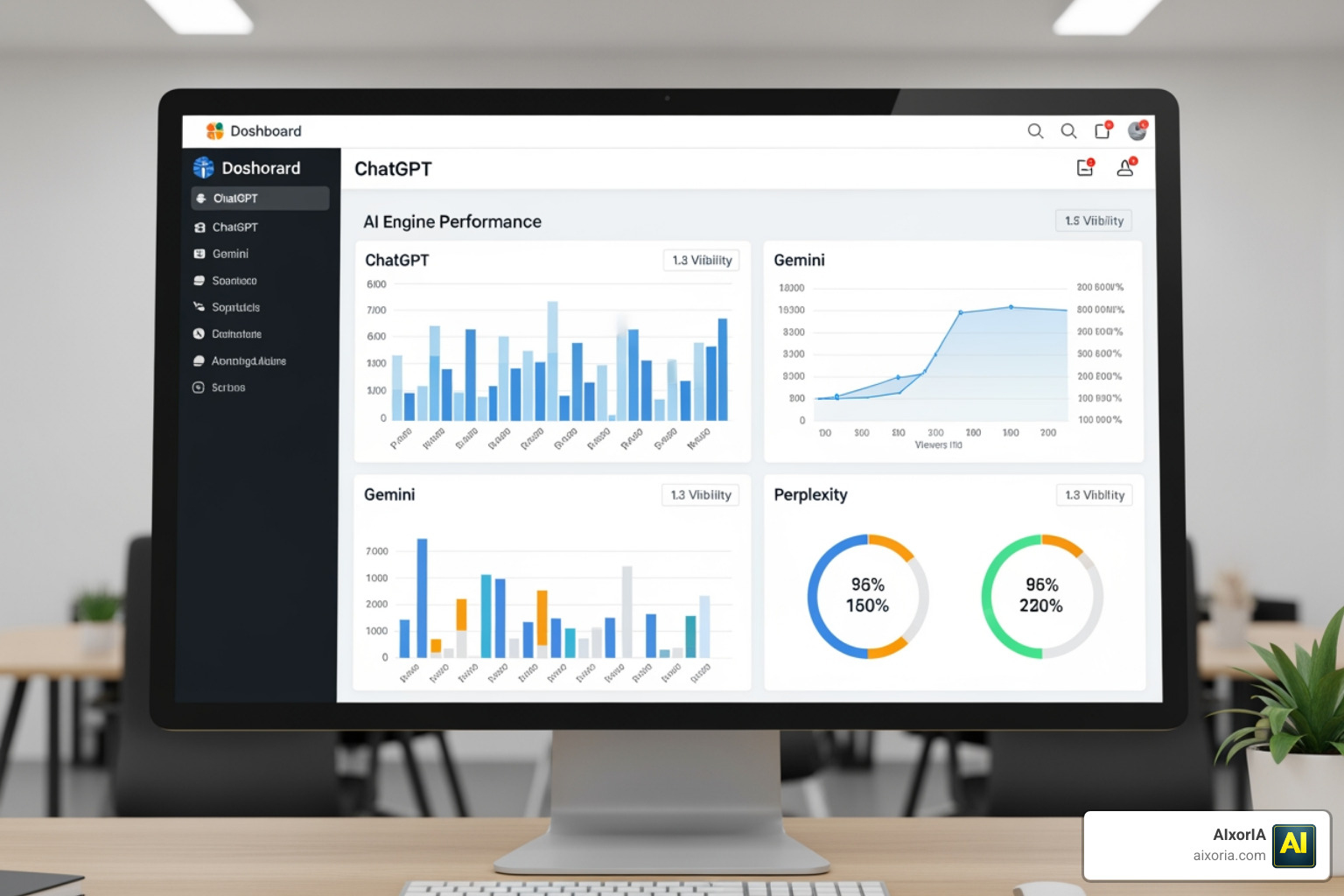
When evaluating tools, we recommend looking for those that offer a comprehensive view of the “AI landscape.” This includes not just the big players like ChatGPT and Google AI Overviews, but also niche or emerging models like Claude, Grok, and DeepSeek. For a curated selection, see the Best Ai Tools For Enhancing Visibility In 2026/.
Key Features to Look for in 2026
The best tools in 2026 share a few critical features:
- Multi-LLM Support: You need to monitor ChatGPT, Perplexity, Gemini, and AI Mode simultaneously.
- Sentiment Analysis: It’s not enough to be mentioned; you need to know if the AI is calling you “the industry leader” or “a budget-friendly alternative.”
- Historical Data: AI answers change daily. You need to see if your visibility is rising or falling over time.
- Source Analysis: Which websites is the AI citing to talk about you? If it’s citing a Reddit thread from 2022, you know exactly where you need to go to update the conversation.
To see how different platforms stack up against each other, read our breakdown on Comparing Leading AI Search Tools In 2026/.
How to Run a Free AI Search Visibility Tool Audit
You don’t always have to pay upfront to see where you stand. Many platforms, such as Amplevo, offer free checks with no sign-up required. Here’s how we recommend running a quick audit:
- Enter your domain: See your current “AI Visibility Score.”
- Benchmark against competitors: Add up to 5 rivals to see who owns the “Share of AI Voice.”
- Track high-impact prompts: Instead of just keywords, track full questions like “How do I scale a B2B SaaS in 2026?”
- Identify Gaps: Look for “Opportunities”—prompts where your competitors are mentioned but you are not.
Key Metrics: Tracking Brand Mentions and Citations in 2026
In AI search, not all mentions are created equal. We categorize them into two main buckets: linked citations and unlinked mentions.
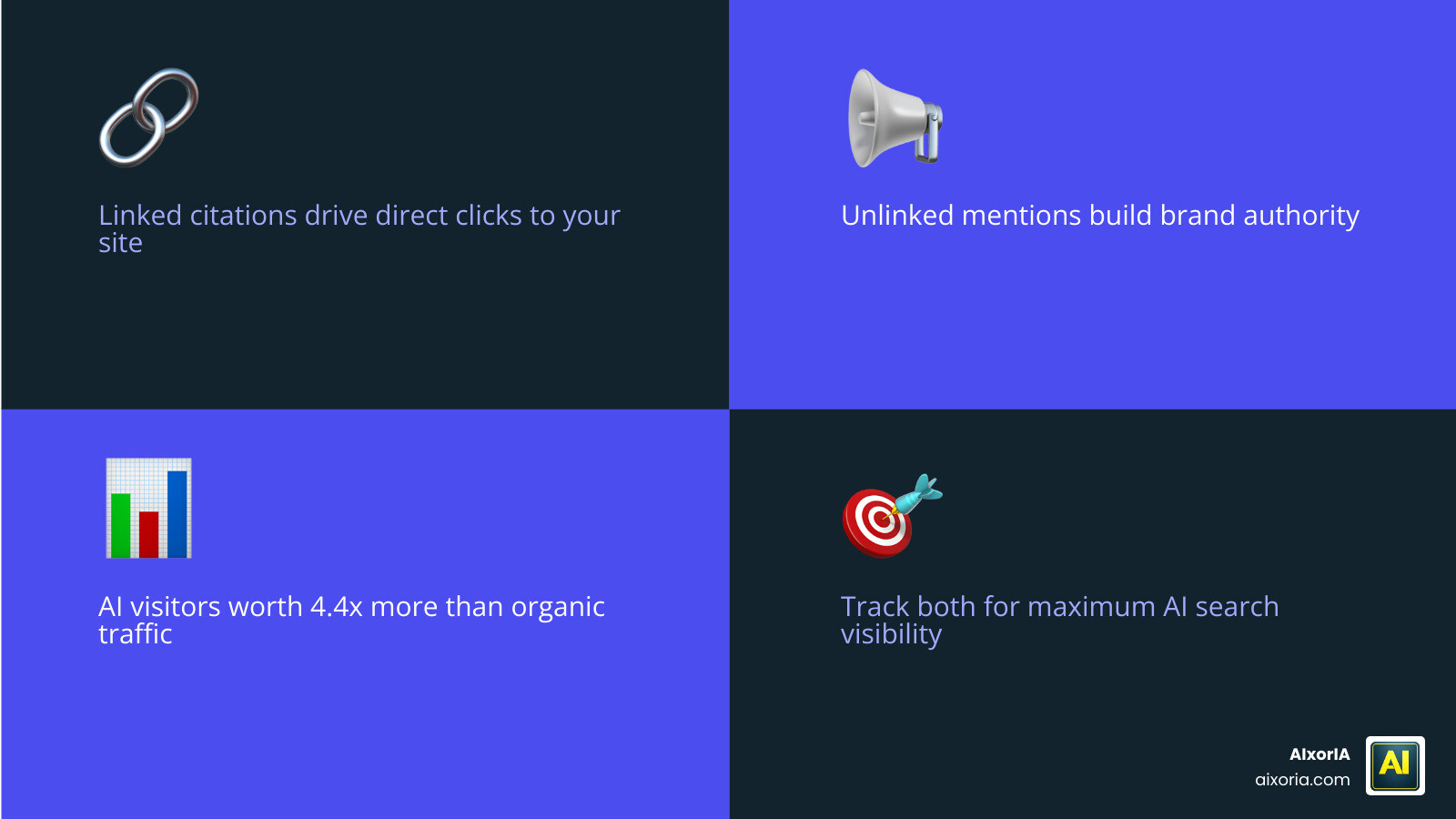
A linked citation is the gold standard—it’s a direct click-through opportunity. An unlinked mention still builds brand authority, but it requires the user to perform a second search to find you. Research shows that an AI search visitor can be worth up to 4.4x more than a traditional organic visitor because they are further down the purchase funnel. To understand the traffic impact, see How Ai Search Optimization Tools Increase Organic Traffic In 2026/.
Evaluating Pricing Models and ROI
Pricing for an ai search visibility tool generally falls into three categories:
- Starter Plans ($50 – $100/mo): Best for small startups tracking 30-50 prompts.
- Pro/Business Plans ($180 – $500/mo): For agencies and mid-market brands tracking hundreds of prompts with daily updates.
- Enterprise Plans ($1,000+ /mo): Custom solutions with API access and deep behavioral analytics.
The ROI is measured by your “Share of AI Voice” and the reduction in “invisible erosion.” If you aren’t appearing in the top 5 responses for your category, you are losing revenue. For more on pricing, check out 7 Best Ai Visibility Tools For Marketers In 2026/.
Monitoring Performance Across Major AI Engines
It is vital to monitor your brand across the specific “personalities” of different AI engines.
- ChatGPT: Often cites social proof and community discussions.
- Google AI Overviews: Relies heavily on high-authority web content and traditional SEO signals.
- Perplexity: Focuses on real-time news and technical documentation.
- Claude: Known for nuanced, detailed comparisons.
Staying on top of these requires a tool that covers at least 10+ platforms. You can find more details on these specialized tools here: What Are The Best Ai Search Monitoring Tools In 2026/.
Integrating AI Visibility into Modern SEO and AEO Workflows
AI visibility shouldn’t live in a silo. It needs to be integrated into your broader marketing strategy, including Answer Engine Optimization (AEO).
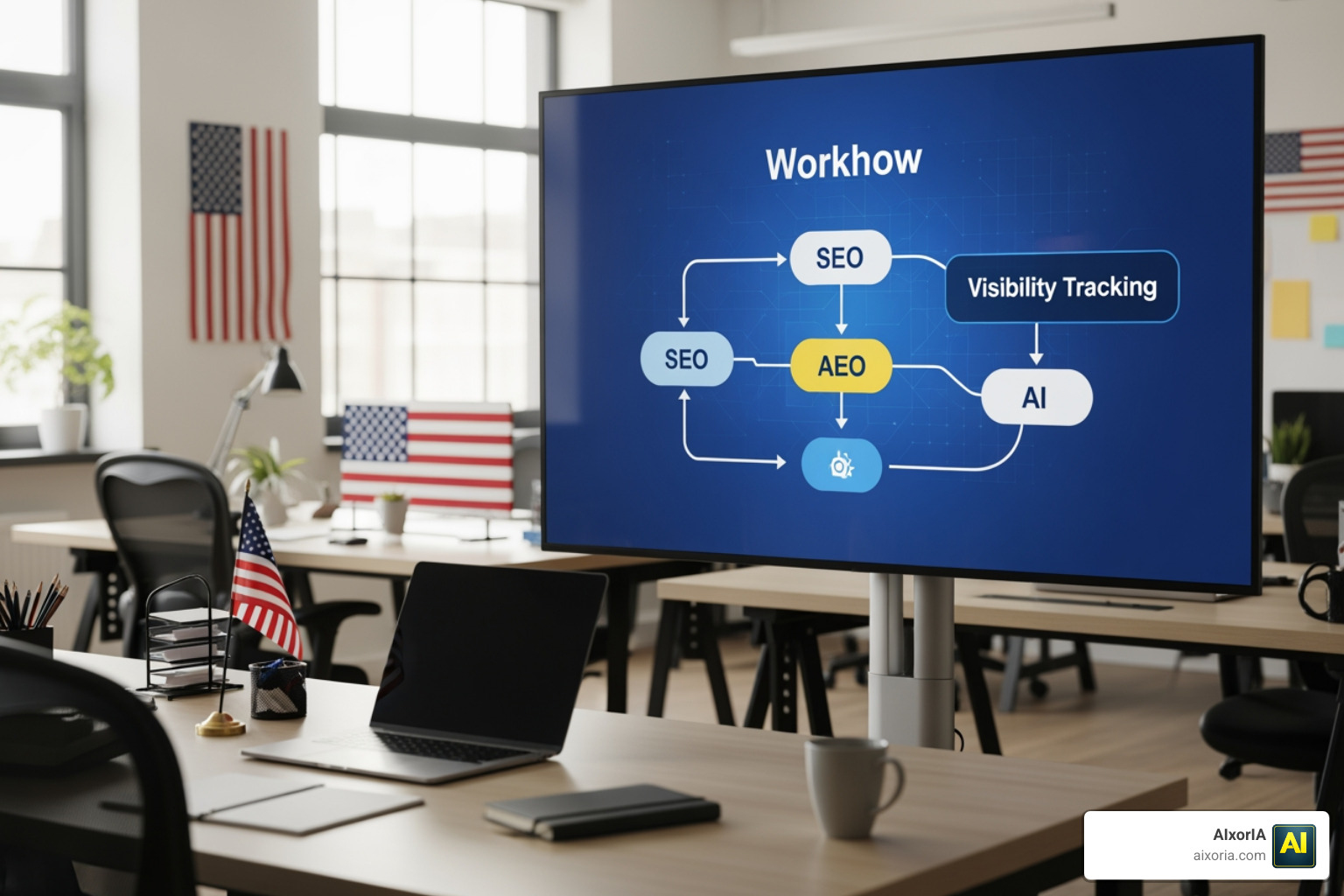
We use AI visibility data to inform our content calendars. If a tool like Searchable or AIclicks tells us that we are invisible for “best enterprise CRM,” we don’t just write a blog post—we look at the sources the AI is citing (like Reddit or G2) and ensure our presence is felt there too. This is a core part of Which Answer Engine Optimization Tools Work Best For Ai Visibility/.
Supporting Tech Startup Growth and Authority
For tech startups, an ai search visibility tool is a secret weapon for sales and reputation management. When a founder can show a potential investor that their brand is the #1 recommended solution by ChatGPT in their niche, it builds massive trust. It also helps in identifying “citation gaps”—specific sites like TechRadar or niche directories where a mention could trigger a wave of AI citations. Learn more about this at 9 Best Ai Tools For Optimizing Product Visibility In 2026/.
Avoiding Common Implementation Pitfalls
Don’t fall into the trap of manual scaling. Trying to “check” ChatGPT yourself is inconsistent because of the probabilistic nature of AI. Other pitfalls include:
- Ignoring Hallucinations: Some tools don’t verify if the AI is providing accurate info about you.
- Fragmented Reporting: Using five different free tools instead of one unified dashboard.
- Focusing on the wrong prompts: Tracking keywords instead of natural language questions.
For advice on choosing the right path, see Whats The Best Answer Engine Optimization Tool For Ai Products/.
Optimization Strategies for AI-Generated Answers
Once you have the data from your ai search visibility tool, you need to act. The goal is to make your content as “digestible” as possible for LLMs.
Identifying High-Impact Citation Sources
AI models love certain types of sources. We’ve found that they frequently cite:
- Reddit and social forums: Great for “unbiased” user opinions.
- Industry Directories: Like Product Hunt or specialized B2B lists.
- Niche Publications: High-authority blogs in your specific field.
By identifying these sources, you can focus your outreach and PR efforts where they will have the most impact on your AI visibility. This strategy is essential for How Ai Search Optimization Tools Increase Organic Traffic/.
Content Formatting for Better AI Readability
To improve your chances of being cited, we recommend:
- Using llms.txt: A file (similar to robots.txt) that tells AI models exactly what your site is about.
- Structured Data: Using JSON-LD schema to help AI identify entities and relationships.
- Q&A Pages: AI engines love content that directly answers a question in a clear, concise format.
- E-E-A-T: Experience, Expertise, Authoritativeness, and Trustworthiness are still the backbone of AI trust.
For more technical tips, see the Top Ai Search Optimization Tools For Content Creators 2026 Guide/ and our look at What Is The Best Ai Tool For Increasing Visibility/.
Frequently Asked Questions about AI Search Visibility
What is a “good” AI visibility score in 2026?
There is no universal “perfect” score, as it depends on your industry. However, most tools like Visible AI or Beacon use a 0-100 scale. A score above 70 generally indicates you are a dominant voice in your category, while anything below 40 suggests you are being overlooked by major LLMs.
Can I track brand mentions in ChatGPT and Gemini simultaneously?
Yes! Modern tools like AIclicks allow you to monitor 10+ platforms in a single dashboard. This is crucial because an AI engine’s “knowledge” can vary wildly based on its training data and real-time search capabilities.
How does AI search visibility impact traditional organic traffic?
While it can lead to “zero-click” answers, being cited by an AI often leads to higher-quality traffic. Users who click a link in a ChatGPT response have already been “pre-sold” on your brand by the AI, leading to higher conversion rates compared to standard search visitors.
Conclusion
The search landscape is moving fast, but you don’t have to navigate it alone. At AIxorIA, we specialize in helping businesses master these new frontiers. Whether you need a comprehensive performance audit to see where you stand or custom AI solutions to boost your brand’s presence, we are here to help.
Our mission is to provide simple language help, affordable services, and fast support to ensure your brand isn’t just a “blue link” in the past, but a top recommendation in the AI-driven future. Ready to take the next step? Explore our AI productivity services and let’s start building your AI visibility today!
1 thought on “AI Search Visibility Tool in 2026 | Track Brand Mentions & Citations”