Finance teams are under increasing pressure to move faster, reduce manual work, and deliver real-time insights. Traditional accounting and finance tools are no longer enough—modern organizations need AI-powered finance automation software that can handle everything from invoicing and expense tracking to forecasting and compliance.
AI is transforming finance operations by automating repetitive tasks, detecting anomalies, predicting cash flow, and enabling smarter decision-making. For US-based businesses in particular, where compliance, scalability, and accuracy are critical, choosing the right platform can significantly impact efficiency and growth.
This guide covers the best AI-powered finance automation software in 2026, with detailed breakdowns, pricing insights, and real-world use cases to help you choose the right solution.
Table of Contents
What Makes the Best AI-Powered Finance Automation Software?
Not all finance tools are built equally. The best platforms in 2026 combine automation with intelligence.
AI-driven automation
The software should automate tasks like invoice processing, reconciliation, expense categorization, and reporting using AI—not just rules.
Accuracy and compliance
For US businesses, compliance with financial regulations, audit trails, and secure data handling are essential.
Integration capabilities
Finance tools must connect with CRMs, ERPs, payroll systems, and banking platforms.
Scalability
The platform should support growth—from startups to enterprise-level operations.
Real-time insights
AI should provide forecasting, anomaly detection, and actionable insights—not just historical reports.
READ MORE – Benefits of Finance Automation Software
The Best AI-Powered Finance Automation Software at a Glance
| Software | Best For | Key Strength | Pricing |
|---|---|---|---|
| QuickBooks | Small to mid-sized businesses | AI bookkeeping & automation | From $30/month |
| Xero | Cloud accounting | Smart reconciliation | From $15/month |
| NetSuite | Enterprise finance | Full ERP + AI insights | Custom pricing |
| FreshBooks | Freelancers & SMBs | Automated invoicing | From $19/month |
| Zoho Books | Growing businesses | AI-driven workflows | From $15/month |
| Sage Intacct | Financial management | Advanced reporting | Custom pricing |
| Expensify | Expense automation | Smart receipt scanning | From $5/user/month |
| Ramp | Corporate finance automation | AI spend control | Free + enterprise plans |
| Vic.ai | Enterprise AP automation | AI invoice processing | Custom pricing |
Best AI Finance Automation Software for Small Businesses
QuickBooks
QuickBooks remains one of the most widely used accounting platforms in the US, and in 2026, its AI capabilities have significantly evolved.
The platform uses AI to automate bookkeeping tasks such as categorizing expenses, reconciling transactions, and generating financial reports. It can learn from user behavior over time, improving accuracy and reducing manual corrections. For small business owners and finance teams, this means less time spent on repetitive tasks and more focus on decision-making.
QuickBooks also integrates seamlessly with banking systems, payroll, and third-party apps, creating a centralized finance ecosystem. Its AI-driven insights help identify cash flow trends, detect anomalies, and suggest actions to improve financial health.
Pros:
- Strong automation for bookkeeping
- Widely trusted in the US market
- Extensive integrations
Cons:
- Can become expensive with add-ons
- Limited advanced features for large enterprises
Pricing: Starts at $30/month
Best AI-Powered Cloud Accounting Software
Xero
Xero is known for its clean interface and powerful cloud-based accounting features, enhanced with AI-driven automation.
Its AI engine helps with bank reconciliation by matching transactions automatically and flagging inconsistencies. This reduces manual errors and speeds up financial processes. Xero also provides real-time financial dashboards, giving businesses instant visibility into their performance.
For US-based companies working with remote teams or multiple locations, Xero’s cloud-first approach ensures accessibility and collaboration.
Pros:
- Excellent user experience
- Strong automation in reconciliation
- Real-time financial insights
Cons:
- Payroll features limited in some regions
- Learning curve for advanced features
Pricing: Starts at $15/month
Best Enterprise AI Finance Platform
NetSuite
NetSuite is a full-scale ERP platform designed for enterprises that need complete financial control and scalability.
Its AI capabilities extend across financial planning, revenue recognition, and forecasting. NetSuite can analyze large volumes of financial data to generate insights, predict trends, and support strategic decisions.
Because it integrates finance, CRM, and operations into a single system, it eliminates data silos and improves efficiency across departments.
Pros:
- Comprehensive enterprise solution
- Advanced AI forecasting
- Highly scalable
Cons:
- Expensive
- Complex implementation
Pricing: Custom pricing (enterprise-level)
Best AI Tool for Freelancers and Service Businesses
FreshBooks
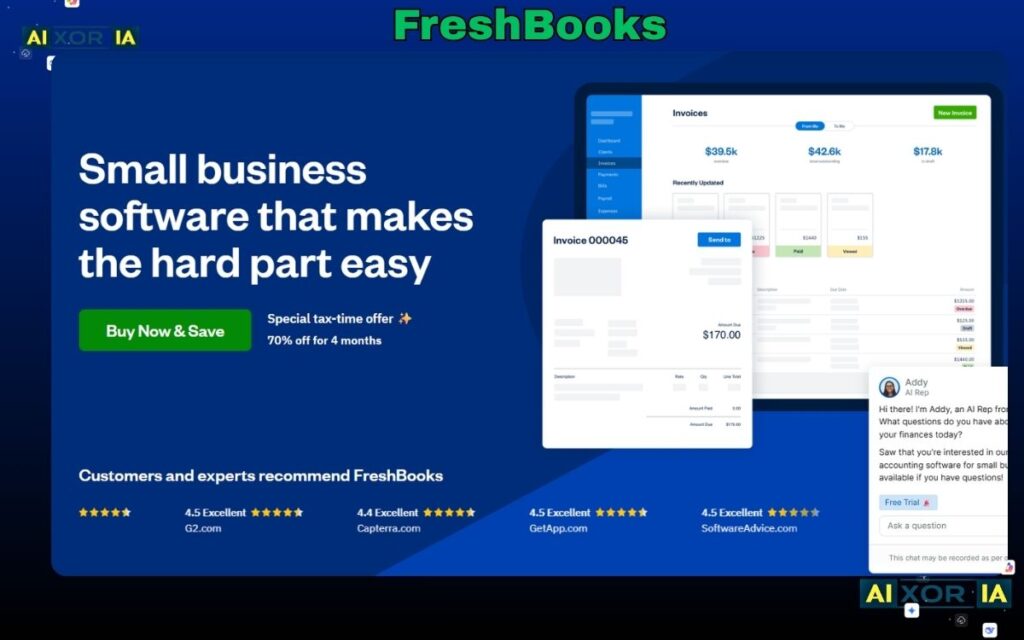
FreshBooks is designed for freelancers and small service-based businesses that need simple but powerful finance automation.
It uses AI to automate invoicing, track expenses, and manage client billing. The platform can also send reminders, track payments, and generate reports without manual intervention.
FreshBooks focuses heavily on usability, making it ideal for non-technical users who want automation without complexity.
Pros:
- Easy to use
- Strong invoicing automation
- Ideal for freelancers
Cons:
- Limited scalability
- Fewer advanced features
Pricing: Starts at $19/month
Best AI Finance Automation for Growing Businesses
Zoho Books
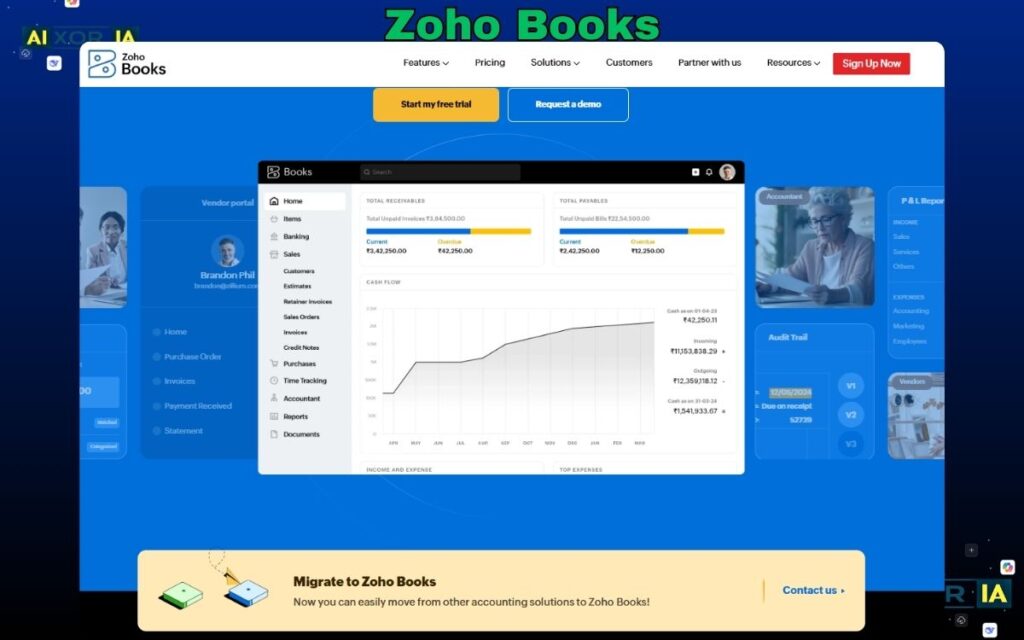
Zoho Books offers a balance between affordability and advanced automation features.
Its AI assistant helps automate workflows, categorize transactions, and generate financial insights. It also integrates with the broader Zoho ecosystem, making it suitable for businesses already using Zoho products.
The platform is particularly useful for growing companies that need scalable automation without enterprise-level costs.
Pros:
- Affordable pricing
- Strong automation features
- Good integrations
Cons:
- Less popular in US compared to competitors
- Limited advanced analytics
Pricing: Starts at $15/month
Best AI Financial Management Software for Mid-Market
Sage Intacct
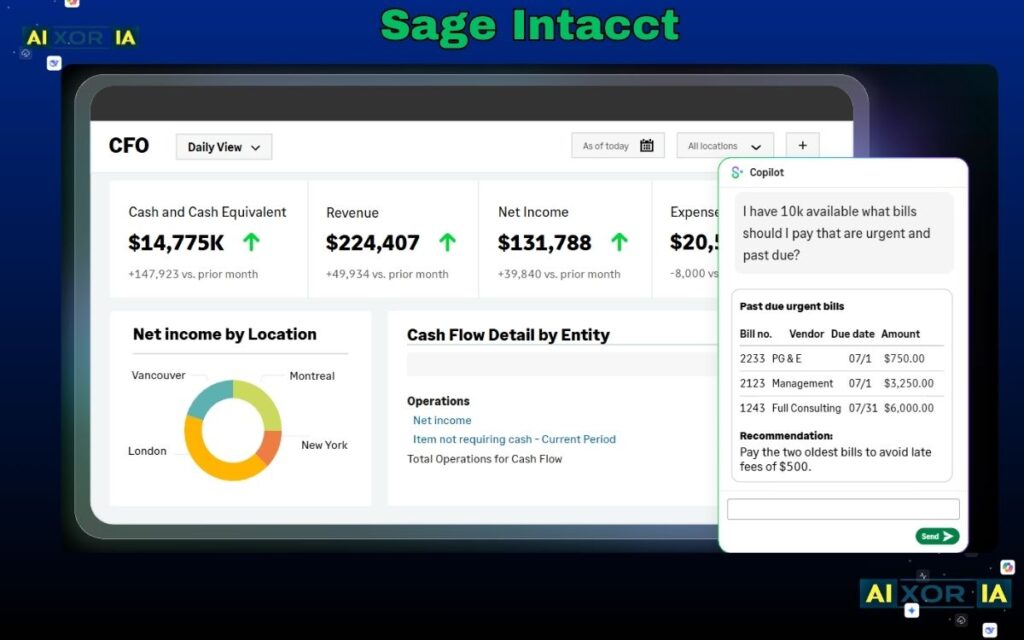
Sage Intacct is a powerful financial management platform designed for mid-sized organizations.
It uses AI to automate core financial processes, including accounts payable, accounts receivable, and reporting. Its advanced analytics and dashboards provide deep insights into financial performance.
Sage Intacct is particularly strong in compliance and audit readiness, making it suitable for regulated industries.
Pros:
- Advanced reporting and analytics
- Strong compliance features
- Scalable for mid-sized businesses
Cons:
- Higher cost
- Requires setup and training
Pricing: Custom pricing
Best AI Expense Automation Software
Expensify
Expensify focuses on automating expense tracking and reporting using AI.
Its SmartScan technology can extract data from receipts and automatically categorize expenses. This eliminates manual data entry and speeds up reimbursement processes.
For companies managing employee expenses at scale, Expensify simplifies approvals, compliance, and reporting.
Pros:
- Excellent receipt scanning
- Fast expense processing
- Easy to use
Cons:
- Limited broader finance features
- Not a full accounting solution
Pricing: Starts at $5/user/month
Best AI-Powered Corporate Finance Platform
Ramp

Ramp is a modern finance automation platform that combines expense management, corporate cards, and AI-driven insights.
It helps businesses control spending by analyzing transactions, identifying waste, and suggesting cost-saving opportunities. Its automation features handle approvals, categorization, and reporting in real time.
Ramp is particularly popular among US startups and fast-growing companies due to its modern interface and automation-first approach.
Pros:
- Strong spend management
- AI-driven insights
- Free core offering
Cons:
- Focused on expense and spend management
- Limited traditional accounting features
Pricing: Free plan available; enterprise pricing varies
Best AI Accounts Payable Automation Software
Vic.ai
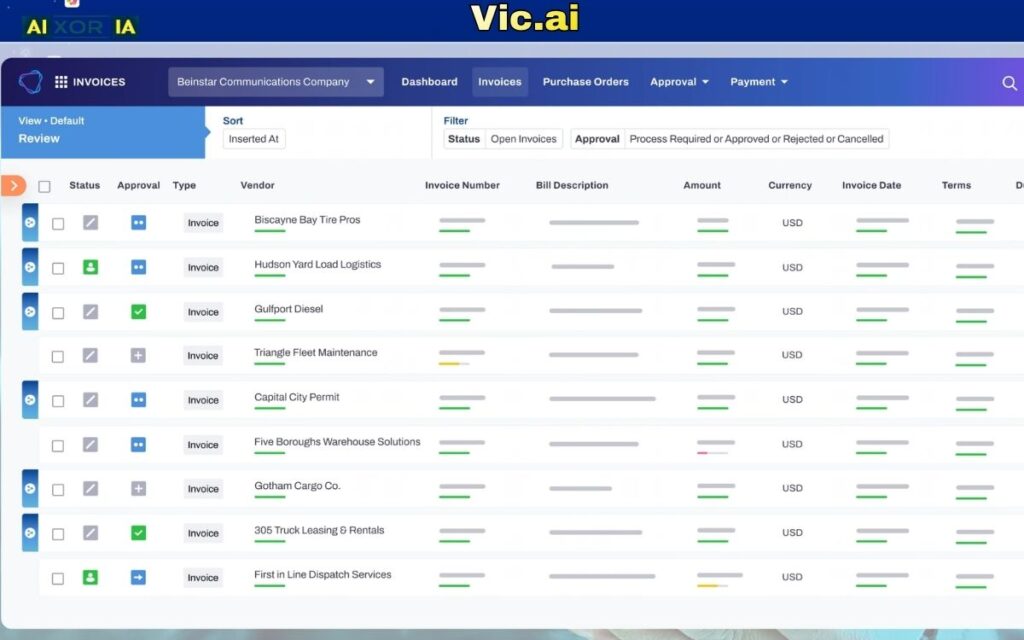
Vic.ai specializes in automating accounts payable using advanced AI.
It can process invoices, match data, and approve transactions with minimal human intervention. The system continuously learns from data, improving accuracy over time.
For enterprises handling high volumes of invoices, Vic.ai significantly reduces manual workload and increases efficiency.
Pros:
- Advanced AI automation
- High accuracy in invoice processing
- Scalable for enterprises
Cons:
- Enterprise-focused
- Requires integration setup
Pricing: Custom pricing
READ MORE – 9 Best Corporate Finance Automation Software
How to Choose the Right AI Finance Automation Software
The right choice depends on your business size and needs:
- Small businesses → QuickBooks or FreshBooks
- Growing companies → Zoho Books or Xero
- Enterprises → NetSuite or Sage Intacct
- Expense-focused → Expensify or Ramp
- Accounts payable automation → Vic.aiVic.ai
Many organizations combine tools—for example, using QuickBooks for accounting and Expensify for expense management.
The Role of AI in Finance Automation (2026)
AI is reshaping finance operations in several ways:
- Automating repetitive tasks like data entry and reconciliation
- Detecting fraud and anomalies in real time
- Predicting cash flow and financial trends
- Improving decision-making with actionable insights
As AI continues to evolve, finance teams are shifting from manual processing to strategic roles focused on analysis and growth.
Final Thoughts
The best AI-powered finance automation software in 2026 is not just about automation—it’s about intelligence, scalability, and integration.
Businesses that adopt the right tools can reduce manual work, improve accuracy, and gain real-time visibility into their financial operations. Whether you’re a small business owner or part of an enterprise finance team, investing in AI-powered automation is becoming essential for staying competitive.