The Reality of Urgent Loans for Bad Credit Guaranteed Approval
Scr0ll d0wn to D0VVNL0AD
When an unexpected emergency arises, searching online for urgent loans for bad credit guaranteed approval often feels like a lifeline. However, understanding the regulatory and practical reality behind this term is essential for protecting your finances.
A bad credit score is typically defined as a FICO score under 670, with subprime ranges stretching down from 580 to 300. Traditional financial institutions often view applicants in this tier as high-risk, making standard personal loans difficult to secure.
The promise of “guaranteed approval” is a marketing myth. Federal and state consumer protection regulations legally prohibit lenders from guaranteeing loan approvals without first evaluating a borrower’s ability to repay. Any entity offering absolute guaranteed approval regardless of circumstances is either operating outside consumer safety laws or masking hidden predatory terms.

Instead of traditional credit checks, modern subprime lenders evaluate overall financial health using alternative underwriting methods.
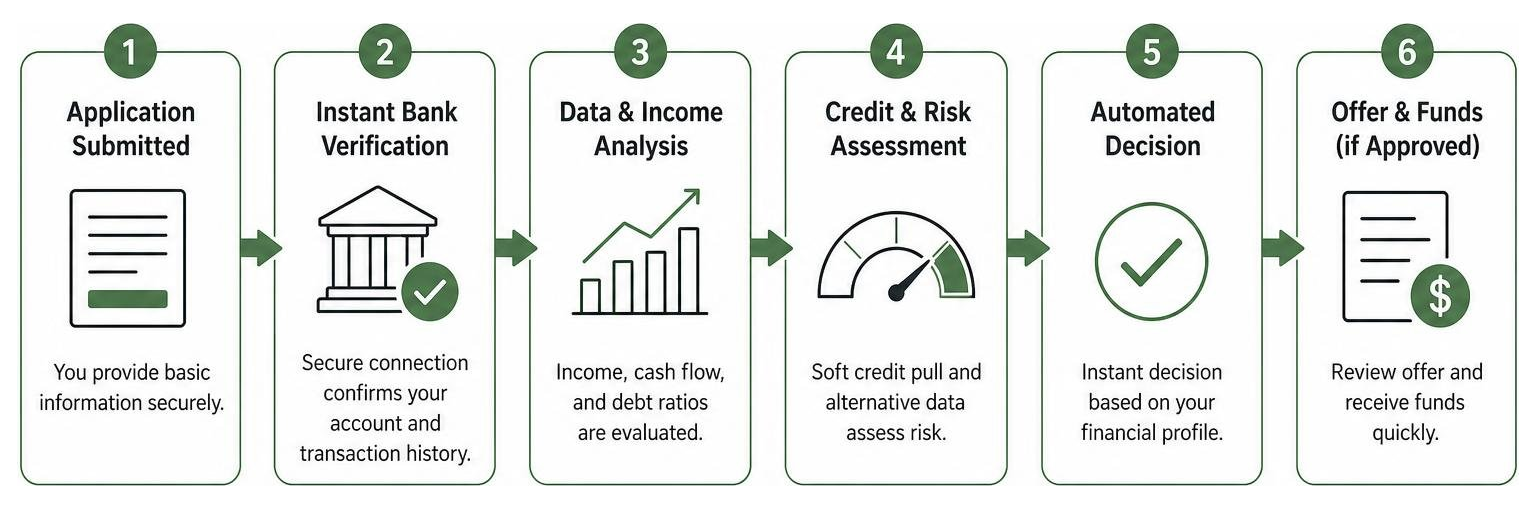
Instead of relying solely on your credit history, lenders use modern verification methods to assess your current ability to make payments:
- Soft Credit Pulls: Evaluating your Experian credit file without triggering a hard inquiry that lowers your score.
- Secondary Bureau Checks: Assessing non-traditional databases such as Clarity Services to review past borrowing activity.
- Instant Bank Verification (IBV): Securely connecting to your online bank account to confirm income, evaluate debt ratios, and verify that your account is free of excessive non-sufficient funds (NSF) charges.
Qualifying for Urgent Loans for Bad Credit Guaranteed Approval
While no legitimate lender guarantees approval, meeting baseline eligibility criteria significantly increases your chances of securing funds. Lenders look for basic indicators that confirm you can manage short-term debt obligations:
- Age Requirement: You must be 18 years or older.
- Verifiable Income: Demonstrating steady earnings of at least $1,000 to $1,200 per month.
- Active Checking Account: Possessing an active checking account with direct deposit capabilities.
- Valid Identification: Providing a government-issued photo ID and proof of residence.
- Bankruptcy Status: Ensuring you are not currently undergoing active bankruptcy proceedings.
- Military Status: Federal protections (such as the Military Lending Act) restrict certain short-term, high-interest products for active-duty military personnel.
Soft Inquiry vs Hard Credit Checks
Understanding credit check methods can help you protect your FICO score during urgent searches. A traditional hard credit check occurs when a lender pulls your official credit report from major bureaus (Equifax, Experian, TransUnion) to make a final lending decision, which temporarily lowers your credit score by a few points.
In contrast, soft credit inquiries evaluate your preliminary qualification without leaving a negative mark on your score. Platforms offering Fast Cash Loans often utilize soft Experian pulls alongside specialized secondary credit bureau checks (such as Clarity Services). This approach allows lenders to verify your income and existing debt obligations while preserving your core FICO credit score, allowing you to check rates and options without risking unnecessary credit damage.
Types of Fast Emergency Financing Options
When you need rapid liquidity, several loan structures offer fast turnarounds. Each type handles interest, repayment terms, and disbursement speeds differently.
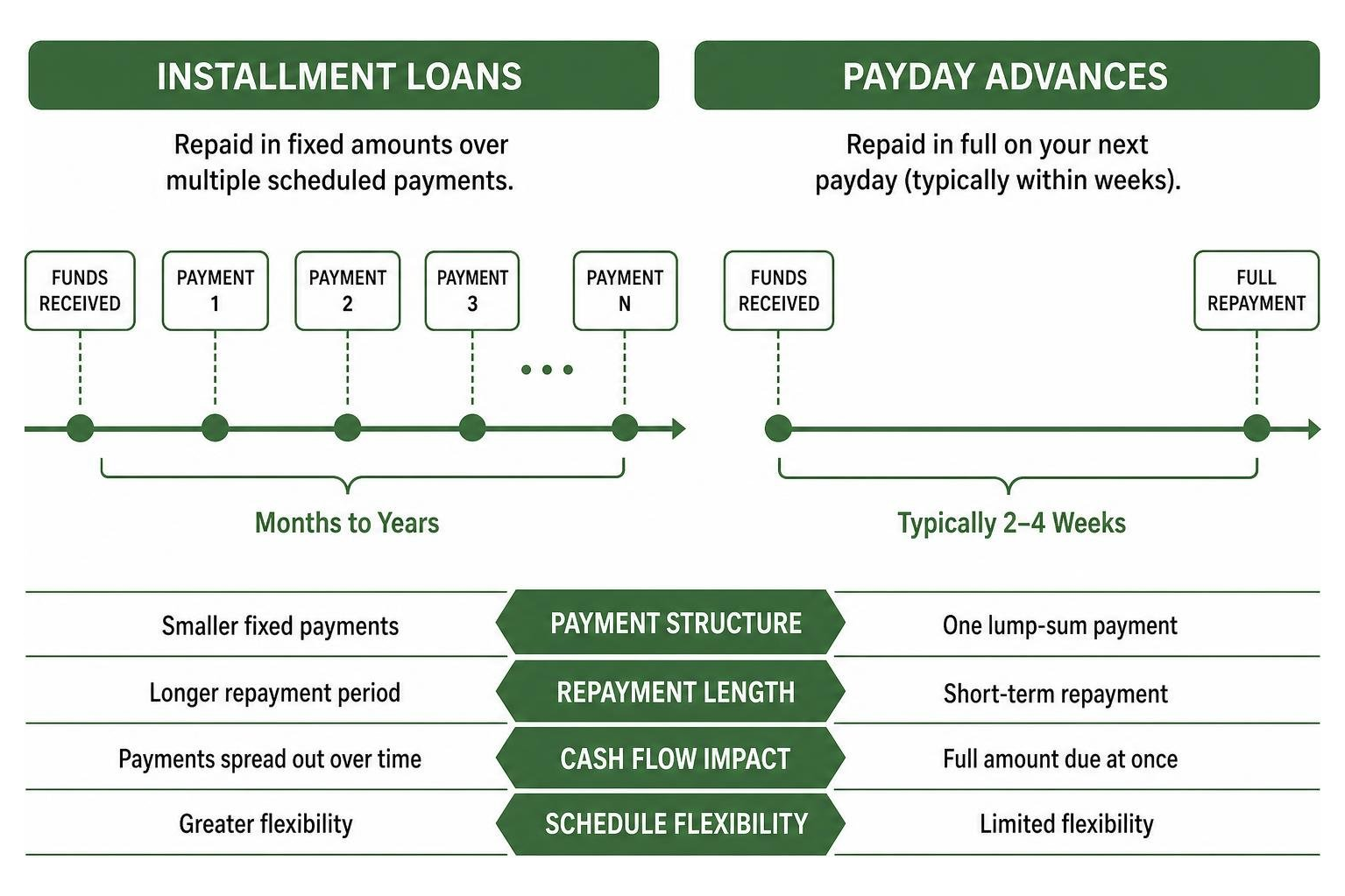
Installment Loans vs Payday Advances
Understanding the structural differences between short-term loan types can save you thousands of dollars over time.
| Feature | Emergency Installment Loans | Payday Advances |
|---|---|---|
| Repayment Term | 3 to 36 months in fixed monthly payments | Single lump sum on your next payday (2 to 4 weeks) |
| Typical Borrowing Limits | $500 to $10,000 | $100 to $1,000 |
| APR Range | 5.99% to 35.99% (or up to 195% for subprime) | 200% to 600%+ |
| Debt Cycle Risk | Lower; structured, predictable installments | High; frequent rollovers leading to severe debt traps |
| Credit Bureau Reporting | Frequently reported (helps build credit) | Rarely reported (unless defaulted and sent to collections) |
For consumers needing structured repayments, exploring tailored options like $800 Loans provides a clear view of how fixed monthly installment agreements operate compared to short-term payday advances.
Risks Associated with Urgent Loans for Bad Credit Guaranteed Approval
While quick access to capital solves immediate problems, high-cost short-term debt carries substantial financial risks:
- Precomputed Interest Costs: Some subprime lenders calculate the full interest charge upfront rather than using simple interest. This means paying off the loan early may not reduce your total interest burden.
- Upfront Origination Fees: Lenders may charge nonrefundable origination fees, which are deducted directly from the loan payout before the funds reach your account.
- NSF and Declined Payment Fees: If an automated payment fails due to insufficient funds, lenders may charge fees around $45, while your bank may assess separate overdraft penalties.
- High APR Escalation: Short-term emergency products can carry effective APRs ranging from 200% to over 600%. A standard $300 loan taken over two weeks with a $20 per $100 fee equates to a 521% APR.
Rates, Costs, and Disbursement Speeds

Understanding funding timelines is just as important as knowing loan costs when facing a true financial emergency.
Understanding Interest Rates and Finance Charges
The true cost of an urgent loan depends on whether the lender charges simple interest, precomputed interest, or flat finance fees:
- Flat Finance Fees: Common among short-term micro-loans, charges typically range from $15 to $30 for every $100 borrowed.
- Subprime APR Ranges: For multi-month installment products, subprime APRs usually range between 29.82% and 195%. Borrowers with poor credit can see monthly payments vary by up to $300 for the exact same principal amount depending on the lender’s risk assessment.
- Total Payback Examples: A representative $1,000 loan repaid over a 12-month term at a 29.82% APR yields a total cost of approximately $1,134.72. Conversely, a $750 line of credit with weekly payments of $74.29 over 221 days results in a total payback of $1,188.26 at a 22% interest rate alongside fee additions.
State regulations heavily influence these charges. For example, some states cap short-term borrowing limits at $300 with strict 15% maximum fee structures, while other states allow higher rate ceilings.
Payment Schedules and Budget Impact
Disbursement speeds depend on the transfer method you choose and when you complete your application:
- Instant Debit Card Transfers: By linking an active debit card, funds can arrive in your account within seconds of final approval.
- Same-Day ACH Processing: Submitting your completed application prior to morning cutoffs (typically around 11:30 AM EST) allows lenders to process ACH deposits by 5:00 PM EST the same day.
- Standard Business Day Transfers: Applications submitted late in the day or over weekends process on the following business day due to standard banking settlement hours.
To avoid unexpected shortfalls, seek out flexible terms. Some modern lenders feature digital apps that allow borrowers to reschedule installment due dates up to 29 days in advance without incurring penalty fees.
Safe Strategies for Credit Rebuilding and Alternatives
Using emergency financing responsibly requires balancing your immediate cash needs with long-term credit health.
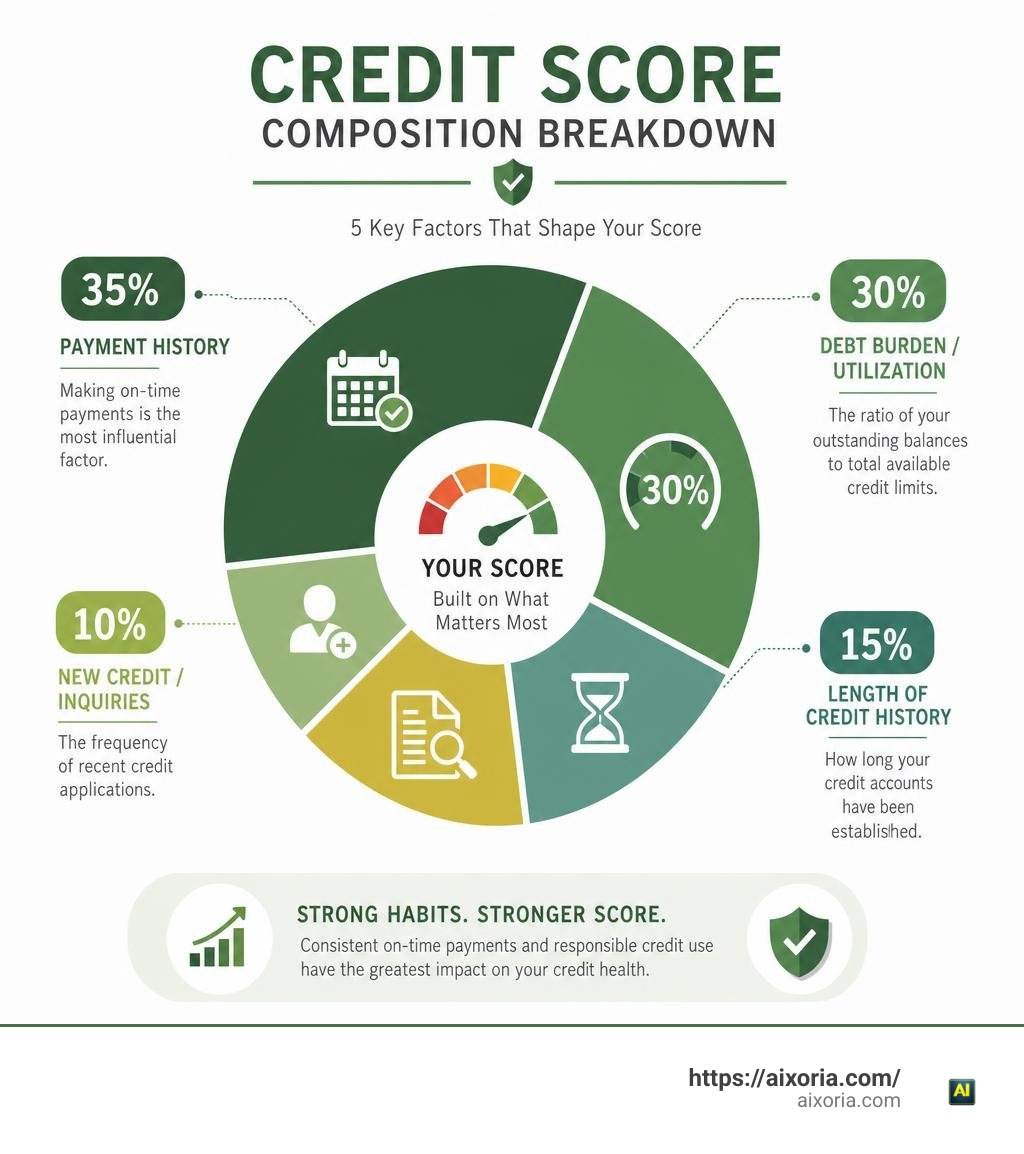
A FICO credit score is calculated using five key metrics:
- Payment History (35%): Making on-time payments is the most influential factor in improving your score.
- Debt Burden / Utilization (30%): The ratio of your outstanding balances to total available credit limits.
- Length of Credit History (15%): How long your credit accounts have been established.
- New Credit / Inquiries (10%): The frequency of recent credit applications.
- Types of Credit Used (10%): Maintaining a healthy balance of revolving lines and installment loans.
Borrowing from lenders that report on-time repayments to Equifax, Experian, and TransUnion allows you to gradually rebuild your score. Conversely, defaulting on high-interest loans leads to collection actions that severely damage your credit file.
Identifying Predatory Red Flags
To protect yourself from predatory entities and fraudulent schemes, look out for these common warning signs:
- Demanding Upfront Fees: Legitimate lenders never request payment via wire transfer, prepaid debit cards, or gift cards prior to disbursing your loan.
- Lack of State Licensing: Trustworthy lenders display their state licenses and fee disclosures clearly on their website.
- Absolute Approval Guarantees: Be cautious of websites promising “100% approval for everyone” without evaluating income or identity.
- Unsecured Application Platforms: Ensure the application portal uses secure 256-bit encryption technology (look for the lock icon and
https://in your browser address bar).
Safer Financial Alternatives to Emergency Loans
Before committing to high-cost subprime financing, consider these lower-risk options:
- Payday Alternative Loans (PALs): Offered by federal credit unions, PALs provide small-dollar loans ($200 to $2,000) repaid over 1 to 12 months with APRs legally capped at 28%.
- Employer Wage Advance Apps: Services that let you access money you’ve already earned before your official payday for a small fee or optional tip.
- Peer-to-Peer and Specialized Networks: Working with no-guarantor lenders or bad-credit connection services. For example, checking specialized networks via Maggie Loans can help you explore options that don’t require a co-signer.
- Buy Now, Pay Later (BNPL) Services: Spreading essential emergency purchases over four equal, interest-free payments to manage immediate cash flow needs.
Frequently Asked Questions about Emergency Bad Credit Financing
How fast can I get funds with bad credit?
Funding speeds depend on your transfer choice and submission time. Choosing instant debit card transfers can deliver funds to your bank account within seconds of approval. Standard ACH direct deposits typically land the same afternoon if submitted before 11:30 AM EST on a business day, or within 24 business hours.
Does applying for an urgent loan hurt my credit score?
Initial pre-qualification forms use soft credit inquiries, which do not affect your FICO score. However, if you proceed with a full application, the lender may perform a hard credit inquiry that temporarily drops your score by a few points. Selecting lenders that rely primarily on soft Experian checks and secondary bureau inquiries helps protect your main credit profile.
What is the safest way to borrow money urgently with a low FICO score?
The safest approach is to apply for a Payday Alternative Loan (PAL) through a local federal credit union, where interest rates are capped at 28% APR. If you need online personal financing, look for transparent direct lenders or established platforms like 24CashFast or Yup Loans that clearly disclose all fees, avoid upfront charges, and use soft checks during the initial application.
Conclusion
Financial emergencies can feel overwhelming, especially when you’re managing a low credit score. While true urgent loans for bad credit guaranteed approval do not exist under consumer protection laws, accessible emergency options are available based on your employment, steady income, and banking history.
By focusing on transparent installment structures, understanding funding cutoffs, and carefully reviewing total borrowing costs, you can address unexpected cash needs without falling into high-interest debt cycles. When life throws a curveball, taking a moment to evaluate rates, check licensing, and choose the safest available option will help protect your long-term financial health.
Explore the latest technology and market updates with Aixoria