Who is eligible for a personal loan in the US? Baseline Requirements
Scr0ll d0wn to D0VVNL0AD
When evaluating Who is eligible for a personal loan in the US?, financial institutions do not rely on a single qualification checkbox. Instead, underwriters review your entire financial profile to determine if you present an acceptable borrowing risk. However, before a lender ever inspects your credit score or monthly earnings, you must meet several mandatory baseline requirements.
These baseline rules filter out applicants who are legally or operationally ineligible to receive funds. If you do not meet these initial thresholds, your application will be automatically declined regardless of your income.
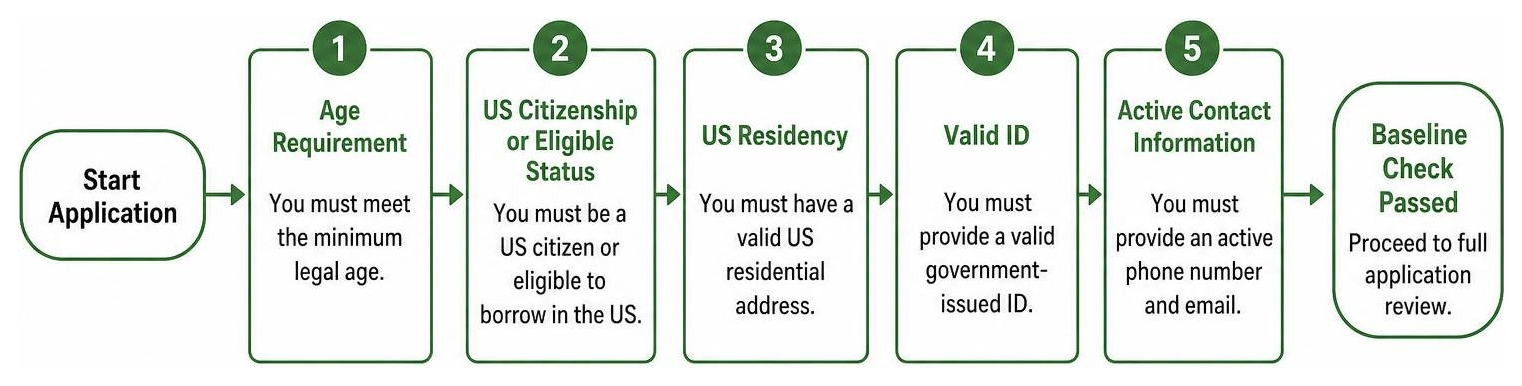
Age and Citizenship Standards for Who is Eligible for a Personal Loan in the US
To enter into a legally binding loan contract in the United States, you must be of legal age. In almost every US state, the legal age of majority is 18 years old (though Alabama requires borrowers to be 19, and Mississippi sets the age threshold at 21).
In addition to age, lenders maintain strict residency and legal status standards:
- US Citizens and Permanent Residents: Most national institutions require you to be a US citizen or hold a lawful Permanent Resident Card (Green Card).
- Tax Identification Numbers: You must possess a valid Social Security Number (SSN) or, with select online lenders, an Individual Taxpayer Identification Number (ITIN).
- Physical Address: Borrowers must reside within one of the 50 US states or Washington, D.C. (Many US lenders explicitly exclude applicants residing in US territories such as Puerto Rico or Guam).
- Active Bank Account: You must maintain a verifiable US checking or savings account in your name. Lenders use this account to deposit your loan proceeds and set up automatic monthly payment deductions.
Income and Employment Guidelines for Who is Eligible for a Personal Loan in the US
Lenders require proof that you have enough cash flow to handle a new monthly installment payment without defaulting on existing expenses. Understanding Personal Loan Eligibility Requirements USA (2026) means recognizing how financial institutions verify your earning stability.
While a few financial institutions require a specific minimum annual income threshold — such as $25,000 per year — most lenders evaluate your overall income relative to your existing monthly debts.
Key income and employment benchmarks include:
- Steady Job History: Most financial institutions look for at least two consecutive years of stable employment or continuous income in the same industry.
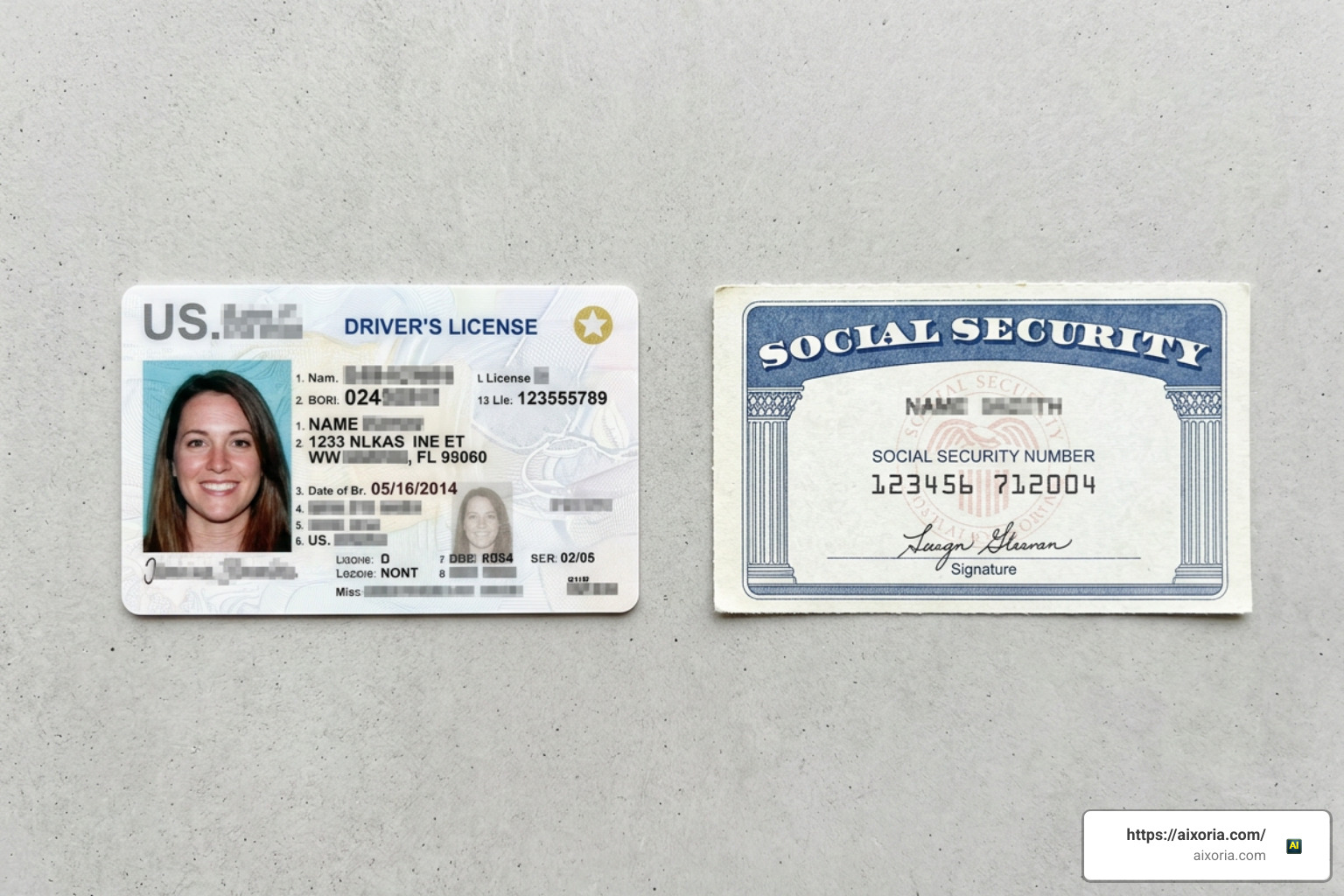
- Verifiable Cash Flow: You must provide third-party documentation confirming your earnings. Standard income documents include pay stubs, W-2 forms, 1099s, and recent bank statements.
- Self-Employed Applicants: If you work as an independent contractor, freelancer, or small business owner, you can qualify by submitting 1 to 2 years of personal and business tax returns, along with profit-and-loss (P&L) statements.
- Alternative Income Sources: You do not necessarily need traditional W-2 salary income. Lenders regularly approve borrowers whose income stems from retirement pensions, Social Security benefits, disability payments, alimony, child support, or investment dividends.
Credit Score Thresholds and Debt-to-Income Ratios
Once you pass the baseline criteria, underwriters move to the core factors driving your loan decision: your credit history and debt load. These two elements reveal whether you have historically paid debts on time and whether you have room in your monthly budget for another payment.
Lenders evaluate your credit profile using your FICO score and your Debt-to-Income (DTI) ratio. According to detailed industry research in Personal Loan Statistics | Fact-Checked 2026, consumers with credit scores above 720 are three times more likely to be approved than those with scores under 620.
| Credit Score Tier | FICO Score Range | Expected APR Range | Approval Probability | Lender Preference |
|---|---|---|---|---|
| Exceptional | 800 – 850 | 6.5% – 10.9% | Very High | All financial institutions |
| Very Good | 740 – 799 | 11.0% – 15.9% | High | All financial institutions |
| Good | 670 – 739 | 16.0% – 21.9% | Moderate to High | Traditional banks & credit unions |
| Fair | 580 – 669 | 22.0% – 29.9% | Moderate | Credit unions & online lenders |
| Poor / Subprime | 300 – 579 | 30.0% – 35.9%+ | Low | Specialized bad-credit lenders |
Beyond your credit score, lenders assess the length of your credit history. Most institutions like to see at least 2 to 3 years of established credit lines (such as credit cards or auto loans) to ensure you have a proven track record.
Your Debt-to-Income (DTI) ratio measures how much of your gross monthly income goes toward existing recurring debt obligations. You can calculate your DTI by dividing your total monthly debt payments (rent/mortgage, minimum credit card payments, student loans, auto loans) by your pre-tax gross monthly income.
For instance, if your gross monthly income is $5,000 and your monthly debt payments total $1,500, your DTI ratio is 30%.
Lenders categorize DTI risk tiers as follows:
- Under 20% (Excellent): Indicates significant discretionary income and lower default risk.
- 20% to 35% (Strong): Preferred target for most personal loan approvals.
- 36% to 40% (Acceptable): Upper threshold for most major institutions; review Personal Loan Requirements & Eligibility | Citi.com to see how conservative lenders handle this boundary.
- Above 43% (High Risk): Often triggers an immediate application denial unless balanced by an exceptionally high credit score or substantial cash reserves.
To explore your approval odds without damaging your credit profile, make sure to take advantage of soft credit pulls. A soft inquiry allows lenders to preview your credit profile and offer preliminary rates without leaving a hard inquiry mark on your credit report.
Evaluating Lender Types: Banks, Credit Unions, and Online Lenders
Not all lending institutions treat qualification criteria the same way. The answer to Who is eligible for a personal loan in the US? often depends heavily on the specific type of financial institution you choose.
Understanding the difference between traditional banks, credit unions, and online fintech platforms allows you to apply where your approval chances are highest.

1. Traditional National Banks
Traditional brick-and-mortar banks maintain the strictest underwriting standards. They cater primarily to prime borrowers with solid incomes and established credit histories.
- Credit Score Focus: Typically require a minimum score of 670 or higher.
- Customer Relationship Policies: Many traditional banks require applicants to hold an active checking or savings account with them for at least 12 months prior to applying.
- Loan Terms & Fees: They often offer competitive interest rates and high borrowing caps (up to $50,000 or $100,000), but processing times can range from 1 to 7 business days.
2. Federal and Local Credit Unions
Credit unions are member-owned, non-profit institutions that prioritize overall financial character over automated scoring algorithms.
- Credit Score Focus: Often approve fair-credit applicants with scores starting around 620.
- Membership Criteria: You must qualify for credit union membership based on geographic location, employer affiliation, or charitable association.
- APR Caps: Federal credit unions operate under statutory interest rate caps (historically capped at 18% APR), making them significantly cheaper for fair-credit borrowers compared to online platforms.
3. Online Lenders and Fintech Platforms
Fintech lenders use automated underwriting algorithms to approve personal loans rapidly, capturing roughly 47% of the US personal loan market share.
- Credit Score Focus: Offer flexible qualification criteria, accepting credit scores starting around 580 to 600.
- Income Verification: They look closely at real-time cash flow and banking activity rather than relying strictly on legacy credit scores.
- Speed: Processing is fast, with approvals delivered in minutes and funding dispatched within 24 to 48 hours. However, APRs for subprime applicants can reach up to 35.99%.
Essential Documentation and Qualifying with Bad Credit
Applying for a personal loan requires gathering key paperwork in advance. Missing documents or typos on an online application can delay funding or cause an automated rejection. Reviewing How to Get a Personal Loan: A Step-by-Step Guide will give you a clear sense of how to structure your submission properly.
Required Documentation Checklist
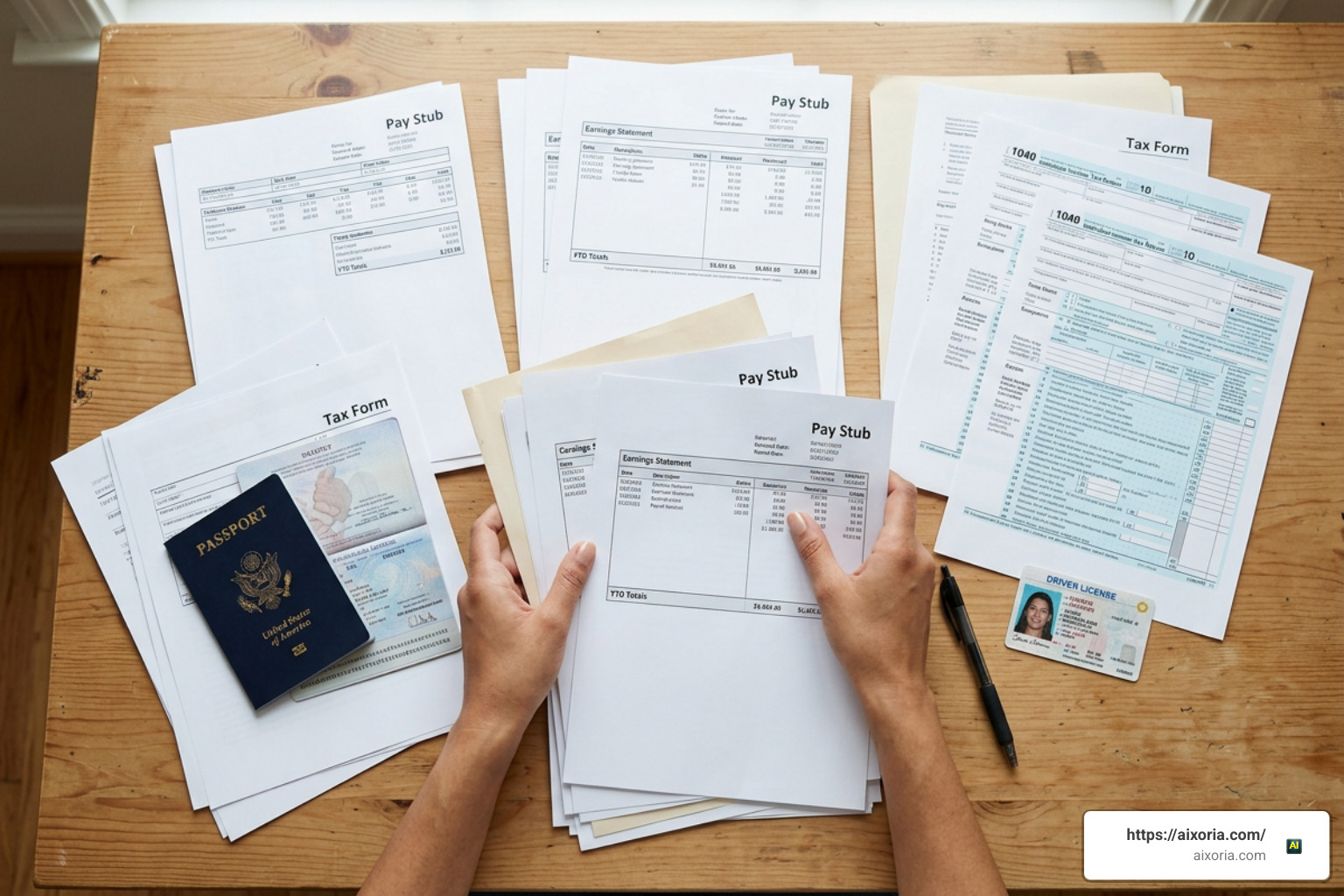
- Proof of Identity: Government-issued photo ID (Driver’s License, US Passport, or State ID) and SSN/ITIN card.
- Proof of Address: Recent utility bill, signed lease agreement, or mortgage statement dated within 60 days.
- Proof of Income: Two recent pay stubs, W-2 forms, or consecutive monthly bank statements showing direct deposits. Self-employed applicants need 1 to 2 years of tax returns.
- Bank Account Details: Active checking account routing number and account number for electronic fund disbursement.
How to Qualify if You Have Bad or Fair Credit
If your credit score falls below 620, securing an unsecured personal loan can be challenging, but it is not impossible. Here are three effective strategies to improve your qualification odds:
- Apply with a Co-Signer or Co-Borrower: Adding a co-signer who has excellent credit and a stable income significantly reduces lender risk. Research reveals that applying with a qualified co-signer reduces interest rates by an average of 5%. A co-borrower shares joint ownership of the funds, whereas a co-signer simply guarantees repayment if you default.
- Opt for a Secured Personal Loan: If you cannot qualify for an unsecured loan, offer collateral to secure the debt. Secured personal loans accept savings accounts, certificates of deposit (CDs), or vehicle titles as backing. If you fail to repay, the lender can seize the asset, which makes them far more willing to approve lower credit scores.
- Request a Smaller Loan Amount: Borrowing less money reduces the lender’s overall risk exposure and lowers your monthly payment, making it easier to meet strict DTI limits.
If your application is declined, federal law offers valuable protection. Under the Equal Credit Opportunity Act (ECOA), lenders are legally required to send you an Adverse Action Notice within 30 days. This notice explicitly explains why your application was rejected—giving you a roadmap to fix errors, lower your debt, or rebuild your credit score before applying again.
Frequently Asked Questions About Personal Loan Eligibility
What is the most common reason for personal loan denial?
The single most common reason for personal loan application denial is a high Debt-to-Income (DTI) ratio. Even if you have a respectable credit score, if your monthly debt payments consume more than 40% to 43% of your gross income, lenders will conclude that you lack the financial cushion to handle an additional monthly payment.
Other frequent rejection causes include:
- A poor credit score or recent delinquencies (payments 30+ days past due).
- Insufficient or unverified monthly income.
- Limited credit history (thin credit file with under 2 years of activity).
- Typos or inconsistent personal details on the application form.
Can non-US citizens or visa holders qualify for a personal loan?
Yes, non-US citizens can qualify for a personal loan, but eligibility rules are stricter. Permanent residents holding a valid Green Card qualify with almost all major US financial institutions.
For non-permanent residents and temporary visa holders (such as H-1B, L-1, or O-1 visa holders):
- You must hold a valid Social Security Number (SSN).
- Your loan repayment term typically cannot exceed the remaining legal expiration date listed on your visa.
- Select specialized online lenders cater specifically to visa holders, provided you demonstrate steady employment with a US firm and maintain a US bank account.
Check the explicit guidelines detailed in Frequently Asked Questions | American Express US to see how card issuers manage residency eligibility.
How does pre-qualification affect your credit score?
Pre-qualification uses a soft credit inquiry, which does not affect your credit score in any way. Soft pulls allow you to shop around with multiple lenders, review estimated interest rates, and check potential loan amounts without leaving a mark on your credit report.
However, once you select an offer and formally submit a full loan application, the lender performs a hard credit inquiry. A hard credit pull allows the underwriting team to pull your full official credit report. This hard inquiry typically causes a temporary credit score drop of 3 to 5 points, which usually recovers within a few months of making on-time loan payments.
Conclusion
Understanding Who is eligible for a personal loan in the US? comes down to recognizing that lenders evaluate your financial profile as a complete package. While basic requirements like being 18 years old, maintaining US residency, and holding an active bank account are non-negotiable baseline rules, factors like credit score, income, and DTI ratio offer room for balancing trade-offs.
Before submitting a formal loan application:
- Review your credit report across major credit bureaus and dispute any errors.
- Calculate your DTI ratio and pay down high-interest credit card debt to bring it below 36%.
- Gather income verification documents, including pay stubs and tax returns.
- Use soft credit pre-qualification tools to compare real rates without hurting your score.
By preparing your documentation and choosing the right lender type for your financial background, you can secure the personal loan you need on terms you can comfortably afford.
Looking for more insights into automated financial tech tools, credit assessment algorithms, and smart personal finance solutions? Discover the latest AI updates and financial tech tools at Aixoria to stay ahead of the evolving financial landscape!