Finance automation has moved far beyond basic bookkeeping. In 2026, it’s about building intelligent, scalable systems that handle invoicing, expense tracking, reporting, compliance, and forecasting—with minimal manual input.
For U.S.-based businesses, the stakes are even higher. Finance teams need tools that support accuracy, compliance (GAAP, tax standards), integrations with existing systems, and increasingly, AI-driven decision-making.
The right finance automation software doesn’t just save time—it improves financial visibility, reduces errors, and enables faster, data-driven decisions across the organization.
This guide covers the 9 best finance automation software tools in 2026, with a focus on real-world usability, automation depth, AI capabilities, and scalability.
Table of Contents
What Makes the Best Finance Automation Software?
Not all finance tools are truly “automated.” The best platforms go beyond simple tracking and deliver:
End-to-end automation
From invoice creation to payment reconciliation and reporting, processes should run with minimal manual intervention.
AI-powered insights
Modern tools use AI to categorize expenses, detect anomalies, forecast cash flow, and recommend actions.
Integration with financial ecosystems
Seamless connectivity with banks, payroll systems, CRMs, ERPs, and payment gateways is essential.
Compliance and security
SOC 2, encryption, audit trails, and tax compliance are non-negotiable for U.S. businesses.
Scalability
The tool should grow with your business—from startup-level operations to enterprise workflows.
READ MORE – Finance Automation Software Tools in 2026
The Best Finance Automation Software Tools at a Glance
| Tool | Best For | Key Strength | Pricing |
|---|---|---|---|
| QuickBooks | Small to mid-sized businesses | Accounting + automation | From $30/month |
| Xero | Cloud accounting | Real-time collaboration | From $15/month |
| NetSuite | Enterprises | Full ERP + finance automation | Custom pricing |
| FreshBooks | Freelancers & agencies | Invoicing + simplicity | From $17/month |
| Zoho Books | Budget-friendly automation | Strong integrations | From $15/month |
| Ramp | Expense management | AI-powered spend control | Free (core features) |
| Brex | Corporate finance | Cards + automation | Free + paid tiers |
| Tipalti | Accounts payable automation | Global payments + compliance | Custom pricing |
| Sage Intacct | Financial management | Advanced reporting + AI | Custom pricing |
Best Finance Automation Software for Small Businesses
QuickBooks

QuickBooks remains one of the most widely used finance automation platforms in the U.S., especially for small and mid-sized businesses.
It automates core financial tasks such as invoicing, expense tracking, bank reconciliation, and tax calculations. The platform connects directly with bank accounts and credit cards, automatically categorizing transactions and reducing manual data entry.
AI features in QuickBooks have improved significantly. The system can now suggest expense categories, detect unusual transactions, and generate financial reports with minimal input. It also provides cash flow projections based on historical data, helping business owners make informed decisions.
QuickBooks integrates with a large ecosystem of third-party apps, making it adaptable for different industries and workflows.
Pricing: Starts from $30/month
Pros:
- Strong automation for core accounting
- Large integration ecosystem
- Easy to use for beginners
Cons:
- Can become expensive with add-ons
- Limited advanced customization for larger enterprises
Best Cloud-Based Finance Automation Software
Xero
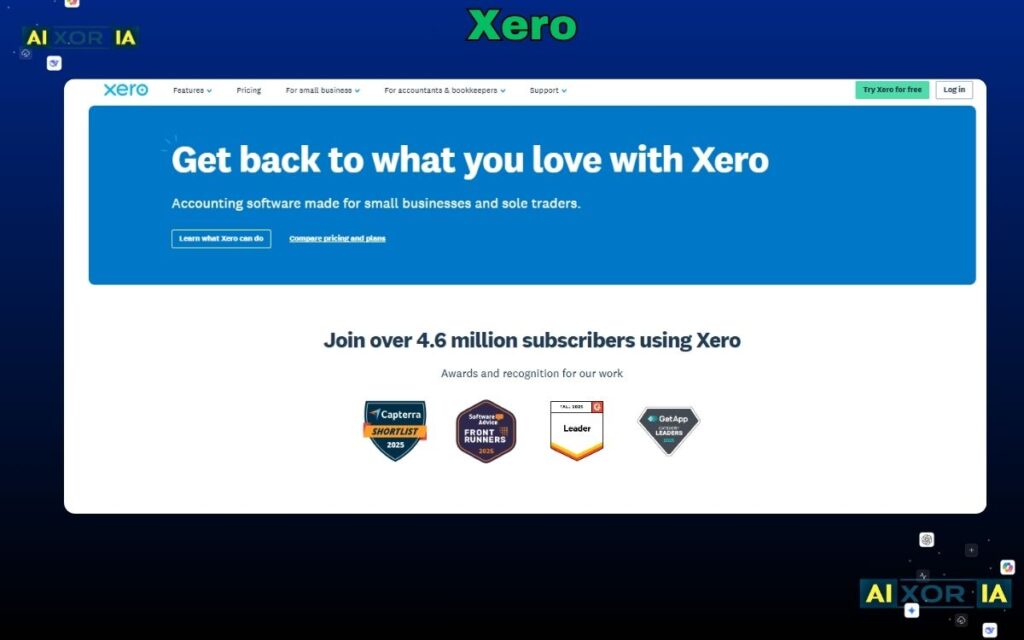
Xero is a cloud-first accounting platform designed for real-time financial visibility and collaboration.
It automates invoicing, payroll, bank reconciliation, and expense tracking while allowing multiple users to work simultaneously. This makes it ideal for distributed teams and businesses working with external accountants.
Xero’s AI capabilities focus on automation and accuracy. It can reconcile transactions automatically, suggest matches, and flag inconsistencies. The platform also provides predictive insights for cash flow and financial planning.
Its clean interface and strong reporting tools make it a favorite among modern businesses.
Pricing: Starts from $15/month
Pros:
- Excellent real-time collaboration
- Clean, user-friendly interface
- Strong automation features
Cons:
- Limited advanced reporting compared to enterprise tools
- Payroll features vary by region
Best Enterprise Finance Automation Software
NetSuite

NetSuite is a full-scale enterprise resource planning (ERP) platform with powerful finance automation capabilities.
It handles everything from general ledger and accounts payable/receivable to financial planning and compliance. The platform is designed for large organizations that require centralized control over complex financial operations.
NetSuite uses AI and machine learning to automate financial close processes, detect anomalies, and generate forecasts. It also provides real-time dashboards and advanced analytics, enabling finance teams to monitor performance at scale.
Because of its depth, NetSuite often requires implementation support and technical expertise.
Pricing: Custom pricing
Pros:
- Comprehensive financial management
- Advanced AI-driven insights
- Scalable for large enterprises
Cons:
- Expensive
- Complex setup and learning curve
Best Finance Automation Software for Freelancers
FreshBooks
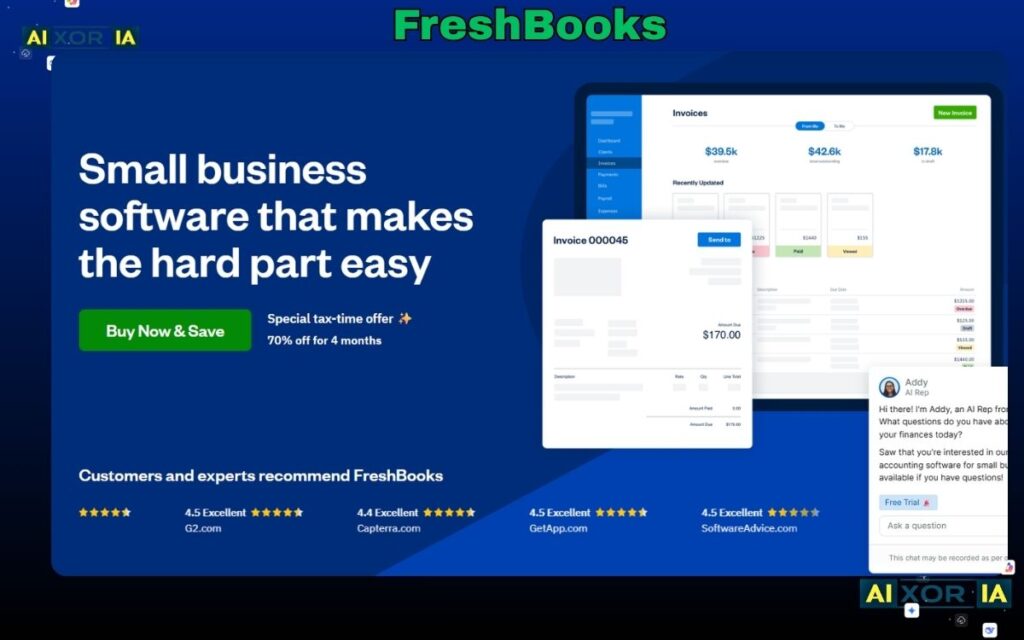
FreshBooks is designed for freelancers and service-based businesses that need simple, effective financial automation.
It focuses on invoicing, time tracking, and expense management. Users can automate recurring invoices, payment reminders, and expense categorization.
AI features in FreshBooks help streamline workflows by automatically organizing expenses and generating reports. While not as advanced as enterprise tools, it offers enough automation to reduce administrative work significantly.
Pricing: Starts from $17/month
Pros:
- Simple and intuitive
- Strong invoicing features
- Ideal for freelancers
Cons:
- Limited scalability
- Fewer advanced features
Best Budget-Friendly Finance Automation Software
Zoho Books
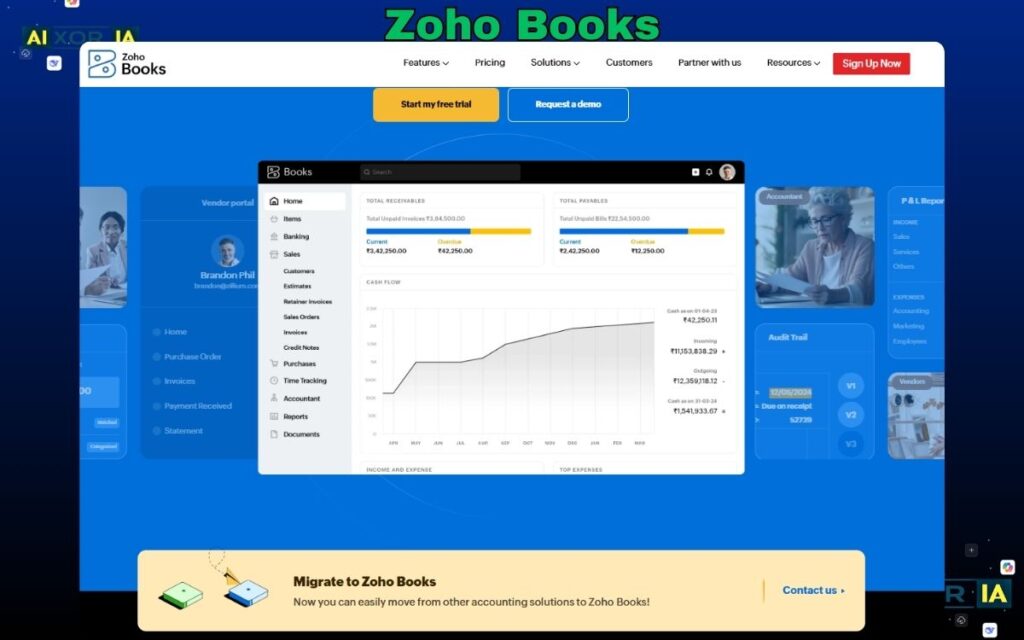
Zoho Books offers a powerful set of finance automation features at a competitive price point.
It automates invoicing, tax calculations, expense tracking, and bank reconciliation. The platform integrates seamlessly with the broader Zoho ecosystem, making it a strong choice for businesses already using Zoho products.
Zoho Books also includes AI-driven features such as transaction categorization and anomaly detection. Its reporting capabilities are robust, especially considering its price.
Pricing: Starts from $15/month
Pros:
- Affordable pricing
- Strong automation features
- Good integration ecosystem
Cons:
- Interface can feel less intuitive
- Limited third-party integrations compared to competitors
Best AI-Powered Expense Management Software
Ramp
Ramp is built specifically for modern finance teams that want to control and optimize spending through automation.
It offers corporate cards, expense tracking, and automated approval workflows. What sets Ramp apart is its deep focus on AI-driven insights.
Ramp analyzes spending patterns in real time, identifies cost-saving opportunities, and flags unusual transactions. It can also automate expense categorization, enforce company policies, and generate detailed reports.
For U.S. businesses, Ramp’s automation significantly reduces manual expense management while improving financial oversight.
Pricing: Free for core features
Pros:
- Strong AI-powered insights
- Real-time spend visibility
- Free core plan
Cons:
- Limited international support
- Focused mainly on expense management
Best Finance Automation Software for Corporate Cards
Brex

Brex combines corporate cards with finance automation, making it ideal for startups and growing companies.
It automates expense tracking, receipt collection, and approval workflows. Transactions are categorized automatically, and finance teams can enforce spending policies in real time.
Brex also uses AI to analyze spending behavior, detect anomalies, and provide recommendations for cost optimization. Its integration with accounting tools ensures seamless financial reporting.
Pricing: Free + paid tiers
Pros:
- Integrated cards and automation
- Real-time expense tracking
- Strong startup focus
Cons:
- Limited features for large enterprises
- U.S.-centric
Best Accounts Payable Automation Software
Tipalti
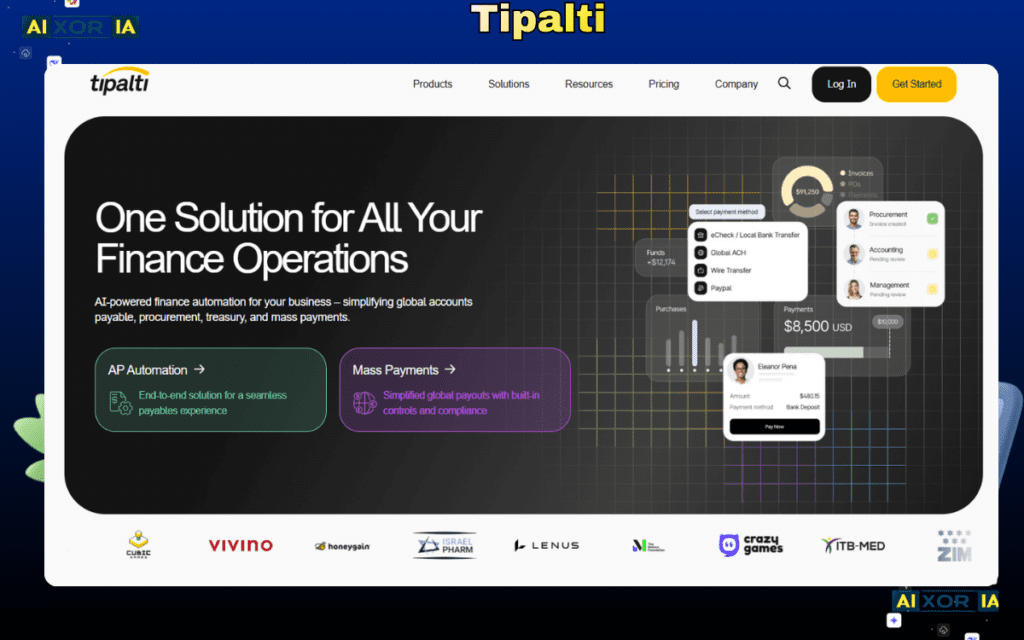
Tipalti specializes in accounts payable automation and global payment management.
It automates invoice processing, payment approvals, and compliance checks. The platform supports multiple payment methods and currencies, making it ideal for businesses operating internationally.
Tipalti’s AI capabilities help detect fraud, ensure compliance, and streamline workflows. It also reduces manual errors by automating data entry and reconciliation.
Pricing: Custom pricing
Pros:
- Strong global payment support
- Advanced compliance features
- Scalable for enterprises
Cons:
- Higher cost
- Requires implementation effort
Best Advanced Financial Management Platform
Sage Intacct
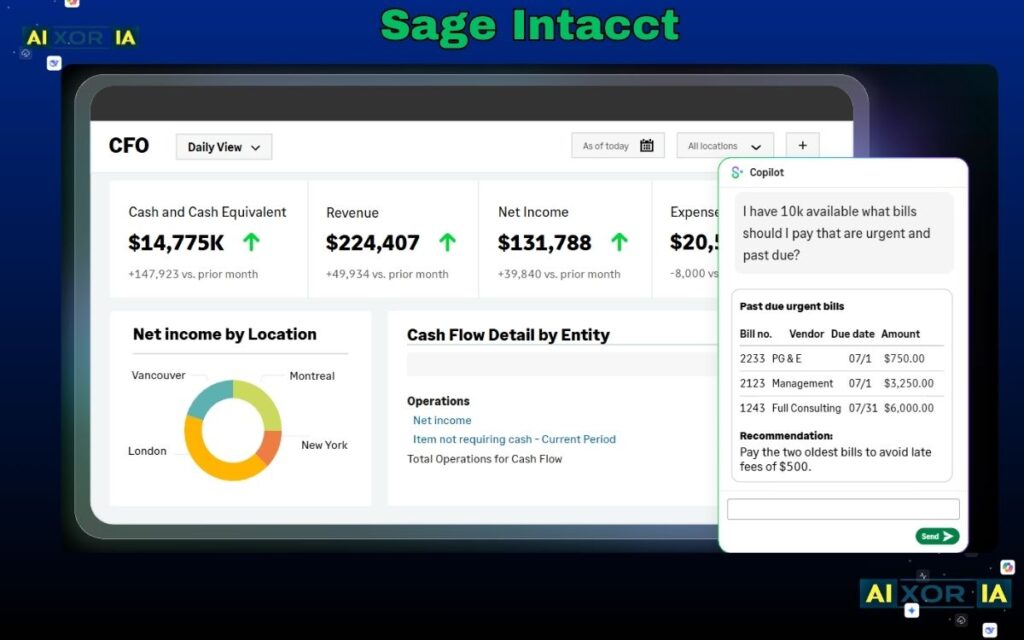
Sage Intacct is a cloud-based financial management platform designed for growing and mid-sized enterprises.
It offers advanced automation for core accounting processes, along with powerful reporting and analytics tools. The platform is particularly strong in financial consolidation and multi-entity management.
Sage Intacct uses AI to automate workflows, detect anomalies, and provide predictive insights. Its dashboards give finance teams real-time visibility into performance.
Pricing: Custom pricing
Pros:
- Advanced reporting and analytics
- Strong automation capabilities
- Scalable architecture
Cons:
- Expensive
- Requires training and setup
How to Choose the Right Finance Automation Software
Your ideal tool depends on your business needs:
- Small businesses → QuickBooks or Xero
- Freelancers → FreshBooks
- Budget-conscious teams → Zoho Books
- Enterprises → NetSuite or Sage Intacct
- Expense-focused automation → Ramp or Brex
- Global payments → Tipalti
Many organizations combine tools—for example, using Ramp for expenses and QuickBooks for accounting.
The Role of AI in Finance Automation (2026)
AI is now central to finance automation.
Modern platforms can:
- Automatically categorize transactions
- Detect fraud and anomalies
- Predict cash flow
- Recommend cost-saving actions
- Generate financial reports
This reduces manual work and improves accuracy, allowing finance teams to focus on strategy instead of routine tasks.
Final Thoughts
Finance automation is no longer optional—it’s a competitive advantage.
The best finance automation software tools in 2026 combine automation, AI, integrations, and scalability to help businesses operate more efficiently and make better financial decisions.
3 thoughts on “The 9 Best Finance Automation Software Tools in 2026”