Why the Right Email Marketing Tools for CRM Software Make or Break Your Campaigns
Scr0ll d0wn to D0VVNL0AD
If you’re trying to find the 7 best email marketing tools for CRM software, here’s the quick answer:
- HubSpot CRM – Best all-in-one for small to mid-size businesses
- ActiveCampaign – Best for advanced automation and deliverability
- Zoho CRM – Best value for budget-conscious teams
- Brevo – Best for unlimited contacts on a tight budget
- MailerLite – Best for beginners and ease of use
- GetResponse – Best for list growth and conversion funnels
- Kit – Best for creators and newsletter-based businesses
You start with a CRM to track your contacts. Then you add an email tool to reach them. Then you need a third app to connect the two. Then you realize your sales team can’t see who opened what — and your email tool has no idea who’s close to buying.
That’s the tool sprawl trap. And it wastes a lot of time.
Teams using separate CRM and email platforms spend significant hours every week just syncing data between them — manually. Meanwhile, nearly 1 in 6 emails never even reaches the inbox, so if your tools aren’t working together, your chances of cutting through drop fast.
The good news? Several platforms now combine CRM and email marketing into one connected system. That means your contact data, email behavior, and sales pipeline all live in the same place — and your emails can actually react to what customers do.
This guide walks through the seven best options, what makes each one worth considering, and how to pick the right fit for your business.
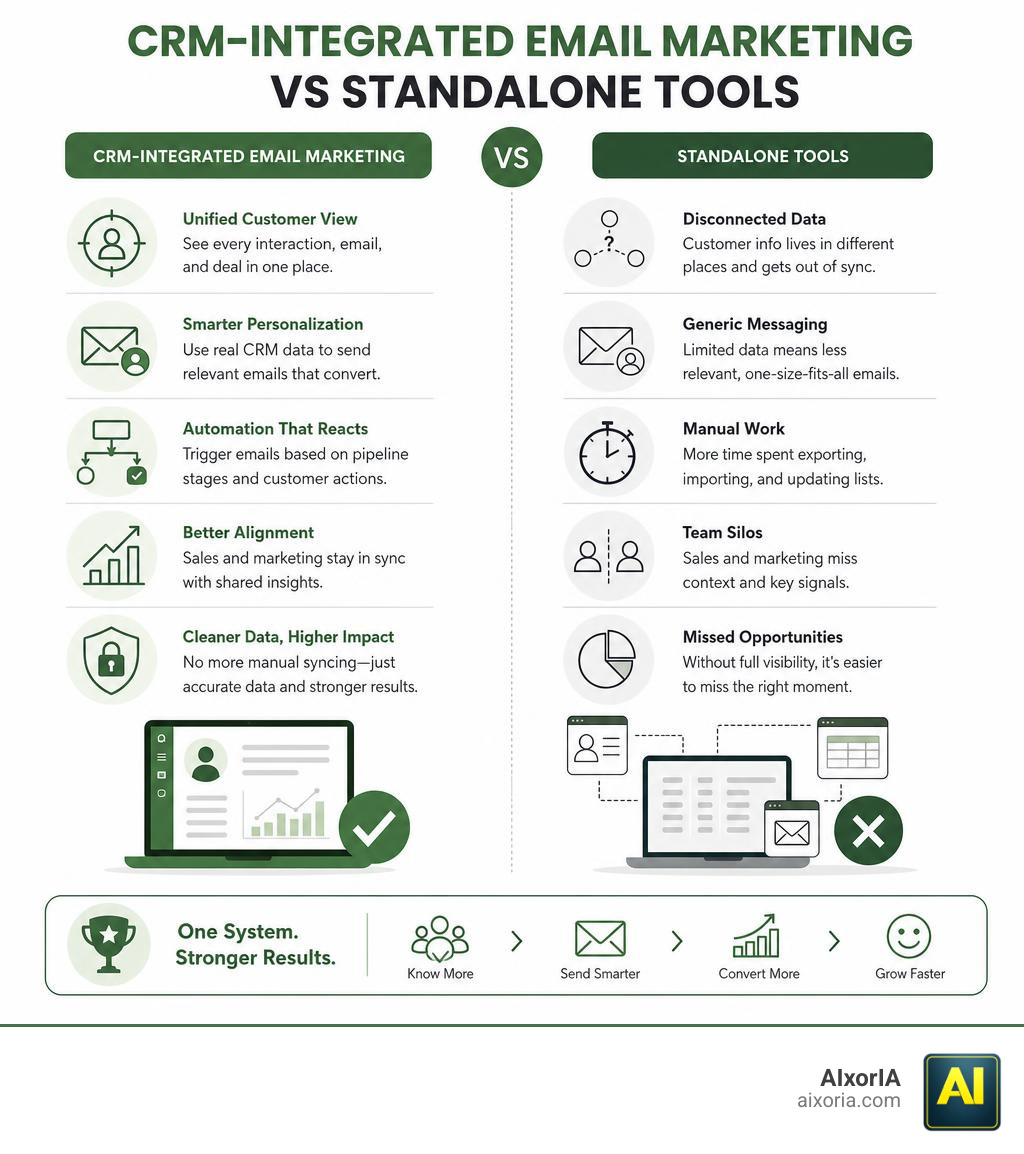
Understanding CRM Email Marketing vs. Standalone Tools

To get the most out of your campaigns in 2026, it helps to understand the difference between standalone email tools and unified CRM email marketing platforms.
Standalone email marketing tools are designed to send campaigns to a list of subscribers. While they are great for newsletters, they often suffer from data silos. They don’t know if a subscriber is currently talking to a sales representative, if they have an active deal open, or if they are a high-value customer with a pending support ticket.
When you use a dedicated 11 Best CRM and Email Marketing Software in 2026 | Webtopping , you get a unified customer profile. Every email sent, opened, or clicked is logged directly onto the contact’s timeline alongside their purchase history and sales interactions. This eliminates the need for manual data syncing and ensures your marketing and sales teams are always looking at the exact same data.
Why You Need the 7 Best Email Marketing Tools for CRM Software
Integrating your CRM with your email marketing brings several massive advantages:
- Automated Follow-ups: Trigger personalized follow-up emails immediately after a sales call or when a prospect moves to a new pipeline stage.
- Customer Journey Mapping: Track customer interactions from their very first website visit to their latest purchase, and tailor your messaging to their exact lifecycle stage.
- Sales Pipeline Visibility: Allow sales reps to see which marketing resources their leads are engaging with so they can make warmer, more relevant sales calls.
- Time-saving Automation: Stop exporting CSV files back and forth. Let your tools handle the data transfer automatically so you can focus on strategy.
Key Features to Look For in the 7 Best Email Marketing Tools for CRM Software
When evaluating tools, keep these essential features in mind:
- Two-way Sync: Information should flow instantly in both directions. If a contact unsubscribes from an email, your CRM must update their status immediately.
- Contact Segmentation: The ability to group contacts using both email engagement (e.g., clicked a link) and CRM data (e.g., deal size or industry).
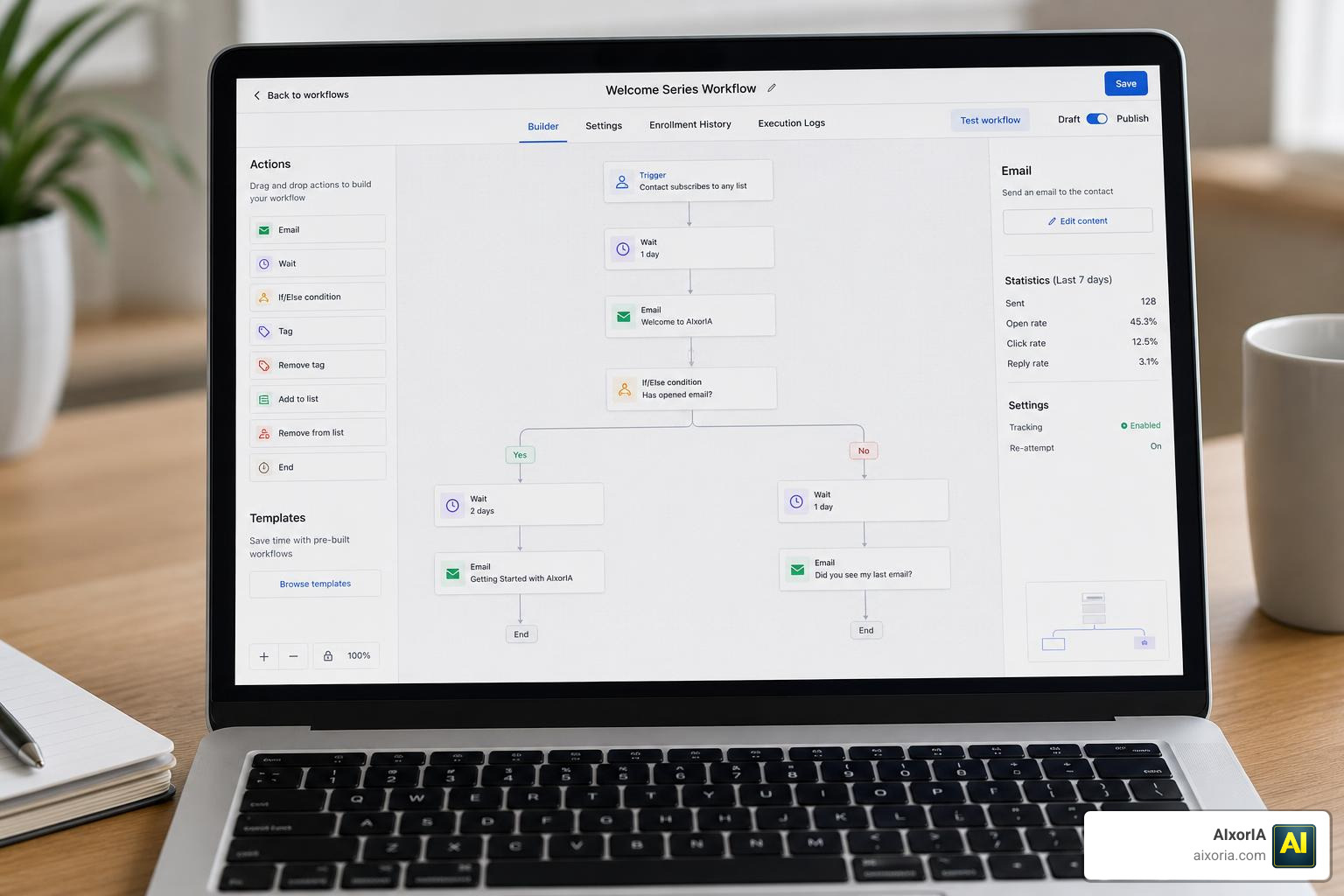
- Visual Automation Builder: An intuitive, drag-and-drop canvas to design automated email paths based on customer behavior.
- Dynamic Personalization: Inserting personalized fields beyond just their first name, such as their last purchased product or their dedicated account manager’s name.
- Deliverability Tools: Built-in features like SPF, DKIM, and DMARC setup support to ensure your emails actually reach the inbox.
Evaluating the 7 Best Email Marketing Tools for CRM Software
To help you find the perfect match, we have analyzed the top options based on their pricing, core strengths, and how well they integrate with CRM systems. You can read more about these platform dynamics in this deep-dive on the Best CRM With Email Marketing (2026): HubSpot, ActiveCampaign, Zoho | SoftwareInspect .
| Tool | Starting Price (Approx.) | Best For | CRM Integration Depth |
|---|---|---|---|
| HubSpot CRM | Free / Paid from $15–$20/mo | All-in-one operations | Native / Built-in |
| ActiveCampaign | Paid from $15–$29/mo | Advanced automation | High (Built-in CRM available) |
| Zoho CRM | Free / Paid from $14/mo | Customization & value | Native (via Zoho Ecosystem) |
| Brevo | Free / Paid from $9/mo | Budget-conscious scaling | Moderate (Built-in CRM) |
| MailerLite | Free / Paid from $10/mo | Beginners & simplicity | Moderate (Integrates via API) |
| GetResponse | Free / Paid from $19/mo | Funnel building & webinars | Moderate (Good integrations) |
| Kit | Free / Paid from $15/mo | Creators & newsletters | Moderate (Excellent subscriber tags) |
1. HubSpot CRM
HubSpot is the gold standard for an all-in-one platform where marketing, sales, and service tools share a single database. When you send an email through HubSpot, it updates the unified contact timeline instantly, giving your sales team complete context.
- Key Features: Drag-and-drop email editor, landing page builder, built-in forms, and automated lead capture.
- CRM Integration: Flawless. Because the CRM and email tools are built on the same foundation, there is zero syncing lag.
- Pricing: Offers a generous free tier (up to 2,000 marketing emails per month with HubSpot branding). Paid Starter plans begin around $15–$20/month, though professional and enterprise tiers scale up quickly for larger teams.
2. ActiveCampaign
If you want to build highly sophisticated, behavioral-driven automation paths, ActiveCampaign is incredibly hard to beat. It combines email marketing with a built-in sales CRM that features visual pipeline management.
- Key Features: Advanced automation builder, behavioral triggers, contact lead scoring, and predictive sending.
- CRM Integration: Very high. You can trigger automated email sequences based on changes in deal stage, pipeline status, or custom CRM fields.
- Pricing: Starts at around $15 to $29/month for 1,000 contacts, making it a highly competitive choice for growing businesses that need enterprise-grade automation.
3. Zoho CRM
Zoho CRM is part of the massive Zoho ecosystem. When paired with Zoho Campaigns, it provides a highly customizable and deeply integrated marketing and sales suite at a fraction of the cost of other enterprise tools.
- Key Features: Deep customization, multi-channel outreach (email, SMS, social), and robust reporting.
- CRM Integration: Excellent native integration. It syncs contacts, opt-outs, and campaign results back to your central CRM records effortlessly.
- Pricing: Zoho CRM offers a free tier for up to 3 users. Paid plans start at $14/user/month, offering some of the best overall value on the market.
4. Brevo
Formerly known as Sendinblue, Brevo is an incredibly budget-friendly option that charges based on the number of emails you send rather than the size of your contact list. It features a built-in sales CRM to keep your operations organized.
- Key Features: Transactional email API, SMS marketing, WhatsApp campaigns, and a simple deal pipeline.
- CRM Integration: Moderate. The built-in CRM is straightforward and easy to use, making it ideal for small businesses that don’t need complex enterprise pipelines.
- Pricing: Brevo’s free plan allows you to store unlimited contacts and send up to 300 emails per day. Paid plans start at just $9/month, making it highly scalable.
5. MailerLite
MailerLite is widely recognized as the easiest tool for beginners. If you want to get a professional campaign up and running in an afternoon without a steep learning curve, this is your best option.
- Key Features: Intuitive drag-and-drop editor, clean interface, landing pages, and excellent customer support.
- CRM Integration: While MailerLite does not have a heavy built-in sales CRM, it integrates beautifully with popular external CRMs like HubSpot, Zoho, and Pipedrive.
- Pricing: Free for up to 500 subscribers and 12,000 emails per month. Paid plans start at an affordable $10/month.
6. GetResponse
GetResponse has evolved from a traditional email tool into a complete inbound marketing platform. It is particularly strong for businesses that rely on webinars and structured conversion funnels to close deals.
- Key Features: AI email generator, webinar hosting, pre-built conversion funnels, and automated web push notifications.
- CRM Integration: Good. It offers native integrations with major CRM platforms, allowing you to sync leads captured from webinars and landing pages directly into your sales pipeline.
- Pricing: Offers a free trial. Paid plans start at around $19/month and include helpful list-building tools.
7. Kit
Formerly known as ConvertKit, Kit is designed specifically for the creator economy, including bloggers, podcasters, authors, and digital product sellers. It focuses heavily on simple subscriber management and paid newsletters.
- Key Features: Creator network, visual automation builders, paid newsletter subscriptions, and high deliverability.
- CRM Integration: It uses a flexible system of tags and custom fields to act as a lightweight CRM, making it incredibly easy to manage different audience segments.
- Pricing: Free for up to 1,000 subscribers with basic features. Paid creator plans start at $15/month.
How to Measure the Success of Your Integrated Campaigns
Once your CRM and email marketing tools are talking to each other, you need to monitor the right metrics to ensure your strategy is working. Keep a close eye on these key performance indicators (KPIs):
- Open Rate: The industry average is around 21%. If your open rate drops below 15%, it usually points to unengaging subject lines or a deliverability issue.
- Click-Through Rate (CTR): For B2B campaigns, a healthy CTR sits around 2–3%. This measures how compelling your email content and call-to-action buttons actually are.
- Unsubscribe Rate: Keep this below 0.5% per campaign. Anything higher suggests your content is not aligned with what that specific audience segment expected to receive.
- Hard Bounce Rate: Keep this strictly below 2%. High bounce rates (invalid email addresses) can permanently damage your sender reputation with inbox providers like Gmail and Outlook.
- Pipeline Impact: Because your tools are integrated, you can track exactly how many closed-won deals started as a subscriber on your email list. This is the ultimate metric for measuring your return on investment (ROI).
For deeper strategic insights on selecting and configuring these tools, you can explore the 13 Best CRM with Email Marketing Reviewed (2026) – Sense Central or check out this guide on finding an Email Automation Tool With CRM Built In Ranked .
Frequently Asked Questions about CRM Email Marketing
What is the difference between sales sequences and email marketing?
Sales sequences are typically highly personalized, one-to-one or small-batch emails sent directly from a sales rep’s inbox (like Gmail or Outlook) to nurture specific deals. Email marketing involves sending bulk, campaign-based messages (like newsletters, promotions, and product updates) to broader segments of subscribers, requiring clear unsubscribe options to comply with email regulations.
Can a small business use a free CRM for email marketing?
Yes, absolutely! Platforms like HubSpot and Brevo offer excellent free tiers. However, keep in mind that free plans usually come with limitations, such as restricted monthly send volumes, basic automation features, and mandatory platform branding on your emails.
How does CRM integration improve email deliverability?
When your email tool is connected to your CRM, you can easily clean your list by filtering out unengaged contacts who haven’t opened an email in months. This keeps your engagement rates high, which signals to inbox providers that you are a trustworthy sender, ultimately keeping your emails out of the spam folder.
Conclusion
Choosing the right marketing automation strategy is all about finding the balance between power, simplicity, and budget. By selecting one of the 7 best email marketing tools for CRM software, you will eliminate manual data entry, align your sales and marketing teams, and deliver highly personalized experiences that your customers will love.
If you are feeling overwhelmed by the technical setup, API integrations, or automation design, we are here to help. At AIxorIA, we provide custom AI solutions, hands-on tool training workshops, step-by-step tutorials, and comprehensive performance audits to help your business run smoothly.
Ready to streamline your systems and scale your marketing? Empower your business with AIxorIA today!