Synthesia vs. HeyGen for AI Avatar Videos: Which Should You Choose?
Scr0ll d0wn to D0VVNL0AD
Choose Synthesia for structured training and team-wide video programs. Choose HeyGen for short marketing videos, personalized outreach, and more creative avatar options. Both can turn a script into a presenter-led video, but neither is the best choice for every project.
If you run a small team, start with one real task: make the same short video in both free plans. Compare how the avatar looks and sounds, how easy it is to edit, and what a finished video would cost. Then check any must-haves, such as translation, LMS delivery, or security controls, before paying.
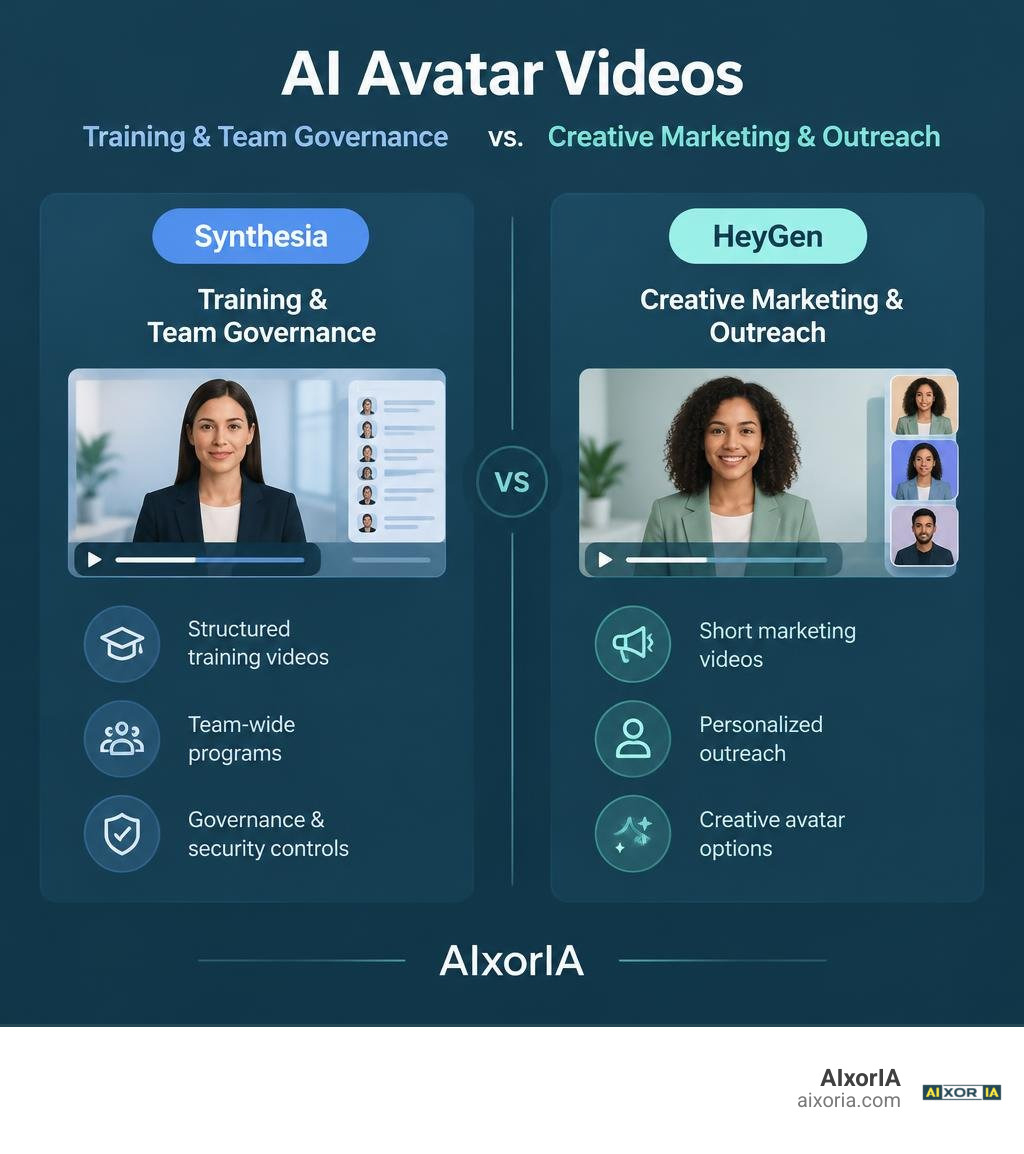
Synthesia vs HeyGen for AI Avatar Videos: Feature and Quality Comparison
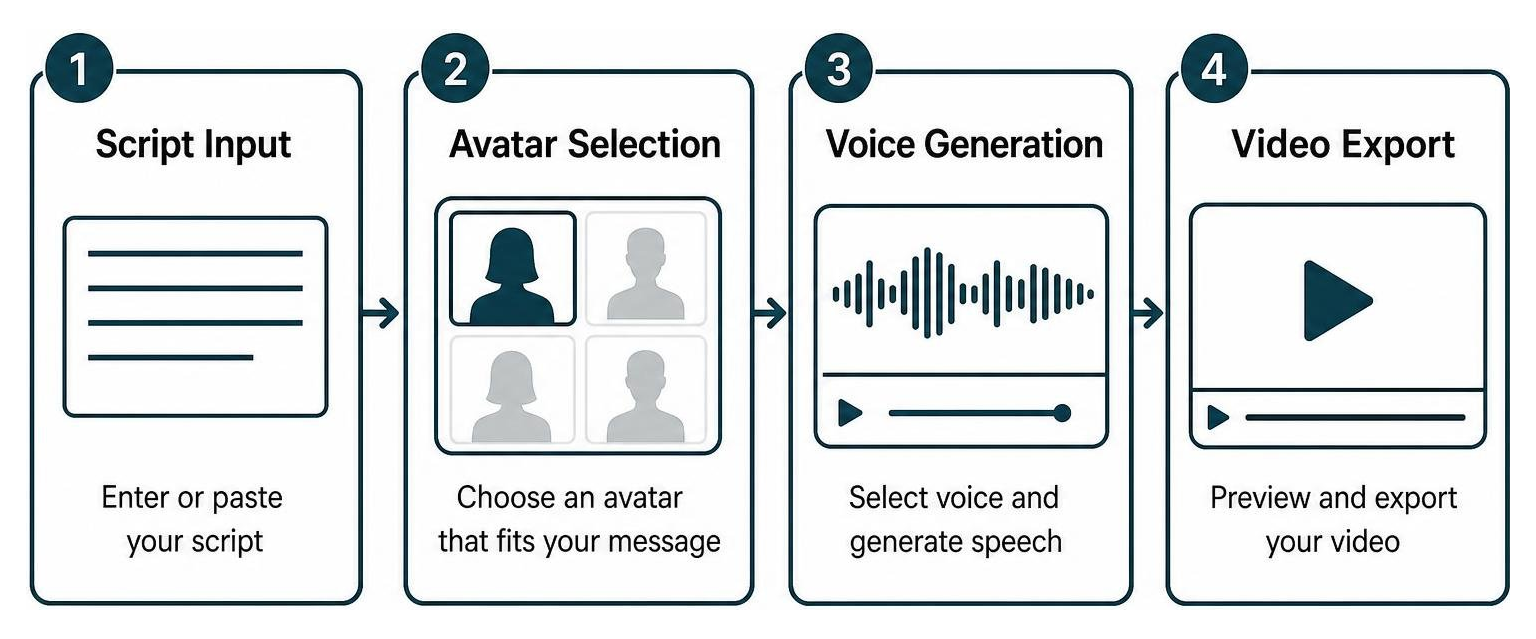
Comparing modern AI video platforms requires looking beneath the surface of slick marketing demos. While both platforms turn text scripts into talking-head videos, they approach rendering pipelines, avatar customization, and workspace architecture from very different product philosophies.
| Feature / Dimension | Synthesia | HeyGen |
|---|---|---|
| G2 User Rating | 4.7 / 5 (2,700+ reviews) | 4.8 / 5 (1,500+ reviews) |
| Stock Avatars | 240+ stock avatars | 1,100+ stock avatars |
| Supported Languages | 140+ languages | 175+ languages |
| Voice Library | 1,000+ voices | 300+ voices |
| Flagship Avatar Engine | Express-2 | Avatar IV / V |
| Custom Avatar Cost | $1,000/year add-on | Included in standard plans |
| Interactive Video / SCORM | Native quizzes, branching, SCORM | Basic branching & SCORM on low tiers |
| Enterprise Certifications | ISO 42001, SOC 2 Type II, ISO 27001 | SOC 2 Type II, GDPR, CCPA |
| Max Export Resolution | 1080p Full HD | Up to 4K (Business plans) |
| Primary Sweet Spot | Enterprise L&D, Corporate Comms | Social Ads, Sales Outreach, Creative UGC |
Avatar Realism, Micro-Expressions, and Lip-Sync Fidelity
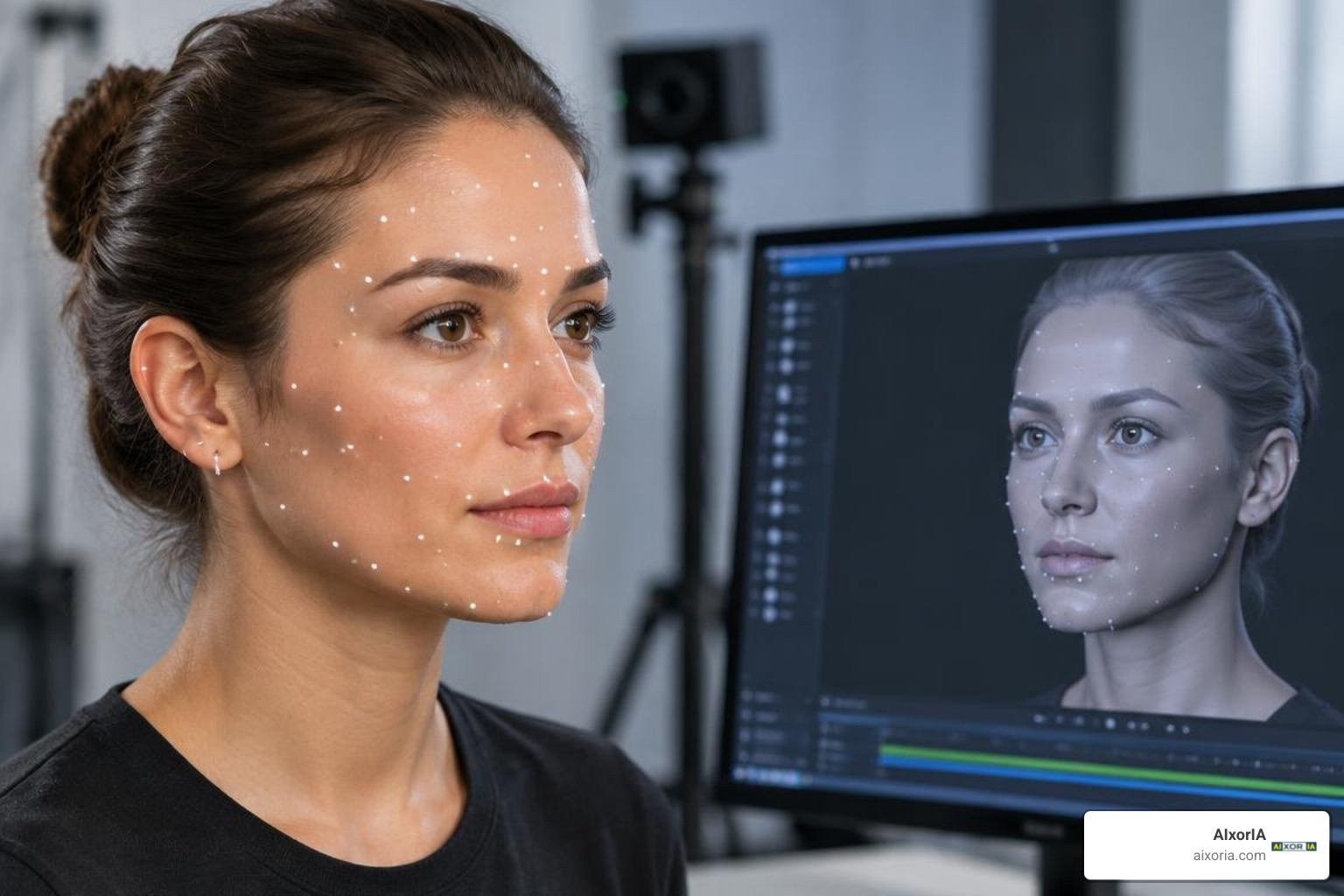
Avatar realism is no longer just about moving a mouth over a static image. Modern avatars require fluid neck mechanics, natural eye saccades, subtle breathing cycles, and phoneme-level lip synchronisation.
HeyGen’s flagship Avatar IV and V architectures deliver expressive, human-like motion. In independent uncanny-valley evaluations, HeyGen’s top-tier models achieved a 9.2/10 score, compared to Synthesia’s 8.2/10. HeyGen excels in dynamic gestures, spontaneous head tilts, and emotive facial reactions, giving it an edge in consumer-facing videos. According to independent 2026 avatar benchmark tests, HeyGen achieves up to 96.4% lip-sync accuracy across complex syllables.
Synthesia takes a different approach with its Express-2 engine. Rather than dramatic gestures, Synthesia focuses on micro-expressions—subtle eyebrow movements, measured nods, and corporate composure. In a blind preference study involving 1,013 participants evaluating business presenter delivery, viewers chose Synthesia’s avatars 7 times out of 10. While HeyGen feels more expressive for informal social clips, Synthesia provides polished realism that avoids uncanny exaggerated motions in professional presentations.
Voice Quality, Language Support, and Video Localization
Voice synthesis and language coverage dictate how effectively your content resonates internationally. HeyGen leads in total dialect breadth, boasting 175+ supported languages compared to Synthesia’s 140+.
Where Synthesia shines is its voice variety and brand consistency. Offering over 1,000 natural voices, Synthesia allows teams to set precise pronunciation dictionaries, ensuring technical acronyms and corporate terminology remain uniform across 100+ localized variants. For teams looking across different multilingual voiceover tools, Synthesia’s dubbing workflow translates entire multi-scene courses in minutes while preserving screen-text layout.
HeyGen counters with rapid 2-minute voice cloning and native lip-synced video translation. Instead of simply replacing an audio track, HeyGen re-renders the mouth movements of the speaker to match the translated language. This makes HeyGen an exceptional choice for dubbing existing live-action footage or translating personalized messages.
Video Editing Capabilities and AI Playground Features
Both tools eliminate traditional cameras, but their editing suites target different creative mindsets.
Synthesia uses a slide-deck model familiar to anyone who has built presentations in PowerPoint or Google Slides. Each scene operates as a slide where you can layer text, upload custom media, record your screen, and insert stock shapes. In 2026, Synthesia introduced its AI Playground, bringing generative b-roll capabilities powered by leading foundational video engines directly into the editing canvas. This allows creators to generate illustrative video backgrounds alongside presenter scripts.
HeyGen feels more like a modern design suite tailored for fast iteration. It provides rapid aspect-ratio switching (from 16:9 widescreen to 9:16 vertical video for mobile), face swapping, dynamic talking photos, and generative text-to-video assistants. If you are exploring broader AI tools for content creation, HeyGen’s rapid templating and vertical layout controls make short-form video assembly fast and flexible.
Pricing Breakdown: Minute Caps vs. Credit-Based Economics
When comparing Synthesia vs. HeyGen for AI avatar videos, it helps to understand how each vendor meters usage. Synthesia utilizes predictable minute caps, while HeyGen operates on a consumption-based credit system.

Free Plans and Entry-Level Creator Tiers
For individual creators and testing:
- Synthesia Free Tier: Offers 3 minutes of finished video per month, giving access to core editing features, stock avatars, and 140+ languages without requiring a credit card.
- HeyGen Free Tier: Provides 3 video credits per month (up to 3 single-minute videos) with watermarked exports and access to standard avatar engines.
On paid entry plans, the structures diverge:
- Synthesia Starter: Costs $29 per month (billed monthly) or $18 per month (billed annually). It caps finished video output at 10 minutes per month without any complex credit meters.
- HeyGen Creator: Costs $29 per month ($24 per month billed annually) and provides 600 monthly credits.
For a detailed breakdown of credit consumption dynamics, review this credit-math and pricing analysis.
Evaluating Synthesia vs HeyGen for AI Avatar Videos on Scaled Production
The true cost of production depends heavily on which avatar generation you select in HeyGen:
- HeyGen Avatar III: Consumes 3 credits per minute of video (providing roughly 200 minutes per month on the Creator tier).
- HeyGen Avatar IV / V: Consumes 20 credits per minute (yielding approximately 30 minutes of video per month on the Creator tier).
- HeyGen Video Translation: Consumes 2 credits per minute for basic audio dubbing and 5 credits per minute for re-rendered lip-sync translation.
When scaling production, Synthesia’s flat minute limits prevent unexpected burn-down spikes. Furthermore, Synthesia only meters net-new or modified scenes during script revisions, whereas platforms that re-render full canvas pipelines burn full compute time on minor typo corrections.
For custom avatars, HeyGen includes webcam-based instant digital twins in its base subscriptions. Synthesia treats custom digital twins as a premium enterprise add-on starting at $1,000 per year, backed by dedicated studio calibration and strict identity verification.
Best Platform by Use Case: Corporate L&D vs. High-Velocity Marketing
Matching the platform to your primary organizational goal ensures you achieve maximum return on investment.
Evaluating Synthesia vs. HeyGen for AI Avatar Videos in Enterprise Training
For corporate learning and development (L&D), human resources, and compliance teams, Synthesia is the recognized market leader. Trusted by over 90% of the Fortune 100, Synthesia is designed specifically for instructional design workflows.
Key L&D advantages of Synthesia include:
- Native SCORM Export: Export full video packages compatible with industry-standard Learning Management Systems (LMS) like Cornerstone, Workday, and Canvas.
- Interactive Quizzes and Knowledge Checks: Build interactive decision paths and embedded knowledge assessments directly into the video player without third-party authoring tools.
- Role-Play Coaching: Use interactive avatars that listen, evaluate spoken learner responses, and provide automated feedback.
- Brand Consistency Kits: Lock color palettes, typography, and presenter templates across global departments.
Teams seeking scalable business productivity solutions find Synthesia’s structured template ecosystem ideal for turning dry SOPs and compliance manuals into engaging training curriculums.
Choosing Synthesia vs. HeyGen for AI Avatar Videos Across Creative Workflows
For marketing teams, growth hackers, and sales development reps, HeyGen is built for speed and engagement.
Key creative advantages of HeyGen include:
- High-Converting Social Formats: Instantly build 9:16 vertical videos formatted for TikTok, YouTube Shorts, and Instagram Reels with dynamic auto-captions.
- Personalized Sales Outreach at Scale: Connect HeyGen’s API to CRM workflows (like HubSpot or Salesforce) to generate hundreds of personalized outbound prospecting videos featuring customized prospect names and website screenshots.
- Talking Photo Generation: Animate static illustrations, historical portraits, or team headshots into functional talking avatars in seconds.
- 4K Output: Export high-resolution master files suitable for commercial display ads on Business tiers.
For growth specialists utilizing AI tools for sales and marketing, HeyGen provides the creative velocity needed to test dozens of hooks, copy variations, and localized campaigns.
Enterprise Security, Compliance, and Data Governance
As synthetic media adoption expands, compliance and information security become non-negotiable procurement criteria.
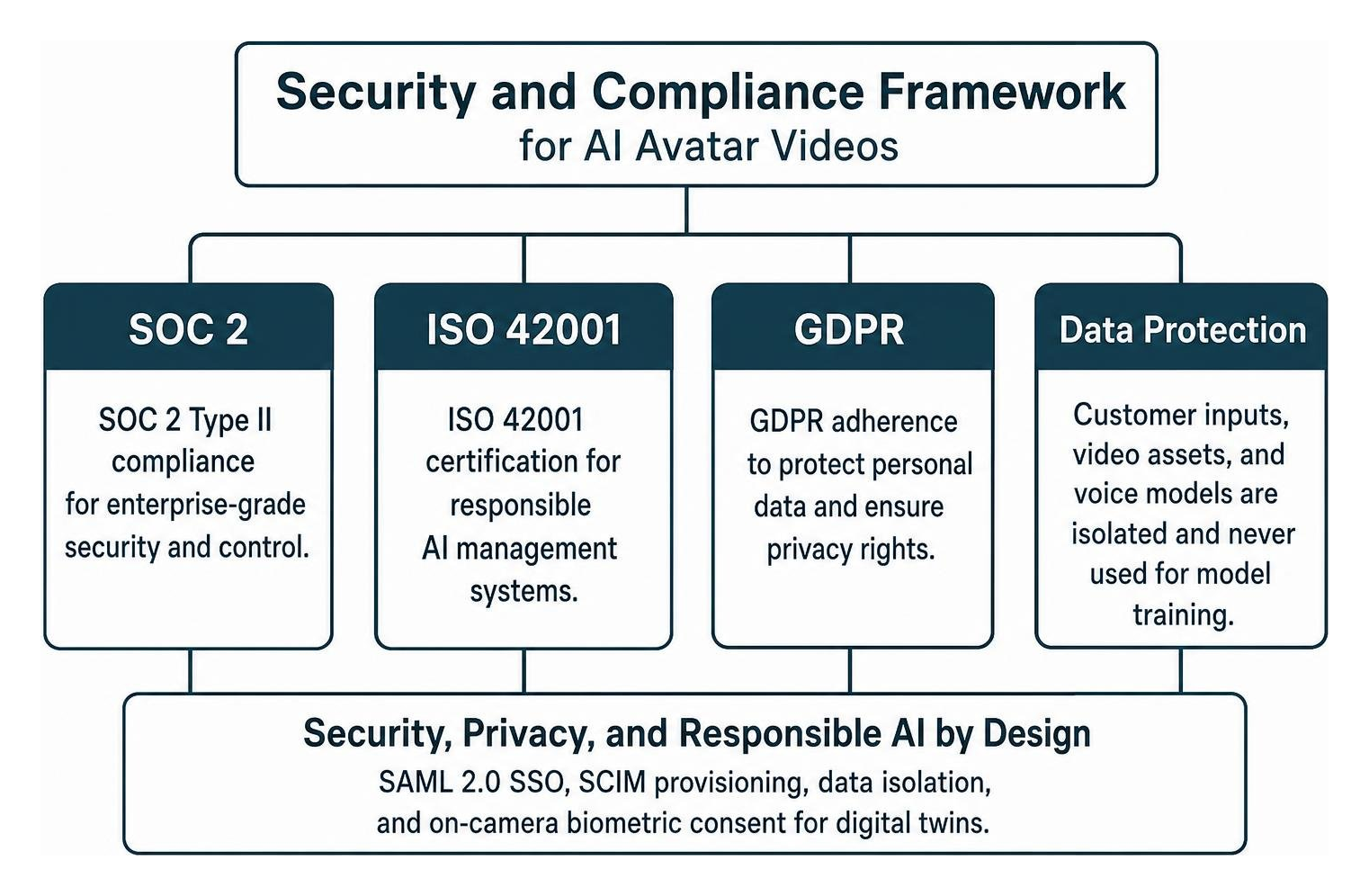
Synthesia holds the industry’s most robust compliance profile. It is the first AI video company to achieve ISO 42001 certification (the international standard for responsible Artificial Intelligence Management Systems), alongside SOC 2 Type II, ISO 27001, and ISO 27701 certifications. Synthesia provides SAML 2.0 Single Sign-On (SSO), automated SCIM user provisioning, and explicit contractual guarantees that customer inputs are never used to train foundational AI models.
HeyGen provides enterprise-grade SOC 2 Type II compliance, GDPR, and CCPA adherence. HeyGen explicitly guarantees that private customer video assets and custom voice models remain isolated and are never repurposed for model training. Both platforms require strict on-camera biometric consent declarations before any custom digital twin can be synthesized, eliminating identity spoofing risks.
Frequently Asked Questions About Synthesia and HeyGen
Is HeyGen or Synthesia better for beginners?
HeyGen is generally easier for complete beginners and solo creators. Its interface is intuitive, offering instant digital twin creation from a short webcam video and an extensive library of social media templates. Synthesia is also approachable, but its slide-based editor and structured governance features are designed around multi-scene corporate training programs. However, Synthesia Academy provides industry-leading structured courses that help beginners master instructional video design quickly.
Which platform offers better multilingual translation and dubbing?
HeyGen holds an advantage in video-to-video dubbing and translation flexibility, supporting 175+ languages and automatically re-aligning the original speaker’s lip movements to match the translated audio. Synthesia supports 140+ languages and excels at script-based multi-language localization, allowing enterprise teams to translate an entire library of training modules with consistent brand terminology and locked visual layouts in a single click.
What are the real costs of creating custom digital avatars?
With HeyGen, lightweight “Instant Avatars” created from a brief webcam recording are included in standard paid plans, while studio-grade custom avatars require specialized higher-tier packages. Synthesia focuses on studio-grade fidelity, offering custom digital twins as an enterprise add-on for $1,000 per year, which includes identity verification, lighting calibration, and model fine-tuning.
Conclusion
Both platforms represent the cutting edge of AI-generated video, but they serve distinct operational needs:
- Choose Synthesia if: Your primary goals are corporate training, compliance modules, internal communications, LMS integration via SCORM, and strict enterprise security governance (ISO 42001/SOC 2).
- Choose HeyGen if: Your priorities are high-velocity marketing ads, multi-format social content, personalized sales outreach via API, photo animation, and dynamic avatar expressiveness.
At AIxorIA, we help businesses evaluate, implement, and master leading artificial intelligence software to unlock measurable productivity gains. Explore our comprehensive resources, practical implementation guides, and curated software directories at AIxorIA’s platform directory to find the right AI video tools for your team.
1 thought on “Synthesia vs HeyGen: Which AI Avatar Tool Is Best?”