Why Healthy Cooking Tools Matter More Than You Think
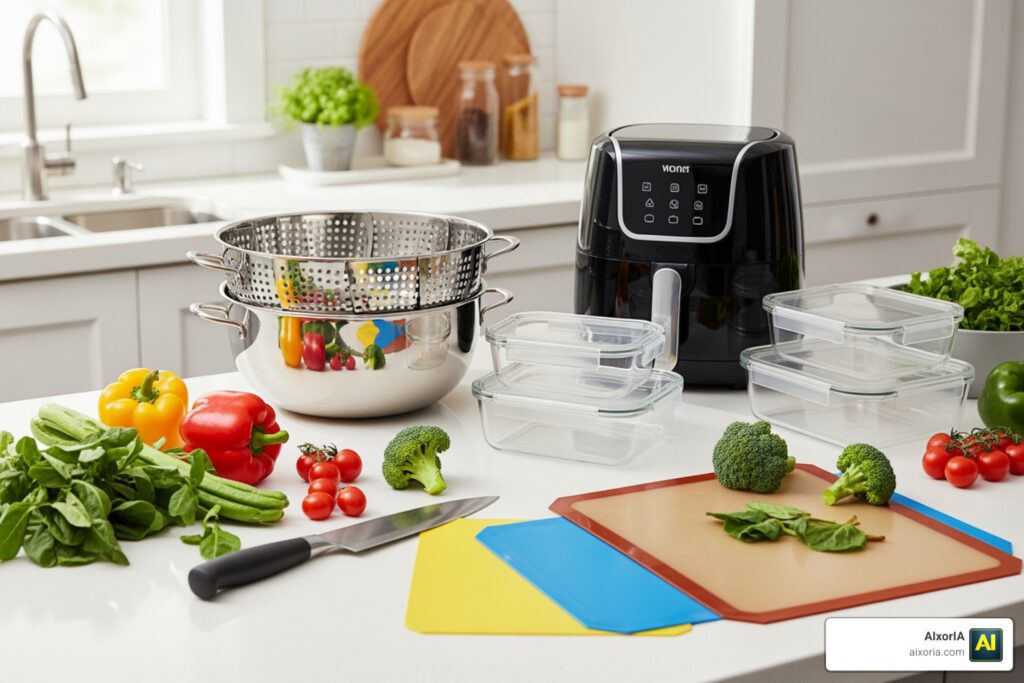
The right healthy cooking tools can make the difference between eating well consistently and giving up on home cooking altogether.
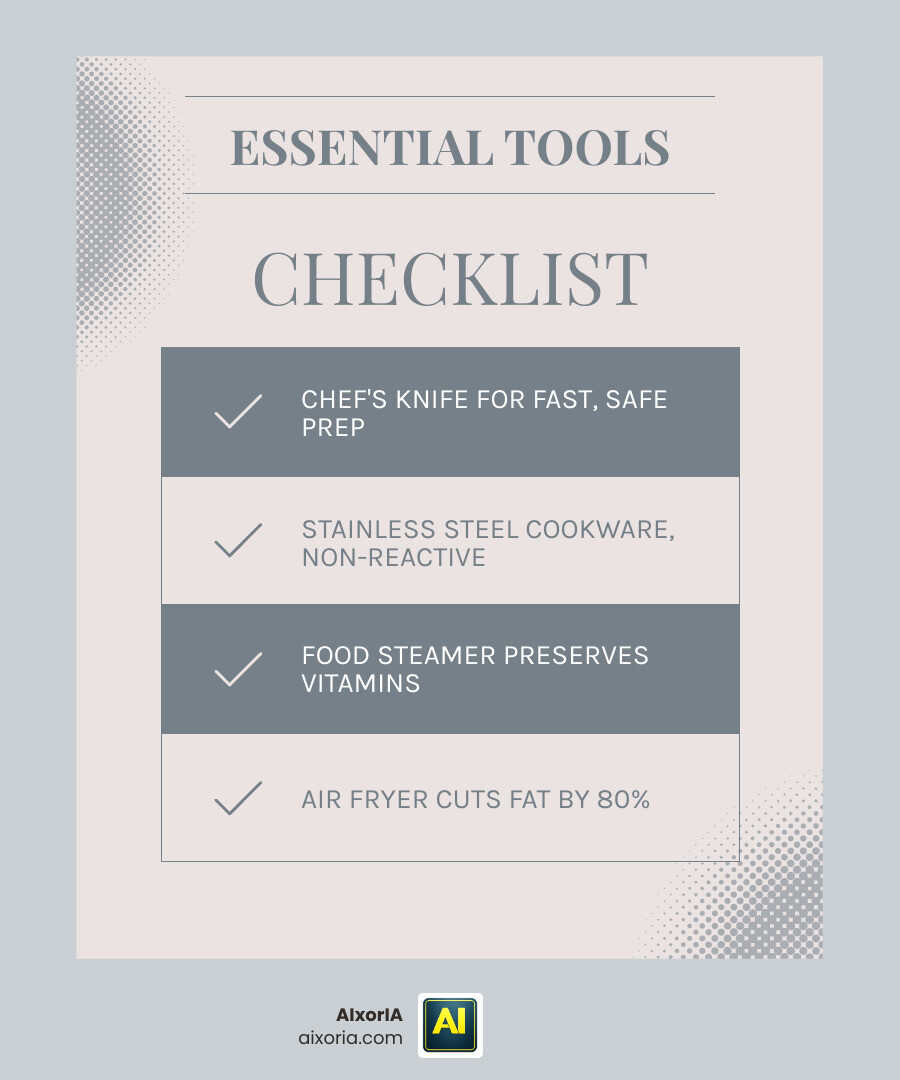
Here are the essential healthy cooking tools most kitchens need:
| Tool | Primary Benefit |
|---|---|
| Chef’s knife | Fast, safe prep for vegetables and proteins |
| Stainless steel cookware | Non-reactive, durable, no chemical leaching |
| Food steamer | Preserves vitamins and minerals without oil |
| Air fryer | Crispy results with up to 80% less fat |
| Rice cooker | Consistent results for whole grains |
| Food scale | Accurate portions for balanced nutrition |
| Silicone spatulas | Safe for non-stick and ceramic surfaces |
| Glass storage containers | No plastic chemicals in your food |
Healthy eating is only sustainable if cooking at home feels doable. And cooking at home only feels doable when your kitchen is set up with the right gear.
The tools you use aren’t just about convenience. They affect what’s actually in your food — from chemical coatings that leach into meals at high heat, to cooking methods that strip or preserve nutrients.
In May 2026, there are more options than ever. But more options also means more confusion about what’s actually worth buying.
This guide cuts through the noise. Whether you’re building a kitchen from scratch or upgrading what you already have, you’ll find clear, practical recommendations here — organized from basics to high-tech appliances.
Essential Healthy Cooking Tools for Every Kitchen
Before we dive into the high-tech gadgets, we have to talk about the “workhorses.” These are the foundational items that allow you to handle fresh, whole ingredients safely and efficiently. Without these basics, even the most advanced kitchen can feel cluttered and inefficient.
The Power of Precision: Knives and Boards
A sharp knife is actually safer than a dull one because it requires less pressure and won’t slip off a smooth onion skin or a tough sweet potato. According to the American Heart Association, a high-carbon stainless steel chef’s knife is the most critical investment you can make. It handles 90% of prep work, from dicing fibrous kale to slicing lean proteins. High-carbon steel is preferred because it retains its edge longer than standard stainless steel, meaning fewer trips to the sharpener and a more consistent cut every time. Complement this with a small paring knife for delicate tasks like peeling fruit and a serrated knife for tomatoes and crusty whole-grain bread.
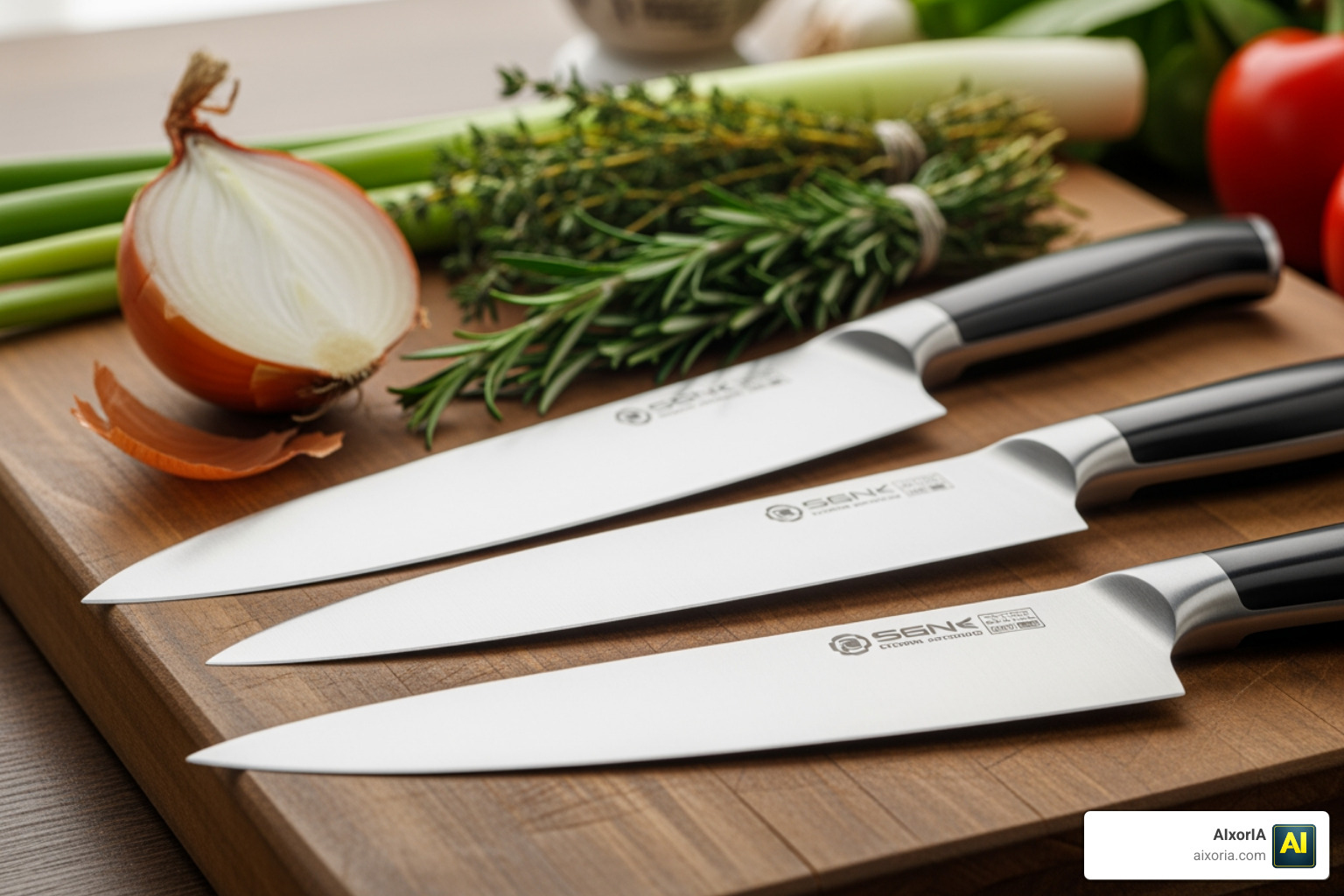
When it comes to cutting boards, we recommend having two: a wooden board for produce and a plastic one for raw proteins. This prevents cross-contamination and keeps your kitchen heart-healthy. Hardwood boards like acacia or maple are also gentler on your knife blades, extending the life of your investment.
Cookware That Lasts a Lifetime
If you want to avoid toxic fumes and chemical leaching, stainless steel and cast iron are your best friends.
- Stainless Steel: Look for 18/10 grade (18% chromium, 10% nickel) for maximum corrosion resistance. Fully-clad sets provide even heat distribution, ensuring your salmon or sautéed greens don’t burn, which helps prevent the formation of harmful charred compounds.
- Cast Iron: A well-seasoned cast iron skillet is naturally non-stick and adds a tiny bit of iron to your diet. It’s perfect for searing meats with minimal oil. Because it retains heat so effectively, it allows for a deep sear that locks in juices without needing excessive butter or fats.
As the American Heart Association notes, you don’t need a hundred gadgets; you just need a few high-quality pieces that perform reliably every day.
High-Tech Appliances for Nutrient-Dense Meals
Technology in May 2026 has made it incredibly easy to “set it and forget it” while maintaining the nutritional integrity of your food. Modern appliances now focus on precision and speed, ensuring that healthy eating fits into a busy schedule.
Air Fryers and Steamers: The Best Healthy Cooking Tools for Oil Reduction
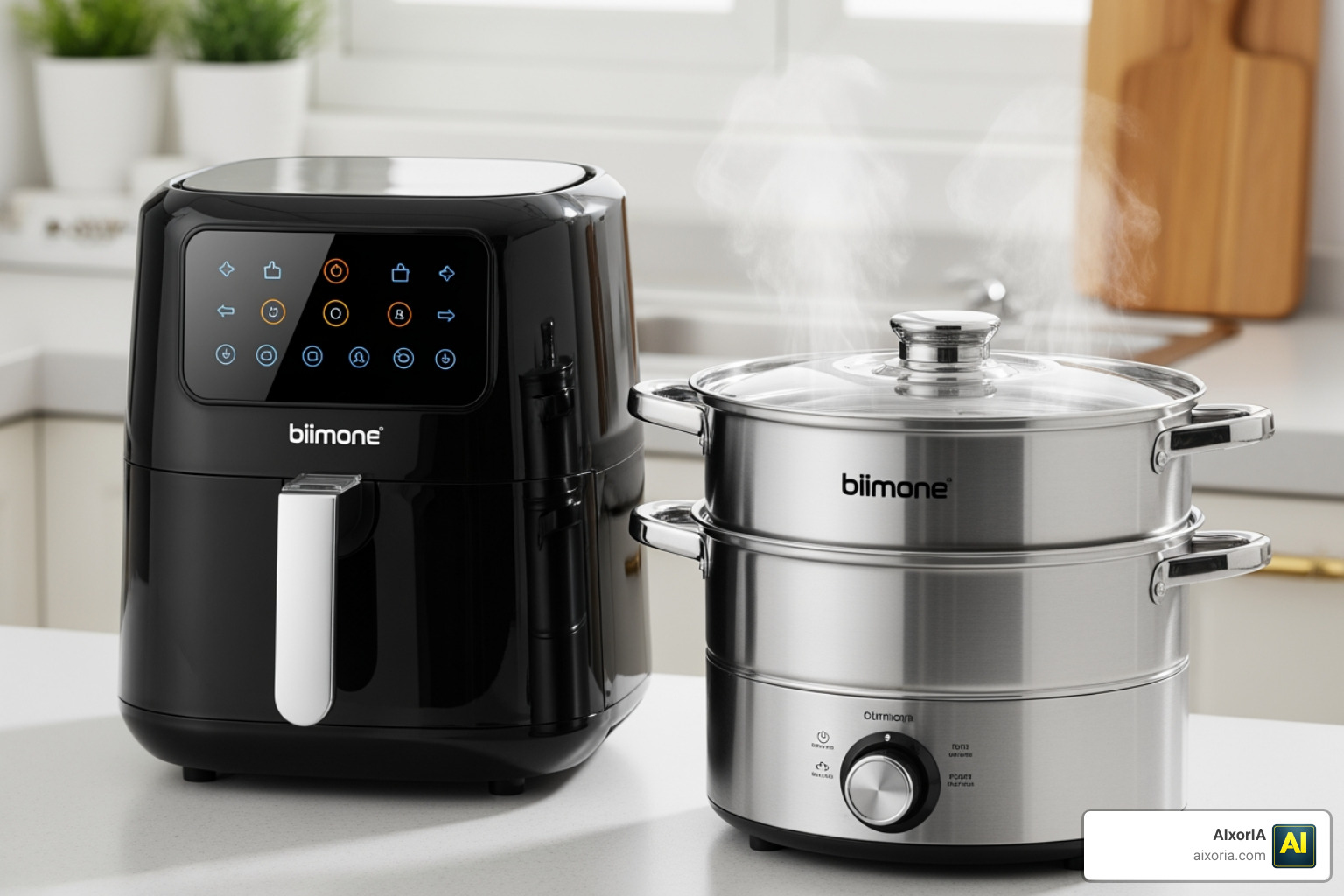
If we had to pick one tool that has changed the game for families, it’s the air fryer. By using rapid convection technology, it circulates hot air to “fry” food with up to 80% less fat than traditional methods. This significantly reduces acrylamide—a chemical that can form in foods during high-heat frying. Beyond just “frying,” these tools are excellent for roasting root vegetables to bring out their natural sweetness without heavy oils.
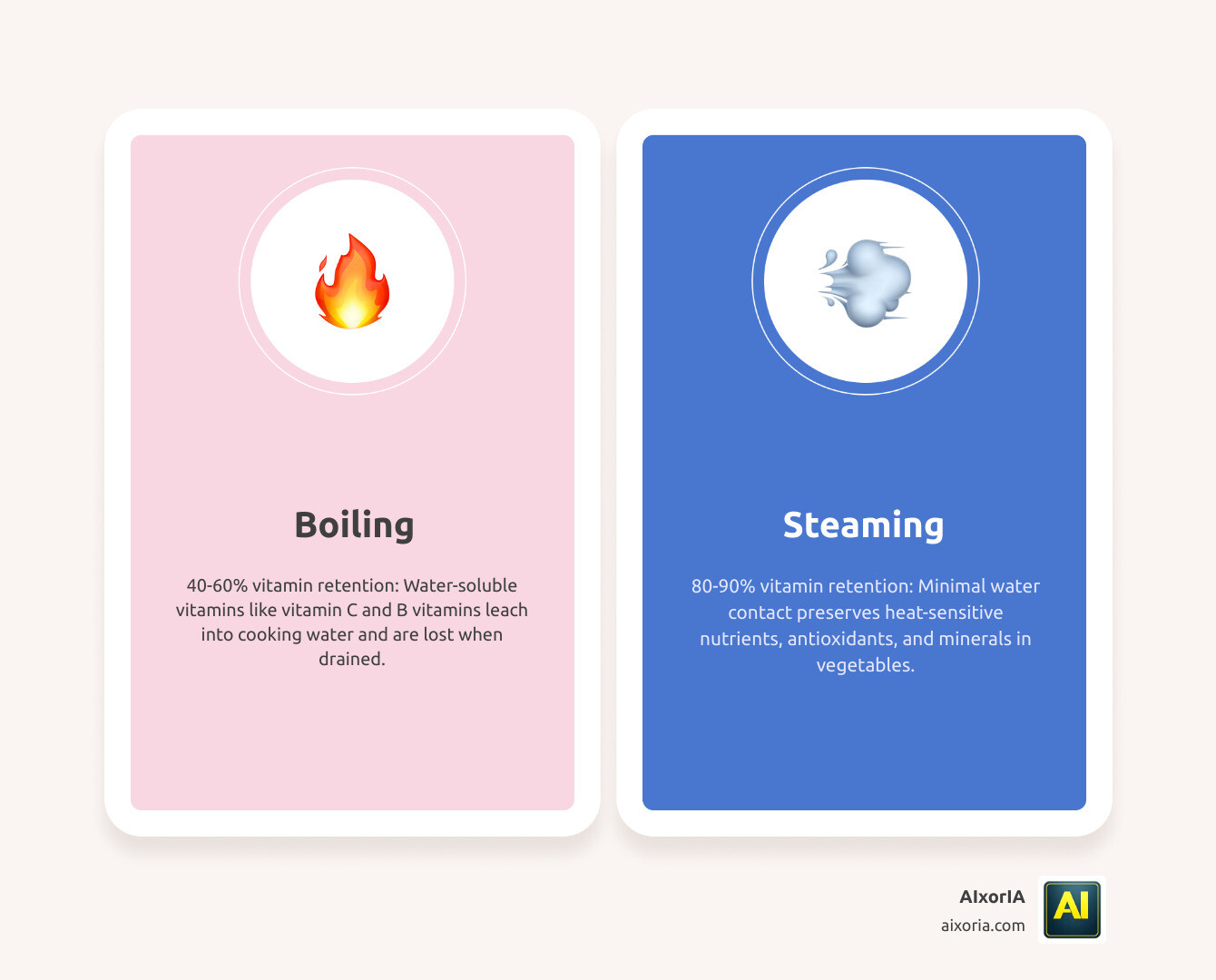
Food steamers are equally essential for nutrient preservation. Boiling vegetables often results in vitamins leaching into the water (which usually goes down the drain). Steaming keeps those vitamins in the vegetable. The BELLA Two Tier Food Steamer is a fan favorite, boasting over 14,162 reviews and a 4.5-star rating for its ability to cook grains and greens simultaneously, making it a powerhouse for efficient meal prep.
Smart Rice Cookers and Dehydrators: Healthy Cooking Tools for Modern Diets
For those on low-carb or nutrient-dense diets, tools like the Toshiba Rice Cooker with Induction Heating (4.4 stars from 786 reviews) are invaluable. These machines often utilize “fuzzy logic” technology, which allows the cooker to make micro-adjustments to temperature and cooking time based on the moisture levels of the grain. This ensures that even tricky grains like quinoa or farro come out perfectly fluffy, preserving their fiber content and preventing the mushy texture that often leads people to abandon whole grains. They also offer specific settings for GABA rice, which increases the bioavailability of nutrients.
If you’re looking for healthy snack alternatives, a dehydrator allows you to make kale chips or dried fruit without the added sugars found in store-bought versions. And for dessert? The Yonanas Fruit Soft Serve Maker (22,257 reviews!) turns frozen bananas and berries into a creamy “ice cream” with zero dairy or added sweeteners.
Choosing Safe Materials: Non-Toxic Cookware and Utensils
What your tools are made of is just as important as what they do. Traditional non-stick coatings (Teflon) can release toxic PFAS when they overheat or get scratched.
The Move to Ceramic and Silicone
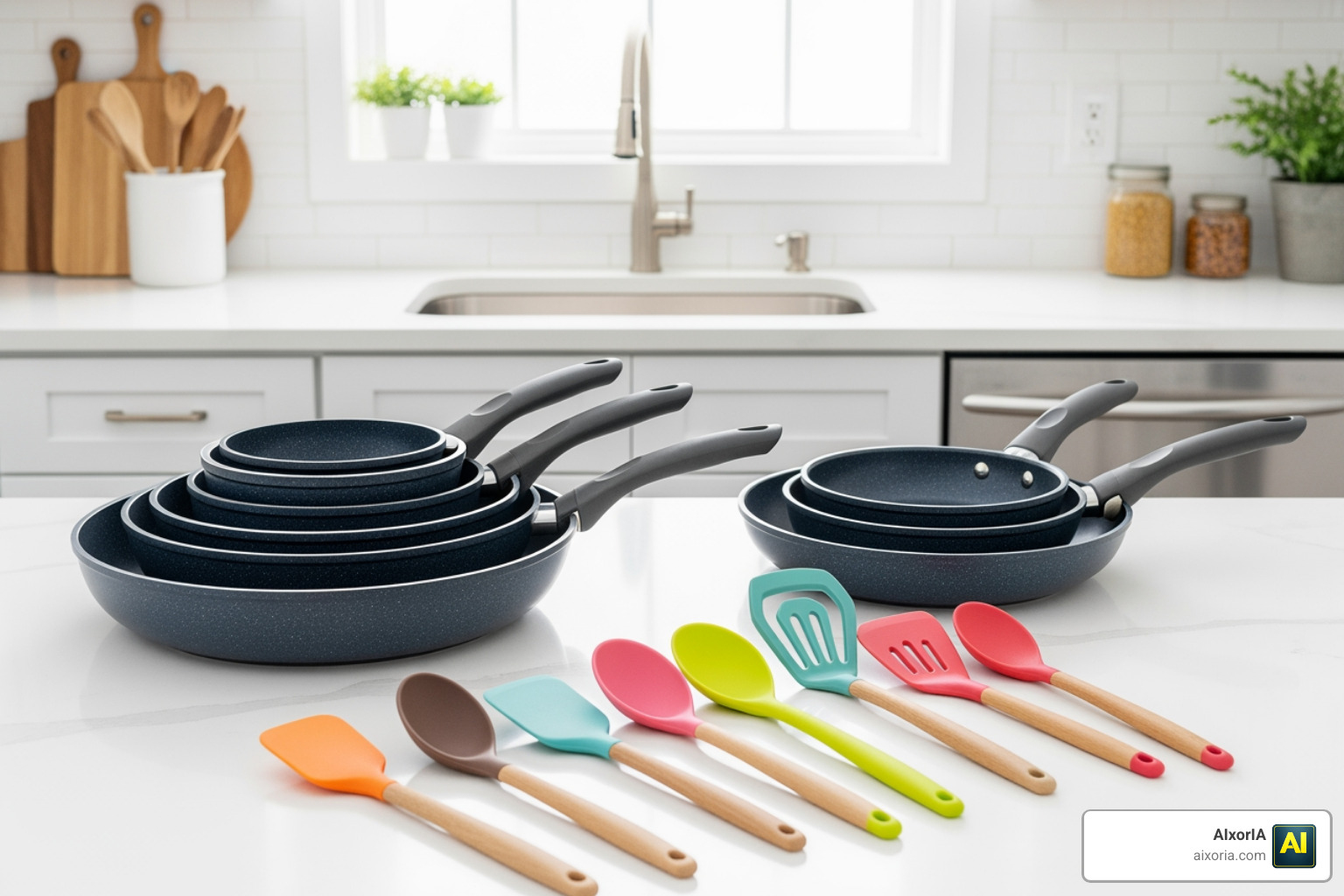
Ceramic non-stick coatings are a fantastic alternative. They are made from minerals and are generally PFAS-free. However, they don’t last forever—once they scratch, they lose their effectiveness.
For utensils, we suggest moving away from plastic, which can leach microplastics into hot food. Instead, look for:
- 100% Virgin Silicone: Perform the “pinch test”—if you twist the silicone and it turns white, it contains fillers. High-quality silicone is heat-resistant up to 450°F.
- Hardwood: Acacia, walnut, and olive wood are naturally antibacterial and won’t scratch your pans. Avoid “stranded” bamboo, as it often uses formaldehyde-based glues.
For more on the science of safe materials, check out this guide on material safety in kitchen tools.
Specialized Tools for Efficient Meal Prep
The biggest barrier to healthy eating is often time. These healthy cooking tools are designed to slash your prep time so you can spend more time enjoying your meal and less time at the cutting board. Efficiency in the kitchen is the key to maintaining a consistent wellness routine.
- Vegetable Choppers and Mandolines: These provide uniform slices for salads and stir-fries in seconds. Just be sure to use a finger guard! Uniformity isn’t just for looks; it ensures all pieces cook at the same rate, preventing some bits from being raw while others are overcooked.
- Salad Spinners: Dry greens last longer in the fridge and allow dressings to stick better, meaning you use less oil. It’s a simple tool that makes eating large volumes of leafy greens much more palatable.
- Digital Food Scales: Essential for portion control. A scale helps you realize that a “serving” of pasta might be smaller than you think, helping you stay on track with your goals without the guesswork of volume-based measuring cups.
- Immersion Blenders: Perfect for making creamy vegetable soups directly in the pot, eliminating the need for heavy cream. They are also much easier to clean than a traditional upright blender.
- Food Processors: An 11-cup capacity food processor is a game-changer for making large batches of hummus, nut butters, or cauliflower rice. By making these staples at home, you avoid the hidden sugars, excessive sodium, and preservatives found in store-bought versions.
- Kitchen Shears: An underrated tool, shears are perfect for quickly trimming fat from poultry or snipping fresh herbs directly into your dish, preserving the volatile oils that provide flavor and antioxidants.
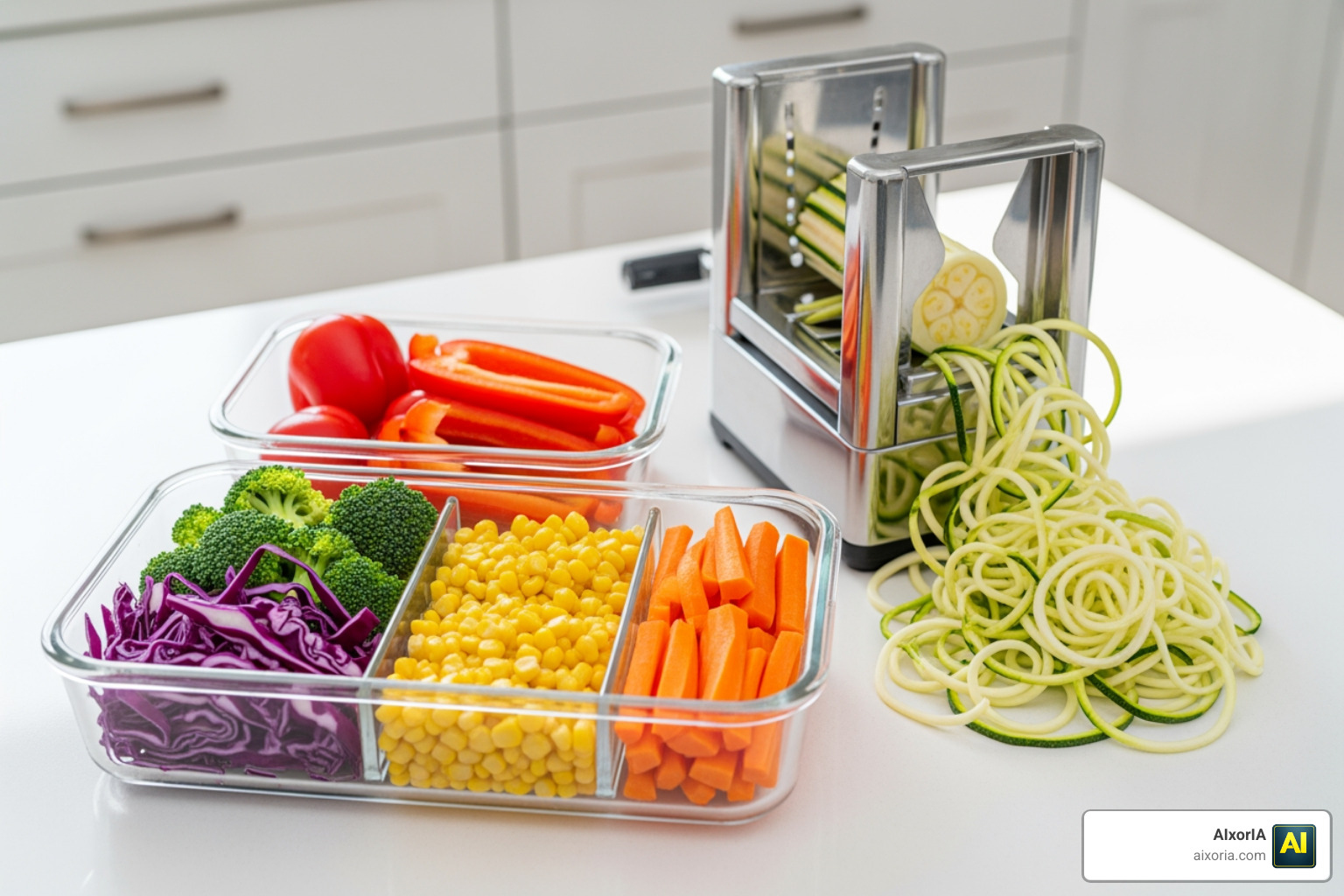
Don’t forget storage! Swapping plastic containers for glass Pyrex or mason jars ensures your prepped meals stay fresh without chemical interference. Silicone freezing molds are also great for portioning out home-made bone broth or pesto, allowing you to defrost only what you need for a single meal.
Frequently Asked Questions about Healthy Cooking Tools
Are ceramic non-stick coatings safer than traditional options?
Yes, generally. Ceramic coatings are made from inorganic minerals (usually silica) and do not contain PFOA or PTFE (Teflon). They are stable at higher temperatures and don’t release toxic fumes. However, they are more delicate and should be hand-washed with non-abrasive sponges to extend their lifespan.
How do air fryers promote healthier cooking?
Air fryers use a powerful fan to circulate heat, creating a “fried” texture with just a teaspoon of oil (or none at all). This drastically reduces calorie intake and harmful fats. They are also excellent for roasting vegetables, making them crispy and appealing to kids who might otherwise avoid “mushy” greens.
Which tools are best for preserving nutrients in vegetables?
Food steamers and pressure cookers (like the Instant Pot) are the winners here. Because they cook food quickly with minimal water contact, they prevent water-soluble vitamins (like Vitamin C and B vitamins) from leaching out. A pressure cooker is also excellent for breaking down lectins in beans and grains, making them easier to digest.
Conclusion
Building a collection of healthy cooking tools doesn’t have to happen overnight. We recommend starting with the basics—a great chef’s knife and a stainless steel skillet—and then adding “investment” pieces like an air fryer or a high-quality blender as your budget allows.
By focusing on quality over quantity and choosing non-toxic materials, you create a kitchen environment that supports your long-term wellness goals.
At AIxorIA, we believe in using technology to simplify life. Just as the right kitchen tool makes cooking easier, the right AI solutions can make your business more efficient. We provide custom AI solutions, tool training workshops, and performance audits to help you master the modern digital landscape.
If you’re looking to boost your productivity outside the kitchen, explore our AI productivity services to see how we can help your business grow with simple language and fast support. Happy cooking!