Why Construction Teams Are Turning to AI Project Management Tools Right Now

The best AI tools for construction project management can be the difference between a project that finishes on time and one that bleeds money for months.
Here’s a quick answer if you need it fast:
Top AI Tools for Construction Project Management in 2026:
| Tool | Best For |
|---|---|
| Trunk Tools | Document search, RFI handling, submittal reviews |
| Procore | Large enterprise contractors |
| ALICE | Schedule optimization and sequencing |
| monday.com | Mid-sized firms needing flexible dashboards |
| Buildots | Automated site progress tracking |
| Togal.AI | Fast, accurate construction takeoffs |
| Bricklayer.ai | Predictive scheduling and risk flagging |
| Constructable | Field teams needing speed and offline access |
| Bazy | Small contractors wanting an all-in-one platform |
| Planaut | Document-heavy projects needing AI scope extraction |
Construction is one of the toughest industries to manage. Tight deadlines, rising costs, labor shortages, and mountains of paperwork make every project a high-stakes balancing act.
And yet, most teams are still spending hours searching through PDFs, chasing RFI approvals, and manually updating schedules.
That’s starting to change — fast.
AI use in project management has nearly doubled in just two years. A 2025 Capterra survey found that 55% of users now cite adding AI functionality as their main reason for switching to new project management software.
The payoff is real. AI-powered tools can improve estimate accuracy by over 20% and cut completion time in half. Field teams using AI assistants save 1–2 hours per day. Project managers are reclaiming up to 25 hours every week.
If you’re a small or mid-sized contractor, you don’t need a massive IT team to benefit. Many of today’s best tools are built to be picked up and used within days — no technical expertise required.
This guide breaks down the top options available right now, what they actually do well, and how to choose the right one for your team and budget.
Why Use the Best AI Tools for Construction Project Management in 2026?
In 2026, the construction industry has reached a tipping point. We are no longer just “experimenting” with AI; we are relying on it to stay competitive. The primary reason for this shift is the sheer volume of data involved in modern builds. A single project can involve over 2,000 pages of documents, from specs to drawings. Manually managing this is no longer sustainable.

When we look at the 8 Best Ai Tools For Construction Project Management 2026 Tested/, several core benefits stand out:
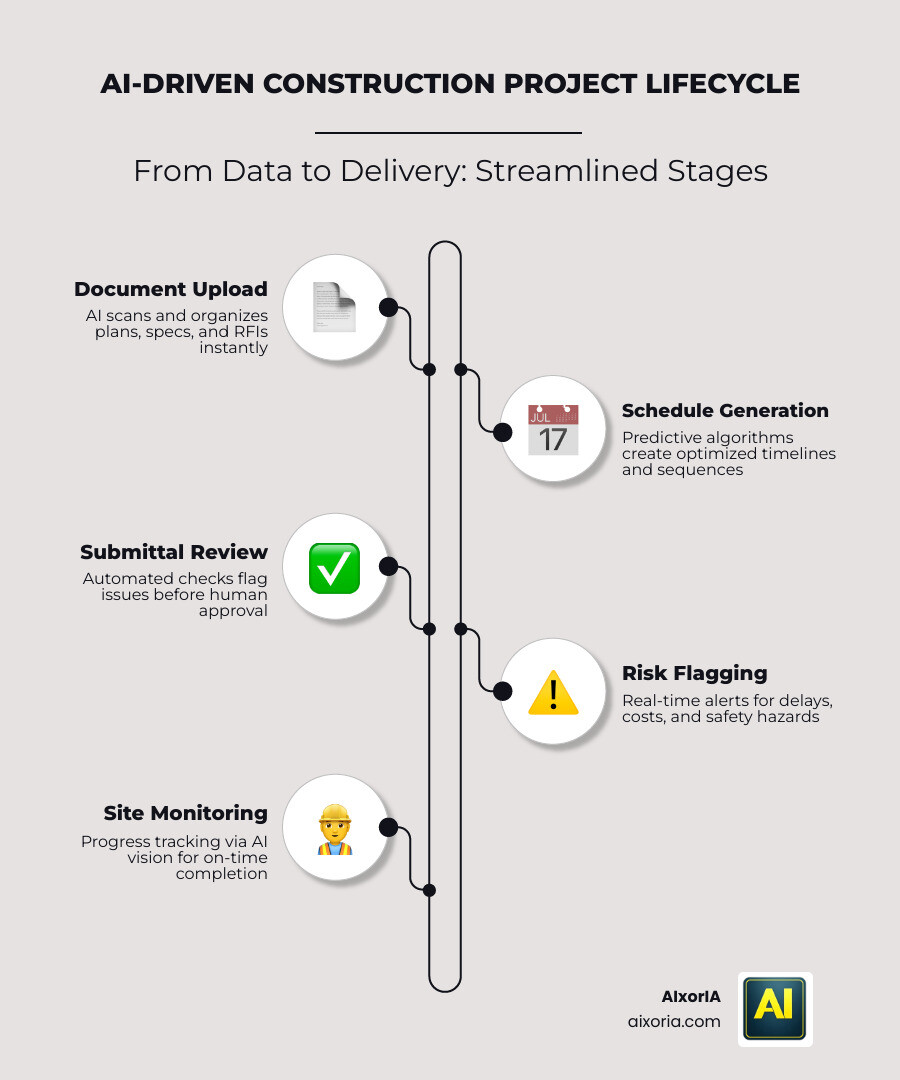
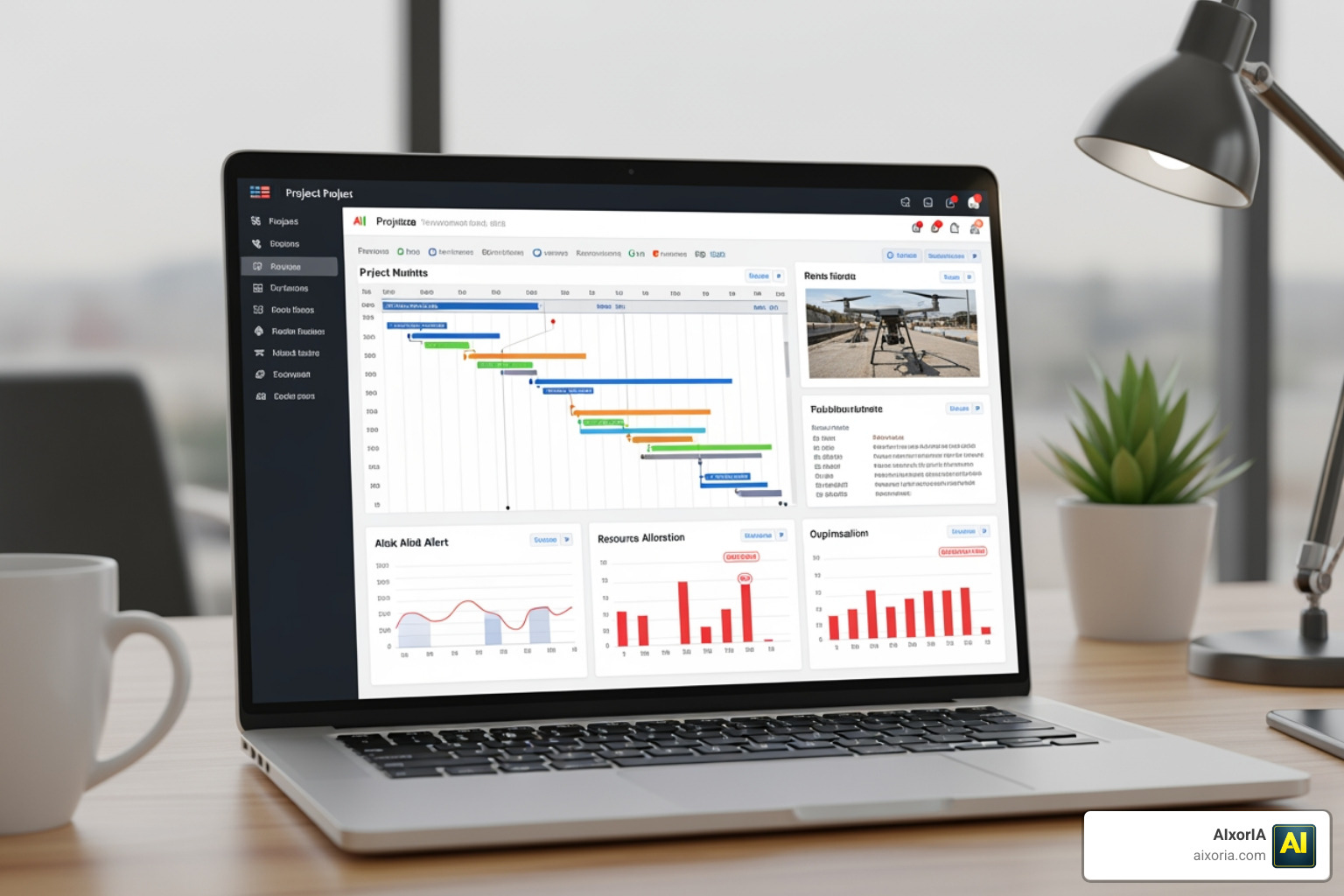
- Schedule Optimization: Traditional Gantt charts are static. AI tools like ALICE or Bricklayer.ai can simulate millions of build sequences to find the most efficient path, often reducing schedules by up to 35%.
- Predictive Risk Management: Instead of reacting to a delay, AI flags potential issues—like weather disruptions or crew shortages—up to 14 days before they impact the site.
- Resource Allocation: AI monitors labor rates and equipment availability in real-time, ensuring that a carpenter shortage on “Building A” doesn’t halt progress on “Building B.”
- Administrative Relief: By automating submittal reviews and RFI entries, teams see a 70% reduction in manual reporting time.
| Feature | Traditional Management | AI-Driven Management |
|---|---|---|
| Estimates | Manual, prone to 20%+ error | 20% more accurate, 50% faster |
| Reporting | Manual data entry, delayed | Automated, real-time updates |
| Scheduling | Static, human-logic only | Generative, millions of simulations |
| Risk | Reactive (after it happens) | Predictive (14 days in advance) |
Top 10 AI Construction Software Solutions for Every Firm
Choosing the Best AI Tools for Construction Project Management depends heavily on your firm’s size and specific pain points. Here are the heavy hitters leading the market in 2026.
- Trunk Tools: This is the “brain” for your project documents. It saves field members up to 2 hours a day by providing instant answers to questions in under 30 seconds. Its “TrunkSubmittal” feature auto-reviews 90% of submittals, catching discrepancies that could cause $100K+ in rework costs.
- Procore: The industry giant has integrated deep AI capabilities to handle large-scale enterprise needs. It’s the go-to for massive contractors who need everything from financials to site safety in one ecosystem.
- ALICE Technologies: If scheduling is your nightmare, ALICE is the dream. It uses generative AI to run “what-if” scenarios, helping you optimize equipment and labor costs across complex projects.
- monday.com: Perfect for mid-sized firms, it offers highly customizable dashboards. Its AI Copilot flags at-risk tasks and automates status updates so you don’t have to chase down subcontractors.
- Constructable: Built for speed and field use, Constructable features a “Magic Extractor” that pulls data from plans without retyping. It also offers full offline sync, which is a lifesaver on remote sites.
- Bricklayer.ai: This tool acts as an autonomous project manager. It unifies project intelligence to prevent cost overruns and uses deep BIM integration for real-time clash detection.
- Conium AI: Conium uses industry-specific AI agents to handle high-value tasks like RFP analysis and BoQ generation. It’s designed to perform like your best-performing project team, acting independently to monitor progress.
- Construct AI: A conversational “command center.” You can literally ask it, “What is the budget situation on framing?” and it will analyze your live data to give you a plain-English answer and a recommendation.
- Bazy: The ultimate all-in-one for smaller contractors. It replaces the “11 different apps” most contractors use with a single platform that handles everything from 10-second AI estimates to weather-aware scheduling.
- Planaut: Planaut is a powerful co-pilot for document-heavy projects. It extracts scope items with CSI MasterFormat classification automatically, saving up to 80% of the time usually spent on manual estimates.
Key Features and Selection Criteria
Not all AI is created equal. When we evaluate the Best AI Tools for Construction Project Management, we look for features that solve actual site problems rather than just adding “tech for tech’s sake.”
Core Features of the Best AI Tools for Construction Project Management
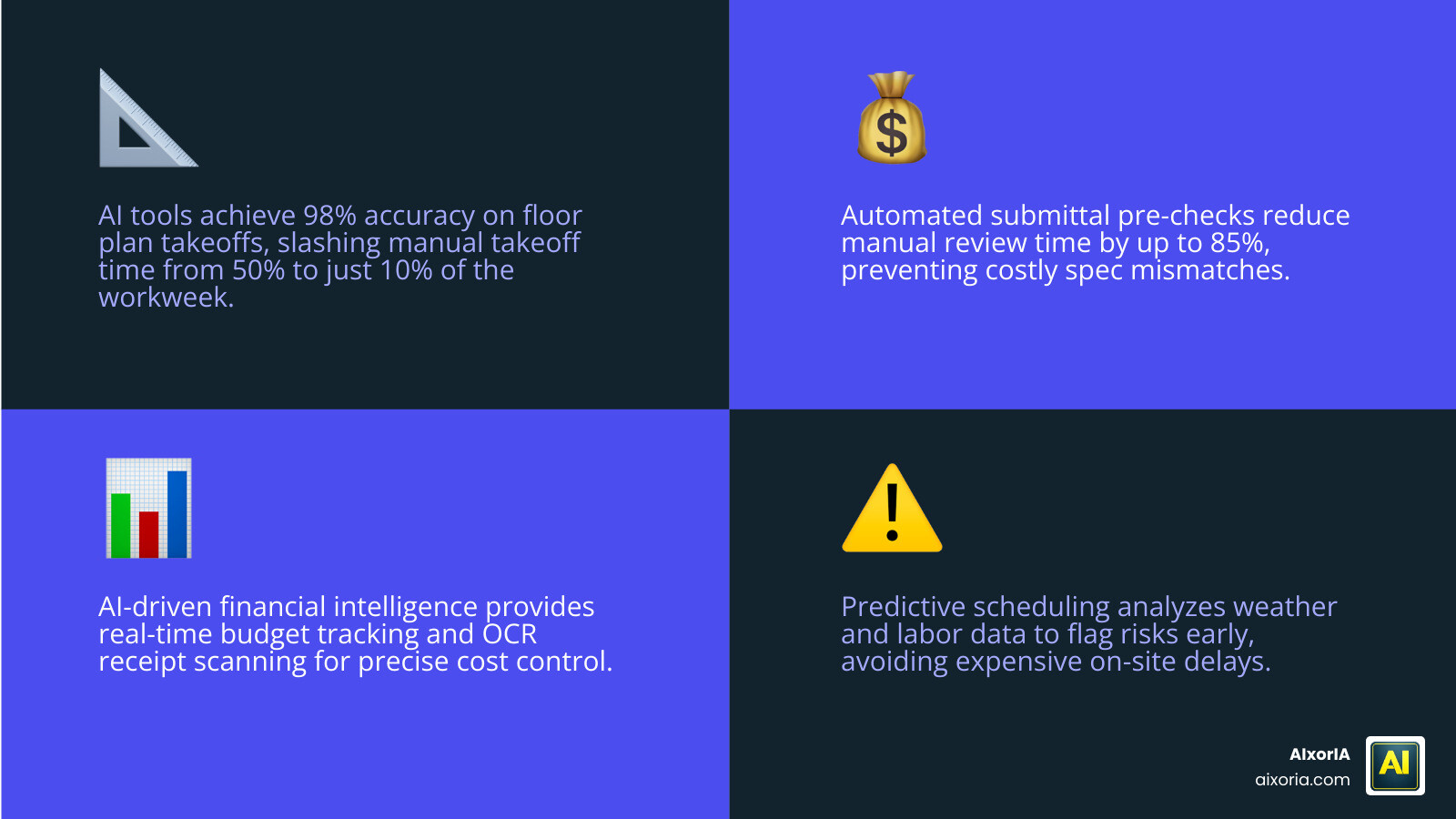
- Predictive Scheduling & Risk Flagging: The tool should analyze weather, historical data, and current labor to predict delays.
- Automated Takeoffs: Look for tools like Togal.AI that boast 98% accuracy on floor plans. This can drop takeoff time from 50% of your workweek to just 10%.
- BIM Integration: For larger firms, syncing 3D models with schedules is vital for identifying clashes before they become expensive field errors.
- Financial Intelligence: Managing the bottom line is easier with Top Ai Tools For Managing Construction Finances/ that offer OCR receipt scanning and automated budget tracking.
- Submittal Pre-checks: AI should validate submittals against specs automatically, reducing manual review time by up to 85%.
How to Choose the Best AI Tools for Construction Project Management
We recommend a “start small, scale fast” approach. Before committing to a platform, check for these three things:
- Integration Support: Does it talk to Procore, QuickBooks, or Microsoft Project? You don’t want to create new data silos.
- Mobile & Offline Capabilities: If the tool doesn’t work in a basement with no Wi-Fi, it won’t work for your field team.
- User Interface: As noted in our 8 Best Ai Tools For Construction Project Management 2026 Tested/#Comment 448, if the software is too clunky, the field team simply won’t use it.
- Document Control: Ensure it has robust 7 Best Construction Document Management Software In 2026/ features so your “version one” drawings aren’t being used when “version four” is already out.
Frequently Asked Questions about Construction AI
Will AI replace human construction project managers?
Absolutely not. AI is here to augment, not replace. Think of it as a super-powered assistant. While AI can handle the “grunt work”—like searching 2,000 pages for a specific RFI or calculating a budget variance—it cannot lead a team, negotiate with a difficult subcontractor, or solve complex on-site interpersonal conflicts. It provides the data so you can make better decisions.
How much do the best AI construction tools cost in 2026?
Pricing varies wildly. Small-scale tools like Bazy or Planaut often start with free trials and move into affordable subscriptions (ranging from $49 to $349 per month). Enterprise solutions like Procore or ALICE typically use custom quotes based on your annual construction volume (ACV). However, the ROI is usually clear: saving 25 hours a week for a PM or avoiding a single $100K rework event pays for the software many times over.
Which AI tool is best for small vs. enterprise contractors?
For residential and small contractors, Bazy and Handoff.AI are winners because they are easy to set up. For mid-sized firms, monday.com and Constructable offer the best balance of flexibility and power. For enterprise-level needs, Procore, Bricklayer.ai, and ALICE provide the deep integration and simulation power required for multi-million dollar projects.
Conclusion
The digital transformation of the construction site is no longer a “future” concept—it’s the current reality of 2026. By adopting the Best AI Tools for Construction Project Management, you aren’t just buying software; you’re buying back time for your team and protecting your profit margins from the “death by a thousand cuts” that manual errors cause.
At AIxorIA, we specialize in making this transition simple. Whether you need a custom AI solution tailored to your specific workflow or a workshop to get your field team up to speed, we provide affordable, fast customer support to help you build smarter.
Ready to reclaim your workweek? Explore more about how AI can boost your productivity and start building for the future today.
4 thoughts on “10 Best AI Tools for Construction Management 2026”