Choosing the Best Payroll Software in USA
Scr0ll d0wn to D0VVNL0AD

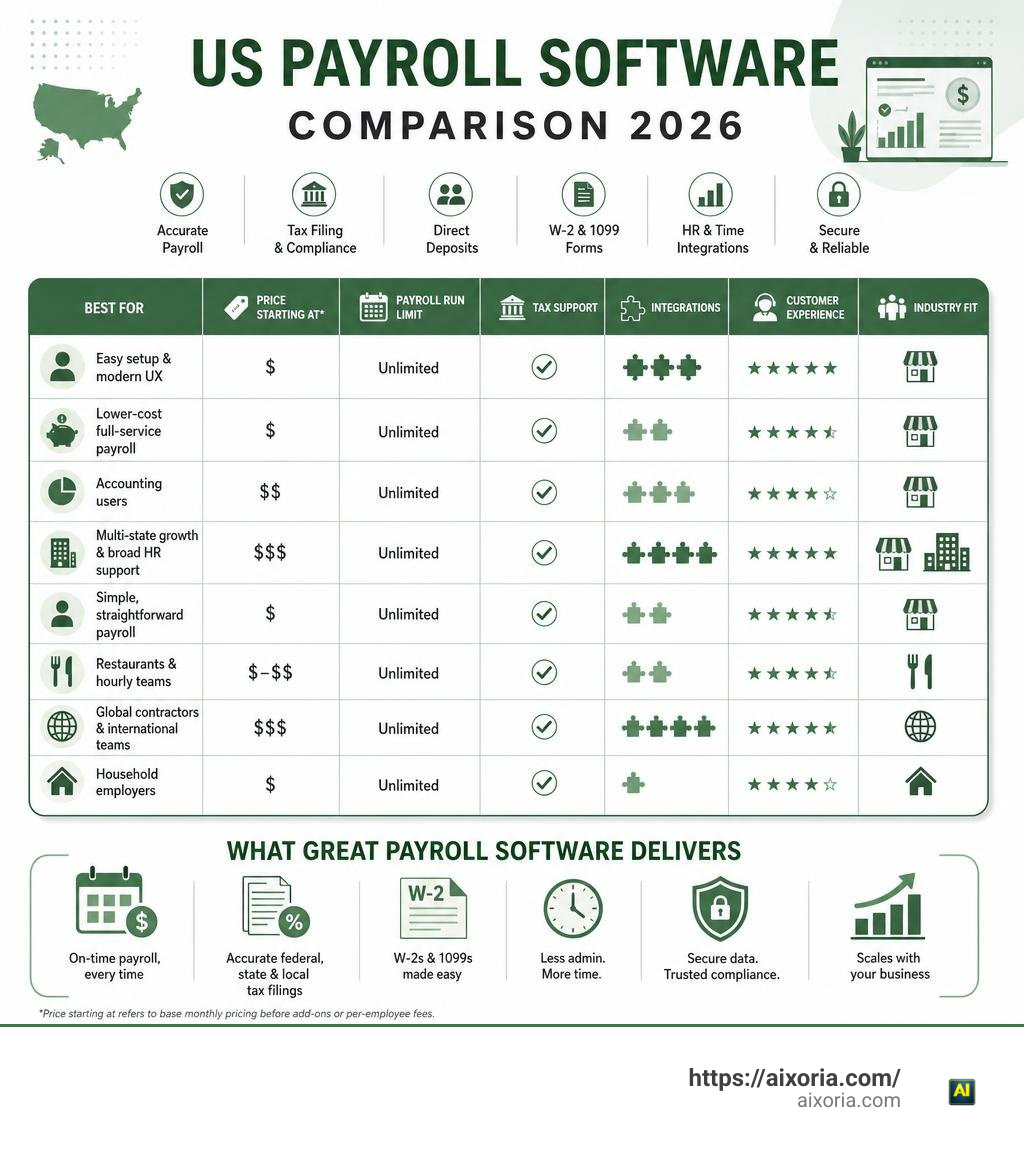
The best payroll software in usa depends on your team size, state footprint, industry rules, and need for HR or global contractor tools. For most small businesses, the strongest options are:
| Best for | Payroll software to compare |
|---|---|
| Easy setup and modern user experience | Gusto |
| Lower-cost full-service payroll | Patriot Software |
| QuickBooks accounting users | QuickBooks Payroll |
| Multi-state growth and broad HR support | ADP RUN |
| Simple, straightforward payroll | OnPay |
| Restaurants and hourly teams | Gusto or OnPay |
| Global contractors or international teams | Deel or Rippling |
| Household employers | SurePayroll |
Payroll is not just about sending direct deposits. A good platform can calculate wages, handle federal, state, and local tax filings, create W-2s and 1099s, and reduce repeat data entry between time tracking, HR, and accounting systems.
That matters because payroll mistakes are costly. IRS penalties for late payroll tax deposits can begin at 2% and rise to 15%, while late Form 940 or 941 filings can trigger monthly penalties of up to 25% of the unpaid tax.
This guide compares leading US payroll platforms on price, payroll-run limits, tax support, integrations, customer experience, and industry fit. The goal is simple: help you choose software that makes payday less risky and less time-consuming.
Key Features to Look for in the Best Payroll Software in USA

When evaluating the best payroll software in usa, we find that taking time to prioritize core functionality before signing a subscription saves hundreds of administrative hours over the business lifecycle. Modern cloud-based systems do far more than print physical checks or initiate automated direct deposits; they serve as central compliance engines for your operations.
To ensure your chosen platform scales alongside your organization, we recommend evaluating vendors across several critical categories:
- Automated Tax Calculation and Filing: The foundation of any reliable system is automated tax processing. The platform should accurately calculate, withhold, and pay federal income tax, Social Security, Medicare (FICA), and Federal Unemployment Tax (FUTA). Furthermore, it must automatically file quarterly tax forms (Form 941), annual unemployment returns (Form 940), and year-end tax documentation (W-2s and 1099s) with the IRS and relevant state revenue departments.
- Multi-State Tax Compliance: If you manage remote employees or teams spread across state lines, software must handle multi-state payroll withholding, local tax rules, and state unemployment insurance (SUI) registrations seamlessly without requiring tedious manual adjustments.
- Flexible Payroll Runs and Schedules: Look for software offering unlimited payroll runs. Off-cycle bonus distributions, unexpected commissions, or correction checks can quickly become expensive if your provider assesses individual transaction fees for each extra pay run.
- Employee Self-Service Portals: Modern platforms provide digital portals—often accessible via iOS and Android mobile apps—where team members can update direct deposit info, view digital pay stubs, complete Form W-4 updates, and download annual W-2 forms. Granting employees lifetime account access ensures they retain tax documents even after moving to new companies, significantly reducing administrative inquiries.
- Direct Accounting and Time-Tracking Integrations: Duplicate data entry is one of the primary sources of accounting discrepancies. Top platforms integrate natively with popular general ledger tools like QuickBooks Online, zeroing out manual journal entries while syncing shift data directly from point-of-sale (POS) and time-clock apps.
- Integrated Employee Benefits and HR Tools: As your team grows, combining payroll with benefits administration—including group health insurance, 401(k) retirement contributions, Flexible Spending Accounts (FSAs), Health Savings Accounts (HSAs), and pay-as-you-go workers’ compensation policies—simplifies monthly deductions and protects working capital.
Evaluating these core competencies ensures you select a platform that mitigates legal risk while streamlining day-to-day operations.
How Leading US Payroll Providers Compare on Pricing and Features
Understanding vendor pricing structures is critical to establishing a predictable budget. Across the US market, payroll providers generally charge a fixed base monthly fee combined with a per-employee or per-contractor monthly rate. However, distinct variations exist between unlimited subscription models and legacy per-payroll-run billing structures.
The breakdown below highlights how key providers structure their pricing, run limits, and tax support options:
| Payroll Provider | Starting Base Fee | Per-Worker Monthly Fee | Pay Run Limits | Tax Filing Support | Ideal Business Size |
|---|---|---|---|---|---|
| Gusto | $49/mo (Simple) | $6/worker | Unlimited runs included | Full-service federal, state, local | Solopreneurs to 100+ employees |
| Patriot Software | $17/mo (Basic) / $37/mo (Full-Service) | $4/worker | Unlimited runs included | Basic (self-file) or Full-Service automated | Cost-conscious micro & small businesses |
| OnPay | $49/mo | $6/worker | Unlimited runs included | Full-service federal, state, local | Teams seeking flat-rate simplicity |
| QuickBooks Payroll | $50/mo (Core) | $7/worker | Unlimited runs included | Automated federal & state filings | Businesses committed to QuickBooks |
| ADP RUN | Custom quotes | Custom quotes | Tiered or custom limits | Comprehensive full-service | Growing teams seeking enterprise HR |
| Justworks | $50/mo base | $8/worker | Unlimited runs included | Complete multi-state tax handling | Teams needing modular payroll & benefits |
| Deel | Custom (US Payroll from $19/worker) | Varies by service tier | Unlimited runs included | Multi-jurisdiction & global compliance | Multi-state or international teams |
Pricing structures directly influence long-term affordability. For example, platforms like Gusto, OnPay, and Patriot Software provide unlimited monthly payroll runs under a fixed monthly fee, making them exceptional options for businesses paying hourly workers weekly or running frequent off-cycle checks. Conversely, traditional platforms such as Paychex Flex often bill per payroll processing event, which can raise operating costs for companies running multi-frequency pay schedules.
Software user experience also impacts administrative savings. Modern solutions like Full-Service Payroll Services with Benefits and HR | Gusto provide intuitive, browser-based dashboards that allow business owners to complete routine payroll runs in under 10 minutes. In fact, customer research reveals that small businesses save an average of 4 hours per month—or 48 hours every year—on routine payroll management after switching to Gusto’s automated workflow.
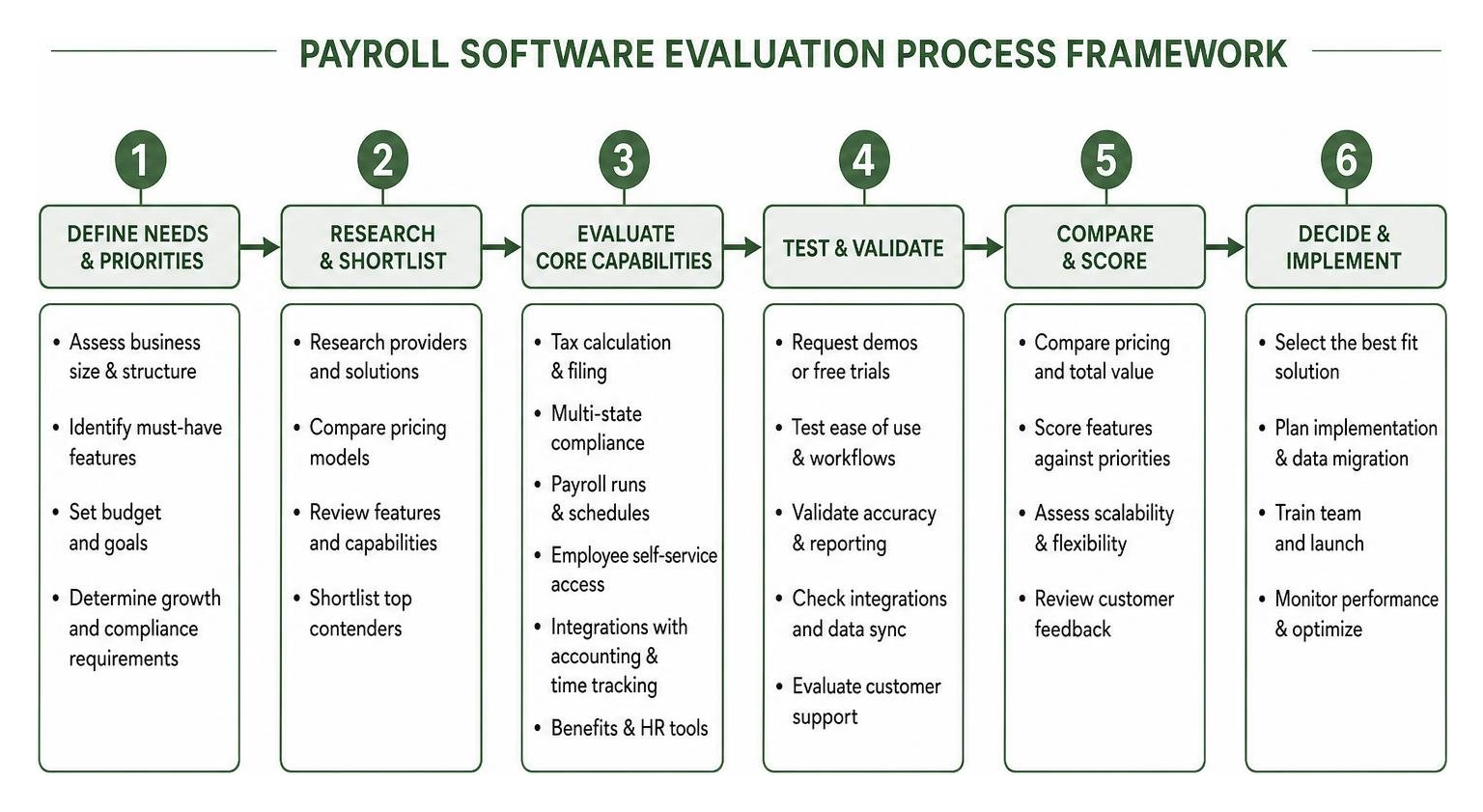
When picking a vendor, evaluate whether low entry costs align with your administrative capacities. While basic plans without automated tax filings offer lower initial price tags, full-service tiers generally deliver far better value by eliminating the time and compliance risks associated with manual tax remittances.
Tailoring Payroll Software to Specific US Industry Requirements

Different industries operate under distinct regulatory, operational, and compensation frameworks. A one-size-fits-all approach to payroll often results in compliance oversights or excessive manual work around calculating specialized wage adjustments.
Industry Fit for Specialized Best Payroll Software in USA Solutions
Selecting software tailored to your specific market sector ensures complex compliance obligations are addressed automatically:
- Restaurants and Hospitality: Food service operations face unique wage rules, including tip credit calculations, tip pooling distributions, and variable shift schedules. Platforms like Gusto and OnPay integrate directly with POS setups, helping managers automatically reconcile hourly wages against reported cash and credit tips while remaining compliant with minimum wage requirements.
- Churches and Religious Organizations: Managing payroll for ministers and clergy requires specialized software settings. Under IRS guidelines, ordained ministers enjoy dual tax status: they are treated as employees for income tax purposes but as self-employed for Social Security and Medicare taxes. Top platforms accommodate clergy housing allowance exclusions, FICA exemptions, and FUTA tax exemptions without creating calculation errors on quarterly returns.
- Healthcare and Service Facilities: Healthcare providers frequently operate round-the-clock shift rotations involving complex overtime calculations, weekend differentials, and multi-location staffing. Systems such as ADP RUN and Workday US handle continuous wage recalculations and multi-location differential rules efficiently.
- Nonprofit Organizations: Nonprofits must maintain strict expense tracking across specific grant funding streams while managing cost controls carefully. Affordable platforms like Patriot Software provide transparent pricing alongside specialized tax-exempt organization reporting.
- Household Employers: Families employing in-home caregivers, nannies, or housekeepers require tailored platforms built to manage specialized domestic employer filings. Solutions like SurePayroll simplify household payroll taxes, automating Schedule H tax filings alongside federal and state quarterly payments.
For small businesses seeking straightforward solutions, leveraging Payroll Software & Services for Small Businesses | Gusto Ranked #1 on G2 Fall 2025 provides access to industry-ready workflows that eliminate manual compliance calculations across retail, professional services, and hospitality sectors.
Managing Multi-State Compliance and International Contractors
The rise of remote work has introduced complex tax obligations for growing US employers. When an employee works remotely from a different state, businesses must generally register with that state’s tax authority, set up local state income tax withholding, and pay local State Unemployment Insurance (SUI).
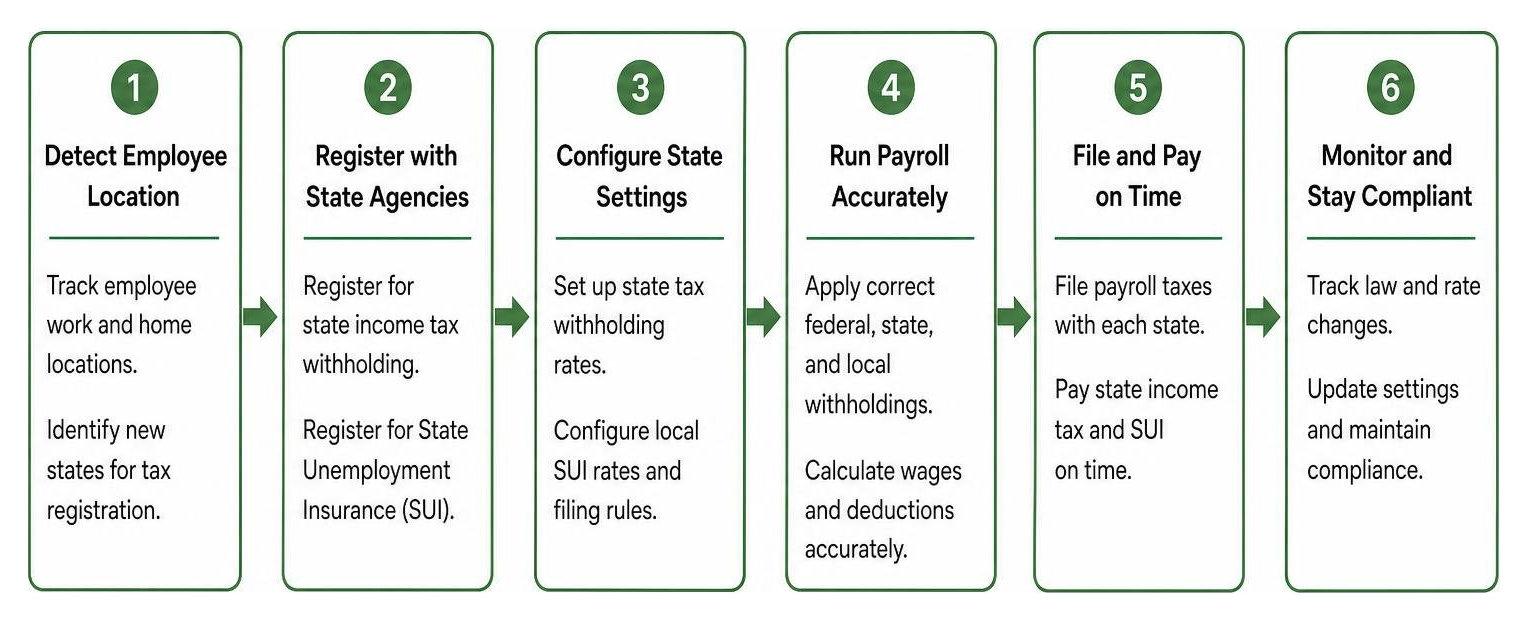
Modern full-service platforms automate multi-state payroll by tracking employee home locations and adjusting tax withholdings based on local legislation. However, for organizations expanding beyond national borders, traditional US-focused tools can reach operational limits.
Standard US payroll tools typically lack mechanisms to pay international workers in their native currencies or handle local employment contracts overseas. Businesses building global or distributed teams often require specialized platforms like Deel or Rippling, or integrated capabilities provided through SaaS Payroll & HR Solutions | Gusto, which natively supports contractor payments across 120+ countries.
For companies hiring full-time overseas staff without establishing local foreign entities, utilizing Employer of Record (EOR) platforms ensures full compliance with international labor laws, native tax withholdings, and localized benefits management.
How to Switch Providers and Maintain US Payroll Tax Compliance
Switching payroll providers may seem daunting, but following a structured roadmap eliminates payment delays and prevents duplicate tax filings.
The transition process follows key operational stages:
- Select an Optimal Switch Date: The ideal time to switch payroll software is January 1st, as starting fresh at the beginning of a new tax year eliminates the need to migrate mid-year quarter-to-date (QTD) and year-to-date (YTD) wage balances. If transitioning mid-year, aim to switch at the start of a calendar quarter (April 1, July 1, or October 1).
- Establish a Two-Week Lead Window: Allow at least two to three weeks before your targeted live pay date to import historical records, set up direct deposit details, and verify bank connectivity.
- Export Core Tax and Employee Records: Securely export all employee personal information, active W-4 selections, historical pay stubs, prior quarterly Form 941 filings, state unemployment account numbers, and rate notices from your old system.
- Configure the New Platform and Run Parallel Audits: Input your business tax identifiers (EIN, state withholding ID, SUI account numbers) into the new platform. Input employee historical earnings for the current tax year to guarantee accurate year-end W-2 generation.
- Formally Close the Previous Account: Do not close your prior software account until all quarterly filings managed by the former vendor have been completely processed and accepted by tax authorities.
Tax Filing Automation and Penalty Prevention in the Best Payroll Software in USA
Outsourcing payroll tax filings to automated software serves as an essential risk-mitigation strategy for small business owners. IRS statistics reveal that approximately 40% of small businesses incur payroll tax fines every year, facing an average penalty of $845 for late or incorrect filings. Furthermore, US small businesses historically paid nearly $5 billion in payroll-related penalties in a single calendar year.
The financial impact of non-compliance can escalate quickly under statutory penalty structures:
- Late Payroll Tax Deposits: Missing federal tax deposit deadlines triggers immediate statutory penalties under IRS enforcement. Failure-to-deposit penalties start at 2% for deposits 1 to 5 days late, increase to 5% for deposits 6 to 15 days late, and jump to 10% for deposits made more than 15 days late. If the deposit remains unpaid more than 10 days after receiving the first IRS bill, the penalty rises to 15%.
- Late Return Filings: Failing to file quarterly Form 941 or annual Form 940 on time carries a failure-to-file penalty equal to 5% of the total tax due per month, accumulating up to a maximum cap of 25%.
Deploying trusted platforms such as RUN Powered by ADP® Payroll Software | ADP or full-service alternatives eliminates these compliance concerns. These tools use automated calculation engines and built-in AI error detection to flag pay anomalies before runs complete, submitting tax deposits and quarterly forms on schedule.
Frequently Asked Questions about US Payroll Software
What is the difference between basic and full-service payroll software?
Basic payroll software focuses strictly on wage calculation, direct deposit processing, and gross-to-net paystub generation. Under a basic plan, the business owner remains responsible for manually remitting federal, state, and local payroll taxes and submitting quarterly returns (Form 941) and annual forms (Form 940, W-2s, 1099s).
Full-service payroll software automates the entire tax ecosystem. The software provider calculates tax obligations, automatically deducts payroll funds from your business account, deposits taxes with federal and local treasuries, and files all required tax documents on your behalf. Platforms like Online Payroll Software for Small Businesses – Justworks offer comprehensive tax management alongside modular HR tools, giving small business owners total administrative peace of mind.
How does per-run pricing differ from unlimited payroll run subscriptions?
Per-run pricing structures charge a base transaction fee every single time you process a payroll batch. Under this setup, paying monthly employees costs less than paying weekly employees, and executing off-cycle payroll runs—such as issuing correction checks or manual bonus distributions—incurs extra transactional fees.
Unlimited payroll run subscriptions charge a fixed monthly base price plus a fixed monthly per-employee fee. Under this model, you can process payroll as many times as necessary each month without incurring additional software charges. This subscription model provides greater budget predictability for businesses running multi-frequency pay schedules or employing hourly staff.
What setup timeline is required when switching US payroll providers?
Setting up a new US payroll platform typically takes between 1 to 3 weeks depending on company size and historical data requirements. Micro-businesses with under 10 employees using modern cloud software can often complete setup within a few days if all tax registration numbers, employee W-4s, and direct deposit details are ready.
For larger organizations or mid-year migrations requiring historical payroll data transfers, setting aside a two-week transition window ensures sufficient time for data verification and parallel payroll testing. Comprehensive enterprise solutions such as Payroll Software for the United States | Workday US may require longer implementation periods due to complex integrations across continuous recalculation engines and core HR financial suites.
Conclusion
Selecting the best payroll software in usa comes down to aligning software capabilities with your company’s operational footprint. Platforms like Gusto and OnPay offer intuitive user interfaces, automated compliance, and transparent flat-rate pricing perfect for small businesses. Cost-effective alternatives like Patriot Software provide an affordable entry point for micro-businesses, while solutions like ADP RUN deliver advanced HR capabilities designed to support multi-state growth.”https://www.mediafire.com/file/lmwkx5rpqf8uc0c/Block_Furniture_1.0_BY_MCMPDL.mcaddon/file“;
By automating tax deposits, quarterly filings, and accounting integrations, modern payroll platforms save business owners dozens of hours each month while protecting their bottom line against costly IRS late-filing penalties. Equipping your business with modern, automated workflows ensures your workforce stays compensated accurately while freeing your leadership team to focus on scaling company operations.
To discover how modern digital transformation and automated workflows can further streamline your business operations, Explore top AI productivity solutions for 2026.
2 thoughts on “Best Payroll Software in USA 2026: Top Picks Compared”