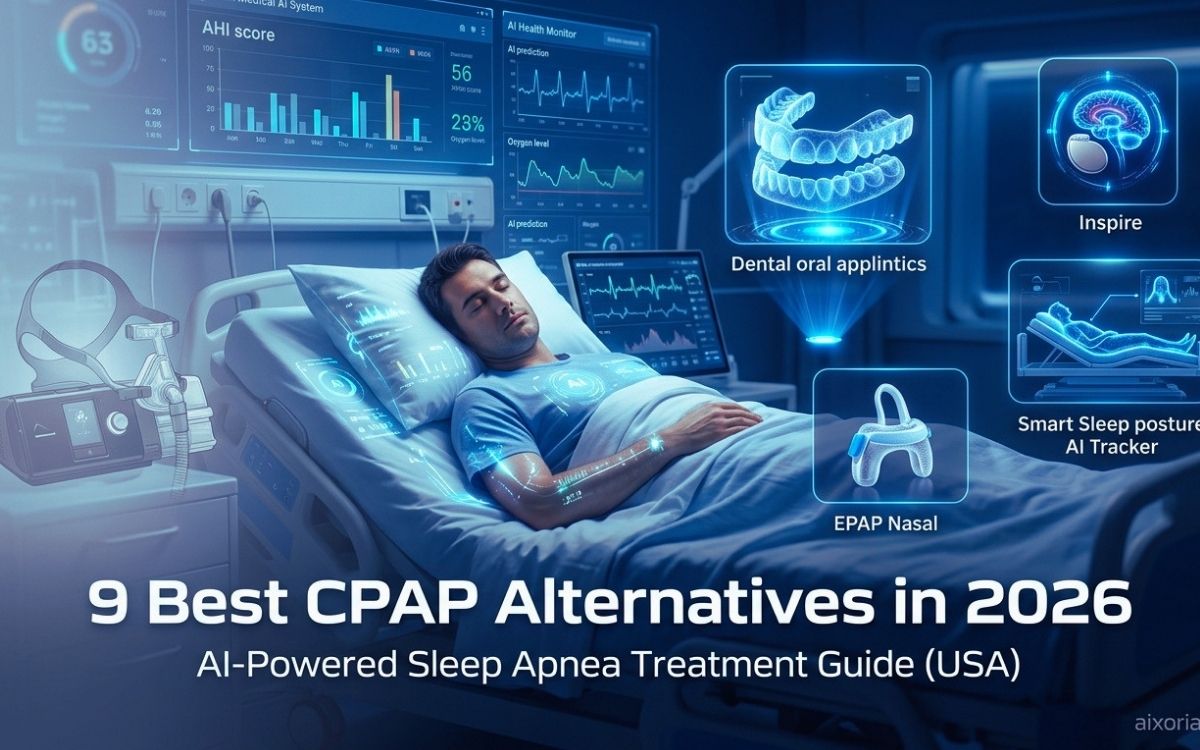
Sleep apnea treatment has changed significantly in the last few years. While CPAP (Continuous Positive Airway Pressure) is still the clinical gold standard, many patients in the U.S. struggle with long-term compliance due to discomfort, mask intolerance, and lifestyle limitations.
In 2026, treatment is no longer just about machines—it is about AI-assisted diagnosis, personalized airway modeling, and multi-therapy approaches.
Modern sleep medicine now combines:
- Sleep studies (Polysomnography)
- AHI scoring (Apnea–Hypopnea Index)
- AI-based airway collapse prediction models
- Personalized device selection based on patient breathing patterns
According to sleep medicine updates, CPAP alternatives are increasingly selected based on phenotype-based airway analysis, not just severity alone.
Table of Contents
2026 AI SHIFT: How Technology Changed CPAP Alternatives
Modern sleep labs in the U.S. now use AI-assisted systems that analyze:
- Airflow resistance patterns
- Oxygen desaturation trends
- Jaw and tongue position tracking
- Sleep posture data from wearable sensors
These systems help predict airway collapse probability before it happens, improving treatment matching.
For example:
- Patients with jaw-driven obstruction are directed toward oral appliances
- Patients with neuromuscular collapse may be guided toward Inspire therapy
- Positional apnea cases are treated with AI-tracked sleep posture correction devices
This is why 2026 CPAP alternatives are more personalized than ever before.
📊 Quick Comparison (Featured Snippet Table)
| Treatment Option | Noise Level | Portability | Clinical Success Rate |
|---|---|---|---|
| Oral Appliance | Very Low | High | 60–80% (mild/moderate) |
| BiPAP | Medium | Low | 70–85% (complex cases) |
| Inspire Therapy | None | High | 80–90% (selected cases) |
9 Best CPAP Alternatives
1. Oral Appliance Therapy (Mandibular Advancement Device)
Oral appliances are one of the most recommended CPAP alternatives for mild to moderate sleep apnea. These devices are custom-made by dentists to slightly move the lower jaw forward, keeping the airway open during sleep.
They are widely used because they are simple, silent, and easier to tolerate than CPAP machines.
Key Features
- Custom dental-fitted device
- Jaw repositioning mechanism
- Portable and travel-friendly
- No electricity or machine required
Pros
- High comfort compared to CPAP
- Easy to travel with
- Silent operation
- Good for mild to moderate OSA
Cons
- May cause jaw soreness initially
- Not ideal for severe sleep apnea
- Requires dental adjustments
Best For
- Mild to moderate sleep apnea patients
- CPAP-intolerant users
Pricing
- $1,500 – $3,500 (U.S. dental fitting included)
Medical Context
Most effective when AHI is in the mild to moderate range (5–30 events/hour).
Real Experience
The device feels slightly uncomfortable during the first few nights, but breathing improves noticeably after adjustment. Jaw pressure reduces over time with proper fitting.
2. BiPAP (Bilevel Positive Airway Pressure)
BiPAP is a more advanced CPAP alternative that delivers two pressure levels—higher during inhalation and lower during exhalation. This makes breathing easier and more natural compared to standard CPAP.
It is commonly prescribed in sleep clinics for patients who cannot tolerate CPAP or require higher pressure support.
Key Features
- Dual-pressure breathing system
- Adjustable medical settings
- Prescription-based device
- Used in clinical sleep therapy
Pros
- Easier exhalation than CPAP
- Better comfort for long sleep sessions
- Effective for complex sleep apnea
- Adjustable pressure levels
Cons
- Still requires a mask
- Expensive compared to CPAP
- Needs medical supervision
Best For
- Moderate to severe sleep apnea
- CPAP intolerance cases
Pricing
- $800 – $3,000+ (insurance dependent)
Real Experience
Patients often feel that breathing becomes smoother than CPAP, especially while exhaling, but mask usage still requires adaptation time and can feel restrictive initially.
3. Inspire Therapy (Hypoglossal Nerve Stimulation)
Inspire Therapy is a surgical CPAP alternative designed for patients with moderate to severe sleep apnea who cannot tolerate CPAP machines. It works by implanting a small device in the chest that stimulates the hypoglossal nerve during sleep, keeping the airway open naturally without a mask.
Unlike traditional CPAP, this is a fully internal therapy system, meaning no external airflow machine is required at night.
Key Features
- Implantable nerve stimulation device
- Controlled via remote control
- No mask or tubing required
- Activates automatically during sleep
Pros
- No CPAP mask or airflow needed
- High long-term comfort and compliance
- Clinically strong results for selected patients
- Natural breathing during sleep
Cons
- Requires surgical implantation
- Very high cost compared to CPAP
- Not suitable for all sleep apnea patients
- Needs medical evaluation before approval
Best For
- Moderate to severe obstructive sleep apnea
- Patients who fail CPAP therapy
- Long-term CPAP-intolerant users
Pricing
- $20,000 – $40,000 (often insurance-covered in eligible cases)
Real Experience
Most patients report a major improvement in sleep quality because they no longer need to wear a mask. However, recovery after surgery takes time, and initial adjustment to the stimulation settings is required before optimal results are achieved.
4. Weight Loss & Lifestyle Therapy
Weight loss and lifestyle therapy is one of the most natural and effective CPAP alternatives Alternativesfor patients who are overweight or have mild sleep apnea. Excess body weight, especially around the neck and upper airway, increases airway collapse during sleep. Reducing this pressure can significantly improve breathing patterns.
This approach is often recommended as a first-line supportive treatment along with medical therapy, especially for patients with mild to moderate OSA.
Key Features
- Diet and nutrition-based approach
- Regular physical activity and exercise
- Reduction of neck and abdominal fat
- Sleep hygiene improvement (timing, posture, routine)
Pros
- No medical device required
- Improves overall health and energy
- Long-term sustainable benefits
- Can reduce sleep apnea severity naturally
Cons
- Slow progress over time
- Requires strong consistency and discipline
- Not a complete cure for severe OSA alone
Best For
- Overweight patients with mild sleep apnea
- Patients looking for natural CPAP Alternatives
- Support therapy alongside medical treatments
Pricing
- Variable (depends on diet plans, gym, or medical programs)
Real Experience
Many users notice gradual improvement in breathing and snoring within a few months of consistent weight loss. Sleep becomes deeper and more stable, especially when combined with better sleep posture and routine changes.
5. Positional Therapy
Positional therapy is a simple yet effective CPAP alternative that focuses on changing the way a person sleeps. Many sleep apnea cases become worse when a patient sleeps on their back because gravity causes the tongue and soft tissues to block the airway.
This therapy trains the patient to sleep on their side using wearable devices, posture alarms, or sleep position trainers. It is especially useful for positional obstructive sleep apnea, where symptoms mainly occur in the supine position.
Key Features
- Sleep position correction devices
- Wearable posture trainers or vibration alarms
- Side-sleep training method
- No medication or machine required
Pros
- Very low cost CPAP Alternative
- Easy to start without medical procedure
- Improves breathing in positional OSA
- No side effects or complex setup
Cons
- Only works for positional sleep apnea
- Requires long-term habit change
- Less effective for severe OSA cases
Best For
- Mild positional sleep apnea patients
- Back-sleep related breathing issues
- Users looking for simple CPAP Alternatives
Pricing
- $20 – $200 (depending on device type)
Real Experience
Many users report quick improvement in snoring when they consistently avoid back sleeping. However, maintaining side-sleeping habits every night can be challenging in the long term without using a supportive device.
6. EPAP Devices (Expiratory Positive Airway Pressure)
EPAP devices are small, lightweight nasal valve-based CPAP alternatives that work without machines or electricity. Instead of pushing air into the airway like CPAP, EPAP devices create gentle resistance during exhalation, which helps keep the airway open naturally throughout the night.
They are often used for mild sleep apnea or for patients who need a simple, travel-friendly solution without complex equipment.
Key Features
- Nasal valve-based airflow resistance system
- No machine, tubing, or electricity required
- Disposable or reusable device options
- Small and travel-friendly design
Pros
- Extremely portable CPAP Alternative
- Silent operation during sleep
- Simple to use with no setup required
- Useful for travel or backup therapy
Cons
- Limited effectiveness in severe OSA
- Mild nasal discomfort for some users
- Not a full replacement for CPAP in all cases
Best For
- Mild obstructive sleep apnea patients
- Travelers needing portable CPAP Alternatives
- Users intolerant to CPAP machines
Pricing
- $50 – $200 per month (depending on brand and usage type)
Real Experience
Users often find EPAP devices easy to adapt to because they are simple and non-invasive. While comfort varies, many report reduced snoring during short-term or travel use, though results are less consistent compared to oral devices or CPAP therapy.
7. Nasal Surgery (Septoplasty / Turbinate Reduction)
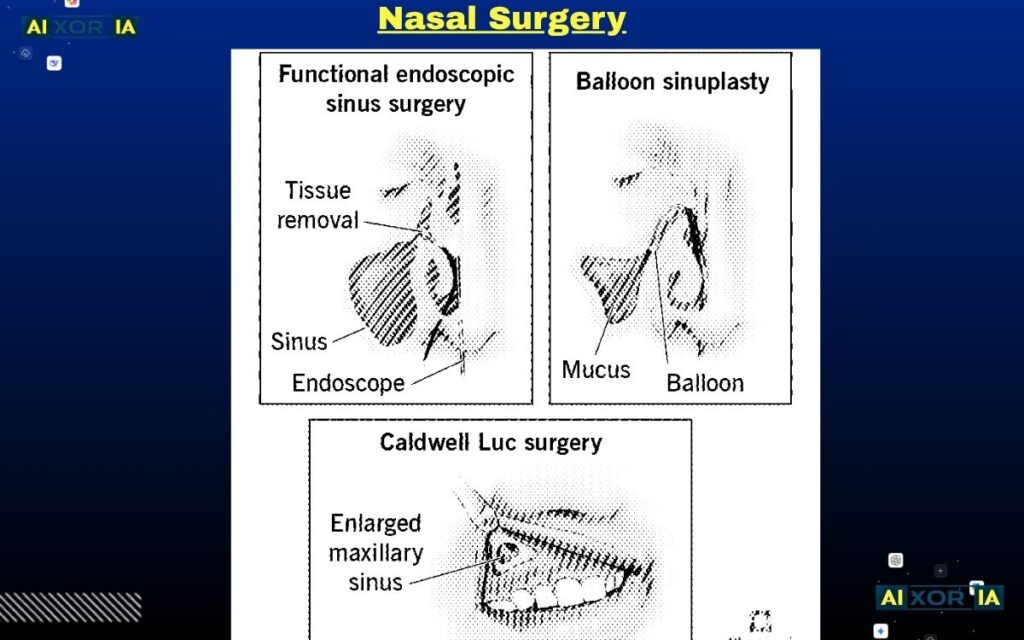
Nasal surgery is a medical CPAP alternative that focuses on correcting physical blockages inside the nose that contribute to breathing difficulty during sleep. Conditions like a deviated septum, enlarged turbinates, or chronic nasal obstruction can worsen sleep apnea symptoms and reduce oxygen flow at night.
By improving nasal airflow, surgery can significantly reduce breathing resistance, making it easier to sleep and, in some cases, improving the effectiveness of other CPAP Alternatives as well.
Key Features
- Corrects structural nasal airway blockage
- Includes procedures like septoplasty and turbinate reduction
- One-time surgical correction
- Improves nasal airflow during sleep and daytime
Pros
- Long-term improvement in breathing
- Reduces nasal obstruction significantly
- Can enhance effectiveness of other therapies
- One-time procedure with lasting results
Cons
- Surgical risks and recovery time
- Not a complete cure for sleep apnea alone
- Requires ENT specialist evaluation
- Results vary based on severity of OSA
Best For
- Patients with nasal obstruction contributing to sleep apnea
- Deviated septum or chronic nasal blockage cases
- Users needing improved airflow for other CPAP Alternatives
Pricing
- $3,000 – $10,000+ (varies by hospital and complexity)
Real Experience
Patients often report easier nasal breathing within weeks after recovery. Sleep feels less strained, especially for those who previously struggled with congestion, but sleep apnea symptoms may still require additional therapy for full control.
8. Tongue Retaining Devices (TRD)
Tongue Retaining Devices are non-invasive CPAP Alternatives designed to prevent airway blockage by holding the tongue in a forward position during sleep. In many sleep apnea cases, the tongue falls backward and partially blocks the airway, especially when sleeping on the back.
TRDs help keep the airway open mechanically without using air pressure or surgical intervention, making them a simple option for mild sleep apnea or snoring-related breathing issues.
Key Features
- Soft silicone suction-based device
- Holds tongue in forward position
- No machine or electricity required
- Simple, non-invasive design
Pros
- Affordable CPAP Alternative
- No surgical or medical procedure needed
- Helps reduce snoring in mild cases
- Portable and easy to use
Cons
- Initial discomfort for many users
- Not suitable for severe OSA
- Lower long-term compliance rate
- May cause dry mouth in some cases
Best For
- Mild sleep apnea patients
- Tongue-related airway obstruction
- Users seeking simple CPAP Alternatives
Pricing
- $40 – $150 (depending on brand and quality)
Real Experience
Users often find the device uncomfortable during the first few nights due to tongue suction sensation, but some report reduced snoring after adaptation. However, consistent long-term use can be challenging for many patients.
9. Combination Therapy (Multi-Approach Treatment)
Combination therapy is one of the most practical CPAP Alternatives in 2026, where multiple treatment methods are used together instead of relying on a single solution. Doctors often combine oral appliances, positional therapy, weight management, and lifestyle improvements to achieve better sleep apnea control.
This approach is especially useful for patients who do not respond well to CPAP or want a more flexible, non-invasive treatment plan.
Key Features
- Uses multiple CPAP Alternatives together
- Personalized treatment based on AHI severity
- May include oral devices + lifestyle + positional therapy
- Doctor-guided or sleep specialist–recommended plan
Pros
- Higher success rate than single treatments
- Flexible and customizable approach
- Reduces dependency on CPAP machines
- Improves long-term sleep quality
Cons
- Requires monitoring and adjustments
- Results vary depending on consistency
- Not a quick fix solution
- May involve multiple lifestyle changes
Best For
- Moderate sleep apnea patients
- CPAP-intolerant users
- Patients needing personalized CPAP Alternatives
Pricing
- Varies depending on combination of therapies used
Real Experience
Most patients experience gradual improvement when multiple therapies are combined, especially when oral devices and sleep posture training are used together. Results feel more stable over time, but consistency is the key factor for success.
Best CPAP Alternatives in 2026
In 2026, CPAP is still the most effective treatment for obstructive sleep apnea, but it is no longer the only solution. Modern sleep medicine in the U.S. focuses on personalized treatment based on AHI score, airway anatomy, and AI-based sleep analysis, which makes CPAP Alternatives more practical than ever.
There is no single “best” alternative for everyone. The right option depends on severity, comfort, lifestyle, and medical condition.
Best Overall CPAP Alternatives by Use Case
- Best non-surgical option → Oral Appliance Therapy
- Best advanced medical solution → Inspire Therapy
- Best natural improvement → Weight loss & lifestyle therapy
- Best simple lifestyle fix → Positional therapy
- Best portable option → EPAP devices
Key Medical Insight (2026 Update)
Sleep specialists now classify treatment based on:
- AHI severity levels (mild, moderate, severe)
- Airway collapse pattern
- AI-driven sleep tracking data
- CPAP intolerance history
This means treatment is no longer “one machine fits all” — instead, CPAP Alternatives are chosen like a personalized medical plan.
Final Recommendation
If CPAP is not working for you, the best approach is not to quit treatment entirely, but to switch to a clinically guided alternative based on your sleep study results.
For most patients in the U.S.:
- Mild cases → Oral devices or positional therapy
- Moderate cases → Oral devices or combination therapy
- Severe cases → Inspire therapy or BiPAP alternatives
Closing Thought
CPAP Alternatives in 2026 are not just backup options—they are part of a modern, personalized sleep medicine system designed to improve comfort, compliance, and long-term health outcomes.