Why AI Resource Allocation Is a Game-Changer for Small Businesses
AI resource allocation is the process of using artificial intelligence to automatically assign and optimize resources — people, time, money, and equipment — so your business gets the most value from what it has.
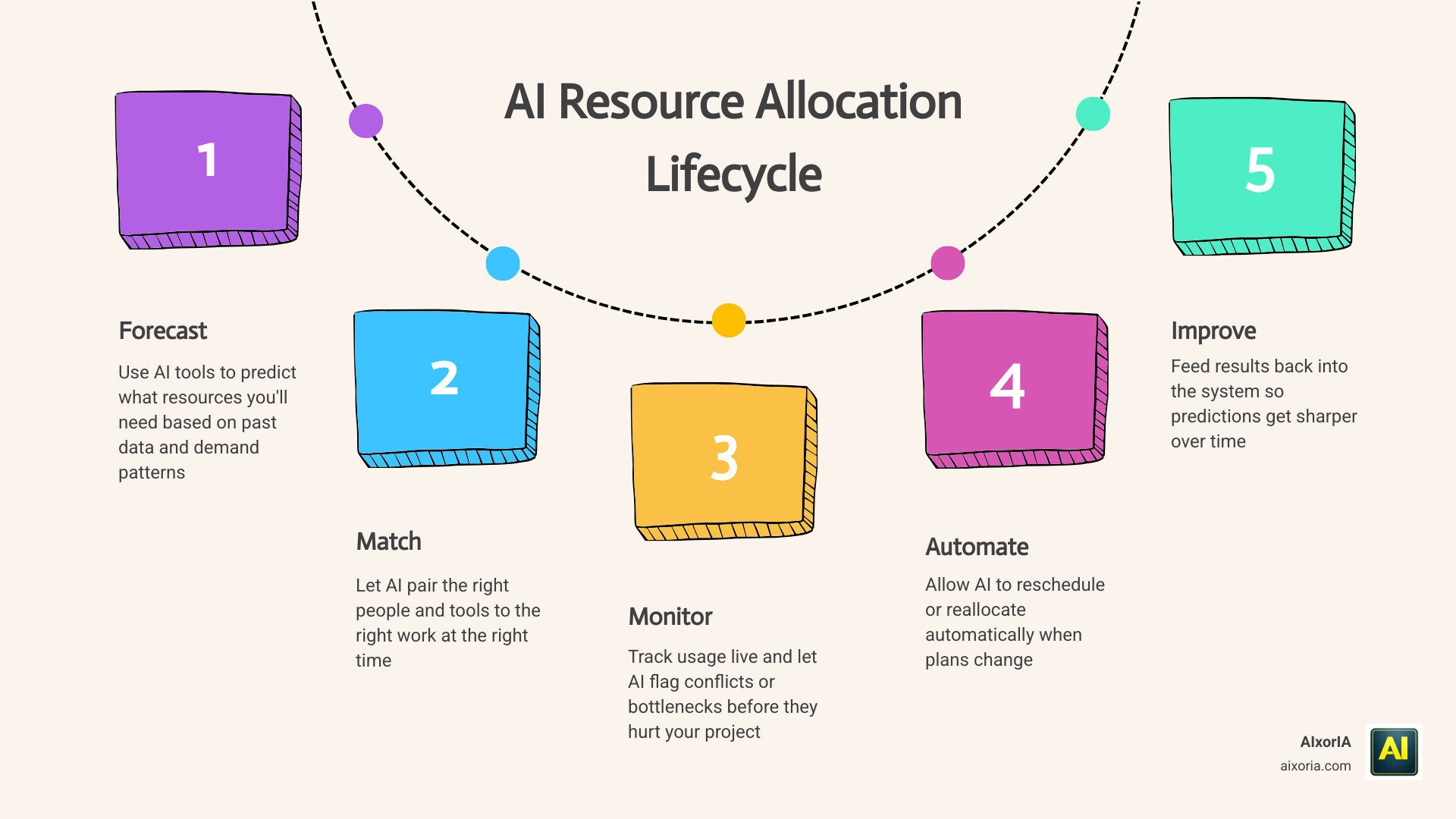
Here’s a quick breakdown of how to allocate AI resources efficiently:
- Forecast demand — Use AI tools to predict what resources you’ll need based on past data
- Match resources to tasks — Let AI pair the right people and tools to the right work at the right time
- Monitor in real time — Track usage live and let AI flag conflicts or bottlenecks before they hurt your project
- Automate adjustments — Allow AI to reschedule or reallocate automatically when plans change
- Review and improve — Feed results back into the system so predictions get sharper over time
If you’ve ever scrambled to figure out who’s doing what, overspent on equipment you barely used, or watched a project fall behind because the wrong person was on the wrong task — you already know how painful poor resource management feels.
The good news? AI can fix most of that.
Traditional resource planning relies on spreadsheets, gut instinct, and fixed rules. These approaches work fine when your business is small and predictable. But as complexity grows, they break down fast.
AI-driven tools go further. They analyze patterns across hundreds of variables simultaneously, spot problems before they happen, and suggest smarter ways to deploy what you already have. Research shows AI-driven resource management can cut scheduling time by around 30%, reduce overtime costs by 5–8%, and push workforce utilization up by 10–20%.
For a small business owner without a dedicated operations team, that’s not a nice-to-have. That’s a lifeline.
The Core Mechanics of AI Resource Allocation
To understand how AI resource allocation works, we need to look under the hood. Unlike a human manager who might look at a calendar and a list of names, AI systems treat resource management as a continuous, high-speed optimization problem.

Traditional methods use “static allocation.” This means you set a plan on Monday, and even if a team member gets sick on Tuesday or a client moves a deadline on Wednesday, the plan stays the same until someone manually fixes it. AI uses “dynamic scaling.” It continuously monitors the environment and shifts resources on the fly to meet current demand.
Moving Beyond Static Rule-Based Systems
For years, businesses relied on “threshold-based scaling.” For example, a rule might say, “If we have more than 50 support tickets, assign one more person to the help desk.” While better than nothing, this logic is reactive and often too late.
AI-driven systems use attention-based workload prediction and dynamic resource allocation for heterogeneous computing environments to look ahead. By identifying “burstiness” and temporal patterns in historical data, these systems can predict a surge in demand before it happens.
| Feature | Traditional Methods | AI-Driven Allocation |
|---|---|---|
| Decision Speed | Manual/Slow | Real-time/Instant |
| Data Inputs | Limited (Spreadsheets) | Massive (Hundreds of variables) |
| Logic | Fixed rules (If/Then) | Predictive & Adaptive |
| Accuracy | Prone to human error | Data-backed precision |
Leveraging Heterogeneous Computing Environments
In the tech world, we often talk about “heterogeneous computing.” This is a fancy way of saying we use different types of processors—like CPUs for general tasks and GPUs for heavy AI lifting—to get the job done.
Small businesses often face a similar situation with their “human hardware.” You have specialists (GPUs) and generalists (CPUs). AI helps manage this mix by ensuring high-value specialists aren’t stuck doing low-value general tasks. Research into AI-driven resource allocation for microservices in hybrid cloud platforms shows that using reinforcement learning to manage these diverse resources can improve efficiency by 20–30% and reduce latency during peak periods.
How to Implement AI Resource Allocation in Your Business
Implementing these systems doesn’t require a PhD. In 2026, most small businesses can access these benefits through user-friendly software that handles the complex math behind the scenes.

The first step is moving away from “gut feel” and toward data-backed decisions. You can start by checking out our guide on the best AI tools for business in 2026: autonomous agents, ROI formula, enterprise guide to see which platforms fit your industry.
Predicting Needs with AI Resource Allocation Tools
The “magic” of AI starts with historical data. By feeding your past project timelines, budgets, and staffing levels into an AI tool, the system learns your business’s unique rhythm. It identifies patterns that humans miss—like the fact that your graphic designer’s output slows down every October, or that certain types of projects always require 20% more budget than quoted.
For enterprise-level insights on a small business budget, look at the best AI productivity tools for enterprise in 2026. These tools use demand forecasting to tell you exactly how many people you’ll need three months from now, allowing you to hire or contract with confidence.
Real-Time Optimization in AI Resource Allocation
Once your project is live, AI acts as a 24/7 air traffic controller. It provides:
- Conflict Detection: It flags if a piece of equipment is double-booked across two jobs.
- Skill Matching: It suggests the best person for a task based on their past performance and current availability.
- Automated Rescheduling: If a task finishes early, the AI can pull the next task forward, keeping the momentum going.
To find the right software to handle these tasks, browse our list of what are the best AI tools for work to find a solution that integrates with your existing calendar and email.
Balancing Efficiency and Fairness with Structured Randomization
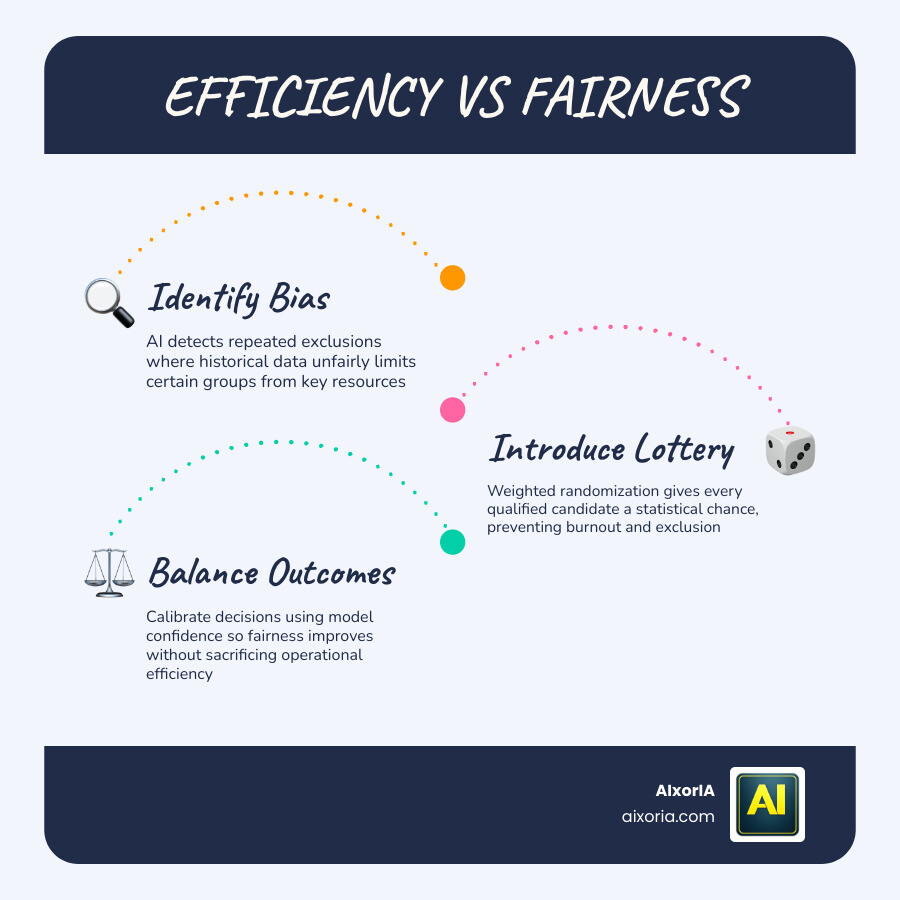
One of the biggest risks of AI resource allocation is that the “most efficient” decision isn’t always the “fairest” one. If an AI always assigns the hardest tasks to your most productive employee because they are the fastest, that employee will eventually burn out.

Addressing Structural Injustice in Allocation
Traditional AI models can accidentally reinforce bias. For example, if a model sees that a certain group has historically been denied resources, it might continue to deny them resources to “maximize efficiency.”
To combat this, we can use “structured randomization.” This involves introducing a “weighted lottery” into the decision-making process. Instead of the AI making a 100% deterministic choice, it gives “claims” to different individuals. Even if someone isn’t the “top” candidate, they still have a statistical chance of being selected. This prevents the same people from being consistently excluded by an algorithm.
Calibrating Decisions Based on Model Uncertainty
We also need to consider optimizing AI in resource allocation by looking at uncertainty. If an AI is only 51% sure that “Person A” is better than “Person B,” making a hard decision in favor of Person A is unfair. In these cases, randomization is actually more ethical because it acknowledges the model’s limitations.
Maximizing ROI through Cost Optimization and Capacity Planning
At the end of the day, AI resource allocation is about the bottom line. For small businesses, “trapped capital”—money tied up in unused inventory or idle staff—is a silent killer.
Reducing Waste and Improving Delivery Times
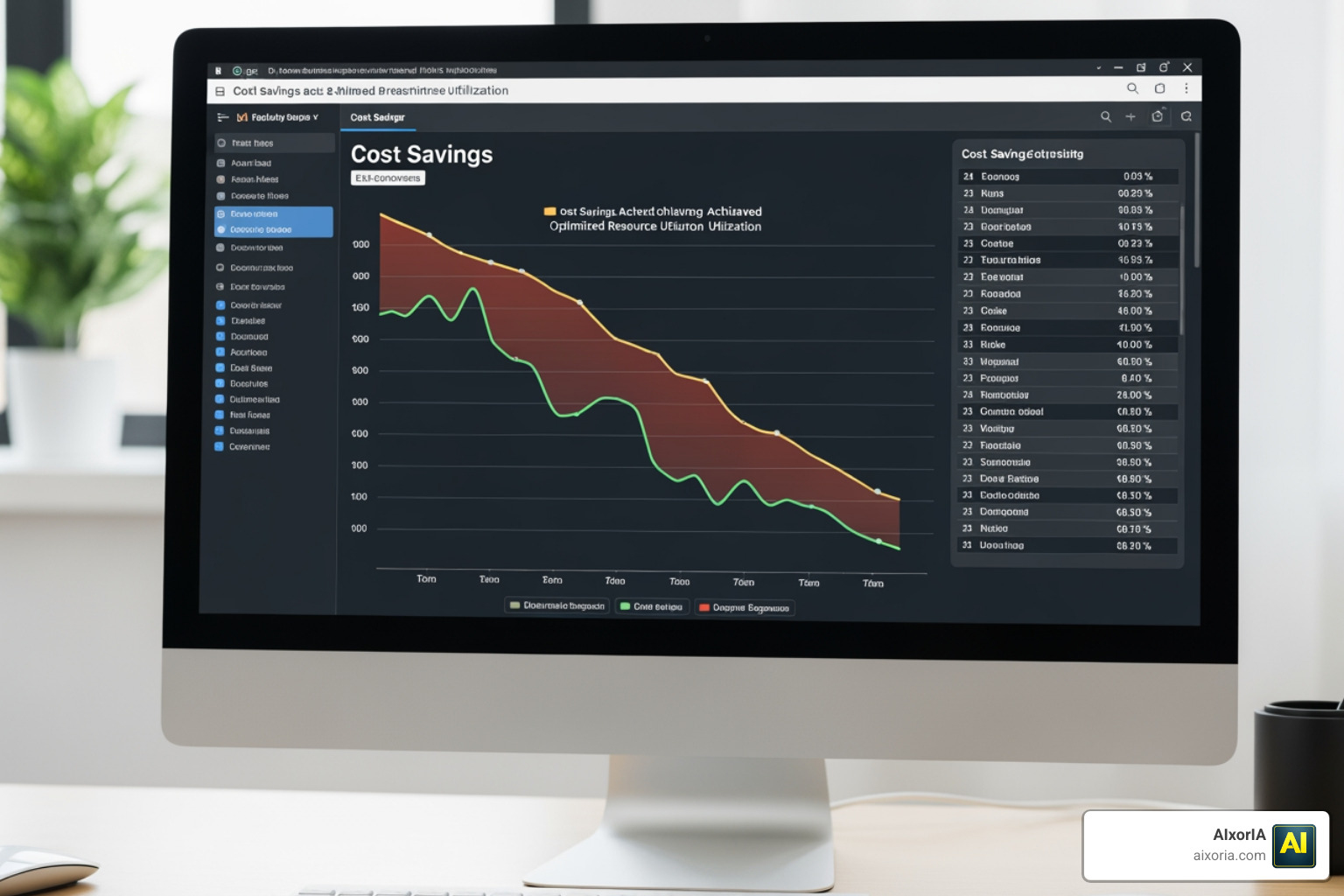
AI helps you identify exactly where you are wasting money. For instance, rather than buying a piece of expensive equipment that sits idle 60% of the time, an AI tool might suggest renting it only for the specific days it’s needed. This kind of insight can lead to a 30-40% reduction in expenditure compared to manual provisioning.
By following 10 resource allocation strategies for optimized performance, you can ensure your Service Level Agreements (SLAs) are met with minimal violations—research shows AI can keep SLA violations as low as 2.3% while maintaining high utilization.
Strategic Talent and Capital Management
Your people are your most expensive and valuable resource. AI helps you manage them better by:
- Forecasting hiring needs so you aren’t rushing to find talent at the last minute.
- Improving employee satisfaction by allowing for automated shift swaps and preventing workload “stacking.”
- Managing OpEx and CapEx by predicting the ROI of every resource move.
For more on managing your team’s time, see the best AI tools for productivity and time management and the best AI productivity tools for entrepreneurs 2026.
Overcoming Implementation Challenges and Security Risks
Transitioning to AI-driven systems isn’t without its hurdles. Data security and team buy-in are the two biggest obstacles we see at AIxorIA.

Navigating Data Security and Privacy
When you give an AI tool access to your business data, you must ensure it’s protected. We recommend:
- Multi-factor authentication (MFA) for all users.
- Encryption protocols for data at rest and in transit.
- Regular audit trails to see exactly how the AI made its decisions.
Managing Organizational Change and Adoption
Your team might be worried that “the robots are taking over.” It’s important to frame AI as a “co-pilot” rather than a replacement. We advocate for a “human-in-the-loop” approach. This means the AI generates a draft schedule or resource plan, but a human manager always provides the final approval. This maintains transparency and ensures that “tribal knowledge”—the stuff not in the data—is still considered.
Frequently Asked Questions about AI Resource Allocation
How does AI resource allocation differ from traditional project management?
Traditional project management is often static and reactive, relying on manual updates. AI resource allocation is dynamic and predictive, using real-time data to adjust plans before problems occur.
Can randomization actually improve fairness in AI decisions?
Yes! By using weighted lotteries, you ensure that people with “claims” to a resource aren’t shut out just because they aren’t the #1 statistical choice. This prevents systemic exclusion and accounts for model uncertainty.
What are the primary cost benefits of AI-driven allocation?
The biggest benefits are reduced resource waste (up to 40%), lower overtime costs (5-8%), and better capital distribution by identifying “trapped” funds in underperforming areas.
Conclusion
At AIxorIA, we believe that you shouldn’t need a massive corporate budget to access world-class technology. AI resource allocation is no longer a futuristic concept—it’s a practical tool that small businesses can use today to work smarter, stay fair, and grow faster.
Whether you’re looking for custom AI solutions, performance audits to find your “trapped capital,” or tool training workshops to get your team up to speed, we’re here to help. Our mission is to provide simple language help and affordable services that make complex tech feel easy.
Ready to see how AI can transform your operations? Explore AI tools for industrial engineering in 2026 or contact us today for a consultation. Let’s build a more efficient future together.