AI Tools for Mental Health Therapists: Notes and Scheduling
Scr0ll d0wn to D0VVNL0AD
AI tools for notes and scheduling for mental health therapists can draft session notes, offer online booking, and send appointment reminders. The best fit depends on your workflow: some tools handle documentation alongside your current practice system, while others combine notes and scheduling in one place.
Start by checking whether a tool supports your note format, works with your calendar or EHR, and offers a Business Associate Agreement before it handles client data. Get client consent before recording sessions, and review every AI-drafted note before signing it. AI can ease the paperwork; clinical judgment stays with the therapist.
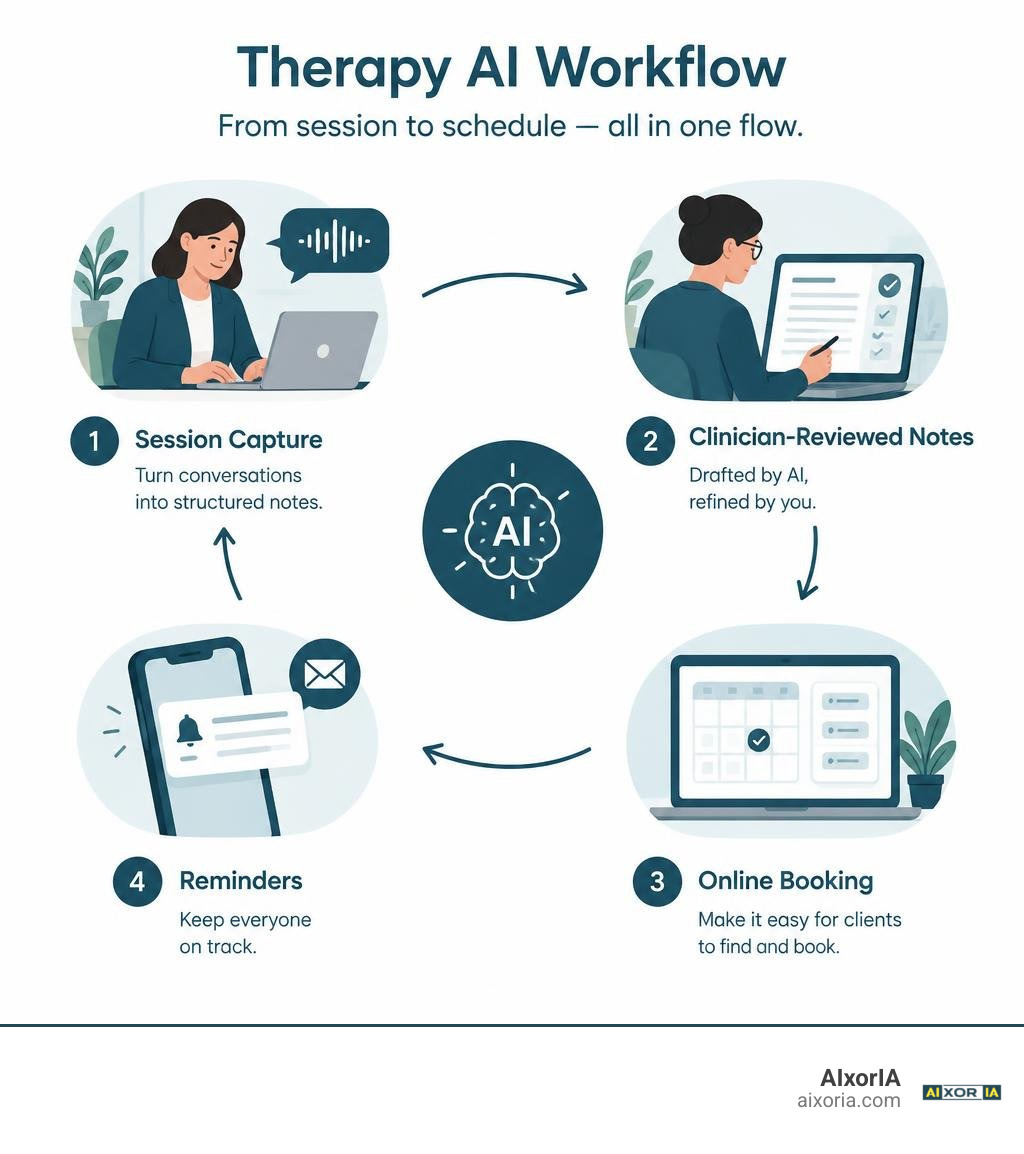
Why AI Tools for Mental Health Therapists for Notes and Scheduling Are Transforming Practices
Therapists get into mental health to connect with people, not to become full-time data entry clerks. Yet, administrative tasks are one of the biggest drivers of clinician burnout. Mental health professionals can spend upwards of 25 minutes writing a single note, easily racking up 15 or more hours of unpaid documentation every week.
Adopting specialized top AI support tools for mental health allows practitioners to offload routine administrative chores. Instead of spending evenings catching up on charting or managing calendar mix-ups, therapists use artificial intelligence to reclaim billable hours, stay present with clients, and maintain a healthier work-life balance.
How Automated Documentation Reclaims Weekly Clinical Hours
Traditional documentation forces clinicians to choose between scribbling notes during a session—breaking eye contact and therapeutic presence—or carrying hours of charting home. AI documentation tools bridge this gap using ambient clinical intelligence.
By listening in real time to in-person or telehealth sessions (with explicit client consent), or by ingesting brief post-session dictation, AI note generators transcribe dialogue and automatically format it into structured clinical records within 60 seconds. Rather than wrestling with manual typing, clinicians can use behavioral health platforms to generate structured drafts in formats such as SOAP, DAP, BIRP, and GIRP.
Modern systems function much like specialized medical transcription software, but with an added layer of clinical context. The potential time savings depend on the clinician’s workflow, note complexity, and review process. A short pilot can reveal whether a tool produces usable drafts without adding unnecessary editing time.
How Smart Scheduling Eliminates Client No-Shows and Intake Friction
Scheduling bottlenecks and missed appointments directly impact practice revenue. When prospective clients reach out during a mental health crisis or motivation spike, delayed responses often result in lost inquiries.
AI-powered scheduling eliminates these friction points by providing 24/7 self-service intake and booking. Automated systems verify calendar availability, cross-reference room allocations, send intake packets, and collect deposit information automatically.
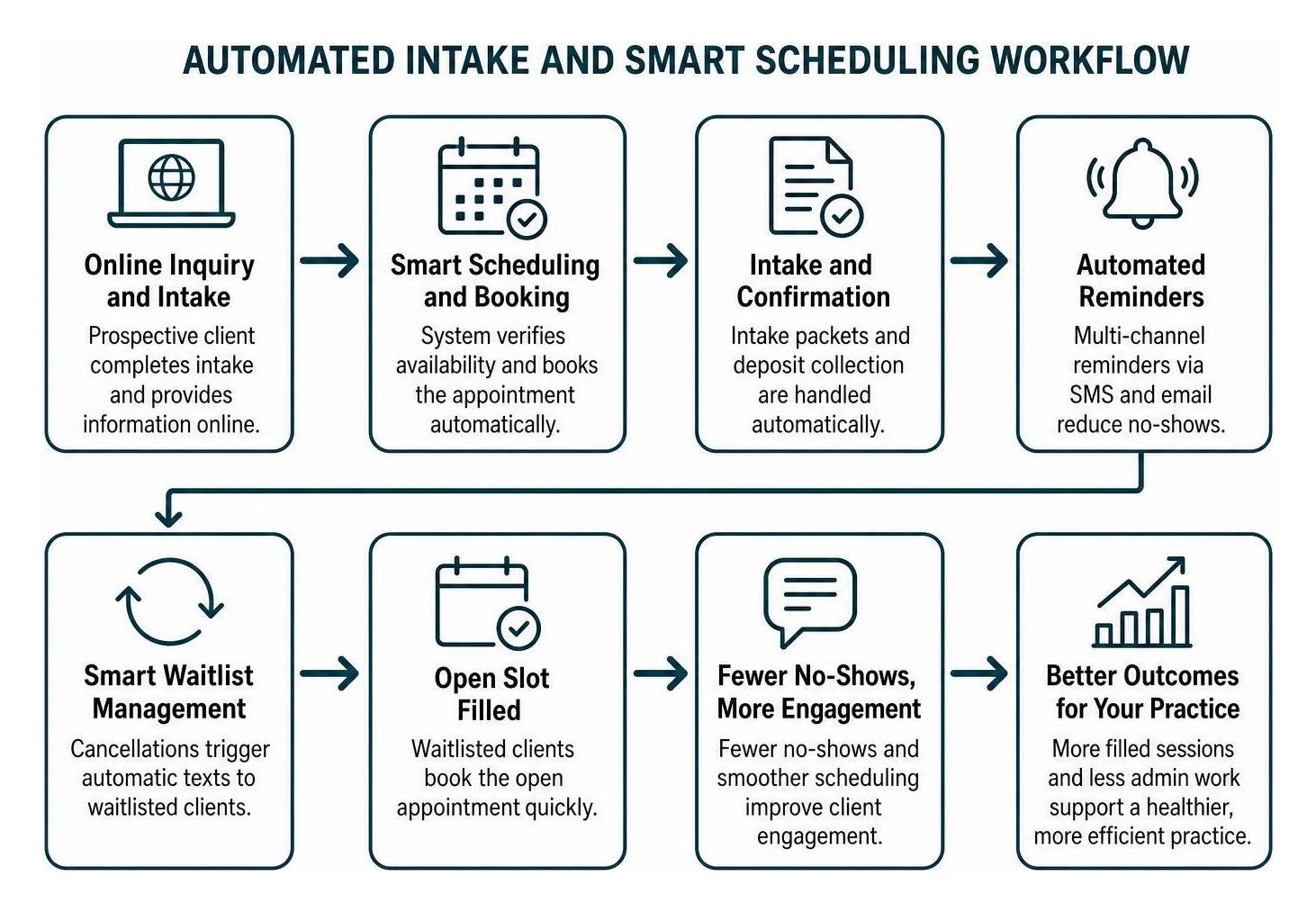
Furthermore, AI scheduling assistants use multi-channel reminder cadences (SMS and email) to drastically lower no-show rates. Platforms utilizing these modern scheduling software features report reducing missed appointments by 30% to 60%. Smart waitlists automatically text waitlisted clients when a cancellation occurs, filling vacant calendar slots without requiring manual intervention from front-desk staff or solo practitioners.
Evaluating AI Documentation and Practice Management Platforms
Choosing the right software depends on whether you want an AI assistant that sits alongside your current setup or an all-in-one practice management ecosystem.

| Evaluation area | What to assess before choosing a platform |
|---|---|
| Note formats | Confirm the platform can create the clinical documentation formats your practice uses, such as SOAP, DAP, BIRP, or GIRP. |
| Workflow fit | Decide whether you need a tool that works alongside an existing EHR or a unified system for notes, scheduling, telehealth, and billing. |
| Privacy controls | Verify that the vendor will sign a Business Associate Agreement and offers appropriate access controls, encryption, and data-handling practices. |
| Scheduling tools | Look for calendar synchronization, intake workflows, appointment reminders, and waitlist support that match your practice’s needs. |
| Pilot and support | Test the documentation quality, staff training needs, and support process before committing to a long-term rollout. |
Standalone AI Scribes vs. All-in-One AI-Native EHRs
When evaluating ai tools for mental health therapists for notes and scheduling, clinicians typically face a strategic fork in the road: standalone AI scribes versus all-in-one AI EHR platforms.
- Standalone AI Scribes (Overlays): Dedicated discreet ambient AI note takers work alongside an established EHR and focus on listening, transcribing, and formatting notes. Once generated, the clinician can copy, paste, or sync the reviewed draft into the primary system. This model can avoid a disruptive data migration while improving charting speed.
- AI-Native EHR Platforms: These systems combine documentation, scheduling, telehealth, and billing in one workflow. Their advantage is tighter coordination: the session ends, the progress note is drafted, and the next appointment can be scheduled without moving between separate systems.
Key Features to Look for in AI Tools for Mental Health Therapists for Notes and Scheduling
When selecting software for your clinic, ensure the platform provides these essential capabilities:
- Behavioral Health Note Templates: Look beyond basic summaries. Your software must natively handle SOAP, DAP, BIRP, and GIRP formats, as well as comprehensive intake assessments.
- Longitudinal Context (“Golden Thread”): The best AI tools for healthcare professionals track client goals and treatment milestones across multiple sessions so every note connects to long-term treatment plans for audit readiness.
- Automated Risk Detection: Platforms with clinical safety triggers can scan dialogue for self-harm or crisis indicators and immediately flag them for supervisory review.
- Supervisor and Group Practice Controls: Group practices require role-based access, student intern tracking, and multi-provider scheduling dashboards.
- Bidirectional Calendar Sync: Prevents double-booking by syncing practice availability with personal calendars (Google, Outlook) in real time.
Privacy, Ethics, and HIPAA Compliance in Behavioral Health AI
Security is paramount when handling Protected Health Information (PHI). Nearly three-quarters (74%) of generic consumer AI therapy applications have been identified as posing critical privacy risks. Mental health professionals cannot simply paste session transcripts into consumer chatbots.
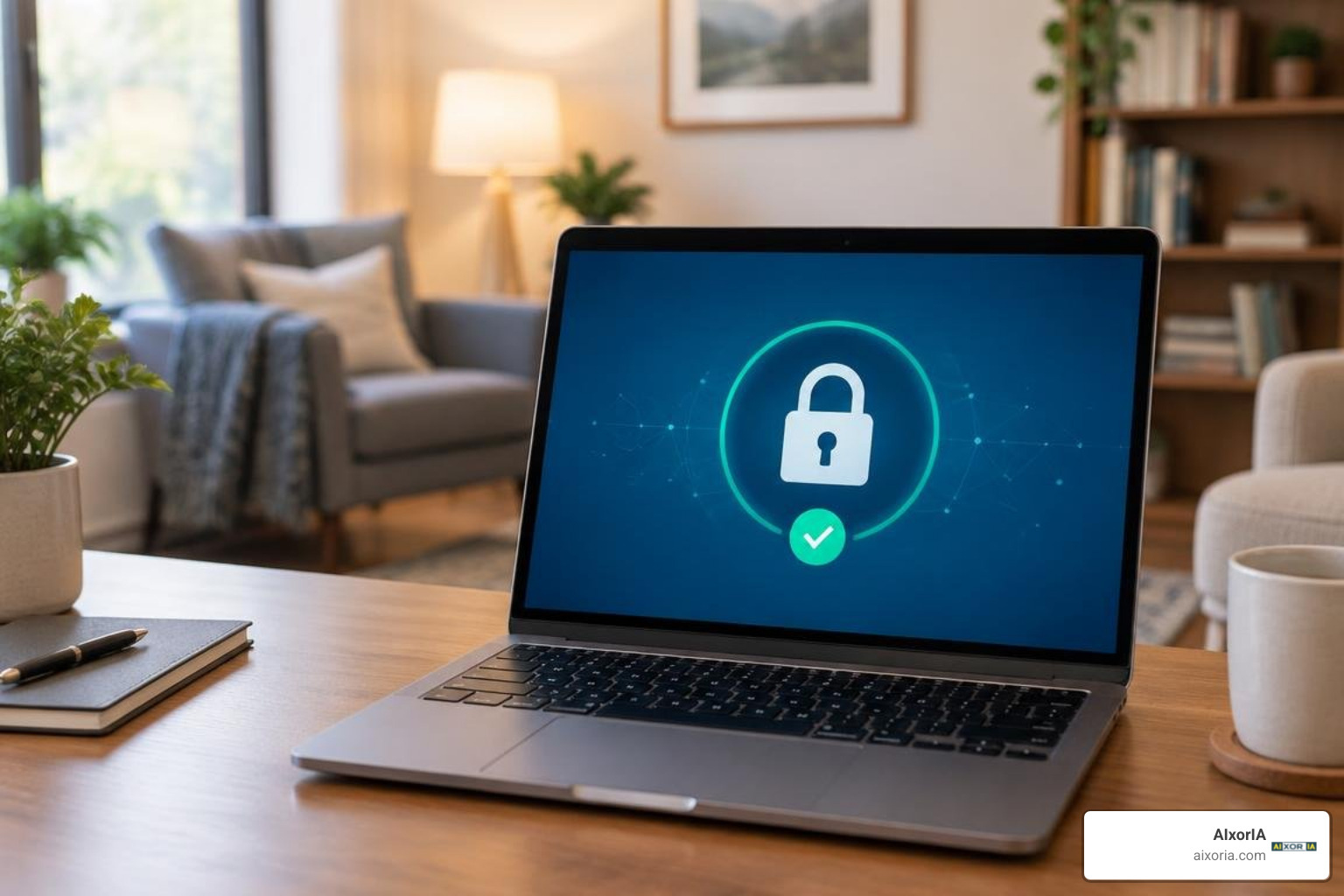
Practitioners evaluating privacy-first platforms should understand the technical baselines required to protect sensitive client discussions.
How AI Tools for Mental Health Therapists for Notes and Scheduling Ensure HIPAA Compliance
To meet federal and international compliance standards (HIPAA, PHIPA, PIPEDA), specialized clinical tools implement strict security measures:
- Executed Business Associate Agreements (BAAs): Under HIPAA regulations, third-party software vendors processing PHI should have an appropriate Business Associate Agreement (BAA) in place before handling PHI.
- Zero-Data Model Training: Legitimate clinical AI platforms do not use client session audio, transcripts, or personal health details to train underlying large language models.
- End-to-End Encryption: Data must be encrypted in transit using modern TLS protocols and at rest using AES-256 standards.
- On-Device Redaction and Auto-Deletion: Leading platforms redact identifying information directly on the local machine before transmission and automatically purge raw audio recordings immediately after transcription.
While general productivity AI note-taking applications are helpful for non-clinical tasks, mental health documentation requires software engineered specifically for healthcare privacy.
Navigating Clinical Boundaries and Ethical Oversight
AI is an administrative assistant, not a licensed clinician. Maintaining ethical boundaries requires clear protocols:
- Human-in-the-Loop Review: Clinicians must personally read, edit, and sign off on every AI-generated progress note before committing it to the legal record.
- Separation of Psychotherapy Notes: Official progress notes (shared with billing and insurance) must remain architecturally separated from intimate process notes, preserving sensitive client disclosures.
- Informed Client Consent: Always obtain written and verbal consent from clients before initiating ambient recording or transcription during sessions.
Implementation Guide: Integrating AI into Your Therapy Workflow
Transitioning your practice to AI-assisted workflows should be systematic:
- Audit Your Current Bottlenecks: Determine whether your biggest time sink is progress note backlog, intake scheduling friction, or billing delays.
- Execute Vendor BAAs: Never process client data without an active Business Associate Agreement in place.
- Establish Consent Protocols: Update intake paperwork with clear disclosures outlining how session audio is processed, encrypted, and automatically deleted.
- Run a 14-Day Pilot: Test your selected software across 10 to 15 sessions. Evaluate how well the tool captures your clinical voice and handles complex client interactions.
- Standardize Team Templates: For group practices, align clinicians on standard note formats (such as SOAP or DAP) to maintain consistent documentation across the organization.
Frequently Asked Questions About AI for Mental Health Practice
Are AI therapy note generators legally HIPAA compliant?
Yes, provided the software vendor signs a Business Associate Agreement (BAA), utilizes AES-256 data encryption at rest and in transit, maintains strict access controls, and does not train public AI models on protected health information. Always verify compliance documentation prior to onboarding.
How much do AI tools for therapy notes and scheduling typically cost?
Entry-level standalone AI note generators start between $14.99 and $19.00 per month for solo practitioners. Comprehensive, unlimited AI documentation tiers generally range from $39.00 to $99.00 monthly. All-in-one AI-native EHR platforms offering scheduling, billing, and documentation range from $39.00 to $79.00 per clinician per month. Most providers offer free trials lasting 7 to 14 days without requiring credit card details.
Can AI tools write specialized formats like EMDR or couples therapy notes?
Yes. Leading clinical AI tools support specialized modalities including EMDR, CBT, DBT, trauma-informed care, and multi-party couples or family therapy. These platforms attribute dialogue across multiple speakers and track individual progress toward unique treatment plan goals.
Conclusion
Administrative overload should not stand between mental health therapists and impactful client care. By deploying purpose-built AI tools for documentation and scheduling, clinicians can eliminate hours of charting backlog, reduce appointment no-shows, and protect their personal well-being.
At AIxorIA, we help modern practices navigate technical transformation safely. Explore our strategic automation frameworks to discover how tailored AI tool training, performance audits, and workflow orchestration can streamline your operations without vendor lock-in.
1 thought on “AI Tools for Mental Health Therapists: Notes & Scheduling”