Turn One YouTube Video Into Shorts and a Blog Post
Scr0ll d0wn to D0VVNL0AD
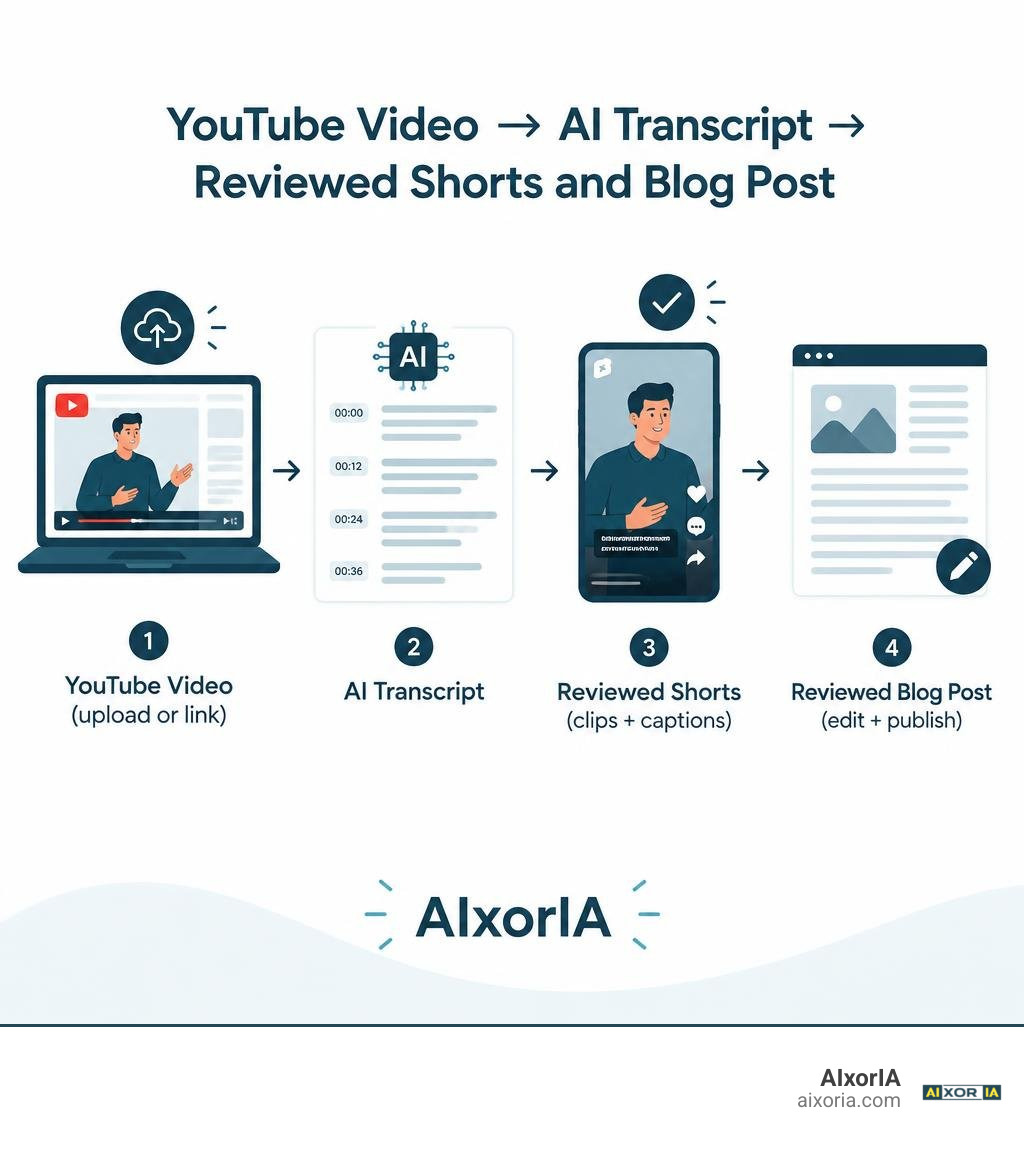
AI tools to repurpose YouTube videos into Shorts and blogs can turn one recording into content for both social media and search. Upload your video or paste its link. The tool can suggest clips, reframe them for vertical viewing, add captions, and use the transcript to draft a blog post. Review the clips for context, correct the transcript, and edit the post before publishing.
For a small team, the main benefit is less time spent making each piece from scratch. Look for editable clips and captions, a usable video-to-blog feature, and scheduling if you publish across several channels. No tool can promise a viral Short or an accurate article without a human check.
Before choosing a platform, run the same short test video through the options under consideration. Check whether the suggested clips keep the original point intact, whether captions need substantial cleanup, and whether the draft blog post preserves the speaker’s meaning. Then compare the amount of editing required before publication. This review process helps a small team choose a workflow that supports quality control rather than simply producing more drafts. It also makes approval decisions easier because reviewers can inspect real outputs before committing to a recurring process.
Why Use AI Tools to Repurpose YouTube Videos into Shorts and Blogs in 2026?
YouTube Shorts averages over 200 billion daily views, making short-form video the primary growth driver for modern channels. At the same time, traditional search engines and AI answer engines rely on written, well-structured articles to index and rank information. Relying solely on a single long-form video leaves significant traffic on the table.
Adopting effective AI content creation workflows allows creators and marketing teams to establish an omnipresent digital footprint without expanding headcounts. Converting a single production into short vertical videos and comprehensive articles extracts maximum return on investment from every recorded hour.
| Feature / Metric | Traditional Manual Workflow | AI Repurposing Pipeline |
|---|---|---|
| Turnaround Time (60-min video) | 4 to 6 hours | 10 to 15 minutes |
| Output Volume | 3 to 8 manual clips | 20 to 40 candidate clips + written drafts |
| Aspect Ratio Reframing | Keyframe tracking by hand | Automated computer vision speaker centering |
| Subtitling & Transcription | Manual transcription / timing edits | Automated speech recognition with kinetic styling |
| Multichannel Scaling | High friction, separate editing tasks | Parallel multi-format generation |
Slashing Production Time from Hours to Minutes
Historically, dissecting a 60-minute podcast episode, webinar, or tutorial required scrubbing timelines, setting manual cut points, reframing scenes from 16:9 to 9:16, generating subtitle files, and writing summaries by hand. This manual process takes 4 to 6 hours for a modest yield of 3 to 8 usable clips.
By contrast, an automated clipping engine processes the same hour-long video in 10 to 15 minutes, delivering 20 to 40 candidate shorts alongside an editable, structured written outline. Creators experience a 10x reduction in production time, moving bottlenecks away from manual technical trimming toward high-level editorial selection and publishing.
Maximizing Search Visibility Across Google and YouTube
While short-form video captures instant mobile engagement, written articles drive long-tail organic search visibility. Using AI for generating written content from video extracts core concepts, timestamps, and actionable quotes, transforming conversational dialogue into keyword-rich blog posts.
Because raw spoken speech contains filler words, conversational pauses, and rambling sentences, relying on specialized workflows for rewriting and refining transcript text ensures the final written output adheres to high editorial standards. This dual-distribution model captures both visual scrollers on social feeds and intentional searchers on Google.
Essential Architecture: How AI Repurposing Engines Convert Video to Multi-Format Assets
Modern repurposing tools combine three core AI layers:
- Automatic Speech Recognition (ASR): Converts audio tracks into timestamped, speaker-diarized text.
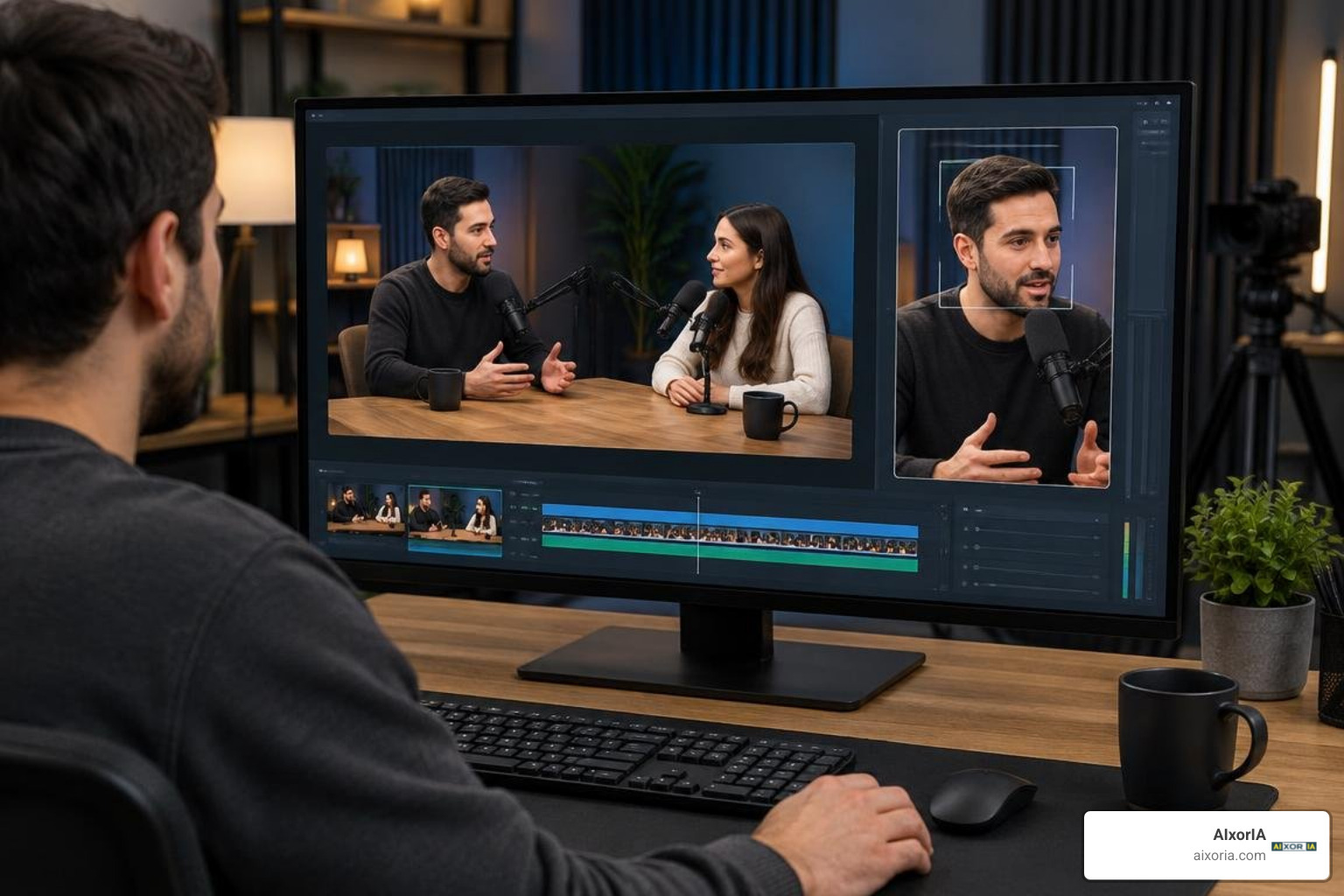
- Computer Vision & Facial Recognition: Identifies who is speaking, reframes horizontal video into vertical 9:16 crops, and adjusts camera pans smoothly.
- Natural Language Processing (NLP): Evaluates semantic hooks, identifies self-contained concepts, scores virality potential, and synthesizes full-length written articles.
Core Features of AI Tools to Repurpose YouTube Video into Shorts and Blog Formats
When evaluating automated platforms, several technical capabilities separate basic video cutters from robust content engines:
- Predictive Virality Scoring: Algorithms scan text and audio metrics for high-energy statements, emotional shifts, surprising facts, or strong hook phrases, assigning a virality score to guide publishing priorities.
- Intelligent 9:16 Reframing: Dynamic visual tracking keeps speakers centered without awkward cropping or lost hand gestures.
- Kinetic Captions & B-Roll Generation: Automated word-by-word highlighted captions (often in high-retention karaoke styles) paired with contextual B-roll assets maintain visual interest.
- Automated Article Formatting: Converting transcript sections into organized H2 and H3 structures with key takeaways, FAQs, and bullet lists.
- Modern Clipping Automation: Utilizing modern auto clip maker capabilities to instantly generate dozens of platform-ready assets directly from a YouTube URL.
Handling Multi-Speaker Dynamics and High-Accuracy Transcriptions
Multi-person discussions, such as panel debates and interviews, present unique editing challenges. Advanced AI engines utilize acoustic speaker diarization combined with visual facial recognition to distinguish between participants.
When two or more individuals converse, the system intelligently toggles between single-speaker close-ups and dynamic split-screen layouts. It ensures that question-and-answer pairs remain coherent rather than cutting off guest responses prematurely. High-tier speech models maintain 95%+ transcription precision while automatically removing disfluencies, false starts, and filler words like “um,” “ah,” and “you know.”
Global Localization: Translation, Dubbing, and Multilingual SEO
Reaching international markets no longer requires hiring multilingual editing teams. Repurposing suites offer automated subtitle generation in up to 99 languages alongside neural voice dubbing and lip synchronization.
By translating video transcripts into multiple localized written articles and subtitled Shorts, brands capture organic search traffic and social viewership across diverse linguistic demographics from a single English recording.
Step-by-Step Strategy: From Single Video to Viral Shorts and SEO Blog Posts
Executing an efficient repurposing pipeline requires a repeatable workflow that bridges raw media ingestion, automated AI generation, and final quality assurance.

End-to-End Workflow: How AI Tools to Repurpose YouTube Video into Shorts and Blog Posts Operate
The workflow begins by pasting a public link into a platform built for multi-format instant generation. The AI extracts the audio track, analyzes narrative beats, and generates vertical clips alongside written drafts within minutes.
To manage social distribution efficiently, team members can review official guidance on Video Clips & Shorts in YouTube Studio to understand native playback parameters before connecting their distribution pipeline.
Converting Video Transcripts into High-Ranking SEO Blog Articles
To turn spoken conversations into authoritative written guides, avoid publishing raw transcripts. Implement this structured editorial checklist:
- Extract Structured Hierarchies: Organize spoken concepts into logical headings (H2s and H3s) that match actual user search intent.
- Incorporate Keyword Density Naturally: Weave primary and secondary search queries into introductory paragraphs, headers, and bullet lists without unnatural keyword stuffing.
- Format for Skimmability: Break long blocks of speech into concise paragraphs, comparison tables, and highlighted summary boxes.
- Include Visual and Textual Breakouts: Embed relevant Shorts directly into matching article sections to increase on-page dwell time.
- Add Internal and External Context: Link to relevant background resources and reference hubs to provide comprehensive value for readers.
Optimizing and Scheduling Short-Form Clips Across Social Platforms
Once candidate clips are generated, review them for hook strength in the first 3 seconds. Customize text overlays with brand colors, adjust caption typography, and ensure kinetic pacing aligns with your target platform.
To maintain consistency without manual daily uploads, integrate automated social media management systems to schedule content across YouTube Shorts, Instagram Reels, TikTok, and LinkedIn. For teams scaling video production further, pairing repurposed clips with tools for generating high-impact video content establishes a continuous, diversified publishing pipeline.
Frequently Asked Questions About Repurposing YouTube Videos with AI
Can a single AI platform handle both video clipping and full blog generation?
Yes. Several modern content repurposing platforms ingest a single YouTube URL and simultaneously generate 9:16 vertical video clips, full-length SEO blog drafts, social posts, and email newsletter summaries in parallel. However, human editorial review remains essential to verify technical accuracy and ensure brand voice consistency across text outputs.
What are the main limitations of free AI video repurposing plans?
Free tiers generally serve as product trials and typically impose:
- Exported video watermarks.
- Strict monthly processing limits (typically 15 to 60 minutes of video).
- Lower export resolutions (720p instead of 1080p or 4K).
- Restricted access to advanced features like multi-speaker tracking, AI dubbing, or direct CMS scheduling.
How does AI identify the most viral-worthy hooks in long-form videos?
Repurposing engines analyze acoustic variations (pitch elevation, volume shifts, speaker excitement), semantic signals (strong assertions, questions, statistical revelations), and structural pacing. Segments exhibiting high narrative tension, self-contained lessons, or surprising statements receive higher hook scores and are prioritized for short-form generation.
Conclusion: Scaling Your Cross-Platform Content Engine
Maximizing the return on your video production requires working smarter across every digital channel. By leveraging automated repurposing tools, individual creators and lean marketing teams can transform a single long-form recording into dozens of high-performing short-form videos and authoritative, search-optimized articles.
To continue streamlining your workflows and discovering vetted software recommendations, explore AIxorIA’s curated AI productivity guides and tools to build an efficient, future-ready content engine.