Why Finding the Best AI Insurance Billing Software Can Transform Your Practice’s Revenue
Scr0ll d0wn to D0VVNL0AD
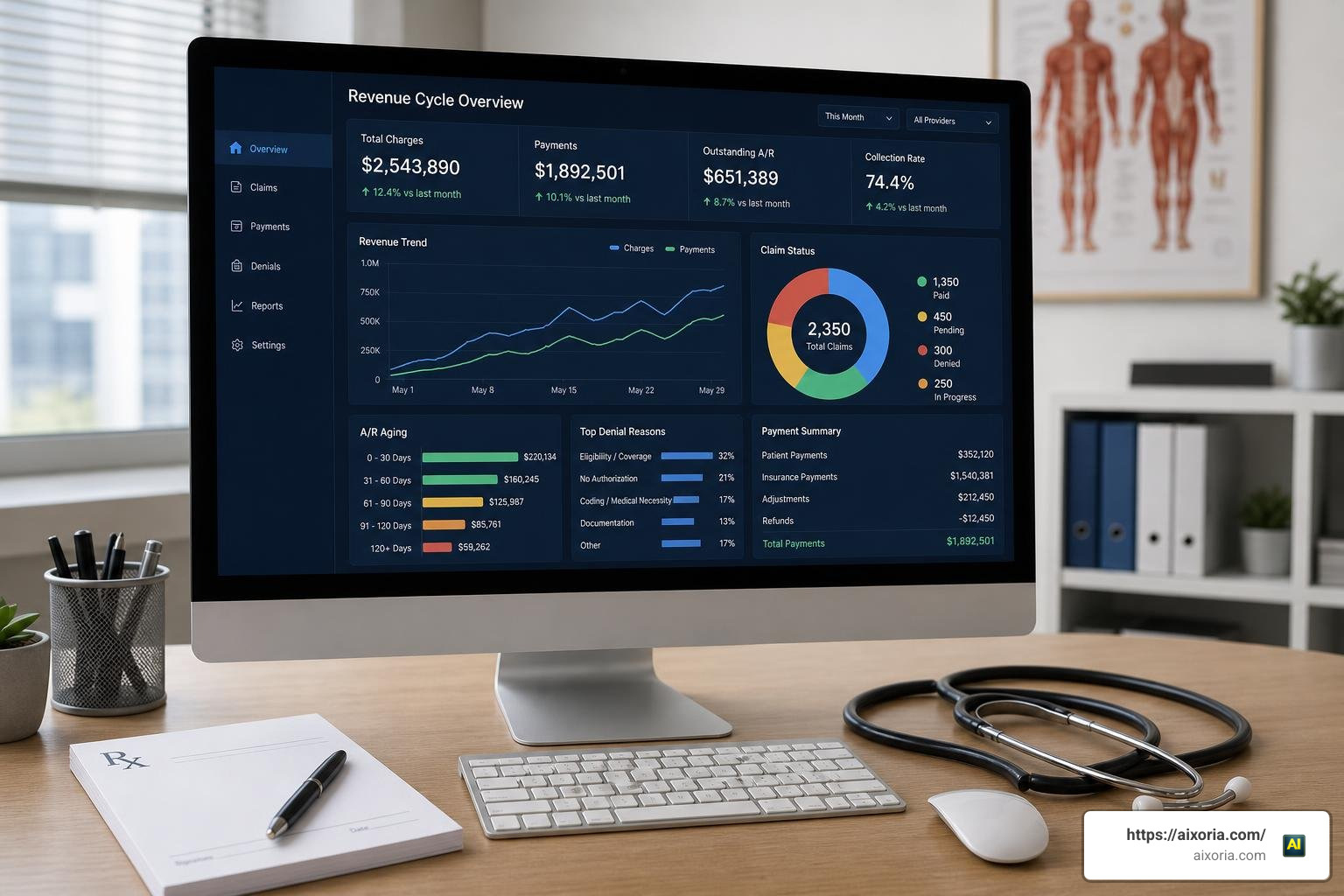
The best AI insurance billing software in 2026 isn’t just a nice upgrade — it’s becoming a financial necessity for healthcare practices of every size.
Here’s a quick answer if you’re short on time:
Top AI Insurance Billing Software at a Glance (2026):
| Platform | Best For | Standout Stat |
|---|---|---|
| Waystar | Mid-market practices | 98.5% first-pass clean claim rate |
| CodaMetrix | Large hospitals, autonomous coding | 60% reduction in coding costs |
| AKASA | Health systems | 13% drop in A/R days, 300+ staff hours saved/month |
| OmniMD | Small to mid-size practices | 97% first-pass rate, 20% revenue lift in 90 days |
| Max AI | Dermatology and specialty care | 50% denial reduction year-over-year |
| ClaimVise | BPOs and independent practices | $1/claim, under 10 seconds to process |
| LunaBill | Hospitals and RCM firms | Cost per claim dropped from $22.28 to $2.00 |
| CureMD | Clinics wanting full EHR + billing | 95%+ first-pay rate, 40% fewer A/R days |
The numbers tell a stark story. The average practice loses 10–15% of claims to denials — and two-thirds of those denied claims are never resubmitted or paid. That’s not a billing problem. That’s a revenue leak that compounds every single month.
AI billing platforms are now fixing this at scale. About 63% of healthcare organizations are already using AI for revenue cycle work, and the results are hard to ignore. Top platforms report first-pass clean claim rates between 95% and 98.5%, compared to the messy, manual reality most practices still live with.
This guide breaks down exactly how these platforms work, what separates the best from the rest, and which solution fits your practice size and budget.
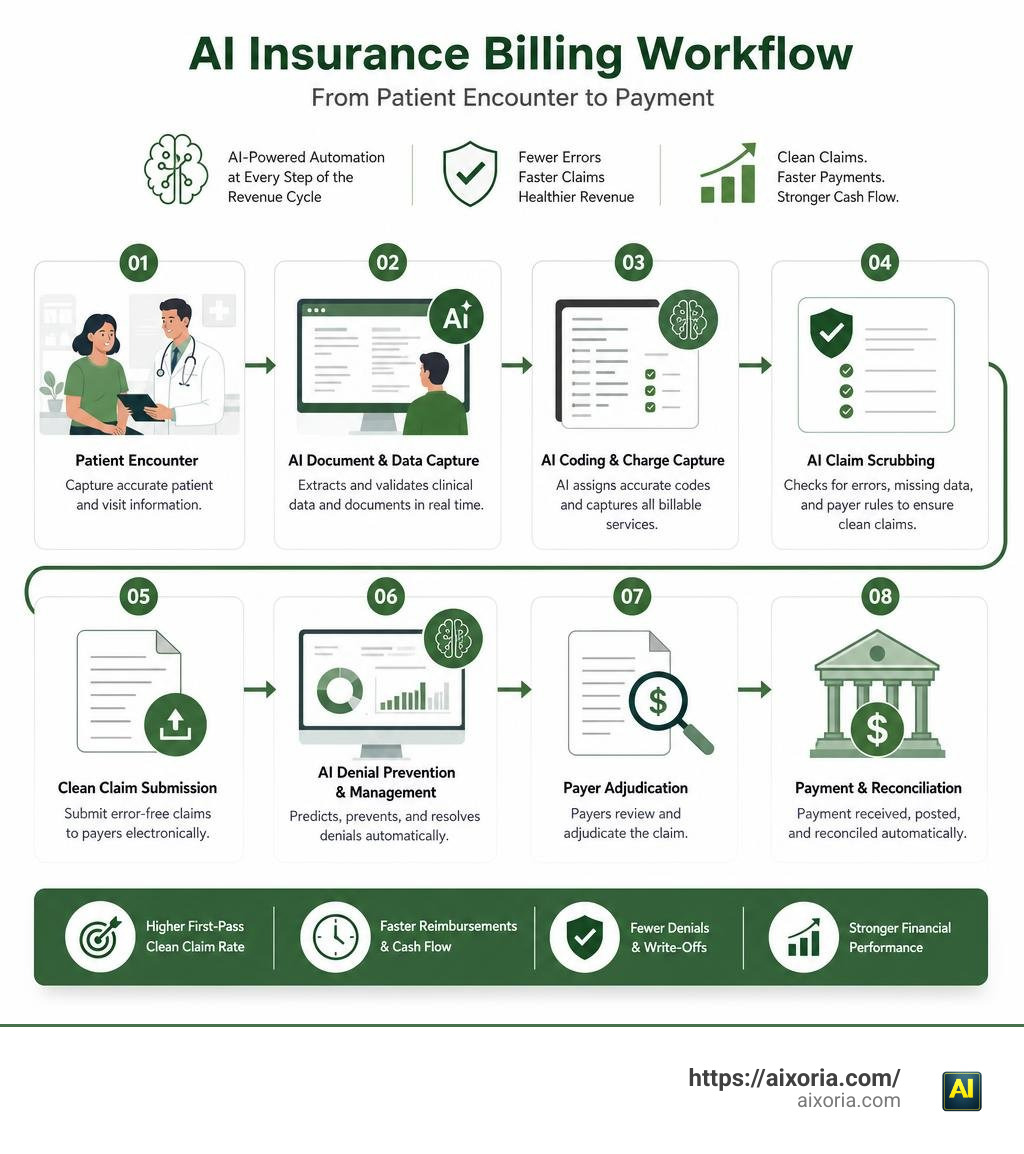
Key Features of the BEST ai insurance billing software
When shopping for the best AI insurance billing software, it is easy to get lost in vendor buzzwords. Many legacy billing systems have simply rebranded their old, rigid “rules engines” as “AI.” True artificial intelligence, however, does not rely on a static list of rules. It uses machine learning to adapt dynamically to your practice’s unique payer mix, historical denial patterns, and evolving clinical documentation.
To find a system that actually moves the needle, we must look for features that target the root causes of revenue leakage. If your clinical notes are messy, a poor system will give you “garbage in, slightly smarter garbage out.” The best tools prevent this by integrating clinical integrity directly with financial workflows.
Key capabilities of top-tier platforms include:
- Real-Time Eligibility Verification: Automatically checking coverage details before the patient ever steps into the clinic.
- Predictive Denial Prevention: Scanning claims for high-risk patterns and flagging potential rejections before they are sent to the payer.
- Autonomous Auto-Coding: Translating unstructured clinical notes directly into compliant medical codes using Natural Language Processing (NLP).
By automating these tedious administrative hurdles, practices can significantly reduce overhead. If you want to understand how automation transforms financial operations on a broader scale, check out our Benefits of Finance Automation Software 2026 Guide.
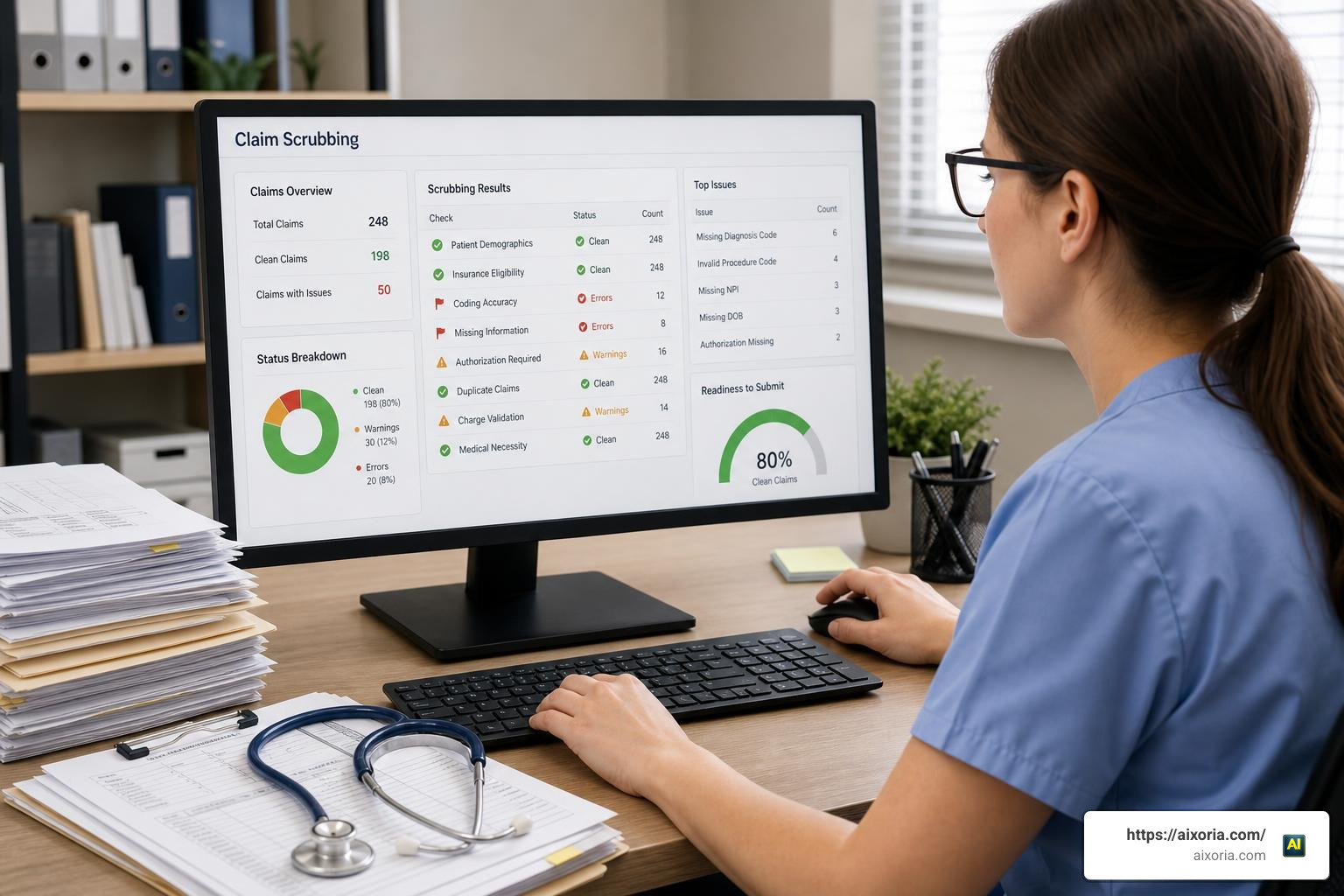
Autonomous Coding and Claim Scrubbing
The coding stage is historically where medical billing slows to a crawl. Translating a complex patient encounter into a string of CPT, ICD-10, and HCPCS codes requires immense precision. A single misplaced modifier can trigger an immediate denial, costing your practice an average of $25 in staff time to rework.
AI-native software uses advanced deep learning models to perform autonomous chart reviews. It reads unstructured clinical progress notes, extracts diagnoses and procedures, and matches them to the correct codes with remarkable speed. For example, platforms like CodaMetrix report cutting manual coding work by up to 70% while dropping claim denials by 60%.
Furthermore, advanced AI-powered billing validation tools ensure that code suggestions are fully traceable. Rather than acting as a “black box,” the AI provides a confidence score and highlights the exact sentence in the patient’s chart that justifies the code. This level of transparency is crucial for maintaining compliance and surviving payer audits.
Real-Time Eligibility Verification and Patient Checks
A massive percentage of claim denials trace back to simple eligibility errors—such as inactive coverage, out-of-network status, or missing prior authorizations. Traditional billing teams must log into multiple payer portals or wait on hold to verify benefits, which is a massive drain on productivity.
Modern AI platforms automate this process entirely. When a patient schedules an appointment, the AI performs real-time eligibility verification and insurance discovery behind the scenes. It checks the patient’s active benefits, deductible status, and co-pay requirements, and flags any services that require prior authorization.
This upfront automation ensures that your front-desk staff can address coverage issues with the patient immediately, preventing billing headaches later on. Streamlining these daily workflows is a key reason why healthcare leaders are looking at the Best AI Tools for Business Productivity to optimize their operations.
AI-Powered Platforms vs. Traditional Medical Billing Software
To understand why AI is revolutionizing the healthcare revenue cycle, we have to look at how it compares to traditional, manual workflows. Legacy medical billing software is essentially a digital filing cabinet. It holds data and routes tasks, but it still requires human hands to type in charges, manually scrub claims, and write appeal letters.
AI-powered systems, on the other hand, act as an autonomous workforce. Here is a breakdown of how the two approaches compare:
| Operational Metric | Traditional Medical Billing Software | AI-Powered Insurance Billing Platform |
|---|---|---|
| Processing Speed | 4+ hours per claim (manual entry, manual coding) | Under 10 seconds per claim (autonomous processing) |
| Average Accuracy Rate | 85% to 88% (highly dependent on staff expertise) | 95% to 99%+ (continuous machine learning) |
| First-Pass Clean Claim Rate | 75% to 85% | 95% to 98.5% |
| Denial Rates | 10% to 20% industry average | 2% to 8% (predictive error interception) |
| Cost per Claim | $8 to $15+ (in-house labor or offshore BPOs) | $1 to $2 (flat-rate autonomous execution) |
| A/R Follow-up | Manual portal checks and phone calls | Automated AI agents checking portals and making calls |
How Agentic Orchestration Redefines the BEST ai insurance billing software
The latest evolution in AI billing is the shift toward “agentic orchestration.” Rather than functioning as single-purpose software tools, modern platforms deploy a coordinated network of specialized AI agents.
On autonomous RCM platforms, for instance, you might have seven distinct AI agents working in harmony:
- Scribe Agent: Ingests clinical audio or notes.
- Coding Agent: Extracts ICD-10 and CPT codes.
- Scrubbing Agent: Validates the claim against hundreds of payer rules.
- Denial Prediction Agent: Estimates the risk of rejection.
- Appeal Agent: Automatically drafts appeals for denied claims.
- Drug Reconciliation Agent: Cross-references medication administration logs.
- Audit Agent: Ensures compliance and maintains audit trails.
This multi-agent approach means the software does the actual heavy lifting of reading, writing, and calculating, while human billers step in only as supervisors to handle complex edge cases and exceptions.
Predictive Denial Management and Automated Appeals
Payer rules are a moving target. Insurance companies constantly update their policies, and what was fully covered last month might require a specific modifier this month. When a claim is denied, it often sits in a backlog because your staff simply does not have the time to chase it down.
AI-powered systems solve this through continuous denial pattern learning. Every time a claim is rejected or partially paid, the AI analyzes the reason, the payer’s rules, and the original clinical notes. It builds a localized knowledge base that gets smarter with every transaction.
If a denial does slip through, platforms leveraging AI-powered revenue cycle automation do not wait for a human to find it. The AI immediately extracts the clinical evidence from the patient’s EHR, matches it to the payer’s guidelines, and drafts a highly specific, compliant appeal letter in seconds. It converts what used to be a 20-minute manual chore into a one-click review.
Integration, Security, and Compliance Standards
No matter how smart an AI billing platform is, it is completely useless if it cannot talk to your existing systems or if it compromises patient privacy. In healthcare, security and compliance are non-negotiable.

When evaluating any AI tool, we must verify that it meets the highest standards of data protection. To see how these security frameworks apply across other automated financial systems, read our guide on the Best Accounting Workflow Automation Software in 2026 SOC 2 AI.
Seamless EHR and Practice Management Connections
The goal of AI billing is to eliminate manual data entry. To achieve this, the AI must integrate directly with your Electronic Health Record (EHR) and Practice Management System (PMS).
Modern platforms connect using standard healthcare protocols like HL7, FHIR, and secure REST APIs. This allows data to flow bi-directionally in real time. When a clinician signs off on a chart in Epic, Athenahealth, Cerner, or ModMed, the AI instantly pulls the documentation, codes the encounter, and prepares the claim without requiring your staff to copy and paste data between screens.
If you are looking to build a fully integrated, automated financial ecosystem, exploring the 9 Best AI-Powered Finance Automation Software in 2026 can help you understand how these data pipelines connect.
Data Security and Regulatory Compliance
Processing Protected Health Information (PHI) requires strict adherence to federal and international regulations. The best AI insurance billing software must be fully HIPAA compliant and hold a SOC 2 Type II certification.
Crucially, reputable AI billing vendors will execute a Business Associate Agreement (BAA) and process data within secure, healthcare-eligible cloud environments (such as AWS Bedrock or Microsoft Azure AI Health). They explicitly guarantee that patient data is never used to train public, general-purpose models like the standard versions of ChatGPT or Claude.
For a broader look at how security-first platforms manage financial workflows, check out our analysis of the Best Finance Automation Software Tools 2026.
Cost, Pricing Models, and Accessibility for Small Practices
A common misconception is that AI-powered billing is a luxury reserved only for massive hospital networks and enterprise health systems. In reality, the scalability of AI has made these tools incredibly cost-effective for independent practices and local clinics.
Common Pricing Structures for AI Billing Software
- Percentage of Collections: The vendor charges a percentage (typically 1.5% to 7%) of the total revenue successfully collected. This aligns the vendor’s incentives with your practice’s success.
- Flat Rate Per Claim: Platforms like ClaimVise charge a flat, transparent fee (such as $1 per claim). This model is highly predictable and ideal for high-volume practices or billing BPOs.
- Monthly SaaS Subscription: A flat monthly fee per provider or per user. This is common for all-in-one EHR and billing suites.
- Performance-Based Pricing: You pay only a percentage of recovered revenue from old accounts receivable backlogs, with zero upfront or licensing fees.
Evaluating ROI for the BEST ai insurance billing software
When calculating the return on investment (ROI) of AI billing, we have to look at both direct savings and recovered revenue.
Let’s look at a quick process diagram of how AI-native systems capture lost revenue compared to manual methods:
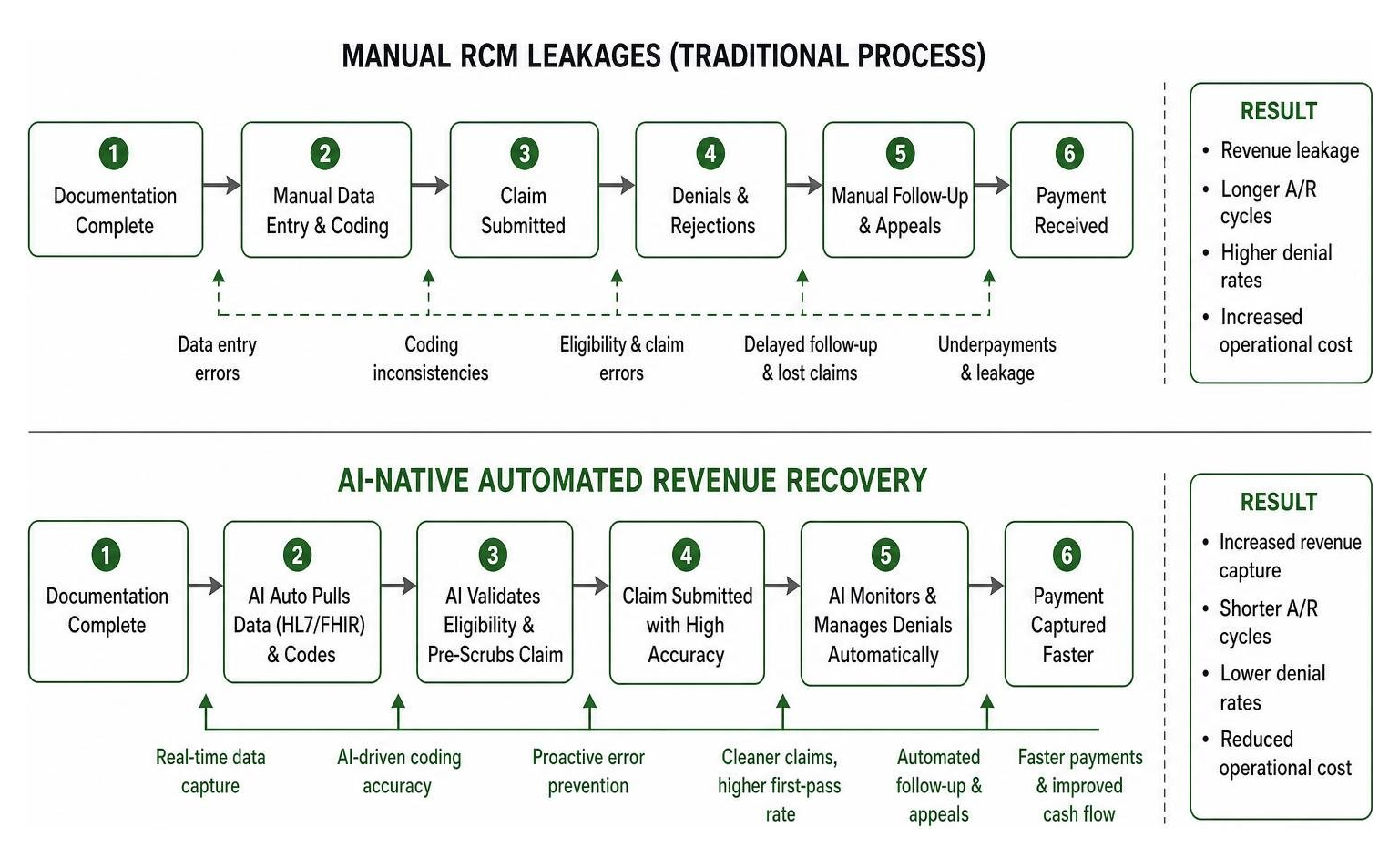
By deploying autonomous billing systems, practices can dramatically reduce their billing operations costs by up to 30%. Furthermore, by utilizing AI-driven AR management, health systems have successfully cut their days in A/R by 13% or more, transforming outstanding insurance balances into immediate cash flow.
Can Small to Mid-Size Practices Afford AI Billing?
Yes, absolutely. Because many AI billing tools offer modular, pay-as-you-go pricing, small practices do not need to invest tens of thousands of dollars upfront.
By integrating specialized AI medical billing solutions into their existing practice management software, independent clinics can automate their most painful administrative tasks—like eligibility checks and payment posting—without replacing their entire IT stack. This level of scalability levels the playing field, allowing a local three-provider clinic to operate with the same billing efficiency as a major regional hospital.”https://www.mediafire.com/file/q0lmz4xv7ampent/Visual_Effects_BY_MCMPDL.mcaddon/file“;
Frequently Asked Questions about AI Insurance Billing
Will AI replace human medical billers and coders?
No. AI is designed to act as a highly efficient co-pilot, not a replacement. It automates repetitive, high-volume mechanical tasks—like reading standard charts, checking eligibility, and routing claims. This frees up your human billing experts to focus on complex coding cases, patient communication, and high-level appeal strategies where human judgment is irreplaceable.
How accurate is AI medical coding in 2026?
Top-tier AI coding engines achieve over 95% accuracy on standard, routine outpatient encounters (and up to 99% in highly structured specialties like radiology). However, if the AI encounters a highly complex inpatient chart with ambiguous documentation, it will automatically flag the file and escalate it to a human coder for review.
How long does it take to set up AI billing software?
Setup times vary based on the complexity of your practice. A modular, API-first AI tool can often be integrated with your existing EHR and go live in just a few days. For comprehensive, all-in-one platform transitions or large hospital systems, onboarding and custom configuration typically take between 4 to 12 weeks.
Conclusion
The shift toward AI-powered insurance billing is no longer a futuristic concept—it is the standard for modern healthcare operations in 2026. By automating coding, predicting denials, and verifying eligibility in real time, the best AI insurance billing software helps practices secure their revenue, lower administrative costs, and focus on what matters most: patient care.
At Aixoria, we are dedicated to helping businesses navigate the rapidly evolving world of artificial intelligence. Explore more AI tools on Aixoria to find the perfect automation solutions to scale your business and streamline your workflows.