Why Choosing the Right Analytics Company Can Make or Break Your Business
Scr0ll d0wn to D0VVNL0AD
What are the top 5 analytics companies in 2026? Here’s a quick answer:
- Microsoft – Largest market share (~31.2%), Power BI, Azure ecosystem
- Databricks – Fastest-growing unified data + AI platform ($5.4B ARR)
- IBM – Enterprise analytics platform leader (~12.8% market share)
- Salesforce (Tableau) – Leading data visualization and BI platform
- Google Cloud (BigQuery/Looker) – Cloud-native analytics powerhouse
Data is everywhere — but turning it into useful decisions is still rare.
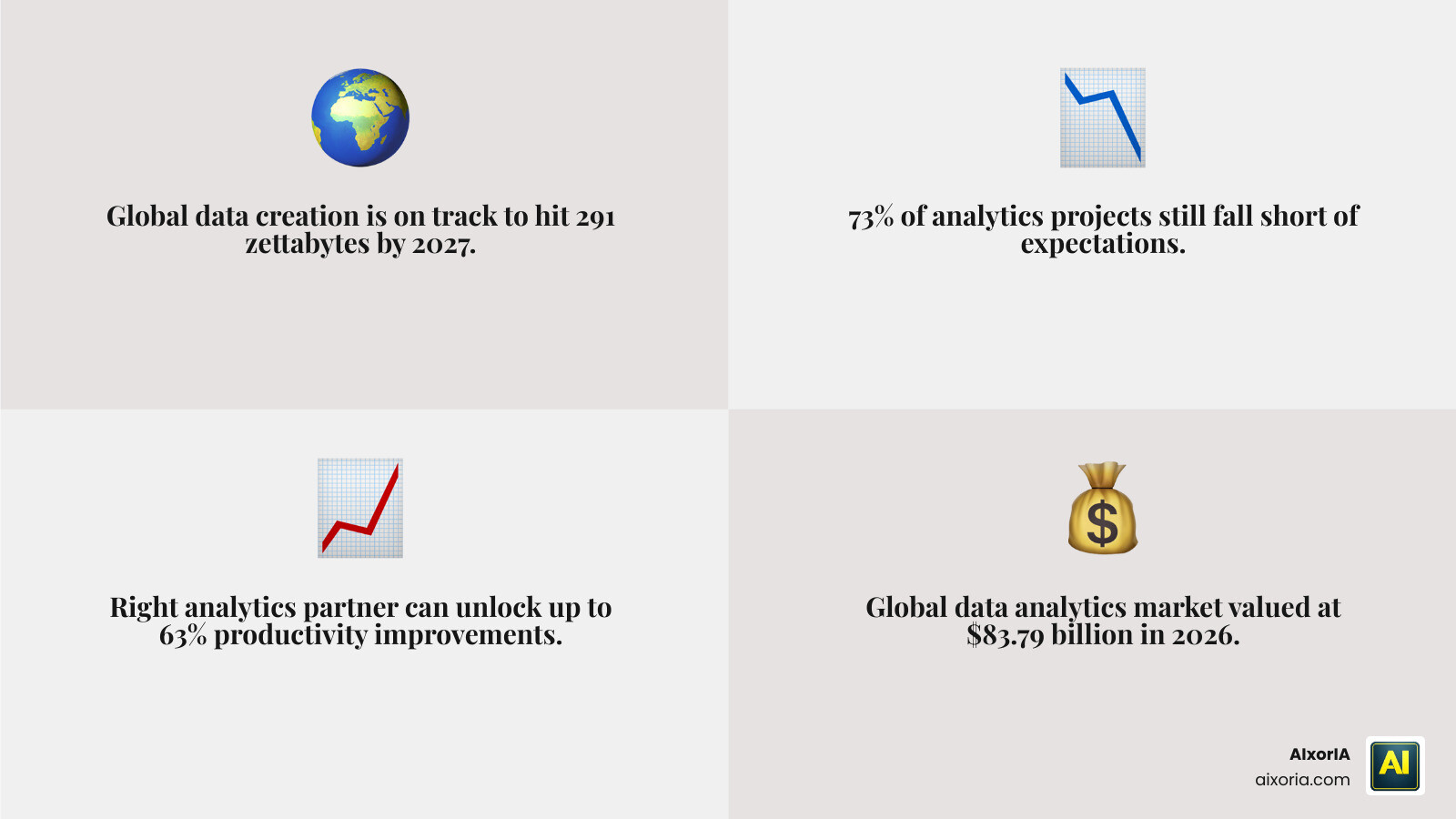
Global data creation is on track to hit 291 zettabytes by 2027. That’s nearly double what we’re producing today. Yet despite all that raw material, 73% of analytics projects still fall short of expectations, according to Forrester.
The problem isn’t a lack of data. The problem is knowing what to do with it.
For small business owners trying to keep up without a team of data scientists, picking the right analytics partner isn’t just a tech decision — it’s a survival decision. The right company can unlock up to 63% productivity improvements. The wrong one can drain your budget and leave you with a dashboard nobody uses.
The global data analytics market is valued at $83.79 billion in 2026 and is projected to grow nearly tenfold by 2035. The companies leading that charge are worth understanding — whether you’re looking to hire one, partner with one, or just learn from how they operate.
What are the top 5 analytics companies in 2026?
When we look at the landscape in 2026, the definition of a “top company” has shifted. It is no longer just about who has the prettiest charts; it is about who can handle “agentic AI”—AI agents that autonomously investigate data and execute business actions. By mid-2027, it is predicted that 65% of enterprise data queries will be handled by these autonomous agents.
To understand What are the top 5 analytics companies?, we have to look at the five pillars of the modern analytics landscape:
| Company | Market Share (Est.) | AI Maturity | Primary Focus |
|---|---|---|---|
| Microsoft | 31.2% | High (Copilot/Agentic) | Hyperscale Cloud Ecosystem |
| Databricks | ~5% | Very High (Lakehouse AI) | Unified Data Lakehouse |
| IBM | 12.8% | High (Watsonx) | Enterprise AI & Data Platforms |
| Salesforce (Tableau) | ~8% | High (Einstein) | Customer-Centric AI Analytics |
| Google Cloud | ~10% | Very High (Gemini/Looker) | Cloud-Native Data Warehousing |
The Five Pillars of 2026 Analytics
- Hyperscale Cloud Ecosystem Providers (Microsoft): Microsoft remains the king of the hill. With over 30 million monthly active users on Power BI, they have created a “data flywheel” where more users lead to more certified developers and better integrations.
- Unified Data Lakehouse Innovators (Databricks): Databricks is the “cool kid” that grew up. They reached a $5.4 billion annual revenue run rate in early 2026 by unifying data engineering and BI into a single platform. If you want to see what the future looks like, check out Best Ai Tools For Data Analysis And Visualization In 2026.
- Enterprise AI & Data Platforms (IBM): IBM continues to lead in complex enterprise environments where governance and security are non-negotiable.
- Customer-Centric AI Analytics Specialists (Salesforce/Tableau): Since Salesforce integrated Tableau, they have dominated the CRM-driven analytics space, making data storytelling accessible to sales and marketing teams.
- Cloud-Native Data Warehousing Authorities (Google/Snowflake): Google Cloud’s BigQuery and platforms like Snowflake have redefined how we store and query data without moving it, reducing costs and increasing speed.
For more on how these platforms are evolving, see Top 10 Data Analytics Platforms in 2026.
Key Specializations and Tech Stacks of Global Leaders

The “tech stack” of a top analytics company in 2026 is a far cry from the spreadsheets of yesteryear. Today, the leading firms focus on a few critical technologies:
- Vector Databases: Essential for powering the Large Language Models (LLMs) that allow you to “talk” to your data.
- Natural Language Querying (NLQ): Tools like ThoughtSpot allow users to ask questions in plain English. Instead of writing SQL code, a manager can simply ask, “Why did sales dip in Boston last Tuesday?”
- Real-Time Streaming: Companies like ClickHouse and Confluent excel here, processing millions of transactions per second to catch fraud or optimize supply chains as they happen.
- Data Lakehouses: This architecture combines the cost-effectiveness of a data lake with the performance of a data warehouse.
Leading companies are increasingly focusing on “Agentic Decision Systems.” We’ve moved past simple dashboards into systems that don’t just show you a problem but suggest (or take) the next best action. You can learn more about this shift in our guide to Business Intelligence Tools In 2026 From Dashboards To Agentic Decision Systems.
According to recent market reports, the tech stack choice often dictates the speed of deployment. Many global leaders now use industry-specific data models to shorten deployment times by 30% to 50%. You can find a deeper dive into these corporate profiles at Who Are the Top 10 Data Analytics Companies in 2026?.
Industry Use Cases: Turning Data into Productivity
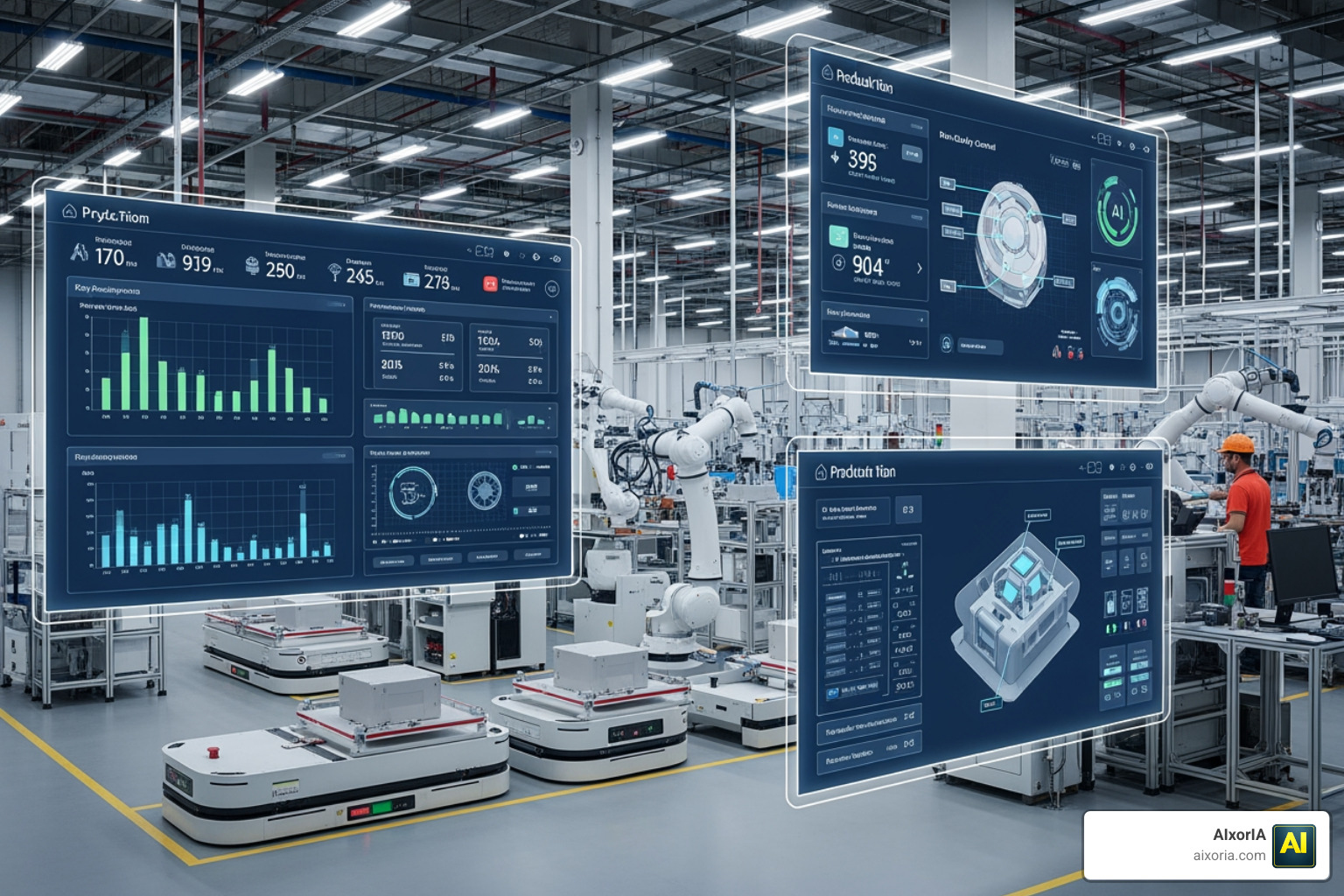
Why do businesses spend millions on these companies? Because when done right, the ROI is staggering. Organizations with strong data capabilities report productivity improvements of up to 63%.
Real-World Success Stories
- Retail & E-commerce: A global retailer used predictive analytics to reduce stock-out events by 30%. By spotting trends before the weekend rush, they kept shelves full and customers happy.
- Financial Services (BFSI): Major banks use real-time AI to flag fraud. One European utility reduced outage minutes by 22% using predictive maintenance, saving millions in repair costs and fines.
- Healthcare: Clinics are applying clinical data analytics to accelerate diagnoses and personalize treatment protocols, literally saving lives through better data.
- Manufacturing: Using “in-warehouse” machine learning, companies are forecasting demand with 15% less waste.
Despite these wins, the “73% failure rate” looms large. Most projects fail because of “direction,” not “data.” We often see businesses try to build complex systems before they have a basic strategy. If you’re looking for a more accessible way to start, consider exploring 5 Best Business Intelligence Open Source Tools Complete 2026 Guide.
How to Evaluate and Choose the Right Analytics Partner
Choosing a partner is like choosing a co-pilot. You don’t just want someone who knows how to fly; you want someone who knows where you’re going. When evaluating What are the top 5 analytics companies? for your specific needs, use these criteria:
- Technical Scalability: Can the platform handle 221 zettabytes (the global average in 2026) or will it crash when your data grows?
- Industry Fluency: Does the company understand your specific “vernacular”? A retail analytics tool speaks a different language than a healthcare one.
- Governance and Security: With data privacy laws tightening globally, ensure your partner has a “sovereign data” approach, keeping your information secure and compliant.
- Ease of Use: If your team can’t use the tool without a PhD in data science, it will become “shelf-ware.” Look for high “Ease of Use” ratings (for example, ThoughtSpot often scores 9.8/10 in this category).
- Demonstrated ROI: Ask for the formula. A good partner should be able to show you how (Net Benefit – Cost) / Cost x 100 results in a positive number for your business.
For a deeper look at which AI is actually best for the heavy lifting of analysis, check out our resource: Which Ai Is Best For Doing Data Analysis.
Frequently Asked Questions
What are the top 5 analytics companies for mid-market growth?
For mid-sized businesses, the “Big 5” might be too expensive or complex. Mid-market leaders often turn to:
- Alteryx (The “Swiss Army Knife” of data engineering)
- ThoughtSpot (Best for search-based analytics)
- Sisense (Great for embedding analytics into your own apps)
- Qlik (Strong data integration and visualization)
- Free/Low-Code Tools (Like those found in our 5 Best Free Ai Tools For Data Analysis 2026 Guide)
What are the top 5 analytics companies by market share?
As of 2026, the market share leaders are dominated by the tech giants who provide the “pipes” for the internet:
- Microsoft (31.2%)
- IBM (12.8%)
- Oracle (10.5%)
- SAP (9.2%)
- Amazon Web Services (AWS) (Rounding out the top tier with cloud-native dominance)
Why do 73% of analytics projects fail to meet expectations?
The failure usually stems from three things: Data Silos (data stuck in different departments), Lack of Strategy (collecting data without a goal), and Talent Shortages. Many companies buy the “Ferrari” of analytics tools but don’t have a driver. This is why we focus so heavily on training and audits to ensure the tools actually get used.
Conclusion
The world of data in 2026 is fast, complex, and incredibly rewarding for those who get it right. Whether you are looking at the massive ecosystem of Microsoft, the cutting-edge speed of Databricks, or the enterprise platform reliability of IBM, the key is strategic alignment.
At AIxorIA, we believe that technology should be a helper, not a headache. We specialize in custom AI solutions, tool training workshops, and performance audits designed to make sure your analytics journey doesn’t end up in that 73% failure pile. We take the “complex” and make it “simple,” providing affordable services and fast support to help you turn those zettabytes into dollars.
Ready to stop drowning in data and start driving results? More info about analytics services is just a click away. Let us help you find the right path in this data-driven decade.
1 thought on “Top 5 Analytics Companies in 2026: Best Data Leaders”