The Best Enterprise Social Media Management Tools in 2026
Scr0ll d0wn to D0VVNL0AD

An enterprise social media management tool is a platform built to help large organizations plan, publish, monitor, and measure social media activity across multiple accounts, teams, and brands — all from one place.
Here are the top options worth knowing about:
| Tool | Best For | Starting Price |
|---|---|---|
| Hootsuite | All-in-one management + listening | ~$99/user/month |
| Sprout Social | Real-time intelligence + engagement | ~$199/seat/month |
| Agorapulse | ROI tracking + affordability | Custom (free tier available) |
| Eclincher | AI automation + compliance | Custom |
| Zoho Social | Budget-conscious teams | Lower tiers available |
Managing social media for a large organization is nothing like managing a personal account or even a small business page.
You’re dealing with dozens of accounts, multiple team members, strict brand guidelines, compliance requirements, and the constant pressure to prove that social media actually drives revenue.
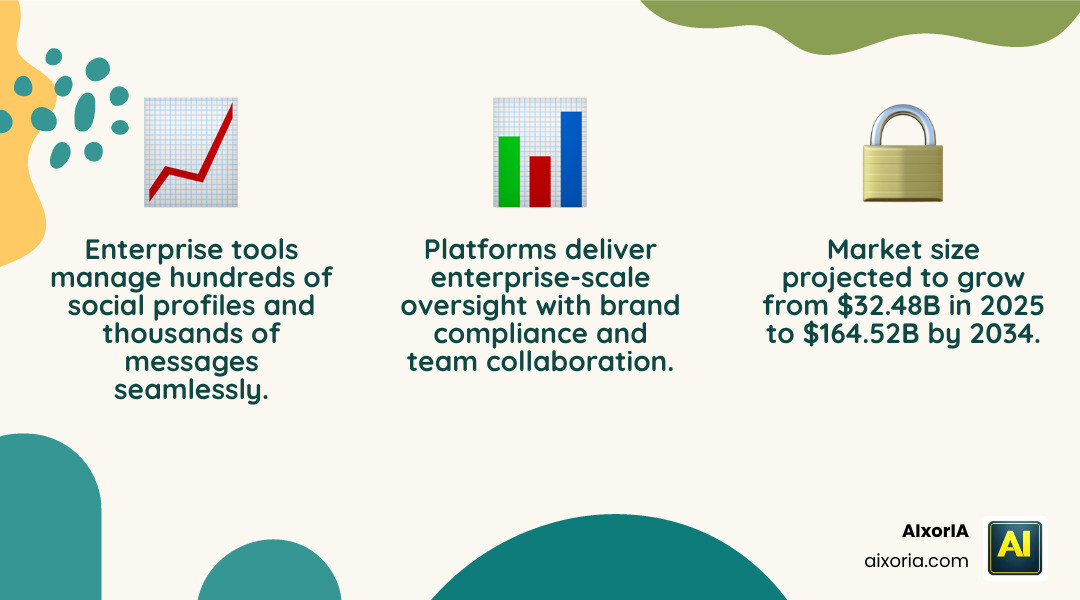
The global social media management market was valued at $32.48 billion in 2025 and is projected to hit $164.52 billion by 2034. That growth reflects just how critical these tools have become for organizations operating at scale.
But here’s the problem most teams run into: the wrong tool creates more work, not less. More clicks, more logins, more confusion.
This guide cuts through the noise and compares the leading platforms head-to-head — so you can find the one that actually fits how your team works.
What Defines an Enterprise-Grade Social Media Management Tool?
What makes a tool “enterprise-grade”? It isn’t just a higher price tag. While a small business might just need to schedule a few posts on Instagram, an enterprise needs a command center.
The primary differentiator is scale and oversight. An enterprise social media management tool is designed to handle hundreds of social profiles and thousands of incoming messages without breaking a sweat. Unlike individual-user tools, these platforms focus on:
- Complex Hierarchies: Managing different departments, regions, or sub-brands under one parent company.
- High-Volume Engagement: Tools like Sprout Social or Hootsuite are built to manage “Smart Inboxes” that can handle 150+ channels simultaneously.
- Operational Efficiency: Research shows these tools have an average adoption rate of 72% because they tackle the “chaos” of multi-team coordination.
- Proving Impact: These tools don’t just count “likes”; they tie social activity to revenue, leads, and cost savings.
Essential Core Features for Enterprise Teams
If we are looking at the “must-haves” for 2026, four pillars stand out. Without these, a tool is just a glorified calendar.
1. Advanced Scheduling and Multi-Account Management
Large teams often publish thousands of posts monthly. Eclincher users, for example, average around 1,600 published posts per month. You need a unified content calendar that allows for bulk scheduling and platform-specific customization.
2. Team Collaboration and Approval Workflows
This is the “safety net.” Enterprises need multi-level approval chains. A post might need to be reviewed by a legal team, a brand manager, and a regional lead before it goes live. This prevents the dreaded “accidental tweet” that could cause a PR crisis.
3. Unified Inboxes and Task Assignment
When you receive over 150,000 incoming interactions a month (as some Eclincher users do), you can’t just “check the notifications.” You need to route messages to the right team members with established Service Level Agreements (SLAs).
4. Social Listening and Intelligence
Social moves faster than any dashboard. Tools now use AI to monitor millions of unfiltered thoughts and opinions in real-time. This acts as a virtual focus group, helping us understand sentiment spikes before they become trends.

Leading Platform Comparison: Analytics, Reporting, and ROI
We know that “engagement” is a vanity metric if it doesn’t lead to business results. Here is how the big players stack up in proving their worth:
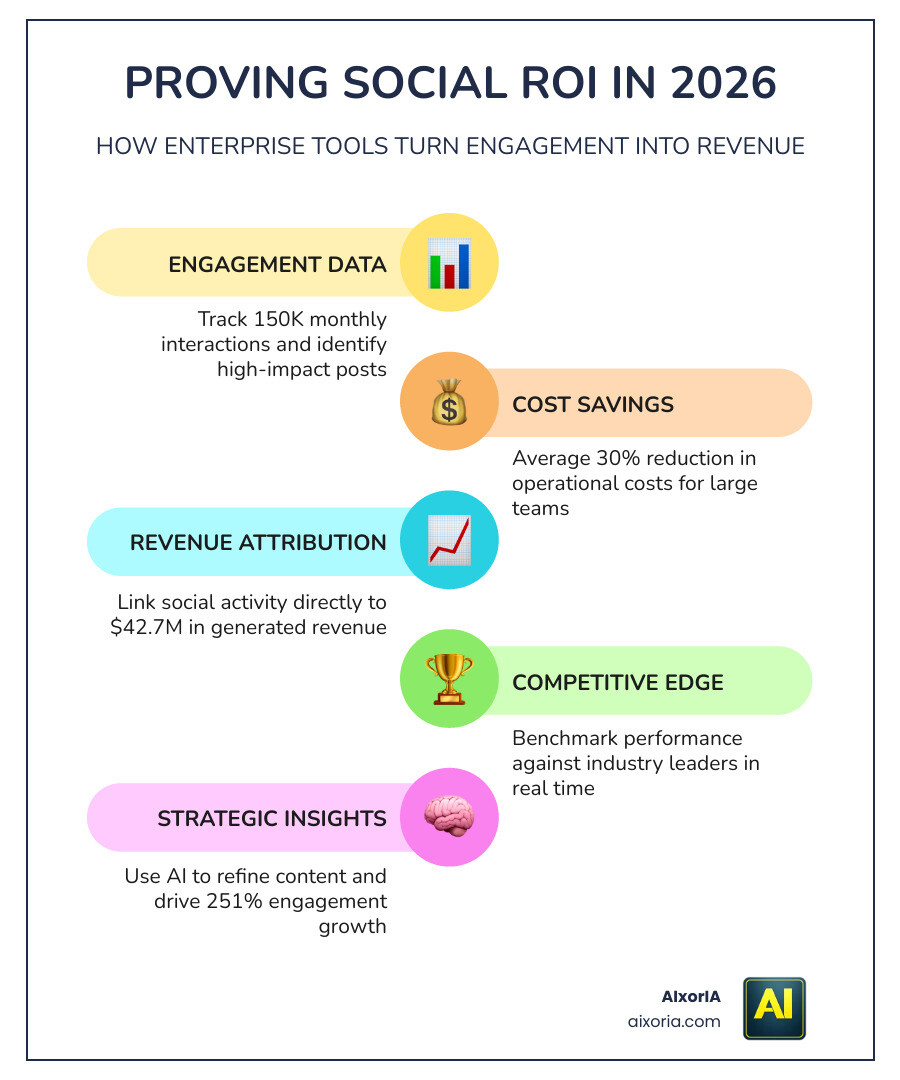
- Hootsuite: A powerhouse for deep analytics. A global insurance provider using Hootsuite actually generated $42.7 million in revenue through social media. They also offer competitive benchmarking to see how you stack up against the “other guys.”
- Sprout Social: Focuses on “Social Intelligence.” Their users report a 251% increase in community engagement. Their reports are presentation-ready, designed to be handed directly to a CMO to show high-quality engagement action rates.
- Agorapulse: The standout for direct ROI tracking. They integrate directly with Google Analytics to track sales, traffic, and leads from organic posts. On average, teams switching to Agorapulse save 30% on costs while gaining better visibility into their revenue pipeline.
The Role of AI in Modern Enterprise Social Tools
By May 2026, AI is no longer a “bonus feature”—it’s the engine. But it has evolved beyond just writing captions.
Content Production at Scale Platforms like Social9 use AI to localize content into over 50 languages, ensuring cultural adaptation for global teams. Others, like Apaya Studio, use a “Brand Framework” that reads your website to ensure the AI never suggests something off-brand.
Risk and Crisis Detection AI now acts as a 24/7 digital sentry. Hootsuite’s OwlyGPT and similar tools flag “risky” content or sudden spikes in negative sentiment. This predictive crisis monitoring is essential for brand protection in an era where a single post can go viral for the wrong reasons in minutes.
Workflow Automation We are seeing AI agents (like Trellis in Sprout Social) that turn massive amounts of conversation into clear, actionable insights. This can reduce content brainstorming time from 10 hours a week to just 10 minutes.
Security, Compliance, and Governance Features
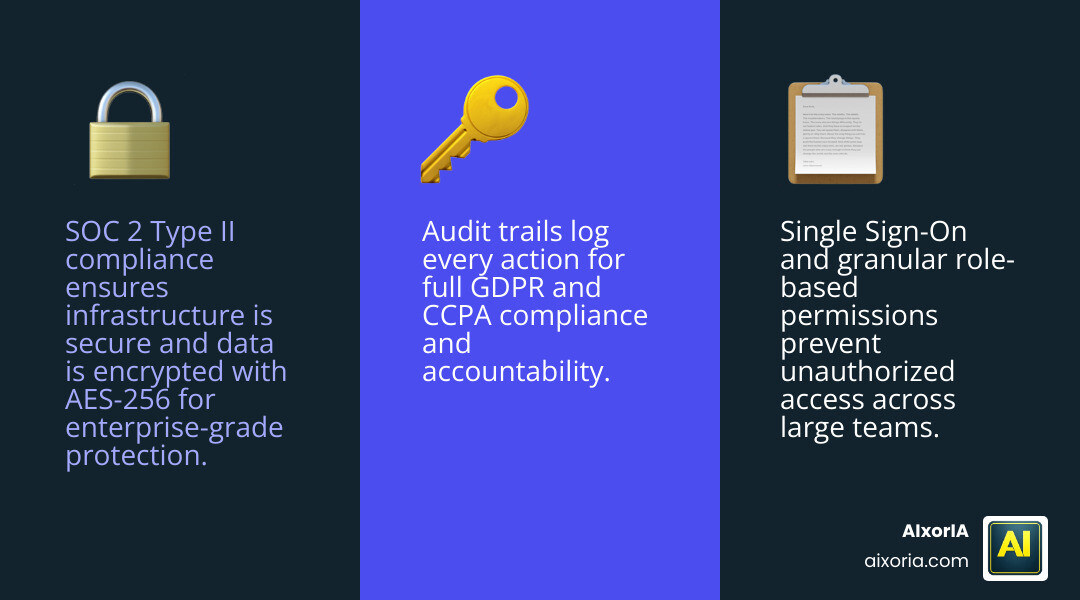
For a global brand, security isn’t optional—it’s a legal requirement. When we evaluate an enterprise social media management tool, we look for the “Security Trinity”:
- Certifications: SOC 2 Type II compliance is the gold standard. It ensures the infrastructure is secure and data is encrypted (AES-256).
- Access Control: Single Sign-On (SSO) and granular role-based permissions are vital. You don’t want an intern having the power to delete the main corporate account.
- Audit Trails: Every action—from a draft edit to a published post—must be logged. This is critical for GDPR and CCPA compliance, providing a clear history of who did what and when.
Integration with Existing Enterprise Systems
A tool that lives in a vacuum is a bottleneck. The best platforms act as a “connective tissue” for your tech stack.
- CRM Integration: Connecting social activity to Salesforce or HubSpot allows us to see the entire customer journey.
- Collaboration Tools: Most top-tier tools integrate natively with Slack, Microsoft Teams, and Asana.
- Digital Asset Management (DAM): Integration with Google Drive, Box, or Dropbox ensures your team is always using the most up-to-date, brand-approved assets.
9 Ai Tools For Social Media Management Automation In 2026 can further help you understand how these integrations streamline your daily tasks.
Pricing Models and Scalability Options
Enterprise pricing is rarely “one size fits all.” It’s usually a “choose your own adventure” based on:
- Number of Seats: Per-user pricing (like Sprout’s $199-$399 range).
- Volume of Content: Some platforms charge based on the number of posts or brands managed.
- Add-ons: Social listening and employee advocacy are often premium features.
While Hootsuite starts around $99/month, true enterprise plans are custom-quoted. Agorapulse is often cited as a more affordable alternative, with users saving an average of 30% after switching from more expensive competitors.
Addressing Common Enterprise Pain Points
Large teams face unique “friction points” that smaller teams don’t. Here is how the top tools solve them:
- The “Bouncing” Problem: Teams lose hours switching between 10 different native apps. A unified dashboard can save a team up to 40 hours a month.
- The Reporting Black Hole: Spending days manual-compiling spreadsheets is a waste of talent. Automated, branded executive reports can reduce reporting time by 30%.
- Brand Fragmentation: With teams in different time zones, keeping a consistent voice is hard. Centralized governance and AI-enforced “guardrails” ensure everyone stays on the same page.
Best Platforms for Specific Enterprise Needs
Not every enterprise social media management tool is the best at everything. Depending on your strategy, you might lean toward different options:
- For Multi-Location Management: Birdeye and SOCi excel at managing hundreds of local “pins” or store pages. The Gym Group, for instance, onboarded 240+ gyms to a centralized platform to maintain a 7% engagement rate.
- For Employee Advocacy: Hootsuite Amplify is a leader here. DaVita saved $1.5 million in ad value by turning their employees into brand ambassadors.
- For Deep Social Listening: Sprout Social is often the go-to for teams that need to transform social insights into actual business intelligence.
- For Social Customer Care: Agorapulse is praised for its 30-minute average support response time and 96% user satisfaction.
If you are specifically looking for listening capabilities, check out our guide on 9 Social Media Management Tools With Listening In 2026.
How to Evaluate and Select the Right Tool for Your Organization
Choosing a tool is a big commitment. Here is our recommended roadmap for making the right choice:
- Audit Your Current Workflow: Where are the bottlenecks? Is it approvals? Reporting? Engagement?
- Check the “Big Three”: Ensure any tool you consider has SOC 2 compliance, SSO, and the specific integrations (like Salesforce) your team uses daily.
- Test with Real Content: Don’t just look at a demo. Use a 14-day or 30-day trial to run a real campaign.
- Look for the ROI Timeline: The average ROI timeline for these tools is 11 months. Plan your budget with that window in mind.
At AIxorIA, we specialize in helping businesses navigate these complex tech decisions. Whether you need a performance audit of your current setup or a custom AI tutorial to get your team up to speed, we’re here to make the transition simple.

Conclusion
The right enterprise social media management tool doesn’t just “post to Twitter.” It protects your brand, unifies your global team, and provides the data needed to prove that social media is a revenue-generating powerhouse.
From the deep listening of Hootsuite to the ROI-focused tracking of Agorapulse and the AI-driven localization of Social9, the “best” tool depends entirely on your specific strategic goals.
If you’re still unsure which path to take, explore our comparison of the 9 Best Social Media Management Tools Like Recurpost In 2026 or dive into our ultimate breakdown of Which Is The Best Social Media Management Tool In 2026.
Ready to modernize your social strategy? We can help you audit your current tools and implement AI solutions that actually save time. Explore our AI productivity services here.