Managing documents at an enterprise level is no longer just about storage—it’s about control, compliance, automation, and intelligent access to information. As organizations scale, documents become fragmented across systems, teams, and formats, making it harder to maintain consistency, security, and efficiency.
Enterprise document management software (DMS) solves this by centralizing documents, automating workflows, enforcing governance, and increasingly, using AI to extract insights and streamline operations.
In 2026, the best platforms go beyond file storage. They act as intelligent systems that manage the entire document lifecycle—from creation and collaboration to archiving and compliance.
This guide breaks down the best enterprise document management software, focusing on scalability, integrations, security, and AI-powered capabilities.
Table of Contents
What Makes the Best Enterprise Document Management Software?
Enterprise environments require more than basic file management. The best platforms typically offer:
Centralized document control
A single source of truth where documents are stored, organized, versioned, and accessed securely across teams.
Advanced security and compliance
Support for standards like SOC 2, GDPR, HIPAA, along with features like role-based access, audit trails, encryption, and SSO.
Workflow automation
Automated document routing, approvals, and lifecycle management to reduce manual work and errors.
AI-powered document intelligence
AI can classify documents, extract data, summarize content, and even trigger workflows based on document context.
Integration with enterprise systems
Seamless connections with CRM, ERP, collaboration tools, and cloud storage systems.
READ MORE – What Is Marketing Campaign Management Software?
The Best Enterprise Document Management Software at a Glance
| Tool | Best For | Key Strength | Pricing |
|---|---|---|---|
| Microsoft SharePoint | Microsoft ecosystem | Deep integration + collaboration | From $5/user/month |
| DocuWare | Workflow automation | Intelligent document processing | Custom pricing |
| M-Files | Metadata-driven management | Context-based organization | Custom pricing |
| Box | Cloud content management | Security + collaboration | From $15/user/month |
| OpenText Content Suite | Large enterprises | Compliance + scalability | Custom pricing |
| Laserfiche | Process automation | AI + workflow automation | Custom pricing |
| Google Workspace (Drive) | Cloud-native teams | Simplicity + collaboration | From $6/user/month |
Best Enterprise Document Management Software for Microsoft Ecosystem
Microsoft SharePoint
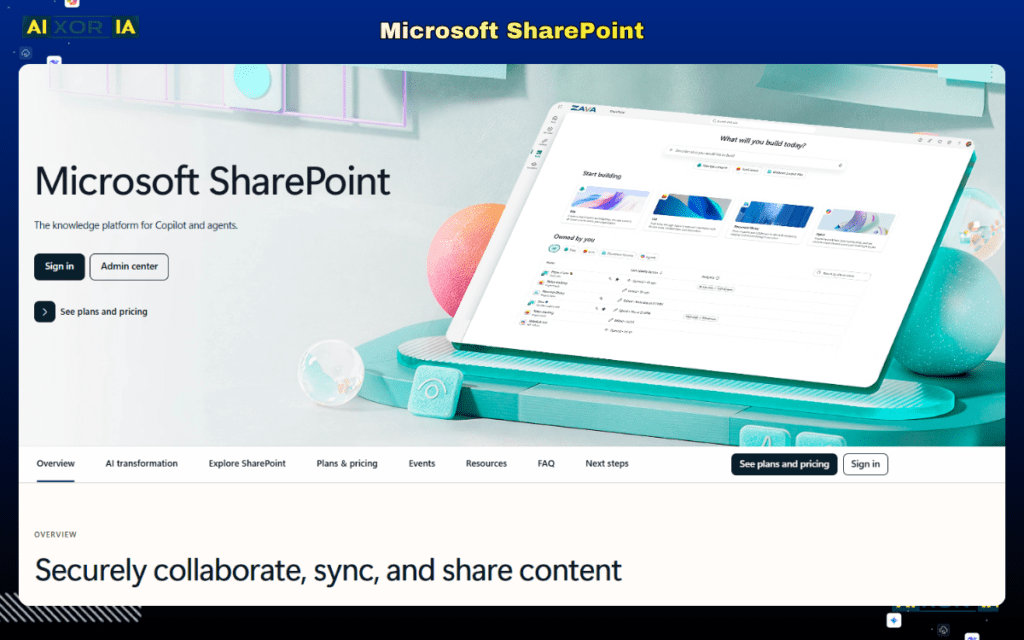
Microsoft SharePoint remains one of the most widely used enterprise document management systems, particularly for organizations already invested in Microsoft 365.
SharePoint acts as a centralized platform for storing, organizing, and sharing documents across teams. Its deep integration with tools like Outlook, Teams, and OneDrive makes it a natural choice for enterprises that rely on Microsoft’s ecosystem.
In 2026, SharePoint has significantly evolved with AI-powered capabilities through Microsoft Copilot. AI can automatically summarize documents, extract key information, suggest content, and even assist in document creation. This reduces the time employees spend searching for and processing information.
From a workflow perspective, SharePoint integrates with automation tools to handle approvals, document routing, and compliance processes at scale. It also offers enterprise-grade security, including role-based permissions, audit logs, and data loss prevention.
Pricing: Starts at $5/user/month (via Microsoft 365 plans)
Pros:
- Deep integration with Microsoft tools
- Strong security and compliance features
- AI-powered document insights
Cons:
- Can be complex to configure
- Requires Microsoft ecosystem for full value
Best Enterprise Document Management Software for Workflow Automation
DocuWare
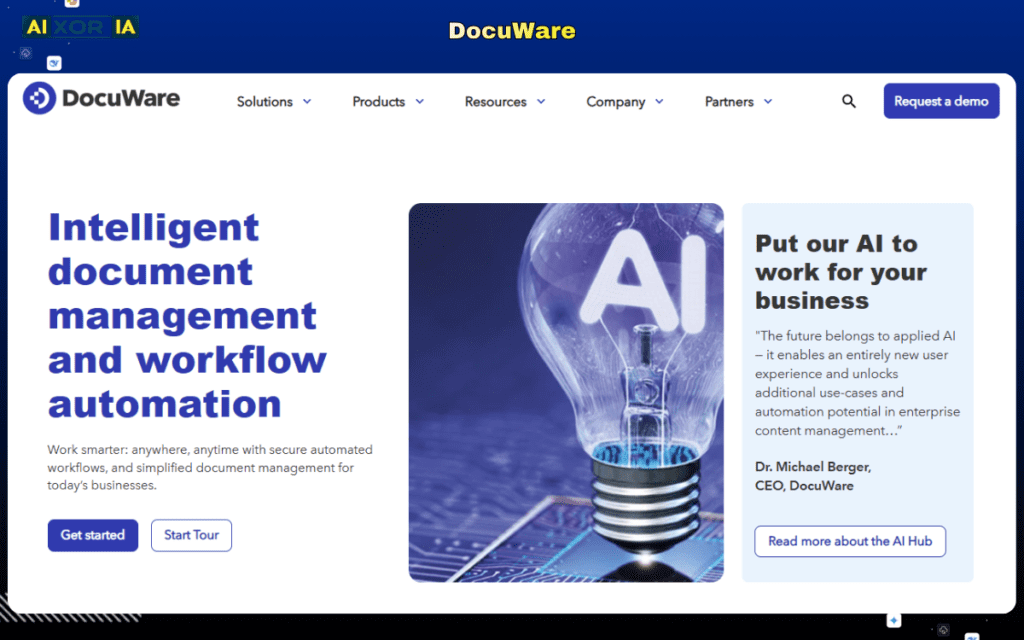
DocuWare is designed for organizations that want to automate document-heavy workflows such as invoicing, HR processes, and contract management.
It provides cloud-based document storage combined with powerful workflow automation tools. Documents can be automatically captured, indexed, and routed through predefined workflows without manual intervention.
AI plays a key role in DocuWare’s capabilities. It can classify documents, extract data from forms and invoices, and trigger workflows based on document content. This significantly reduces manual processing and improves accuracy.
DocuWare is particularly strong in compliance-heavy industries, offering secure document storage, audit trails, and regulatory support.
Pricing: Custom pricing based on enterprise needs
Pros:
- Strong automation capabilities
- AI-driven document processing
- High compliance standards
Cons:
- Implementation can take time
- Pricing not transparent
Best Metadata-Driven Document Management System
M-Files
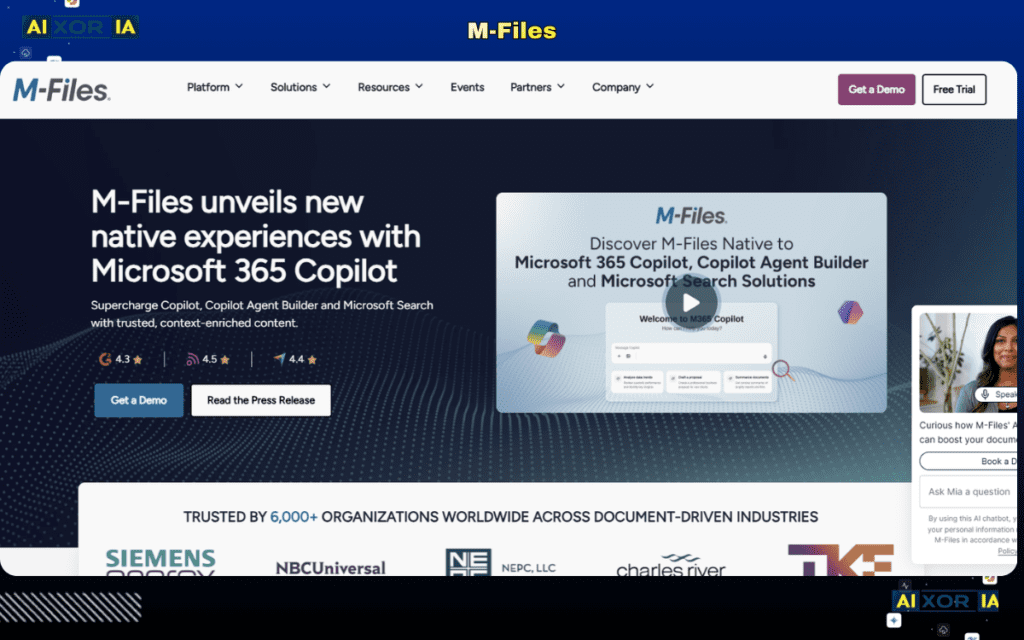
M-Files takes a unique approach to document management by organizing content based on metadata rather than traditional folder structures.
This means users can find documents based on what they are (client, project, type) rather than where they are stored. For large enterprises dealing with thousands of documents, this significantly improves efficiency.
AI enhances this system by automatically tagging documents, classifying content, and suggesting workflows. M-Files can also surface relevant documents based on context, helping users access information faster.
It integrates with existing systems, allowing organizations to unify document management across cloud and on-premise environments.
Pricing: Custom pricing
Pros:
- Metadata-driven organization
- Strong AI classification
- Improves search and accessibility
Cons:
- Learning curve for new users
- Requires proper setup for best results
Best Cloud Content Management Platform
Box
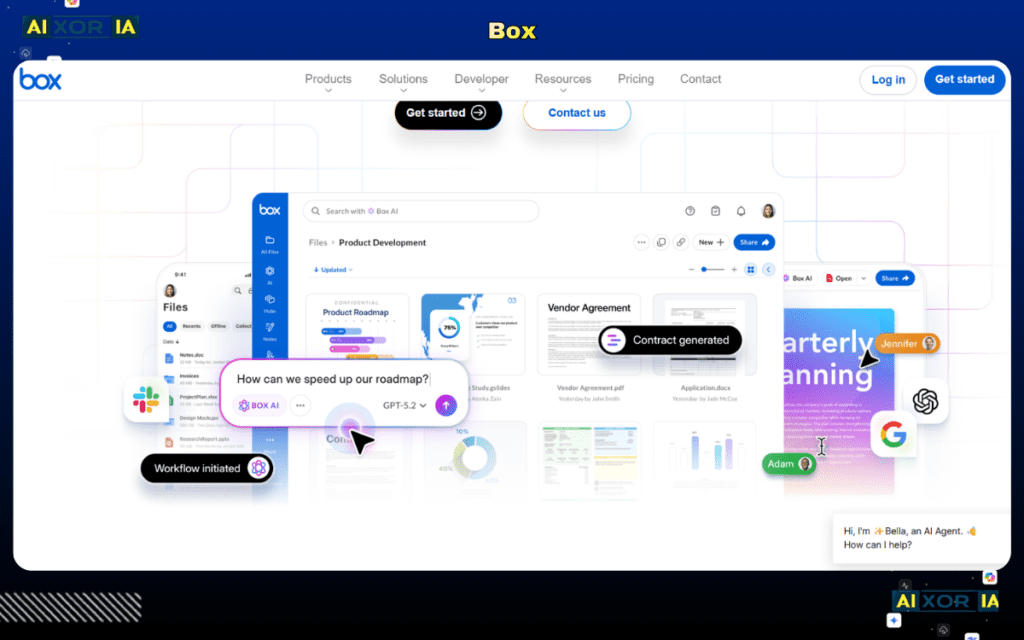
Box is a cloud-native content management platform focused on secure file sharing, collaboration, and enterprise-grade security.
It allows teams to collaborate on documents in real time while maintaining strict control over access and permissions. Box is widely used in industries like healthcare, finance, and legal due to its compliance capabilities.
AI is becoming a major part of Box’s offering. With Box AI, users can summarize documents, extract insights, and automate workflows directly within the platform. This makes it easier to manage large volumes of content efficiently.
Box also integrates with a wide range of enterprise tools, making it suitable for organizations with diverse tech stacks.
Pricing: Starts at $15/user/month
Pros:
- Strong security and compliance
- Excellent collaboration features
- AI-powered content insights
Cons:
- Advanced features require higher-tier plans
- Can get expensive at scale
Best Enterprise-Grade Document Management Platform
OpenText Content Suite
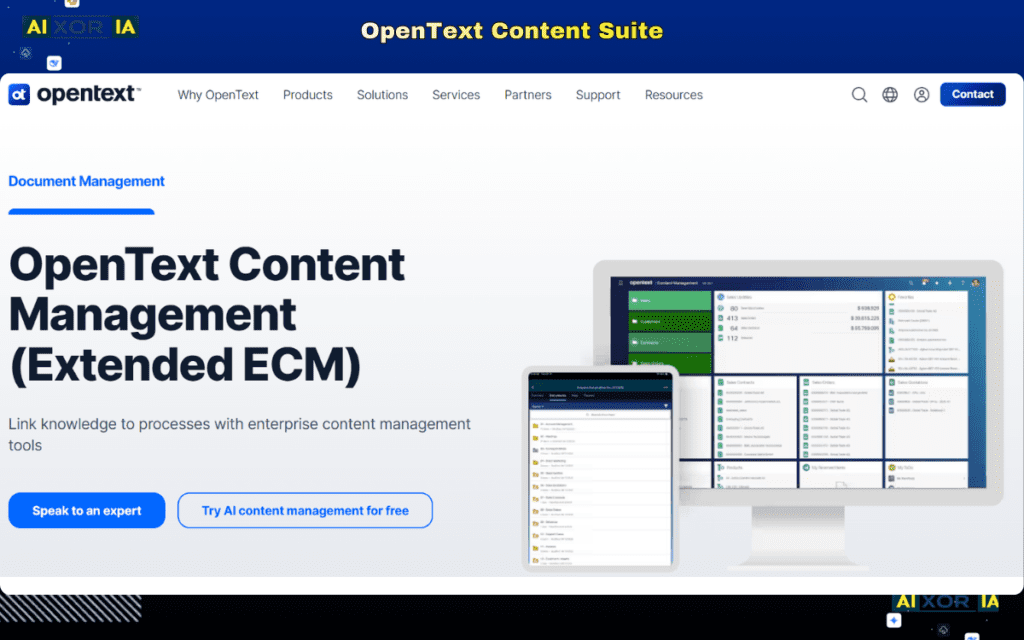
OpenText Content Suite is built for large enterprises that require advanced document management, governance, and compliance capabilities.
It supports complex workflows, records management, and enterprise-wide document control. Organizations with strict regulatory requirements often rely on OpenText for its robust compliance features.
AI capabilities include document classification, data extraction, and predictive insights, helping organizations manage content more intelligently.
OpenText is best suited for large-scale deployments where customization and control are critical.
Pricing: Custom enterprise pricing
Pros:
- Highly scalable
- Strong compliance features
- Advanced customization
Cons:
- Complex implementation
- Requires dedicated IT resources
Best Document Management Software for Process Automation
Laserfiche

Laserfiche combines document management with business process automation, making it a powerful tool for enterprises looking to digitize operations.
It allows organizations to automate document workflows, manage records, and ensure compliance. Laserfiche is particularly useful for government, education, and regulated industries.
AI features include document classification, data extraction, and workflow automation, enabling faster and more accurate processing of documents.
The platform also offers analytics and reporting tools to track performance and optimize processes.
Pricing: Custom pricing
Pros:
- Strong automation features
- AI-powered document handling
- Good for regulated industries
Cons:
- Setup can be complex
- Requires training
Best Cloud-Native Document Management for Simplicity
Google Drive (via Google Workspace)
Google Drive, part of Google Workspace, is a simple yet powerful document management solution for cloud-native teams.
It offers real-time collaboration, easy sharing, and seamless integration with tools like Docs, Sheets, and Gmail. While it may not have the advanced features of enterprise-grade platforms, it is highly effective for teams that prioritize simplicity and accessibility.
AI capabilities through Google Workspace include document summarization, smart suggestions, and automated organization, helping users manage content more efficiently.
Pricing: Starts at $6/user/month
Pros:
- Easy to use
- Real-time collaboration
- Affordable
Cons:
- Limited advanced document management features
- Not ideal for complex enterprise workflows
READ MORE – 9 Best Social Media Campaign Management Software
How to Choose the Right Enterprise Document Management Software
The best solution depends on your organization’s needs:
- If you use Microsoft tools → SharePoint
- If automation is your priority → DocuWare or Laserfiche
- If you need smart organization → M-Files
- If you want cloud collaboration → Box or Google Drive
- If you need enterprise-scale control → OpenText
Many enterprises combine multiple tools to create a complete document management ecosystem.
The Role of AI in Enterprise Document Management (2026)
AI is transforming document management from passive storage into active intelligence.
Modern platforms can:
- Automatically classify and tag documents
- Extract data from invoices, contracts, and forms
- Summarize long documents
- Trigger workflows based on content
- Provide insights and recommendations
This reduces manual work, improves accuracy, and helps organizations make better decisions faster.
AI is no longer optional—it is becoming a core part of enterprise document management systems.
Final Thoughts
Enterprise document management software is a critical part of modern business infrastructure. The right platform can improve efficiency, ensure compliance, and unlock the value of organizational knowledge.
In 2026, the best solutions combine automation, AI, security, and scalability to support complex enterprise needs.
Rather than choosing based on features alone, focus on how the platform fits into your workflows, integrates with your systems, and supports long-term growth.
4 thoughts on “7 Best Enterprise Document Management Software in 2026”