Why Knowing Which AI Content Detectors Are Most Accurate Matters Right Now
Which AI content detectors are most accurate is one of the most important questions you can ask before trusting any detection tool with a real decision — like grading a student’s paper or approving content for your website.
Here’s a quick answer based on independent benchmarks and testing in 2026:
| Detector | Overall Accuracy | False Positive Rate |
|---|---|---|
| Originality.ai | 91–95% | 2–6% |
| Winston AI | 87–92% | 5–8% |
| Pangram Labs | ~100% (small sample) | Very low |
| Copyleaks | 85–90% | 6–8% |
| GPTZero | 76–88% | 9–18% |
| Turnitin | 74–96% | 4–12% |
| ZeroGPT | 71–82% | 14–26% |
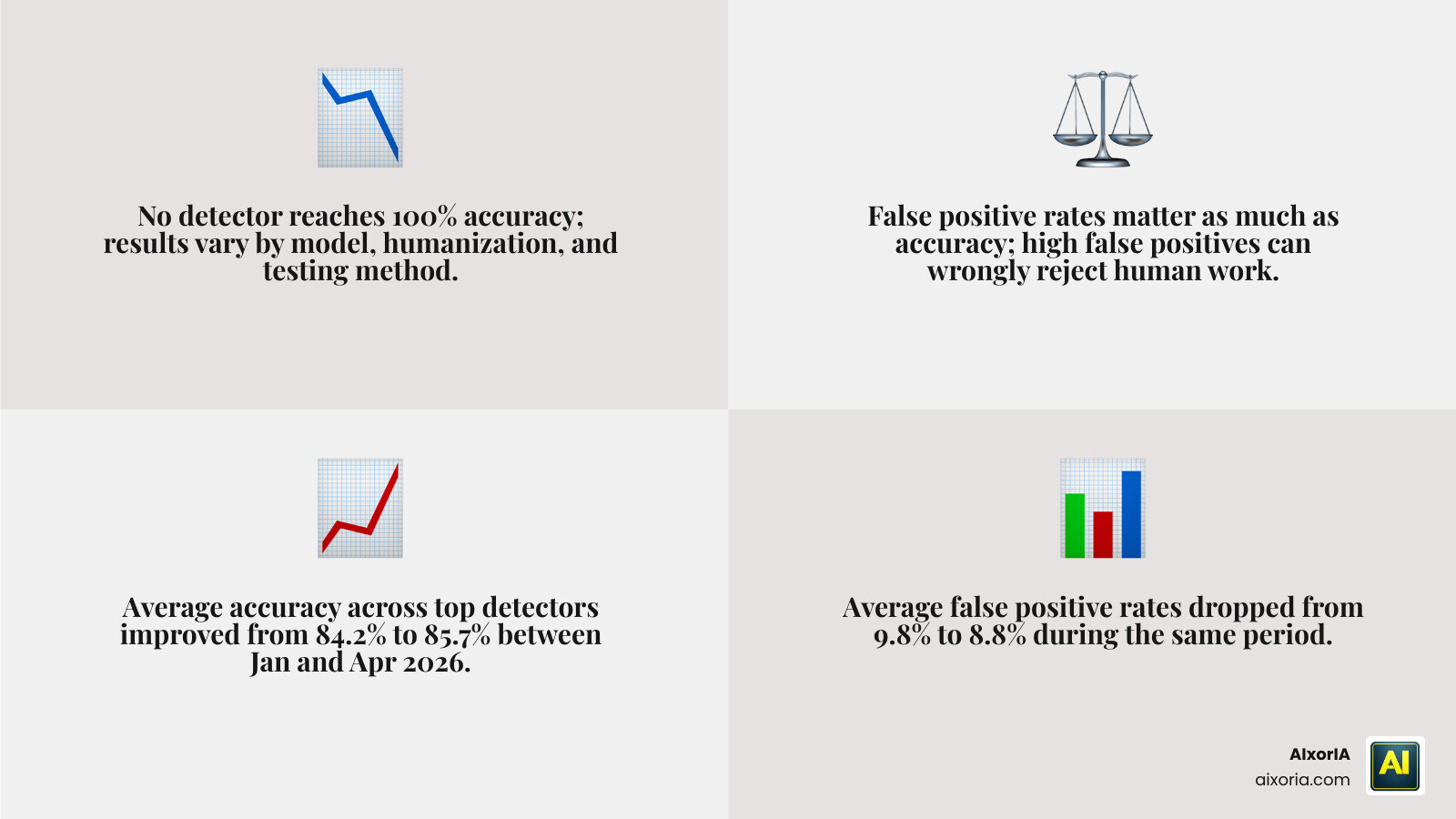
The honest truth: No detector is 100% accurate. Results vary depending on the AI model used, whether content was humanized, and the testing methodology.
The gap between marketing claims and real-world performance is significant. Several tools advertise 99%+ accuracy, but independent tests consistently show lower numbers — sometimes far lower.
What makes this tricky for small business owners is simple: a wrong result has real consequences. Flag a human-written article as AI and you might reject perfectly good work. Miss actual AI content and you could publish something that hurts your credibility or search rankings.
Accuracy also isn’t the only thing that matters. A tool that catches 96% of AI text but wrongly flags 12% of human writing can cause serious problems. False positive rates matter just as much as detection rates.
The good news is that the field is improving. Average accuracy across the top 10 detectors rose from 84.2% to 85.7% between January and April 2026, while average false positive rates dropped from 9.8% to 8.8%.
This guide breaks down which tools actually perform best, where they fall short, and how to pick the right one for your needs.
Which AI Content Detectors Are Most Accurate?
To understand Which AI Content Detectors Are Most Accurate?, we first need to pull back the curtain on how they actually work. AI detectors do not look for “plagiarism” in the traditional sense. Instead, they analyze the mathematical properties of text using two primary metrics: perplexity (how predictable the word choices are) and burstiness (how much the sentence length and structure vary).
AI models like ChatGPT or Claude tend to write with low perplexity and low burstiness—meaning they choose the most statistically likely words and write in highly consistent, uniform sentences. Human writers, on the other hand, write with high perplexity (unpredictable vocabulary) and high burstiness (mixing short, snappy sentences with long, complex ones).
According to a comprehensive benchmark featured in the 6 Most Accurate AI Detectors in 2026 (500 Documents Analyzed) – PunsWave , accuracy comes down to token-level predictability. The most advanced detectors evaluate text at a deep token level rather than relying on surface-level pattern matching. When analyzing a balanced dataset of 500 documents, tools that combine token-level perplexity with sentence-level burstiness consistently outperformed those using basic linguistic heuristics.
Evaluating Which AI Content Detectors Are Most Accurate for SEO
For digital marketers and web publishers, search engine guidelines are the ultimate rulebook. Google has repeatedly emphasized that its systems reward high-quality, original content, regardless of how it is produced. However, relying purely on raw AI-generated drafts can put your organic reach at risk if the content lacks real-world value, unique insights, or accuracy.
Using the Best AI Content Detectors for SEO in 2026 allows marketing teams to maintain editorial control. By identifying highly predictable, robotic text patterns before publishing, you can ensure your articles feel authentic, authoritative, and human-crafted. The goal of SEO-focused detection isn’t necessarily to ban AI entirely, but to ensure that the final output meets high content quality standards and avoids search engine filters.
Testing Which AI Content Detectors Are Most Accurate on Humanized Text
The rise of “semantic humanizers” and advanced paraphrasing tools has created a massive headache for standard detectors. These humanizing tools are designed specifically to bypass AI detection by artificially inflating burstiness and swapping predictable words with synonyms.
Independent tests reveal a staggering drop in accuracy when detectors face humanized text. For example, in controlled evaluations documented in the Best AI Content Detector: Top Tools Compared , Turnitin’s accuracy plummeted from 96% on raw AI text to just 28% on semantically humanized content. Similarly, GPTZero’s detection rate fell from 91% to a mere 18% when faced with rewritten text. This highlights a critical limitation: while detectors are highly reliable at catching raw machine output, they struggle significantly when humanized or hybrid (mixed AI and human) content is introduced.
Performance Comparison of Leading AI Detectors in 2026
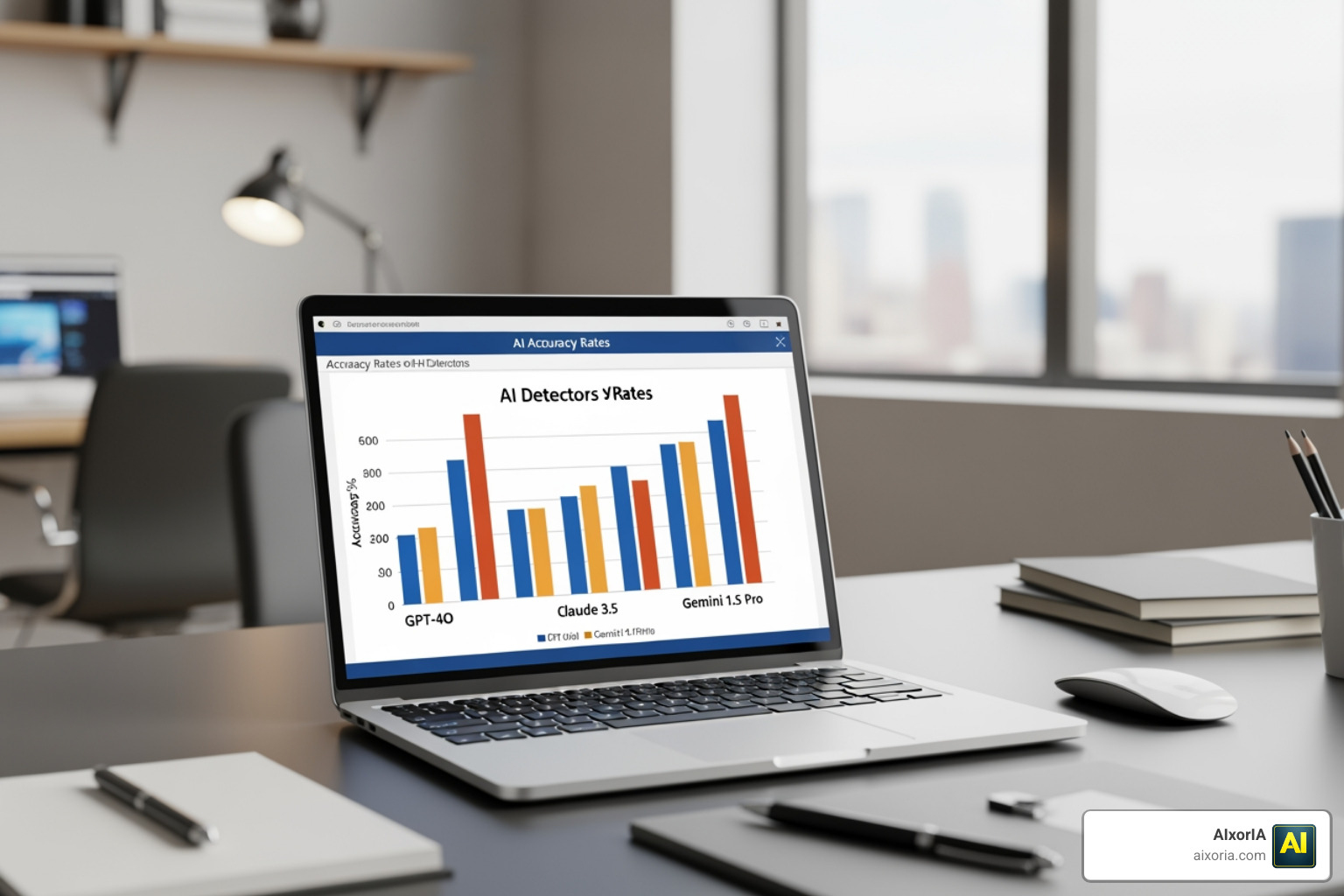
When we look at how the top tools perform across different Large Language Models (LLMs), the gaps become even more apparent. According to the AI Detector Accuracy Benchmark (2026) | aidetectors.io , Claude 3.5 Sonnet remains the hardest model for detectors to identify, showing a massive 22.4 percentage point spread between the best-performing and worst-performing detection tools.
If you are running digital campaigns, choosing a tool that can accurately scan across multiple models is essential to protect your brand. For a deeper look at managing these standards, see our guide on the Best AI Content Detectors for Marketing Campaigns in 2026.
Originality.ai and Winston AI
Originality.ai and Winston AI consistently rank near the top of accuracy lists for professional workflows.
- Originality.ai is highly regarded for its “Deep Scan” feature, which analyzes text against advanced models like GPT-4o, Gemini, and Claude. It also offers a Chrome extension and a document creation replay feature to prove human writing history.
- Winston AI claims a 99.98% accuracy rate and stands out for its Optical Character Recognition (OCR) technology. This allows users to extract and scan text directly from images, PDFs, and even physical handwriting. Both tools are highly reliable but are paid services, making them best suited for professional publishers and agencies. For more options, check out our list of the Best AI Detection Tools in 2026.
Copyleaks and GPTZero
For educational environments and multi-language workspaces, Copyleaks and GPTZero are the industry standards.
- Copyleaks offers incredibly robust multilingual support, detecting AI patterns in over 30 languages (including English, French, Spanish, and German) with specific localized accuracy metrics. It also features deep LMS integrations (like Canvas and Moodle) and an “AI Logic” explanation panel that shows exactly why a text was flagged.
- GPTZero is widely used in classrooms, offering a generous free tier (10,000 words per month) and sentence-by-sentence analysis. While highly accessible, its false-positive rate on humanized or non-native English text is historically higher than premium competitors. Educators can explore further in our roundup of the Best AI Content Detectors for Teachers in 2026.
Pangram Labs and Cudekai
If your workflow demands research-grade precision or high-volume processing, Pangram Labs and Cudekai represent the cutting edge of detection technology.
- Pangram Labs, developed by a team with research roots at Stanford, Google, and Tesla, achieved a perfect 100% pass rate on both AI and human samples in independent, small-scale testing. It is designed to maintain a near-zero false-positive rate, making it ideal for academic institutions and enterprise publishers.
- Cudekai relies on a highly sophisticated blend of token-level perplexity and sentence-level burstiness. In a 500-document benchmark, Cudekai achieved an impressive 97.3% accuracy rate with only a 2.1% false-positive rate, while processing up to 25,000 words in under 3 seconds. To see how these stack up against others, view our 20 Best AI Detector Tools in 2026 Tested Ranked.
Key Challenges and Limitations of AI Detection
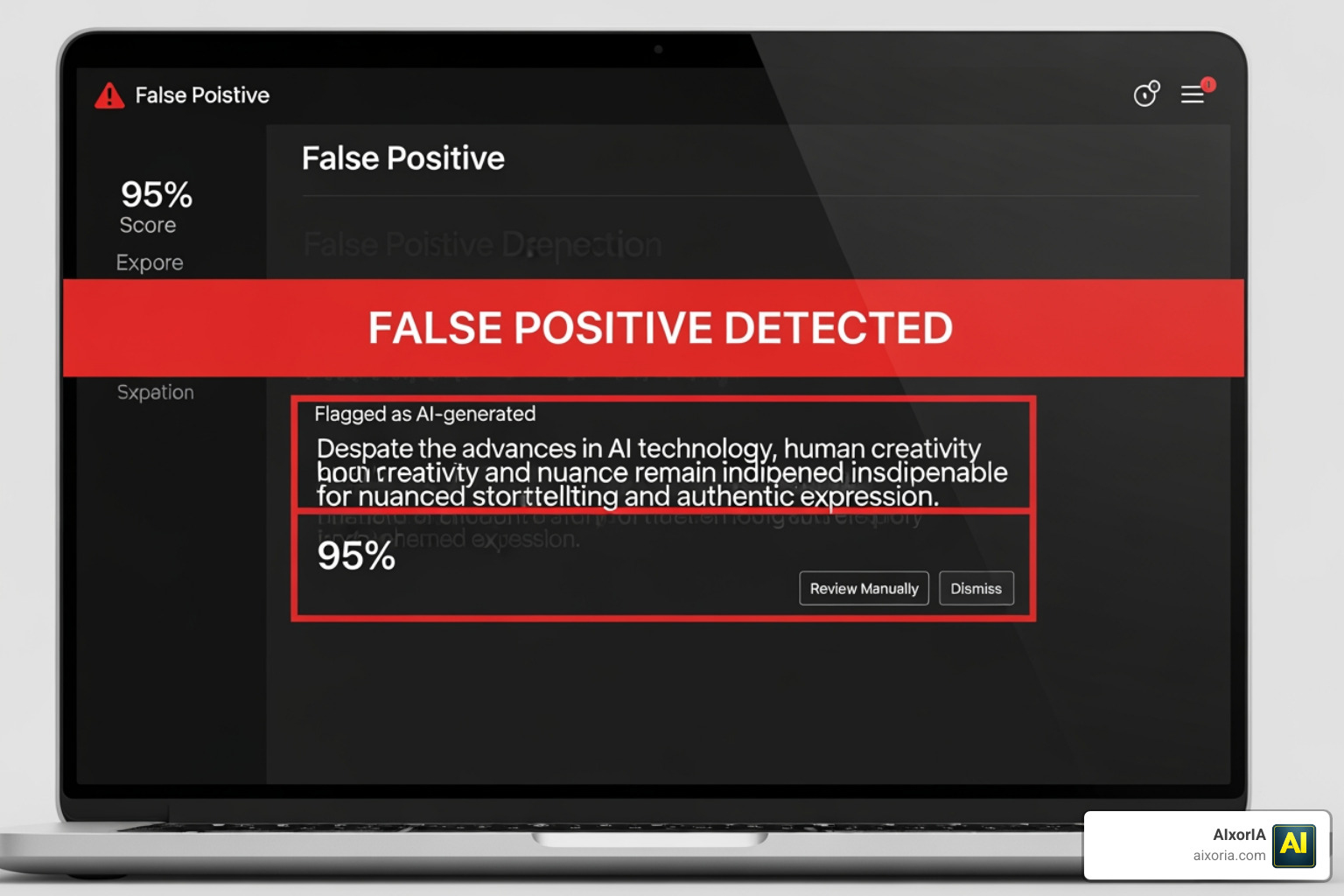
Despite recent software improvements, the AI detection industry still faces a fundamental hurdle: the false positive problem. A false positive occurs when a completely human-written document is incorrectly flagged as AI-generated.
This issue is especially prevalent when evaluating the writing of non-native English speakers. Because ESL (English as a Second Language) writers often use more structured, formal vocabulary and simpler sentence variations to ensure clarity, their writing naturally mimics the low-perplexity, low-burstiness patterns that detectors associate with AI.
As noted in the Are AI Detectors Accurate? 8 Tools Tested | SupWriter study, none of the major tools on the market lived up to their bold 99%+ marketing claims under rigorous, diverse testing conditions. Relying blindly on these tools without human oversight can lead to unfair accusations of academic dishonesty or the wrongful rejection of high-quality freelance work. For a broader perspective on how to navigate these technical limits, read about the Best AI Content Detection Tools in 2026.
Frequently Asked Questions About AI Detection Accuracy
Can AI detectors identify content from Claude 3.5 and GPT-5?
Yes, but their accuracy varies. As AI models evolve, developers of detection tools must constantly retrain their algorithms on new datasets. While raw output from GPT-4o and Gemini Pro is relatively easy to flag, Claude 3.5 Sonnet’s natural rhythm and varied vocabulary continue to present the biggest detection gap in the industry. For a detailed breakdown of how 30+ tools handled these advanced models, see Best AI Detectors in 2026: I Tested 30+ Popular AI Detectors to Find the Most Accurate Ones .
Do humanizing tools successfully bypass top AI detectors?
Yes, in most cases. Semantic humanizers and advanced paraphrasing software restructure text to artificially inflate perplexity and burstiness metrics. When humanizing tools are applied, detection accuracy across almost all major platforms drops below 50%. This is why detection scores should always be treated as a general probability signal rather than absolute proof.
How should educators and publishers handle false positives?
We always recommend keeping a human reviewer in the loop. Instead of treating a high AI score as a final decision, use it as a starting point for a conversation. Look at writing histories (such as Google Docs version histories), check for consistent formatting, and evaluate the depth of the content. For publishers managing diverse global teams, our Best AI Content Detectors for Arabic Text 2026 Guide offers great insights into handling multilingual content ethically.
Conclusion
Determining which AI content detectors are most accurate depends heavily on your specific use case. While premium tools like Originality.ai and Winston AI lead in raw accuracy for publishers, platforms like Copyleaks and GPTZero offer the accessibility and integrations needed for educational environments.
However, because no tool is completely foolproof, relying solely on automated scans can lead to costly mistakes. At AIxorIA, we specialize in helping businesses navigate this rapidly changing landscape. We provide custom AI solutions, tool training workshops, comprehensive content integrity audits, and performance optimization services to ensure your team can leverage AI tools safely and ethically.
Want to learn how to master these tools and keep your workflows authentic? Explore our step-by-step AI Tutorials or contact us today to set up a custom training session for your business.
3 thoughts on “Which AI Content Detectors Are Most Accurate in 2026? Tested & Ranked”