Why the Best ETL Tools in Data Warehouse Are Critical in 2026

The best ETL tools in data warehouse setups can mean the difference between raw, useless data and insights that actually drive decisions. And in 2026, this matters more than ever.
Here’s a quick answer if you’re in a hurry:
Top ETL Tools for Data Warehousing at a Glance:
| Tool | Best For | Key Strength |
|---|---|---|
| Fivetran | Automated pipelines | 700+ reliable connectors |
| Airbyte | Open-source flexibility | 550+ connectors, self-hosted |
| Databricks | AI/ML + analytics | Unified data + ML platform |
| Google Cloud BigQuery | Cloud-native analytics | Serverless, massive scale |
| AWS Glue | AWS ecosystem | Deep Amazon integration |
| Matillion | Cloud-native ETL | ELT with visual interface |
| Informatica IDMC | Enterprise governance | 500+ connectors, compliance |
| Integrate.io | SMB + compliance | Low-code, fixed-fee pricing |
| Hevo Data | Budget-conscious teams | Simple pricing, 150+ connectors |
| dbt | Transformation layer | SQL-based, pairs with any ingestor |
The global ETL software market is valued at $10.24 billion in 2026 and is on track to hit $21.25 billion by 2031. That growth isn’t a coincidence. By the end of 2025, the world generated roughly 181 zettabytes of data — and businesses need tools to make sense of it all.
But here’s the problem most small business owners face: data is only useful when it’s clean, connected, and ready to analyze. Manually moving data between systems is slow, error-prone, and a massive time drain.
ETL tools solve this by automating three steps:
- Extract — pulling data from your sources (CRMs, spreadsheets, databases, apps)
- Transform — cleaning and reshaping it into a usable format
- Load — pushing it into a data warehouse where you can analyze it
The right tool can save your team hours every week and help you make faster, smarter decisions — without needing a data engineering degree.
This guide breaks down exactly which tools are worth your time, what to look for, and how to avoid overpaying.
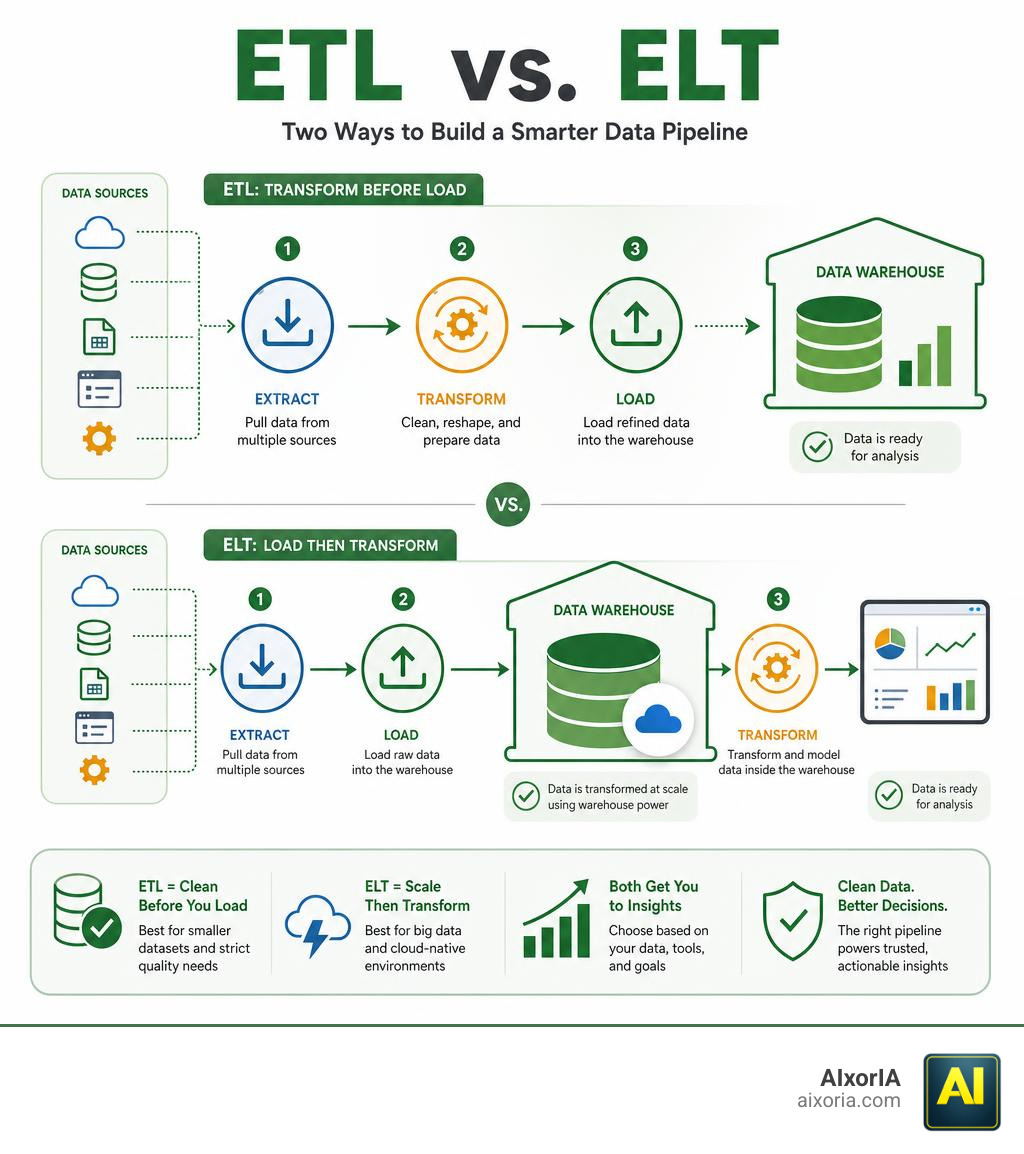
Understanding ETL vs. ELT in Modern Data Warehousing
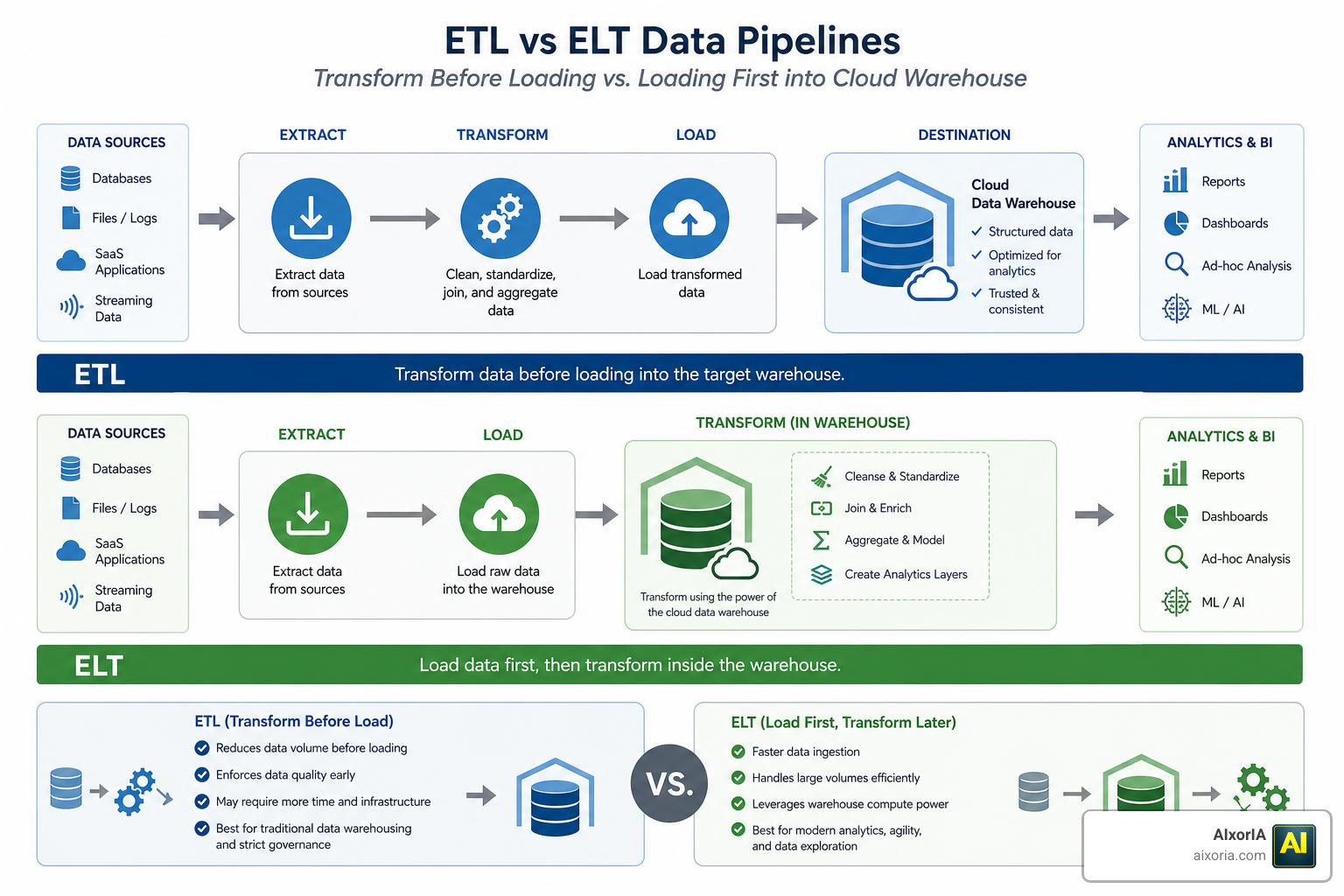
To build a modern data pipeline, we must first understand how data moves. Traditional pipelines rely on ETL (Extract, Transform, Load), where raw data is cleaned and restructured on a separate staging server before it reaches the data warehouse. This was necessary when data warehouse storage and compute were incredibly expensive.
However, the rise of cloud computing has shifted the industry toward ELT (Extract, Load, Transform). In an ELT workflow, raw data is loaded directly into the cloud data warehouse first. Transformations are then handled using the warehouse’s own massive, scalable compute power.
Understanding this flow is essential because your choice depends heavily on your Methods of Data Collection and where you want your processing power to live.
Why ETL Matters for Data Quality
While ELT is popular, traditional ETL remains vital for industries with strict data security, compliance, and privacy rules. If you need to mask personally identifiable information (PII) before it ever touches your cloud storage, transforming data before loading is non-negotiable.
Automated data cleansing, validation rules, and schema drift detection prevent corrupt data from breaking your downstream dashboards. When choosing an ingestion method, pairing your pipeline with reliable Online Data Collection Tools ensures that the raw data entering your pipeline is structured and secure from the start.
The Shift to ELT in Cloud Environments
For most modern businesses, cloud-native ELT is the default choice. Cloud warehouses like Snowflake, Google Cloud BigQuery, and Amazon Redshift offer virtually unlimited, scalable compute and storage.
By using “push-down transformations” (where the ETL tool simply writes SQL commands for the warehouse to execute), organizations avoid the bottleneck of a middleman server. This allows data teams to keep raw data intact, meaning they can change their transformation models later without having to re-extract the original data.
Key Categories of the Best ETL Tools in Data Warehouse
Not all ETL tools serve the same purpose. To help you navigate the landscape, we have broken down the main categories of the best ETL tools in data warehouse environments:
| Category | Best For | Examples | Key Trade-off |
|---|---|---|---|
| Open-Source | Highly technical teams wanting complete control | Airbyte, Meltano | High maintenance and engineering overhead |
| Cloud-Native / SaaS | Rapid deployment and hands-off maintenance | Fivetran, Hevo Data | Can become highly expensive as data scales |
| Enterprise-Grade | Complex legacy systems and strict governance | Informatica, IBM DataStage | Steep learning curve and complex interfaces |
| Real-Time / Streaming | Sub-second latency needs (e.g., fraud detection) | Estuary Flow, Confluent | Higher infrastructure costs and complexity |
| Self-Service / No-Code | Non-technical business users and analysts | Integrate.io, Domo | Limited customizability for complex code pipelines |
For a deeper dive into how these categories fit different workflows, you can read the 9 best ETL Tools in 2026 | Zapier guide.
Open-Source and Self-Service Solutions
Open-source tools like Airbyte OSS offer unmatched customizability. If you have an engineering team capable of hosting and maintaining the infrastructure, open-source is highly cost-effective and avoids vendor lock-in.
On the flip side, self-service, no-code platforms empower business analysts to build pipelines visually. Tools like Peliqan – All-in-one Data Platform combine ETL, low-code Python, and built-in warehousing to let non-technical users access clean data without waiting on IT backlogs.
Cloud-Native and Enterprise-Grade Platforms
If your organization handles massive scale, cloud-native platforms offer managed infrastructure, built-in high availability, and tight security. For instance, Google Cloud BigQuery boasts a stellar customer satisfaction score of 97 and a market presence score of 99, with 91% of users recommending it. Databricks follows closely with a G2 satisfaction score of 100, loved for its ability to unify data engineering, analytics, and ML workloads.
For legacy systems, enterprise tools like Pentaho Data Integration: Ingest, Blend, Orchestrate, and Transform Data provide robust drag-and-drop orchestration that blends on-premises databases with modern cloud environments.
Essential Features to Evaluate in Data Integration Software
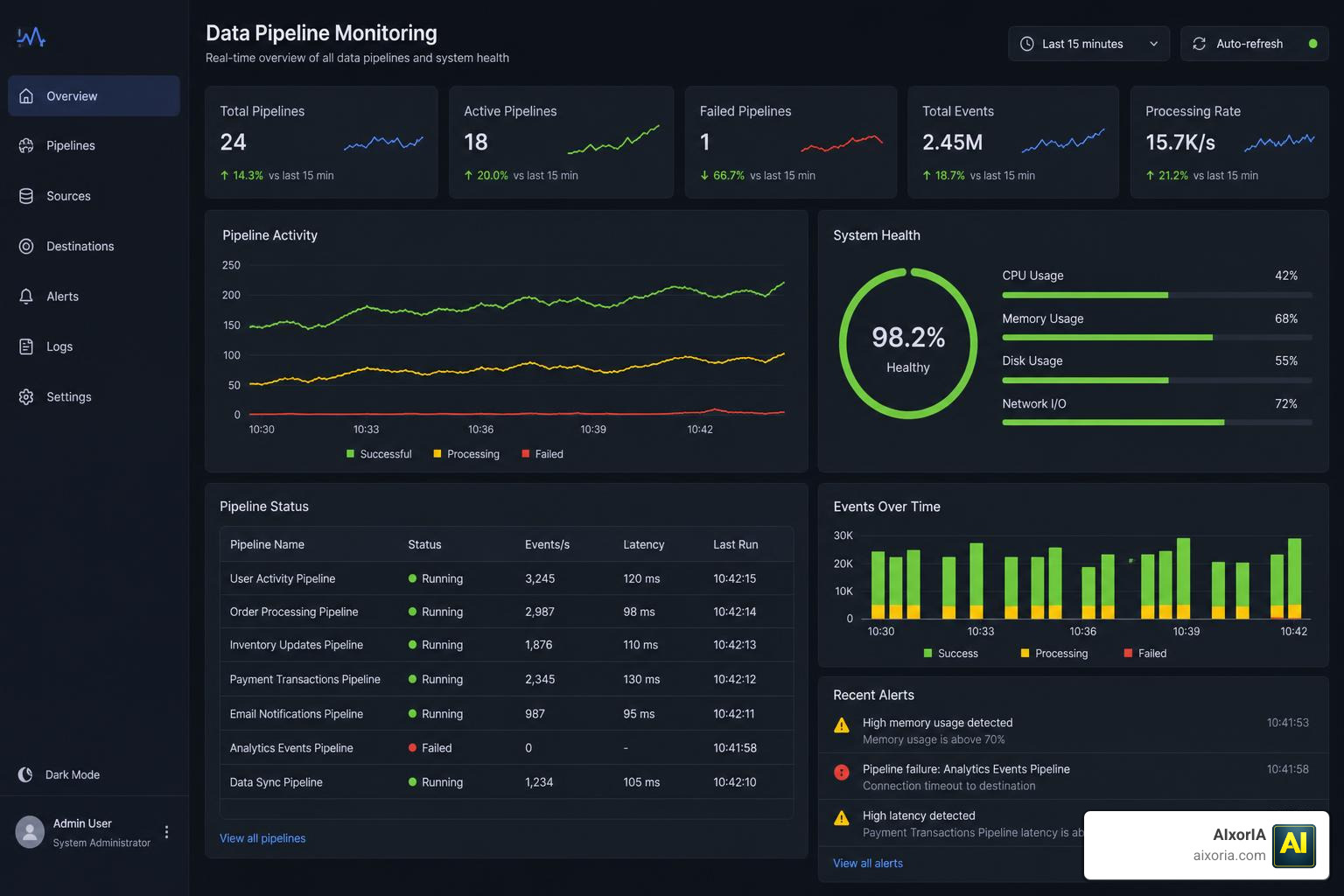
When selecting the best ETL tools in data warehouse ecosystems, look past marketing claims and focus on these core capabilities. For a comprehensive checklist, check out the recommendations on Best ETL Tools For Seamless Data Integration | Integrate.io.
Ingestion and Connector Breadth
Your ETL tool is only as good as its connectors. Look for:
- Prebuilt Connectors: Platforms like Fivetran (500+ connectors) and Airbyte (550+ connectors) reduce custom API coding.
- Change Data Capture (CDC): Instead of scanning entire databases, CDC reads database transaction logs in real time, reducing source system strain.
- Automated Schema Detection: If a CRM field changes upstream, your ETL tool should automatically detect the drift and update the warehouse schema without failing.
Security, Compliance, and Governance
Because ETL tools handle sensitive business data, enterprise-grade security is crucial. Ensure your tool offers SOC 2 Type II, ISO 27001, HIPAA, and GDPR compliance. Features like column-level masking, data encryption (at rest and in transit), and role-based access control (RBAC) are essential to maintain governance.
For highly regulated migrations, specialized tools like Archon ETL™ | Intelligent ETL Automation for Enterprise Data Migration offer metadata-driven validation and Smart ETL features to preserve referential integrity automatically.
Maximizing ROI and Future-Proofing Your Data Stack
Choosing an ETL tool is a long-term investment. To ensure you don’t outgrow your stack or get hit with surprise bills, you must plan for scalability and automation. This is where using the Best AI Report Generator in Word Document and other automated reporting tools can help you continuously audit your pipeline health and data performance.
Optimizing the Best ETL Tools in Data Warehouse for Cost
Total Cost of Ownership (TCO) includes software licenses, cloud compute, and the engineering hours spent fixing broken pipelines.
Many cloud ETL platforms charge based on Modified Active Rows (MAR) or volume. If a CRM bulk update or schema change occurs, your monthly bill can unexpectedly spike by 30% to 50%. To control costs, establish clear cluster management practices, set budget alerts, and evaluate fixed-fee pricing models like Integrate.io’s unlimited pipeline plans.
For a transparent breakdown of pricing structures and vendor trust scores, review the Top 10 ETL / ELT Software (2026) market analysis.
AI and Machine Learning Integration in the Best ETL Tools in Data Warehouse
Modern ETL tools are increasingly using AI to automate pipeline construction. AI-powered query assistants help analysts write complex SQL transformations, while machine learning models predict and resolve schema drift before pipelines break.
Furthermore, tools like Databricks utilize “Lakehouse” architectures and Medallion structures to incrementally clean and prepare raw data, making it immediately ready for training machine learning and Generative AI models.
Frequently Asked Questions about Data Warehouse ETL
What is the difference between ETL and ELT?
ETL transforms data on a separate staging server before loading it into the destination, which is ideal for strict privacy compliance. ELT loads raw data directly into the cloud warehouse first and transforms it there, taking advantage of cheap, scalable cloud compute.
How do real-time ETL tools handle streaming data?
Real-time tools use Change Data Capture (CDC) and continuous processing engines (like Apache Kafka or Estuary Flow) to capture database updates as they happen, delivering sub-second latency for operational dashboards and fraud detection.
What are the main security standards for ETL tools?
The industry standards for secure data integration include SOC 2 Type II, ISO 27001, HIPAA (for healthcare), and GDPR/CCPA compliance, alongside end-to-end AES-256 encryption and role-based access controls.
Conclusion
Selecting from the best ETL tools in data warehouse configurations is a critical step in building a data-driven business. The right tool eliminates manual script maintenance, secures your business intelligence, and prepares your data stack for future AI integrations.
At AIxorIA, we specialize in helping businesses navigate these complex technical waters. We provide custom AI solutions, tool training workshops, hands-on tutorials, and performance audits designed to streamline your data pipelines without high costs or confusing jargon.
Ready to transform your data strategy? Discover the 20 Best ETL Tools for Data Integration or reach out to us today to schedule a performance audit and get your data stack running at peak efficiency!
2 thoughts on “Best ETL Tools in Data Warehouse for 2026: Top Picks”