Visibility is no longer just about publishing content—it’s about getting the right content in front of the right audience at the right time. In 2026, AI has fundamentally changed how brands, creators, and businesses increase their reach across search engines, social platforms, and digital ecosystems.
The challenge is not access to tools, but choosing the right ones. Many platforms promise growth, but only a few deliver measurable improvements in traffic, discoverability, and engagement.
This guide breaks down the most effective AI tools for enhancing visibility, based on real use cases, practical functionality, and their ability to scale across different channels.
Table of Contents
What Does “Enhancing Visibility” Mean in 2026?
Enhancing visibility goes beyond rankings. It includes:
- Search engine presence (organic traffic)
- Social media reach and engagement
- Content discoverability across platforms
- Brand awareness in competitive niches
- Audience targeting and personalization
AI tools now assist in all of these areas by analyzing data, predicting trends, and automating execution.
What Makes an AI Tool Effective for Visibility?
Before choosing a tool, it’s important to evaluate it based on these core factors:
1. Data-Driven Insights
The tool should analyze search trends, user behavior, and competition.
2. Automation Capabilities
It should reduce manual effort in publishing, optimization, or distribution.
3. Multi-Channel Integration
Visibility is not limited to one platform. The best tools work across SEO, social media, and content systems.
4. Ease of Use with Control
A balance between automation and customization is essential, especially for scaling.
5. Measurable Results
The tool should clearly show improvements in traffic, engagement, or reach.
READ MORE – What is the Best AI Tool for Increasing Visibility?
The Best AI Tools for Enhancing Visibility
1. Surfer SEO — Best for On-Page SEO Optimization
Surfer SEO helps optimize content based on real-time SERP data. It analyzes top-ranking pages and provides actionable recommendations for improving your content structure, keyword usage, and readability.
Key strengths:
- Real-time content scoring
- NLP-based keyword suggestions
- SERP-based structure optimization
Best use case:
Improving blog posts to rank higher on Google and increase organic visibility.
Limitations:
Requires understanding of SEO fundamentals to get the most value.
2. Jasper AI — Best for Scalable Content Creation
Jasper AI is designed for generating high-quality content quickly while maintaining brand voice. It helps create blog posts, ad copy, and social content optimized for engagement.
Key strengths:
- Long-form content generation
- Brand voice customization
- Built-in templates for marketing use cases
Best use case:
Producing consistent, optimized content at scale.
Limitations:
Content still requires human editing for authority and originality.
3. Semrush — Best for Keyword Research and Competitive Analysis
Semrush provides deep insights into keyword opportunities, competitor strategies, and traffic data. It is one of the most comprehensive tools for building visibility through search.
Key strengths:
- Keyword gap analysis
- Competitor tracking
- Traffic analytics
Best use case:
Identifying high-impact keywords and uncovering content opportunities.
Limitations:
Can be overwhelming for beginners due to feature depth.
READ MORE – The 5 Best AI Tools for Business Strategy
4. Canva — Best for Visual Content Visibility
Visual content plays a major role in engagement and reach. Canva’s AI features help create high-quality graphics, thumbnails, and social media posts that attract attention.
Key strengths:
- AI design suggestions
- Easy-to-use templates
- Social media optimization formats
Best use case:
Enhancing visibility on platforms like Instagram, Pinterest, and LinkedIn.
Limitations:
Less advanced compared to professional design tools.
5. Hootsuite — Best for Social Media Automation
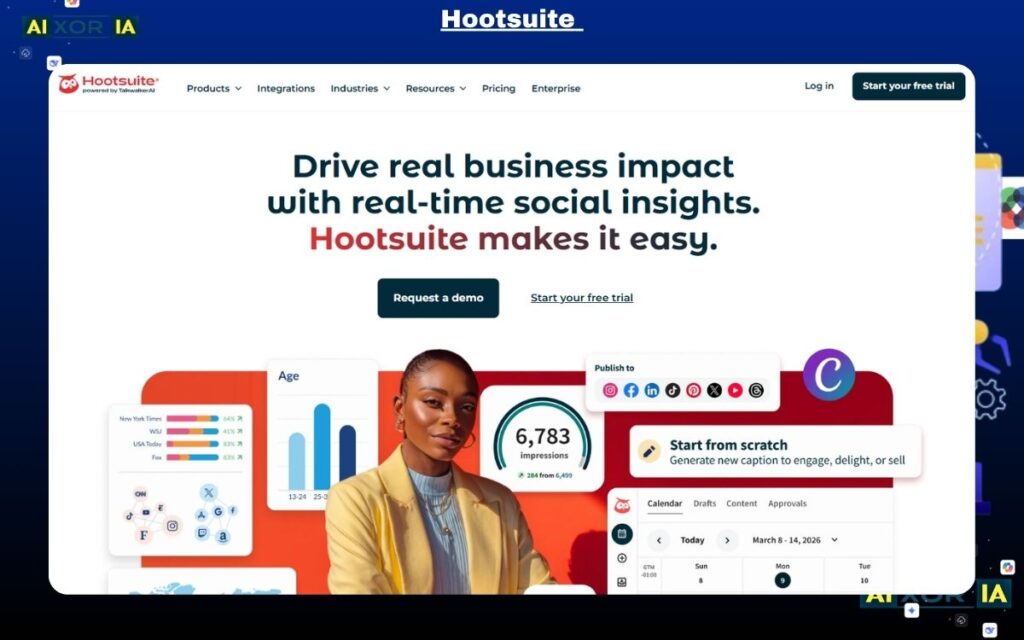
Hootsuite uses AI to schedule posts, analyze engagement, and optimize publishing times for maximum reach.
Key strengths:
- Automated scheduling
- Performance analytics
- Multi-platform management
Best use case:
Maintaining consistent social media presence with minimal effort.
Limitations:
Advanced analytics may require higher-tier plans.
6. ChatGPT — Best for Content Ideation and Strategy
ChatGPT helps generate content ideas, outlines, and even full drafts tailored to specific audiences. It is especially useful for brainstorming and structuring high-performing content.
Key strengths:
- Idea generation
- Content structuring
- SEO-friendly writing assistance
Best use case:
Planning and structuring content that aligns with search intent.
Limitations:
Requires human oversight to ensure accuracy and originality.
7. Google Analytics — Best for Performance Tracking
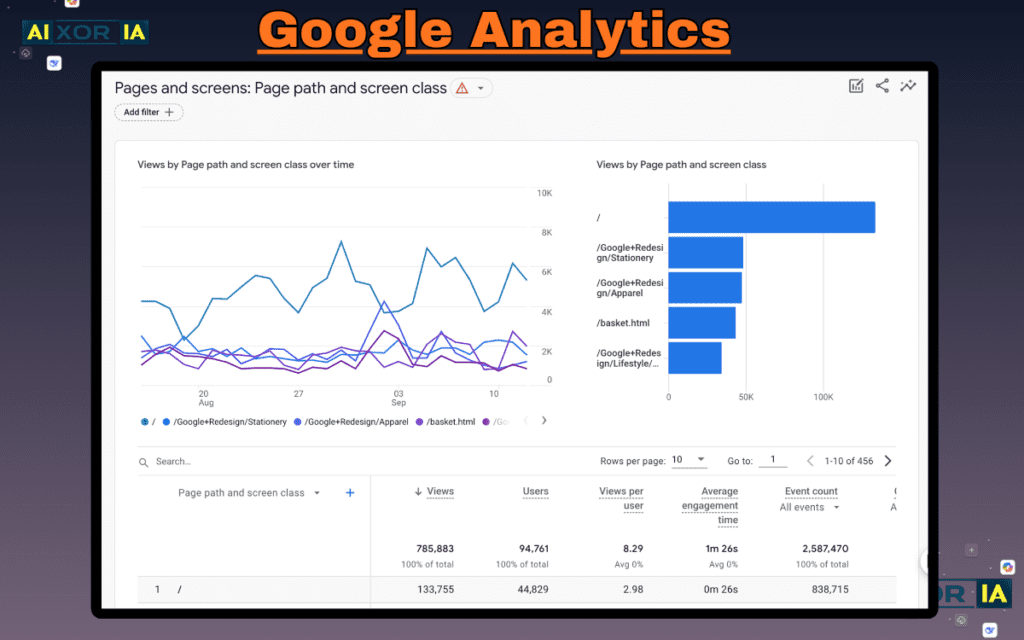
No visibility strategy is complete without measurement. Google Analytics provides insights into traffic sources, user behavior, and conversion data.
Key strengths:
- Real-time traffic tracking
- Audience insights
- Conversion analysis
Best use case:
Understanding what’s working and optimizing visibility strategies accordingly.
Limitations:
Data interpretation requires experience.
How to Combine These Tools for Maximum Visibility
Using a single tool is rarely enough. High-performing strategies combine multiple tools into a workflow:
- Use Semrush for keyword research and topic discovery
- Create content using Jasper AI or ChatGPT
- Optimize it with Surfer SEO
- Design visuals using Canva
- Distribute content via Hootsuite
- Track performance with Google Analytics
This layered approach ensures that every stage—creation, optimization, and distribution—is covered.
READ MORE – 20 Best SEO Tools I’m Using in 2026
Common Mistakes That Reduce Visibility
Even with the best tools, these mistakes can limit results:
- Publishing content without clear search intent
- Relying entirely on AI without human editing
- Ignoring content structure and readability
- Failing to update old content
- Not tracking performance data
Avoiding these issues is as important as choosing the right tools.
Who Should Use These Tools?
These AI tools are suitable for:
- Bloggers aiming to rank on Google
- Businesses targeting U.S. audiences
- Digital marketers managing multiple channels
- Content creators building personal brands
- Agencies scaling content production
The exact combination depends on your goals, budget, and level of expertise.
Conclusion
Enhancing visibility in 2026 requires more than publishing content—it requires a strategic approach powered by AI.
The best AI tools for enhancing visibility are those that help you:
- Discover opportunities
- Create high-quality content
- Optimize for search and engagement
- Distribute across platforms
- Measure and improve performance
There is no single “perfect” tool. The most effective approach is combining the right tools into a system that aligns with your goals and audience.
4 thoughts on “Best AI Tools for Enhancing Visibility in 2026 (Tested Strategies for Growth)”