The 9 best ways to make money with AI in 2026 are workflow automation services, building micro-SaaS tools, AI-assisted copywriting, selling digital products, AI marketing agencies, trading analytics tools, AI consulting, faceless content channels, and AI skill training.

By combining AI agents, automation frameworks, and scalable digital systems, individuals can create profitable businesses that focus on high-value tasks instead of repetitive manual work.
Unlike the “get rich quick” claims often seen online, most successful AI entrepreneurs build service-based or product-based systems that solve real problems for businesses.
Table of Contents
The AI Income Matrix (2026 Opportunity Comparison)
| Opportunity | Difficulty | Startup Cost | Earning Potential |
|---|---|---|---|
| Automation Services | Medium | Low | $3k – $10k/month |
| Micro-SaaS Tools | High | Medium | $5k – Unlimited |
| Digital Products | Low | Very Low | $500 – $5k/month |
| AI Consulting | High | Low | $200 – $500/hour |
| Faceless Channels | Medium | Low | Ads + Affiliate income |
This table shows a simple truth:
AI doesn’t automatically create money.
It increases productivity.
The people earning the most combine AI tools with real market demand.
READ MORE – Which Free AI Tool Is Best for Financial Analysis?
1. Workflow Automation Services
Many businesses still rely on manual workflows such as:
- Data entry
- Lead management
- CRM updates
- Customer onboarding
- Email sorting
AI automation allows freelancers and consultants to build systems that automatically handle these tasks.
For example:
- Website form collects leads
- Lead automatically enters CRM
- AI qualifies the lead
- Sales team gets notification
- Daily report generated automatically
Businesses pay for this because automation reduces operational costs and saves time.
In fact, many small US companies now prefer paying $2,000 monthly retainers for AI automation experts rather than hiring additional administrative staff.
Tool Example: Make.com
One of the most powerful automation platforms used in AI workflow services is Make.com.
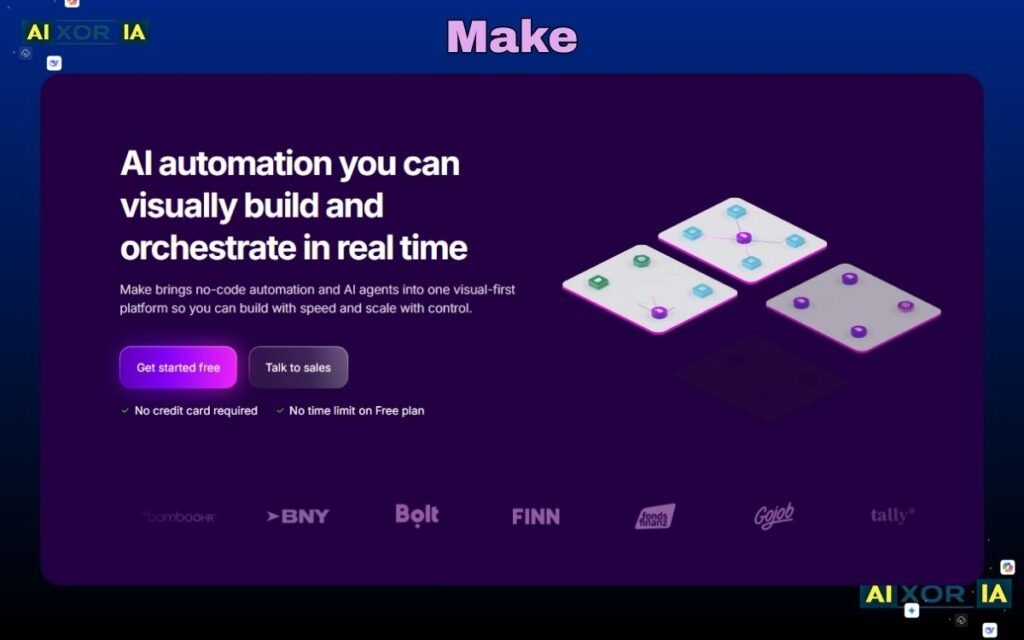
Make.com allows users to connect hundreds of apps and create automated workflows without writing complex code. Businesses use it to connect tools like CRMs, email platforms, analytics dashboards, and databases.
For example, a freelancer can build an automation system that automatically collects customer leads from a website, enriches the data using AI APIs, sends personalized follow-up emails, and updates the CRM — all without manual intervention.
The platform works using a visual workflow builder where each step is represented as a module. This makes it easier to design complex automations compared to traditional scripting methods.
Freelancers who specialize in automation often sell services such as:
- automation system setup
- business workflow optimization
- AI-powered lead generation pipelines
- automated reporting dashboards
The reason companies pay for these services is simple: automation directly increases operational efficiency.
Instead of spending 40 hours per week on manual processes, businesses can automate these workflows and focus on strategic tasks like sales and product development.
Real Experience
When testing automation setups, I noticed that even a simple lead-capture automation saved over 10 hours per week for small teams, making businesses much more willing to pay for these solutions.
AI Profitability Logic (Scalability Formula)
Professional AI freelancers often evaluate business models using a simple scalability formula:Sai=(AI Automation FactorManual Effort Hours)+Tool Subscription CostClient Retainer Value
If Sₐᵢ > 5.0, the business model is considered highly scalable.
This means AI automation allows a freelancer to serve more clients without increasing manual workload.
2. Building Micro-SaaS AI Tools
Another powerful opportunity is building Micro-SaaS tools.
Micro-SaaS products are small software tools designed to solve one specific problem extremely well.
Examples include:
- SEO keyword clustering tools
- AI content idea generators
- social media caption creators
- research assistants
- meeting summarizers
Unlike large SaaS startups, Micro-SaaS tools can often be developed by one or two people.
Platform Example: Gumroad
While building software requires hosting and development, many creators launch early versions of their AI tools on platforms like Gumroad.
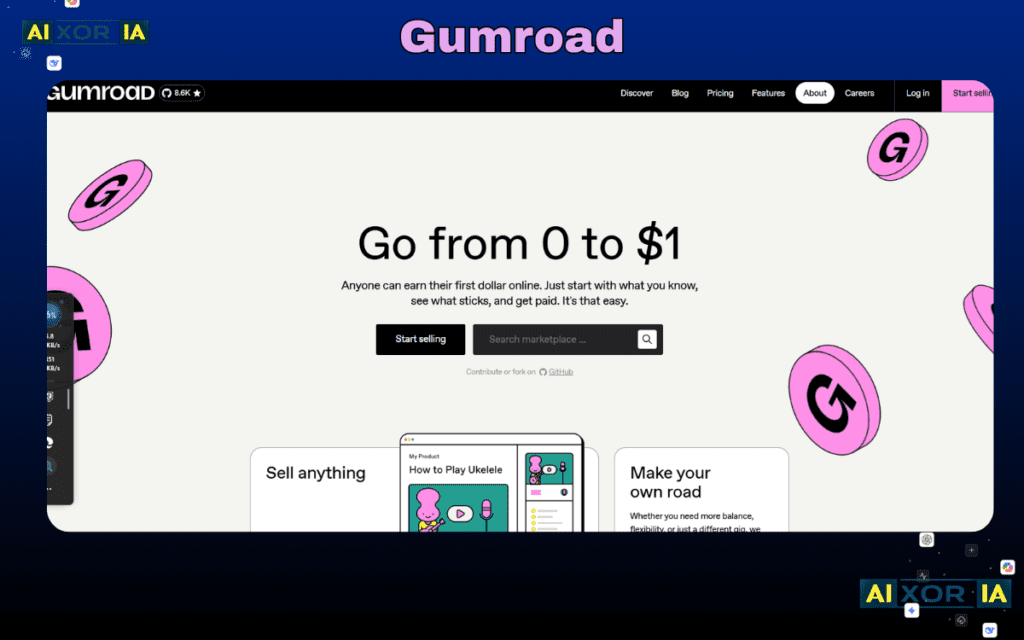
Gumroad allows developers and creators to sell digital products, SaaS access, templates, and software subscriptions directly to customers.
Instead of building complex payment systems and user dashboards from scratch, creators can use Gumroad to:
- sell early product access
- manage subscriptions
- distribute software tools
- collect customer feedback
This approach is especially useful for Micro-SaaS founders who want to validate an idea quickly before building a full platform.
Many indie developers start with a simple AI tool, release it on Gumroad, and then improve the product based on user feedback.
Over time, successful tools can evolve into full SaaS platforms with recurring revenue models.
Real Experience
During testing of digital product marketplaces, I noticed that tools solving very narrow problems often attract more buyers than general AI tools, because users clearly understand the value.
3. AI-Assisted Copywriting
AI hasn’t replaced writers — it has changed how writing is done.
Modern copywriters now use AI for:
- research assistance
- content outlines
- headline generation
- idea brainstorming
- editing suggestions
However, businesses still rely on human strategy and storytelling.
Companies pay writers not just for words but for results, such as:
- website traffic
- conversions
- brand positioning
This is why AI-assisted copywriting remains one of the most stable online service businesses.
4. Selling AI Digital Products
Another scalable opportunity is selling digital assets created with AI.
Popular examples include:
- social media templates
- prompt libraries
- marketing swipe files
- Notion productivity systems
- design bundles
These products require one-time creation but can be sold repeatedly.
Platforms like Gumroad and digital marketplaces make it easy to distribute these products globally.
The biggest advantage of digital products is scalability: once the product is created, sales can continue without additional effort.
5. AI Marketing Agencies
Marketing agencies are rapidly adopting AI tools to improve campaign efficiency.
AI marketing agencies typically offer services such as:
- content strategy
- ad campaign testing
- competitor analysis
- automated reporting
- social media management
Instead of hiring multiple specialists, companies now work with small teams that use AI tools to deliver results faster.
Many agencies charge monthly retainers between $1,000 and $5,000, depending on the service scope.
6. AI-Powered Trading Analytics
AI is also being used to create analytical tools for financial markets.
Instead of promising automatic profits, most serious tools focus on:
- market sentiment analysis
- portfolio risk evaluation
- trading data visualization
- trend detection
These systems help traders make better decisions based on data rather than emotions.
Because financial analytics tools provide measurable value, users are often willing to pay monthly subscription fees.
7. AI Consulting for Businesses
As AI adoption increases, many companies struggle to understand how to integrate AI into their workflows.
AI consultants help businesses:
- identify automation opportunities
- choose AI tools
- train employees
- design efficient systems
Consultants typically earn through:
- hourly consulting
- project-based implementation
- monthly retainers
In the US market, experienced consultants can charge $200 to $500 per hour depending on expertise.
8. Faceless AI Content Channels
Content creation has also evolved with AI.
Many creators now run faceless content channels, where AI generates scripts, voiceovers, and visuals.
Common formats include:
- educational videos
- tech explainers
- motivational content
- history storytelling channels
Revenue typically comes from:
- advertising revenue
- affiliate marketing
- sponsorship deals
Because the creator doesn’t appear on camera, production can be faster and more scalable.
9. Teaching AI Skills
As AI becomes essential in many industries, people want practical training.
This has created opportunities for educators to sell:
- AI courses
- workshops
- coaching programs
- workflow templates
Instead of teaching complex AI theory, successful instructors focus on practical workflows that improve productivity.
For example:
- AI for marketing teams
- AI for freelancers
- AI automation for businesses
Practical education often attracts professionals who want to learn skills that improve their work immediately.
READ MORE – Best 3 AI Tools for Business Name Generator
Final Thoughts
The biggest misconception about AI income is that it automatically generates money.
In reality, AI acts as a productivity multiplier.
People who succeed in this space usually follow a simple strategy:
- Identify a real business problem
- Use AI tools to solve it efficiently
- Package the solution as a service or product
When applied this way, AI allows individuals and small teams to build scalable digital businesses with relatively low overhead.
Frequently Asked Questions (FAQ)
1. Can you really make money using AI in 2026?
Yes, people are making money with AI in 2026 by using it to automate tasks, build software tools, create digital products, and provide consulting services. Instead of replacing human work completely, AI is mostly used as a productivity tool that helps individuals and small teams perform work faster and more efficiently.
Successful AI-based businesses usually focus on solving real problems, such as automating business workflows, improving marketing campaigns, or building useful software tools.
2. What is the easiest way to start making money with AI?
For beginners, the easiest entry points are usually AI-assisted services or digital products.
Common beginner-friendly options include:
AI content writing services
Selling digital templates
Building simple automation workflows
Managing AI-powered marketing campaigns
These opportunities require lower startup costs and minimal technical expertise compared to building full software platforms.
3. Do you need coding skills to make money with AI?
No, coding skills are not always required.
Many AI tools now offer no-code or low-code interfaces, allowing users to build automation systems, generate content, or create digital products without programming knowledge.
However, learning some technical skills can help when building Micro-SaaS products or advanced automation systems.
4. How much money can people realistically make with AI?
Income varies depending on the business model and experience level.
Typical earning ranges include:
AI freelancers: $1,000 – $10,000 per month
Automation consultants: $2,000 – $8,000 per client
Micro-SaaS founders: $5,000+ monthly recurring revenue
AI educators or course creators: $500 – $20,000+ depending on audience size
Most people start with side income opportunities before scaling into full businesses.
1 thought on “9 Ways People Are Making Money Using AI in 2026”