How AI Tools for Truck Dispatchers Make Daily Work Easier
Scr0ll d0wn to D0VVNL0AD
AI tools for truck dispatchers help teams find suitable loads, compare rates and empty miles, enter load details, track deliveries, and spot delays. Some work alongside a load board or transportation management system (TMS); others combine those tasks in one platform. The right choice depends on your fleet size, the systems you already use, and which task costs your team the most time.
AI can narrow the options and handle routine updates, but dispatchers still need to check load details, manage exceptions, and make the final call. This guide compares eight tools by what they do, how they fit into a workflow, and who they suit best.
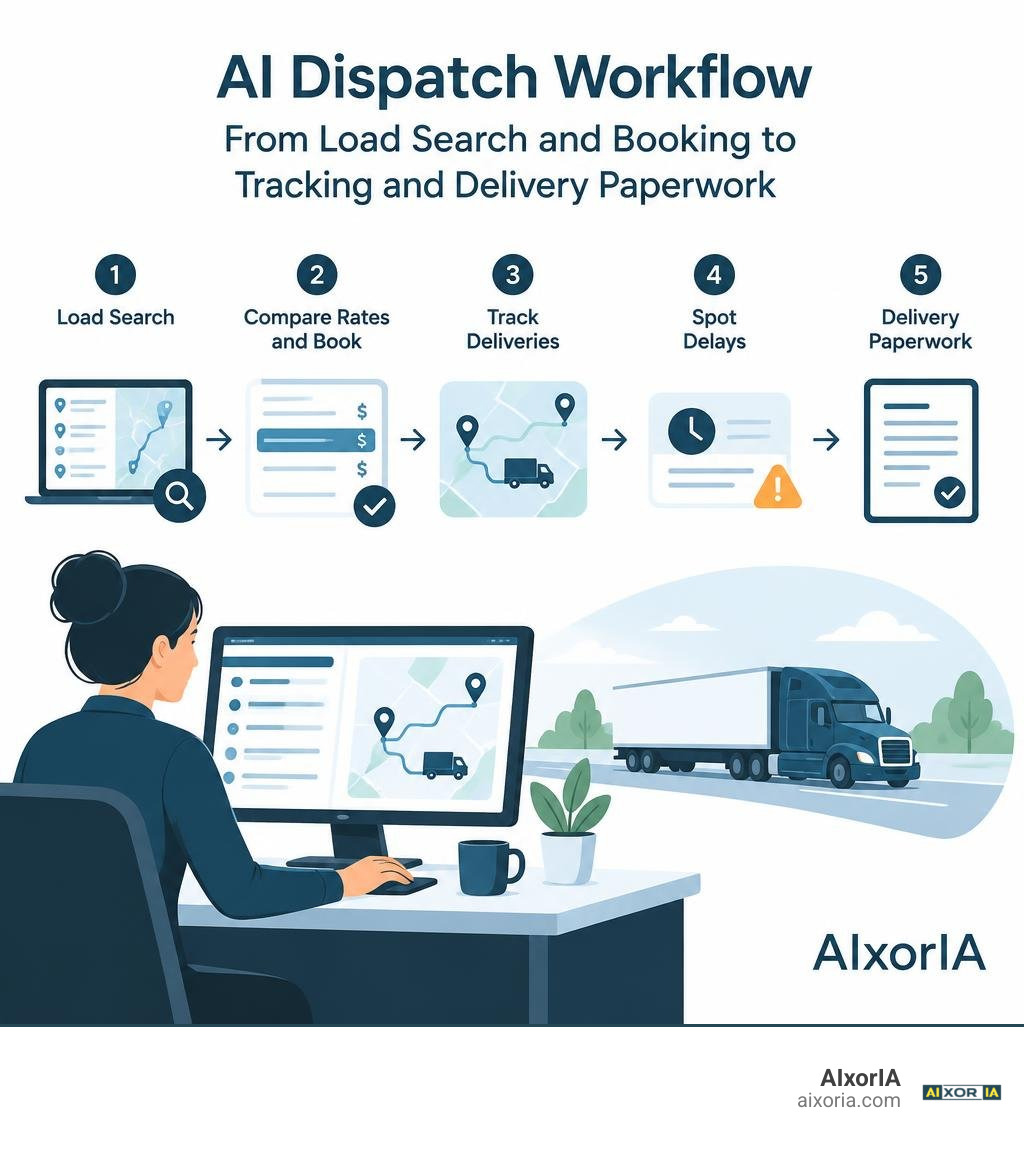
How AI Tools for Truck Dispatchers Transform Modern Fleet Operations
Dispatchers are often described as the multitasking backbones of trucking operations. On any given morning, a dispatcher juggles twenty open browser tabs, tracks unpredictable weather patterns, negotiates rates with freight brokers over phone and email, and ensures drivers do not violate strict Hours of Service (HOS) rules.
Historically, scaling a trucking company meant hiring more dispatchers in a direct one-to-one ratio with fleet growth. A single dispatcher typically managed 15 to 20 trucks before operational cracks began to show. Missed check calls, delayed rate confirmation entries, and overlooked deadhead miles quickly eroded razor-thin profit margins.
Modern artificial intelligence transforms this equation entirely. By handling data-heavy, repetitive computational tasks, AI gives dispatchers real-time decision support. Instead of manually cross-referencing maps, driver logs, and load boards, dispatchers receive prioritized recommendations. Exploring the best AI tools for business productivity illustrates how automation frees professionals across industries from low-value busywork. In freight logistics, dispatchers using advanced systems can now comfortably handle 35 to 40 trucks without increased stress or operational errors.
Core Capabilities of Modern AI Tools for Truck Dispatchers
Modern AI dispatch tools do not just store information; they actively interpret and act on operational data through several core functions:
- Intelligent Optical Character Recognition (OCR): Advanced machine learning models scan unstructured Rate Confirmations (RateCons), bills of lading (BOLs), and invoices, extracting key dates, addresses, accessorial fees, and special handling instructions in seconds.
- Automated Rate Negotiation: Natural language processing (NLP) drafts contextual, market-backed email or chat responses to brokers, bidding on freight based on live lane averages and real operating costs.
- Dynamic Route and Backhaul Optimization: Machine learning algorithms evaluate surrounding market outbound volumes, pairing primary hauls with profitable return loads before the truck even delivers its outbound freight.
- Predictive Delay and Risk Alerts: AI correlates live electronic logging device (ELD) telematics, traffic patterns, and weather feeds to flag potential appointment misses hours before they happen.
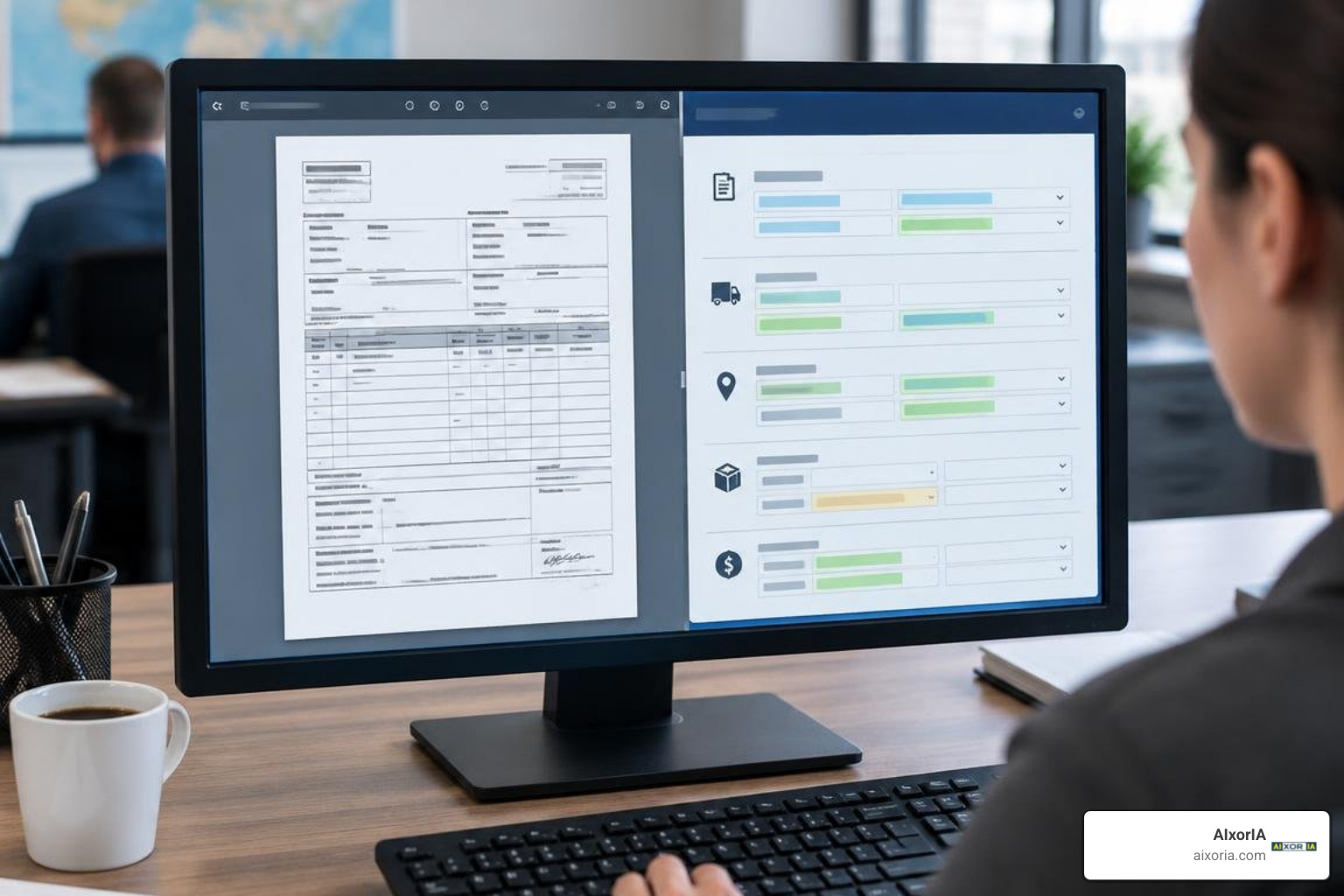
AI vs. Traditional Dispatch Software: Key Differences
Traditional dispatch software acts primarily as a digital filing cabinet. It records where a truck went, stores contact numbers, and tracks completed loads after someone types in the information. If a delivery falls behind schedule, legacy software waits for a human to notice the delay, calculate the downstream impact, and manually reschedule subsequent pickups.
AI dispatch systems, by contrast, are active and predictive. They continuously process live telemetry to forecast bottlenecks, evaluate market capacity across multiple freight exchanges, and dynamically score loads based on real net profitability per mile. Adopting the best AI tools for data analysis and visualization in 2026 has shown that shifting from static data entry to continuous predictive analysis is what unlocks true fleet efficiency.
| Operational Feature | Traditional Dispatch Software | AI-Powered Dispatch Systems |
|---|---|---|
| Load Entry | Manual keyboard input (15–30 mins/load) | Instant OCR parsing (< 30 seconds) |
| Load Sourcing | Manual searching across separate board tabs | Multi-board aggregation with automated profit ranking |
| Rate Negotiation | Manual phone calls and individual emails | AI-drafted counteroffers based on real-time lane rates |
| Route Management | Static GPS distance calculations | Predictive rerouting adjusting for traffic, weather, and HOS |
| Exception Handling | Reactive (after a driver calls in late) | Proactive (predicts SLA breaches hours in advance) |
| Dispatcher Capacity | 15 to 20 trucks per dispatcher | 35 to 40 trucks per dispatcher |
Top 8 AI Dispatch Tools for Trucking in 2026
To help you find the best solution for your fleet, we evaluated the leading platforms based on their core AI features, pricing models, ideal fleet size, and integration capabilities.
| Tool | Core Strengths | Best For | Integrations | Starting Price |
|---|---|---|---|---|
| 1. Numeo | Multi-board search, auto-negotiation emails | Small-to-mid fleets, solo dispatchers | DAT, Truckstop, RXO | Free basic tier; Pro at $9.99/mo |
| 2. DispatchMVP (Otto) | Voice-activated dispatch assistant, OCR | Fleets seeking hands-free workflows | Samsara, Motive, QuickBooks | $49/mo (Owner-Operator) |
| 3. PCS Software (Cortex AI) | Dynamic fleet rebalancing, predictive maintenance | Mid-size to enterprise carriers (20–100+ trucks) | Native TMS, major ELDs | Custom enterprise quote |
| 4. LoadSwift | Rapid RateCon OCR, Kanban boards, WhatsApp | Independent dispatchers & small fleets | Google Maps, WhatsApp, accounting tools | $5/mo (Starter) |
| 5. Load Nova | In-browser qualification, instant screenshot parsing | Brokers and dispatchers using DAT/Truckstop | DAT, Truckstop, TruckSmarter | Contact vendor / Chrome Store |
| 6. LoadHunter | Unified load board extension, broker vetting, VoIP | High-volume DAT and Truckstop dispatchers | DAT, Truckstop, FMCSA database | Contact vendor / Chrome Store |
| 7. iTruckr | Automated broker check-ins, multi-channel messaging | Fast-growing carriers reducing phone time | SMS, WhatsApp, Email, Telematics | Contact vendor for demo |
| 8. TruckSmarter Dispatch | Conversational chat-to-book, automated broker calls | Owner-operators & independent dispatchers | TruckSmarter load network, Gmail | Free tier; Unlimited at $49/mo |
1. Numeo: Best for Multi-Board Load Aggregation and AI Negotiation
Numeo addresses one of the most frustrating parts of dispatching: switching back and forth between multiple load boards while manually drafting negotiation emails. Designed to operate as a digital workforce layer over your existing tools, Numeo aggregates postings from DAT, Truckstop, RXO, and other sources into a unified interface called Load Hub.
The platform ranks incoming loads by true profit margin after factoring in deadhead miles and carrier operating costs. When a dispatcher identifies an attractive load, Numeo uses built-in AI models to draft contextual negotiation emails with a single click. These drafts reference live lane pricing to help carriers secure top rates without prolonged back-and-forth messaging.
Numeo also provides real-time “Load Radar” push alerts via mobile apps and messaging channels, ensuring dispatchers never miss high-value spot loads while away from their desks.
2. DispatchMVP (Otto): Best for Voice-Activated Fleet Management
DispatchMVP brings conversational voice technology directly into dispatch operations through its proprietary AI assistant, Otto. Recognizing that dispatchers and drivers spend hours on phone calls, the platform introduced voice-activated dispatch tools that allow users to manage operations entirely hands-free.
A dispatcher can simply speak commands like, “Otto, replace driver Charles with David on dispatch 1004,” and the system executes the update across all schedules and connected telematics platforms. For drivers on the road, a hands-free mobile app lets them say “Hey Otto” to report arrivals, departures, and transit updates, automatically generating shipper check calls.
DispatchMVP pairs this voice interface with OCR document recognition that reduces data entry times from over 30 minutes per document to under 60 seconds, integrating cleanly with ELD providers like Samsara and Motive alongside QuickBooks.
3. PCS Software (Cortex AI): Best for Mid-to-Enterprise Fleet Scaling
For carriers running 20 to over 100 power units, PCS Software embeds its Cortex AI engine directly into enterprise TMS workflows. Rather than treating AI as an external add-on, PCS builds predictive decision automation into daily fleet scheduling.
Cortex AI continuously monitors capacity across depots, identifying when regional volume shifts require dynamic asset rebalancing. If a driver calls out sick at 6:00 AM, the system analyzes all available tractors, active HOS clocks, and scheduled delivery windows to suggest optimal route reassignments in seconds. Real-world carrier case studies show fleets scaling from 10 to 200 trucks while maintaining a 98% on-time delivery rate using this automated matching.
Cortex AI also monitors shop maintenance feeds, preventing dispatchers from assigning heavy cross-country loads to tractors overdue for preventative service.
4. LoadSwift: Best for Fast RateCon OCR and Solo Dispatchers
LoadSwift is designed to eliminate paperwork bottlenecks for independent dispatchers and growing logistics teams. Its standout feature is an intelligent RateCon auto-fill tool. When a dispatcher uploads a rate confirmation PDF, LoadSwift extracts addresses, reference numbers, weight limits, and agreed pay within seconds, populating the TMS board automatically.
The platform organizes fleet activity through an intuitive Kanban board, giving dispatch teams visual clarity over every load from tender to delivery. The LoadSwift fleet management software also automates back-office administrative tasks by generating driver payslips with a single click and transmitting real-time tracking updates and route adjustments directly to drivers via WhatsApp and SMS.
5. Load Nova: Best for Instant Load Qualification and In-Browser Booking
Load Nova functions as an AI dispatch co-pilot designed to live directly inside your web browser. Built specifically for freight brokers and dispatchers who spend their days inside DAT, Truckstop, and TruckSmarter, the Load Nova AI dispatch dashboard eliminates tab-switching by embedding qualification metrics directly onto load board listings.
Using OCR and natural language processing, Load Nova allows dispatchers to capture load information from screenshots, PDFs, or raw text and convert it into structured booking drafts in seconds. The tool runs instant calculations for rate per mile (RPM), total deadhead, and net margin, displaying a confidence score for each posting. This enables dispatchers to filter out unprofitable freight immediately, saving an estimated 20 to 30 minutes of evaluation time per load.
6. LoadHunter: Best for DAT and Truckstop Direct Workflow Automation
LoadHunter is a browser extension that turns standard freight exchanges into comprehensive dispatch control centers. Available directly via the LoadHunter extension on Truckstop marketplace, it embeds profit calculators, VoIP dialers, and safety checks directly into board search results.
As dispatchers scroll through available loads, LoadHunter automatically hides low-margin freight based on preset margin rules. With one click, dispatchers can view complete FMCSA safety data and check broker factoring creditworthiness before initiating contact. The tool can also send automated outreach emails or place VoIP calls to collect missing pickup times and negotiate rates, letting dispatchers intervene only when a broker agrees to target parameters.
7. iTruckr: Best for Automated Omnichannel Communication and Broker Updates
Clear communication prevents costly detention claims and missed appointments, but manual check-calls consume hours of a dispatcher’s day. The iTruckr dispatch platform resolves this by serving as an automated communication bridge connecting drivers, dispatchers, brokers, and shippers.
The software connects with existing vehicle telematics and mobile devices, tracking load progress in real time. When transit delays occur due to traffic or weather, iTruckr generates proactive delay notifications via SMS, WhatsApp, or email to all relevant stakeholders. It also automates rate negotiation workflows and digital document collection, prompting drivers to snap photos of signed proof of delivery (POD) receipts the moment a shipment is unloaded.
8. TruckSmarter Dispatch: Best for Conversational 24/7 Load Booking
TruckSmarter Dispatch functions as a conversational AI dispatch partner built directly into a mobile chat interface. Designed for owner-operators and agile dispatchers looking to move away from rigid dashboards, it allows users to search, evaluate, and book loads simply by typing natural requests.
A user can instruct the chat assistant: “Find me a dry van load from Chicago to Atlanta paying at least $2.50 a mile departing Thursday.” The AI scans available marketplace freight, filters out low-paying offers, and presents the best options. TruckSmarter Dispatch can draft broker negotiation emails and even place automated calls to confirm load availability and verify accessorial terms. Solo operators looking for lean business workflows will find that exploring the best AI tools for entrepreneurs in 2026 reveals how conversational tools like this provide enterprise-level leverage on a modest budget.
How AI Reduces Empty Miles, Deadhead, and Administrative Delays
Empty miles represent one of the largest financial drains in commercial transportation. Industry data shows that more than a fifth of all European Union road freight vehicle-kilometers in 2024 were driven empty, climbing to nearly a quarter for national transport routes. North American carriers face similar hurdles, with empty deadhead miles frequently accounting for 15% to 20% of a truck’s total annual distance.
AI dispatch systems combat this inefficiency by shifting route planning from single-leg booking to continuous network optimization.
Dynamic Load Matching and Profit-Per-Mile Scoring
Traditional dispatching often focuses on booking one load at a time. A dispatcher secures a lucrative outbound haul but leaves the return trip unassigned until the driver is hours away from delivery. This reactive approach frequently forces carriers to accept low-paying spot freight or deadhead hundreds of miles back to a home terminal.
AI tools evaluate freight opportunities holistically. Modern AI dispatch platforms use algorithmic filters and risk scoring to evaluate hundreds of secondary loads while the initial dispatch is being planned. By assessing outbound destination capacity, historical lane pricing, and fuel costs, the system calculates true net profit across the entire multi-leg circuit. Fleets using predictive load-scoring tools report saving three to four hours per dispatcher per week while increasing net revenue by up to €500 ($550) per truck per month.
Real-Time Delay Detection, ELD Compliance, and Rerouting
Delays in trucking carry expensive domino effects. A two-hour delay at a shipper dock can cause a driver to run out of legal driving hours under HOS regulations, resulting in missed delivery appointments, detention penalties, and canceled subsequent loads.
AI tools mitigate these disruptions by maintaining continuous data feeds with ELD hardware and GPS telematics. When the system detects a slowdown, it models downstream schedule impacts automatically:
- Impact Calculation: Evaluates remaining driver drive time against delivery window constraints.
- Automated Rescheduling: Flags high-risk appointment breaches and drafts updated ETA notices for broker approval.
- Dynamic Reassignment: If a violation is unavoidable, the AI scans nearby fleet assets and suggests swapping loads with a compliant driver in the immediate vicinity.
Implementation Strategy and Integration Challenges
Adopting AI dispatch tools does not require replacing your entire software infrastructure overnight. The most successful fleets follow an incremental implementation roadmap that maintains daily workflow continuity while modernizing core processes.
Integrating AI with Existing TMS, Telematics, and Load Boards
A common concern among fleet managers is whether new AI tools will create another disconnected software silo. Modern AI platforms avoid this problem by using standard REST APIs and browser extensions that integrate directly into existing workflows:
- Load Board Integration: Browser-based AI overlays (such as Numeo, Load Nova, and LoadHunter) operate directly inside DAT and Truckstop, requiring no changes to your current board subscriptions.
- Telematics & ELD Sync: Modern platforms offer native API connectors for major providers like Samsara, Motive, and Azuga, enabling instant GPS and HOS tracking without new in-cab hardware.
- Accounting Connectivity: AI document extractors export verified RateCon and invoice data directly into accounting platforms like QuickBooks, eliminating manual ledger entries.
To ensure clean execution, carriers must maintain strict data hygiene. AI models rely on accurate cost-per-mile baselines, updated equipment specs, and timely driver status logging to generate profitable routing suggestions.
Selecting the Right AI Tools for Truck Dispatchers by Fleet Size
Every trucking business operates differently. Selecting the most effective AI tool depends on your fleet’s current scale and operational bottlenecks:
- Owner-Operators & Micro Fleets (1–5 Trucks): Prioritize low-friction mobile tools with minimal setup costs. Browser extensions like Load Nova or conversational tools like TruckSmarter Dispatch eliminate administrative overhead without requiring extensive onboarding.
- Mid-Sized Carriers (6–25 Trucks): Focus on platforms that combine multi-board load aggregation with automated communication and RateCon parsing, such as Numeo, DispatchMVP, or LoadSwift.
- Growing Fleets & Enterprises (25–100+ Trucks): Deploy enterprise TMS engines with embedded machine learning, such as PCS Software’s Cortex AI, to orchestrate multi-terminal load balancing, fleet-wide HOS compliance, and predictive maintenance tracking.
Frequently Asked Questions about AI Dispatching
Can AI completely replace human truck dispatchers?
No. AI dispatch tools are designed to assist human dispatchers, not replace them. While artificial intelligence excels at scanning thousands of data points, calculating margins, and automating repetitive data entry, freight transportation remains a relationship-driven industry built on human judgment.
Dispatchers handle delicate broker negotiations, support drivers facing unexpected mechanical or personal emergencies on the road, and navigate facility-specific dock challenges that software cannot foresee. AI handles the computational busywork so human dispatchers can focus on high-touch problem-solving and driver retention.
How much time and money do AI dispatch tools save trucking companies?
Industry studies show that logistics teams deploying AI document parsing and automated communication cut administrative workloads by 10% to 20%. Dispatchers save an average of 3 to 4 hours per week on load searches, rate verification, and manual data entry. Financially, reducing empty deadhead miles and optimizing multi-leg route profitability can generate up to $500 to $550 (€500) in additional revenue per truck each month.
How do AI dispatch tools connect with ELD and telematics devices?
Most modern AI dispatch platforms connect with ELD and fleet telematics systems (such as Samsara, Motive, and Bridgestone Azuga) via secure cloud APIs. Once authorized, the dispatch tool receives real-time GPS coordinates, vehicle diagnostic codes, and remaining HOS drive-time clocks directly from the hardware provider. This continuous data stream allows the AI to calculate precise ETAs, flag compliance risks, and optimize routes without requiring extra tracking devices.
Conclusion
The freight market moves fast, and operating on narrow margins with manual spreadsheets and fragmented browser tabs is no longer sustainable. Commercial transportation is undergoing a major shift: nearly 40% of transportation and warehousing businesses plan to integrate AI into their analytical workflows. Fleet operators who give their teams modern AI dispatch tools consistently out-book, out-route, and out-negotiate competitors while protecting their drivers from unnecessary deadhead miles.
Whether you run a single power unit or manage a nationwide fleet, adopting AI dispatch tools is one of the most effective steps you can take to streamline operations and build long-term profitability. At AIxorIA, we curate and provide practical AI software resources, tutorials, and productivity guides designed to help businesses harness modern automation tools to boost everyday performance. Explore our collection of guides to equip your team with the knowledge and tools needed to thrive in the modern logistics landscape.