Why the Best Project Portfolio Management Software Matters in 2026
Scr0ll d0wn to D0VVNL0AD
The best project portfolio management software gives teams a single place to plan, prioritize, and track every project — all at once, not one at a time.
If you’re in a hurry, here are the top PPM tools to know right now:
| Tool | Best For | Gartner/Peer Rating |
|---|---|---|
| Planview | Enterprise portfolio alignment + AI | Leader, 4th consecutive year |
| Wrike | Collaborative teams, hybrid work | 4.7 / 5 (Gartner Peer Insights) |
| Microsoft Project | Microsoft ecosystem, scenario modeling | 4.7 / 5 (Gartner Peer Insights) |
| Smartsheet | Flexible workflows, reporting | 4.4 / 5 (Gartner Peer Insights) |
| Primavera P6 | Complex, large-scale projects | 4.5 / 5 (Gartner Peer Insights) |
| Epicflow | Multi-project resource optimization | Top-rated for shared resource pools |
| Celoxis | Mid-market, value for money | 4.5 / 5 (Gartner Peer Insights) |
Managing one project is hard. Managing ten at once — with shared teams, tight budgets, and competing deadlines — is a different challenge entirely.
That’s exactly the problem project portfolio management (PPM) software is built to solve. It’s not just about tracking tasks. It’s about making smart decisions across all your projects at the same time: which ones to start, which to pause, and how to use your resources without burning people out.
In 2026, the stakes are higher. Organizations are running more projects with leaner teams. AI is changing how portfolios get prioritized. And the old way — juggling spreadsheets and disconnected tools — simply doesn’t cut it anymore.
This guide breaks down what separates a true PPM tool from a basic project tracker, which platforms lead the market, and how to pick the right one for your situation.
Defining the Best Project Portfolio Management Software in 2026
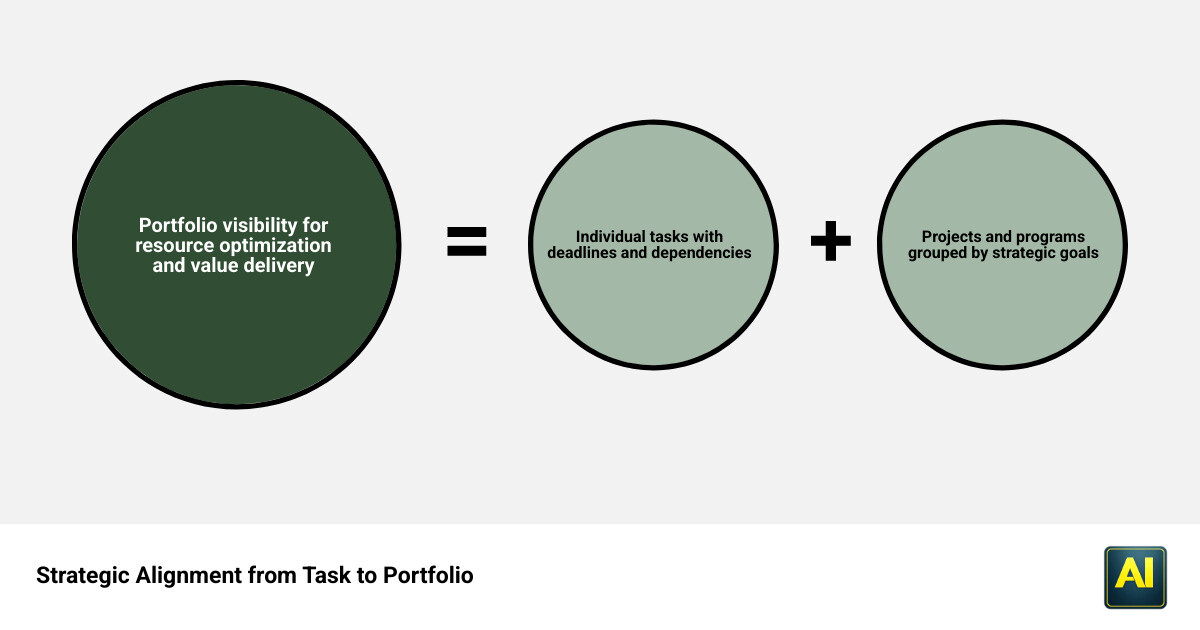
When we talk about the Best Project Portfolio Management Software, we aren’t just talking about a digital to-do list. In 2026, PPM software is defined as a strategic engine that supports the selection, planning, and execution of various work packages. This includes traditional projects, but also “containers” of work like products, programs, and value streams.
Modern solutions, such as Project Portfolio Management (PPM) Software from Deltek, focus on providing a “single source of truth.” This allows leadership to see exactly how investments are performing in real-time. A top-tier tool helps you manage the entire lifecycle—from the moment an idea is captured (demand management) to the final delivery of value.
For many organizations, the shift in 2026 has been toward “Strategic Portfolio Management.” This means the software doesn’t just ask “Are we doing the work right?” but rather “Are we doing the right work?” If you want to dive deeper into how these definitions are shifting this year, check out our insights on What is the Best Project Portfolio Management Software in 2026?
Key Differences Between PPM and Traditional Project Management
It’s easy to get these two confused, but the difference is all about the “view.” Traditional project management is “bottom-up”—it focuses on individual task durations, start dates, and specific deliverables. It’s about the “how.”
PPM, on the other hand, is “top-down.” It focuses on portfolio health, multi-project oversight, and resource capacity. While a project manager cares if Task A is finished, a portfolio manager cares if Project A is still worth the investment compared to Project B.
Key differences include:
- Scope: Project management handles one project; PPM handles the entire collection.
- Goal: Project management aims for on-time delivery; PPM aims for maximum ROI and strategic alignment.
- Resources: Project management assigns tasks; PPM balances capacity across the whole company to prevent bottlenecks.
If you are still deciding which level of tool your team needs, our guide on What Tools to Use for Project Management can help clarify your requirements.
The Role of AI and Analytics in the Best Project Portfolio Management Software
In 2026, AI is no longer a “nice-to-have” feature; it is the backbone of the Best Project Portfolio Management Software. Leading tools now use predictive analytics to spot risks before they happen. For instance, some platforms can predict a resource bottleneck three months in advance, allowing you to stagger project start dates to keep workflows smooth.
AI also brings conversational interfaces to the table. Instead of clicking through ten dashboards, you can ask a tool like Zoho Projects for a summary of budget variances across your “Alpha” portfolio. We’ve seen AI perform sentiment analysis on project updates to detect if a team is flagging, even if the status light is still “green.” To see how these technologies fit into your broader tech stack, explore the Best AI Tools for Business Productivity.
Essential Features of Modern PPM Solutions
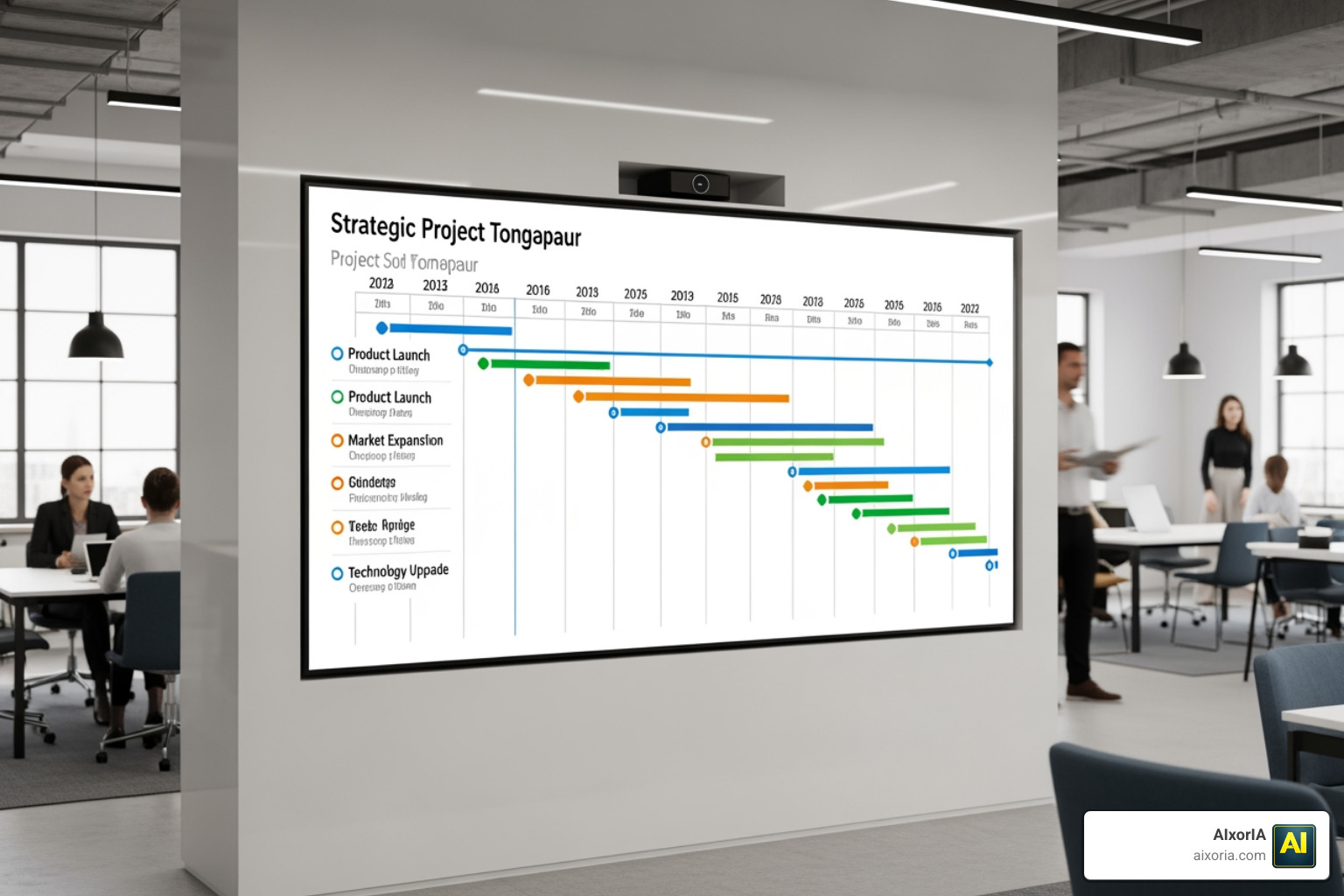
To be considered one of the best in 2026, a PPM solution must offer more than just Gantt charts. It needs to handle the complexity of “what-if” scenarios. Solutions like Planview ProjectAdvantage allow managers to model different portfolio scenarios—for example, “What happens to our deadlines if we lose 10% of our engineering budget?”
Other essential features include:
- RAID Logs: Centralized tracking of Risks, Assumptions, Issues, and Dependencies across all projects.
- Financial Forecasting: Tracking CAPEX (capital expenditure) and OPEX (operating expenditure) in real-time.
- Hybrid Support: The ability to manage Waterfall, Agile, and Phase-Gate methodologies in a single view.
Effective collaboration is also vital. While PPM tools handle the “big picture,” they must integrate with The 7 Best Team Collaboration Tools in 2026 to ensure the people doing the work stay connected.
Strategic Prioritization and Demand Management
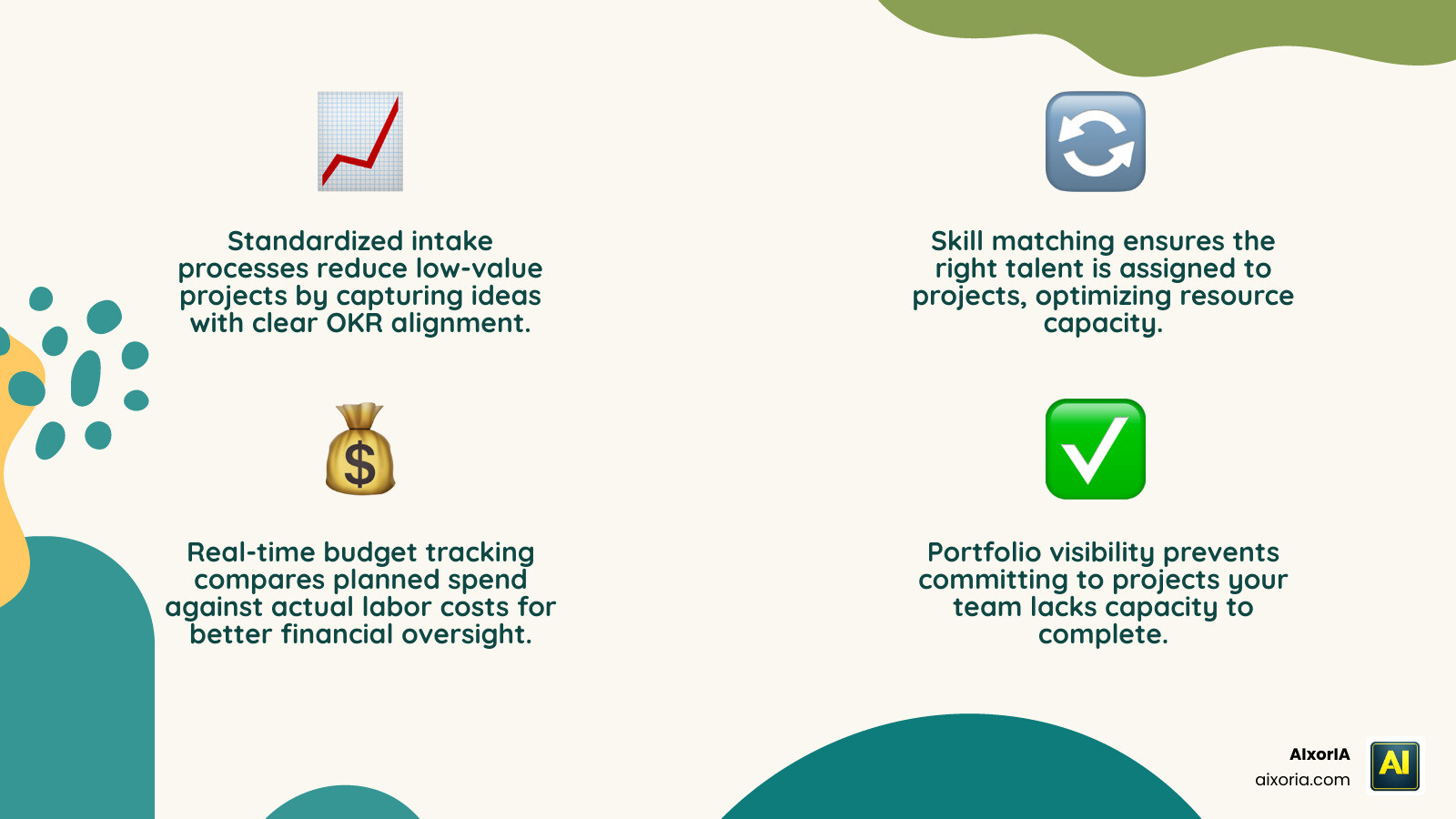
The intake process is where most portfolios fail. Without a standardized way to capture ideas and develop business cases, companies end up with too many low-value projects. The Best Project Portfolio Management Software uses scoring methodologies to rank initiatives based on their alignment with Objectives and Key Results (OKRs).
Tools like Ganttic help by providing high-level visibility into these demands, ensuring you don’t commit to a project that your team literally doesn’t have the hours to complete.
Resource Capacity and Financial Tracking
Resources are your most expensive asset. Modern PPM tools provide “skill matching,” which looks at the specific talents of your staff rather than just their availability. This ensures that the right person is on the right project.
Financial tracking has also become more sophisticated. You can now see real-time budget tracking that compares planned spend against actual labor costs. ProjectManager and similar cloud-based tools allow for this level of detail without needing a separate accounting degree to understand the dashboard.
Comparing Leading PPM Tools and Use Cases
Choosing the Best Project Portfolio Management Software depends heavily on your organization’s scale.
| Feature | Planview | Microsoft Project | Wrike |
|---|---|---|---|
| Primary Strength | Enterprise Strategy | Ecosystem Integration | Team Collaboration |
| AI Capability | Risk & Initialization | Copilot Integration | Work Intelligence |
| Methodologies | Agile, Waterfall, Hybrid | Waterfall-heavy (Agile via Azure) | Highly flexible Hybrid |
| Best For | Fortune 500 / Global Org | MS 365 Power Users | Fast-moving Mid-market |
Planview remains a leader in the Gartner Magic Quadrant for its ability to connect strategy to delivery for over 2.7 million users. Microsoft Project, particularly when paired with Power BI, offers unmatched data visualization for those already in the Microsoft 365 ecosystem. Meanwhile, Wrike is often cited for its high user satisfaction ratings (4.7/5) due to its ease of use. For a broader look at what’s trending, see What are the Most Popular Project Management Software in 2026?
Selecting the Best Project Portfolio Management Software for Your Industry
Industry matters. If you are in Aerospace, Defense, or Government Contracting, your needs are vastly different from a creative agency. You need tighter oversight, “earned value management,” and strict compliance. Deltek PM Compass is often the “gold standard” here, offering a command center for projects where margins are thin and complexity is high.
Conversely, if you’re a smaller firm, you might prioritize speed and cost. We recommend looking at What is the Best Project Management Software for Small Business in 2026? to find a tool that scales with you without the enterprise price tag.
Overcoming Implementation and Adoption Challenges
Even the Best Project Portfolio Management Software will fail if your team doesn’t use it. The biggest challenge isn’t the technology—it’s the change management.
Common hurdles include:
- Data Silos: Teams refusing to move their “private” spreadsheets into the centralized system.
- Lack of Executive Buy-in: If leadership doesn’t use the data to make decisions, the teams won’t bother updating it.
- Complex Governance: Making the intake process so hard that people find ways to bypass it.
To address these, we suggest starting small. Use a Best Free Project Management Software for Small Business in 2026 to prove the concept before investing in a massive enterprise-wide rollout.
Frequently Asked Questions about PPM
How does PPM software differ from standard project tools?
Standard tools manage the “to-do” list for a single project. PPM software manages the “to-do” list for the entire company, focusing on resource capacity, financial health, and strategic alignment across dozens or hundreds of projects.
What are the benefits of AI in portfolio management?
AI can automate project initialization, identify hidden risks in your schedule, and provide natural language updates via tools like Microsoft Teams. It helps managers move from being “reactive” to “proactive” by predicting bottlenecks before they delay a project.
How do I choose between cloud-based and on-premise PPM?
In 2026, most organizations choose cloud-based (SaaS) for its scalability, real-time updates, and easier integration with other tools. On-premise is usually reserved for highly regulated industries like defense or banking where data sovereignty is a legal requirement.
Conclusion
Finding the Best Project Portfolio Management Software is about more than just checking boxes on a feature list. It’s about finding a partner that aligns with your strategic goals and can handle the complexity of your specific industry. Whether you are looking for the AI-driven insights of Planview or the seamless integration of Microsoft Project, the right tool will transform your PMO from a reporting center into a value-delivery engine.
At AIxorIA, we know that technology is only half the battle. We provide custom AI solutions, tool training workshops, and performance audits to ensure your team actually knows how to use these powerful tools to their full potential. If you’re ready to stop juggling spreadsheets and start leading your portfolio with confidence, we’re here to help with simple language and fast support.
Visit us at https://aixoria.com/ to see how we can empower your business today.